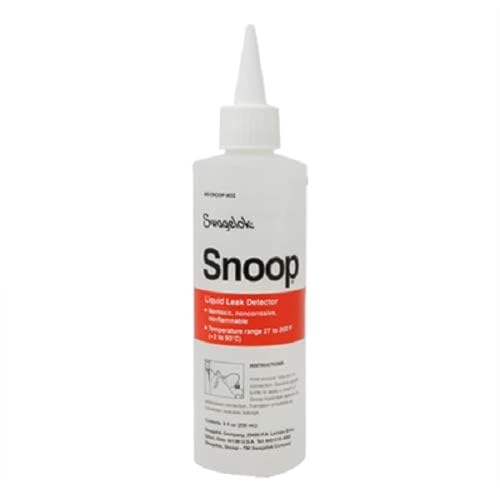
When a welding-gas regulator or hose fitting is suspected of leaking, choosing an actual leak-detection solution is one part of the job—not permission to improvise a pressure test. Swagelok Snoop MS-SNOOP-8OZ is an 8-fluid-ounce liquid leak detector supplied with a flexible applicator tube. Before ordering it for a welding shop, verify the exact formula, operating temperature, gas-system compatibility and site-approved leak-check procedure.
The first buying decision is whether the work is within the standard Snoop product’s published temperature range. Swagelok lists the MS-SNOOP-8OZ bottle at 27°F to 200°F (−2°C to 93°C). It separately sells a Real Cool Snoop formula intended for colder conditions. A similar white bottle and a similar product name do not make those formulations interchangeable.
As an Amazon Associate I earn from qualifying purchases.
- Non-toxic
- Non- flammable in liquid state
- Dries clean
- Will not collect dust
Last update on 2026-11-01 / Affiliate links / Images from Amazon Product Advertising API
What the exact 8-ounce bottle includes
Swagelok identifies part number MS-SNOOP-8OZ as its standard Snoop liquid leak detector in an 8 oz (236 mL) bottle. The manufacturer describes a flexible snooper tube for access to difficult locations and sustained bubbling behavior intended to reveal smaller gas leaks. Those are product identification and intended-use statements, not evidence that WSP has independently tested the liquid or that it detects every leak in every system.
On Amazon, verify that the current ASIN listing still identifies the standard Swagelok Snoop formula and the 8-fluid-ounce container. Marketplace listings can differ by reseller, bottle design, package count or revision. Do not assume a multipack, calibration service, electronic detector or Real Cool formula is included with a standard single-bottle offer.
Standard Snoop versus Real Cool: the temperature question
For standard Snoop MS-SNOOP-8OZ, the stated 27–200°F range means the formula’s application temperature matters in a cold shop or unheated enclosure. Swagelok’s Real Cool Snoop, part number beginning MS-RC-SNOOP, lists a lower minimum temperature on its own product page. This article is about the standard 8-ounce Snoop, not a recommendation to substitute another chemical without verifying service suitability.
If the intended testing environment is below the published minimum, stop and select a manufacturer-authorized solution for the actual temperature and gas-service requirements. Do not warm an active gas system, bypass an isolation rule or infer that a product is usable because its packaging survived winter storage. Application and storage requirements are separate questions, and the current data sheet and site policy must answer them.
What bubbles can and cannot tell you
Swagelok describes Snoop as a leak detector that shows sustained bubbling at a gas leak site. The observation can help qualified personnel locate an external leakage point in a system being checked under an approved procedure. It does not, by itself, prove the installation meets a required pressure-test specification, a gas purity standard or a regulated acceptance criterion.
A persistent or suspect leak is a reason to stop, isolate and escalate according to the appropriate gas-system procedures. Leak detection liquid is not a sealant, regulator repair kit or authorization to tighten pressurized fittings. Likewise, absence of visible bubbles at one location is not universal evidence of a leak-free gas train.
Oxygen, fuel gas and shielding gas require separate approvals
A welding shop may contain argon/CO2 shielding systems, oxygen equipment, fuel-gas cylinders and compressed air. The correct detector and procedure depend on the actual gas, components, cleaning requirements and applicable manufacturer instructions. Do not assume one shop bottle is automatically approved for every oxygen or fuel-gas connection. Consult the liquid’s current technical literature, the gas-equipment maker and the workplace’s safety procedure.
This is especially important for oxygen equipment, where oil, grease and other contamination may create severe hazards. If the system requires an oxygen-service-approved leak-check fluid or a specialized test method, verify those approvals directly. Do not substitute household soap, solvent or unverified cleaners on the strength of a product comparison article.
Ordering checklist for a maintenance or welding shop
- Record the suspected system and gas service—shielding, fuel, oxygen or air—without assuming the same rule applies to each.
- Confirm the manufacturer and exact part number MS-SNOOP-8OZ, not MS-RC-SNOOP-8OZ or a bulk refill.
- Check the container as an 8-fluid-ounce bottle; verify the current listing’s package count and applicator arrangement.
- Verify the manufacturer’s 27–200°F application range against the work area’s actual temperature.
- Review the current Swagelok product data and safety data sheet and the site-approved leak-check procedure before use.
- Determine whether testing is allowed for that system and who is qualified to conduct it; do not use this guide as a regulator adjustment procedure.
- If a suspected leak or abnormal condition is found, stop the operation and follow the equipment manufacturer’s isolation and repair instructions.
Where the product fits in a broader diagnosis
The WSP gas regulator leak-detection article discusses the wider inspection question. The MIG shielding-gas flow guide separates restrictions, flow settings and leaks, which can look similar at the weld. A detector helps investigate one cause; it should not replace process verification, an approved pressure test or qualified repair.
For oxygen regulator behavior that changes after flow stops, the WSP pressure-creep guide explains why an internal regulator fault is different from an external fitting leak. Do not try to correct that condition by treating a liquid detector as a repair tool.
Manufacturer sources and buying conclusion
The primary identification source is Swagelok’s MS-SNOOP-8OZ product page. Swagelok’s application explanation describes the sustained bubble behavior. Its Real Cool Snoop product page shows why the temperature-related name difference matters.
The right buy is the exact standard Snoop 8 oz bottle only when the manufacturer’s stated temperature range, gas-service compatibility and site procedure all fit. Otherwise the correct decision is Unknown—verify, not an automatic marketplace substitution. There is no fixed price, stock guarantee, first-hand test claim or procedure certification in this guide.
Leave a Reply