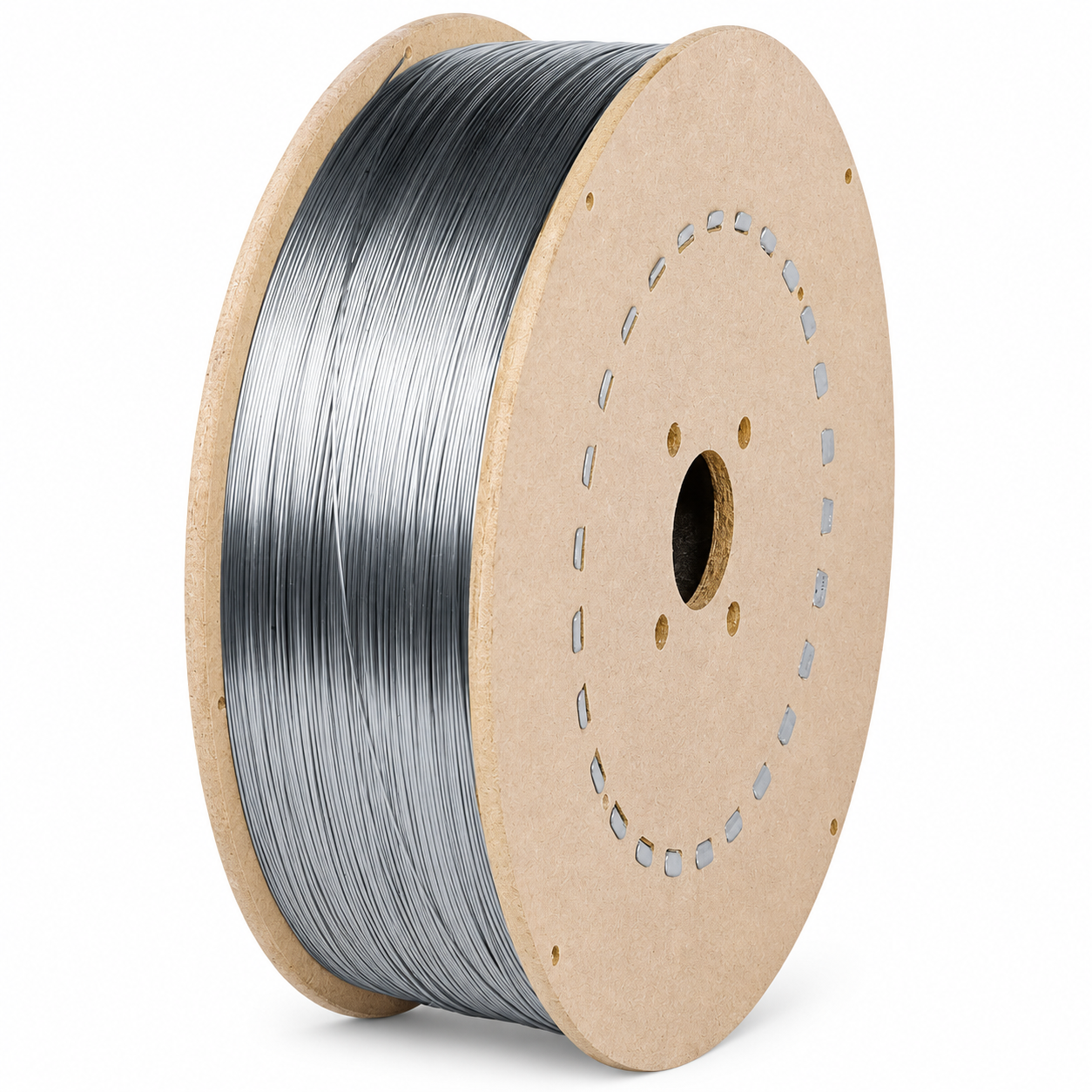
Order Lincoln Electric SuperArc L-56 part ED021276 only after confirming the exact wire diameter, spool weight, wire classification and your job’s welding procedure. ArcWeld currently lists ED021276 as one 44-pound fiber spool of 0.045-inch solid ER70S-6 wire. The part number identifies this commercial packaging; an ER70S-6 classification by itself does not identify the diameter or amount of wire shipped.
The buying mistake to avoid is treating L-56 as a complete ordering description. A shop might need the same AWS-classified wire in a different diameter, spool configuration or supply package. This guide is a receiving and requisition checklist, not a welding parameter chart. Use the current manufacturer documentation and approved procedure for settings, shielding gas, preheat and applicable code requirements.
Read the purchase line in four separate pieces
- Brand and product line: Lincoln Electric SuperArc L-56 identifies the manufacturer and named solid-wire family.
- Product form: Copper-coated solid MIG/GMAW electrode; do not substitute flux-cored wire or a TIG filler rod because both can carry a similar strength-number.
- Diameter: 0.045 inch is the precise commercial size in the ED021276 listing. Check the drive-roll groove, gun liner, contact tip and approved WPS for the same diameter.
- Package: One 44-pound fiber spool, not a 33-pound or 11-pound spool and not a bulk drum. Ask receiving to verify actual packaging and label against the purchase order.
The listing’s SKU is ED021276, the live Shopify variant uses that same SKU and the connected ArcWeld store reports positive inventory. Inventory shown online is not a binding shipment promise. If a shop requires several spools from one heat or lot, request that detail explicitly before placing an order; a seller’s visible quantity does not establish a single lot.
What ER70S-6 does—and does not—tell you
ER70S-6 is an AWS A5.18 solid carbon-steel wire classification. It tells the buyer the specified consumable classification, but it does not by itself approve a job or establish that every manufacturer’s product under that classification is interchangeable in a particular welding procedure. The receiving document should show the correct standard, manufacturer, diameter and any lot or certificate requirements set by the customer.
L-56 is often selected for steel fabrication because the wire family is designed with deoxidizers for mill-scale-tolerant work. That is not permission to weld through contaminants, disregard base-metal preparation, assume acceptable mechanical properties on an unknown joint or skip required inspection. Procedure qualifications and the actual product data sheet govern gas, position, transfer mode and application limits.
Check the feeder and gun before the new spool arrives
A correct wire on the purchase order can still be the wrong wire for the machine as it is currently equipped. Check the machine’s current wire size and spool mounting method against its own parts manual. The feeder’s hub and brake, drive rolls, gun liner and contact tip must suit the selected wire and physical spool, without forced installation or improvised hardware. A 0.045-inch contact tip requirement cannot be replaced by a guess based solely on the feeder’s model name.
- Write down the exact feeder make, model and installed spool-hub or adapter configuration.
- Record the contact tip marking and liner size currently installed; confirm against the equipment manufacturer’s parts guidance.
- Review drive-roll type and groove marking for the electrode and diameter.
- Confirm available spool space, brake adjustment requirements and the maximum package weight in the equipment instructions.
- Ask who will approve any setup change before the material is sent to the welding station.
A receiving inspection is different from a welding trial. It should identify an obvious mismatch before anyone cuts the package seal or takes the spool to a machine. If a 44-pound fiber spool does not fit the feeder setup, do not modify a spindle, guard or brake to make it fit. Resolve the mismatch through the correct equipment or order configuration.
Do the paperwork check before a time-critical production run
Ask whether the job needs a certificate of conformance, actual lot or heat traceability, AWS classification proof or a material-test record. Those are not the same document. A distributor’s product listing can identify a part number; it is not a substitute for the actual controlled manufacturer certificate or the customer’s purchase specifications. Put the required document and traceability language on the PO, then compare the delivered spool label against the shipping documents.
When the procedure names an exact brand and trade designation, substitution is a controlled decision. A receiving worker should not quietly replace the specified L-56 with a different ER70S-6 spool. When a WPS allows equivalent consumables, the responsible welding coordinator still needs to confirm any additional essential-variable and customer-approval restrictions.
The order decision
If your specification calls for Lincoln L-56, 0.045-inch solid ER70S-6 wire in a 44-pound fiber spool, review the exact ED021276 ArcWeld product page. It is a one-spool listing. Compare the active variant and selling unit, then confirm current inventory and documentation needs before checkout.
If the WPS permits a different grade or diameter, use WSP’s Filler Metal Finder and alloy support overview to frame your questions. Both are selection aids, not approvals. For process-setup context, WSP’s measurement and specification-check example shows why the unit and measurement task should be written down rather than inferred.
Final five-point receiving checklist
- Check manufacturer and ED021276 commercial part number exactly.
- Confirm ER70S-6, 0.045-inch diameter and one 44-pound fiber spool.
- Match physical spool mounting and 0.045-inch feeder consumables to the machine manual.
- Request applicable WPS, shielding gas and certificate/lot controls from the responsible lead.
- Inspect spool label and shipping unit against the order before moving it into production.
Bottom line: the product name identifies a wire family; the SKU identifies the exact commercial order. Get both right, and let the controlled WPS and actual machine configuration settle the remaining fit questions.
Leave a Reply