As an Amazon Associate, we earn from qualifying purchases.
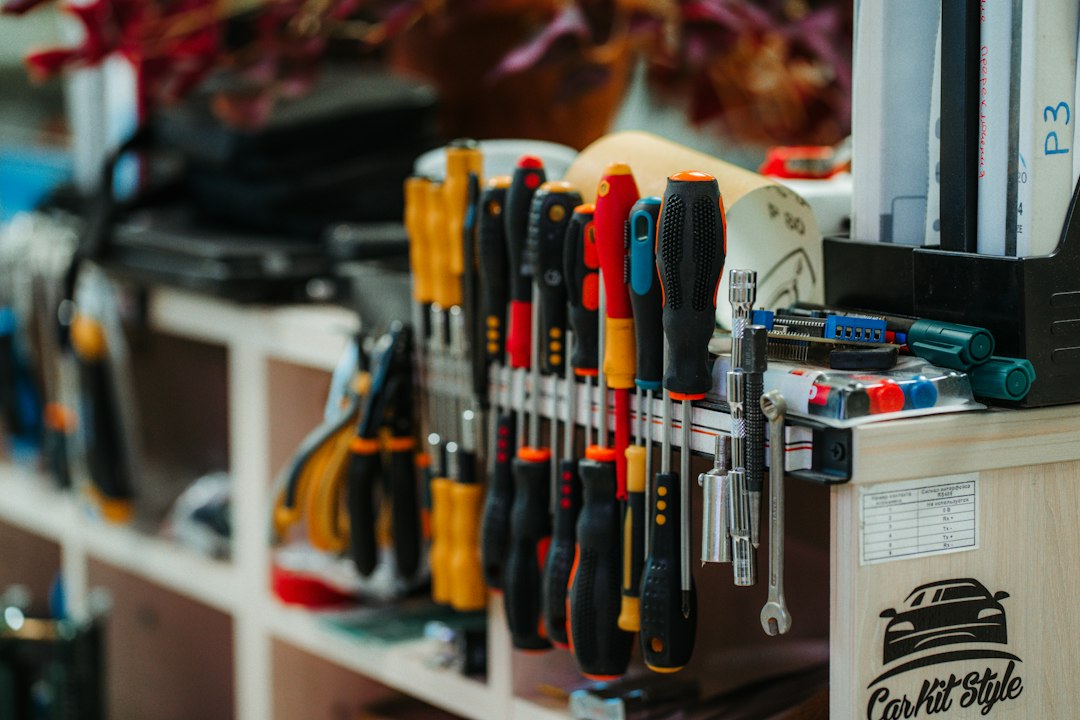
Featured image: contextual workshop hand tools. The Starrett 18A is not pictured.
A drill that wanders off a layout mark can turn a simple bracket into a rework job. The Starrett 18A automatic center punch is worth considering when the recurring problem is getting the hole started where you marked it. Its spring-loaded action makes a starter indentation without a separate hammer.
This is a source-based buying and setup guide, not a hands-on test. The recommendation is narrow: consider the 18A for repeated hole layout when you want an adjustable, serviceable automatic punch. Accurate measurements, suitable drills, and secure workholding still determine the finished result.
What the Starrett 18A actually solves
A center-punch mark gives the drill tip a recess to locate in before cutting begins. Starrett explains that this helps address the tendency of a drill to wander across an unmarked surface. The automatic mechanism removes the separate hammer strike from that marking step. Starrett's punch guide explains both functions.
Think of the punch as a way to preserve a location you have already established. It does not find the center of a part, determine bolt spacing, or compensate for a crooked reference edge. If two bracket holes must line up with another component, verify that pattern before making permanent marks.
That distinction matters when deciding what to buy. A punch helps with starting position. A measuring or fixturing problem needs attention earlier in the process.
Confirm the exact model and package
This guide covers the Starrett 18A, EDP 50120: a steel automatic punch measuring 5 inches long with a 9/16-inch body diameter. It has a knurled handle, adjustable impact cap, and removable point. Starrett lists a single punch per package. The diameter describes the tool body, not the diameter of the hole you will drill. Manufacturer specifications
The matching Amazon listing is ASIN B0006J4Q64. Its product information identifies model and part number 18A, one item, and the same length and diameter. Check those fields before ordering, particularly if you change a variation or follow a related-product suggestion.

- Heavy Duty – The Automatic Center Punch is made from steel that resists corrosion, wear and tear. It is durable and can provide users with satisfying results.
- Automatic Mechanism – The Starrett Center Punch has an internal mechanism that automatically strikes a blow when downward pressure is applied, making it easy to use in any workshop application.
- Adjustable Force – The force of the blow can be adjusted when used for different materials by turning the knurled cap. With this setting, it can create a perfect mark on any surface.
- Precision Marking – The spring tension which regulates the blow provides a constant point with each strike, ensuring uniformity in depth and size for each setting. This makes it the perfect tool for precision marking.
- Wide Range of Application – This tool can help you make a small indentation to accurately spot the location of a hole in metals, plastics, wood, and other machinable materials.
Last update on 2026-10-11 / Affiliate links / Images from Amazon Product Advertising API
Do not confuse the complete punch with a replacement point. A listing that names PT06690 is a service part for the 18A, rather than another package of the complete tool.
A practical marking sequence
Start with a visible layout and a supported, stationary workpiece. Choose a reference edge, mark the required locations, and check the dimensions before punching. For repeated parts, keep the same reference convention rather than measuring each hole from whichever edge is closest.
Set the punch on the intended location and press with your palm until the mechanism trips. Release the pressure so it can reset. Starrett says turning the knurled cap counterclockwise reduces the strike. Those operating details come from its automatic-punch instructions.
Our practical recommendation is to try the setting on comparable scrap first. You want a usable locating mark without unnecessarily marking or distorting the surrounding surface. Inspect the first indentation before working through an entire batch. If the location is wrong, stop and resolve the layout rather than continuing with the same measurement error.
Move to drilling only after checking the mark. Starrett notes that larger drills can require a pilot hole when their web is wider than the punched recess. Follow the drill manufacturer's method for the particular material and final hole size.
Where it earns its place
The strongest buying case is a bench that sees recurring layout work: mounting tabs, repair brackets, and other parts whose hole locations are established individually. These are suggested applications, not claims about tested accuracy or guaranteed suitability for every alloy.
Before buying, watch one ordinary job from measurement through drilling. Are you losing time locating the drill tip, finding the hammer, or correcting a missed starting point? That is a relevant problem for an automatic punch. If the real delay is a dull drill, awkward clamp setup, or an unclear drawing, buying another layout tool will have less effect.
A useful trial after purchase is to mark a small scrap pattern and compare the finished hole positions with the original layout. Evaluate the complete process rather than judging the tool by how loud the mechanism sounds or how deep a mark it leaves.
Limits to understand before ordering
The 18A is one size within a family. Starrett's catalog also lists the smaller 18AA and heavier-duty 18C. They are different models, so a photograph or the words “automatic center punch” alone are not enough to identify the item. Starrett catalog
Neither the cited listing nor the basic specifications establish a universal maximum material hardness for the 18A. Do not interpret “steel construction” as a promise that it will mark every hardened workpiece. If that is your main application, ask Starrett about the specific material before purchasing.
Similarly, a punched mark cannot guarantee a finished-hole tolerance. Treat claims about perfect accuracy, universal compatibility, or guaranteed time savings cautiously unless they come with a relevant test method.
Keep the drilling step safe
Wear suitable eye protection and follow the instructions for the tools involved. At a drill press, clamp the work or use a drill vise; a center mark does not prevent the part from spinning. Remove the chuck key, keep guards in place, and keep hands clear of the rotating tool.
CCOHS also advises against gloves, loose clothing, and jewelry around a drill press. Stop the machine before adjusting or measuring the work, and use an appropriate brush or other recommended method for chips. Drill-press safety guidance
Serviceability and the buying decision
The removable point is a useful ownership feature. Starrett identifies PT06690 as the replacement point for the 18A. Check the current part information before ordering, and do not assume a point for the 18AA will fit. 18A product and replacement-point information
For everyday layout, the 18A makes the most sense when you want hammer-free marking and the option to service the point. Check the current seller, return terms, and package description on the exact Amazon listing. Price and availability can change; neither is assumed here.
Leave a Reply