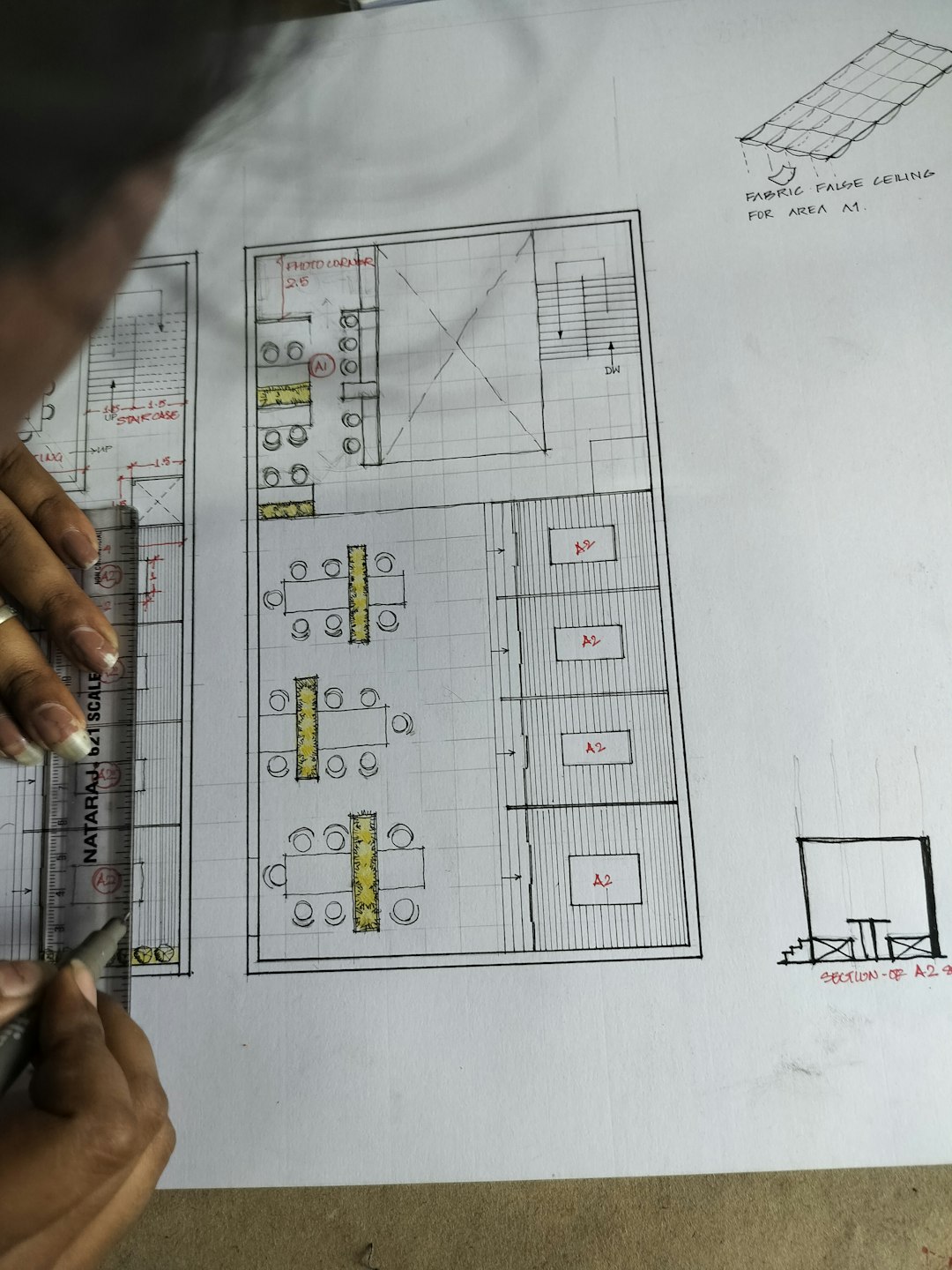
A welder can have excellent hand control and still lose time if the drawing is misunderstood. Fabrication begins before the arc starts: someone has to identify the right revision, find the joint on the print, understand the views, read the dimensions, interpret the weld symbol, and connect that information to the procedure and inspection requirements. Blueprint literacy is not office paperwork added to welding. It is part of how a shop communicates the job.
A drawing gives the shop a shared reference
AWS Welding Digest describes drawings as a common ground that lets designers, fabricators, quality personnel and other departments communicate about the same physical result. That matters because a weld does not exist by itself. It belongs to a part with dimensions, orientation, material, revision history and an intended function.
When a drawing is clear and the people using it know how to read it, fewer decisions depend on memory or verbal shorthand. The welder can point to the joint, the fitter can point to the dimension, and inspection can point to the same callout. That shared reference is one of the quiet systems that separates repeatable shop work from improvisation.
Revision control is a craftsmanship issue
A technically good weld made to the wrong revision is still the wrong work. AWS Welding Digest specifically emphasizes checking revision numbers because errors can enter the job during bidding, planning and fabrication. On the floor, revision control can be as simple as stopping long enough to confirm that the print at the table is the one the job is actually being built to.
That habit is not bureaucracy for its own sake. It protects material, labor and trust. A fabrication team that treats revision checks as part of the setup can catch a change before parts are cut, fit or welded.
Welding symbols compress instructions
AWS’s current Understanding Welding Symbols course teaches the basic components of welding prints, joint and weld types, symbol placement, supplementary information and how welds relate to joints. The point of the symbol system is efficiency: a small collection of standardized marks can communicate where the weld goes and what form it should take without turning every drawing into a paragraph of prose.
That compact language only works when the reader slows down enough to interpret it correctly. Arrow-side versus other-side placement, groove type, contour, size, length, pitch, all-around and field-weld information can change what the fabricator is expected to do. Production work still has to follow the governing drawing, applicable standard and WPS.
Reading drawings is a shop skill, not a one-time class
Blueprint reading improves through use. The welder sees how a detail view clarifies a joint that looked ambiguous in plan view. A fitter learns which dimensions control assembly and which dimensions are reference information. An inspector learns where the symbol, note and acceptance requirement intersect. Over time, the drawing stops looking like a page of lines and becomes a map of the job.
That learning should remain active even for experienced people. New CAD conventions, customer standards, project-specific notes and revision systems can change the way information is presented. Asking for clarification is not weakness; it is better than making an undocumented assumption that becomes expensive after welding.
A practical drawing check before the arc starts
- Confirm the drawing number and revision.
- Locate the exact joint in the correct view or detail.
- Read dimensions and notes before relying on scale.
- Interpret the weld symbol and compare it with the WPS or work instruction.
- Confirm material and part identification.
- Ask for clarification when information conflicts or is incomplete.
Why this matters to welding culture
Craftsmanship is often described as what happens at the puddle, but professional shop culture is broader. It includes how people receive information, how they verify it, how they hand work to the next person, and how they keep an avoidable mistake from traveling downstream. Reading the drawing carefully is one of those habits. It connects individual skill to the larger system that makes a fabricated assembly repeatable.
For more welding culture, shop-life stories and practical resources built around the people behind the trade, visit The Welders Life.
Sources
Featured image is contextual technical-drawing photography and is not an AWS training image or a production drawing for a specific job.

Leave a Reply