Wendy the Welder history sits just outside the best-known image of America’s World War II home front. Rosie the Riveter became the enduring symbol, but thousands of women also learned to weld and worked in shipyards, Navy yards and heavy manufacturing. Their story is worth remembering because it shows something the welding trade still recognizes: a worker can start with almost no trade background, learn under pressure, become skilled and take real pride in work that has to hold.
This is not a story about a single fictional mascot. “Wendy the Welder” became a less-famous counterpart to Rosie, while the real history belongs to women such as Marian Wynn, Agnes Moore, Kay Morrison, Mary Torres and Virginia Wilder Parker, whose work is preserved in National Park Service oral histories and museum collections.
Wendy the Welder was more than a wartime nickname
The Smithsonian’s National Museum of American History describes “Wendy the Welder” as the lesser-known counterpart to Rosie the Riveter: women who welded and assembled steel plate into troop ships, supply ships, submarines and aircraft carriers. The National Park Service likewise notes that thousands of women welders participated in wartime shipbuilding.
The name matters less than the work. Welding had become central to fast ship production, and shipyards needed people who could learn the process, pass tests and produce acceptable work in difficult positions. That opened a door that had largely been closed to women before the war.
The training could be fast, but the work was real
National Park Service histories make the compressed learning curve clear. Marian Wynn arrived at Richmond Kaiser Shipyard #3 and worked as a pipe welder from 1944 to 1945. Agnes Moore entered the Richmond shipyards with no previous understanding of welding, completed a short wartime training class and went on to become a journeyman welder.
That speed should not be mistaken for casual standards. Wartime production compressed training because the need was enormous, but workers still had to demonstrate that they could do the job. Kay Morrison’s NPS history records that she trained in welding, later passed a Navy welding test and qualified as a journeyman welder. Virginia Wilder Parker’s work at the Charlestown Navy Yard was evaluated closely enough that supervisors used radiography on her welds.
The job looked like welding, not a publicity poster
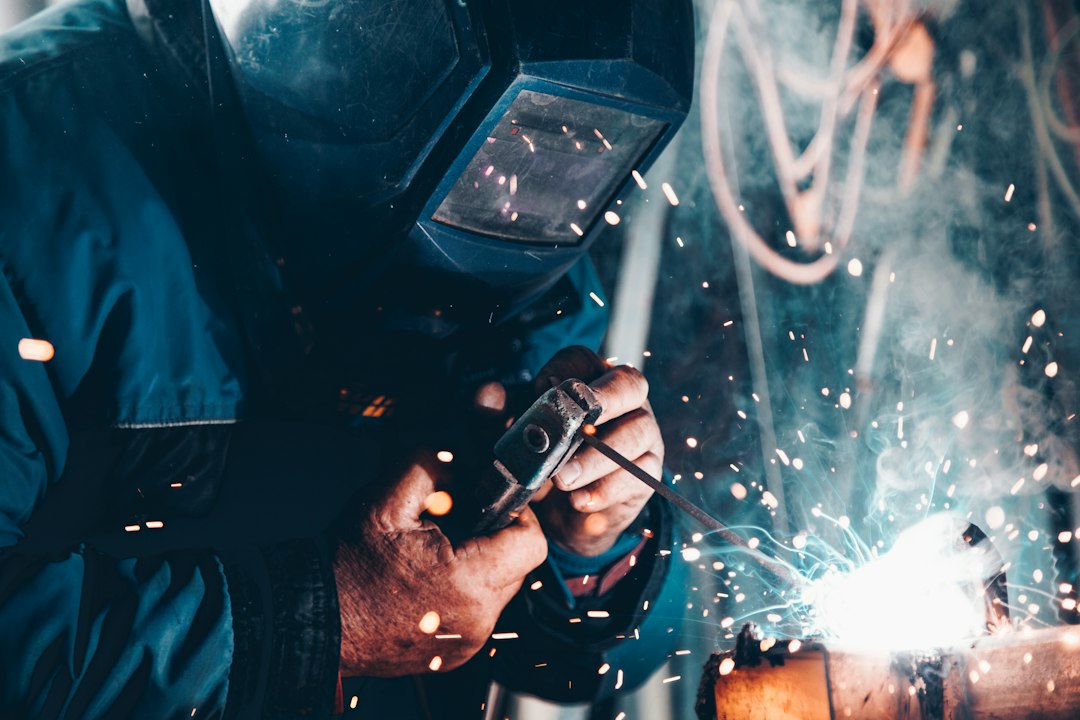
The surviving stories are full of details that sound familiar to anyone who has spent time around a fabrication shop: leathers, helmets, awkward positions, hot slag, long shifts, noise and the constant need to keep working safely around other trades. Agnes Moore described welding in cramped and poorly lit ship spaces. Marian Wynn worked pipe. Kay Morrison welded large ship sections that were later moved into position by crane.
Those details matter because they pull the story away from nostalgia. The women were not simply “helping out.” They were doing production work with real hazards and quality expectations.
What their stories say about craftsmanship
One of the strongest threads in these accounts is pride in competence. The work had an obvious purpose, but pride also came from being able to perform a difficult trade well. That is a familiar part of welding culture today. A good weld is not impressive because the operator makes a speech about it. It is impressive because the joint fits, the process is controlled, the finished work meets the requirement and the next person can trust it.
World War II did not erase barriers in the trades. In fact, several women’s histories describe discrimination before hiring and loss of welding jobs after the war as returning veterans were given priority. Remembering the accomplishment without remembering those limits would flatten the history.
The trade changed—and then tried to change back
Wartime labor shortages created opportunities that would have been difficult to imagine only a few years earlier. Women entered welding, drafting, electrical work, painting, inspection and many other shipyard jobs. When the war ended, many were pushed back out of industrial roles even when they wanted to stay.
Kay Morrison’s NPS biography says she was disappointed that she could not continue in the profession after the war. Virginia Wilder Parker also wanted to keep welding and later found a welding project through a family connection. Those stories are useful because they separate proven ability from access to opportunity.
Why this history still belongs in welding culture
The welding trade often talks about experience as something handed down: the person who shows a new hire how to hold a short arc, the instructor who makes a student grind out a bad root and try again, the veteran fitter who knows where distortion will move before the tack is made. Wartime women welders became part of that history even though many were not allowed to remain in the trade long enough to build conventional careers.
- Skill can be learned quickly, but competence still has to be demonstrated.
- Good training combines process knowledge with repeated hands-on work.
- Quality standards matter most when production pressure is high.
- A trade loses something when capable workers are excluded from the path to long-term experience.
- The culture of welding is bigger than the people who received the most famous poster.
If stories about the people, habits and culture around the trade are what you enjoy most, The Welders Life carries that side of welding beyond parts and process charts—why the work matters, how the trade feels and what welders carry with them after the hood comes up.
A better way to remember “Rosie”
Rosie the Riveter deserves her place in American memory, but welding history is richer when Wendy stands beside her. The women who learned to weld during World War II were not a footnote to shipbuilding. They were workers who passed tests, made production welds, worked difficult shifts and helped prove that craft ability is not owned by one gender.
The useful legacy is not a slogan. It is a shop-floor lesson: when people are given serious training, real standards and a chance to do the work, skill has a way of showing itself.

Leave a Reply