The part that stops a welding shift is not always expensive. Sometimes it is a contact tip, a plasma electrode, a grinding wheel, a tungsten size nobody checked, or the last pair of the correct gloves. The dollar value may be small. The interruption is not.
That is what makes shop consumables easy to underestimate. Individually, they look like minor purchases. Together, they form the daily operating layer between a stocked shop and a stalled one. When no one has a dependable count, ordering becomes a cycle of emergency runs, overbuying familiar items, and discovering shortages only after the job is already set up.
A useful inventory system does not need to behave like a warehouse platform. For many welding and fabrication shops, it needs to do a few basic things consistently: identify the item, record what is physically on hand, define when attention is required, show what should be reviewed for reorder, and preserve enough usage history to spot a pattern.
The physical count remains the truth
Usage logs are helpful, but welding shops are messy places for perfect transaction data. A contact tip gets handed to another booth. A sleeve of electrodes moves to a field truck. Abrasives are pulled during second shift and entered later—or not at all. If every missed entry automatically changes the official count, the spreadsheet becomes confidently wrong.
A better small-shop approach is to keep the physical count authoritative. Use logged usage to understand velocity and forecast pressure, then reconcile the master quantity through an actual count. That separation makes the forecast useful without pretending the log captured every movement.
A reorder point is a decision trigger
A reorder point is not the same as an automatic purchase order. It is the quantity that tells someone to stop and review the item. The right threshold depends on usage, supplier lead time, package quantity, job requirements, storage limits, and the cost of being wrong.
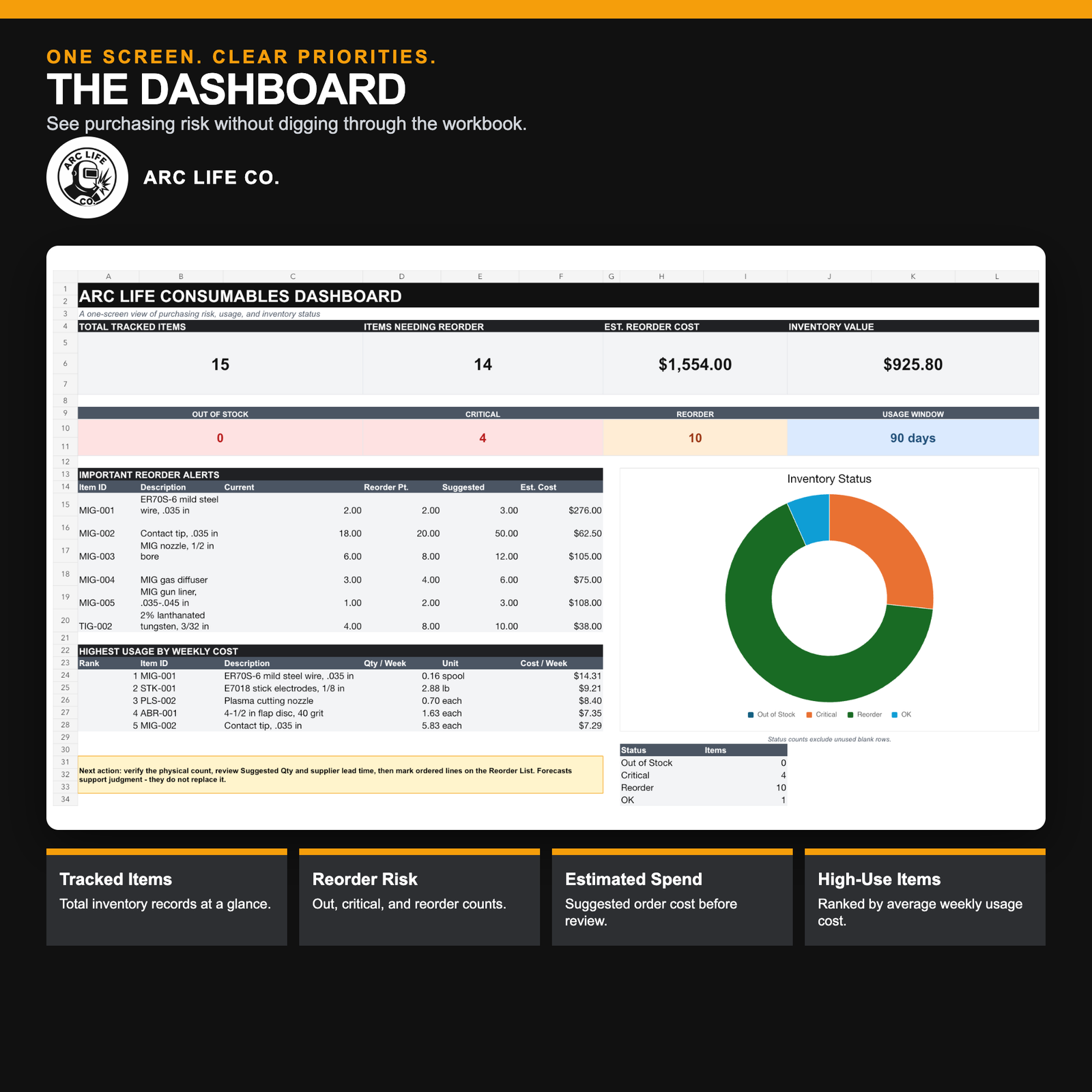
For a steady-use item with a dependable supplier, the threshold may be simple. A specialized torch component or PPE item with a long lead time deserves more margin. A useful reorder list should bring those decisions together: current count, reorder point, suggested quantity, estimated cost, preferred supplier, and the person responsible for approving the purchase.
Burn rate is useful when it stays humble
Average weekly usage can help identify items that deserve closer attention. It can also estimate how many days of stock may remain. Those numbers are planning signals, not promises. A rush job, a new operator, a process change, scrap, or an incomplete log can shift the result quickly.
The same restraint applies to downtime estimates. Multiplying labor and production exposure by the hours lost can make a cheap stockout visible to management. It does not turn the estimate into an accounting entry. The point is to compare the cost of reasonable stock with the operational consequence of having none.
One review beats five emergency messages
The process works best when it has a cadence. Count the critical items, review anything at or below its reorder point, verify suggested quantities and supplier details, mark what has been ordered, and check high-use items for unusual movement. A ten-minute review on a fixed day is more dependable than waiting for five people to report shortages in five different ways.
That review should include more than filler metal and torch parts. Plasma consumables, abrasives, PPE, gas-handling accessories, shop chemicals, saw blades, and other recurring items all compete for attention. The useful categories are the ones that match the way the shop actually buys, stores, and uses material—not the categories that look neat in a template.
A practical starting system
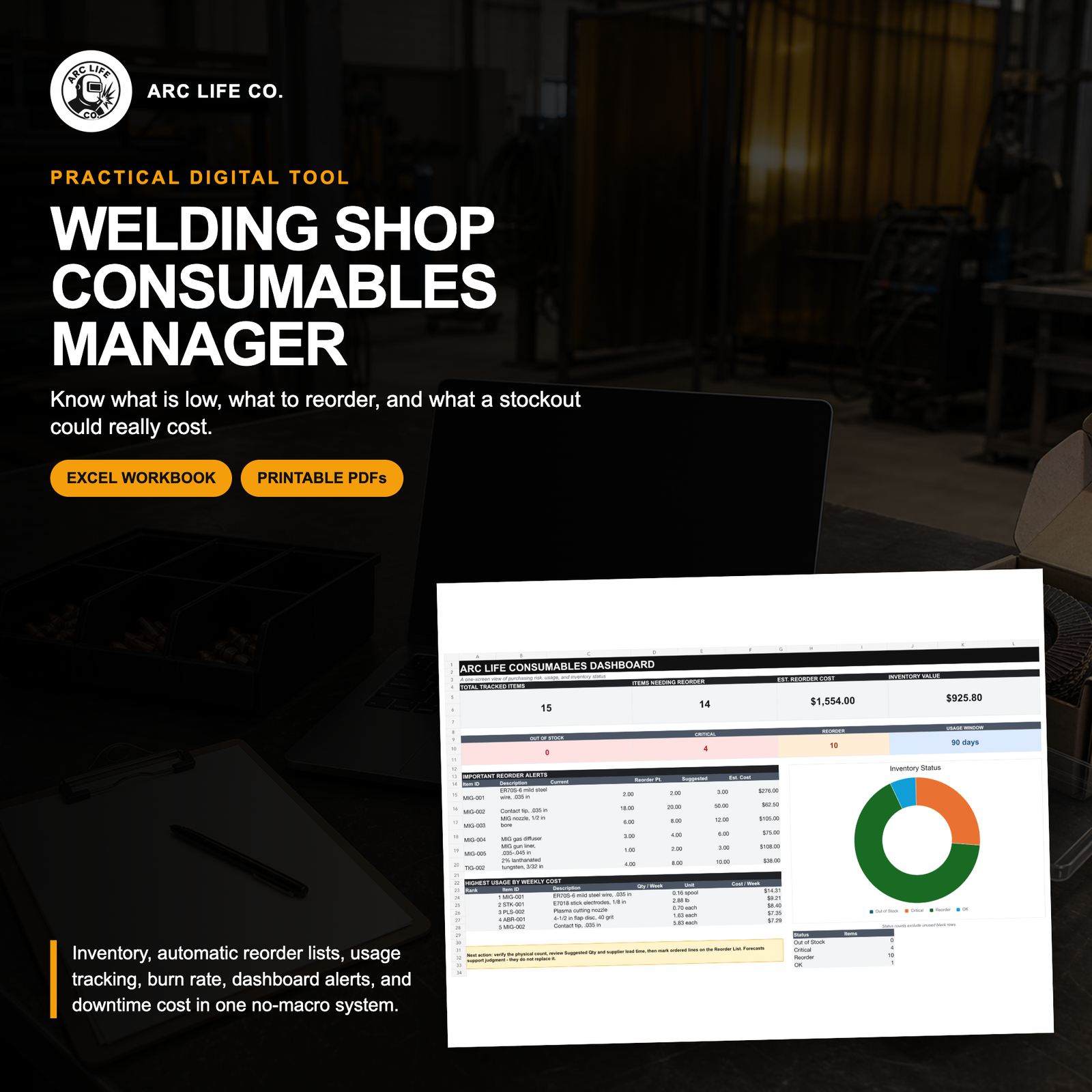
The Arc Life Welding Shop Consumables Manager is an Excel-based system designed around that small-shop workflow. It includes a master inventory, reorder list, usage log, burn-rate analysis, downtime cost calculator, dashboard, setup lists, a quick-start guide, and five printable forms. It uses standard formulas and contains no macros. The current workbook supports up to 200 recurring consumables.
It deliberately does not subtract every logged use from the official count, connect to suppliers, create purchase orders, or place orders. Those limits matter. The physical count remains authoritative, and a person still verifies the unit, quantity, price, supplier, and purchasing decision before acting. Excel 2019 or later is recommended because other spreadsheet applications may alter formulas, charts, validation, or print settings.
The value is not that the workbook “knows” what to buy. It gives the shop one place to see what is low, what is moving, and what deserves a decision before the next shift starts looking for a part that should have been on the shelf.
Shop question: Which low-cost consumable has caused the most expensive interruption in your shop?
See both shop-management systems in the Arc Life Digital Tools collection.
Leave a Reply