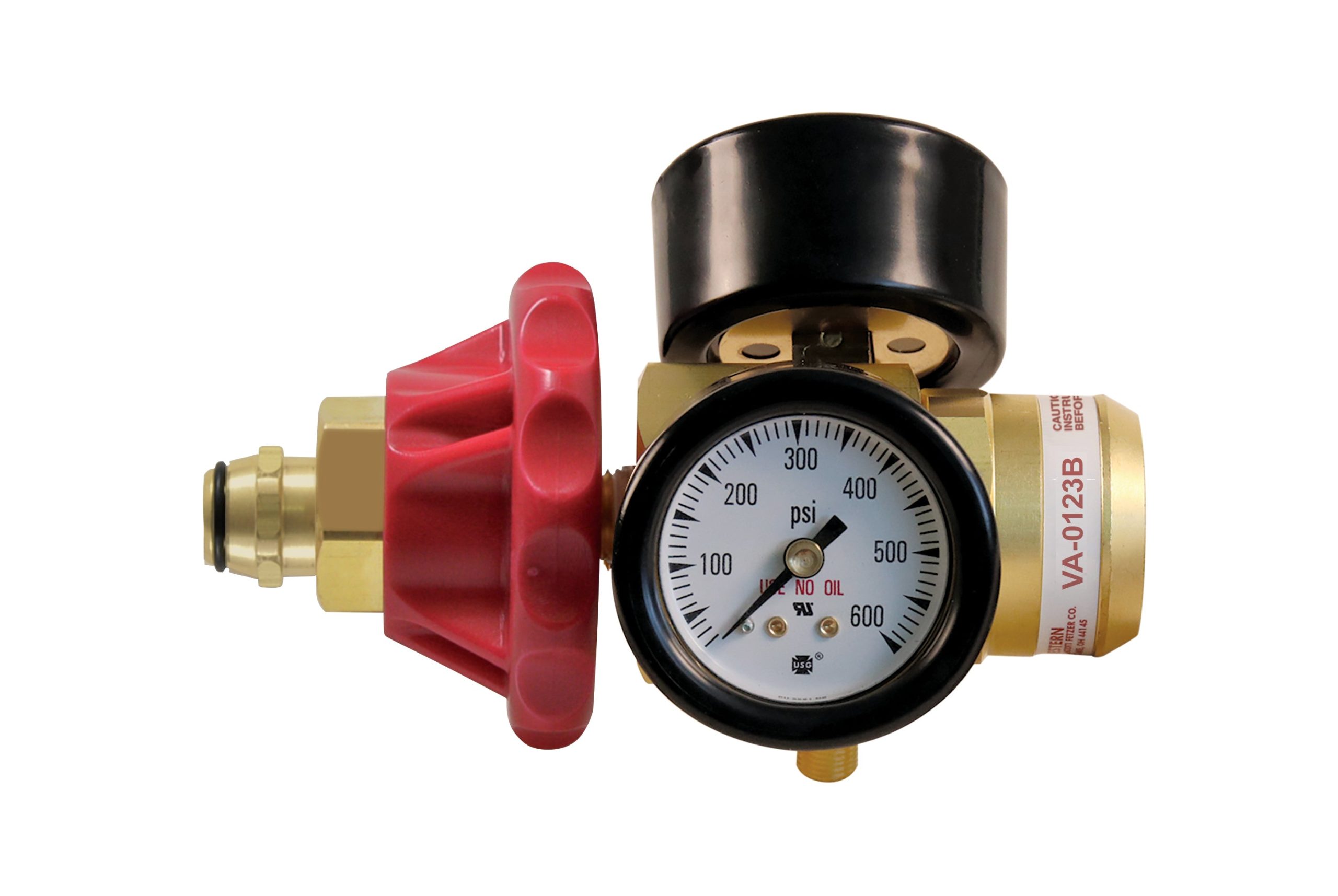

The Western Enterprises VA-0123B is an air-acetylene HVAC regulator used on air-acetylene torch systems where controlled gas delivery matters. For maintenance buyers, welders, and HVAC support teams, the main value is straightforward: a regulator is the control point between the cylinder and the torch setup. If that control point is wrong, the flame becomes difficult to manage, heat input becomes inconsistent, and troubleshooting gets pushed downstream to the torch, hose, or tip.
This breakdown stays on the practical side. It focuses on what to verify before purchase, what to inspect during setup, and where this part fits in a typical air-acetylene work cell. Product details that are not confirmed in the source material are marked Unknown (Verify).
Key Takeaways
- The VA-0123B is identified as an air-acetylene HVAC regulator with a CGA-520 inlet connection.
- It is intended for air-acetylene torch setups used in brazing and light heating applications.
- Stable gas delivery depends on the regulator, cylinder connection, hose condition, and torch tip condition working together.
- Do not assume hose or torch compatibility beyond what is confirmed for your setup. Verify all connection types before ordering.
- Unverified technical details such as outlet pressure range, gauge style, and fitting configuration should be treated as Unknown (Verify).
What the VA-0123B Does
In an air-acetylene setup, the regulator controls gas delivery from the cylinder to the torch assembly. That matters because acetylene systems are sensitive to improper handling, damaged sealing surfaces, and mismatched connections. A regulator that is correctly matched to the cylinder and hose assembly helps the operator make repeatable adjustments at the torch instead of fighting unstable flow at the source.
Based on the provided product description, the VA-0123B uses a CGA-520 inlet connection and includes A-size fittings for common HVAC torch or hose hookups. Those connection details are useful, but the exact field application still depends on the rest of the system. Verify every interface before use.
Inspect Before You Buy
Use this checklist before placing the regulator into service or approving it for stock:
- Check cylinder connection: Verify the cylinder valve connection is CGA-520 and not another acetylene or gas standard.
- Inspect outlet connection: Confirm the hose or torch side uses the expected A-size fitting arrangement. If any fitting is uncertain, mark it Unknown (Verify).
- Inspect condition: Look for damaged threads, dented body surfaces, or contamination in the inlet and outlet ports.
- Check seals: Verify that sealing surfaces and washers are clean and properly seated.
- Confirm service intent: Use only where the setup is intended for air-acetylene HVAC work. Do not assume it is interchangeable with other fuel-gas regulator types.
Setup and Support Checks
Before putting the regulator into service, follow a basic verification routine:
- Verify cylinder identity: Confirm the gas cylinder is the correct type for the regulator inlet.
- Inspect the inlet threads: Make sure the threads are clean and undamaged. Do not force the connection.
- Check hose condition: Inspect the hose for cracks, abrasion, heat damage, and loose fittings.
- Verify torch compatibility: Confirm the torch and tip are appropriate for air-acetylene service.
- Leak-check after assembly: Perform a leak check using your site-approved method before ignition.
- Test adjustment response: Open and adjust the system slowly. If control is erratic, stop and inspect the regulator, hose, and torch tip before proceeding.
If the flame will not stabilize, do not jump straight to the regulator as the only cause. Check the hose, tip, torch body passages, and cylinder valve condition first. In many support calls, the regulator is only one part of a broader restriction or leak issue.
Troubleshooting Guide
Problem: Flow will not adjust smoothly.
Check and inspect the adjustment mechanism, inlet connection, and hose for restrictions. Verify the cylinder is opened correctly and that the torch tip is not plugged. If the regulator response is still abnormal, remove it from service for evaluation.
Problem: Connection leaks at the cylinder or outlet.
Inspect the mating threads, sealing surfaces, and any washers or adapters used in the system. Verify the connection standard before tightening further. Do not over-tighten damaged parts.
Problem: Inconsistent heating at the torch.
Check the regulator setting, hose condition, and torch tip condition. Verify that the tip is appropriate for the work being performed. If the system was recently changed, confirm no adapter or fitting mismatch was introduced.
Problem: Part received but fit is uncertain.
Stop and verify the cylinder connection, hose fitting, and torch connection against the actual equipment in hand. If a detail is not confirmed, list it as Unknown (Verify) rather than forcing installation.
Product and Parts Notes
The available source material identifies the Western Enterprises VA-0123B as the product to review. Beyond that, unconfirmed details such as gauge configuration, relief features, maximum delivery pressure, and accessory package contents are Unknown (Verify). Buyers should not rely on assumptions from similar regulators.
For procurement, the best practice is to match the regulator to the exact cylinder connection and the actual hose/torch interface used in the field. If your team stocks multiple air-acetylene setups, label them clearly by gas type and connection standard to reduce mix-ups at the point of use.
Safety Notes
- Use only with the correct gas and cylinder connection for the system. Do not improvise adapters without verifying compatibility.
- Keep all fuel gas equipment clean and protected from impact, oil, and contamination.
- Leak-check the assembled system before lighting the torch.
- Follow site rules for cylinder handling, ventilation, ignition, and shutdown.
- If any connection, seal, or operating detail is uncertain, stop and verify before use.
FAQ
Is the VA-0123B only for HVAC work?
It is identified as an air-acetylene HVAC regulator. That makes it relevant to HVAC brazing and related light heating work, but final suitability depends on your torch system and task requirements. Verify your application before purchase.
Does it fit every acetylene cylinder?
No. The source identifies a CGA-520 inlet connection. Only use it where that connection matches the cylinder and your setup. Other details are Unknown (Verify).
Can I assume the outlet fittings match my hose kit?
No. The source mentions A-size fittings for common HVAC torch or hose hookups, but you still need to verify the actual hose and torch connection in your shop. Do not assume compatibility.
What should I check first if the flame is unstable?
Check the hose, torch tip, cylinder valve, and regulator connections. A flame issue can come from several parts of the system, not just the regulator.
Sources Checked
- ArcWeld product page for Western Enterprises VA-0123B Air-Acetylene HVAC Regulator, CGA-520
Note: No WSP lookup page or filler metal finder page was provided for this topic, so no WSP or filler metal section was added.
Leave a Reply