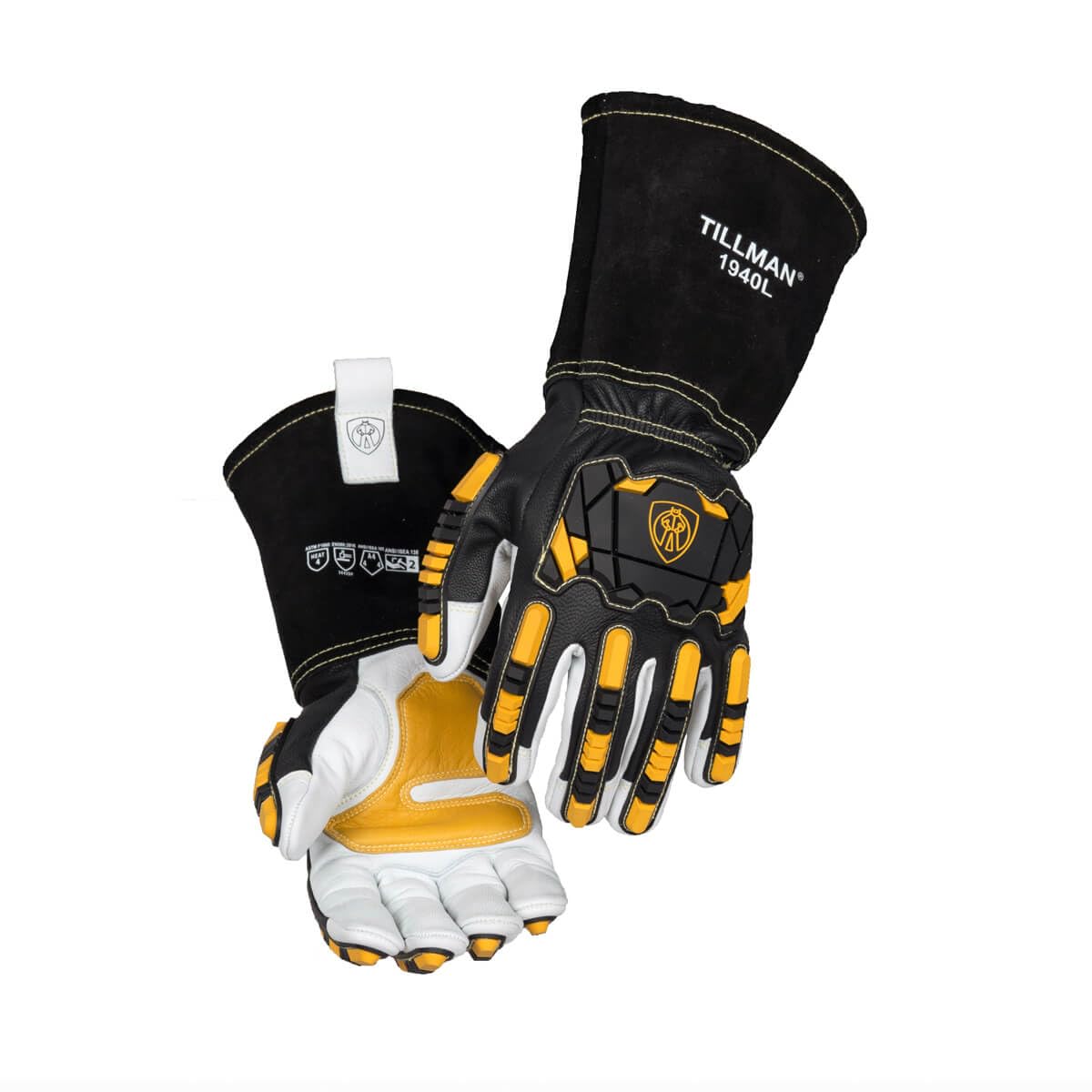

The Tillman 1940 Impact Welding & Metalworking Glove Goatskin, Large is positioned as a heavy-duty glove for welding and metalworking tasks where hand protection, grip, and impact resistance matter. For buyers and maintenance teams, the main question is not whether the glove looks rugged. The question is whether its construction, fit, and protection claims match the actual job hazards.
This breakdown stays on the practical side. It covers the stated features, what to inspect before issuing the glove, and what to verify during use. If you are sourcing PPE for a shop, treat this as a purchase support guide, not a procedure approval document.
Key Takeaways
- Goatskin leather is typically used where dexterity and durability both matter.
- The listed impact-rated design suggests added protection on the back of the hand and fingers, but exact impact coverage details are Unknown (Verify).
- Stated cut, abrasion, and puncture resistance claims should be matched to the actual hazard profile before issue.
- Water-resistant treatment, gauntlet cuff, and Kevlar stitching indicate a glove built for welding and general metal handling.
- Size and hand fit still need to be checked at point of use. Protective gloves fail when the fit is wrong.
Product Overview
According to the available product information, this glove uses goatskin leather with a para-aramid and steel palm liner. It is described as impact-rated and designed for demanding welding jobs. The listed protection claims include A4 cut resistance and Level 4 abrasion and puncture resistance. Heat resistance is stated up to 500F. The glove is also described as Watershield treated, with a gauntlet cuff and Kevlar stitching.
For a buyer, these are the details that matter most: leather type, liner type, heat claim, seam construction, and cuff style. Those elements determine how the glove may perform around hot material, sharp edges, and repeated handling. They do not remove the need for task-specific review.
Check the Glove Against the Job
Before purchase or issue, check the work task and inspect the hazard list. The glove may be suitable for welding support, fabrication handling, grinding support, or maintenance work, but each job has different exposure.
Check:
- Hot surface contact risk
- Spatter exposure
- Sharp edge handling
- Pinch and crush exposure
- Need for dexterity at the fingers and thumb
- Need for wrist and forearm coverage
Inspect:
- Leather thickness and consistency across both gloves
- Seam quality at the fingers, thumb, and cuff
- Condition of stitching, especially at high-wear points
- Any stiffness or surface damage before first use
- Whether the gauntlet cuff covers the wrist and overlaps the sleeve correctly
Verify:
- Hand size against the glove size offered
- Grip with dry hands and with light contamination expected in the shop
- Range of motion for torch handling, part placement, and tool control
- Whether the glove supports the required tactile feel without forcing oversize fit
Troubleshooting and Support Notes
If the glove does not perform as expected, look first at fit, wear condition, and task mismatch. Many glove complaints are not material failures. They are use-condition failures.
Problem: Reduced dexterity
- Check whether the glove is too large for the hand.
- Inspect for liner bulk in the palm or fingers.
- Verify whether the task needs lighter gloves or more precise finger movement.
Problem: Heat transfer felt sooner than expected
- Inspect for wear spots, thinning leather, or damaged seams.
- Verify whether the glove was used on contact hotter than the stated heat claim.
- Check whether the glove is dry, clean, and in serviceable condition.
Problem: Grip feels inconsistent
- Inspect for oil, moisture, or grinding dust on the palm.
- Verify whether the Watershield treatment is still functioning as intended.
- Check whether the job requires a different glove surface or a replacement pair.
Problem: Premature seam wear
- Inspect stitch lines at the index finger, thumb crotch, and palm.
- Verify whether the glove is being used for edge dragging, pulling, or rough handling beyond its expected duty.
- Remove from service if seams open or stitching is compromised.
What the Stated Protection Claims Mean
The listed A4 cut resistance, Level 4 abrasion resistance, and Level 4 puncture resistance indicate a protective glove suited to more demanding handling tasks. However, those ratings should be treated as product claims for selection review, not as a guarantee for every workplace condition.
For welders and maintenance buyers, the practical question is whether the glove protects against the specific edges, heat levels, and handling patterns in your shop. If the glove will be used near sharp plate edges, rough castings, or repeated part transfer, verify that the protection level is acceptable for the task.
The stated heat resistance to 500F is useful for brief contact exposure planning, but it does not mean unlimited thermal protection. Contact duration, hot metal mass, and moisture all affect real-world performance. Use the claim as a starting point and verify against actual work conditions.
Fit and Issue Check
Even a well-built glove can fail if the fit is wrong. Large gloves should allow a secure grip without excess finger length or palm slack.
Check fit by doing the following:
- Put the glove on with the hand in a relaxed position.
- Close the hand fully and confirm the fingers do not bind.
- Grip a common shop tool or a scrap workpiece.
- Check that the cuff does not ride up and expose the wrist.
- Verify that the glove does not rotate during use.
If the glove shifts on the hand, the issue is not just comfort. Loose fit can reduce control and increase snag risk.
Product / Parts Section
This draft is based on the listed ArcWeld product for the Tillman 1940 Impact Welding & Metalworking Glove Goatskin, Large. The provided product reference is:
Tillman 1940 Impact Welding & Metalworking Glove Goatskin, Large
Use the product page as the source for the current listing details. Do not assume the available size, color, or specifications beyond what is shown on the page. The short description provided lists a size conflict, so size details are Unknown (Verify) and should be checked before purchase or issue.
Safety Notes
- Do not use damaged gloves with open seams, burned leather, or torn cuffs.
- Do not assume one glove covers all welding and handling hazards.
- Verify the glove is dry before use where heat exposure is expected.
- Inspect both gloves as a matched pair before issuing to a worker.
- Match glove protection to the task, including sharp-edge handling and hot material transfer.
FAQ
Is the Tillman 1940 glove only for welding?
No. The product is described as a welding and metalworking glove, so it may be used for related shop handling tasks. Verify job fit before issue.
Does the glove protect against cuts and punctures?
The provided description claims A4 cut resistance and Level 4 abrasion and puncture resistance. Treat those as product claims and verify them against your hazard assessment.
Can this glove be used for hot work near weld spatter?
It is described as a welding glove with heat resistance to 500F, but that does not guarantee protection in every hot-work condition. Check actual exposure, contact time, and glove condition.
Why does fit matter so much?
Poor fit reduces dexterity, grip control, and coverage at the wrist. In welding support work, that can increase snag risk and reduce handling accuracy.
Sources Checked
- ArcWeld product page: Tillman 1940 Impact Welding & Metalworking Glove Goatskin, Large
- Provided product reference and short description in the task brief
For buyers and shop leads, the practical approach is straightforward: verify fit, inspect construction, and compare the stated protection claims to the real job. If the glove matches the task, it can be a useful option for welding and metalworking support. If the task exceeds the glove’s verified protection, select a different PPE option.
Leave a Reply