Category: Abrasive & Drill Equipment

  • Drill Bit Chatter When Drilling Steel

    Drill Bit Chatter When Drilling Steel

    Drill bit chatter in steel usually points to a setup problem, a tool condition problem, or both. The bit is not cutting smoothly, so it starts to bounce, squeal, or leave a rough hole. In steel, the most common causes are incorrect speed, too little feed pressure, poor workholding, a dull bit, or a walking start point.

    Key Takeaways

    • Chatter is usually caused by low feed pressure, excess speed, or weak workholding.
    • A dull or damaged bit will chatter even if the drill settings are correct.
    • Use a stable start point and keep the work clamped solidly.
    • Reduce speed before increasing force.
    • Check chip flow. If the bit is rubbing instead of cutting, chatter gets worse.

    Troubleshooting Drill Bit Chatter in Steel

    1) Check workholding first

    Loose material is one of the fastest ways to create chatter. If the part can move, flex, or vibrate, the bit will not stay engaged.

    • Clamp the work directly to a stable bench or fixture.
    • Support thin stock so it does not lift as the bit breaks through.
    • Confirm the drill point is not pushing the part sideways.

    2) Confirm speed is not too high

    Excess RPM can make the bit skim the surface instead of cutting cleanly. That increases heat and vibration.

    • Reduce speed if the bit is squealing, vibrating, or polishing the surface.
    • Use a lower speed on larger bit diameters and harder steel.
    • If the drill has variable speed, test a slower setting before changing bits.

    3) Increase feed pressure if the bit is rubbing

    Too little pressure lets the cutting edges bounce across the material. The bit needs enough feed to stay engaged.

    • Apply steady pressure, not a sharp push.
    • Do not let the bit spin without cutting.
    • If chatter improves only when you push harder, the previous feed was too light.

    4) Inspect the bit condition

    A dull, chipped, or uneven bit can cause chatter even in a solid setup. Check the cutting edges and point geometry.

    • Look for rounded lips, chipped edges, or discoloration from heat.
    • Replace damaged bits. Regrinding quality is Unknown (Verify).
    • Use the correct bit type for the steel and hole size.

    5) Start the hole cleanly

    If the bit walks before it bites, it can start vibrating as soon as it touches the surface.

    • Use a center punch or a stable pilot mark.
    • Start at controlled speed and keep the drill square to the work.
    • For critical holes, a pilot hole may help. Pilot size is Unknown (Verify).

    6) Clear chips during drilling

    Packed chips increase rubbing and heat. That can turn into chatter fast, especially in deeper holes.

    • Peck drill when needed to break chips and clear the flute.
    • Do not force chips to re-cut if they are clogging the hole.
    • Use cutting fluid if your procedure allows it. Product-specific fluid compatibility is Unknown (Verify).

    7) Check drill and machine stability

    Runout, worn bearings, loose chucks, or flex in the setup can amplify chatter. If the machine itself is unstable, the bit cannot cut smoothly.

    • Confirm the bit is seated correctly in the chuck or holder.
    • Check for excessive spindle play or visible wobble.
    • Make sure the drill body is not flexing under load.

    Support Section: Bit Selection and Replacement

    If you are troubleshooting repeated chatter, it helps to rule out a worn or poor-quality bit. A fresh, properly sized bit is easier to evaluate than a damaged one.

    The Triumph Twist Drill T17HD 1/16-Inch to 1/2-Inch Drill Set by 64ths, Thunderbit Premium High Speed Steel is available as a general drill set option for steel, wood, and plastic applications. Specific steel grade limits, coating details, and exact performance data are Unknown (Verify).

    [ArcWeld product box:

    Triumph Twist Drill T17HD 1/16-Inch to 1/2-Inch Drill Set by 64ths, Thunderbit Premium High Speed Steel

    Triumph Twist Drill T17HD 1/16-Inch to 1/2-Inch Drill Set by 64ths, Thunderbit Premium High Speed Steel

    Unearth professional-grade performance with the Triumph Twist Drill T17HD Drill Set, a must-have for any serious tradesperson or DIY enthusiast. This exceptional drill set covers sizes from a precise 1/16-inch to a robust 1/2-inch in increments of 64ths, equipping you with a versatile array of drill bits for all your projects. Ideal for drilling into wood, metal, or plastic, these premium high-speed steel bits pro…

    View at Arc Weld Store
    ]

    Safety Notes

    • Secure the work before drilling. Never hold steel by hand.
    • Wear eye protection. Hot chips and broken edges can eject unexpectedly.
    • Keep hands clear of the rotating bit and moving chips.
    • Stop the drill before clearing a jam or adjusting the setup.
    • If the bit grabs, release pressure and reset the setup before continuing.

    FAQ

    Why does my drill bit chatter only at the start of the hole?

    That usually means the bit is walking, the surface mark is weak, or the feed pressure is too light at entry. A center punch and a slower, more controlled start often help.

    Why does chatter get worse as the hole gets deeper?

    Chip buildup, heat, and bit flex become more important as depth increases. Peck drilling and chip clearing usually help.

    Can a dull bit cause chatter in steel?

    Yes. A dull bit cuts poorly and tends to rub or bounce instead of biting cleanly.

    Should I go faster or slower to stop chatter?

    In most steel drilling cases, slower speed is the first adjustment. If the bit is only rubbing, you may also need more steady feed pressure.

    Do I need cutting fluid?

    Cutting fluid often helps reduce heat and improve chip flow, but exact recommendations depend on the steel type, drill type, and drilling method. Verify per procedure.

    Sources Checked

    Related Arc Weld Part

    Triumph Twist Drill T17HD 1/16-Inch to 1/2-Inch Drill Set by 64ths, Thunderbit Premium High Speed Steel

    Triumph Twist Drill T17HD 1/16-Inch to 1/2-Inch Drill Set by 64ths, Thunderbit Premium High Speed Steel

    Unearth professional-grade performance with the Triumph Twist Drill T17HD Drill Set, a must-have for any serious tradesperson or DIY enthusiast. This exceptional drill set covers sizes from a precise 1/16-inch to a robust 1/2-inch in increments of 64ths, equipping you with a versatile array of drill bits for all your projects. Ideal for drilling into wood, metal, or plastic, these premium high-speed steel bits pro…

    View at Arc Weld Store

    Related Weld Support Guides

  • Abrasive Cut-Off Wheel Not Lasting Long

    Abrasive Cut-Off Wheel Not Lasting Long

    If a cut-off wheel wearing fast is a recurring problem, the issue is usually not the wheel alone. Excess pressure, wrong wheel type, side loading, poor RPM matching, and poor technique all shorten wheel life. In many cases, the wheel is being used outside its intended cutting range.

    Key Takeaways

    • Excess feed pressure is one of the most common causes of fast wheel wear.
    • Use the wheel for cutting, not grinding or side-loading.
    • Match wheel type and grinder speed to the job. Unknown (Verify) if your wheel rating is not marked clearly.
    • Harder materials, incorrect angle, and poor clamping can make a wheel seem dull faster.
    • Inspect flanges, arbor condition, and grinder runout if wear is uneven or the wheel cuts slowly.

    Common Causes of Fast Wheel Wear

    1) Too Much Pressure

    If you have to force the cut, stop and check the setup. A cut-off wheel should remove material with steady, moderate feed. Heavy pressure overheats the abrasive, closes the cut, and can glaze or wear the wheel quickly.

    2) Wrong Wheel for the Material

    Wheel bond, grit, and thickness affect life. A wheel that works acceptably on mild steel may wear much faster on stainless, hardened material, scale, or thick section work. If wheel selection is uncertain, verify the wheel type against the work material.

    3) Side Loading or Grinding with the Edge

    Cut-off wheels are not designed for side pressure. Using the edge to enlarge a slot, correct alignment, or dress a cut will shorten wheel life and can fail the wheel.

    4) Grinder Speed or Setup Problem

    Check whether the grinder and wheel are properly matched. Unknown (Verify) if the wheel speed rating and grinder RPM are not clearly readable. A mismatch can increase wear and create unsafe cutting conditions.

    5) Poor Technique

    Starting the cut at the wrong angle, twisting in the kerf, or letting the wheel rub instead of cut all reduce life. Keep the wheel aligned with the cut and let the abrasive do the work.

    6) Workpiece Movement

    If the part is not clamped well, the cut can pinch the wheel. Pinching causes heat, drag, and premature wear. It also raises the chance of wheel damage.

    Troubleshooting Support

    Check the Cut Rate

    If the wheel sparks heavily but removes little material, it may be glazed, overloaded, or the wrong type for the job. If the wheel cuts well at first and then slows quickly, inspect for heat buildup and excessive pressure.

    Inspect the Grinder and Mounting

    Check flanges, nut condition, arbor fit, and wheel runout. A wheel that is mounted unevenly can wear fast on one side and cut poorly. For related diagnostics, see Cut-Off Wheel Vibration Troubleshooting: Grinder Wobble, Wheel Runout, Flange Problems, and Unsafe Cutting Symptoms.

    Verify the Cut Path

    Make sure the wheel is entering straight and the work is supported so the cut stays open. If the slot closes behind the wheel, friction rises and life drops.

    Review Wheel Condition

    Replace the wheel if it is cracked, chipped, uneven, or reduced below safe size. A worn wheel may still spin, but performance and safety both decline.

    How to Make a Wheel Last Longer

    • Use light, steady feed pressure.
    • Keep the wheel square to the cut.
    • Clamp the work securely.
    • Use the correct wheel type for the base material.
    • Do not use the wheel for grinding or prying.
    • Replace damaged or out-of-round wheels.

    Product / Parts Section

    No specific cut-off wheel product was provided for this topic. The only allowed product supplied for this draft is the Triumph Twist Drill T17HD 1/16-Inch to 1/2-Inch Drill Set by 64ths, which is not a cut-off wheel and is not a compatible replacement for abrasive cutting. Do not substitute drill bits for cut-off wheels.

    Safety Notes

    • Wear eye protection, face protection, gloves, and hearing protection.
    • Keep guards installed and positioned correctly.
    • Do not exceed the wheel rating. Unknown (Verify) if the wheel or grinder label is unreadable.
    • Never use a cracked, chipped, or side-loaded cut-off wheel.
    • Stand clear of the wheel plane during startup.

    FAQ

    Why does my cut-off wheel wear down so quickly?

    Most often because of too much pressure, wrong wheel selection, side loading, or a grinder setup problem.

    Should I push harder if the wheel is cutting slowly?

    No. First check the wheel type, clamping, grinder speed, and whether the wheel is rubbing or pinching in the cut.

    Can I use a cut-off wheel like a grinding wheel?

    No. Cut-off wheels are for cutting only. Side pressure and grinding use will shorten life and can create a safety hazard.

    What if the wheel wears unevenly?

    Check for arbor runout, damaged flanges, improper mounting, and side loading during the cut.

    Sources Checked

    Related Arc Weld Part

    Triumph Twist Drill T17HD 1/16-Inch to 1/2-Inch Drill Set by 64ths, Thunderbit Premium High Speed Steel

    Triumph Twist Drill T17HD 1/16-Inch to 1/2-Inch Drill Set by 64ths, Thunderbit Premium High Speed Steel

    Unearth professional-grade performance with the Triumph Twist Drill T17HD Drill Set, a must-have for any serious tradesperson or DIY enthusiast. This exceptional drill set covers sizes from a precise 1/16-inch to a robust 1/2-inch in increments of 64ths, equipping you with a versatile array of drill bits for all your projects. Ideal for drilling into wood, metal, or plastic, these premium high-speed steel bits pro…

    View at Arc Weld Store

    Related Weld Support Guides

  • Stainless Steel Wire Wheel Brush for Welding Surface Prep: 8mm Rotary Drill Attachment

    Why Surface Prep Determines Weld Quality

    A clean joint is a strong joint. Rust, mill scale, and oxidation trap moisture and contaminants that cause porosity, lack of fusion, and brittle welds. Many welders skip or rush surface prepโ€”a false economy.

    The CAARLA 8mm stainless steel wire wheel brush is a fast, effective surface prep tool. It fits standard 1/4″ drill chucks and removes rust, scale, and spatter without damaging the base metal.

    What Makes This Wire Wheel Different

    Stainless Steel Wire: Unlike carbon steel brushes, stainless wire resists corrosion and won’t leave black iron residue on your workpiece. Critical for stainless steel welding, where iron contamination causes pitting.

    8mm Diameter: Compact enough for tight corners and edges, large enough to cover area quickly. Fits most 1/4″ drill chucks and angle grinders with adapter.

    Crimped Design: Tightly wound bristles provide moderate hardnessโ€”aggressive enough to remove scale, gentle enough to preserve surface finish.

    Applications in the Welding Shop

    • Pre-weld cleaning: Remove mill scale and light rust from structural steel before MIG or stick welding.
    • Spatter removal: Clean spatter from previous welds on the same joint.
    • Stainless steel prep: Safe for 304, 316, and duplex stainless without iron contamination.
    • Aluminum prep: Works on aluminum oxide layer (use lower RPM to avoid heat buildup).
    • Pipe and tube: Ideal for cleaning the inside and outside of small-diameter pipe before welding.

    Specifications & Compatibility

    Arbor/Shank: 1/4″ (standard drill chuck size) Brush Diameter: 8mm (0.31″) Wire Material: Stainless steel (0.012″ wire gauge) Max RPM: 3,000โ€“6,000 (check your drill manual; angle grinders typically 10,000+ RPM) Weight: ~20 grams

    Compatible Tools:

    • Corded and cordless 1/4″ drills
    • Rotary tools with 1/4″ chuck adapter
    • Angle grinders with 1/4″ arbor adapter (use caution; high RPM may shorten brush life)

    Performance & Use

    Wire Wheel Brush 8mm Stainless Steel Wire Brush Rotary Drills Tools with Bowl-Shape Head and 2.35mm Shank for Metal Cleaning Polishing
    • 1.Effective cleaning and surface preparation, ensuring consistent and reliable performance on various surfaces
    • 2.Easy and smooth removal of severe corrosion, rust, paint, spatter and scale
    • 3.Enabling heavy-duty surface conditioning on expansive areas while minimizing the risk of scratching metal surfaces.
    • 4. This meticulous craftsmanship results in longer brush life, enhanced safety, smoother operation, and overall ease of use, making them a dependable choice for various surface conditioning applications
    • 5.Exceptional Durability: brushes boast outstanding durability.ensure stability even under high speeds and pressure, offering long-term use with minimal wear and tear

    Last update on 2026-06-17 / Affiliate links / Images from Amazon Product Advertising API

    What to Compare Before You Buy

    • Wire Material: Stainless steel (this brush) vs. carbon steel vs. brass. Stainless won’t rust or contaminate; brass is softer for delicate surfaces; carbon steel is cheapest but rusts and leaves residue.
    • Brush Diameter: 8mm (compact) vs. 3″ (wider coverage) vs. 6″ (bench grinder). Smaller is better for detail work; larger is faster for flat surfaces.
    • Wire Gauge & Stiffness: 0.012″ stainless (moderate hardness) vs. 0.020″ (aggressive) vs. 0.008″ (gentle). Stiffer wire removes scale faster but may scratch.
    • Arbor Size: 1/4″ (drill chuck) vs. 5/8″ (bench grinder) vs. M14 (angle grinder). Verify your tool before buying.
    • Price Per Unit: Single brush at ~$8โ€“$12 vs. multi-packs at ~$3โ€“$5 per brush. Sets offer better value if you need backups.

    Comparable Amazon Picks (Optional)

    How to Use Safely

    1. Wear PPE: Safety glasses (wire fragments can fly), leather gloves, and a dust mask if using in a dusty environment.
    1. Secure the workpiece: Clamp or vise the part so it won’t spin or slip.
    1. Start the drill at low speed (1,000โ€“2,000 RPM), then increase gradually.
    1. Apply light pressure: Let the brush do the work. Heavy pressure causes heat, wire breakage, and poor surface finish.
    1. Keep the brush perpendicular to the surface for even cleaning.
    1. Stop and inspect every 10โ€“15 seconds to check progress and wire condition.

    Maintenance & Longevity

    • Clean after use: Tap the brush gently against a scrap piece to remove embedded debris.
    • Check for wire loss: If bristles are noticeably shorter or sparse, replace the brush.
    • Store dry: Stainless steel resists rust, but moisture can cause corrosion at the arbor. Store in a dry toolbox.
    • Typical lifespan: 20โ€“50 hours of active use, depending on material hardness and pressure applied.

    When to Replace

    Replace the brush when:

    • Wire bristles are noticeably worn (shorter than 5mm).
    • Bristles are missing or broken in clusters.
    • The brush no longer removes scale or spatter effectively.
    • The arbor is bent or damaged.
  • Shark 4.5″ Stainless Steel Knotted Wire Wheel: Heavy-Duty Surface Prep for Angle Grinders

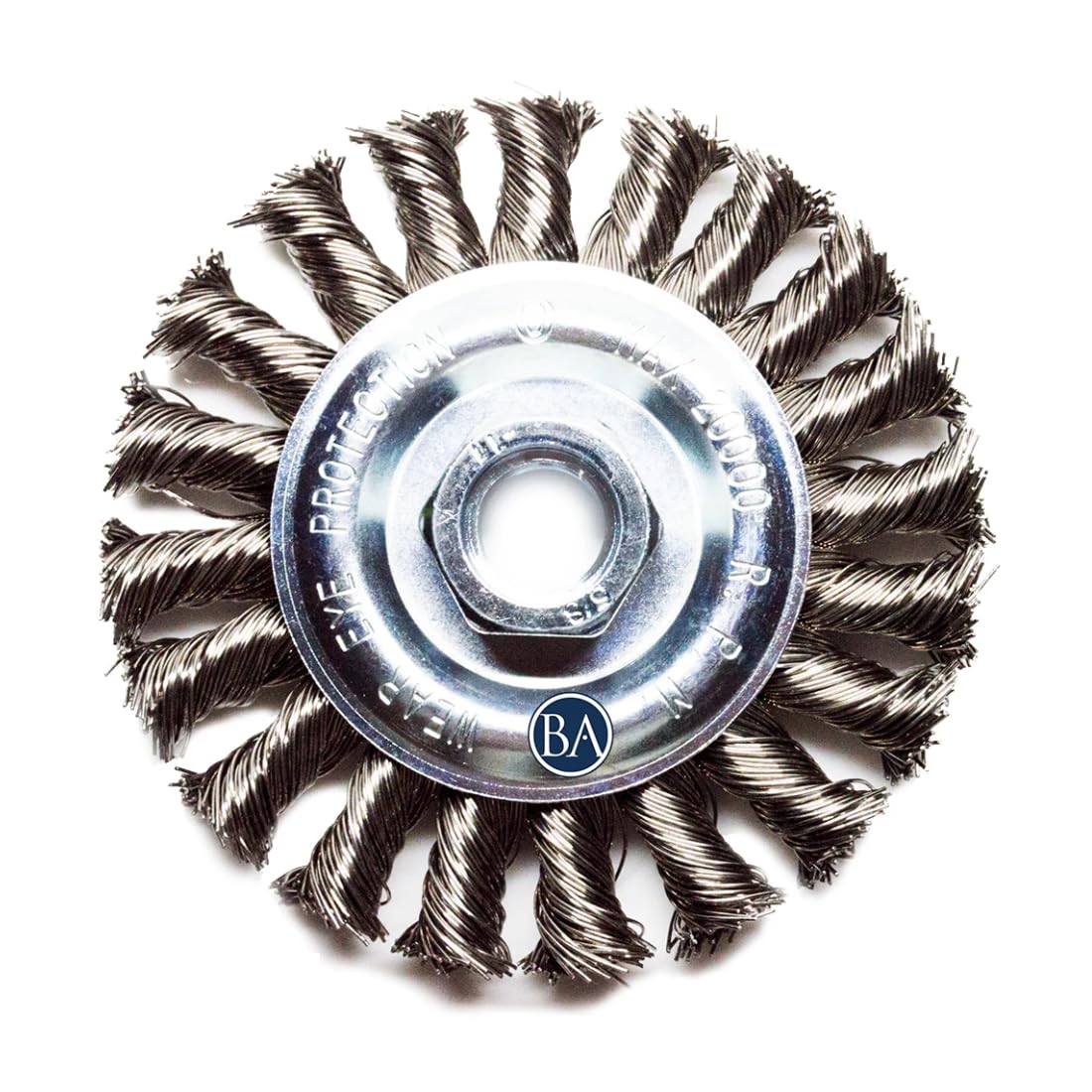
    Rust, scale, and mill scale don’t disappear on their own. Before you strike an arc, your base metal needs to be cleanโ€”and a quality wire wheel is the fastest way to get there. The Shark 4.5″ stainless steel knotted wire wheel is built for aggressive cleaning on angle grinders, removing rust and surface contaminants without damaging the underlying metal.

    What Makes This Wire Wheel Stand Out

    The Shark 13981 is a workhorse consumable:

    • Stainless Steel Construction โ€” Resists corrosion and lasts longer than carbon steel alternatives
    • Knotted Design โ€” Twisted knots provide aggressive cutting action while maintaining control
    • 5/8″-11 Arbor โ€” Fits standard 4.5″ angle grinder chuck (most common size)
    • 0.020″ Gauge Wire โ€” Heavy-duty diameter for deep rust and scale removal
    • 4.5″ Diameter โ€” Compact enough for tight spaces; large enough for efficient coverage

    This is the wheel you reach for when you need results, not a gentle touch.

    Who Should Buy This Wheel

    This wheel is ideal for:

    • Fabrication shops prepping structural steel before welding
    • Restoration and repair welders removing rust from old equipment and machinery
    • Pipeline and heavy equipment crews cleaning large surfaces before joining
    • Maintenance technicians deburring and conditioning metal edges
    • DIY welders and hobbyists who want a durable, multi-use surface prep tool

    Last update on 2026-06-18 / Affiliate links / Images from Amazon Product Advertising API

    Performance & Use

    What to Compare Before You Buy

    • Wire Material โ€” Stainless steel (this model) vs. carbon steel; stainless lasts longer but costs more
    • Knot Type โ€” Knotted (aggressive) vs. crimped (gentler); choose based on your surface finish target
    • Wire Gauge โ€” 0.020″ (heavy-duty) vs. 0.016″ (medium); thicker wire cuts faster but can leave marks
    • Arbor Size โ€” Confirm your grinder chuck is 5/8″-11; some older grinders use different threads
    • Speed Rating โ€” Most 4.5″ wheels are rated for 8,500โ€“13,000 RPM; check your grinder’s max speed

    Comparable Amazon Picks (Optional)

    Installation & Safety

    Mounting a wire wheel correctly prevents accidents:

    1. Unplug your grinder โ€” Always de-energize before changing wheels
    1. Remove the guard โ€” Most grinders have a quick-release guard
    1. Loosen the arbor nut โ€” Use the grinder’s wrench; turn counterclockwise
    1. Slide off the old wheel โ€” Keep the arbor washer in place
    1. Install the new wheel โ€” Align the center hole with the arbor; slide on smoothly
    1. Tighten the arbor nut โ€” Snug firmly but don’t over-torque; hand-tight plus 1/4 turn is usually correct
    1. Reinstall the guard โ€” Ensure it covers the wheel’s upper half
    1. Test-run at low speed โ€” Let it spin for 10 seconds before full power

    Critical Safety Note: Never operate a wire wheel without the guard in place. Knotted wheels can catch and throw debris or your hand if contact occurs.

    Performance Characteristics

    The Shark knotted wheel excels at:

    • Rust removal โ€” Strips surface rust in 2โ€“3 passes on mild steel
    • Scale and mill scale โ€” Removes factory oxide layer before welding
    • Deburring โ€” Smooths sharp edges after cutting or grinding
    • Weld prep โ€” Cleans HAZ (heat-affected zone) before re-welding
    • Paint and coating removal โ€” Aggressive enough for light paint stripping

    Expected lifespan: 20โ€“40 hours of active use before the knots flatten and cutting action diminishes. Lifespan varies with surface hardness and grinder speed.

    Maintenance & Storage

    Extend your wheel’s life:

    • Clean after use โ€” Tap the wheel gently to dislodge embedded metal particles
    • Store dry โ€” Moisture promotes rust, even on stainless steel
    • Check for cracks โ€” Inspect the wheel before each use; discard if you see radial cracks
    • Avoid prolonged contact โ€” Don’t let the wheel sit against the workpiece; use short, controlled passes

    Comparison: Knotted vs. Crimped Wire Wheels

    FeatureKnottedCrimped
    Cutting PowerAggressive; fast removalModerate; controlled
    Surface FinishRougher; leaves marksSmoother; more refined
    Best ForHeavy rust, scale, deburringLight cleaning, finishing
    Lifespan20โ€“40 hours30โ€“50 hours
    Cost$12โ€“$20$10โ€“$18

    For pre-weld prep, knotted wheels (like the Shark) are the standard choice.

    Safety Reminders

    • Always wear a face shield rated for grinding (ANSI Z87.1)
    • Use hearing protection; angle grinders exceed 85 dB
    • Wear cut-resistant gloves; never let loose clothing near the spinning wheel
    • Keep bystanders clear of the work area
    • Check your grinder’s maximum RPM; don’t exceed the wheel’s rating
  • Angle Grinder Wire Wheel Brush Set: 8-Pack for Weld Cleaning & Rust Removal

    Surface Prep Doesn’t Have to Be Complicated

    Before you weld, you clean. After you weld, you clean again. A quality wire wheel brush set cuts prep time and delivers consistent surface finish. This 8-pack includes multiple sizes and stylesโ€”knotted, crimped, and cup designsโ€”so you have the right tool for the job without constant swaps.

    Cluster: Abrasive Support / Surface Prep

    What’s in the 8-Pack

    ItemQtySizeStyleBest Use
    Knotted wire wheel24″AggressiveHeavy rust, paint removal
    Crimped wire wheel24″CoarseGeneral cleaning, weld spatter
    Knotted cup brush23″AggressiveCorners, tight spaces
    Crimped cup brush23″CoarseFine finishing, edges

    Copy table

    This variety eliminates the need to buy separate wheels for different tasks.

    Performance & Use

    No products found.

    What to compare before you buy

    • Wheel size: 4-inch wheels cover area faster; 3-inch cups fit tight corners better. Choose based on your typical joint geometry.
    • Wire type: Knotted designs are aggressive (faster stock removal); crimped designs are gentler (better surface finish).
    • Arbor size: Verify your angle grinder uses a standard 5/8″-11 threaded arbor (most common).
    • RPM rating: Confirm your grinder’s max RPM matches the wheel rating (typically 6,000โ€“12,500 RPM for these sizes).
    • Material being cleaned: Carbon steel, stainless steel, and aluminum all benefit from wire brushes, but stainless requires care to avoid contamination.

    Comparable Amazon picks (optional)

    How to Use Wire Wheels Safely

    1. Wear face protection: Wire wheels can throw bristles at high speed. Use a full-face shield or safety glasses.
    2. Secure the workpiece: Clamp your part so both hands are free to control the grinder.
    3. Start at low speed: Gradually increase RPM to avoid sudden torque or binding.
    4. Keep the grinder moving: Don’t hold the wheel in one spot; move it across the surface in smooth passes.
    5. Inspect the wheel before use: Look for cracks, missing bristles, or damage.

    When to Use Each Wheel Type

    Knotted wheels (aggressive):

    • Heavy rust removal
    • Paint stripping
    • Thick mill scale on structural steel

    Crimped wheels (gentler):

    • Weld spatter cleanup
    • Fine surface finishing
    • Stainless steel (to minimize heat and contamination)

    Cup brushes (3-inch):

    • Inside corners and tight joints
    • Edge blending
    • Small-diameter tubing

    Common Wire Wheel Problems & Fixes

    Wheel is throwing bristles?

    • The wheel may be worn or damaged. Replace it.
    • Check that the arbor nut is tight.
    • Ensure you’re not exceeding the wheel’s RPM rating.

    Surface is too rough after cleaning?

    • Switch from a knotted to a crimped wheel for a finer finish.
    • Reduce pressure and make multiple light passes instead of one heavy pass.

    Wheel binds or catches?

    • Your workpiece may not be secure. Re-clamp it firmly.
    • Reduce RPM and approach the surface at a shallower angle.

    Why This 8-Pack Works

    Having multiple sizes and styles on hand eliminates downtime spent swapping single wheels. The mix of knotted and crimped designs covers most common prep tasksโ€”from aggressive rust removal to fine finishingโ€”without buying specialty wheels.

    Next Steps

    • Verify your grinder’s arbor sizeย (5/8″-11 is standard; some older models differ).
    • Check your grinder’s max RPMย to ensure it matches the wheel rating.
    • Stock replacement wheelsย for the styles you use most frequently.
    • Inspect your angle grinder’s guardย to ensure it’s properly positioned before use.
  • SWANSOFT 1100W Electric Needle Scaler: Rust, Slag, and Paint Removal for Welders

    ntroduction

    Weld slag, rust, and mill scale don’t come off easily by hand. The SWANSOFT 1100W electric needle scaler is a handheld power tool that vibrates 23 hardened needles at 4,500 strokes per minute to strip contaminants in minutes. Built for fabrication shops, pipeline crews, and field repairs, this scaler handles heavy rust, old paint, and welding spatter without damaging the base metal.

    Key Takeaways

    • 23 hardened descaling needlesย (3 ร— 180 mm) vibrate at 4,500 strokes/minute
    • 1100W motorย delivers consistent power for thick rust and slag removal
    • Lightweight pistol gripย reduces hand fatigue during extended use
    • Industrial-grade durabilityย rated for shipbuilding, construction, and fabrication
    • Includes needle set and carrying caseย for portability and storage

    What Is an Electric Needle Scaler?

    An electric needle scaler is a handheld power tool that removes surface contaminants through rapid needle vibration. Unlike angle grinders (which use abrasive discs) or wire wheels (which can leave residue), needle scalers strike the surface with hardened steel needles, chipping away rust, slag, and paint without altering the base metal’s profile or hardness.

    The SWANSOFT 1100W model is designed for industrial use: shipbuilding, pipeline fabrication, structural steel prep, and post-weld cleanup. It’s faster than manual chipping and safer than grinding for delicate surfaces.

    Specifications:

    • Motor power: 1100W
    • Stroke frequency: 4,500 strokes per minute (SPM)
    • Needle count: 23 hardened steel needles
    • Needle length: 3 ร— 180 mm (7.1 inches)
    • Grip style: Pistol (ergonomic handle)
    • Weight: ~3.5 kg (7.7 lbs)
    • Power supply: 220V (verify your shop’s electrical setup)
    • Included: Needle set, carrying case, instruction manual

    Performance & Use

    SWANSOFT Electric Needle Scaler, 1100W Cordless Needle Scaler Electric Needle Gun with 23 Needles
    • ใ€High-Efficiency Rust Removalใ€‘SWANSOFT electric needle scaler features a 1100W pure copper motor that provides stable and robust power, ensuring efficient rust removal while extending its service life.
    • ใ€Enhanced Safety with Switch Lockใ€‘The electric descaling gun is carefully designed with a safety switch lock, preventing accidental start-ups and improving operational safety for a worry-free user experience.
    • ใ€23 Descaling Needles Includedใ€‘Equipped with 23 hardened descaling needles (3 x 180 mm), providing improved abrasion resistance and superior rust removal capabilities to effectively tackle even the toughest rust stains.
    • ใ€Sturdy All-Steel Constructionใ€‘Designed with an all-steel structure, it is suitable for various working environments and ensures long-term stability and performance.
    • ใ€Versatile Electric Needle Scalerใ€‘Ideal for removing coatings, rust, and welding slag and other surface deposits in shipbuilding, construction, and casting – an ideal professional tool for surface preparation.

    Last update on 2026-06-17 / Affiliate links / Images from Amazon Product Advertising API

    What to Compare Before You Buy

    • Voltage requirement: This model runs on 220V. Verify your shop has 220V service before ordering. Step-down transformers are available but add cost and reduce power.
    • Needle replacement cost: Needles wear out after 20โ€“40 hours of heavy use. Budget $15โ€“$30 for replacement sets.
    • Noise level: Electric needle scalers produce ~95 dB. Hearing protection is mandatory.
    • Surface compatibility: Needle scalers work on steel, cast iron, and aluminum but can damage soft metals (copper, lead). Test on scrap first.
    • Dust generation: Heavy dust and fume release. Use in well-ventilated areas or with a dust collection system.

    Comparable Amazon Picks (Optional)


    When to Use the Electric Needle Scaler

    Best for:

    • Post-weld slag removal (structural, pipeline, shipbuilding)
    • Rust removal from structural steel before painting or welding
    • Mill scale and oxide layer removal before TIG/MIG welding
    • Paint stripping on steel fabrications
    • Field repairs and maintenance work

    Not ideal for:

    • Thin sheet metal (<18 gauge) โ€” risk of perforation
    • Aluminum or soft metals โ€” needles can gouge or embed
    • Precision surfaces requiring tight tolerances
    • Enclosed spaces (dust and noise hazard)

    Setup & Operation

    1. Verify 220V power supplyย at your work location. If unavailable, a step-down transformer is required.
    2. Inspect needlesย for cracks or bending before use. Replace any damaged needles.
    3. Attach the needle setย to the scaler’s chuck. Ensure it’s seated fully and locked.
    4. Put on hearing protectionย (earplugs or muffs rated for 95+ dB).
    5. Power on and let the tool reach full speedย (takes 2โ€“3 seconds).
    6. Apply light to moderate pressureย to the work surface. Let the needles do the work; forcing causes premature wear.
    7. Work in overlapping passesย to ensure even coverage and avoid deep gouges.

    Maintenance & Longevity

    TaskFrequencyDetails
    Inspect needlesBefore each useReplace any bent, cracked, or dull needles
    Clean air ventsWeeklyBlow out dust with compressed air; prevents motor overheating
    Check chuck tightnessWeeklyLoose needles can fly out; verify lock is secure
    Replace needle setEvery 20โ€“40 hoursWorn needles reduce efficiency and increase noise
    Store in caseAfter each useProtects needles and motor from damage

    Copy table


    Troubleshooting

    IssueCauseFix
    Needles not vibratingLoose chuck or bent needlesTighten chuck; replace needles
    Reduced powerClogged air vents or worn needlesClean vents; replace needle set
    Excessive noiseWorn needles or loose chuckReplace needles; verify chuck lock
    Motor overheatingContinuous use >2 hoursAllow 15-minute cool-down; check vents
    Uneven removalUneven pressure or dull needlesApply consistent pressure; replace needles

    Copy table


    Safety Considerations

    • Hearing protection required: 95+ dB output mandates earplugs or earmuffs.
    • Eye protection: Wear safety glasses to shield against flying debris.
    • Dust mask or respirator: Use P100 or equivalent in poorly ventilated areas.
    • Gloves: Wear cut-resistant gloves to protect hands from needle splash.
    • Electrical safety: Inspect the power cord for damage before use. Do not use in wet conditions.
    • Grounding: Ensure the tool is properly grounded per your shop’s electrical standards.

    Comparable Alternatives

    If the SWANSOFT doesn’t fit your needs:

    • Pneumatic needle scalersย โ€” Lower cost, lighter weight; require air compressor.
    • Angle grinders with wire wheelsย โ€” Faster on light rust; risk of over-grinding and heat damage.
    • Chipping hammersย โ€” Manual, low-cost; slow for heavy slag and rust.
    • Abrasive blastingย โ€” Fastest for large surfaces; requires containment and PPE.

    Final Thoughts

    The SWANSOFT 1100W electric needle scaler is a workhorse for any fabrication shop that handles post-weld cleanup and rust removal. The 23-needle design and 4,500 SPM vibration rate make quick work of slag and mill scale. If your shop runs 220V power and you’re prepping structural steel or pipeline work, this tool will pay for itself in labor savings within weeks.

  • 75/100mm M14 Steel Wire Cup Brush for Angle Grinder: When M14 Makes Sense (and When It Doesnโ€™t)

    Category: Surface Prep/Cleaning
    Cluster: Surface Prep & Cleaning (wire wheels, flap discs, rust/paint removal)

    A wire cup brush is a fast way to strip rust, paint, and scaleโ€”but only if it actually fits your grinder. One of the most common โ€œwrong orderโ€ problems is thread mismatch: M14 (common on many non-U.S. grinders) vs 5/8″-11 (common on many U.S. grinders).

    This post breaks down what a 75/100mm M14 steel wire cup brush is used for in welding prep, how to confirm fitment, and what to compare before you buy.

    75/100mm M14 Steel Wire Cup Brush Powerful Paint Removal Rotary Tool Twisted Steel Wire Wheel Abrasive for Angle Grinder Debu(A1)
    • Wire Scratch Brushes
    • 75/100mm M14 Steel Wire Cup Brush Powerful Paint Removal Rotary Tool Twisted Steel Wire Wheel Abrasive For Angle Grinder Debu

    Last update on 2026-06-18 / Affiliate links / Images from Amazon Product Advertising API

    Performance & use (what itโ€™s for)

    A 75 mm (about 3″) or 100 mm (about 4″) wire cup brush is typically used for:

    • Removing surface rust and paint before welding or repainting
    • Cleaning weld zones prior to rework (especially around spatter and oxidation)
    • Fast cleanup on plate, angle, and channel where sanding is slow
    • General surface conditioning when you donโ€™t want to remove much base metal

    Size choice (rule of thumb):

    • 75 mm (3″): better control and access in tighter areas
    • 100 mm (4″): faster coverage on open surfaces

    What to compare before you buy

    • Thread standard (M14 vs 5/8″-11):ย confirm your grinder spindle thread before ordering.
    • Brush diameter:ย choose 75 mm (3″) for control or 100 mm (4″) for speed, based on clearance and access.
    • Wire style:ย knotted wire is more aggressive; crimped is less aggressive and often smoother.
    • Max RPM rating:ย match to your grinderโ€™s no-load RPM (do not exceed).
    • Guard and handling:ย confirm you can run the brush with appropriate guarding and stable two-hand control.

    Comparable Amazon picks (optional)

    M14 vs 5/8″-11: the fitment problem that wastes time

    If youโ€™re in the U.S., a lot of angle grinders use 5/8″-11. Many grinders outside the U.S. (and some imported models) use M14. The brushes are not interchangeable without the correct spindle/adapterโ€”and adapters can introduce runout or safety issues if theyโ€™re not designed for the tool and RPM.

    Best practice: buy the brush that matches your grinder spindle thread. If youโ€™re unsure, check:

    • The grinder manual/spec plate
    • The spindle nut/accessory thread spec
    • The OEM accessory recommendations for your grinder model

    Where this brush fits in a welding workflow

    Use a wire cup brush early in the process:

    1. Strip paint/rust/scale back from the weld zone
    2. Degrease if needed (wire brushing doesnโ€™t remove oil)
    3. Fit-up and tack
    4. After welding, brush to remove surface oxidation or prep for paint (as appropriate)

    If youโ€™re cleaning stainless or critical surfaces, be careful about cross-contamination (dedicated brushes for dedicated materials).

    Safety notes (do not skip)

    Wire cups can shed wire and throw debris at high speed.

    • Safety glasses plus a face shield
    • Gloves and long sleeves
    • Keep the brush movingโ€”donโ€™t dig in and stall it
    • Donโ€™t exceed rated RPM
    • Replace the brush if itโ€™s out of balance, missing wire bundles, or damaged

    Bottom line

    The main reason to buy an M14 wire cup brush is simple: your grinder is M14. Confirm the thread standard first, then pick the diameter (75 mm vs 100 mm) based on access and coverage, and match the brushโ€™s RPM rating to your tool.

  • SALI 6 Pack Wire Cup Brush (4″) for Angle Grinder: What Itโ€™s Good For and What to Check

    Category: Surface Prep/Cleaning
    Cluster: Surface Prep & Cleaning (wire wheels, flap discs, rust/paint removal)

    If you do any amount of weld cleanup, mill scale removal, or paint/rust stripping, a knotted wire cup brush is one of the fastest ways to get back to clean metal. The catch is that wire cups can be a bad fit (wrong arbor), run rough, or shed wire if you push them past what theyโ€™re built for.

    This guide covers what the SALI 6 Pack Wire Cup Brush (4″) is, where it makes sense in a welding workflow, and what to compare before you buy so you donโ€™t end up with a brush that doesnโ€™t fit your grinder or doesnโ€™t match the job.

    SALI 6 Pack Wire Cup Brush, 4 Inch Twisted Knotted Cup Brush for Grinders, with 5/8-11 Inch Arbor for Heavy Cleaning Rust, Stripping and Abrasive, for Angle Grinder
    • [SAFETY] Equipped with an internal fixing plate to avoid flying wire breakage during use and ensure consistency.
    • [High Quality Carbon Steel Wire] Reliable, long life, safe, smooth and easy to use.
    • [Excellent Design] Innovative spiral knotting and crimping brush structure, thick knot cup design is perfect for heavy-duty polished surface finishes, crimping design provides maximum flexibility and fatigue resistance.
    • [Wide Range of Uses] High speed and easy to use is ideal for removing rust, corrosion and paint. cleaning metal surfaces, also works well to remove rust, paint and corrosion.
    • Before proceeding, please wear the necessary protective clothing as well as install the wire cup brush to the correct angle grinder.

    Last update on 2026-06-18 / Affiliate links / Images from Amazon Product Advertising API

    Performance & use (what itโ€™s for)

    A 4-inch twisted/knotted wire cup brush is typically used for:

    • Removing light-to-moderate rust and paint from steel
    • Cleaning weld areas before rework (especially around spatter and surface contamination)
    • Stripping coatings on brackets, frames, and plate before welding
    • Fast cleanup on structural shapes where a flap disc would be slower

    Where itโ€™s not the right tool: precision blending, finish work, or anything where you need controlled material removal. For that, flap discs or grinding wheels are usually the better choice.

    What to compare before you buy

    • Arbor/thread size:ย confirm your grinder spindle matches the brushโ€™s thread (common is 5/8″-11 in the U.S.).
    • Brush diameter vs guard clearance:ย confirm the cup clears your guard and doesnโ€™t contact it under load.
    • Wire type and aggressiveness:ย knotted wire is more aggressive than crimped; choose based on how much material you can safely remove.
    • Max RPM rating:ย match the brush rating to your grinderโ€™s no-load RPM (do not exceed).
    • Workpiece risk:ย wire cups can throw wire and debrisโ€”plan PPE and shielding accordingly.

    Comparable Amazon picks (optional)

    When a wire cup brush beats a flap disc (and when it doesnโ€™t)

    Use a wire cup brush when you need speed and youโ€™re removing surface contamination (rust/paint/scale) more than shaping metal. Itโ€™s also useful when you want to avoid gouging edges the way a hard wheel can.

    Use a flap disc when you need:

    • Controlled blending on weld toes
    • Smoother finish before paint
    • Predictable material removal on edges and corners

    Fitment checklist (quick)

    Before you click โ€œbuy,โ€ confirm:

    • Your grinder spindle thread (commonly 5/8″-11 in the U.S.; verify your model)
    • Your guard size and whether it can stay installed during use
    • Your grinderโ€™s max RPM
    • The surfaces youโ€™ll hit most (flat plate vs corners vs inside angles)

    Safety notes (wire wheels are not forgiving)

    Wire cup brushes can throw wire and launch debris. Treat them like a cutting/grinding operation:

    • Wear safety glasses plus a face shield
    • Gloves and long sleeves help with wire โ€œneedleโ€ injuries
    • Keep bystanders clear and avoid brushing toward your body
    • Donโ€™t exceed rated RPM and donโ€™t use a damaged brush

    Bottom line

    If you want a multi-pack of 4″ knotted wire cup brushes for routine weld prep and cleanup, this SALI set is the right category of toolโ€”just make sure the arbor/thread and RPM rating match your grinder, and use the right PPE every time.

  • Rocaris 6 Pack Wire Wheel & Pen Brush Set: Carbon Steel for Weld Cleaning & Surface Prep

    Rocaris 6 Pack Wire Wheel & Pen Brush Set: Carbon Steel for Weld Cleaning & Surface Prep

    Introduction

    Weld spatter, slag, and rust don’t clean themselves. The Rocaris 6 Pack Carbon Steel Wire Wheel and Pen Brush Set is a versatile, affordable solution for post-weld cleanup and surface preparation. This post covers what’s in the set, how to use each brush type, and when to reach for alternatives.

    Key Takeaways

    • 6-piece set includes 2 cup brushes, 2 wheel brushes, and 2 pen brushes
    • 1/4″ hex shank fits most cordless drills and rotary tools
    • Carbon steel wire is durable for general weld cleaning and rust removal
    • Price point ($25โ€“$40) makes it accessible for hobbyists and small shops
    • Not suitable for stainless steel (use stainless wire to avoid contamination)

    What’s Included

    The Rocaris 6 Pack contains:

    • 2 ร— Carbon steel cup brushes (conical shape for corners and edges)
    • 2 ร— Carbon steel wheel brushes (flat for broad surface coverage)
    • 2 ร— Carbon steel pen brushes (small, handheld for detail work)
    • All with 1/4″ hex shank for drill chuck compatibility

    Brush Types & Applications

    Brush TypeBest ForSpeed (RPM)Notes
    Cup BrushWeld spatter, corners, edges3,000โ€“6,000Conical shape reaches tight areas
    Wheel BrushBroad surfaces, slag removal3,000โ€“6,000Flat profile for even coverage
    Pen BrushDetail work, small parts, deburringHand or low-speedHandheld; no power tool needed

    Performance & Use

    Weld Cleaning Workflow

    1. Let the weld cool to room temperature (do not quench).
    2. Use a cup brush at 3,000โ€“4,000 RPM to remove spatter and slag from the bead and heat-affected zone.
    3. Switch to a wheel brush for broad surface cleanup if needed.
    4. Use pen brushes for detail work, deburring, or hand-cleaning small components.

    Carbon Steel vs. Stainless Steel Wire

    Carbon steel wire is aggressive and cost-effective for mild steel and aluminum. Do not use on stainless steel welds โ€” carbon steel particles can embed in the surface and cause rust spots (corrosion). For stainless, use stainless steel wire brushes only.

    Safety & Maintenance

    Always wear safety glasses when using rotating brushes. Loose wire can fly off at high speed. Keep the brush away from your hands and clothing.

    Inspect brushes before each use. Discard any with bent, missing, or damaged wires. Replace brushes when they become matted or lose cutting ability (typically after 20โ€“40 hours of use, depending on material and RPM).

    What to compare before you buy

    • Wire material: Carbon steel is standard but aggressive; stainless steel brushes are required for stainless steel welding.
    • Brush size: The Rocaris set includes multiple sizes; verify that the included sizes match your typical cleanup tasks.
    • Shank compatibility: 1/4″ hex shank fits most cordless drills; confirm your tool accepts this size.
    • Speed rating: Do not exceed the recommended RPM; high-speed operation can cause wire breakage and flying debris.
    • Quantity: 6 pieces is a good starter set; consider buying extras if you weld frequently.

    Comparable Amazon picks (optional)

    Rocaris 6 Pack Carbon Steel Wire Wheel and Pen Brush Set with 1/4-Inch Hex Shank for Rust Removal, Corrosion and Scrub Surfaces
    • 6 Pack Wire Brush Set: This package includes: 2 pcs carbon steel cup brush, 2 pcs wheel brush, 2 pcs pen brush with 1/4 inch hex shank. Hardened steel wire long maximum 4500 RPM.
    • Attaches to Most Power Drill: 1/4″ Shank Hex quick change shanks are use in all Types of drills and die grinders 4500 Max RPM.
    • Black Steel Wire: Carefully selected premium wire steel, bound & balanced expertly & properly together for unsurpassed knotted integrity for longer life, safety, smoothness & ease of use.
    • Wide Applications: Easily and smoothly remove heavy corrosion, rust, paint, spatter and scale removal while also clean weld edges, debur metal and paint.
    • Looking for a tool to clean your vehicle, shed, or boat? This steel wire pen brush is just what you need to get those hard-to-reach areas. It’s the perfect accessory for your garage or workshop.

    Last update on 2026-06-17 / Affiliate links / Images from Amazon Product Advertising API

    When to Upgrade

    If you’re welding stainless steel regularly, invest in a stainless steel wire brush set to prevent contamination. If you’re running high-volume production, consider a dedicated weld cleaning station with a bench grinder and heavy-duty brushes.

    For light hobbyist work, the Rocaris set is more than adequate and will last months with proper care.

    Verdict

    The Rocaris 6 Pack is a practical, budget-friendly choice for post-weld cleanup and surface prep. The variety of brush types covers most common tasks, and the 1/4″ hex shank integrates with standard drills. The main limitation: carbon steel wire is not suitable for stainless steel. If your work includes stainless, plan for a separate stainless steel brush set.

  • Mill Scale on Hot-Rolled Steel: Why It Ruins Welds (And How to Remove It in 5 Minutes)

    Mill scale is the dark, brittle oxide coating on hot-rolled steel straight from the mill. It looks harmless but traps moisture and contaminants that cause porosity, weak bonds, and visible defects in your weld. Remove it before striking an arcโ€”it takes 5 minutes and prevents hours of rework.

    Key Takeaways

    • Mill scale causes porosity, oxidation, and poor weld fusion
    • Removal takes 5 minutes with a wire cup brush or flap disc
    • Wire cup brush is fastest for flat surfaces; flap disc for edges and blending
    • Cost: $15โ€“$40 for a quality brush; prevents $100+ in scrap
    • Safe removal requires proper PPE and grinder technique

    Quick Diagnosis

    What you observe:

    • Dark, flaky coating on new steel (especially structural or plate)
    • Weld beads with small holes or dark spots after cooling
    • Oxidation that won’t disappear even with good gas coverage
    • Weak fusion or cold welds in the heat-affected zone

    Why it happens:Mill scale forms when hot steel cools in air during manufacturing. It’s iron oxideโ€”chemically inert but mechanically weak. When you weld over it, the scale traps hydrogen and oxygen, creating porosity. It also prevents good contact between the base metal and filler, causing cold welds.

    Safety Notes

    • Eye protection: ANSI Z87.1 safety glasses or face shield (in addition to helmet)
    • Respiratory: Dust mask or respirator (N95 minimum) when grinding; mill scale dust contains iron oxide
    • Hearing: Angle grinders are loud (100+ dB); use earplugs or earmuffs
    • Gloves & sleeves: Wear heat-resistant gloves and long sleeves; sparks will burn skin
    • Secure the work: Clamp or vice the part; never hold it by hand while grinding
    • Disconnect power: Always unplug the grinder before changing brushes or discs

    Step-by-Step Troubleshooting

    Step 1: Identify mill scale (30 seconds)

    • Look for dark gray or black coating on new hot-rolled steel
    • Rub your finger across itโ€”it will flake or smudge
    • If it’s shiny and smooth, it’s likely just light oxidation (less critical but still remove)

    Step 2: Choose your tool (1 minute)

    • Wire cup brush: Best for flat surfaces, large areas, and speed
    • Flap disc (36โ€“40 grit): Better for edges, corners, and blending welds
    • Grinding wheel (hard stone): For heavy scale on thick plate (slower, more aggressive)

    Step 3: Set up safely (2 minutes)

    • Clamp the part firmly in a vise or on a table
    • Put on gloves, long sleeves, and a dust mask
    • Lower your helmet or put on safety glasses
    • Plug in the grinder and check the brush/disc is tight

    Step 4: Remove the scale (2โ€“3 minutes)

    • Start the grinder and let it reach full speed
    • Hold the brush/disc at a 45-degree angle to the surface
    • Use light to medium pressure; let the tool do the work
    • Move in overlapping passes across the entire joint area
    • Stop and inspectโ€”the surface should be bright metal with no dark coating

    Step 5: Clean and inspect (1 minute)

    • Wipe the area with a clean cloth or brush to remove dust
    • Check for any remaining scale in corners or edges
    • If scale remains, repeat Step 4 on those spots
    • Proceed to welding within 30 minutes (oxidation will form slowly)

    Fix Options (Ranked)

    1. Wire Cup Brush (Fastest, Most Practical)

    • Cost: $15โ€“$30 per brush
    • Time: 2โ€“3 minutes per joint
    • Best for: Flat plate, large surfaces, production work
    • Why: Aggressive enough to remove scale quickly without gouging the base metal

    2. Flap Disc (36โ€“40 Grit)

    • Cost: $3โ€“$8 per disc (consumable)
    • Time: 3โ€“5 minutes per joint
    • Best for: Edges, corners, and weld blending
    • Why: Conforms to irregular surfaces; lasts longer than wire brush on heavy scale

    3. Hard Grinding Wheel (Stone)

    • Cost: $5โ€“$15 per wheel
    • Time: 5โ€“10 minutes per joint
    • Best for: Very heavy scale on thick structural steel
    • Why: Removes scale faster but risks gouging; requires skill

    4. Acetone or Vinegar Soak (Slowest, Chemical)

    • Cost: $5โ€“$10
    • Time: 4โ€“12 hours
    • Best for: Hollow sections or tight spaces (grinder can’t reach)
    • Why: Citric acid or vinegar dissolves scale chemically; no dust or sparks

    Recommended Fix (Product Section)

    SALI 6-Pack Wire Cup Brush, 4-Inch Knotted

    A knotted wire cup brush is the fastest, most reliable way to remove mill scale before welding. This 6-pack gives you multiple brushes so you always have a sharp one readyโ€”dull brushes slow you down and risk gouging the base metal.

    Why it works:The twisted knots create aggressive contact with the scale without damaging the underlying steel. The 4-inch size fits standard 4.5-inch angle grinders (the most common shop tool). Knotted wire (vs. crimped) stays sharp longer and handles heavy scale.

    When to use it:

    • Before welding any hot-rolled structural steel
    • Cleaning up old welds before re-welding
    • Removing rust and oxidation from stored material
    • Prep work on fabrication jobs where quality matters

    When NOT to use it:

    • On stainless steel (use stainless-safe brushes instead)
    • On aluminum or soft metals (will gouge)
    • At high RPM on thin sheet (risk of warping)
    • Without proper PPE (sparks and dust are real hazards)

    What to check before buying:

    • Arbor size: Must be 5/8″-11 UNC (standard for 4.5″ grinders)
    • Wire gauge: 0.02″ knotted steel (aggressive enough for scale)
    • Brush diameter: 4″ (fits 4.5″ grinder with clearance)
    • Pack size: 6-pack means you have backups when one wears out
    • Reviews: Look for 4+ stars from welders and fabricators

    Last update on 2026-06-18 / Affiliate links / Images from Amazon Product Advertising API

    Comparable Options

    Flap Disc Alternative (36 Grit):If you prefer a consumable disc that lasts longer and blends edges better, a 36-grit flap disc works well. Cost is similar ($3โ€“$8 per disc), but you’ll use more discs over time. Best for finishing work and edge prep.

    Hard Grinding Wheel (Stone):For very heavy scale on thick plate, a hard grinding stone removes scale faster than wire. Cost is $5โ€“$15, but requires more skill to avoid gouging. Not recommended for beginners.

    Common Mistakes

    • Skipping mill scale removal: Assuming good gas coverage will prevent porosity. It won’tโ€”scale traps hydrogen regardless of shielding.
    • Using a dull brush: Dull brushes don’t cut scale; they just burnish it and slow you down. Replace brushes when they stop sparking aggressively.
    • Grinding too hard: Pressing too hard on the brush risks gouging the base metal, creating stress concentrations. Let the tool do the work.
    • Not cleaning after grinding: Dust and small scale particles can fall into the weld puddle. Wipe the area clean with a cloth before striking an arc.
    • Waiting too long after prep: Bare steel oxidizes quickly. Weld within 30 minutes of prep, or re-clean if you’ve waited longer.

    FAQ (Snippet-Optimized)

    Q: Does mill scale affect all welds?A: Yes. Mill scale traps hydrogen and oxygen, causing porosity in MIG, TIG, and stick welds. Even one small area of scale can create defects.

    Q: Can I just wire brush it by hand?A: Hand brushing removes light oxidation but not mill scale. Use a power tool (angle grinder with wire brush or flap disc) for reliable removal.

    Q: How long does mill scale removal take?A: 2โ€“5 minutes per joint, depending on size and scale thickness. A 4-inch wire cup brush is fastest for flat surfaces.

    Q: Is mill scale the same as rust?A: No. Mill scale is factory oxide (dark, hard, flaky). Rust is corrosion (orange, porous, crumbly). Both must be removed before welding.

    Q: Can I use a wire wheel instead of a cup brush?A: Yes, but cup brushes are better. Cup brushes have more aggressive knots and stay sharp longer. Wire wheels work for light oxidation but are slower on heavy scale.

    Next Steps

    1. Inspect your next job: Before welding, run your finger across the steel. If it’s dark and flaky, it’s mill scaleโ€”remove it.
    1. Stock a wire cup brush: Keep a 6-pack of knotted wire cup brushes in your shop. They’re cheap insurance against porosity and rework.
    1. Check related posts:
    1. Explore ArcWeld.store: Browse our selection of wire brushes, flap discs, and grinder accessories at ย ArcWeld.storeย .

    For more welding fixes and gear options, see our full resource page:  https://blog.weldsupportparts.com/links/ 

Try Amazon Prime Free