Tag: welding consumables

  • Why does my MIG wire feed keep slipping? (Fast Fix Guide)

    If your MIG wire feed keeps slippingโ€”especially mid-beadโ€”youโ€™ll see an unstable arc, hear the drive rolls โ€œchirp,โ€ and end up with inconsistent penetration. This guide walks you through a fast diagnosis and a clean, one-variable-at-a-time fix so you stop chasing settings.

    Where to Buy (Quick Fix Parts)

    Most โ€œwire slippingโ€ complaints come down to these components:

    • Drive rolls (wrong groove / worn groove):ย rolls spin but canโ€™t grip the wire consistently.
    • Spool hub tension (too tight):ย the feeder canโ€™t pull wire off the spool smoothly, so it surges/slips.
    • Gun liner (dirty, kinked, wrong length):ย too much drag; the rolls slip before the wire moves.

    Top Pick (Primary Fix)

    Unknown (Verify ASIN) โ€” liner choices are highly gun-specific (length + wire size + brand compatibility). To avoid recommending the wrong part, no AAWP box is included.

    Backup / Consumable Option

    Unknown (Verify ASIN) โ€” drive rolls are feeder/model-specific. No AAWP box included.


    Key Takeaways

    • Wire โ€œslippingโ€ is usuallyย dragย (liner/tip) orย mismatchย (drive roll groove/wire size), not voltage/WFS settings.
    • Fix it fastest by checkingย spool brake tensionย andย drive roll grooveย first.
    • If itโ€™s not fixed inย 2โ€“3 minutes, stop adjusting andย replace the liner or contact tipย (most common wear items).
    • Keep one rule:ย one change at a timeย so you donโ€™t create a second problem.

    Symptoms (Fast Diagnosis)

    • Drive rolls spin but wire speedย surgesย orย stalls
    • Arc sounds like itโ€™sย cutting in/out
    • Wire feed feelsย jerkyย when you pull the trigger
    • You hearย clicking/chirpingย from the feeder
    • You get randomย burnbackย or the wire โ€œsticksโ€ at the tip
    • You seeย wire shavingsย near the drive rolls (wire being crushed)

    Root Causes (Mapped to Symptoms)

    • Surging wire speedย โ†’ spool brake too tight, liner drag, or contact tip partially blocked
    • Clicking/chirping at feederย โ†’ drive roll tension wrong, wrong groove for wire size/type, worn rolls
    • Wire shavings/dustย โ†’ too much drive roll pressure, wrong knurl/V-groove selection, misaligned inlet guide
    • Feeds fine with tip removedย โ†’ contact tip worn/blocked, diffuser/nozzle contamination, or tip size mismatch
    • Feeds worse when gun is bentย โ†’ liner kinked, liner too short/too long, cable damage, tight bends in lead

    Quick Fix (Do This First)

    • Stop adjusting voltage/WFS.ย Slipping is mechanical 90% of the time.
    • Set the gun lead straightย (no tight loops) and test again.
    • Back off spool brake tensionย until the spoolย justย stops free-spinning when you release the trigger.
    • Confirm drive roll groove matches the wireย (size and type).
    • Remove the contact tipย and test feed for 2 seconds:
      • If it feeds smoothly now โ†’ tip/diffuser/nozzle area is the restriction.
      • If it still slips โ†’ liner/drive rolls/spool tension is the restriction.

    (AAWP omitted โ€” no verified ASIN.)


    Step-by-Step Fix

    1. Confirm wire size and type
      • Verify the spool label (example: .030 in / 0.8 mm solid ER70S-6, or flux-core).
      • Make sure your drive rolls are correct for that wire (V-groove for solid, knurled for flux-coreโ€”model dependent).
    2. Check drive roll groove selection
      • Many rolls are double-sided. Make sure youโ€™re on the correct groove for your wire diameter.
      • If the groove is polished/worn, it may slip even with correct tension.
    3. Reset drive roll tension (donโ€™t crush the wire)
      • Start low. Increase only until the wire feeds without slipping.
      • Too much tension creates wire shavings and makes liner drag worse.
    4. Set spool hub/brake tension
      • Too tight = feeder struggles to pull wire, causing surging/slip.
      • Too loose = overrun/birdnesting risk when you stop feeding.
    5. Isolate the gun end
      • Remove nozzle and contact tip. Feed wire briefly.
      • If itโ€™s smooth now, replace theย contact tipย first (cheap, fast).
    6. If still slipping: service/replace the liner
      • Blow out the liner (dry air only) and inspect for kinks or rust/dirt.
      • If the liner is worn, kinked, or contaminated, replacement is usually faster than trying to โ€œsave it.โ€
    7. Re-test with the lead in a normal working bend
      • If it only fails under bend, the liner/cable is the culprit.

    Parts That Actually Fix This

    Liner
    Replace when: feed gets worse with bends, you see dust/rust, or it wonโ€™t feed smoothly even with correct roll setup.
    Adjust when: liner is clean and straight, and the issue disappears with the tip removed.

    Contact tips
    Replace when: wire sticks, arc is unstable, tip is ovaled, or feeding improves when the tip is removed.
    Adjust when: tip size is correct and the problem is clearly upstream (rolls/spool/liner).

    Drive rolls
    Replace when: groove is worn/polished, wire slips even at correct tension, or wire is being deformed.
    Adjust when: wrong groove/side is selected or tension is mis-set.

    Diffuser / nozzle (if relevant)
    Replace/clean when: spatter buildup constricts the wire path or the tip seat is damaged.
    Adjust when: itโ€™s simply dirtyโ€”cleaning restores normal feed.


    Replace vs Adjust (Fast Decision Table)

    ProblemAdjust FirstReplace
    Wire slips only at higher WFSSpool brake tension + correct roll grooveDrive rolls (worn groove)
    Feeds smooth with tip removedTip size/condition checkContact tip
    Worse when gun lead is bentStraighten lead + check routingLiner
    Wire shavings at feederReduce roll tension + correct roll typeLiner (if packed with debris)

    Copy table

    Rule: If not fixed in 2โ€“3 minutes โ†’ replace the consumable causing drag (tip or liner).


    Prevention Tips

    • Keep the gun lead as straight as practical; avoid tight coils on the floor.
    • Store wire dry; rust/dirt increases liner drag fast.
    • Donโ€™t overtighten drive rollsโ€”set tension to feed reliably without crushing wire.
    • Replace contact tips proactively when arc stability drops (interval: Unknown; depends on amperage/time-on-arc).
    • Use proper ventilation and fume control; keep spatter under control so the nozzle/tip area doesnโ€™t clog.

    Safety note: Wear ANSI Z87.1-rated eye protection under your hood, welding gloves, and ensure adequate ventilation when welding and when blowing out liners (avoid breathing dust/particulate).


    FAQ

    Why does my MIG wire feed slip only when Iโ€™m welding (not when I free-feed)?
    Heat and load increase drag at the tip/nozzle area. A marginal contact tip or spatter buildup can show up only under arc conditions.

    Should I crank drive roll tension until it stops slipping?
    No. Too much tension deforms wire, creates shavings, and makes liner drag worse. Fix the restriction first.

    How do I know if itโ€™s the liner or the contact tip?
    Remove the contact tip and test feed. If it becomes smooth, the tip/nozzle area is the restriction. If it still slips, look upstream (liner/rolls/spool tension).

    Can the wrong drive roll groove cause slipping?
    Yes. A mismatch between groove and wire size/type is a common cause of inconsistent feed and wire deformation.

  • Why does my MIG wire keep sticking in the contact tip? (Fast Burnback Fix)

    If your MIG wire keeps welding itself to the contact tip and stopping the weld cold, youโ€™re dealing with burnbackโ€”the arc climbs up the wire and fuses it inside the tip. The good news: you can usually fix it in minutes by addressing feed consistency first, then consumables.

    This guide is a fast, symptom-first troubleshooting path that avoids random setting changes and gets you back to a stable arc.


    Where to Buy (Quick Fix Parts)

    The most likely failed components when wire sticks in the tip are:

    • Contact tipย (worn, spattered, wrong size, overheated)
    • Gun linerย (dirty, kinked, wrong size, or packed with dust/rust)
    • Nozzle/diffuser areaย (spatter buildup causing heat and drag)

    Top Pick (Primary Fix)

    Unknown (Verify ASIN).
    Reason: contact tips are the #1 โ€œswap firstโ€ consumable for burnback, but the correct tip depends on gun style (Tweco/Lincoln/Miller) and wire diameter.

    Backup / Consumable Option

    Unknown (Verify ASIN).
    Reason: liners are the next most common fix when feeding is inconsistent, but liner fit depends on gun model + length + wire type.


    Key Takeaways

    • If wire sticks in the tip, assumeย wire feed slowed downย before you assume settings are wrong.
    • Swap theย contact tip firstย (fastest, cheapest diagnostic).
    • Then check forย liner dragย andย drive-roll issuesย (tension, size, debris).
    • Donโ€™t chase voltage/WFS until the wire feeds smoothly with the gun straight.

    Symptoms (Fast Diagnosis)

    • Wire fuses to the contact tip during a start or mid-bead
    • Arc gets harsh, then the gun โ€œstutters,โ€ then stops feeding
    • You hear the drive rolls slip or chatter
    • Tip is discolored/blue, wire is balled up at the end
    • Wire feeds fine with the gun straight, but sticks when the lead is bent

    Root Causes (Mapped to Symptoms)

    • Wire sticks on startsย โ†’ wire speed too low at start, stickout too short, tip partially blocked
    • Random sticking mid-beadย โ†’ inconsistent feeding (liner drag, roll tension wrong, spool drag too high)
    • Drive rolls slip + stickingย โ†’ roll tension too loose, wrong roll groove, worn rolls, dirty wire
    • Only happens when lead is bentย โ†’ liner kinked/worn, lead routed too tight, liner too short/long
    • Tip burns up fastย โ†’ wrong tip size, poor electrical contact at tip/diffuser, excessive heat from short stickout

    Quick Fix (Do This First)

    Do these in order. This avoids over-adjusting your machine.

    • Stop and cut the wireย clean (donโ€™t yank it out under tension).
    • Replace the contact tipย (fastest way to eliminate a partially blocked/worn tip).
    • Straighten the gun leadย and test-feed wire. If it feeds better straight than bent, suspect the liner/lead routing.
    • Back off drive-roll tension, then re-tighten just enough to feed without slipping (donโ€™t crush the wire).
    • Check spool drag: the spool should not freewheel, but it also shouldnโ€™t feel โ€œbraked.โ€

    Step-by-Step Fix

    1. Power downย and remove the nozzle and contact tip.
    2. Inspect the tip bore: if itโ€™s ovaled, packed with spatter, or the wire shows scoring, replace it.
    3. Check stickoutย (typical short-circuit MIG is often around 3/8 in. / 10 mm; exact value depends on process and parameters). If youโ€™re extremely short, you can overheat the tip fast.
    4. Verify wire size matches tip sizeย (Unknownโ€”verify whatโ€™s installed). A mismatch can cause drag or arcing at the tip.
    5. Open the feeder:
      • Confirm correctย drive-roll grooveย (solid vs flux-core knurled; correct diameter).
      • Setย tensionย so the wire feeds reliably but does not deform.
    6. Check the liner:
      • Blow out debris (dry air only; avoid introducing oil).
      • If the liner is kinked, rusty, or packed with dust, replace it.
    7. Reassembleย and run a short test bead.
    8. Only after feed is stable:ย fine-tune wire speed and voltageย one change at a time.

    Parts That Actually Fix This

    Contact Tip

    Replace when:

    • Wire sticks repeatedly
    • Tip bore is worn/oval
    • Spatter is baked inside the tip Adjust instead when:
    • Tip is clean/new and the problem tracks with feed speed or stickout

    Liner

    Replace when:

    • Feeding changes dramatically when the lead is bent vs straight
    • Wire feels โ€œgrittyโ€ when you hand-feed
    • You see rust/dirt coming out when you remove the tip

    Drive Rolls

    Replace/repair when:

    • Rolls are worn smooth
    • Wrong groove type/size is installed Adjust instead when:
    • Tension is simply too tight/too loose

    Diffuser / Nozzle (if relevant)

    Replace when:

    • Threads are damaged or the tip doesnโ€™t seat tightly
    • Spatter buildup is severe and recurring

    Replace vs Adjust (Fast Decision Table)

    ProblemAdjust FirstReplace
    Wire sticks only on startsIncrease wire feed slightly, confirm stickoutContact tip
    Wire sticks randomly mid-beadCheck drive-roll tension + spool dragLiner (if feed changes with lead bend)
    Drive rolls slip/chatterIncrease tension slightly, verify grooveDrive rolls (if worn/wrong type)
    Tip overheats/discolors fastIncrease stickout slightly, confirm duty cycle habitsTip + check diffuser seating

    Copy table

    Rule: If not fixed in 2โ€“3 minutes โ†’ replace the consumable.


    Prevention Tips

    • Keep wire clean and dryย (rusty wire increases liner drag fast).
    • Store spools sealed when possible; wipe dust off before loading.
    • Route the gun lead withย wide bends, not tight loops.
    • Replace tips on a routine interval based on usage (Unknownโ€”verify for your duty cycle and wire type).
    • Periodically blow out or replace linersโ€”especially if you run dirty environments (fabrication dust, grinding debris).

    Safety Notes

    • Wear anย ANSI Z87.1ย rated welding helmet and safety glasses under the hood.
    • Use proper welding gloves and keep hands clear of pinch points in the feeder.
    • Maintain ventilation appropriate for the material and process (especially galvanized, stainless, and flux-core fumes).

    FAQ

    Why does burnback happen even when my settings โ€œused to workโ€?

    Consumables drift. A slightly worn tip, dirty liner, or tight spool brake can slow feed just enough that the arc climbs into the tip.

    Can a bad ground cause wire sticking in the tip?

    It can contribute to unstable arc behavior, but most โ€œwire welded to tipโ€ events still trace back to feed inconsistency or a blocked/worn tip.

    Should I crank drive-roll tension to stop slipping?

    No. Too much tension can deform the wire, increase liner drag, and make feeding worse. Set tension to the minimum that feeds reliably.

    Why is it worse when the gun cable is bent?

    Thatโ€™s a classic liner/lead-routing indicator: bending increases friction, which slows wire feed and triggers burnback.


    Internal Links (Related WSP Guides)

  • Bad Gas Coverage in MIG Welds? Replace Your Nozzle

    Intro

    Your MIG welds are porous, and you can see the problem: the shielding gas isn’t covering the weld pool. The arc is exposed, hydrogen from the air contaminates the molten metal, and porosity results. The fix isn’t always a regulator adjustmentโ€”it’s often a worn or wrong nozzle. A damaged nozzle restricts gas flow and creates dead zones where the arc isn’t protected. This guide shows you how to diagnose and fix it in 5 minutes.

    Key Takeaways

    • A worn or wrong nozzle restricts gas flow and causes porosity
    • Copper nozzles conduct heat better and last longer than steel
    • Nozzle orifice size affects gas coverage (5/8″ is standard for most MIG guns)
    • Replace nozzles every 100โ€“150 hours of welding or when spatter buildup is visible
    • Always clean the nozzle before replacing itโ€”spatter can be deceptive

    The Problem

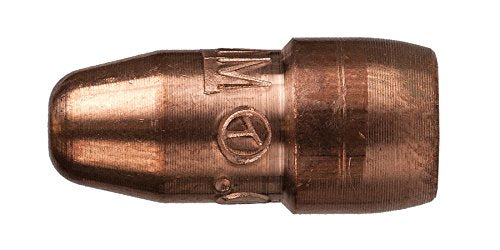
    A MIG nozzle is a copper tube that directs shielding gas around the arc. Over time, spatter welds itself to the nozzle, restricting the gas opening. When the orifice is blocked or worn, gas coverage becomes inconsistent.

    What happens:

    • Reduced gas flow: Spatter buildup narrows the opening, starving the arc of protection.
    • Dead zones: Gas doesn’t reach the entire weld pool, leaving unprotected areas.
    • Hydrogen absorption: Unshielded molten metal absorbs hydrogen from air, creating porosity.
    • Weak welds: Porosity reduces tensile strength and can fail inspection.

    You’ll see:

    • Porosity clustered in the weld center or edges
    • Spatter stuck to the nozzle (sometimes thick)
    • Dull or inconsistent arc appearance
    • Gas leaks or hissing sounds around the gun

    Why It Matters

    Porosity is a weld defect. In structural work, it can fail X-ray or ultrasonic inspection. In production, rework costs time and material. A $5 nozzle replacement prevents hours of grinding and rewelding. It also improves weld aesthetics and reduces spatter cleanup.

    The Fix

    1. Power down the welderย and wait 30 seconds.
    2. Unscrew the nozzleย from the gun (usually hand-tight or one-quarter turn).
    3. Inspect the nozzleย for spatter buildup, erosion, or damage.
    4. Clean the nozzleย with a wire brush or soak it in acetone to remove spatter.
    5. If cleaning doesn’t restore flow, install a new nozzleย (hand-tight).
    6. Verify gas flowย by listening for a steady hiss when you pull the trigger.
    7. Test on scrapย to confirm porosity is gone.

    Why This Product Solves It

    The Miller Nozzle Replacement – N-A5800C AccuLock S Large Thread-On Nozzle, 5/8″ Orifice, Copper is a direct replacement for Miller AccuLock S guns. It’s made from high-quality copper, which conducts heat efficiently and resists spatter adhesion better than steel. The 5/8″ orifice is standard for most MIG work, providing optimal gas coverage. A pack of 10 ensures you always have replacements ready.

    Product Link: Miller Nozzle Replacement - N-A5800C AccuLock S Large Thread-On Nozzle, 5/8" Orifice, Copper

    ” target=”_blank” rel=”noreferrer noopener”>
    Miller Nozzle Replacement - N-A5800C AccuLock S Large Thread-On Nozzle, 5/8" Orifice, Copper

    Miller Nozzle Replacement – N-A5800C AccuLock S Large Thread-On Nozzle, 5/8" Orifice, Copper

    $205.55 โ€“ Pack of 10

    In Stock

    View Product

    What to Check Before You Buy

    • Gun compatibility: AccuLock S guns (Miller, Bernard, and clones). Check your gun nameplate.
    • Orifice size: 5/8″ is standard. Some specialty guns use 1/2″ or 3/4″. Verify before ordering.
    • Thread type: Most nozzles are standard thread-on. Older guns may use different connections.
    • Material: Copper is best for durability. Avoid steel nozzles if possible.

    Real-World Use

    A pipeline crew was struggling with porosity on 3/8″ structural steel. They’d checked gas pressure (correct), wire feed (smooth), and base metal (clean). The nozzle had 6 months of spatter buildupโ€”so thick it looked like a different part. After cleaning and replacing with a fresh nozzle, porosity disappeared. The old nozzle’s orifice had shrunk from 5/8″ to nearly 1/2″ due to spatter.

    Common Mistakes

    • Ignoring spatter buildup: Clean before you replace. Sometimes cleaning alone fixes the problem.
    • Using the wrong orifice size: A 1/2″ nozzle won’t provide full coverage. Confirm size before buying.
    • Not checking gas pressure: A worn nozzle combined with low pressure makes porosity worse. Verify regulator setting.
    • Over-tightening the nozzle: Hand-tight is correct. Over-tightening can crack the gun.
    • Forgetting to test: Always run a test bead on scrap before production welding.

    Safety Notes

    Always follow the manufacturer’s instructions and your shop’s safety procedures. If you’re unsure about fitment or ratings, verify before you buy or install.

    Related Reading

  • Why Does My MIG Wire Feed Slip or Surge? (Fast Fix in 10 Minutes)

    If your MIG wire feed feels inconsistentโ€”slipping at the drive rolls, surging at the arc, or randomly stoppingโ€”youโ€™re usually dealing with a restriction in the wire path, not a โ€œbad welder.โ€ The goal is to restore smooth, low-friction wire travel from spool to contact tip. This guide walks you through a fast diagnosis and a one-variable-at-a-time fix.

    Where to Buy (Quick Fix Parts)

    Most likely failed components for slipping/surging feed:

    • Gun liner (clogged with debris, wrong size, kinked, or cut too long/short)
    • Contact tip (worn/oversized, spatter-packed, or wrong size for wire)
    • Drive roll setup (wrong groove, worn groove, or tension crushing the wire)

    Top Pick (Primary Fix)

    1-pk 42-3035-15 .030″-.035″ 15ft Liner Compatible with Tweco MIG Gun
    • ๐Ÿ”ง COMPATIBILITY NOTICE: This is a replacement part compatible with specific vehicle/machine models. Please carefully check the part number, vehicle model, and size before purchasing.
    • โš™๏ธ RELIABLE PERFORMANCE: Manufactured to meet or exceed standard replacement specifications, providing stable performance and reliable operation under normal working conditions.
    • ๐Ÿ›ก๏ธ DURABLE MATERIALS: Made from high-quality materials, resistant to wear, corrosion, and heat, ensuring a long lifespan and stable use.
    • ๐Ÿงฐ EASY INSTALLATION: Designed for direct replacement installation. No modifications required. Professional installation is recommended if you are unfamiliar with replacing parts.
    • ๐Ÿš— WIDE APPLICATION: Suitable for use with a wide range of vehicles and equipment such as cars, motorcycles, lawnmowers, snowmobiles, and other compatible machinery.

    Last update on 2026-06-05 / Affiliate links / Images from Amazon Product Advertising API

    Disclosure: As an Amazon Associate, I earn from qualifying purchases.

    Backup / Consumable Option

    Last update on 2026-06-04 / Affiliate links / Images from Amazon Product Advertising API

    Key Takeaways

    • If the drive rolls are slipping, donโ€™t crank tension firstโ€”check for a liner restriction and crushed wire.
    • If the arc surges, the wire is often sticking in the tip or dragging in the liner.
    • Set drive roll tension using the โ€œjust enough to feedโ€ method; too tight creates debris that clogs liners.
    • If itโ€™s not fixed in 2โ€“3 minutes, replace the consumable (tip/liner) before changing machine settings.

    Symptoms (Fast Diagnosis)

    • Drive rolls spin but wire doesnโ€™t move (or moves in bursts)
    • Wire feed feels jerky when you pull the trigger
    • Arc stutters/surges even with stable voltage/WFS settings
    • You see copper dust/shavings near the feeder (crushed wire)
    • Wire is flattened or has shaved edges after the drive rolls
    • Feed improves when you straighten the gun lead, then gets worse again

    Root Causes (Mapped to Symptoms)

    • Rollers spin but wire doesnโ€™t feed โ†’ liner restriction, wrong drive roll groove, tension too low or wire crushed from too much tension
    • Jerky feed / surging arc โ†’ contact tip worn/dirty, liner packed with debris, tight bends in lead, spool drag too high
    • Copper dust at feeder โ†’ drive roll tension too high crushing wire (debris migrates into liner)
    • Feed changes with lead position โ†’ kinked liner, damaged lead, liner not seated, too many tight bends

    Quick Fix (Do This First)

    Replace the most common failure components first:

    1. Contact tip (fastest swap)
    2. Liner (most common hidden restriction)
    3. Then re-set drive roll tension (donโ€™t over-tighten)

    Avoid over-adjusting voltage/WFS until the wire path is confirmed smooth.

    1-pk 42-3035-15 .030″-.035″ 15ft Liner Compatible with Tweco MIG Gun
    • ๐Ÿ”ง COMPATIBILITY NOTICE: This is a replacement part compatible with specific vehicle/machine models. Please carefully check the part number, vehicle model, and size before purchasing.
    • โš™๏ธ RELIABLE PERFORMANCE: Manufactured to meet or exceed standard replacement specifications, providing stable performance and reliable operation under normal working conditions.
    • ๐Ÿ›ก๏ธ DURABLE MATERIALS: Made from high-quality materials, resistant to wear, corrosion, and heat, ensuring a long lifespan and stable use.
    • ๐Ÿงฐ EASY INSTALLATION: Designed for direct replacement installation. No modifications required. Professional installation is recommended if you are unfamiliar with replacing parts.
    • ๐Ÿš— WIDE APPLICATION: Suitable for use with a wide range of vehicles and equipment such as cars, motorcycles, lawnmowers, snowmobiles, and other compatible machinery.

    Last update on 2026-06-05 / Affiliate links / Images from Amazon Product Advertising API

    Step-by-Step Fix

    1. Stop and inspect the wire after the drive rolls
      Cut 6โ€“12 in (150โ€“300 mm) off and look for flattening or shaving.
      • Flattened wire = too much tension or wrong groove.
    2. Check spool drag (donโ€™t let it freewheel, donโ€™t choke it)
      You want the spool to stop without coasting into a birdnest when you release the trigger. If drag is excessive, the feeder will slip.
    3. Confirm drive roll groove matches wire type and size
      • Solid wire typically uses V-groove.
      • Flux-core often prefers knurled (verify your feeder manual).
        Unknown (Verify): your specific feederโ€™s recommended roll type.
    4. Set drive roll tension correctly (the โ€œjust enoughโ€ method)
      Start low. Feed wire into a block of wood (or pinch lightly with gloved fingers at the gun end). Increase tension only until it feeds without slipping.
      If you crank tension to โ€œfixโ€ slipping, you often create crushed-wire debris that plugs the liner.
    5. Straighten the gun lead and test feed
      If feed improves when straight, you likely have liner drag, a kink, or a lead issue.
    6. Pull the nozzle and contact tip; test wire feed without the tip
      • If it feeds smooth with the tip removed, the tip is the restriction (wrong size, worn, spatter-packed).
    7. Replace/clean the liner if drag is suspected
      If youโ€™ve had a birdnest, crushed wire, or lots of dust, assume liner contamination. Replace is usually faster than trying to โ€œsaveโ€ it.
    8. Re-test with one change at a time
      Make one change, run a 10โ€“15 second feed test, then move to the next variable.

    Parts That Actually Fix This

    Gun liner
    Replace when:

    • Wire feels rough when feeding
    • You see debris/copper dust and feed is inconsistent
    • The lead position changes feed quality
      Adjust/clean when:
    • Minor contamination and you can blow it out safely (manufacturer guidance varies; replacement is often the most reliable)

    Contact tips
    Replace when:

    • Wire binds at the tip
    • Tip bore is worn (arc becomes inconsistent)
    • Tip is spatter-packed
      Adjust when:
    • You simply had spatter buildup you can remove and the bore isnโ€™t damaged

    Drive rolls
    Replace when:

    • Groove is visibly worn/polished and slips even at correct tension Adjust when:
    • Wrong groove selection or tension was incorrect

    Diffuser / nozzle (if applicable)
    Replace when:

    • Threads are damaged, tip wonโ€™t seat correctly, or gas coverage is inconsistent due to damage
      Adjust/clean when:
    • Itโ€™s just spatter buildup affecting seating

    Replace vs Adjust (Fast Decision Table)

    ProblemAdjust FirstReplace
    Drive rolls slippingReduce spool drag; confirm correct groove; set โ€œjust enoughโ€ tensionLiner (if debris); drive rolls (if worn)
    Surging/stuttering arc with stable settingsTest feed with tip removedContact tip (most common)
    Feed changes when lead is bentStraighten lead; check routingLiner or damaged lead
    Copper dust near feederBack off tension; confirm grooveLiner (likely contaminated)

    Rule: If not fixed in 2โ€“3 minutes โ†’ replace the consumable.

    Prevention Tips

    • Keep the gun lead as straight as practical; avoid tight loops on the floor.
    • Donโ€™t over-tighten drive rolls. Crushing wire creates debris that clogs liners.
    • Store wire dry and covered; rust/contamination increases liner drag.
    • Replace contact tips proactively if you notice arc instability or frequent spatter packing.
    • Routine interval: Unknown (Verify). It varies by duty cycle, wire type, environment, and technique.

    Safety Notes

    • Wear an ANSI Z87.1-rated helmet and safety glasses under the hood.
    • Use welding gloves when handling hot consumables and sharp wire.
    • Ensure proper ventilation; fume exposure increases during troubleshooting because you tend to do repeated short test welds.

    FAQ

    Why does my wire feed fine until I start welding, then it surges?
    Often the wire is binding at the contact tip under heat/spatter, or the liner drag shows up under load. Test feed with the tip removed to isolate it.

    Should I just tighten the drive rolls until it stops slipping?
    No. Over-tension crushes the wire, creates debris, and makes the liner clog worse. Set tension to โ€œjust enough to feed.โ€

    Can a bad ground clamp cause wire feed surging?
    A poor work clamp can cause arc instability that feels like surging, but it wonโ€™t usually cause true mechanical slipping at the feeder. Fix the wire path first, then confirm your clamp and connections.

    How do I know if my liner is the wrong size?
    If the wire drags even when everything is clean and straight, or youโ€™re using a different wire diameter/material than the gun was set up for, liner size mismatch is a common cause. Verify against your gun manual.

  • 123 Pcs TIG Welding Torch Kit for WP-17/18/26

    123 Pcs TIG Welding Torch Kit for WP-17/18/26

    Intro:
    TIG torch consumables wear out fastโ€”especially with aluminum or stainless jobs. This 123-piece kit gives WP-17/18/26 users a complete, ready-to-go stock of nozzles, collets, and gas lenses for pro-level results.

    Key Takeaways

    • Full kit: 123 pieces for WP-17/18/26 torches.
    • Includes alumina nozzles, stubby gas lens, collets, glass cups.
    • Supports steel, stainless, and aluminum TIG jobs.
    • Compatible with most standard torch bodies (verify model).
    • Saves time and downtimeโ€”no emergency parts runs.

    Performance & Use

    All parts are precision-manufactured for reliable fit and gas coverage. Designed for both AC and DC TIG work (verify for your machine). Suits most US-shop WP-17/18/26 torches.

    Durability & Build

    Heatproof glass cups and alumina nozzles resist cracking under high temps. All collets and lenses are built for repeated useโ€”ideal for daily welding or instructional settings.

    Power / Specs

    • Kit size: 123 pieces
    • Torch fit: WP-17, WP-18, WP-26
    • Materials: Alumina, glass, copper
    • Process: TIG (AC/DC), steel, stainless, aluminum
    • Standards: Unknown (Verify)
    • Included: Nozzles, collets, gas lenses, glass cups, accessories

    Who Itโ€™s For

    • TIG welders (pro, hobby, instructional) using WP-17/18/26.
    • Shops needing full consumable stock.
    • Not for: Non-compatible torch models (verify fit).

    Quick FAQ

    Q: Will this fit my torch?
    A: Compatible with WP-17, WP-18, WP-26 (verify torch model).

    Q: Are all parts included for aluminum and stainless?
    A: Yes, supports both (verify machine settings).

    Q: Are the cups glass or ceramic?
    A: Both glass and alumina nozzles included.

    Q: Can I use this for AC and DC TIG?
    A: Yes (verify for your machine).

    Q: Does it include a storage case?
    A: Unknown (Verify on listing).

    Safety Notes

    • Inspect all consumables before use.
    • Replace cracked or worn parts promptly.
    • Use proper PPE (gloves, eyewear) during installation.
    • Always follow the machine manual, SDS, and applicable code requirements. If unsure, verify with the manufacturer.

    Where to Buy

    • Amazon pick: 123 Pcs TIG Welding Torch Kit for WP-17/18/26 โ€” ASIN: B0FWJVW4NT
    • Amazon listing
    • PHUOC LOC THO for TIG Welding Torch Kit 123 Pcs Stubby Lens, Alumina Nozzle, Collets
      • For TIG Welding Torch Kit 123 Pcs Stubby Lens, Alumina Nozzle, Collets
      • Includes 123 pieces for TIG welding torch kit, featuring stubby lens, alumina nozzle, and collets for welding applications.
      • components like alumina nozzle and collets reliable performance and precise welding results with TIG torch kit 123 Pcs.
      • Upgrade Your Gear, Upgrade Your Performance โ€“ Choose Our Reliable Replacement Parts.
      • To ensure a perfect fit and make an informed decision, we encourage you to carefully review both the product’s dimensions and visually inspect it in the provided photos.

      Last update on 2026-06-04 / Affiliate links / Images from Amazon Product Advertising API

  • MIG Welding Wire Selection Guide 2025 | ER70S-6 vs ER70S-3 Specs

    MIG Welding Wire Selection Guide 2025 | ER70S-6 vs ER70S-3 Specs

    MIG wire selection affects weld quality, spatter levels, and penetration depth. Choosing the right wire depends on base metal composition, surface condition, and shielding gasโ€”not just diameter and tensile strength.

    Common MIG Wire Classifications

    ER70S-6 (Most Common)

    • Deoxidizers: Manganese, silicon
    • Tensile strength: 70,000 PSI minimum
    • Best for: Dirty or rusty steel, single-pass welds, general fabrication
    • Shielding gas: 75/25 Ar/COโ‚‚ or 100% COโ‚‚
    • Spatter level: Moderate

    ER70S-3

    • Deoxidizers: Lower manganese and silicon than ER70S-6
    • Tensile strength: 70,000 PSI minimum
    • Best for: Clean steel, multi-pass welds, automotive sheet metal
    • Shielding gas: 75/25 Ar/COโ‚‚ (100% COโ‚‚ not recommended)
    • Spatter level: Low

    ER308L (Stainless Steel)

    • Composition: 19-21% chromium, 9-11% nickel
    • Best for: 304/304L stainless steel
    • Shielding gas: 90/10 Ar/COโ‚‚ or tri-mix (He/Ar/COโ‚‚)
    • Corrosion resistance: Excellent

    ER316L (Stainless Steel)

    • Composition: 18-20% chromium, 11-14% nickel, 2-3% molybdenum
    • Best for: 316/316L stainless, marine environments, chemical processing
    • Shielding gas: 90/10 Ar/COโ‚‚ or tri-mix
    • Corrosion resistance: Superior (molybdenum addition)

    Wire Diameter Selection

    DiameterAmperage RangeMaterial ThicknessTypical Use
    0.023โ€30-130A24-18 gaugeAutomotive sheet metal, thin tubing
    0.030โ€40-145A18-14 gaugeGeneral fabrication, light structural
    0.035โ€50-180A14 gauge-1/4โ€Most common all-purpose size
    0.045โ€75-250A1/4โ€-1/2โ€Heavy structural, thick plate
    0.052โ€100-300A1/2โ€+Industrial fabrication, heavy equipment

    Rule of thumb: Thinner wire = better control on thin material. Thicker wire = faster deposition on heavy plate.

    Shielding Gas Impact on Wire Performance

    75/25 Argon/COโ‚‚ (C25)

    • Pros: Low spatter, smooth arc, good bead appearance
    • Cons: Higher cost than 100% COโ‚‚
    • Best for: ER70S-3, ER70S-6, stainless steel

    100% COโ‚‚

    • Pros: Deep penetration, low cost
    • Cons: Higher spatter, rougher arc
    • Best for: ER70S-6 on thick steel (not recommended for ER70S-3)

    90/10 Argon/COโ‚‚

    • Pros: Minimal spatter, excellent for stainless
    • Cons: Shallow penetration on carbon steel
    • Best for: ER308L, ER316L stainless wire

    Surface Condition Requirements

    Wire TypeMill ScaleLight RustHeavy RustClean Steel
    ER70S-6โœ“โœ“โœ“โœ“
    ER70S-3โœ—โœ—โœ—โœ“
    ER308Lโœ—โœ—โœ—โœ“
    ER316Lโœ—โœ—โœ—โœ“

    ER70S-6 advantage: Higher deoxidizers clean impurities during welding. ER70S-3 requires clean base metal to avoid porosity.

    AWS Filler Metal Specifications

    AWS A5.18 (Carbon Steel MIG Wire) – Covers ER70S-3, ER70S-6, and other carbon steel wires – Defines chemical composition, tensile strength, and elongation requirements

    AWS A5.9 (Stainless Steel MIG Wire) – Covers ER308L, ER316L, and other stainless wires – Specifies corrosion resistance and ferrite content

    Wire Storage & Handling

    Moisture Contamination – Causes: Porosity, hydrogen cracking – Prevention: Store in sealed containers with desiccant packs – Shelf life: 12 months (carbon steel), 6 months (stainless)

    Wire Feed Issues – Kinked wire = erratic arc and bird-nesting – Solution: Use proper spool tension and liner size

    Liner Compatibility

    Wire DiameterLiner Inside Diameter
    0.023โ€-0.030โ€0.030โ€-0.035โ€
    0.035โ€0.035โ€-0.045โ€
    0.045โ€0.045โ€-0.052โ€
    0.052โ€0.052โ€-0.062โ€

    Oversized liner = wire wander. Undersized liner = excessive friction and burnback.

    Common Mistakes

    Using ER70S-3 on rusty steel
    Low deoxidizers canโ€™t compensate for surface contamination. Result: porosity and weak welds. Use ER70S-6 or clean the base metal.

    Wrong liner size for wire diameter
    0.035โ€ wire in 0.045โ€ liner causes erratic feeding. Match liner to wire diameter within 0.005โ€-0.010โ€.

    Storing stainless wire without moisture protection
    Stainless wire absorbs moisture faster than carbon steel. Always use sealed containers with desiccant.

    Buying Checklist

    • โœ“ Wire classification matches base metal (ER70S-6 for dirty steel, ER70S-3 for clean)
    • โœ“ Diameter suits material thickness and amperage range
    • โœ“ Shielding gas compatible with wire type
    • โœ“ AWS A5.18 or A5.9 certification marked on spool
    • โœ“ Liner size matches wire diameter
    • โœ“ Storage container includes moisture protection
    • โœ“ Spool size fits your machine (2 lb, 10 lb, 33 lb, 44 lb)

  • 6010 Electrode vs 7018 Electrode: What Welders Need to Know

    6010 Electrode vs 7018 Electrode: What Welders Need to Know

    6010 and 7018 are two of the most widely used stick electrodes in the welding industryโ€”but they serve very different purposes. One is built for speed, penetration, and root passes. The other is designed for high strength, low hydrogen, and structural work.

    If youโ€™ve ever wondered โ€œWhich rod should I use?โ€ this guide breaks down the differences in arc characteristics, penetration, polarity, strength, and code applications.


    Key Takeaways

    • 6010 = deep penetration, fast-freeze, open-root king
    • 7018 = high-strength, low-hydrogen, structural standard
    • 6010 runs on DCEP only (most cases)
    • 7018 runs on DCEP or AC depending on formulation
    • 6010 great for pipe roots; 7018 dominates final passes and code work
    • 7018 requires low-hydrogen storage (rod oven)

    Electrode Number Meaning

    Understanding the AWS code helps explain performance.

    6010

    • 60 โ†’ 60,000 psi tensile strength
    • 1 โ†’ all positions
    • 0 โ†’ cellulose sodium coating (deep penetration)

    7018

    • 70 โ†’ 70,000 psi tensile strength
    • 1 โ†’ all positions
    • 8 โ†’ low-hydrogen iron powder coating

    Arc Characteristics

    6010

    • Aggressive, digging arc
    • Deep penetration on dirty, rusty, or painted steel
    • Fast-freeze puddle (good for open roots)
    • Tight, narrow bead
    • Strong keyhole control

    7018

    • Smooth, stable arc
    • Softer puddle with less digging
    • Easy to stack uniform, wide beads
    • Higher deposition rate
    • Excellent appearance

    Penetration & Puddle Behavior

    Feature60107018
    PenetrationVery deepModerate
    PuddleFast-freezeFill/freezer hybrid
    SlagLight, flakyThick, easy-peel
    Cleaning ToleranceExcellentNeeds clean steel

    Polarity Requirements

    6010

    • Runs best on DCEP (reverse polarity)
    • Many brands only run correctly on DCEP

    7018

    • Runs on DCEP
    • Many versions available as AC-only rods
    • 7018AC designed for buzz-box machines

    Strength & Mechanical Properties

    Property60107018
    Tensile Strength60 ksi70 ksi
    Hydrogen LevelHighLow (low-hydrogen class)
    DuctilityHighExcellent
    Code WorkLimitedStandard for structural, pressure pipe

    Best Applications

    6010 โ€“ Use When You Need:

    • Root passes on pipe
    • Welding through mill scale or contaminants
    • Deep penetration on structural members
    • Open-gap joints
    • Fast, controlled root keyholing

    7018 โ€“ Use When You Need:

    • Final passes on structural work
    • Code-quality welds (AWS D1.1, ASME, etc.)
    • High-strength welds with low hydrogen
    • Clean steel
    • Smooth, aesthetically clean beads

    Storage & Handling Differences

    6010

    • No rod oven required
    • Tolerates moisture well

    7018

    • Must be stored in a rod oven after opening
    • Cannot be used if exposed to moisture
    • Hydrogen pickup increases crack risk

    Which One Should You Use?

    Use 6010 if:

    • Youโ€™re doing pipe roots
    • The steel is dirty or rusty
    • You need fast-freeze control
    • You need maximum penetration

    Use 7018 if:

    • Youโ€™re doing structural or pressure code work
    • You need low-hydrogen welds
    • You want smooth, strong cap passes
    • The steel is clean and prepped

    Most pipeline welders run 6010 for roots and 7018 for hot passes and caps.


    Where to Buy Electrodes

    ArcWeld Store:
    6010

    7018

    Disclosure: This article contains affiliate links. As an Amazon Associate, I earn from qualifying purchases.


    Safety Notes (AWS/ANSI References)

    • Follow ANSI Z49.1 for SMAW PPE and ventilation
    • Wear Z87.1-rated eye and face protection
    • Use proper ventilationโ€”stick welding generates significant fumes
    • Handle 7018 rods per AWS low-hydrogen storage guidelines
    • Avoid welding 7018 rods that have absorbed moisture

    FAQ

    Can you run 6010 on AC?
    Some machines attempt it, but results are inconsistent. DCEP is required for proper performance.

    Is 7018 stronger than 6010?
    Yes. 7018 is a 70 ksi tensile electrode vs. 60 ksi for 6010.

    Can beginners start with 7018?
    7018 is easier to run cleanly, but its slag can hide defects. 6010 teaches puddle control.

    What rod is best for dirty steel?
    6010โ€”hands down.

  • Washington Alloy THF-700HT Hard-Face MIG Wire Review (2025): Built for Wear Resistance

    Washington Alloy THF-700HT Hard-Face MIG Wire Review (2025): Built for Wear Resistance

    Intro
    Hard-facing wire doesnโ€™t just join metal โ€” it rebuilds it. Washington Alloyโ€™s THF-700HT flux-cored MIG wire is engineered for abrasion resistance and metal recovery in industrial repair work. From loader buckets to crusher parts, this wire keeps production moving where standard filler metals fail.


    Key Takeaways

    • Type: Flux-cored hard-facing wire (gas-shielded).
    • Composition: Iron-based alloy with chromium and carbon for wear protection.
    • Diameter / Spool: .045 in (1.1 mm) ร— 33 lb (15 kg).
    • Hardness: ~55โ€“60 HRC after cooling โ€” ideal for metal-to-metal wear.
    • Applications: Earth-moving equipment, agricultural blades, crusher rolls, and heavy fabrication repair.

    Why Use Hard-Face Wire

    THF-700HT is designed for severe abrasion under moderate impact. The self-shielded flux core allows outdoor repair without external shielding gas, making it a reliable choice for field maintenance. Operators report a smooth arc, good slag release, and minimal spatter โ€” critical when youโ€™re rebuilding high-value components on tight downtime.


    Performance and Best Uses

    • Excellent metal recovery: high deposition rate and dense overlay.
    • Good for carbon or low-alloy base metals.
    • One-pass or multi-layer capable: each layer retains hardness after cooling.
    • Shielding gas required: 100% Co2 or 75/25 Argon/Co2, and run on DC-electrode positive polarity.

    Comparison Table

    ModelKey SpecsBest ForArcWeld StoreAmazon
    Washington Alloy THF-700HT-173.045 in (1.1 mm) ร— 33 lb โ€ข Flux-Cored โ€ข Hardness 55โ€“60 HRC โ€ข DC+Rebuilding worn parts โ€ข Outdoor repairs โ€ข Earth-moving & crusher components Washington Alloy THF-700HT-173  Hard Face Flux-Cored Mig Wire .045 x 33 Lb. Spool “>View at Arc Weld StoreAmazon Listing

    Safety Notes

    Follow AWS A5.21 and manufacturer recommendations for fume extraction and ventilation. Use appropriate PPE: welding helmet (ANSI Z87.1), FR gloves, and sleeves. Hard-facing fumes may contain chromium and manganese โ€” maintain air quality per OSHA 1910.252 standards.


    FAQ

    Q: Can this wire run on a 200 A MIG machine?
    A: Yes. It performs best between 180โ€“250 A with 20โ€“25 V, depending on feed speed.

    Q: Does it need a shielding gas?
    A: Yes. THF-700HT is gas-shielded flux-cored wire, use 100% CO2 or 75% Argon / 25% CO2

    Q: Can I machine the overlay afterward?
    A: Limited โ€” the deposit is very hard. Use grinding rather than cutting tools.

    Q: What base metals work best?
    A: Mild or low-alloy steels โ€” avoid high-carbon or hardened substrates without preheat.


    Where to Buy
    Washington Alloy THF-700HT-173  Hard Face Flux-Cored Mig Wire .045 x 33 Lb. Spool

    “>
    Washington Alloy THF-700HT-173  Hard Face Flux-Cored Mig Wire .045 x 33 Lb. Spool

    Washington Alloy THF-700HT-173 Hard Face Flux-Cored Mig Wire .045 x 33 Lb. Spool

    $357.05

    In Stock

    View Product


    If unavailable, there is a 10# version as well at:

    10-LB Spool .045″ Washington Alloy 700-HT Hardfacing/Hardsurfacing Flux-Cored Mig Wire
    • Hardsurfacing of rollers, conveyor screws, crusher rolls and mill hammers, tanks, truck bodies, farm implements, pipes, steel castings or forgings
    • 1- Each .045 x 10lb Spool (8″ Spool)
    • Hardness HRc: 58-61
    • Use Shielding gas: 100% Co2 OR (75/25 Argon/CO2)
    • DCEP – 150-180 Amp

    Last update on 2026-06-04 / Affiliate links / Images from Amazon Product Advertising API

    Disclosure: we may earn a small commission at no extra cost to you.)

  • Hypertherm SmartSYNC 30โ€“45A Cartridge Review Guide

    Hypertherm SmartSYNC 30โ€“45A Cartridge Review Guide
    An in-depth look at a game-changing consumable for CNC plasma cutting and manual fabrication

    Introduction

    The Hypertherm SmartSYNC 30โ€“45A cartridge is a precision-engineered plasma cutting consumable designed to work with Hyperthermโ€™s SYNC-compatible systems, including the Powermax 45 SYNC,ย  Powermax65 SYNC, Powermax85 SYNC, and Powermax105 SYNC. Unlike traditional five-piece consumable stacks, the SmartSYNC cartridge condenses nozzle, electrode, and swirl ring configurations into one single, intelligent component.

    This cartridge is ideal for manual plasma cutting, mechanized cutting, and gouging operations within the 30 to 45 amp range. It’s widely used by professional welders, fabricators, metal shop technicians, students, and engineers who require consistent arc quality, minimal downtime, and simplified consumable selection.

    Where precise, efficient cutting matters, this cartridge delivers improved performance with minimized operator errorโ€”making it a go-to option in both busy fabrication shops and mobile job sites.

    Types / Variants / Models

    Hypertherm SmartSYNC cartridges are color-coded and uniquely labeled to reflect their intended application. For the 30โ€“45A range, the most relevant variants include:

    Cutting Cartridges (30โ€“45A)
    – Color-coded: Yellow
    – Designed for standard plasma cutting on mild steel, stainless steel, and aluminum.
    – Used primarily in handheld or mechanized cutting modes.

    Gouging Cartridges (30โ€“45A)
    – Color-coded: Green
    – Engineered for plasma gouging operationsโ€”removing welds or preparing joints.
    – Provides a smooth gouge profile with reduced spatter.

    FineCutยฎ Cartridges (up to 45A)
    – Color-coded: Black
    – Made for precision cutting of thin metals where a narrow kerf and clean edge are essential.
    – Best for fabrication shops working on sheet metal or ornamental pieces.

    Each cartridge is process-specific, eliminating the trial and error of selecting between torch parts or matching incorrect consumables.

    Key Features and Specifications

    The SmartSYNC 30โ€“45A cartridge is more than a consumableโ€”it’s a technically advanced solution for optimizing plasma system performance.

    Amperage Range: 30โ€“45 amps
    – Offers flexibility for medium-duty cutting and gouging tasks.

    SmartSYNC Compatibility:
    – Designed exclusively for Powermax SYNC systems (Powermax65, 85, 105 SYNC).
    – Enables automatic process setup, eliminating manual settings and wrong part configurations.

    All-in-One Design:
    – Replaces traditional five-piece consumables with one rotating cartridge, simplifying inventory and changeouts.

    Embedded RFID Technology:
    – Communicates cartridge type and usage data directly to the plasma power source.
    – Logs arc starts and time to assist with preventive maintenance.

    Certifications:
    CE, RoHS compliant, and designed to meet ISO 9001:2015 standards.
    – Ensures global safety, electrical, and environmental compliance.

    Precision Manufacturing:
    – Machined to tight tolerances for optimal arc stability and cut consistencyโ€”especially relevant for CNC plasma tables.

    Usage & Compatibility

    The SmartSYNC 30โ€“45A cartridge is used primarily in plasma arc cutting systems, especially in manual hand-held torch setups and mechanized applications on CNC tables. It is not applicable to traditional SMAW (stick), GMAW (MIG), or GTAW (TIG) welding processes, but complements them in multiprocess fabrication environments.

    Compatible Machines:

    • Powermax45 SYNC
    • Powermax65 SYNC
    • Powermax85 SYNC
    • Powermax105 SYNC

    Benefits:

    Automatic setup means users donโ€™t need to manually configure amperage or gas settingsโ€”perfect for less experienced welders.
    Minimized mistake rate when working under urgent production timelines or high throughput demands.
    Durable construction extends lifespan, reducing changeover frequency.

    Drawbacks:

    Not backward compatible with all non-SYNC Powermax models. They are compatible with Duramax torch systems, with an adapter.
    – Slightly higher upfront cost compared to traditional consumables (offset by longer operational life and fewer mistakes).

    Common Applications

    This cartridge is optimized for medium-duty industrial applications where precision and uptime are critical:

    Light structural fabrication
    Automotive bodywork and exhaust systems
    HVAC ductwork and assembly
    Farm equipment repair
    Sign fabrication with CNC tables
    Maintenance and repair operations (MRO)

    Its robust duty cycle and versatility across mild steel, stainless steel, and aluminum make it ideal for multi-metal environments.

    Tips & Best Practices

    Setup Tips:

    Always insert with the cartridge fully rotated and locked into placeโ€”incorrect seating can cause arc instability.
    – Use the SmartSYNC LCD screen (if equipped) to verify cartridge type before cutting.
    – For precision work, use the FineCut variant and reduce travel speed for minimal dross.

    Maintenance Tips:

    – Inspect the cartridge after 5โ€“10 hours of arc time for signs of nozzle wear.
    – Use only a clean, dry air sourceโ€”moisture or oil will reduce cartridge life.
    – Store cartridges in a dust-free, temperature-controlled environment to prevent contamination.

    Troubleshooting Common Issues:

    Inconsistent cut or gouge arc โ†’ Check for improper installation or worn electrode.
    Excessive dross โ†’ Replace with a new cartridge or evaluate travel speed/height.
    Torch error code โ†’ Verify youโ€™re using a SYNC-supported machine and matching cartridge type.

    Conclusion

    The Hypertherm SmartSYNC 30โ€“45A cartridge is a next-generation consumable that simplifies setup, improves cutting accuracy, and reduces downtime. Whether you’re a fabricator handling day-to-day cutting, a welding student learning precision arc control, or a field technician needing reliable gouging power, this cartridge delivers unmatched performance.

    Its intelligent chip technology, durable build, and simplified design help maintain productivity even in demanding shop or field environments.

    Key takeaway: If you’re using a Powermax SYNC system and regularly operate within the 30โ€“45A range, upgrading to the SmartSYNC cartridge system can dramatically improve both performance and simplicity.

    Affiliate Call to Action

    Last update on 2026-06-04 / Affiliate links / Images from Amazon Product Advertising API

    Check the latest price and availability on Amazon to ensure you’re stocked up with the right cartridge for your cutting needs.

    Note to Readers:
    This post may contain affiliate links. If you purchase through them, we may earn a small commission at no cost to you. Thank you for supporting our site.

  • Welding Science: MIG vs TIG vs Stick Cost per Foot

    Welding Science: MIG vs TIG vs Stick Cost per Foot

    The Science of Welding: MIG, TIG, and Stick Compared โ€“ Plus the Real Cost Per Foot of Weld


    Introduction

    In the world of metal fabrication, welding is both art and a science. Understanding not just how to weld but why certain processes work betterโ€”and cost lessโ€”in specific scenarios is essential for:

    • Welders are optimizing efficiency in the booth.
    • Engineers and designers make process-specific decisions during material selection.
    • Fabrication buyers and project managers estimate costs accurately and competitively.

    From the molecular thermodynamics of arc formation to the economic reality of consumables, each welding processโ€”MIG (GMAW), TIG (GTAW), and Stick (SMAW)โ€”brings trade-offs that can dramatically affect weld quality and cost per foot.

    In this guide, weโ€™ll break down:

    • The science behind MIG, TIG, and Stick welding.
    • How variables like speed, consumable use, and labor affect cost per linear foot.
    • Real-world cost breakdowns and comparisonsโ€”to help you make informed decisions and reduce waste.

    The Science of Welding Processes


    ๐Ÿ”Œ MIG Welding (GMAW) โ€“ High Speed, Low Cost

    Science Behind the Process:

    • Arc Formation: A continuous solid wire is fed through a MIG gun, producing an electric arc between the wire and base metal.
    • Shielding Gas: Typically a mix of argon and COโ‚‚ to protect the weld zone from atmospheric contamination.
    • Filler Metal Transfer: Spray or short-circuit transfer, depending on settings and thickness.

    Molecular Level Insight:

    • The arc melts both the electrode and base metal, fusing them at a localized point as electrons bombard the joint.
    • Shielding gas prevents oxygen and nitrogen from contaminating the weld pool, which is crucial for metallurgy.

    Strengths:

    • High deposition rate and travel speed.
    • Easy to learn and automate.
    • Ideal for production shops and thin to mid-thickness steel.

    Weaknesses:

    • Requires shielding gas, limiting portability.
    • Less suitable for windy outdoor environments or dirty/oxidized metal.

    TIG Welding (GTAW) โ€“ Precision and Cleanliness

    Science Behind the Process:

    • Non-Consumable Tungsten Electrode creates the arc without melting itself.
    • Filler rod is added manually (or autogenously).
    • Shielded with pure argon (and sometimes helium blends).

    Precision Metallurgy:

    • Arc is extremely focusedโ€”ideal for very thin materials and dissimilar metals.
    • Allows precise control of heat input, reducing heat-affected zones (HAZ) and distortion.

    Strengths:

    • Produces the highest quality and cleanest welds.
    • Ideal for aluminum, stainless steel, nickel alloys, and precision aerospace components.

    Weaknesses:

    • Slowest processโ€”low deposition rate.
    • Skill-intensive; long arc-on time per weld.
    • Highest cost per foot.

    Stick Welding (SMAW) โ€“ Versatility and Ruggedness

    Science Behind the Process:

    • Uses a flux-coated consumable electrode.
    • An arc is created between the electrode tip and the base metal.
    • Flux burns off to create shielding gas and leaves a protective slag layer.

    Molecular Dynamics:

    • Flux deoxidizes and scavenges impurities in the weld pool.
    • Slag forms a protective crust, improves cooling rates, and must be chipped away after the weld.

    Strengths:

    • Works in windy/outdoor settings without shielding gas.
    • Lower upfront equipment costs.
    • Suitable forย structural steel, piping, andย field repairs.

    Weaknesses:

    • Slower than MIG, more cleanup.
    • Stub loss and slag introduce waste.
    • Arc-on time is lower than GMAW.

    Welding Variables That Impact Cost

    To get to the real cost per foot, consider these key variables:

    Variable MIG (GMAW) TIG (GTAW) Stick (SMAW)
    Travel Speed Fast Slow Medium
    Deposition Rate High Low Medium
    Consumable Efficiency High (~90โ€“95%) Moderate (~75%) Lower (~60% with stub loss)
    Power Usage Moderate High Moderate
    Labor Skill Level Moderate High Moderate
    Cleanup/Rework Minimal Minimal Significant (slag chipping)

    Cost Breakdown Per Foot of Weld

    Letโ€™s compute the average cost per linear foot using common practices, consumables, and hourly wage estimates.

    ๐Ÿ“Œ Assumptions:

    • Labor rate: $40/hour
    • Electricity: $0.12/kWh
    • Mild steel or stainless steel applications
    • Weld size: 1/4โ€ fillet weld, 12โ€ long

    ๐Ÿงฎ MIG Welding Cost Example

    Consumable & Indirect Costs:

    Item Cost Estimate
    Wire (ER70S-6) $2.50/lb; ~0.035 lb/ft = $0.09
    Shielding gas $1.00/CFH; ~35 CFH โ‰ˆ $0.12/ft
    Power 4 kW/hr @ 12 in/min = ~0.067 kWh = $0.01
    Labor 12 in/min = 1 ft/min = $0.67/ft
    Total per Foot โš™ $0.89/ft

    ๐Ÿงฎ TIG Welding Cost Example

    Consumable & Indirect Costs:

    Item Cost Estimate
    Filler (ER308L rod) $12/lb; ~0.045 lb/ft = $0.54/ft
    Argon (pure) $1.10/CFH @ 20 CFH = $0.18/ft
    Power 5 kW/hr @ 6 in/min = ~0.167 kWh = $0.02
    Labor 6 in/min = 2 min/ft = **$1.34/
  • Read with Kindle Unlimited