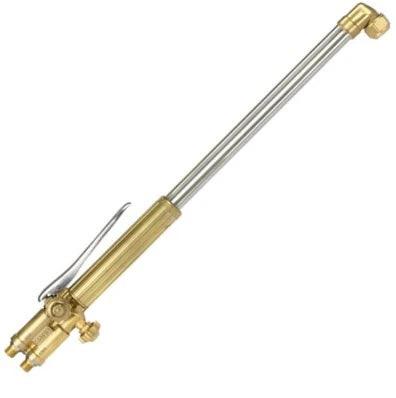
A torch tip that pops, snaps, or backfires during oxy-fuel cutting usually indicates blocked tip passages, incorrect gas pressure, overheating, loose tip seating, damaged torch components, or improper cutting technique. Repeated popping should never be ignored because it can progress into sustained backfire or flashback conditions that damage regulators, hoses, flashback arrestors, and torch assemblies.
Common Symptoms
Sharp popping sound during cutting.
Torch flame extinguishes suddenly.
Flame repeatedly snaps back into the tip.
Uneven or unstable preheat flames.
Torch becomes excessively hot during cutting.
Cut quality deteriorates during operation.
Likely Causes
Blocked tip passages: Slag or debris partially restricts oxygen or preheat flow.
Incorrect gas pressure: Oxygen or fuel gas pressure imbalance destabilizes the flame.
Overheating: Excessive tip temperature can trigger repeated backfires.
Loose cutting tip: Improper seating allows gas leakage and unstable flame patterns.
Damaged tip or torch seat: Worn sealing surfaces affect gas distribution.
Incorrect cutting distance: Running the tip too close to the workpiece overheats the torch rapidly.
Contaminated flashback arrestors or hoses: Restricted flow changes gas balance during operation.
Inspection Steps
Shut down the torch and allow all components to cool.
Inspect the tip orifices for slag blockage or damage.
Verify oxygen and fuel-gas pressures match the tip requirements.
Inspect torch seats and tip threads for wear or contamination.
Check flashback arrestors and hoses for restrictions.
Inspect regulator operation for pressure instability.
Confirm the torch is not overheating from improper cutting distance or prolonged use.
Visual Wear Indicators
Distorted or enlarged tip orifices.
Heavy discoloration from overheating.
Carbon buildup or slag around preheat ports.
Uneven flame shape.
Damaged tip seating surfaces.
Common Wrong-Part Mistakes
Using propane tips with acetylene settings or vice versa.
Installing incorrect tip sizes for material thickness.
Using damaged flashback arrestors.
Cleaning tips with oversized cleaners that enlarge the orifices.
Field Fix vs Proper Fix
Field fix: Clean the tip carefully, verify gas pressures, and allow overheated components to cool. Proper fix: Replace damaged tips, service regulators and arrestors, repair worn torch seats, and verify the complete oxy-fuel system matches the cutting application.
Ignored Failure Consequences
Ignoring torch tip popping can increase flashback risk, damage regulators and hoses, overheat torch heads, reduce cut quality, and create serious fuel-gas safety hazards.
Safety Notes
If sustained backfire or flashback occurs, shut down the torch immediately and inspect the entire gas system before reuse. Never continue cutting with unstable flames or repeated popping conditions.
A cutting torch oxygen lever that sticks, binds, or fails to return smoothly is usually caused by internal contamination, damaged valve components, dried lubrication, heat distortion, worn springs, or regulator contamination entering the torch body. A sticking oxygen lever can affect cutting oxygen flow instantly, causing poor cuts, unstable flame behavior, operator fatigue, and unsafe torch handling conditions.
Common Symptoms
Oxygen lever feels stiff or hard to depress.
Lever does not return smoothly after cutting.
Cutting oxygen flow surges or hesitates.
Torch cut quality changes during operation.
Lever binds more as the torch heats up.
Operator must manually pull the lever back up.
Likely Causes
Internal contamination: Dirt, metal particles, or degraded seals inside the oxygen valve assembly can cause sticking.
Heat distortion: Excessive torch overheating may warp internal components or dry out lubrication.
Damaged return spring: Weak or damaged springs prevent smooth lever return.
Improper lubrication: Oxygen-compatible components require proper handling. Incorrect lubricants can create dangerous contamination risks.
Regulator contamination: Moisture, oil, or debris entering the oxygen system can damage torch internals.
Physical damage: Dropped torches or bent lever assemblies may bind mechanically.
Inspection Steps
Shut off gas supply and bleed the system fully before inspection.
Inspect the oxygen lever pivot for visible damage or contamination.
Check for heat discoloration around the torch head and valve body.
Verify regulator and hose connections are clean and dry.
Inspect oxygen hoses for internal deterioration or contamination.
Test lever movement cold and after brief heating cycles.
Common Wrong-Part Mistakes
Installing incorrect valve kits or seal materials.
Using non-approved lubricants in oxygen systems.
Replacing regulators when the torch valve assembly is the actual problem.
Ignoring contaminated hoses or flashback arrestors.
Field Fix vs Proper Fix
Field fix: Clean external pivot points carefully and verify the torch is not overheating during use. Proper fix: Rebuild or replace damaged oxygen valve components, remove contaminated hoses or regulators, and service the torch using oxygen-compatible repair procedures only.
Ignored Failure Consequences
Ignoring a sticking oxygen lever can lead to unstable cuts, torch overheating, flashback risks, oxygen leaks, operator fatigue, and accelerated internal valve damage.
Safety Notes
Never use petroleum-based lubricants on oxygen system components. Oxygen contamination can create severe fire and explosion hazards. Always bleed pressure from regulators and hoses before servicing oxy-fuel equipment.
Sources Checked
Lincoln Electric accessories and welding support catalogs
An oxy-fuel hose leak should be treated as an immediate safety problem, not a minor nuisance. Leaks most often show up at hose fittings, regulator connections, torch inlets, cracked hose jackets, worn check valves, flashback arrestors, or damaged crimp ends. If oxygen or fuel gas is leaking, shut the cylinders off, bleed pressure from the system, ventilate the area, and inspect before relighting the torch.
Common Symptoms
Hissing sound near regulator, hose, torch, or fittings.
Fuel-gas odor around the work area.
Flame changes when the hose is moved.
Regulator pressure drops while the torch valves are closed.
Bubbles appear during approved leak-solution testing.
Hose jacket is cracked, burned, cut, soft, swollen, or oil-contaminated.
Likely Leak Points
Cylinder valve to regulator: Damaged seats, loose regulator nuts, dirt, or wrong connections can leak at the cylinder outlet.
Regulator outlet fittings: Loose hose nuts, worn sealing faces, or cross-threaded fittings can leak under pressure.
Hose crimp ends: Repeated bending near the ferrule can crack the hose internally.
Flashback arrestors and check valves: Damaged threads or worn seals can leak at either side of the device.
Torch inlet connections: Loose nuts or damaged threads can leak where hoses attach to the torch handle.
Hose body: Burns, cuts, abrasion, dry cracking, or chemical contamination can create pinhole leaks.
Inspection Steps
Close both cylinder valves.
Open torch valves briefly to bleed system pressure, then close the torch valves.
Back out regulator adjusting screws before repressurizing.
Visually inspect the full hose length for burns, cuts, kinks, swelling, oil, grease, and abrasion.
Check all fitting threads, nuts, crimp sleeves, flashback arrestors, and torch inlets.
Repressurize one gas side at a time.
Apply approved leak detection solution to fittings and suspect hose areas.
Watch for growing bubbles. Any bubble formation means repair or replacement is required.
Do not use a flame to check for leaks.
Regulator Drop Test
With the torch valves closed and the system pressurized, close the cylinder valve and watch the working-pressure gauge. A pressure drop can indicate a downstream leak in the regulator outlet, hose, arrestor, check valve, or torch valve. Test oxygen and fuel-gas sides separately so the leak path is easier to isolate.
What To Verify Before Ordering Hose
Gas service: oxygen/fuel-gas twin hose or single-line hose.
Fuel type: acetylene, propane, propylene, natural gas, or alternate fuel.
Hose grade required for the fuel gas being used.
Inside diameter and length.
Fitting size and thread direction.
Compatibility with regulators, torch handle, check valves, and flashback arrestors.
Common Wrong-Part Mistakes
Using hose not rated for the fuel gas.
Mixing oxygen and fuel-gas fittings incorrectly.
Reusing damaged hose nuts or crushed sealing faces.
Skipping check valves or flashback arrestors after hose replacement.
Repairing hose with tape instead of replacing the damaged assembly.
Field Fix vs Proper Fix
Field fix: Tighten a loose fitting only after depressurizing the system and confirming the threads and sealing surfaces are undamaged. Proper fix: Replace leaking hose assemblies, damaged fittings, failed check valves, leaking flashback arrestors, or contaminated regulators. Do not tape, clamp, or splice damaged oxy-fuel hose unless the repair method is approved by the hose and equipment manufacturer.
Ignored Failure Consequences
Ignoring an oxy-fuel hose leak can lead to fire, flashback, regulator damage, unstable flame settings, oxygen-enriched clothing or work areas, fuel-gas accumulation, and serious injury. Fuel-gas leaks are especially hazardous in pits, confined spaces, vehicles, and poorly ventilated shops.
Safety Notes
Keep oil and grease away from oxygen equipment.
Never check leaks with an open flame.
Ventilate the area before relighting any torch.
Do not use damaged, burned, cracked, swollen, or contaminated hose.
Keep cylinders closed when equipment is not in use.
Use proper PPE for oxy-fuel cutting and heating work.
Sources Checked
Uploaded welding accessory catalogs
Uploaded welding PPE and safety catalog references
Existing oxy-fuel troubleshooting coverage on the blog
The Oxylance Sure Cut Lance System Kit is a high-intent replacement and upgrade option for shops that cut seized pins, heavy scrap, cast material, thick plate, stainless, aluminum, or contaminated metal, where a standard oxy-fuel torch or carbon arc gouging setup may be too slow. This post focuses on what comes in the JRSC2024S-REG kit, what wears out first, what spares to keep on hand, and when this exothermic cutting setup makes sense.
Important safety note: exothermic cutting uses oxygen and burning rods. This is not a casual cutting accessory. Use only approved compressed air for breathing, use oxygen only with Sure Cut rods, keep oil and grease away from oxygen equipment, never operate the system alone, and keep a fire watch nearby.
Key Takeaways
Best use case: heavy cutting, piercing, gouging, demolition, seized pin removal, and cutting metal that is difficult for a normal torch.
Verified ASIN: B07HFGTHZQ is listed as the Oxylance Sure Cut Lance System Kit with G250-150-540 regulator, JRSC2024S-REG.
The verified kit listing includes holder, regulator, 25 ft oxygen hose, 25 ft power lead, 25 ft ground lead with striker plate, 1/4 in and 3/8 in collet, 26 in tool box, 12 each 1/4 in x 24 in Sure Cut rods, and 12 each 3/8 in x 24 in Sure Cut rods.
The first consumables to plan around are Sure Cut rods; the first small wear items to inspect are collets, collet nut, collet grommet, oxygen hose, power lead, ground lead, striker plate, and thermal shutoff or anti-slag safety device.
Recommended spare quantity: keep at least one extra rod bundle per rod size used regularly, plus spare collets and oxygen-safe hose/fitting inspection supplies.
Problem / Context: When a Normal Torch Is Not Enough
A standard oxy-fuel torch is excellent for clean carbon steel, but it can struggle when the job involves thick sections, corroded pins, cast iron, stainless, aluminum, concrete-embedded metal, or dirty demolition work. The Oxylance Sure Cut system is marketed for cutting ferrous and non-ferrous metals and for cutting without preheating or cleaning the material first.
That makes this kit a better fit for field repair, equipment teardown, salvage work, structural demolition, gouging, pin removal, and emergency cutting than for light fabrication. If you only need clean sheet-metal cuts, a plasma cutter or oxy-fuel setup may be more practical. If you need to burn through heavy or ugly material, the Sure Cut kit is the upgrade path.
What Comes In The Oxylance JRSC2024S-REG Kit
Item
Verified included?
Why it matters
Sure Cut holder
Yes
Main handle assembly for holding and feeding the cutting rod
G250-150-540 regulator
Yes
High-flow oxygen regulator included with the REG version
25 ft x 5/16 in oxygen hose
Yes
Oxygen delivery to the holder
25 ft #4 power lead
Yes
Electrical lead used for ignition/operation setup
25 ft #4 ground lead with striker plate
Yes
Ground path and striker plate for starting the rod
1/4 in and 3/8 in collet
Yes
Matches the included rod diameters
12 each 1/4 in x 24 in Sure Cut rods
Yes
Smaller rod size for lighter cutting and gouging work
12 each 3/8 in x 24 in Sure Cut rods
Yes
Larger rod size for heavier cutting and gouging work
26 in tool box
Yes
Storage for kit components and rods
Product Recommendation: Best Overall Exothermic Cutting Kit
Best overall option for a complete Sure Cut setup: choose the JRSC2024S-REG kit when you want the holder, high-flow regulator, oxygen hose, power lead, ground lead, collets, storage box, and starter rod assortment in one package.
Holder, G250-150-540 Regulator, 25โ X 5/16โ Oxygen Hose
25โ X #4 Power Lead, 25โ X #4 Ground Lead w / Striker Plate
1/4โ and 3/8โ Collet, 26โ Tool Box
12 ea. 1/4โ X 24โ Sure Cut Rods
12 ea. 3/8โ X 24โ Sure Cut Rods
Last update on 2026-06-05 / Affiliate links / Images from Amazon Product Advertising API
Who Should Buy This Kit?
Heavy equipment repair shops removing seized pins, bushings, and frozen hardware.
Demolition crews cutting mixed or contaminated metal.
Farm, industrial, and salvage users who need field cutting capability.
Shops that already understand oxygen safety and hot-work fire-watch procedures.
Users who want a complete kit instead of piecing together holder, regulator, hose, leads, and rods separately.
Who Should Skip It?
Beginner welders looking for a general cutting tool.
Shops without proper hot-work controls, fire watch, PPE, and oxygen handling procedures.
Users cutting only thin clean sheet metal.
Anyone expecting a low-spatter, precision-cut finish like a CNC plasma table.
Anyone working near flammable material without a controlled work area.
What Wears Out First
The rods are the main consumable. Once you start cutting, rod inventory disappears faster than most buyers expect, especially on thick pins, castings, demolition scrap, or gouging jobs. The kit includes 24 rods total, but a production or field repair shop should treat those as a starter supply, not a long-term stock level.
Sure Cut rods: consumed during every cut.
Collets: inspect for heat damage, deformation, rod slippage, and poor grip.
Collet nut and grommet: inspect when the rod does not hold firmly or the seal looks damaged.
Oxygen hose: inspect for burns, cuts, cracking, fitting damage, contamination, or leaks.
Ground lead and striker plate: inspect for loose connections, damaged cable, and poor starting behavior.
Thermal shutoff / anti-slag safety device: inspect and replace only according to manufacturer guidance.
Many cutting problems get blamed on the rod, but the real cause is often oxygen flow, rod angle, poor grounding, a damaged collet, or using the wrong rod size for the material. Before ordering replacement parts, inspect the full path: oxygen cylinder and regulator, hose, holder, collet, rod, ground lead, striker plate, and work area.
If the rod will not stay lit, check oxygen flow and starting technique before assuming the rods are defective.
If the rod slips, check collet fit and collet wear before increasing force.
If slag blows back toward the user, stop and reassess angle, position, PPE, and fire-watch coverage.
If oxygen equipment has oil, grease, or unknown contamination, do not use it.
If Ignored
Ignoring worn or contaminated Sure Cut components can create serious hazards. Oxygen leaks, oil or grease contamination, damaged hoses, poor work positioning, and missing fire-watch procedures can turn a cutting job into a fire or injury event. Consumables are cheap compared with the risk of forcing damaged oxygen equipment back into service.
Recommended Spare Quantity
Part / consumable
Minimum spare level
Heavy-use spare level
1/4 in x 24 in Sure Cut rods
25 rods
50+ rods
3/8 in x 24 in Sure Cut rods
25 rods
50+ rods
1/4 in collet
1 spare
2+ spares
3/8 in collet
1 spare
2+ spares
Collet nut / grommet
1 set
2+ sets
Oxygen hose inspection supplies
Before every job
Before every shift
Fire-watch equipment
Required
Required plus backup extinguisher plan
Recommended Shop Setup
Store rods dry, clean, and away from oil or grease.
Keep oxygen equipment dedicated and clean.
Use a controlled hot-work area with fire watch.
Keep proper PPE near the cutting station: welding helmet or face shield, safety glasses, FR clothing, gloves, hearing protection, and respiratory protection where needed.
Keep spare rods in both 1/4 in and 3/8 in sizes if both collets are used.
Inspect hose, regulator, fittings, collets, holder, leads, and striker plate before each job.
Comparison Table: Sure Cut Kit vs Other Cutting Options
Option
Best for
Weakness
Buyer intent
Oxylance Sure Cut JRSC2024S-REG
Heavy cutting, gouging, demolition, seized pins, mixed metal
Requires oxygen safety discipline and rod inventory
Best overall heavy-duty upgrade
Standard oxy-fuel torch
Clean carbon steel cutting and heating
Can struggle on some non-ferrous, dirty, or very heavy jobs
Budget option if already owned
Carbon arc gouging
Gouging welds and removing metal
Requires suitable power source and leaves process-specific cleanup
Shop-based alternative
Plasma cutter
Cleaner cuts on compatible material
Limited by machine capacity, air quality, and consumables
Precision upgrade path
Abrasive cutoff tools
Small stock, field trimming, quick cuts
Slow and consumable-heavy on thick sections
Related accessory category
Related Parts Breakdown
No confirmed Weld Support Parts parts breakdown page was found for the Oxylance Sure Cut JRSC2024S-REG kit. For fitment, rely on the manufacturer parts list and verify replacement part numbers before ordering holder components, collets, grommets, hose, power lead, ground lead, striker plate, or safety devices.
ASIN B07HFGTHZQ is listed on Amazon as the Oxylance Sure Cut Lance System Kit with G250-150-540 regulator, JRSC2024S-REG.
Does the JRSC2024S-REG kit include rods?
Yes. The verified Amazon listing and Oxylance catalog information show 12 each 1/4 in x 24 in Sure Cut rods and 12 each 3/8 in x 24 in Sure Cut rods included with the kit.
What rods should I keep as spares?
For most buyers, keep both 1/4 in and 3/8 in rods on hand if you use both included collets. A practical starting point is one extra 25-count bundle per size used regularly.
Is this better than a plasma cutter?
Not for every job. Plasma is usually better for cleaner controlled cuts within the machineโs rated capacity. The Sure Cut system is more attractive for heavy, dirty, awkward, or mixed-material cutting where preheating and surface prep are not practical.
Can I use this system alone?
No. Oxylance safety instructions state not to operate the cutting system alone and to have a fire watch or safety person standing by.
Can oil or grease be near the rods or oxygen equipment?
No. Oxygen equipment and rods must be kept away from oil, grease, and other contamination that can react with oxygen.
Safety Notes
Never operate the cutting system alone.
Always have a fire watch or safety person standing by.
Never use oxygen for breathing.
Use only approved compressed air for breathing applications.
Use oxygen only with Sure Cut rods.
Do not use the system if oxygen leaks are present.
Do not use contaminated rods or contaminated equipment.
Keep rods and oxygen equipment away from oil, grease, and reactive substances.
Wear fire-resistant clothing, eye and face protection, gloves, hearing protection, and respiratory protection where required.
Follow employer, site, OSHA, AWS, ANSI, and manufacturer hot-work rules.
Sources Checked
Sources checked included the Amazon product listing for ASIN B07HFGTHZQ, Oxylance Sure Cut System catalog, Oxylance Sure Cut safety instructions, and Weld Support Parts blog pages for PPE-related internal linking. Product details, kit contents, rod sizes, and safety notes were limited to verified source information. Prices, current availability, certifications beyond source listings, and exact replacement-part availability were not invented.
Backfire and flashback events in oxy-acetylene torches indicate improper gas flow, tip condition issues, or unsafe operating practices. While a backfire is typically a momentary pop, a flashback is more serious and can travel into the torch or hoses, creating a significant safety hazard.
Key Takeaways
Backfire is a short pop; flashback is a sustained flame reversal
Dirty or damaged tips are a common cause
Incorrect gas pressures disrupt flame stability
Blocked hoses or regulators increase flashback risk
Flashback arrestors are critical safety components
Problem / Context
Oxy-fuel systems rely on controlled gas flow and proper mixing at the torch tip. When this balance is disrupted, combustion can occur inside the tip or travel backward into the system. Understanding the difference between backfire and flashback is essential for safe troubleshooting and prevention.
Root Causes
Clogged or dirty tip: restricts gas flow and causes unstable combustion
Incorrect gas pressure: improper oxygen-to-fuel ratio
Loose tip or connections: creates internal leaks
Overheating tip: increases risk of ignition inside the tip
Blocked hoses or regulators: restricts flow and pressure stability
Missing flashback arrestors: no protection against reverse flame travel
Solution / Explanation
Clean torch tips using proper tip cleaners sized for the orifice
Verify gas pressures match manufacturer recommendations
Tighten all connections securely before operation
Allow the torch to cool if overheating occurs
Inspect hoses and regulators for restrictions or damage
Install and maintain flashback arrestors on both oxygen and fuel lines
Specs / Verification Notes
Operating Pressure (Oxygen): Unknown (Verify)
Operating Pressure (Acetylene): Unknown (Verify)
Tip Size: Application dependent
Flashback Arrestor Rating: Unknown (Verify)
Hose Type: Grade R or T (application dependent)
Comparison Table
Condition
Symptom
Severity
Correction
Backfire
Loud pop, flame extinguishes
Low
Clean tip, adjust pressure
Flashback
Hissing or whistling, flame inside torch
High
Clean or replace the tip
Clogged Tip
Unstable flame
Medium
Hissing or whistling, flame inside the torch
Low Gas Pressure
Weak or sputtering flame
Medium
Adjust regulator settings
Safety Notes
Follow ANSI Z49.1 and CGA safety guidelines for oxy-fuel systems. Always use flashback arrestors and check valves. Shut off the gas supply immediately if a flashback is suspected. Never operate damaged equipment.
FAQ
What is the difference between backfire and flashback?
Backfire is a brief pop with flame extinguishing, while flashback involves flame traveling back into the torch or hoses.
What should be done during a flashback?
Immediately shut off oxygen first, then fuel gas, and inspect the system before reuse.
Can dirty tips cause flashback?
Yes. Restricted gas flow from clogged tips is a common trigger for both backfire and flashback.
Next Step
Inspect the torch system, clean the tip, and verify gas pressures before next use. Install flashback arrestors if not already present to reduce risk.
Sources Checked
ANSI Z49.1 Safety in Welding and Cutting
CGA (Compressed Gas Association) safety guidelines
Victorโs ST900FC is a workhorse torch handle for oxy-fuel cutting and heating. Itโs the current flow-control version of the classic 100-series design, built for reliability in fabrication shops, maintenance departments, and field repair work. This guide covers specs, performance details, and selection notes for welders and fabricators.
Key Takeaways
Heavy-duty Victor 0381-1621 torch assembly
Part of Victorโs ST900FC line with built-in Flash-Guardยฎ check valves
Compatible with standard Victor cutting attachments (CA1350, CA2460 series, etc.)
Brass body, high-flow valves, rugged construction for shop or field use
Solid choice for oxy-fuel cutting, gouging, and preheat/heating work
What the ST900FC Solves
1. Flashback protection
Built-in Flash-Guardยฎ check valves help meet OSHA/ANSI recommendations for flashback prevention.
Use flashback arrestors or check valves per ANSI Z49.1 and OSHA 1910.253.
Open oxygen valves slowly to avoid pressure shock.
Purge hoses before lighting the torch.
Wear Z87.1-rated eye/face protection.
Use fuel-specific tips โ propane tips differ from acetylene tips.
FAQ
Does the ST900FC include a cutting attachment? Yes, because this is a one piece torch. Most boxed assemblies include only the torch handle. Cutting attachments are typically sold separately.
Is it compatible with my existing Victor tips? Yes โ when used with the correct Victor cutting attachment. It uses 1 Series tips.
Can I run propane? Yes. Use propane-rated cutting/heating tips and proper hose ratings.
Is this considered a heavy-duty torch? Yes. The ST900FC is in Victorโs heavy-duty line.