Category: Gas Apparatus Support

Cutting Torches, Regulators, parts breakdowns, and accessories

  • Welding Gas Regulator Leak Detection: How to Test Properly

    Welding Gas Regulator Leak Detection: How to Test Properly

    A leaking gas regulator can spell disaster in any welding setup. Whether youโ€™re running MIG, TIG, or oxy-fuel equipment, a compromised regulator risks gas loss, safety hazards, and poor weld quality. Fortunately, testing for leaks is simple and only takes a few minutes โ€” if you know what youโ€™re doing.

    In this guide, weโ€™ll walk through how to properly check your welding gas regulator for leaks, what tools you need, and the signs that itโ€™s time to replace or repair your setup.


    Why Regulator Leaks Are a Big Deal

    A leaking regulator doesnโ€™t just waste expensive shielding gas like argon, COโ‚‚, or acetylene โ€” it can cause:

    • Porosity in welds due to inconsistent gas flow
    • Backfire or flashbacks in oxy-fuel setups
    • Oxygen enrichment or fire risk in poorly ventilated areas
    • Shortened regulator lifespan and failed pressure seals

    Even small leaks can snowball into bigger problems if left unchecked.


    Tools Youโ€™ll Need

    You donโ€™t need a high-tech lab setup to test your regulator. Hereโ€™s what you need:

    • Soapy water solution (dish soap with no oil + water in a spray bottle). Be sure to get soap with no oil because it can not be around compressed oxygen.
    • Leak detection fluid (optional but more precise)
    • PPE: gloves and eye protection
    • Regulator and gas cylinder
    • Wrench for tightening connections

    How to Test a Regulator for Leaks

    1. Check for Physical Damage

    Before you even connect it, visually inspect the regulator:

    • Cracks or corrosion around the body
    • Bent gauges or broken needle indicators
    • Loose fittings or broken inlet/outlet threads

    If you spot any of this, donโ€™t bother testing โ€” replace it.

    2. Secure the Regulator to the Cylinder

    Use the correct wrench to firmly tighten the regulator onto the gas cylinder valve. Make sure no Teflon tape is used on CGA connections โ€” they seal via metal-to-metal compression, not threads.

    3. Open the Cylinder Valve Slowly

    With the regulatorโ€™s pressure-adjustment knob fully backed out (loose), crack the cylinder valve open just slightly, then fully open it. You should see tank pressure register on the gauge.

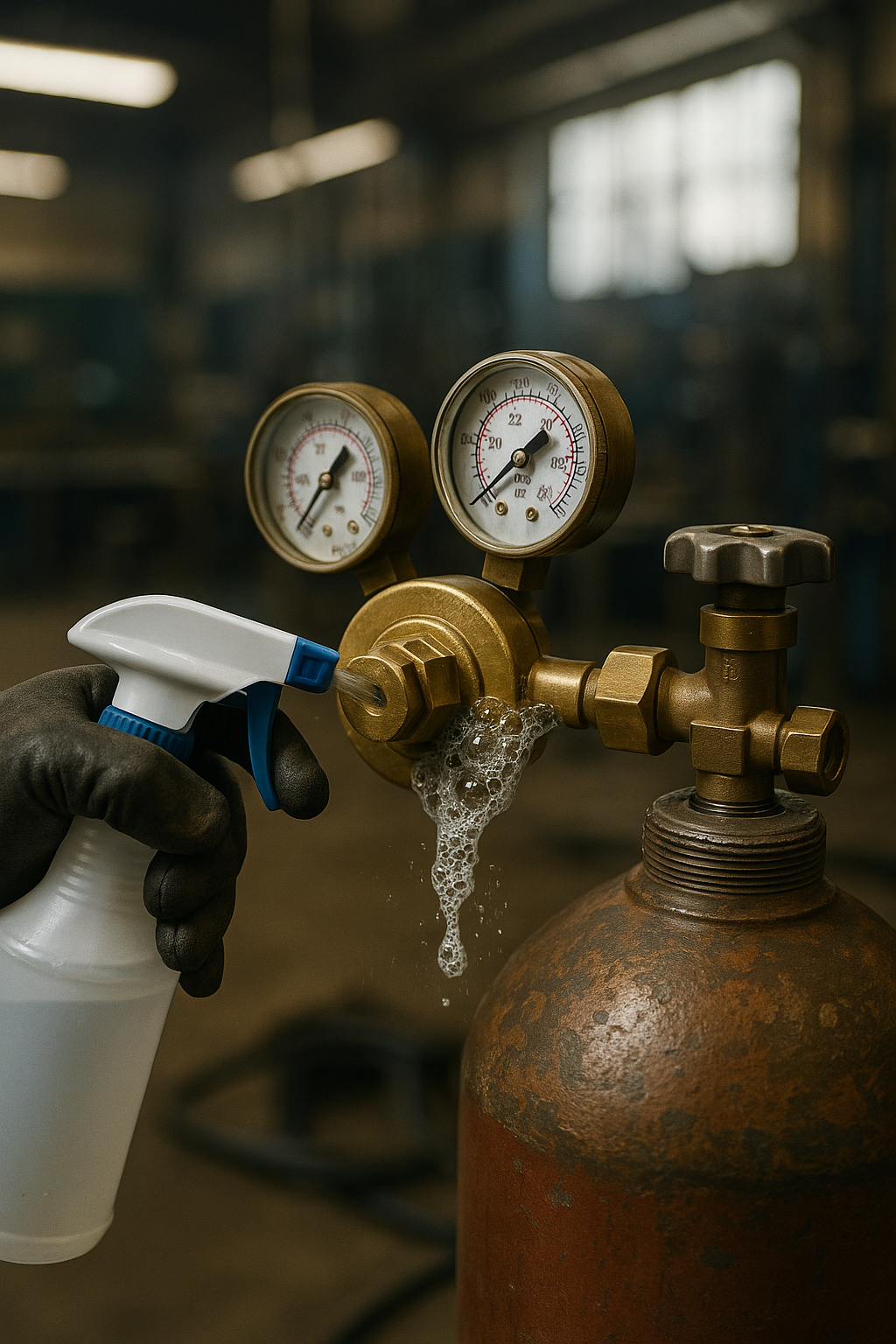
    4. Apply Soapy Water or Leak Detector

    Spray the soapy water solution around these key areas:

    • Cylinder-to-regulator connection
    • Regulator body seams
    • Gauge threads and faces
    • Outlet fitting and hose connection

    Watch closely for bubbling โ€” even small ones signal a leak.

    Pro tip: Use a leak detection fluid rated for welding gas systems if available. Itโ€™s more sensitive than soap and less likely to corrode brass fittings.

    5. Pressurize and Retest

    If no bubbles show at tank pressure, dial in 10โ€“20 psi on the working pressure side, then recheck the outlet connections. This ensures no leaks develop once the system is live.


    What to Do If You Find a Leak

    • At the tank connection: Try reseating and re-tightening the regulator. If it still leaks, the regulator seat may be damaged or the cylinder valve may be faulty.
    • At the body or gauges: Replace the regulator. Internal leaks canโ€™t be repaired easily or safely.
    • At the outlet or hose: Check fitting tightness. If it still leaks, replace the hose or fitting.

    Never use a leaking regulator during welding. Itโ€™s not worth the risk.


    When to Replace Your Regulator

    • If you see persistent leaks despite tightening
    • If your regulator is more than 5โ€“7 years old and shows wear
    • If gauges are inaccurate or slow to respond
    • If threads or seats are damaged

    Upgrading to a quality regulator can save gas and headaches long term.


    Final Thoughts

    Testing for gas leaks should be a part of your routine maintenance, especially if your welds suddenly start looking rough or your gas tanks are draining too fast. A simple spray test can help prevent wasted gas, poor welds, and serious safety issues.

    Note: Some of the links on this page may be affiliate links. If you click and buy, we may earn a small commission at no extra cost to you. We only recommend gear we trust.


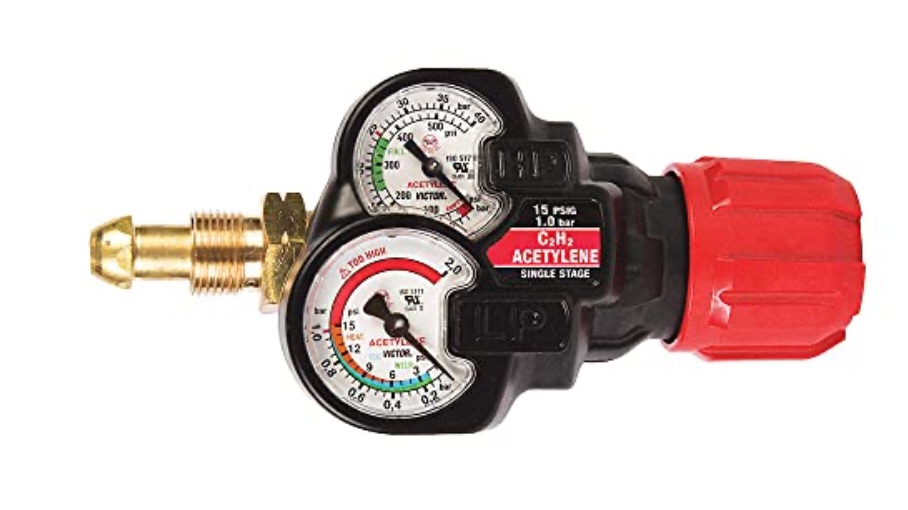
    If you’re regulator needs to be replaced, here are some options for replacement. Gas Regulation Replacement

  • Torch Safety: What Are Flashback Arrestors? Need Them?

    Torch Safety: What Are Flashback Arrestors? Need Them?

    Introduction & Overview

    When working with welding torches, safety is paramount. Torch Safety: What Are Flashback Arrestors? Need Them? is a crucial component designed to enhance safety by preventing dangerous reverse gas flows, which can lead to accidents and equipment damage. This product is essential for anyone using gas torches, ensuring both protection and peace of mind during operations.

    Key Features

    Torch Safety: What Are Flashback Arrestors? Need Them? Features robust construction and advanced mechanisms that effectively stop backflow and flashbacks. The product typically includes non-return valves, flame arrestors, and pressure-sensitive components, making it invaluable for maintaining equipment integrity and operator safety. These features ensure a safer working environment, making flashback arrestors a must-have for any serious torch user.

    Pros & Cons

    Pros:
    – Prevents dangerous gas backflow
    – Enhances operator safety
    – Protects equipment from damage
    – Easy integration into existing setups

    Cons:
    – Requires regular maintenance
    – The initial cost may be high for some users

    Who Itโ€™s For

    Torch Safety: What Are Flashback Arrestors? Need Them? is ideal for both amateur and professional welders who use gas torches regularly. It’s particularly beneficial for those working in high-risk environments where gas mixtures could lead to hazardous situations without proper safety measures in place. It’s also suitable for educational settings where safety is a top priority.

    What Makes It Unique

    What sets Torch Safety: What Are Flashback Arrestors? Need Them? Apart is its dual functionality of preventing both reverse gas flow and potential flashback incidents. The product’s high-quality materials and precision engineering ensure reliable performance, delivering unmatched peace of mind. This sets it apart from simpler safety solutions that may only address one aspect of torch safety.

    Buying Tips

    When considering Torch Safety: What Are Flashback Arrestors? Need Them?ย Look for options that fit your specific torch and gas type. Ensure compatibility with your existing equipment, and consider models with certifications for added assurance. It’s also wise to invest in units that offer easy maintenance to extend lifespan and efficiency. Accessories like spare non-return valves can be beneficial.

    Conclusion

    In summary, Torch Safety: What Are Flashback Arrestors? Need Them? is an essential investment for ensuring safety and efficiency in any torch-based operation. By preventing dangerous gas backflow and flashbacks, it protects both the user and the equipment. This product is a must-have for welders prioritizing safety.

    We may earn a small commission through Amazon affiliate links, at no extra cost to you.

Try Amazon Prime Free