Category: Abrasive Support

  • How to Prep Metal for Welding (Step-by-Step Guide)

    How to Prep Metal for Welding (Step-by-Step Guide)

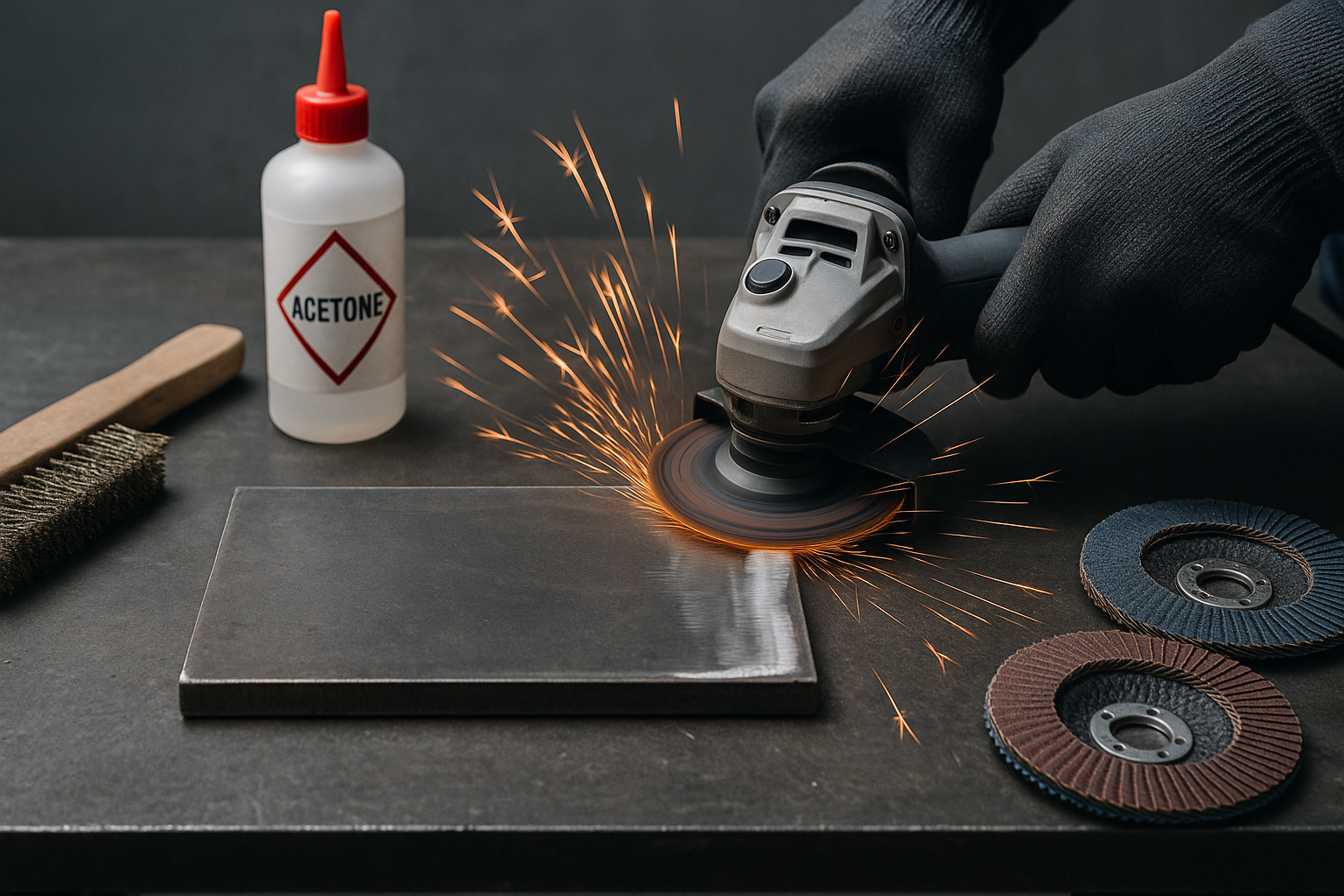
    Proper metal prep is the difference between a clean, strong weld and fighting porosity, inclusions, and arc instability. This guide breaks down exactly how to clean, grind, degrease, and fit-up steel, stainless, and aluminum so you can weld with fewer defects and less rework.


    Key Takeaways

    • Clean metal = fewer porosity and arc-start issues. Remove mill scale, rust, paint, oil, and coatings.
    • Use the right abrasives: flap discs for beveling, hard wheels for aggressive cleaning, and stainless-only tools for stainless.
    • Fit-up accuracy determines distortion control and penetration.
    • Always check safety: ANSI Z87.1 eye protection, proper ventilation, and PPE.
    • Improper prep is one of the Top 3 causes of weld failure per AWS D1.1 commentary.

    Where to Buy (Tools for Metal Prep)

    Arc Weld Store:

    40-grit flap discs โ€” Heavy removal

    Weldcote 10668 Flap Discs C-Prime Ceramic 4.5" 40 Grit XL 7/8" Arbor 10 Pack T27 13300 RPM

    “>
    Weldcote 10668 Flap Discs C-Prime Ceramic 4.5" 40 Grit XL 7/8" Arbor 10 Pack T27 13300 RPM

    Weldcote 10668 Flap Discs C-Prime Ceramic 4.5" 40 Grit XL 7/8" Arbor 10 Pack T27 13300 RPM

    $93.54

    In Stock

    View Product

    80-grit flap discs โ€” Finishing before weld

    Weldcote 10670 XL Flap Discs - C-Prime Ceramic 4.5" 80 Grit 7/8" Arbor - 10 Pack

    “>
    Weldcote 10670 XL Flap Discs - C-Prime Ceramic 4.5" 80 Grit 7/8" Arbor - 10 Pack

    Weldcote 10670 XL Flap Discs – C-Prime Ceramic 4.5" 80 Grit 7/8" Arbor – 10 Pack

    $76.93

    In Stock

    View Product

    Amazon (options):

    • No products found.

    • No products found.

    Affiliate Disclosure: As an Amazon Associate, we earn from qualifying purchases.


    How to Prep Metal for Welding

    1. Identify the Material

    Different materials need different prep steps.

    Carbon Steel

    • Remove mill scale (blue/black surface).
    • Grind out rust, paint, coatings, and galvanizing.
    • Bevel edges for thicker plate (ยผ in / 6 mm and up).

    Stainless Steel

    • Use stainless-dedicated wheels only (never shared with carbon steel).
    • Remove heat tint and oxide layers.
    • Clean surface oils with acetone before welding.

    Aluminum

    • Remove oxide layer mechanically (stainless brush).
    • Degrease with acetone or alcohol.
    • Wire-brush immediately before welding โ€” oxide reforms in minutes.

    2. Remove Coatings, Rust, and Mill Scale

    Tools that work:

    • Flap disc (40โ€“60 grit)
    • Hard grinding wheel
    • Wire wheel (for light rust)
    • Needle scaler (heavy rust or slag)

    Remove down to bright, shiny metal. For carbon steel, AWS D1.1 recommends removing contaminants within 1 inch (25 mm) of the weld area.


    3. Degrease and Clean

    Oil, cutting fluid, and shop grime cause porosity.

    • Use acetone or denatured alcohol.
    • Avoid oily solvents like WD-40.
    • Wipe until the rag stays clean.

    Tip: Do solvent cleaning before grinding (to avoid driving oil into the pores) and again after to remove grinding dust.


    4. Fix Edges, Bevels, and Gaps

    Fit-up sets the stage for the entire weld.

    • Bevel: 30โ€“37.5ยฐ for structural steel (AWS standard).
    • Root opening: 1/16โ€“1/8 in. depending on joint.
    • Remove burrs for full penetration.
    • Tack weld at opposite ends to reduce movement.

    5. Clean Again Before Welding

    Right before striking an arc:

    • Blow off dust
    • Wipe with acetone (stainless + aluminum)
    • Ensure the joint is dry โ€” moisture = hydrogen

    Safety Notes

    • Wear ANSI Z87.1 eye protection and face shield when grinding.
    • Use gloves, FR clothing, and hearing protection.
    • Avoid grinding galvanized steel โ€” zinc fumes require strong ventilation or removal + respirator (P100).
    • Keep flammables away โ€” grinding sparks can exceed 1,800ยฐF.
    • Ensure proper fume extraction for stainless to reduce hex-chrome exposure.

    FAQ

    Do I have to remove all mill scale?

    For critical welds (per AWS D1.1), yes. For hobby MIG on light steel, partial removal can work, but expect spatter and inconsistent penetration.

    Can I weld through paint?

    Not recommended. Most paints give off toxic fumes and produce porosity.

    How clean does aluminum need to be?

    Extremely clean. Oxide melts at ~3,700ยฐF; aluminum melts at ~1,200ยฐF. Thatโ€™s why aluminum requires brushing + solvent cleaning.

    Why do my welds have porosity even after grinding?

    Usually oil contamination or moisture. Try degreasing and pre-heating to ~150โ€“200ยฐF.


    Sources Checked

    • AWS D1.1 Structural Welding Code โ€“ Steel
    • Miller, Lincoln, ESAB abrasive and prep guides
    • ANSI Z87.1 PPE requirements
  • Norton 53336 Wire Cup Brush Review & Buying Guidew

    Norton 53336 Wire Cup Brush Review & Buying Guidew

    Norton 53336 Wire Cup Brush Review & Buying Guide

    Note for Readers: This post may contain affiliate links. If you purchase through them, we may earn a small commission at no cost to you. Thank you for supporting our site.

    Introduction

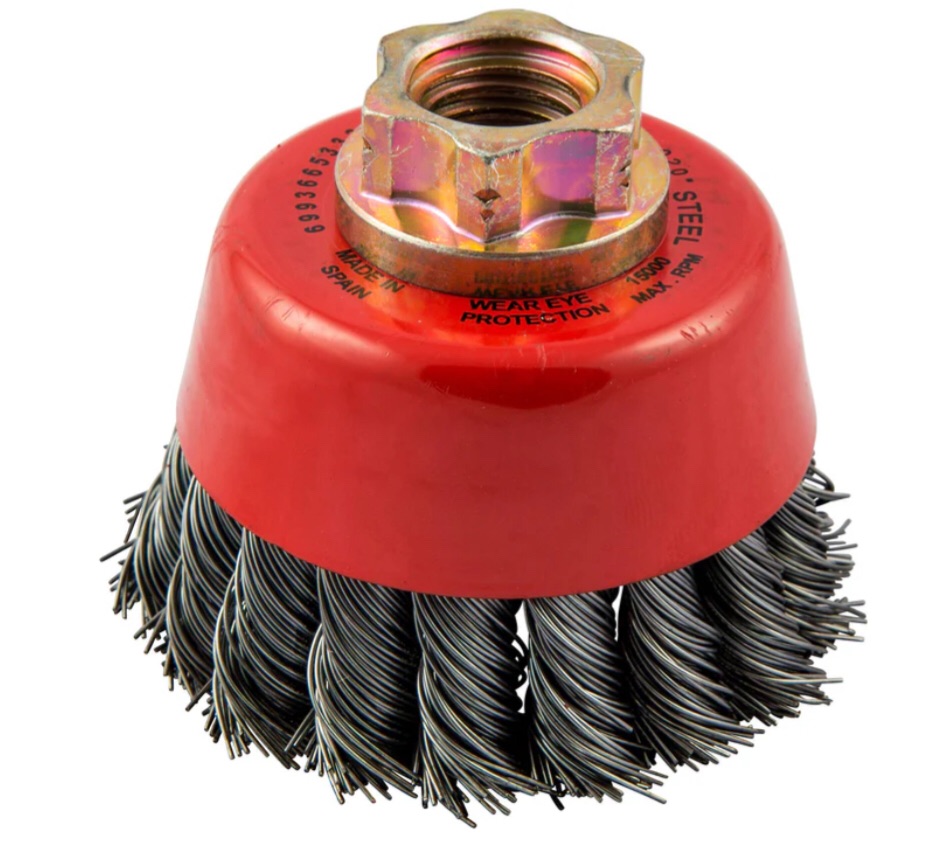
    The Norton 53336 Wire Cup Brush is a high-performance, industrial-grade abrasive wire brush engineered for surface preparation tasks in welding and fabrication. This tool plays a critical role in cleaning, edge blending, weld spatter removal, deburring, and surface-conditioning applications prior to or after welding work.

    Precision-designed for use with right-angle grinders, the Norton 53336 is commonly used by welders, metal fabricators, machinists, maintenance technicians, and vocational students. Itโ€™s particularly valuable in settings where heavy-duty rust removal or slag cleanup is requiredโ€”especially after shielded metal arc welding (SMAW) or flux-cored arc welding (FCAW).

    Types / Variants / Models

    The Norton 53336 wire brush belongs to a broader class of wire wheel brushes and cup brushes manufactured by Norton. While the 53336 is a specific model, Norton offers several variations based on brush style, wire material, and duty capacity:

    Crimped Wire Cup Brushes โ€“ Designed for lighter, flexible brushing; best for general-purpose cleanup.
    Knotted Wire Cup Brushes (like the 53336) โ€“ More aggressive and durable; ideal for heavy-duty deburring and weld cleaning.
    Stainless Steel Wire Variants โ€“ Used when working on non-ferrous metals like aluminum or stainless steel to avoid contamination.

    The Norton 53336 is a knotted wire cup brush, making it suitable for demanding applications where long service life and consistent brush performance are required.

    Key Features or Specifications

    Understanding the real specs of the Norton 53336 (ASIN=B002IPH5H6) helps assess its suitability for heavy fabrication environments:

    Brush Size: 3 inches diameter
    โ†’ Offers a balance between surface coverage and precision, especially useful in tight areas around welds.

    Wire Type: High-Carbon Steel, Knotted
    โ†’ Delivers aggressive material removal on ferrous metals such as carbon steelโ€”ideal for weld slag and spatter removal.

    Wire Gauge: 0.020-inch diameter
    โ†’ Thick enough to handle tough residues, yet fine enough to provide consistent contact with uneven surfaces.

    Thread Size: 5/8โ€-11 UNC Arbor Hole
    โ†’ Compatible with most standard 4 to 5-inch angle grinders used in welding shops across North America.

    Maximum RPM: 12,500
    โ†’ Supports high-speed industrial grinding tools without safety compromise when used correctly.

    Certifications: Meets ANSI B165.1 safety standards
    โ†’ Ensures safe performance in professional shop environments, particularly important for new welders or students in training.

    Each of these specifications ties directly into worksite demands, particularly where time and quality control are crucial.

    Usage & Compatibility

    The Norton 53336 wire cup brush is best used as part of the post-welding surface finishing process. It’s widely applied after processes such as:

    SMAW (Shielded Metal Arc Welding) โ€“ Removes heavy slag efficiently.
    FCAW (Flux-Cored Arc Welding) โ€“ Ideal for chipping away flux residues without damaging the base metal.
    GMAW (MIG Welding) โ€“ Prepares joints by cleaning mill scale or removing oxidation before tacking.
    GTAW (TIG Welding) โ€“ Though less aggressive cleaning is typically needed, the 53336 can still prep surfaces when used carefully.

    Tool Compatibility:

    – Suitable for use with all standard right-angle grinders supporting 5/8″-11 threaded ports.
    – Not recommended for use with die grinders or electric drills, due to mounting differences and RPM mismatches.

    Pros:

    – Fast, aggressive cleaning action
    – Long-lasting wire knot integrity
    – Economical for frequent workshops

    Cons:

    – Not designed for aluminum or stainless unless using a stainless variant
    – Can gouge softer materials if used at incorrect pressure

    Common Applications

    The Norton 53336 is valued across industries and trades for its performance on ferrous metals and weldment cleaning:

    Heavy Equipment Repair โ€“ Removes rust and weld residue from large assemblies.
    Structural Steel Fabrication โ€“ Prepares joints and tidies weld seams in I-beams and trusses.
    Pipeline Welding โ€“ Essential for maintaining weld site cleanliness, especially in high-integrity welds.
    Auto Body Repair (on steel frames) โ€“ Eliminates scale and corrosion to prep for welding.

    Its durability and high RPM capacity make it a go-to in harsh environments where sandblasting isnโ€™t practical and where faster, spot-specific cleaning is needed.

    Tips & Best Practices

    Prep Before Use: Always check the wire knot condition and confirm it is properly threaded onto the grinder arbor.
    Run-In Period: Let the brush spin freely for 60 seconds at full speed before applying it to metalโ€”this tests balance and safety.
    Use Proper Pressure: Allow the wires to do the workโ€”excess pressure can cause premature breakage or tool bounce.
    Protective Gear: Always wear ANSI-rated eye protection, gloves, and a full face shield when using at high speeds.
    Avoid Side Pressure: These brushes are designed for direct-face contact. Using the side can damage the wire tufts and shorten life.
    Maintenance: Store dry, keep away from corrosive environments, and check for wire loss after heavy-duty jobs.

    Conclusion

    The Norton 53336 Wire Cup Brush offers exceptional cleaning strength for welders and fabricators who need efficient, heavy-duty surface prep on steel and iron. Designed for durability and high-speed grinder compatibility, it’s an essential consumable in shops tackling everything from structural steel to machinery repair.

    If you’re a welder or student looking to invest in reliable finishing tools, the Norton 53336 balances price, precision, and performance. It excels where speed and quality intersectโ€”saving time while improving surface integrity before painting, coating, or inspection.

    Affiliate Call to Action

    No products found.

    Check the latest price and availability on Amazon to see if it fits your fabrication needs.
  • Type 1 and Type 27 Cut-Off Wheels: Pros, Cons, and Applications

    Type 1 and Type 27 Cut-Off Wheels: Pros, Cons, and Applications

    # Type 1 and Type 27 Cut-Off Wheels: Product Review & Buying Guide

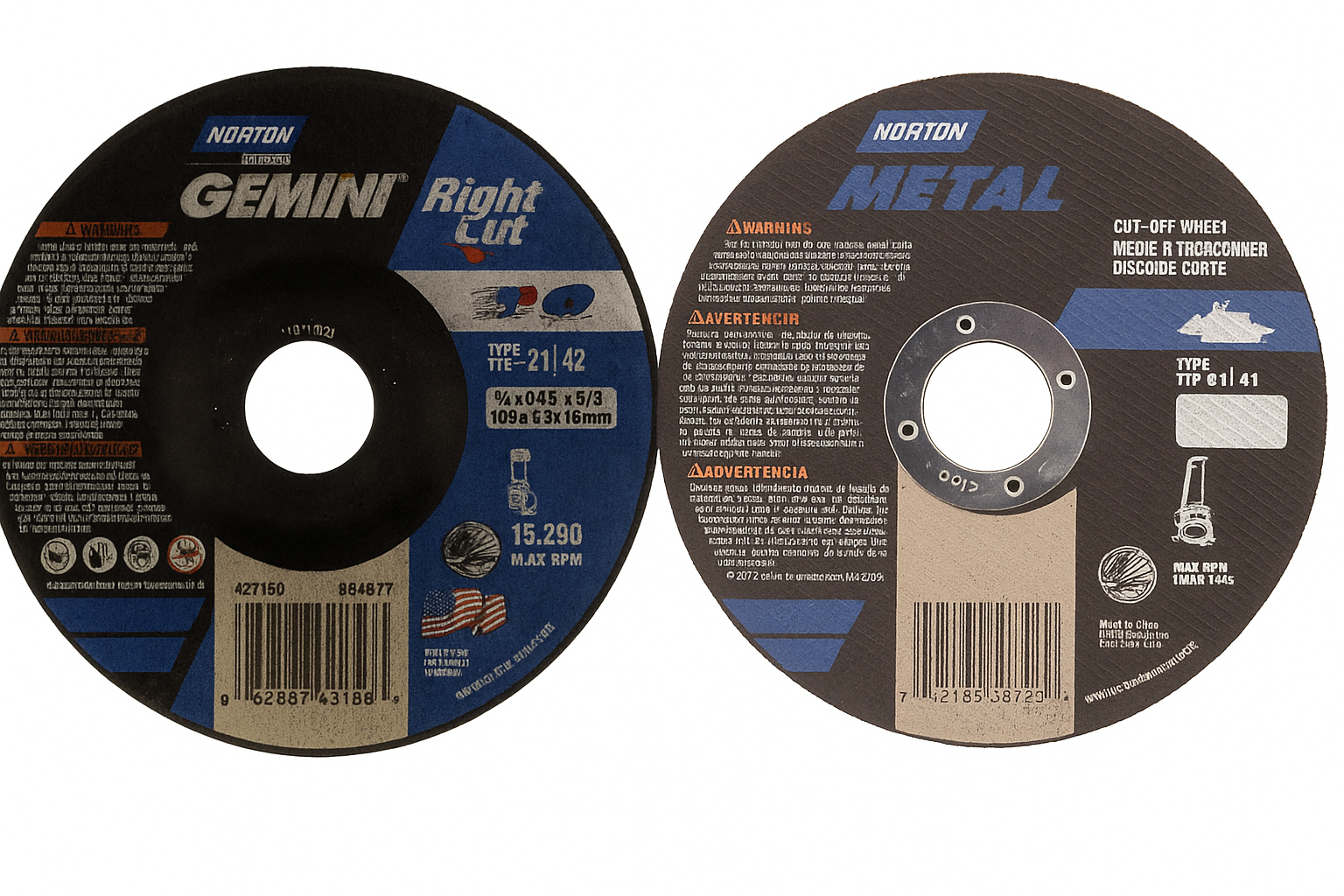
    Cut-off wheels are essential tools for metalworking, fabrication, and construction. Among the most popular are Type 1 (flat) and Type 27 (depressed center) cut-off wheels. Understanding their differences, strengths, and best uses can help you choose the right wheel for your project.

    ## Key Features

    **Type 1 Cut-Off Wheels** are flat, disc-shaped wheels designed for straight, precise cuts. Their thin profile allows for minimal material loss and clean edges. **Type 27 Cut-Off Wheels** feature a depressed center, which provides extra clearance and allows for flush cutting and grinding at an angle.

    Both types are available in various diameters, thicknesses, and abrasive materials (such as aluminum oxide or zirconia alumina), making them suitable for cutting steel, stainless steel, and other metals.

    ## Pros and Cons

    **Type 1 Pros:**
    – Delivers straight, accurate cuts
    – Minimal kerf (material loss)
    – Ideal for tight spaces and precision work

    **Type 1 Cons:**
    – Less versatile for angled or flush cuts
    – Can be more prone to breakage if side pressure is applied

    **Type 27 Pros:**
    – Allows for flush and angle cutting
    – More durable under lateral pressure
    – Versatile for both cutting and light grinding

    **Type 27 Cons:**
    – Slightly thicker, resulting in a wider kerf
    – May not provide as clean a cut as Type 1 in some applications

    ## Applications

    **Type 1 Wheels** are best for straight cuts in metal pipes, rods, and sheet metal. They excel in applications where precision and minimal material loss are critical, such as fabrication shops and automotive repair.

    **Type 27 Wheels** are ideal for jobs requiring both cutting and light grinding, such as weld removal, beveling, and working in hard-to-reach areas. Their design makes them a favorite for construction sites and general metalworking.

    ## Who Should Buy Each Type?

    Choose **Type 1** if you need clean, straight cuts and work primarily with flat stock or in tight spaces. These wheels are perfect for fabricators, mechanics, and anyone needing precision.

    Opt for **Type 27** if you require versatilityโ€”cutting at angles, flush cuts, or occasional grinding. Theyโ€™re well-suited for welders, construction workers, and DIYers tackling a variety of metalworking tasks.

    ## What Makes Them Unique?

    The main distinction lies in their shape and versatility. Type 1โ€™s flat profile is unmatched for straight, accurate cuts, while Type 27โ€™s depressed center offers flexibility for angled work and increased durability. Both types are engineered for safety and efficiency when used with the correct tool and application.

    ## Conclusion

    Selecting the right cut-off wheel depends on your specific needsโ€”precision and minimal waste (Type 1) or versatility and durability (Type 27). Both are indispensable in any metalworking toolkit. We may earn a small commission through Amazon affiliate links, at no extra cost to you.

  • Alumina Oxide vs. Ceramic Flap Discs: Which Is Right for Your Application?

    Alumina Oxide vs. Ceramic Flap Discs: Which Is Right for Your Application?

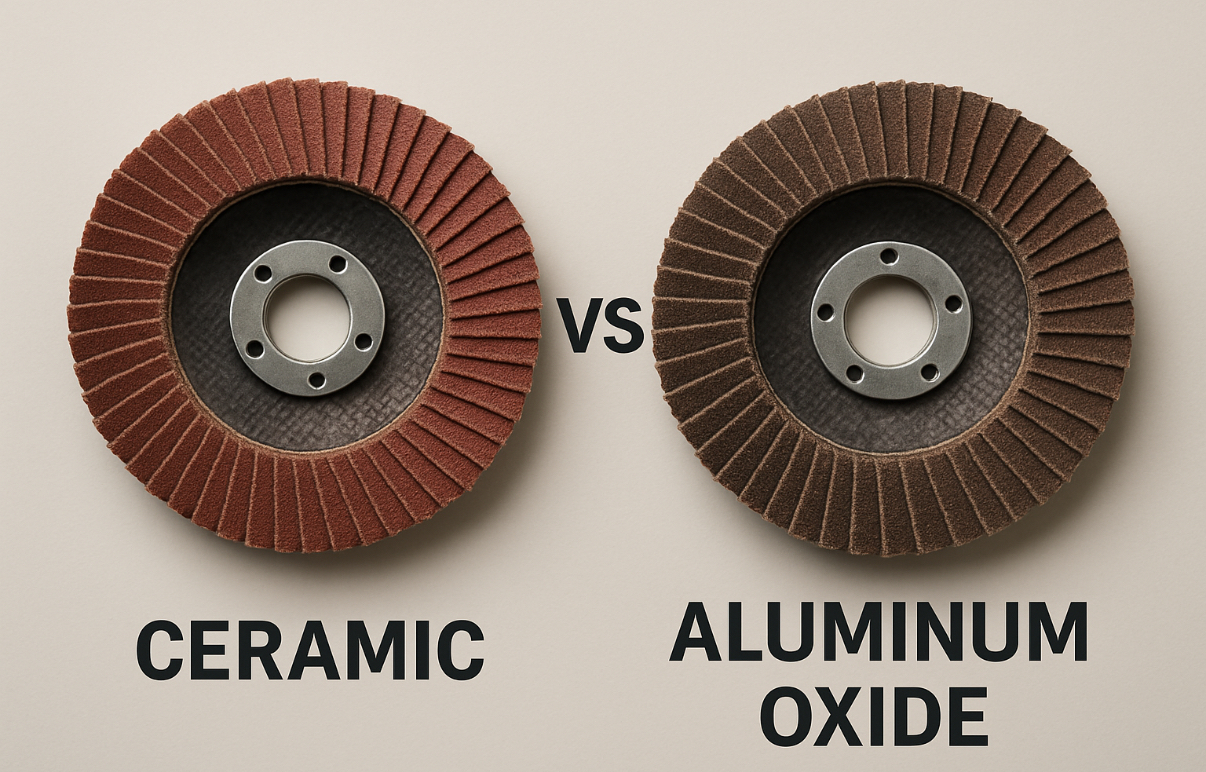
    When it comes to abrasive flap discs, selecting the proper material can significantly influence the efficiency, lifespan, and quality of your grinding and finishing applications. Two of the most common abrasive flap disc materials you’ll encounter are alumina oxide and ceramic. In this post, we’ll compare these two options and help you decide which type will best suit your needs.

    Alumina Oxide Flap Discs: Reliable and Cost-Effective

    Advantages:

    • Cost-Effective: Alumina oxide flap discs are generally more affordable, making them an excellent choice for general-purpose grinding, deburring, and finishing tasks.
    • Versatile: Suitable for use on a variety of metals, including mild steel, aluminum, and other non-ferrous metals.
    • Availability: Widely available across most hardware stores or industrial suppliers.

    Drawbacks:

    • Shorter Life Span: Alumina oxide discs tend to wear out quicker, especially when used on tough metals or demanding applications.
    • Lower Heat Resistance: These discs generate more heat during grinding activities, potentially leading to discoloration or warping of sensitive metals.
    4-1/2″ x 7/8″ 40 Grit[See Price on Amazon]
    4-1/2″ x 7/8″ 60 Grit[See Price on Amazon]
    4-1/2″ x 7/8″ 80 Grit[See Price on Amazon]
    4-1/2″ x 7/8″ 120 Grit[See Price on Amazon]

    Ceramic Flap Discs: Heavy-Duty Performance and Longer Life

    Advantages:

    • Longer Lasting: Ceramic abrasives are engineered to be highly durable, significantly outlasting alumina oxide discs in heavy-duty applications.
    • Cooler Operation: Ceramic flap discs generate less heat during use, making them ideal for working with stainless steel, titanium, or other heat-sensitive alloys.
    • Aggressive Grinding Action: Ceramic discs maintain a sharp edge longer, providing faster and more consistent material removal rates.

    Drawbacks:

    • Higher Initial Cost: Ceramic flap discs do come with a higher upfront price tag, although their longer lifespan and efficiency may offset the initial expense.
    • Not Always Necessary: For lighter jobs or infrequent use, ceramic discs may be considered overkill and not cost-effective.

    Making the Right Choice:

    The decision between alumina oxide and ceramic flap discs largely depends on your specific application and priorities:

    • Choose Alumina Oxide if: You’re performing general-purpose tasks, working on softer metals, or looking for a budget-friendly abrasive option for occasional use.
    • Choose Ceramic if: You’re frequently grinding or finishing harder metals, require faster material removal, want to reduce downtime for disc changes, or need to minimize heat-related issues.
    4-1/2″ x 7/8″ 40 Grit[See Price on Amazon]
    4-1/2″ x 7/8″ 60 Grit[See Price on Amazon]
    4-1/2″ x 7/8″ 80 Grit[See Price on Amazon]

    Final Thoughts:

    Both alumina oxide and ceramic flap discs have their place in your workshop. Alumina oxide discs offer versatility and affordability, making them suitable for general tasks, while ceramic flap discs provide superior performance, durability, and efficiency for more demanding applications. By carefully evaluating your needs, budget, and types of metal you’re working with, you can confidently select the best abrasive solution for your project.

    ** Note: ** I may earn a comission on any purchased made through Amazon from the links above.

  • Watch with Prime Video