Category: Abrasive Support

  • Mill Scale on Hot-Rolled Steel: Why It Ruins Welds (And How to Remove It in 5 Minutes)

    Mill scale is the dark, brittle oxide coating on hot-rolled steel straight from the mill. It looks harmless but traps moisture and contaminants that cause porosity, weak bonds, and visible defects in your weld. Remove it before striking an arcโ€”it takes 5 minutes and prevents hours of rework.

    Key Takeaways

    • Mill scale causes porosity, oxidation, and poor weld fusion
    • Removal takes 5 minutes with a wire cup brush or flap disc
    • Wire cup brush is fastest for flat surfaces; flap disc for edges and blending
    • Cost: $15โ€“$40 for a quality brush; prevents $100+ in scrap
    • Safe removal requires proper PPE and grinder technique

    Quick Diagnosis

    What you observe:

    • Dark, flaky coating on new steel (especially structural or plate)
    • Weld beads with small holes or dark spots after cooling
    • Oxidation that won’t disappear even with good gas coverage
    • Weak fusion or cold welds in the heat-affected zone

    Why it happens:Mill scale forms when hot steel cools in air during manufacturing. It’s iron oxideโ€”chemically inert but mechanically weak. When you weld over it, the scale traps hydrogen and oxygen, creating porosity. It also prevents good contact between the base metal and filler, causing cold welds.

    Safety Notes

    • Eye protection: ANSI Z87.1 safety glasses or face shield (in addition to helmet)
    • Respiratory: Dust mask or respirator (N95 minimum) when grinding; mill scale dust contains iron oxide
    • Hearing: Angle grinders are loud (100+ dB); use earplugs or earmuffs
    • Gloves & sleeves: Wear heat-resistant gloves and long sleeves; sparks will burn skin
    • Secure the work: Clamp or vice the part; never hold it by hand while grinding
    • Disconnect power: Always unplug the grinder before changing brushes or discs

    Step-by-Step Troubleshooting

    Step 1: Identify mill scale (30 seconds)

    • Look for dark gray or black coating on new hot-rolled steel
    • Rub your finger across itโ€”it will flake or smudge
    • If it’s shiny and smooth, it’s likely just light oxidation (less critical but still remove)

    Step 2: Choose your tool (1 minute)

    • Wire cup brush: Best for flat surfaces, large areas, and speed
    • Flap disc (36โ€“40 grit): Better for edges, corners, and blending welds
    • Grinding wheel (hard stone): For heavy scale on thick plate (slower, more aggressive)

    Step 3: Set up safely (2 minutes)

    • Clamp the part firmly in a vise or on a table
    • Put on gloves, long sleeves, and a dust mask
    • Lower your helmet or put on safety glasses
    • Plug in the grinder and check the brush/disc is tight

    Step 4: Remove the scale (2โ€“3 minutes)

    • Start the grinder and let it reach full speed
    • Hold the brush/disc at a 45-degree angle to the surface
    • Use light to medium pressure; let the tool do the work
    • Move in overlapping passes across the entire joint area
    • Stop and inspectโ€”the surface should be bright metal with no dark coating

    Step 5: Clean and inspect (1 minute)

    • Wipe the area with a clean cloth or brush to remove dust
    • Check for any remaining scale in corners or edges
    • If scale remains, repeat Step 4 on those spots
    • Proceed to welding within 30 minutes (oxidation will form slowly)

    Fix Options (Ranked)

    1. Wire Cup Brush (Fastest, Most Practical)

    • Cost: $15โ€“$30 per brush
    • Time: 2โ€“3 minutes per joint
    • Best for: Flat plate, large surfaces, production work
    • Why: Aggressive enough to remove scale quickly without gouging the base metal

    2. Flap Disc (36โ€“40 Grit)

    • Cost: $3โ€“$8 per disc (consumable)
    • Time: 3โ€“5 minutes per joint
    • Best for: Edges, corners, and weld blending
    • Why: Conforms to irregular surfaces; lasts longer than wire brush on heavy scale

    3. Hard Grinding Wheel (Stone)

    • Cost: $5โ€“$15 per wheel
    • Time: 5โ€“10 minutes per joint
    • Best for: Very heavy scale on thick structural steel
    • Why: Removes scale faster but risks gouging; requires skill

    4. Acetone or Vinegar Soak (Slowest, Chemical)

    • Cost: $5โ€“$10
    • Time: 4โ€“12 hours
    • Best for: Hollow sections or tight spaces (grinder can’t reach)
    • Why: Citric acid or vinegar dissolves scale chemically; no dust or sparks

    Recommended Fix (Product Section)

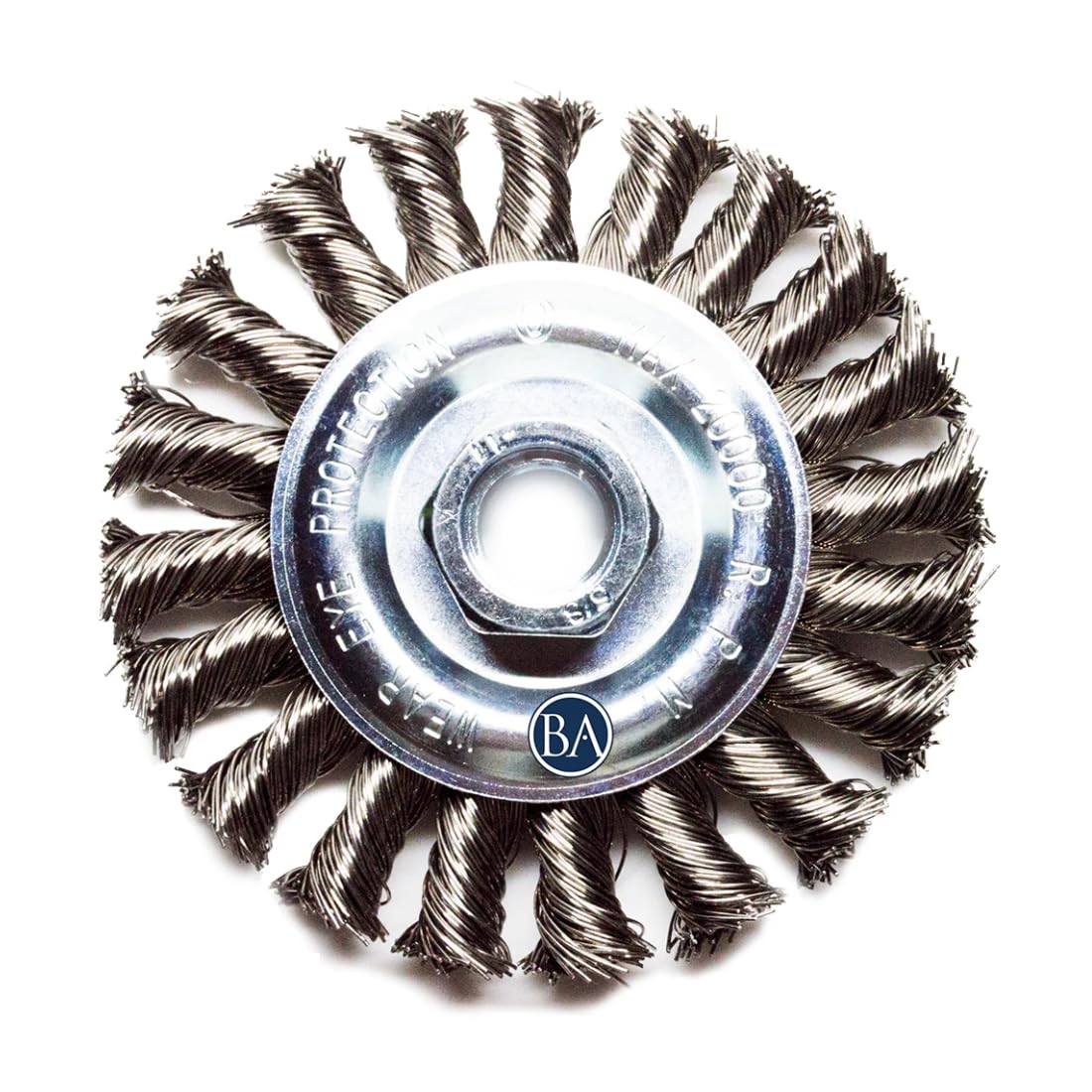
    SALI 6-Pack Wire Cup Brush, 4-Inch Knotted

    A knotted wire cup brush is the fastest, most reliable way to remove mill scale before welding. This 6-pack gives you multiple brushes so you always have a sharp one readyโ€”dull brushes slow you down and risk gouging the base metal.

    Why it works:The twisted knots create aggressive contact with the scale without damaging the underlying steel. The 4-inch size fits standard 4.5-inch angle grinders (the most common shop tool). Knotted wire (vs. crimped) stays sharp longer and handles heavy scale.

    When to use it:

    • Before welding any hot-rolled structural steel
    • Cleaning up old welds before re-welding
    • Removing rust and oxidation from stored material
    • Prep work on fabrication jobs where quality matters

    When NOT to use it:

    • On stainless steel (use stainless-safe brushes instead)
    • On aluminum or soft metals (will gouge)
    • At high RPM on thin sheet (risk of warping)
    • Without proper PPE (sparks and dust are real hazards)

    What to check before buying:

    • Arbor size: Must be 5/8″-11 UNC (standard for 4.5″ grinders)
    • Wire gauge: 0.02″ knotted steel (aggressive enough for scale)
    • Brush diameter: 4″ (fits 4.5″ grinder with clearance)
    • Pack size: 6-pack means you have backups when one wears out
    • Reviews: Look for 4+ stars from welders and fabricators

    Last update on 2026-06-04 / Affiliate links / Images from Amazon Product Advertising API

    Comparable Options

    Flap Disc Alternative (36 Grit):If you prefer a consumable disc that lasts longer and blends edges better, a 36-grit flap disc works well. Cost is similar ($3โ€“$8 per disc), but you’ll use more discs over time. Best for finishing work and edge prep.

    Hard Grinding Wheel (Stone):For very heavy scale on thick plate, a hard grinding stone removes scale faster than wire. Cost is $5โ€“$15, but requires more skill to avoid gouging. Not recommended for beginners.

    Common Mistakes

    • Skipping mill scale removal: Assuming good gas coverage will prevent porosity. It won’tโ€”scale traps hydrogen regardless of shielding.
    • Using a dull brush: Dull brushes don’t cut scale; they just burnish it and slow you down. Replace brushes when they stop sparking aggressively.
    • Grinding too hard: Pressing too hard on the brush risks gouging the base metal, creating stress concentrations. Let the tool do the work.
    • Not cleaning after grinding: Dust and small scale particles can fall into the weld puddle. Wipe the area clean with a cloth before striking an arc.
    • Waiting too long after prep: Bare steel oxidizes quickly. Weld within 30 minutes of prep, or re-clean if you’ve waited longer.

    FAQ (Snippet-Optimized)

    Q: Does mill scale affect all welds?A: Yes. Mill scale traps hydrogen and oxygen, causing porosity in MIG, TIG, and stick welds. Even one small area of scale can create defects.

    Q: Can I just wire brush it by hand?A: Hand brushing removes light oxidation but not mill scale. Use a power tool (angle grinder with wire brush or flap disc) for reliable removal.

    Q: How long does mill scale removal take?A: 2โ€“5 minutes per joint, depending on size and scale thickness. A 4-inch wire cup brush is fastest for flat surfaces.

    Q: Is mill scale the same as rust?A: No. Mill scale is factory oxide (dark, hard, flaky). Rust is corrosion (orange, porous, crumbly). Both must be removed before welding.

    Q: Can I use a wire wheel instead of a cup brush?A: Yes, but cup brushes are better. Cup brushes have more aggressive knots and stay sharp longer. Wire wheels work for light oxidation but are slower on heavy scale.

    Next Steps

    1. Inspect your next job: Before welding, run your finger across the steel. If it’s dark and flaky, it’s mill scaleโ€”remove it.
    1. Stock a wire cup brush: Keep a 6-pack of knotted wire cup brushes in your shop. They’re cheap insurance against porosity and rework.
    1. Check related posts:
    1. Explore ArcWeld.store: Browse our selection of wire brushes, flap discs, and grinder accessories at ย ArcWeld.storeย .

    For more welding fixes and gear options, see our full resource page:  https://blog.weldsupportparts.com/links/ 
  • 3M Flap Disc 769F Type 27 40+ (4-1/2″ x 7/8″) โ€” What Itโ€™s Good For in a Welding Shop

    Intro
    When youโ€™re blending welds, the disc matters as much as the grinder. The wrong flap disc loads up, smears, or burns edges. This post breaks down what to look for in a 4-1/2″ flap disc for weld cleanup and when a Type 27 profile makes sense.

    Key Takeaways

    • A flap disc is usually the fastest โ€œone toolโ€ option for blending weld toes and cleaning bevels.
    • Grit choice controls heat and finish. Coarser cuts faster but can gouge if you lean on it.
    • Type 27 (flat) and Type 29 (conical) feel different on edges and inside corners.
    • Donโ€™t assume stainless and carbon steel behave the same under the same disc pressure.
    • If youโ€™re chasing appearance, plan a second step (finer grit) instead of forcing one disc to do everything.

    Performance & Use

    A flap disc is a layered abrasive designed to cut and finish at the same time. In a welding workflow, that usually means: knock down high spots, blend the toe, and clean spatter without switching from a hard wheel to a sanding disc.

    Where this style of disc typically fits best:

    • Blending MIG fillets on mild steel without leaving deep hard-wheel grooves
    • Cleaning bevel edges before fit-up
    • Removing light scale and surface oxidation prior to welding (not a substitute for proper prep when code requires it)
    • Dressing tack welds and fit-up points

    What to compare before you buy

    • Disc profile: Type 27 (flat) vs Type 29 (angled) for edge access and control
    • Grit grade: coarse for fast removal vs finer for finish control
    • Backing stiffness: stiffer backs cut harder; softer backs conform but can round edges
    • Intended material: carbon steel vs stainless vs mixed work (avoid cross-contamination)
    • Heat behavior: discs that cut cooler reduce discoloration and edge burn (verify with your process)

    Comparable Amazon picks

    Durability & Build

    Flap discs wear based on pressure, angle, and the metal youโ€™re pushing into. If youโ€™re burning edges or glazing the disc, itโ€™s usually one of three things: too much pressure, too steep an angle, or the wrong grit for the job.

    Unknown (Verify)

    • Exact abrasive grain type and backing construction for this specific listing should be confirmed on the product page before making any durability claims.

    Power / Specs

    This is a 4-1/2″ x 7/8″ flap disc format commonly used on standard angle grinders.

    Unknown (Verify)

    • Maximum RPM rating (must match or exceed your grinderโ€™s no-load RPM)
    • Pack quantity and exact thickness/profile details on the listing
    • Any stated โ€œbest forโ€ materials beyond what you can verify on the page

    Who Itโ€™s For

    • Fabricators doing routine weld cleanup and blending on mild steel
    • Anyone trying to reduce tool changes versus hard wheel + sanding disc steps
    • Shops that want repeatable finish control by stocking a small grit range (for example: coarse for knockdown, medium for blend, finer for finish)

    Not ideal for:

    • Heavy stock removal where a grinding wheel is the correct first step
    • Precision finishing where you need a controlled scratch pattern (consider dedicated finishing abrasives)

    Quick FAQ

    Q: Type 27 or Type 29 for weld blending?
    A: Type 27 tends to feel flatter and more controlled on broad surfaces. Type 29 can bite edges more aggressively. Pick based on where youโ€™re grinding (flat plate vs corners/edges).

    Q: Can I use the same disc on carbon steel and stainless?
    A: Avoid it. Cross-contamination can create corrosion issues on stainless. Keep dedicated discs for stainless work.

    Q: Why does my flap disc โ€œload upโ€?
    A: Common causes are too much pressure, wrong grit, or grinding on material that smears. Reduce pressure and adjust technique; if it still loads, change disc type.

    Safety Notes (include verbatim closing line)

    • Wear eye protection and a face shield; flap discs can shed abrasive and metal.
    • Verify the discโ€™s max RPM meets or exceeds your grinderโ€™s RPM.
    • Use gloves and hearing protection; control sparks and hot debris.
    • Keep the work secured; avoid snagging edges that can kick the grinder.
      Always follow the tool manufacturerโ€™s safety instructions and your shopโ€™s PPE requirements.

    Where to Buy (Amazon pick + affiliate link + AAWP box)

    Amazon pick: 3M Flap Disc 769F, Type 27, 40+, 4-1/2 in x 7/8 in, High Performance Abrasive, Ceramic Precision-Shaped Grain Grinding and Finishing Disc, Carbon Steel, Stainless Steel
    Affiliate link: https://www.amazon.com/dp/B07L1F1BMW?tag=weldsupport-20

    3M Flap Disc 769F, Type 27, 40+, 4-1/2 in x 7/8 in, High Performance Abrasive, Ceramic Precision-Shaped Grain Grinding and Finishing Disc, Carbon Steel, Stainless Steel
    • VERSATILITY: Get more done in less time with fewer disc changes โ€“ with the everyday high performance of 3M Flap Discs 769F. The discs are easy to control, so thereโ€™s less chance of gouging, and they deliver excellent results
    • PRECISION-SHAPED GRAIN: The 3M Precision-Shaped Grain cuts faster and lasts longer than traditional abrasives and can be used in various applications, including weld grinding, beveling, edge deburring, blending, finishing, surface preparation, scale removal, and weld spatter removal
    • OPTIMAL PERFORMANCE: Unique blend of ceramic Precision-Shaped Grain and aluminum oxide outperforms traditional alumina-zirconia flap discs
    • CONSISTENT CUT RATE: Individual flaps break down to expose fresh minerals and deliver a consistent cut rate
    • For industrial/occupational use only. Not for consumer sale or use.

    Last update on 2026-06-04 / Affiliate links / Images from Amazon Product Advertising API

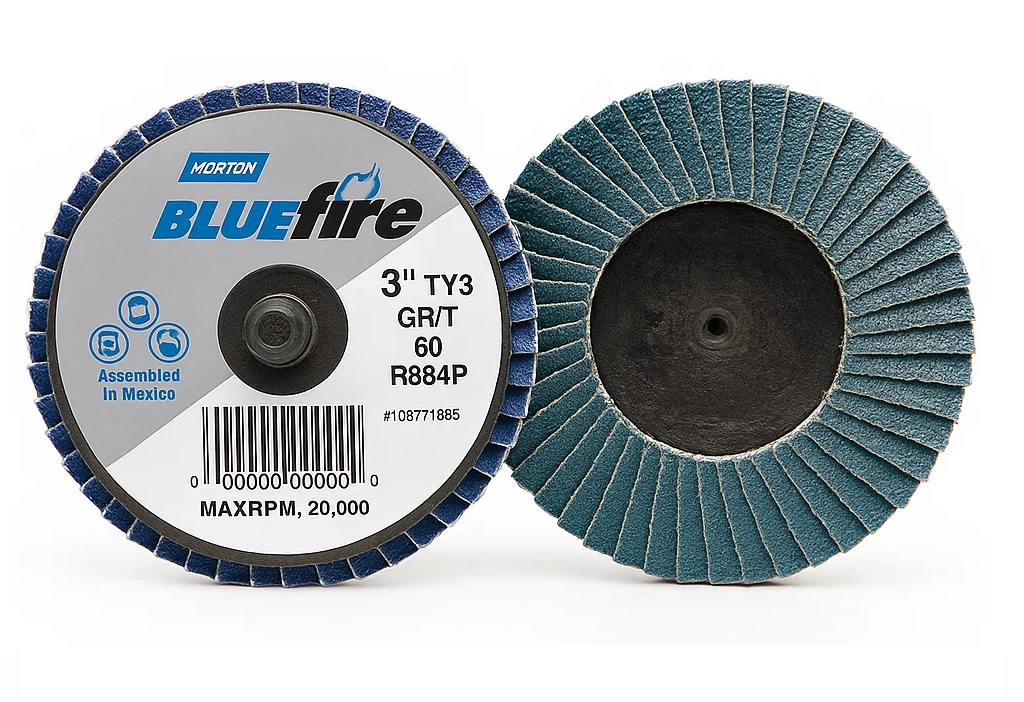
  • Norton 90168, Flap Disc, MD, Grit 80, TY 3, 2in, Bluefire, Pack of (3) (90168)

    Norton 90168, Flap Disc, MD, Grit 80, TY 3, 2in, Bluefire, Pack of (3) (90168)

    Abrasives are where weld quality gets judged. If you are blending small welds, cleaning tight corners, or finishing parts that are too small for a full-size 4-1/2″ disc, a 2″ flap disc is a practical option. The Norton 90168 is listed as a Type 27 flap disc, 2″ diameter, 80 grit, โ€œBluefire,โ€ sold as a 3-packโ€”aimed at controlled blending rather than aggressive stock removal.

    Key Takeaways

    • 2″ flap discs are built for access: corners, small parts, and touch-up where larger discs are clumsy.
    • 80 grit is typically a blend/finish step after heavier grinding (exact progression depends on your finish target).
    • Type 27 discs are commonly used at a shallow angle for controlled removal (verify tool and disc ratings).
    • Always match disc size and max RPM to the tool you are running.

    Performance & Use
    This disc size is most useful when you are trying to avoid over-grinding. Think: cleaning a tack area, blending a small fillet, knocking down a sharp edge, or prepping a weld zone on thin material where heat and gouging matter. The โ€œBluefireโ€ naming suggests a zirconia alumina abrasive per the product page text, but exact abrasive spec should be confirmed against Norton documentation.

    What to compare before you buy

    • Disc diameter and access: 2″ is for tight work; it is not a replacement for a 4-1/2″ when you need coverage.
    • Grit: 80 grit is usually not a first-step weld removal grit. If you need to flatten a proud weld fast, start coarser, then step to 80.
    • Type and angle: Type 27 is typically used at a shallow angle; confirm your technique and guard setup.
    • Tool compatibility: Confirm arbor/attachment style and max RPM rating for your tool (Unknown (Verify) on the ArcWeld.store page).
    • Material match: Verify whether this abrasive is recommended for carbon steel vs stainless applications (Unknown (Verify)).

    Durability & Build
    Flap disc life depends on pressure, angle, and heat. Small discs can be burned up quickly if you lean on them like a grinding wheel. Use light-to-moderate pressure, keep the disc moving, and let the abrasive cut. If you are seeing glazing, you are likely too hot, too much pressure, or on the wrong material.

    Power / Specs
    From the ArcWeld.store product page text:

    • Product: Norton 90168 flap disc
    • Disc type: Type 27 (listed)
    • Disc diameter: 2 in (listed)
    • Grit: 80 (listed)
    • Abrasive material: Zirconia alumina (listed)
    • Pack size: Pack of (3) (listed)
    • Max RPM: Unknown (Verify)
    • Arbor/attachment details: Unknown (Verify)

    Who Itโ€™s For

    • Fabricators doing small-part cleanup, corner blending, and touch-up where a full-size disc is too aggressive.
    • Anyone building a grit progression for finish prep (coarse removal โ†’ blend โ†’ surface conditioning).
    • Shops that want a small-disc option for controlled removal on brackets, tabs, and tight assemblies.

    Quick FAQ
    Q: Is 80 grit enough to remove a weld fast?
    A: Usually it is a blending grit, not a heavy removal grit. If you need to flatten a weld, start coarser, then step to 80 for cleanup.

    Q: Can I run this on any grinder?
    A: Unknown (Verify). You must match disc size, attachment method, and max RPM rating to the tool.

    Q: Is this for steel or stainless?
    A: Unknown (Verify). Check Nortonโ€™s abrasive recommendations for the material you are working on.

    Safety Notes

    • Abrasives can fail if oversped or used with the wrong guard setup. Confirm max RPM and tool compatibility before use.
    • Wear eye and face protection; flap discs throw grit and wire-like debris from the work surface.
    • Keep sparks away from flammables and compressed gas cylinders.
    • Let the disc cutโ€”excess pressure increases heat and can damage the workpiece and the disc.

    Always follow the manufacturerโ€™s instructions and your shopโ€™s safety procedures. If youโ€™re unsure about fitment or ratings, verify before you buy or install.

    Where to Buy
    ArcWeld.store (verified product page): Norton 90168, Flap Disc, MD, Grit 80, TY 3, 2in, Bluefire, Pack of (3)

    ” target=”_blank” rel=”noreferrer noopener”>
    Norton 90168, Flap Disc, MD, Grit 80, TY 3, 2in, Bluefire, Pack of (3)

    Norton 90168, Flap Disc, MD, Grit 80, TY 3, 2in, Bluefire, Pack of (3)

    $26.12

    In Stock

    View Product

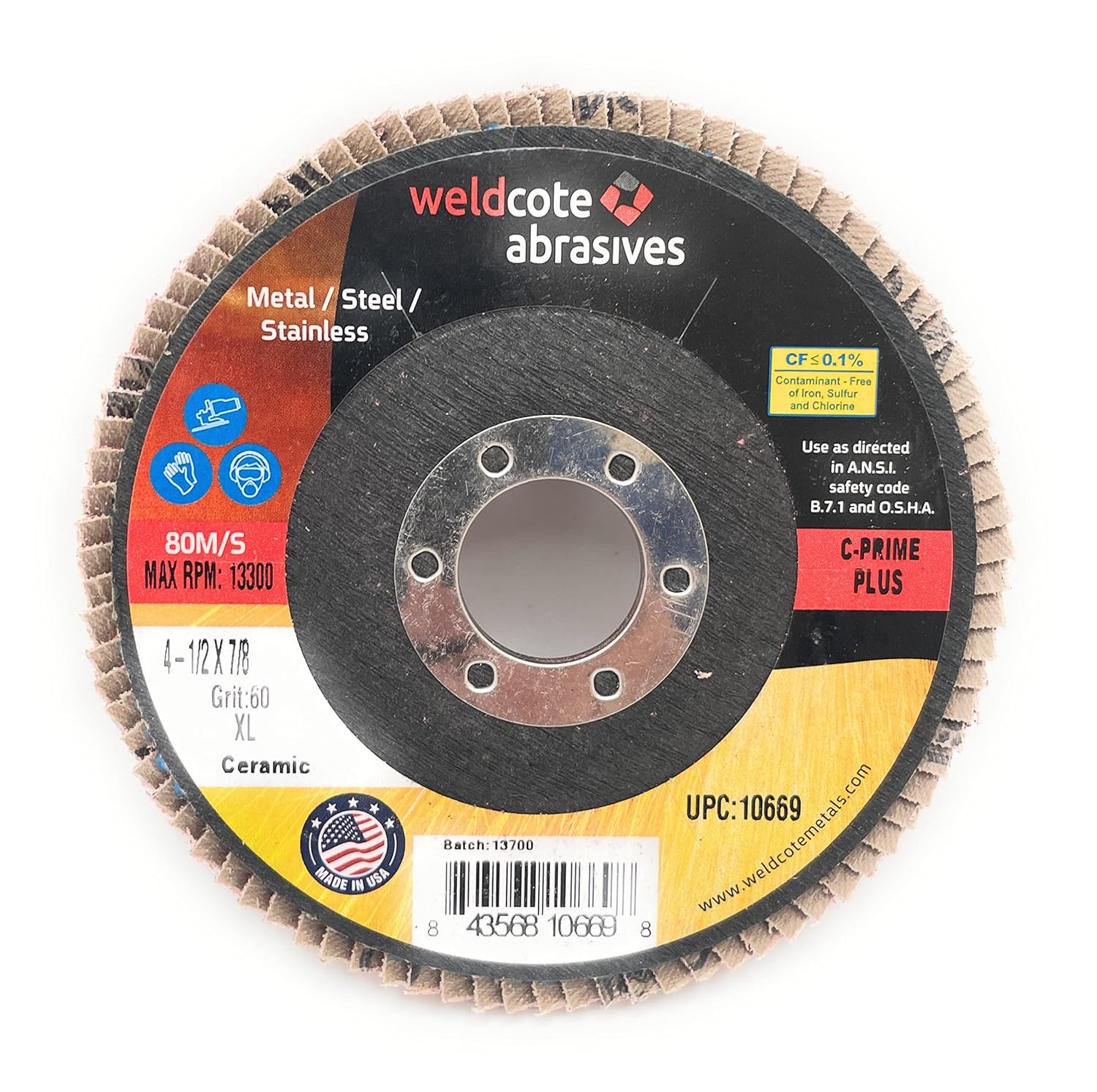
  • Weldcote XL 4.5″ Flap Discs C-Prime Ceramic 60 Grit 7/8″ Arbor Pack of 10 for Heavy Duty Grinding (10669)

    Weldcote XL 4.5″ Flap Discs C-Prime Ceramic 60 Grit 7/8″ Arbor Pack of 10 for Heavy Duty Grinding (10669)

    Intro
    A 60-grit ceramic flap disc is a common โ€œworkhorseโ€ choice when you need real stock removal but still want more control than a hard grinding wheel. The Weldcote XL C-Prime ceramic flap discs are sold as a 10-pack in a 4-1/2″ Type 27 format with a 7/8″ arbor, and the listing states a max speed of 13,300 RPM.

    Key Takeaways

    • 60 grit is a practical middle ground for weld removal and bevel prep before stepping down to finer grits.
    • Ceramic abrasives are typically chosen for aggressive cutting and longer life in heavy grinding (exact performance varies by base metal and pressure).
    • Match disc size/arbor and verify grinder RPM rating before you run it.

    Performance & Use
    For weld blending and prep work, a Type 27 flap disc is often used at a shallow angle to control removal and reduce gouging. Ceramic grain is generally selected when you want faster cutting on steel and youโ€™re doing enough grinding that disc life matters.

    What to compare before you buy

    • Disc diameter and style: 4-1/2″ Type 27 (confirmed in listing text).
    • Arbor size: 7/8″ (confirmed in listing text).
    • Grit: 60 grit (confirmed in listing text).
    • Abrasive type: โ€œC-Prime 100% ceramicโ€ (confirmed in listing text; verify how the manufacturer defines this).
    • Max RPM: 13,300 RPM (confirmed in listing text). Compare to your grinderโ€™s no-load RPM and never exceed the disc rating.
    • Application: heavy stock removal vs blending vs finishing. If youโ€™re chasing appearance, plan a step-down sequence (e.g., 60 โ†’ 80/120) rather than trying to โ€œfinishโ€ with 60.

    Durability & Build
    The โ€œXLโ€ positioning suggests a larger usable abrasive area intended to extend disc life (exact flap count/backing details are Unknown (Verify)). In practice, disc life depends heavily on pressure, angle, heat, and whether youโ€™re grinding clean steel vs mill scale vs stainless.

    Power / Specs

    • Disc type: Flap disc, Type 27 (confirmed in listing text)
    • Diameter: 4-1/2″ (confirmed in listing text)
    • Arbor: 7/8″ (confirmed in listing text)
    • Grit: 60 (confirmed in listing text)
    • Abrasive: Ceramic (listing states โ€œC-Prime 100% ceramicโ€)
    • Max RPM: 13,300 RPM (confirmed in listing text)
    • Pack size: 10 (confirmed in listing text)
    • Backing material/type: Unknown (Verify)

    Who Itโ€™s For

    • Fabrication shops doing frequent weld cleanup on mild steel where speed matters.
    • Anyone who wants to keep a consistent abrasive โ€œstandardโ€ on the shelf (10-pack) to reduce mid-job runs.
    • Welders doing bevel prep and fit-up who need controlled removal without switching to a hard wheel for everything.

    Quick FAQ
    Q: Is 60 grit too aggressive for blending?
    A: It can be, depending on the joint and finish requirement. If you need a smoother look, plan to follow with finer grit rather than forcing 60 to do finish work.

    Q: Can I run these on any 4-1/2″ grinder?
    A: Only if the arbor fits and your grinderโ€™s RPM does not exceed the discโ€™s max RPM (13,300 RPM listed). Verify before use.

    Q: Are these for steel only?
    A: The listing does not specify base-metal limitations. Treat material compatibility as Unknown (Verify) and follow manufacturer guidance.

    Safety Notes (include verbatim closing line)

    • Verify the disc RPM rating meets or exceeds your grinderโ€™s no-load RPM before mounting.
    • Use a guard, eye protection, and gloves; keep bystanders out of the spark path.
    • Let the disc do the workโ€”excess pressure increases heat, can glaze the abrasive, and raises kickback risk.
      Always follow the manufacturerโ€™s instructions and your shopโ€™s safety procedures. If youโ€™re unsure about fitment or ratings, verify before you buy or install.

    Where to Buy (ArcWeld.store link + optional Amazon fallback)

    ” target=”_blank” rel=”noreferrer noopener”>
    Weldcote XL 4.5" Flap Discs C-Prime Ceramic 60 Grit 7/8" Arbor Pack of 10 for Heavy Duty Grinding

    Weldcote XL 4.5" Flap Discs C-Prime Ceramic 60 Grit 7/8" Arbor Pack of 10 for Heavy Duty Grinding

    $80.57

    In Stock

    View Product
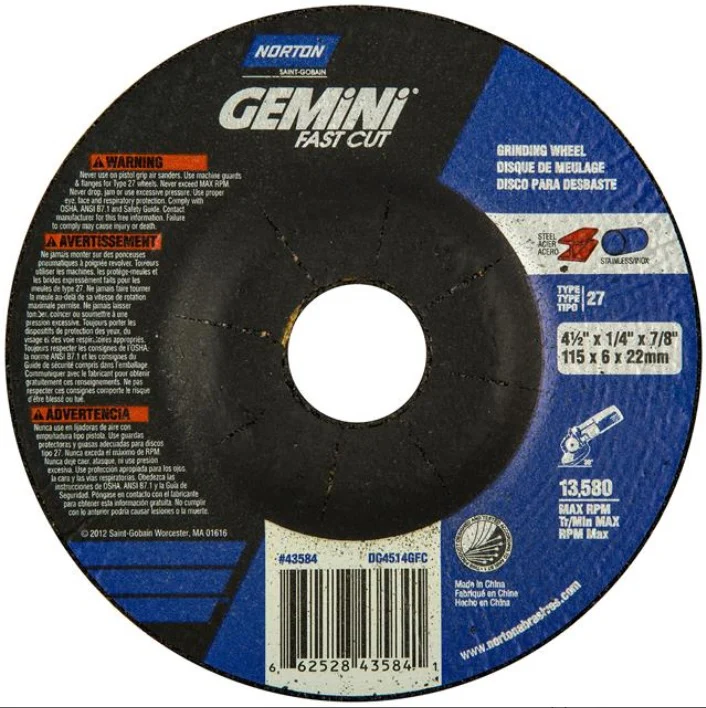
  • Norton Gemini Fast Cut Grinding Wheel Review (4-1/2″ ร— 1/4″ ร— 7/8″, Pack of 25)

    Norton Gemini Fast Cut Grinding Wheel Review (4-1/2″ ร— 1/4″ ร— 7/8″, Pack of 25)

    Grinding wheels live or die by speed, durability, and consistency. The Norton Gemini Fast Cut line is built for welders who need reliable metal removal without burning through discs or bogging down their grinder. If youโ€™re prepping bevels, cleaning welds, or shaping stock on a daily basis, this pack of 25 offers production-friendly value with recognized Norton quality.


    Key Takeaways

    • 4-1/2″ ร— 1/4″ ร— 7/8″ Type 27 grinding wheel for right-angle grinders.
    • Designed for fast stock removal on carbon steel and ferrous metals.
    • Nortonโ€™s Gemini spec: balanced performance, long life, solid value for shop use.
    • Reinforced for welding/fab environmentsโ€”resists chipping and wheel fracture.
    • Pack of 25 reduces downtime and per-disc cost.

    Where to Buy

    Arc Weld Store

    Amazon

    Norton Abrasives Grinding Wheel, Gemini Fast Cut Grinding Wheel, 4 1/2 for Right Angle Grinder, Pack of 25 Discs
    • This Right Cut Angle Grinder is ideal for smoothing welds and for stock removal applications on a variety of steel materials, including 400 series stainless, hard carbon and soft carbon steels
    • Sized as a 4 1/2 grinder wheel with a durable bond, this cutting wheel is designed to cut at high rates, ensuring it’s longer product life
    • This grinder wheel design features an advanced ultra-thin type 27 depressed center that minimizes material loss during the grinding process
    • This cutting disc is designed with an aluminum-oxide abrasive and a solid performance bond that delivers both a consistent cut rate and long wheel life on a right angle grinder up to 13580 RPM
    • Wheel Type is 27 with a 4 1/2 inch diameter. Dimensions: 4-1/2 x 1/4 x 7/8 Inches. Comes as a pack of 25 cutting wheels

    Last update on 2026-06-04 / Affiliate links / Images from Amazon Product Advertising API


    Affiliate Disclosure: As an Amazon Associate, we earn from qualifying purchases.


    Overview

    The Norton Gemini Fast Cut wheel is aimed at welders, fabricators, and maintenance techs who need predictable cutting action and a strong wheel bond that holds up under heat and pressure. This 4-1/2″ wheel fits most common grinders used in steel fabrication, structural welding, railing shops, and job-site repair work.

    Nortonโ€™s Gemini series is positioned above economy wheels but below their premium BlueFire and Norzon lines, making it an ideal daily-use wheel for general shop grinding.


    Performance: What You Get in Real Use

    Fast Stock Removal

    The wheel uses an aluminum oxide grain blend optimized for rapid metal removal on:

    • Mild steel
    • Structural steel
    • Carbon steel plate and shapes
    • Weld bead cleanup

    It cuts aggressively without glazing over, which helps maintain grinder speed and reduces operator fatigue.

    Durability & Wheel Life

    The reinforced fiberglass bond increases resistance to:

    • Side-load pressure
    • Gouging
    • Impact during edge grinding
    • Heat buildup

    Shops using these wheels tend to see predictable wear patterns instead of premature chunking or cracking.

    Control & Feel

    • Smooth, stable tracking
    • Less vibration than low-cost wheels
    • Good control during bevel creation and weld cleanup
    • Responsive cut without needing to force the grinder

    This makes the wheel suitable for extended use during fit-up, prep, and post-weld finishing.


    Best Uses

    • Weld bevel prep
    • Pass cleanup between welds
    • Grinding down MIG or stick welds
    • Plate edge shaping
    • Structural fabrication
    • Field welding repair
    • Removing mill scale before tacking

    These wheels are well-suited for small fab shops, steel contractors, and any workflow where workers need reliable, predictable performance during repetitive grinding tasks.


    Safety Notes

    • Follow ANSI B7.1 for grinding wheel use and inspection.
    • Always mount wheels rated for RPM โ‰ฅ grinder speed (check your grinderโ€™s nameplate).
    • Perform a ring test before installationโ€”discard wheels with cracks or defects.
    • Wear ANSI Z87.1 eye protection, gloves, hearing protection, and FR clothing.
    • Avoid grinding with excessive side pressure; use wheels designed for that purpose.
    • Never grind near flammable vapors, dust, or gas sources.

    FAQ

    What grinders does this fit?

    Any right-angle grinder using a 4-1/2″ wheel with a 7/8″ arbor.

    Can it be used on stainless steel?

    Not ideal. It can grind stainless, but aluminum oxide wheels may contaminate the surface. Use an INOX or stainless-rated wheel for best results.

    Is this a Type 27 wheel?

    Yesโ€”depressed center (Type 27), suited for general-purpose grinding and weld cleanup.

    Is this good for heavy weld removal?

    Yes. The bond and grain blend are designed for aggressive stock removal.

    Does Norton offer better-performing wheels?

    Yesโ€”the BlueFire and Norzon lines provide higher performance. Gemini is the balanced workhorse line.

  • How to Prep Metal for Welding (Step-by-Step Guide)

    How to Prep Metal for Welding (Step-by-Step Guide)

    Proper metal prep is the difference between a clean, strong weld and fighting porosity, inclusions, and arc instability. This guide breaks down exactly how to clean, grind, degrease, and fit-up steel, stainless, and aluminum so you can weld with fewer defects and less rework.


    Key Takeaways

    • Clean metal = fewer porosity and arc-start issues. Remove mill scale, rust, paint, oil, and coatings.
    • Use the right abrasives: flap discs for beveling, hard wheels for aggressive cleaning, and stainless-only tools for stainless.
    • Fit-up accuracy determines distortion control and penetration.
    • Always check safety: ANSI Z87.1 eye protection, proper ventilation, and PPE.
    • Improper prep is one of the Top 3 causes of weld failure per AWS D1.1 commentary.

    Where to Buy (Tools for Metal Prep)

    Arc Weld Store:

    40-grit flap discs โ€” Heavy removal

    Weldcote 10668 Flap Discs C-Prime Ceramic 4.5" 40 Grit XL 7/8" Arbor 10 Pack T27 13300 RPM

    “>
    Weldcote 10668 Flap Discs C-Prime Ceramic 4.5" 40 Grit XL 7/8" Arbor 10 Pack T27 13300 RPM

    Weldcote 10668 Flap Discs C-Prime Ceramic 4.5" 40 Grit XL 7/8" Arbor 10 Pack T27 13300 RPM

    $86.84

    In Stock

    View Product

    80-grit flap discs โ€” Finishing before weld

    Weldcote 10670 XL Flap Discs - C-Prime Ceramic 4.5" 80 Grit 7/8" Arbor - 10 Pack

    “>
    Weldcote 10670 XL Flap Discs - C-Prime Ceramic 4.5" 80 Grit 7/8" Arbor - 10 Pack

    Weldcote 10670 XL Flap Discs – C-Prime Ceramic 4.5" 80 Grit 7/8" Arbor – 10 Pack

    $76.93

    In Stock

    View Product

    Amazon (options):

    Affiliate Disclosure: As an Amazon Associate, we earn from qualifying purchases.


    How to Prep Metal for Welding

    1. Identify the Material

    Different materials need different prep steps.

    Carbon Steel

    Stainless Steel

    Aluminum


    2. Remove Coatings, Rust, and Mill Scale

    Tools that work:

    Remove down to bright, shiny metal. For carbon steel, AWS D1.1 recommends removing contaminants within 1 inch (25 mm) of the weld area.


    3. Degrease and Clean

    Oil, cutting fluid, and shop grime cause porosity.

    Tip: Do solvent cleaning before grinding (to avoid driving oil into the pores) and again after to remove grinding dust.


    4. Fix Edges, Bevels, and Gaps

    Fit-up sets the stage for the entire weld.


    5. Clean Again Before Welding

    Right before striking an arc:

    Safety Notes


    FAQ

    Do I have to remove all mill scale?

    For critical welds (per AWS D1.1), yes. For hobby MIG on light steel, partial removal can work, but expect spatter and inconsistent penetration.

    Can I weld through paint?

    Not recommended. Most paints give off toxic fumes and produce porosity.

    How clean does aluminum need to be?

    Extremely clean. Oxide melts at ~3,700ยฐF; aluminum melts at ~1,200ยฐF. Thatโ€™s why aluminum requires brushing + solvent cleaning.

    Why do my welds have porosity even after grinding?

    Usually oil contamination or moisture. Try degreasing and pre-heating to ~150โ€“200ยฐF.


    Sources Checked

  • Norton 53336 Wire Cup Brush Review & Buying Guidew

    Norton 53336 Wire Cup Brush Review & Buying Guidew

    Norton 53336 Wire Cup Brush Review & Buying Guide

    Note for Readers: This post may contain affiliate links. If you purchase through them, we may earn a small commission at no cost to you. Thank you for supporting our site.

    Introduction

    The Norton 53336 Wire Cup Brush is a high-performance, industrial-grade abrasive wire brush engineered for surface preparation tasks in welding and fabrication. This tool plays a critical role in cleaning, edge blending, weld spatter removal, deburring, and surface-conditioning applications prior to or after welding work.

    Precision-designed for use with right-angle grinders, the Norton 53336 is commonly used by welders, metal fabricators, machinists, maintenance technicians, and vocational students. Itโ€™s particularly valuable in settings where heavy-duty rust removal or slag cleanup is requiredโ€”especially after shielded metal arc welding (SMAW) or flux-cored arc welding (FCAW).

    Types / Variants / Models

    The Norton 53336 wire brush belongs to a broader class of wire wheel brushes and cup brushes manufactured by Norton. While the 53336 is a specific model, Norton offers several variations based on brush style, wire material, and duty capacity:

    Crimped Wire Cup Brushes โ€“ Designed for lighter, flexible brushing; best for general-purpose cleanup.
    Knotted Wire Cup Brushes (like the 53336) โ€“ More aggressive and durable; ideal for heavy-duty deburring and weld cleaning.
    Stainless Steel Wire Variants โ€“ Used when working on non-ferrous metals like aluminum or stainless steel to avoid contamination.

    The Norton 53336 is a knotted wire cup brush, making it suitable for demanding applications where long service life and consistent brush performance are required.

    Key Features or Specifications

    Understanding the real specs of the Norton 53336 (ASIN=B002IPH5H6) helps assess its suitability for heavy fabrication environments:

    Brush Size: 3 inches diameter
    โ†’ Offers a balance between surface coverage and precision, especially useful in tight areas around welds.

    Wire Type: High-Carbon Steel, Knotted
    โ†’ Delivers aggressive material removal on ferrous metals such as carbon steelโ€”ideal for weld slag and spatter removal.

    Wire Gauge: 0.020-inch diameter
    โ†’ Thick enough to handle tough residues, yet fine enough to provide consistent contact with uneven surfaces.

    Thread Size: 5/8โ€-11 UNC Arbor Hole
    โ†’ Compatible with most standard 4 to 5-inch angle grinders used in welding shops across North America.

    Maximum RPM: 12,500
    โ†’ Supports high-speed industrial grinding tools without safety compromise when used correctly.

    Certifications: Meets ANSI B165.1 safety standards
    โ†’ Ensures safe performance in professional shop environments, particularly important for new welders or students in training.

    Each of these specifications ties directly into worksite demands, particularly where time and quality control are crucial.

    Usage & Compatibility

    The Norton 53336 wire cup brush is best used as part of the post-welding surface finishing process. It’s widely applied after processes such as:

    SMAW (Shielded Metal Arc Welding) โ€“ Removes heavy slag efficiently.
    FCAW (Flux-Cored Arc Welding) โ€“ Ideal for chipping away flux residues without damaging the base metal.
    GMAW (MIG Welding) โ€“ Prepares joints by cleaning mill scale or removing oxidation before tacking.
    GTAW (TIG Welding) โ€“ Though less aggressive cleaning is typically needed, the 53336 can still prep surfaces when used carefully.

    Tool Compatibility:

    – Suitable for use with all standard right-angle grinders supporting 5/8″-11 threaded ports.
    – Not recommended for use with die grinders or electric drills, due to mounting differences and RPM mismatches.

    Pros:

    – Fast, aggressive cleaning action
    – Long-lasting wire knot integrity
    – Economical for frequent workshops

    Cons:

    – Not designed for aluminum or stainless unless using a stainless variant
    – Can gouge softer materials if used at incorrect pressure

    Common Applications

    The Norton 53336 is valued across industries and trades for its performance on ferrous metals and weldment cleaning:

    Heavy Equipment Repair โ€“ Removes rust and weld residue from large assemblies.
    Structural Steel Fabrication โ€“ Prepares joints and tidies weld seams in I-beams and trusses.
    Pipeline Welding โ€“ Essential for maintaining weld site cleanliness, especially in high-integrity welds.
    Auto Body Repair (on steel frames) โ€“ Eliminates scale and corrosion to prep for welding.

    Its durability and high RPM capacity make it a go-to in harsh environments where sandblasting isnโ€™t practical and where faster, spot-specific cleaning is needed.

    Tips & Best Practices

    Prep Before Use: Always check the wire knot condition and confirm it is properly threaded onto the grinder arbor.
    Run-In Period: Let the brush spin freely for 60 seconds at full speed before applying it to metalโ€”this tests balance and safety.
    Use Proper Pressure: Allow the wires to do the workโ€”excess pressure can cause premature breakage or tool bounce.
    Protective Gear: Always wear ANSI-rated eye protection, gloves, and a full face shield when using at high speeds.
    Avoid Side Pressure: These brushes are designed for direct-face contact. Using the side can damage the wire tufts and shorten life.
    Maintenance: Store dry, keep away from corrosive environments, and check for wire loss after heavy-duty jobs.

    Conclusion

    The Norton 53336 Wire Cup Brush offers exceptional cleaning strength for welders and fabricators who need efficient, heavy-duty surface prep on steel and iron. Designed for durability and high-speed grinder compatibility, it’s an essential consumable in shops tackling everything from structural steel to machinery repair.

    If you’re a welder or student looking to invest in reliable finishing tools, the Norton 53336 balances price, precision, and performance. It excels where speed and quality intersectโ€”saving time while improving surface integrity before painting, coating, or inspection.

    Affiliate Call to Action

    Norton Knotted Wire Cup Brush, Carbon Steel Bristles, 5/8″-11 Arbor, Single Row, 0.020″ Wire Size, 2-3/4″ Diameter (Pack of 1)
    • Single row, twist knot construction
    • Limits flaring of the brush on corners and angles, protective guard opens up into a shield
    • Rigid structure, prevents wire, dust and any kind of projection from reaching the end-user during work
    • High impact cutting and cleaning on more demanding applications
    • Available with or without plastic guard; application-specific, Better performance level~

    Last update on 2026-06-04 / Affiliate links / Images from Amazon Product Advertising API

    Check the latest price and availability on Amazon to see if it fits your fabrication needs.

  • Type 1 and Type 27 Cut-Off Wheels: Pros, Cons, and Applications

    Type 1 and Type 27 Cut-Off Wheels: Pros, Cons, and Applications

    # Type 1 and Type 27 Cut-Off Wheels: Product Review & Buying Guide

    Cut-off wheels are essential tools for metalworking, fabrication, and construction. Among the most popular are Type 1 (flat) and Type 27 (depressed center) cut-off wheels. Understanding their differences, strengths, and best uses can help you choose the right wheel for your project.

    ## Key Features

    **Type 1 Cut-Off Wheels** are flat, disc-shaped wheels designed for straight, precise cuts. Their thin profile allows for minimal material loss and clean edges. **Type 27 Cut-Off Wheels** feature a depressed center, which provides extra clearance and allows for flush cutting and grinding at an angle.

    Both types are available in various diameters, thicknesses, and abrasive materials (such as aluminum oxide or zirconia alumina), making them suitable for cutting steel, stainless steel, and other metals.

    ## Pros and Cons

    **Type 1 Pros:**
    – Delivers straight, accurate cuts
    – Minimal kerf (material loss)
    – Ideal for tight spaces and precision work

    **Type 1 Cons:**
    – Less versatile for angled or flush cuts
    – Can be more prone to breakage if side pressure is applied

    **Type 27 Pros:**
    – Allows for flush and angle cutting
    – More durable under lateral pressure
    – Versatile for both cutting and light grinding

    **Type 27 Cons:**
    – Slightly thicker, resulting in a wider kerf
    – May not provide as clean a cut as Type 1 in some applications

    ## Applications

    **Type 1 Wheels** are best for straight cuts in metal pipes, rods, and sheet metal. They excel in applications where precision and minimal material loss are critical, such as fabrication shops and automotive repair.

    **Type 27 Wheels** are ideal for jobs requiring both cutting and light grinding, such as weld removal, beveling, and working in hard-to-reach areas. Their design makes them a favorite for construction sites and general metalworking.

    ## Who Should Buy Each Type?

    Choose **Type 1** if you need clean, straight cuts and work primarily with flat stock or in tight spaces. These wheels are perfect for fabricators, mechanics, and anyone needing precision.

    Opt for **Type 27** if you require versatilityโ€”cutting at angles, flush cuts, or occasional grinding. Theyโ€™re well-suited for welders, construction workers, and DIYers tackling a variety of metalworking tasks.

    ## What Makes Them Unique?

    The main distinction lies in their shape and versatility. Type 1โ€™s flat profile is unmatched for straight, accurate cuts, while Type 27โ€™s depressed center offers flexibility for angled work and increased durability. Both types are engineered for safety and efficiency when used with the correct tool and application.

    ## Conclusion

    Selecting the right cut-off wheel depends on your specific needsโ€”precision and minimal waste (Type 1) or versatility and durability (Type 27). Both are indispensable in any metalworking toolkit. We may earn a small commission through Amazon affiliate links, at no extra cost to you.

  • Alumina Oxide vs. Ceramic Flap Discs: Which Is Right for Your Application?

    Alumina Oxide vs. Ceramic Flap Discs: Which Is Right for Your Application?

    When it comes to abrasive flap discs, selecting the proper material can significantly influence the efficiency, lifespan, and quality of your grinding and finishing applications. Two of the most common abrasive flap disc materials you’ll encounter are alumina oxide and ceramic. In this post, we’ll compare these two options and help you decide which type will best suit your needs.

    Alumina Oxide Flap Discs: Reliable and Cost-Effective

    Advantages:

    • Cost-Effective: Alumina oxide flap discs are generally more affordable, making them an excellent choice for general-purpose grinding, deburring, and finishing tasks.
    • Versatile: Suitable for use on a variety of metals, including mild steel, aluminum, and other non-ferrous metals.
    • Availability: Widely available across most hardware stores or industrial suppliers.

    Drawbacks:

    • Shorter Life Span: Alumina oxide discs tend to wear out quicker, especially when used on tough metals or demanding applications.
    • Lower Heat Resistance: These discs generate more heat during grinding activities, potentially leading to discoloration or warping of sensitive metals.
    4-1/2″ x 7/8″ 40 Grit[See Price on Amazon]
    4-1/2″ x 7/8″ 60 Grit[See Price on Amazon]
    4-1/2″ x 7/8″ 80 Grit[See Price on Amazon]
    4-1/2″ x 7/8″ 120 Grit[See Price on Amazon]

    Ceramic Flap Discs: Heavy-Duty Performance and Longer Life

    Advantages:

    • Longer Lasting: Ceramic abrasives are engineered to be highly durable, significantly outlasting alumina oxide discs in heavy-duty applications.
    • Cooler Operation: Ceramic flap discs generate less heat during use, making them ideal for working with stainless steel, titanium, or other heat-sensitive alloys.
    • Aggressive Grinding Action: Ceramic discs maintain a sharp edge longer, providing faster and more consistent material removal rates.

    Drawbacks:

    • Higher Initial Cost: Ceramic flap discs do come with a higher upfront price tag, although their longer lifespan and efficiency may offset the initial expense.
    • Not Always Necessary: For lighter jobs or infrequent use, ceramic discs may be considered overkill and not cost-effective.

    Making the Right Choice:

    The decision between alumina oxide and ceramic flap discs largely depends on your specific application and priorities:

    • Choose Alumina Oxide if: You’re performing general-purpose tasks, working on softer metals, or looking for a budget-friendly abrasive option for occasional use.
    • Choose Ceramic if: You’re frequently grinding or finishing harder metals, require faster material removal, want to reduce downtime for disc changes, or need to minimize heat-related issues.
    4-1/2″ x 7/8″ 40 Grit[See Price on Amazon]
    4-1/2″ x 7/8″ 60 Grit[See Price on Amazon]
    4-1/2″ x 7/8″ 80 Grit[See Price on Amazon]

    Final Thoughts:

    Both alumina oxide and ceramic flap discs have their place in your workshop. Alumina oxide discs offer versatility and affordability, making them suitable for general tasks, while ceramic flap discs provide superior performance, durability, and efficiency for more demanding applications. By carefully evaluating your needs, budget, and types of metal you’re working with, you can confidently select the best abrasive solution for your project.

    ** Note: ** I may earn a comission on any purchased made through Amazon from the links above.

  • Try Amazon Prime Free