Author: Adam

  • Tillman Gloves: Choose the Best MIG, TIG, or Stick Welding Fit

    Tillman Gloves: Choose the Best MIG, TIG, or Stick Welding Fit

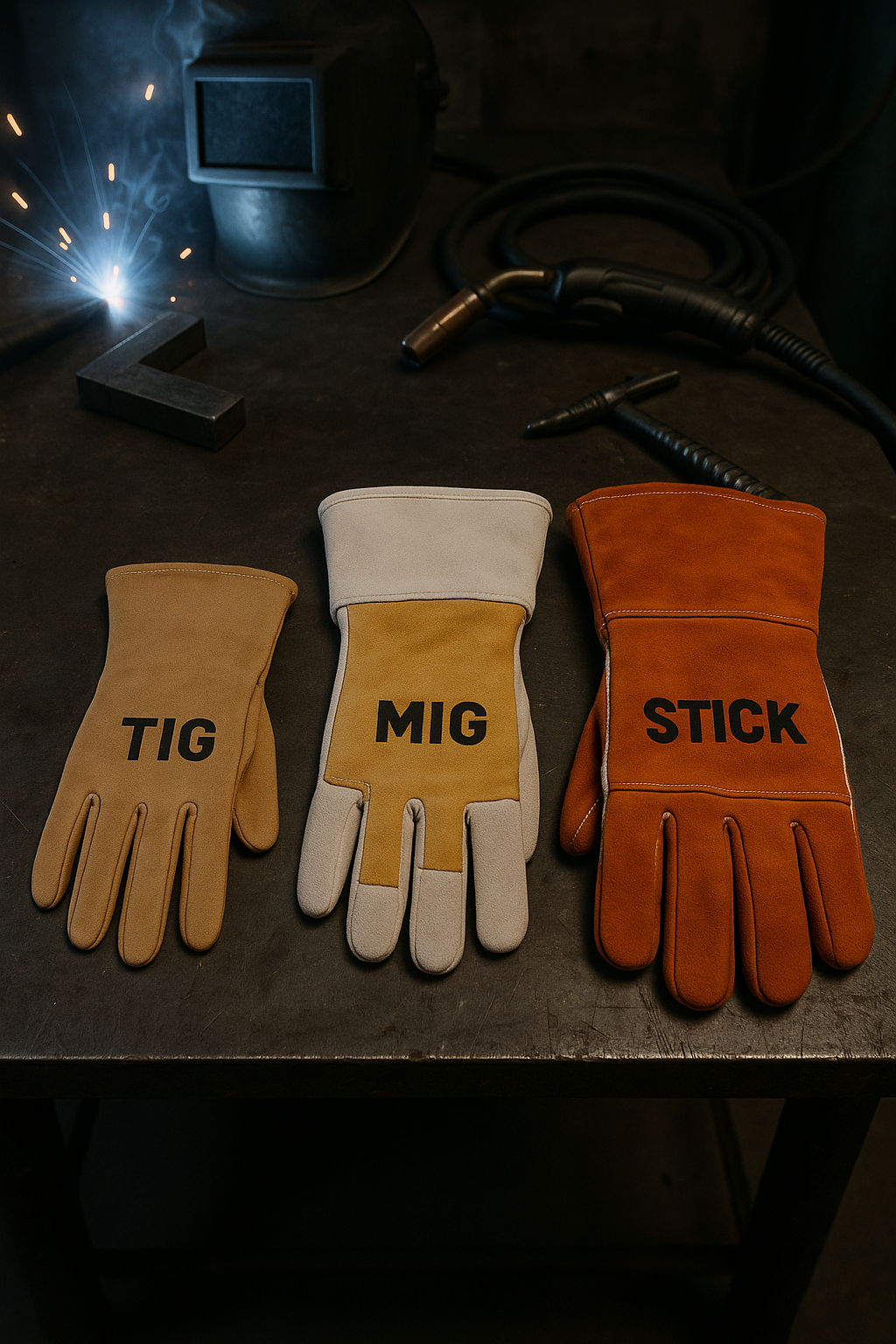
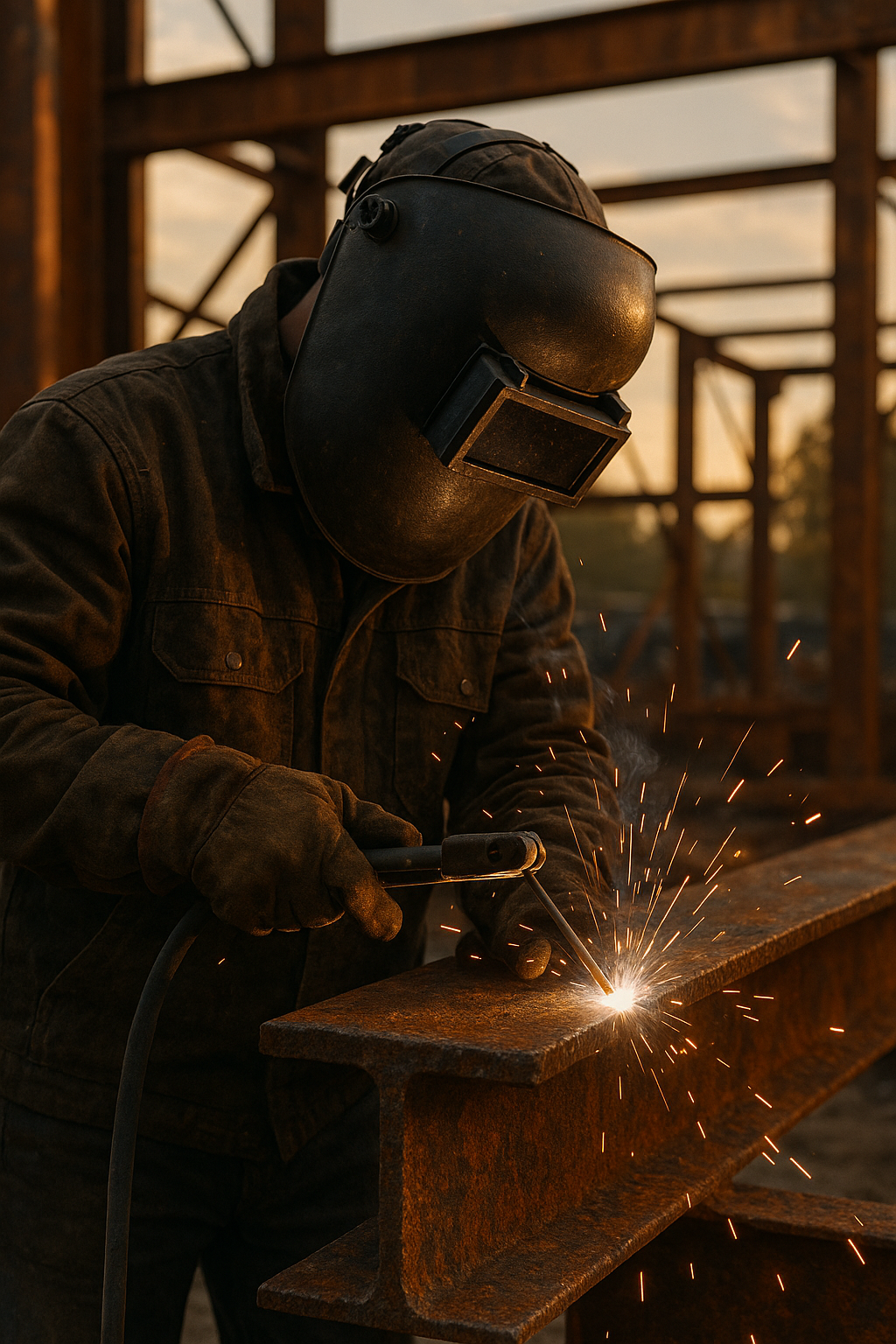
    When it comes to welding, your gloves arenโ€™t just accessories โ€” theyโ€™re your first line of defense. Whether you’re laying down delicate TIG beads or burning heavy rod on a stick job, the right glove makes a massive difference in comfort, control, and safety. Tillman, one of the most trusted names in welding PPE, offers gloves tailored specifically for MIG, TIG, and Stick processes. But which model is right for your work?

    Letโ€™s break it down.


    TIG Welding: Thin, Precise, and Flexible

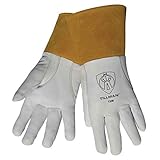
    TIG welding demands finesse, and that means your gloves need to offer maximum dexterity with minimal bulk. Tillmanโ€™s TIG gloves are crafted from premium materials like top-grain goatskin or kidskin leather, both known for their softness and flexibility.

    Best Pick: Tillman 24C or 1338

    • Material: Kidskin (24C) or Goatskin (1338)
    • Why it works: Lightweight, form-fitting, and durable enough to take the heat while giving you fingertip control.
    • Bonus: Some TIG models include a seamless forefinger for improved feel on the torch.
    Tillman 24CL Welding Gloves, TIG, L, Straight, PR
    • Sale Unit: PAIR
    • Brand: Tillman
    • Glove Type: Welding Glove
    • Welding Application: TIG
    • Glove Material: Kevlar / Leather

    Last update on 2026-01-19 / Affiliate links / Images from Amazon Product Advertising API

    Sale
    Tillman 1338 Top Grain Goatskin TIG Glove with Glide Patch Large White
    • Goatskin
    • superior feel and dexterity
    • Reinforced thumb for added strength

    Last update on 2026-01-19 / Affiliate links / Images from Amazon Product Advertising API

    These gloves wonโ€™t last forever if youโ€™re dragging filler rod or working in high-amp applications โ€” but for clean, controlled TIG work, theyโ€™re ideal.


    MIG Welding: Balance of Dexterity and Protection

    MIG welding hits that middle ground. You need enough finger feel to control your gun and trigger, but more insulation than TIG gloves offer. Spatter is more common here, so longer cuffs and more heat resistance matter.

    Best Pick: Tillman 42 or 48

    • Material: Top-grain cowhide with cotton or fleece lining
    • Why it works: Durable with added lining for spatter protection, while still flexible enough for wire-feed control.
    • Bonus: The reinforced palm patch on some models adds grip and extends glove life.


    Last update on 2026-01-19 / Affiliate links / Images from Amazon Product Advertising API


    Welding Gloves, MIG, L, Reinforced, PR
    • Price For: Each Stitching Material: Kevlar(R) Grade of Leather: A Design: (2) Piece Back Item: Welding Gloves Size: L Color: Tan Cuff Material: Split Cowhide Leather Lining Material: Cotton/Foam Length: 12″ Cuff: 4″ Gauntlet Cut: Gunn Thumb Style: Reinforced Application: MIG Back Material: Grain Pigskin Palm Material: Pigskin
    • Leather Palm Type: Top Grain Country of Origin (subject to change): Unknown

    Last update on 2026-01-19 / Affiliate links / Images from Amazon Product Advertising API

    These are workhorsesโ€”great for shop use, structural jobs, or fabrication tasks where comfort and toughness must coexist.


    Stick Welding: Heat, Spatter, and Brutal Conditions

    Stick welding is where gloves get put through hell โ€” sparks flying, rods burning, slag popping. You need insulation, thick leather, and a long gauntlet cuff. Dexterity takes a back seat to safety and durability.

    Best Pick: Tillman 750 or 850

    • Material: Premium side-split cowhide or elk skin
    • Why it works: High heat resistance, rugged build, and foam-lined backs for heavy-duty work.
    • Bonus: Kevlar stitching on these gloves helps prevent seam blowouts under repeated thermal cycling.


    Sale
    Tillman 850 Gold Elk Skin Premium Welding Gloves-L
    • Reusable Welding Gloves: The gloves are reusable for multiple welding projects.
    • Elk Skin Material: Made from premium elk skin material for durability and comfort.
    • Lock Closure: The gloves feature a lock closure for secure fit.
    • Adult Size: Designed in a large adult size to fit most welders.
    • Welding Use: Specifically designed for welding projects and tasks.

    Last update on 2026-01-19 / Affiliate links / Images from Amazon Product Advertising API


    John Tillman and Co Tillman Large 14″ Pearl Gray Premium Elkskin CottonFoam Lined Stick Welders Gloves with Welted Fingers and Kevlar Thread Locking Stitch (TIL750L)
    • Tillman Large Pearl Gray 14″ Top Grain Elk Cotton/Foam Lined Welders Gloves With Straight Thumb, Stiff Cowhide Cuff, Welted Fingers, Kevlar Stitching And Pull Tab (Carded)
    • John Tillman and Co
    • John Tillman and Co – 750l
    • Pull Tab – provides easy on/off and extra protection while dragging a welding gun. Straight Thumb – for best gun grip. Top Grain Elk Back and Palm – superior feel and performance

    Last update on 2026-01-19 / Affiliate links / Images from Amazon Product Advertising API

    These gloves are built to last, especially for welders working outdoors, in field repair, or on dirty, high-amperage stick jobs.


    Choosing the Right Fit

    When selecting gloves, donโ€™t go by price or looks โ€” go by process. Consider:

    • Heat exposure: TIG runs cooler, Stick runs hot.
    • Dexterity needs: TIG demands precision, Stick does not.
    • Work duration: Longer sessions mean youโ€™ll want gloves that stay comfortable.

    Also, sizing matters. Too loose, and youโ€™ll lose control. Too tight, and youโ€™ll lose circulation โ€” and feel every arc pulse.


    Final Thoughts

    Tillman has been a staple in welding PPE for a reason โ€” their gloves are purpose-built for the demands of each welding process. Choosing the right pair isnโ€™t just about comfort โ€” itโ€™s about staying safe, welding better, and protecting your hands for the long haul. Stay safe, weld strong.

    If youโ€™re ready to gear up, weโ€™ve linked our recommended Tillman gloves for each welding process below.

    As an affiliate, we may earn from qualifying purchases at no extra cost to you.

  • Welding Cable Guide: Lead Length & Sizes Explained

    Welding Cable Guide: Lead Length & Sizes Explained

    When it comes to welding performance and safety, your choice of welding cable is just as important as your machine or electrode. Whether youโ€™re setting up a new rig or upgrading your current leads, understanding cable size and lead length can make a noticeable difference in weld quality and efficiency. In this guide, we break down the key factors to help you choose the right welding cable for your needs.


    What Is Welding Cable?

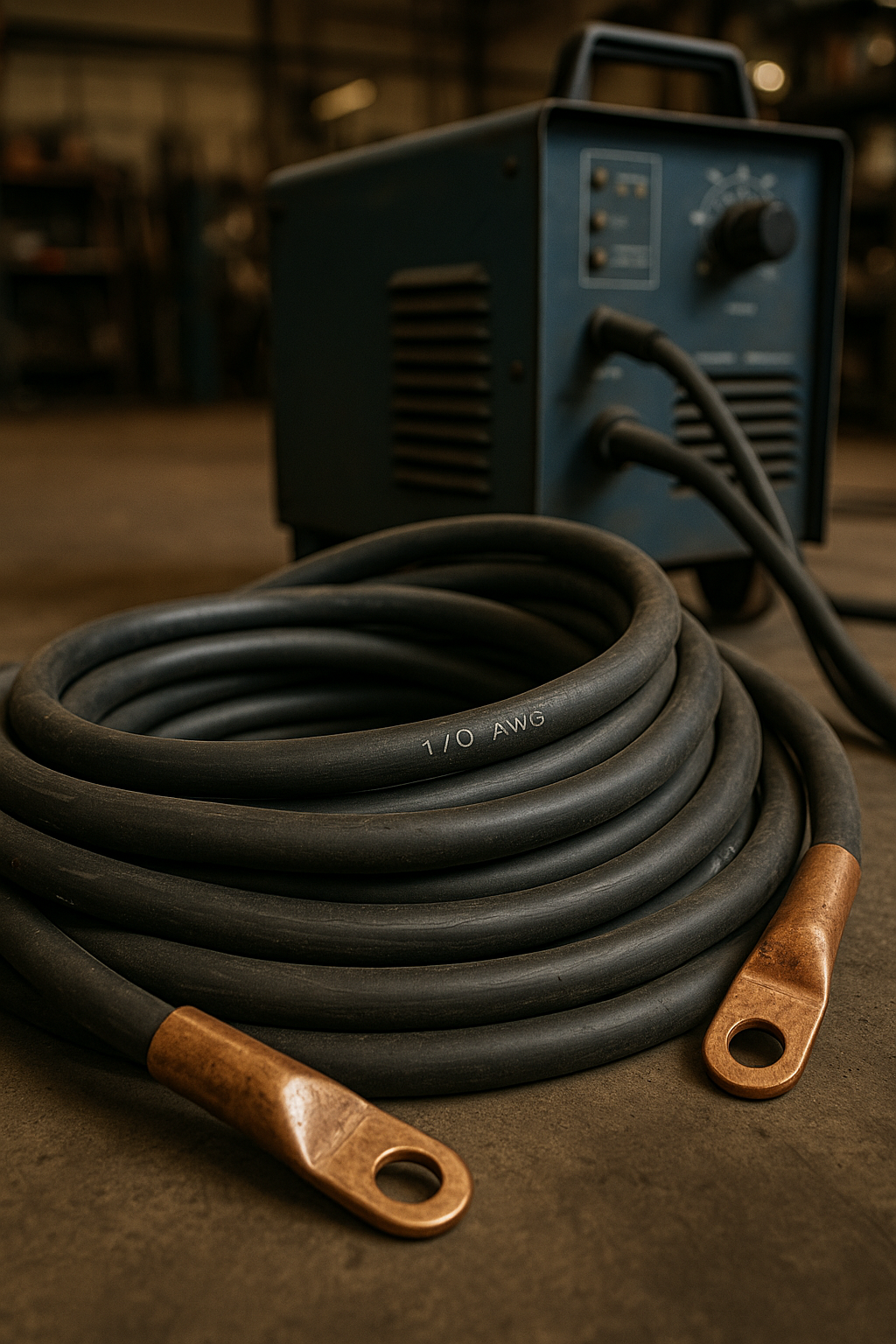
    Welding cable is a flexible, high-amperage conductor used to connect the power source (welder) to the work clamp and electrode holder. It’s built with a heavy-duty rubber jacket and fine copper strands, designed to withstand the demanding conditions of welding environmentsโ€”abrasion, oil, flame, and movement.


    Understanding Cable Sizes (Gauge)

    Welding cable sizes are measured in American Wire Gauge (AWG), where smaller numbers mean thicker cables. Common sizes include:

    • #6 AWG โ€“ Suitable for light-duty work up to ~50 ft
    • #4 AWG โ€“ Good for medium-duty up to 75 ft
    • #2 AWG โ€“ Used for higher amperage up to 100 ft
    • #1 or 1/0 AWG โ€“ Heavy-duty applications, great for long distances or high-amperage machines
    • 2/0 or 3/0 AWG โ€“ Industrial-grade welding or extremely long lead runs

    The thicker the cable, the more amperage it can carry without overheating or voltage drop. For example, a #1 AWG can carry 200 amps over 100 feet without noticeable performance issues, while a #6 might struggle past 30 feet with the same amperage.


    Why Lead Length Matters

    Lead length impacts voltage dropโ€”longer cables create more electrical resistance. That resistance can reduce power at the arc, affecting penetration and weld quality. To minimize voltage loss:

    • Keep leads as short as practical
    • Use a thicker cable for longer distances
    • Avoid excessive splicing or poor connectors

    As a rule of thumb, if your leads are longer than 50 feet, consider sizing up your cable to the next thicker gauge.


    Match Cable to Your Machineโ€™s Output

    Check your welderโ€™s max output amperage and duty cycle. If you’re running a 250A MIG welder at 60% duty cycle, youโ€™ll want a cable rated comfortably above that (like 1/0 AWG) to avoid overheating. Undersized cables not only reduce performance, theyโ€™re also a fire hazard.


    Single vs. Paired Cables

    For stick or TIG welding, youโ€™ll often use two separate leadsโ€”an electrode and a ground. For wire-feed machines, the ground cable is separate, and the power flows through the MIG gun. In all cases, make sure both leads are properly rated and matched in length when possible to ensure balanced resistance.


    Choosing the Right Jacket Type

    Most welding cables come with either:

    • EPDM Rubber โ€“ Flexible, oil-resistant, good for shop use
    • Neoprene โ€“ Weather and abrasion-resistant, good for outdoor/rough use
    • SJOOW/SOOW โ€“ Multi-conductor variants are often used for extension leads or industrial setups

    If youโ€™re working in cold environments or with frequent cable coiling/uncoiling, go for a high-flex cable with fine copper strandsโ€”easier to manage and less prone to cracking.


    Quick Cable Sizing Table

    AmpsMax Length (ft)Recommended Size
    15050 ft#4 AWG
    20075 ft#2 AWG
    250100 ft1/0 AWG
    300+100+ ft2/0 or 3/0 AWG

    Always round up for safety and efficiency.


    Final Tips

    • Inspect your cable for cuts, worn insulation, or corrosion at the lugs
    • Keep connections tight and clean
    • Consider quick-connect ends for modular setups

    Conclusion

    Picking the right welding cable size and lead length isnโ€™t just a technical detailโ€”it directly affects your arc stability, equipment lifespan, and safety. When in doubt, go thicker and shorter. Itโ€™s a small investment that pays off every time you strike an arc.

    Note: This post may contain affiliate links, and we may earn a commission if you purchase through them, at no extra cost to you.

  • Welding Gas Regulator Leak Detection: How to Test Properly

    Welding Gas Regulator Leak Detection: How to Test Properly

    A leaking gas regulator can spell disaster in any welding setup. Whether youโ€™re running MIG, TIG, or oxy-fuel equipment, a compromised regulator risks gas loss, safety hazards, and poor weld quality. Fortunately, testing for leaks is simple and only takes a few minutes โ€” if you know what youโ€™re doing.

    In this guide, weโ€™ll walk through how to properly check your welding gas regulator for leaks, what tools you need, and the signs that itโ€™s time to replace or repair your setup.


    Why Regulator Leaks Are a Big Deal

    A leaking regulator doesnโ€™t just waste expensive shielding gas like argon, COโ‚‚, or acetylene โ€” it can cause:

    • Porosity in welds due to inconsistent gas flow
    • Backfire or flashbacks in oxy-fuel setups
    • Oxygen enrichment or fire risk in poorly ventilated areas
    • Shortened regulator lifespan and failed pressure seals

    Even small leaks can snowball into bigger problems if left unchecked.


    Tools Youโ€™ll Need

    You donโ€™t need a high-tech lab setup to test your regulator. Hereโ€™s what you need:

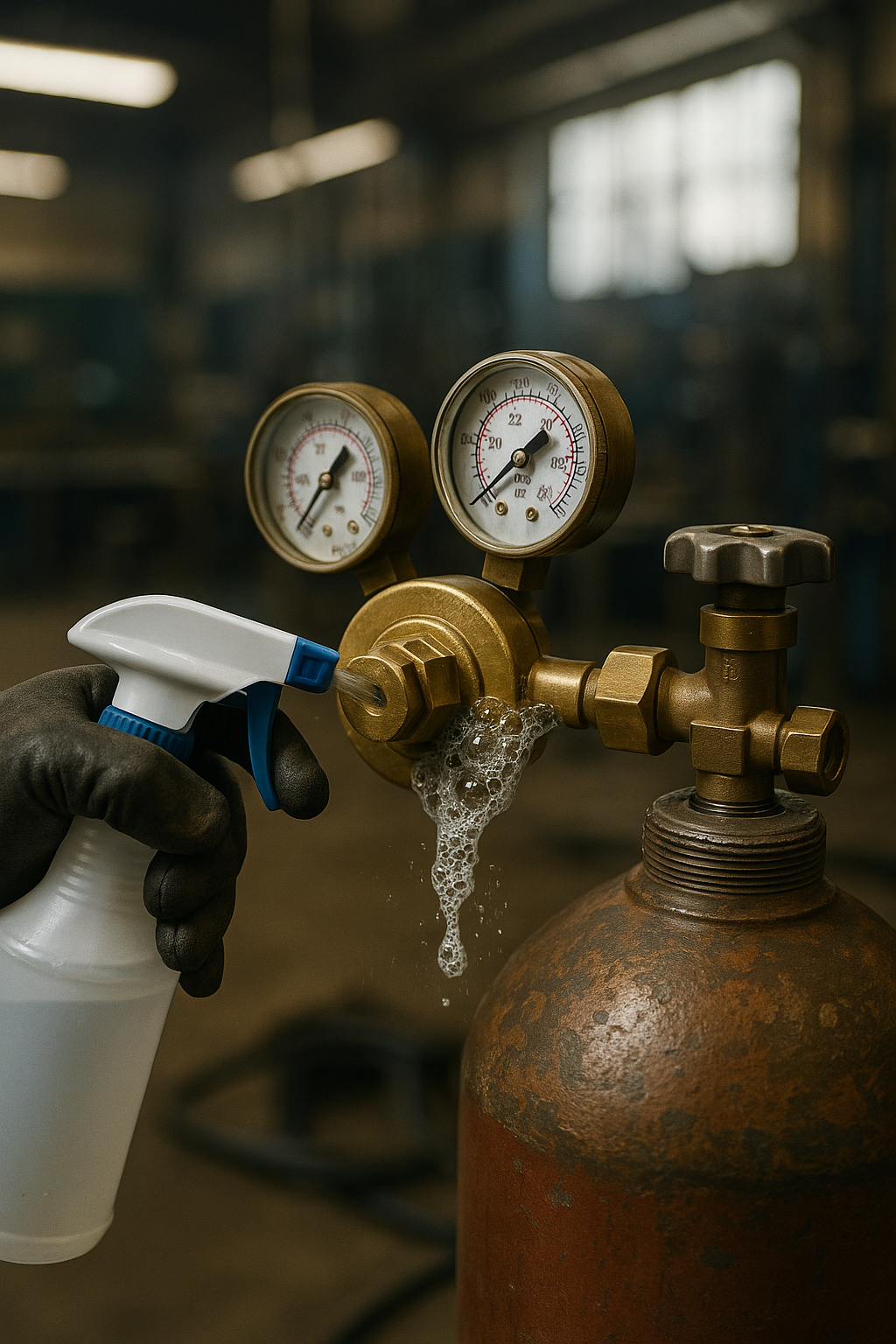
    • Soapy water solution (dish soap with no oil + water in a spray bottle). Be sure to get soap with no oil because it can not be around compressed oxygen.
    • Leak detection fluid (optional but more precise)
    • PPE: gloves and eye protection
    • Regulator and gas cylinder
    • Wrench for tightening connections

    How to Test a Regulator for Leaks

    1. Check for Physical Damage

    Before you even connect it, visually inspect the regulator:

    • Cracks or corrosion around the body
    • Bent gauges or broken needle indicators
    • Loose fittings or broken inlet/outlet threads

    If you spot any of this, donโ€™t bother testing โ€” replace it.

    2. Secure the Regulator to the Cylinder

    Use the correct wrench to firmly tighten the regulator onto the gas cylinder valve. Make sure no Teflon tape is used on CGA connections โ€” they seal via metal-to-metal compression, not threads.

    3. Open the Cylinder Valve Slowly

    With the regulatorโ€™s pressure-adjustment knob fully backed out (loose), crack the cylinder valve open just slightly, then fully open it. You should see tank pressure register on the gauge.

    4. Apply Soapy Water or Leak Detector

    Spray the soapy water solution around these key areas:

    • Cylinder-to-regulator connection
    • Regulator body seams
    • Gauge threads and faces
    • Outlet fitting and hose connection

    Watch closely for bubbling โ€” even small ones signal a leak.

    Pro tip: Use a leak detection fluid rated for welding gas systems if available. Itโ€™s more sensitive than soap and less likely to corrode brass fittings.

    5. Pressurize and Retest

    If no bubbles show at tank pressure, dial in 10โ€“20 psi on the working pressure side, then recheck the outlet connections. This ensures no leaks develop once the system is live.


    What to Do If You Find a Leak

    • At the tank connection: Try reseating and re-tightening the regulator. If it still leaks, the regulator seat may be damaged or the cylinder valve may be faulty.
    • At the body or gauges: Replace the regulator. Internal leaks canโ€™t be repaired easily or safely.
    • At the outlet or hose: Check fitting tightness. If it still leaks, replace the hose or fitting.

    Never use a leaking regulator during welding. Itโ€™s not worth the risk.


    When to Replace Your Regulator

    • If you see persistent leaks despite tightening
    • If your regulator is more than 5โ€“7 years old and shows wear
    • If gauges are inaccurate or slow to respond
    • If threads or seats are damaged

    Upgrading to a quality regulator can save gas and headaches long term.


    Final Thoughts

    Testing for gas leaks should be a part of your routine maintenance, especially if your welds suddenly start looking rough or your gas tanks are draining too fast. A simple spray test can help prevent wasted gas, poor welds, and serious safety issues.

    Note: Some of the links on this page may be affiliate links. If you click and buy, we may earn a small commission at no extra cost to you. We only recommend gear we trust.


    If you’re regulator needs to be replaced, here are some options for replacement. Gas Regulation Replacement

  • DIY Welding Cart: Organizing Tools for Shop Setup

    DIY Welding Cart: Organizing Tools for Shop Setup

    If you’re setting up a home welding shop or upgrading your garage workspace, a DIY welding cart is one of the smartest first builds you can take on. Not only does it give you a place to store your welder, cables, and consumables, but it also keeps your setup mobile, compact, and organized. Whether you MIG, TIG, or stick weld, a well-built cart saves time and space โ€” and prevents that classic tool scramble mid-project.

    Why Build Your Own Welding Cart?

    Buying a pre-built welding cart can get expensive fast โ€” especially if you want heavy-duty shelves, drawer space, or features like bottle racks and grounding studs. A DIY cart lets you:

    • Customize dimensions to fit your welder or plasma cutter

    • Add racks for clamps, grinders, and cables

    • Use scrap metal or repurposed materials to save cash

    • Learn or refine your fabrication skills in the process

    For beginner to intermediate welders, itโ€™s a perfect project to practice clean welds, square tubing, and caster alignment.

    Planning Your Layout

    Before you cut any steel, think about how you work. Ask yourself:

    • Do you need it to roll under a bench when not in use?

    • Will it carry a gas cylinder for MIG or TIG welding?

    • How many shelves or drawers do you need?

    • Will you add a power strip or extension cord holder?

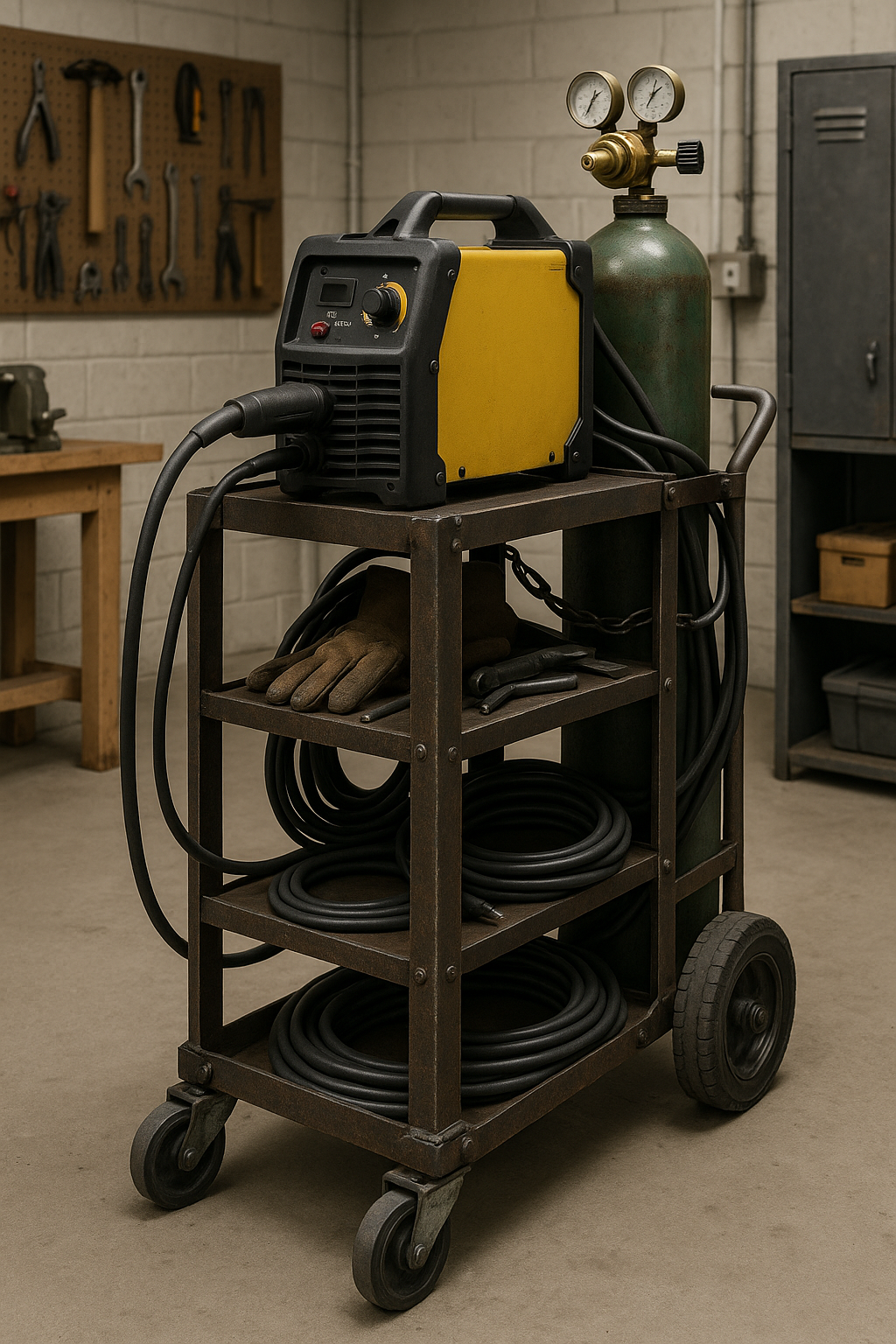
    A typical layout might include:

    • Top shelf for the welder or plasma cutter

    • Middle shelf for accessories like wire spools, clamps, or gloves

    • Bottom shelf for heavier items or shielding gas bottles

    • Cable hooks on the sides

    • Locking casters for stability and movement

    Optional upgrades: drawer slides, fire extinguisher mount, or tool trays for pliers, nozzles, and brushes.

    Materials and Tools Needed

    You donโ€™t need much to get started. A basic welding cart can be made using:

    Materials

    • 1″ square tubing (14โ€“16 gauge is plenty strong)

    • Sheet metal for shelves

    • Casters (2 fixed, 2 swivel with brakes)

    • Flat bar or angle iron for supports

    • Paint or powder coat (optional)

    Tools

    • MIG welder or stick welder

    • Angle grinder with cut-off and flap discs

    • Clamps, tape measure, square, marker

    • Drill and bits (for mounting shelves or accessories)

    • Safety gear: gloves, helmet, fire-resistant clothing

    If you’re light on tools, consider picking up a basic welding kit or angle grinder set โ€” many solid options are available online.

    Welding Cart Build Tips

    • Start square: Make sure your tubing is squared and clamped before tacking. Check alignment often.

    • Tack first, weld later: Fully weld only after everything is fit up correctly. This reduces warping and rework.

    • Weight balance matters: Place your gas bottle over the axle line if possible to avoid tipping.

    • Ground smart: Consider welding on a ground stud or using a dedicated clamp location to make setup faster.

    Once your cart is fully assembled, give it a cleanup with acetone or alcohol, hit it with primer, and paint to match your shop’s vibe โ€” or go all black for a classic industrial look.

    Final Thoughts

    A welding cart might not be glamorous, but itโ€™s a game-changer for productivity and workspace efficiency. Building your own lets you tailor it exactly to your tools, your space, and your welding style. Plus, it gives you one more project under your belt โ€” and a functional one at that.


    Disclaimer: Some of the links in this post may be affiliate links. That means we may earn a commission if you purchase through them, at no additional cost to you. Every product we recommend is something weโ€™d use in our own shop.

  • MIG Problems Solved: Porosity Fix Guide

    MIG Problems Solved: Porosity Fix Guide

    MIG welding is known for its speed and ease, but it isnโ€™t immune to issues, especially porosity. If you’ve ever laid a bead that looked more like Swiss cheese than solid metal, you’re not alone. Porosity is one of the most common (and frustrating) MIG welding problems, but the good news is: it’s solvable. This quick guide covers the causes and actionable fixes to help you get back to laying clean, reliable welds.


    What Is Porosity in MIG Welding?

    Porosity happens when gas gets trapped in the molten weld pool and forms bubbles as the metal solidifies. These gas pockets can severely weaken your weld, cause leaks in pressure vessels, and ruin the appearance. There are two types:

    • Surface porosity: visible holes on the weld face.
    • Subsurface porosity: hidden defects inside the weld, often only found with X-ray or ultrasonic inspection.

    Both types are bad news, but theyโ€™re usually preventable.


    Common Causes and Fixes

    1. Contaminated Base Metal

    Problem: Dirt, rust, oil, paint, or moisture on the workpiece can create gas when burned, leading to porosity.
    Fix: Clean the metal thoroughly with a wire brush, grinder, or acetone before welding. Even new steel can have mill scale or oil that needs removal. See the clean side on the right.

    2. Poor Shielding Gas Coverage

    Problem: If your gas isnโ€™t fully protecting the weld, air can mix in and cause bubbles.
    Fixes:

    • Check your flow rate: For most MIG setups, 20โ€“30 CFH is ideal. Too low or too high can cause turbulence.
    • Inspect for leaks: Look for cracks in hoses or loose fittings.
    • Avoid wind: Even a slight breeze can disrupt shielding gas. Weld indoors or use wind guards when possible.

    3. Incorrect Stick-Out (Electrode Extension)

    Problem: If your wire stick-out is too long, it reduces gas shielding and increases spatter.
    Fix: Keep stick-out around 3/8″ to 1/2″ for solid MIG wire. Flux-core may allow for a bit more, but always refer to the manufacturer’s specs.

    4. Wrong Gun Angle or Distance

    Problem: Angling the gun too much or holding it too far away from the workpiece can compromise gas coverage.
    Fix: Use a push technique with the gun held at a 10โ€“15ยฐ angle from vertical. Keep the nozzle about 3/4″ from the puddle.

    5. Dirty or Damaged Consumables

    Problem: Spatter buildup inside your nozzle or a bad diffuser can affect gas flow.
    Fix: Regularly clean or replace the nozzle, tip, and diffuser. Use anti-spatter spray to prevent buildup.

    6. Wrong Wire or Gas Combo

    Problem: Using the wrong type of wire or gas for the job can cause an unstable arc and porosity.
    Fix: Make sure you’re using the right filler wire for your material. For mild steel, ER70S-6 with 75/25 argon/COโ‚‚ is the common go-to. Stainless or aluminum will require different combinations.


    Pro Tip: Keep a Checklist

    If youโ€™re running into porosity issues often, build a pre-weld checklist. Hereโ€™s a simple one:

    • Clean the metal
    • Check gas flow and hose integrity
    • Inspect consumables
    • Confirm correct wire/gas combo
    • Set gun angle and stick-out properly


    Final Thoughts

    Porosity in MIG welds can be frustrating, but itโ€™s rarely random. Usually, it comes down to gas coverage, cleanliness, or technique. By understanding the root causes and dialing in your setup, youโ€™ll be able to produce clean, professional-quality welds every time.


    This post may contain affiliate links. We may earn a commission if you purchase through themโ€”at no additional cost to you. We only recommend products we trust for quality and performance in the shop.

  • ESAB Rebel 215ic Review: Best All-In-One 200 Amp DC Welder

    ESAB Rebel 215ic Review: Best All-In-One 200 Amp DC Welder

    Introduction & Overview

    The ESAB Rebel 215ic Review: Best All-In-One Welder is a game-changer for both professional and hobby welders. Celebrated for its flexibility and portability, this welder accommodates a variety of welding processes, making it an indispensable tool in any workshop. Designed to meet the demands of modern welding needs, its versatility is its standout feature, offering a powerful solution for a wide range of projects.

    Key Features

    The ESAB Rebel 215ic is known for its multi-process capabilities, allowing DC MIG, TIG, and Stick welding. This versatility positions it as a valuable asset for those needing diverse welding techniques in one machine. With an output range of 120V to 230V, it can handle a variety of materials and thicknesses. The machine also boasts an intelligent sMIG (smart MIG) feature that adjusts settings automatically, simplifying usage for beginners while still catering to experts who prefer custom settings.

    Pros & Cons

    Pros:
    – Multi-process capability: MIG, TIG, and Stick welding.
    – Portable and lightweight design.
    – User-friendly interface with TFT-LCD screen.
    – Durable construction for long-lasting use.
    – Wide voltage range for diverse applications.

    Cons:
    – Might be considered expensive by budget users.
    – Requires additional purchase for TIG accessories.
    – Learning curve for absolute beginners.

    Who Itโ€™s For

    The ESAB Rebel 215ic is ideal for welders who require flexibility and portability without compromising performance. Whether you’re a seasoned professional or an ambitious hobbyist, this all-in-one welder suits those needing to switch between different welding styles efficiently. Itโ€™s particularly beneficial for small shops or home workshops, where space and versatility are at a premium.

    What Makes It Unique

    What sets the ESAB Rebel 215ic apart from competitors is its innovative sMIG technology, which automatically adjusts to the operatorโ€™s style, optimizing the welding parameters. This technology not only enhances weld quality but also reduces setup time. Additionally, its lightweight, rugged construction makes it perfect for projects on the go or in varying environments.

    Buying Tips

    When purchasing the ESAB Rebel 215ic, consider investing in high-quality protective gear and compatible TIG accessories if you plan to maximize its features. Check the power supply requirements based on your workshop setup to ensure seamless operation. Itโ€™s wise to buy from authorized retailers to take advantage of any available warranties and customer support.

    Conclusion

    In summary, the ESAB Rebel 215ic Review: Best All-In-One Welder stands out for its versatility, portability, and advanced features that cater to a wide range of users. Its innovative sMIG technology and robust design make it a benchmark in the welding industry. If you’re looking to invest in a reliable, multi-process welder, the ESAB Rebel 215ic is a worthy choice.

    ย 

    We may earn a small commission through Amazon affiliate links, at no extra cost to you.


    Esab Rebel Series EMP 215Ic Mig/Tig/Stic
    • Category: Welding — Replacement Parts

    Last update on 2026-01-19 / Affiliate links / Images from Amazon Product Advertising API

  • Nozzle Care: How to Clean Your MIG Nozzles for Spatter Cleanup

    Nozzle Care: How to Clean Your MIG Nozzles for Spatter Cleanup

    MIG welding is known for its efficiency, but even the best welders battle one persistent nuisanceโ€”spatter buildup on the nozzle. If left unchecked, spatter clogs gas flow, affects arc stability, and reduces the life of your consumables. Thatโ€™s why proper nozzle care isn’t optionalโ€”it’s essential.

    In this post, weโ€™ll walk through how to clean your MIG nozzles, what tools and products help the most, and how to prevent spatter from building up in the first place using anti-spatter spray and nozzle dip. Weโ€™ll also touch on the different types of nozzles, including ceramic and standard copper styles, and when to use each. Letโ€™s dive in.


    Why Nozzle Maintenance Matters

    The nozzle directs shielding gas over your weld, protecting it from contamination. When it gets clogged with spatter, youโ€™ll see erratic arcs, porosity, and weak welds. It also shortens the lifespan of your contact tips and liners, costing you money and time in replacements.

    Routine cleaning and prevention extend the life of your equipment, maintain weld quality, and help you avoid unnecessary downtime.


    Cleaning MIG Nozzles: Step-by-Step

    1. Power Off โ€“ Always shut off the machine and let everything cool before you start.
    2. Remove the Nozzle โ€“ Unscrew or twist off the nozzle, depending on your model.
    3. Scrape Out Spatter โ€“ Use a nozzle cleaning tool, welper pliers, or a round file to scrape out built-up spatter. Avoid using sharp metal tools that can gouge or warp the nozzle.
    4. Wire Brush It โ€“ Use a small wire brush to finish off the cleaning inside and out.
    5. Check for Damage โ€“ If the nozzle is deformed, cracked, or excessively worn, itโ€™s time to replace it.
    Sale
    Welper Mig Gun Pliers – 1 Each
    • Versatile Design: This mig welding plier serves eight purposes in one, saving you time and boosting productivity
    • Durable Construction: Crafted with robust carbon steel, ensuring longevity and reliability
    • Ergonomic Grip: The ergonomic handle provides a comfortable and secure grip for extended use
    • Multi-Functional: Ideal for hammering, wire cutting, insulation bushing removal, and more
    • Easy to Use: The spring-operated handle makes it simple to use and switch between functions

    Last update on 2026-01-19 / Affiliate links / Images from Amazon Product Advertising API

    Last update on 2026-01-19 / Affiliate links / Images from Amazon Product Advertising API


    Preventative Measures: Anti-Spatter Spray & Nozzle Dip

    Cleaning helps, but prevention is your best weapon. Here’s how to keep spatter from sticking in the first place:

    Anti-Spatter Spray

    This silicone-based spray coats your nozzle, contact tip, and even your workpiece to prevent spatter from sticking. Just a light mist before welding helps make post-weld cleanup a breeze.

    • When to use: Great for light-duty welding or when you donโ€™t want to disrupt workflow for cleaning.
    • Pro tip: Make sure the spray is safe for painted or coated surfaces if you’re using it on the workpiece.
    Anti-Spatter,Trigger Spray,16.9 oz.
    • Category: Welding — Welding Chemicals

    Last update on 2026-01-19 / Affiliate links / Images from Amazon Product Advertising API

    Nozzle Dip (Gel)

    Nozzle dip is a heat-resistant gel that you dip your hot nozzle into. It forms a protective coating that prevents spatter from fusing to the surface.

    • When to use: Ideal for production settings or when youโ€™re running high amps and generating more heat/spatter.
    • Application tip: Dip only the outer nozzle, not the contact tip.
    DYNAFLUX MIG WELDING NOZZLE GEL CONTACT TIP DIP – 16OZ (1)
    • Nozzle Gel Petroleum Based Nozzle Gel – 16OZ
    • Provides excellent protection against weld spatter build-up on M.I.G. gun nozzles, contact tips
    • positioners, stud welding chucks and electrode holders on all automatic
    • and semi-automatic welding apparatus
    • Will not cause porosity. Blue in color.

    Last update on 2026-01-19 / Affiliate links / Images from Amazon Product Advertising API

    DYNAFLUX MIG WELDING NOZZLE GEL CONTACT TIP DIP – 16OZ (12)
    • Nozzle Gel Petroleum Based Nozzle Gel – 16OZ
    • Provides excellent protection against weld spatter build-up on M.I.G. gun nozzles, contact tips
    • positioners, stud welding chucks and electrode holders on all automatic
    • and semi-automatic welding apparatus
    • Will not cause porosity. Blue in color.

    Last update on 2026-01-19 / Affiliate links / Images from Amazon Product Advertising API


    Different Types of MIG Nozzles

    Understanding your nozzle type can affect how you clean and protect it:

    • Standard Copper Nozzles: Most common and affordable. Good thermal conductivity, but spatter sticks easily.
    • Heavy-Duty Nozzles: Thicker walls and better suited for industrial or high-amperage applications.
    • Ceramic Nozzles: Extremely resistant to heat and spatter, but more brittle. Often used in robotic or high-frequency operations.

    Choosing the right nozzle for your applicationโ€”and maintaining itโ€”can make a noticeable difference in your weld quality and machine performance.


    Final Thoughts

    MIG nozzle maintenance may seem minor, but it plays a major role in keeping your welds clean and your machine running smoothly. Regular cleaning combined with anti-spatter spray or nozzle dip can save you both time and consumables.

    Whether you’re a hobbyist or a pro in the shop, having a few of these tools and products in your kit is worth it. And if you’re looking to pick up some of the items mentioned here, weโ€™ve included links to trusted products we recommend. These are affiliate links, so we may earn a small commissionโ€”at no extra cost to youโ€”if you decide to buy through them. It helps keep our blog running and supports future content.


  • Welding Boots 2025: Best FR Work Footwear for Welders

    Welding Boots 2025: Best FR Work Footwear for Welders

    Welding can be unforgiving, especially on your gear. Sparks, slag, spatter, and high-heat surfaces arenโ€™t just dangerous to your skinโ€”theyโ€™ll shred your footwear fast if youโ€™re not wearing the right boots.

    In this guide, weโ€™re spotlighting the best flame-resistant (FR) welding boots of 2025. These options are all available on Amazon, reviewed by real welders, and built for serious work.


    SAFETOE Composite Toe Welding Boots

    These boots are purpose-built for welding environmentsโ€”no fluff, just fire-resistant function.

    • Toe Protection: Composite toe meets ASTM F2413-18 standards
    • FR Rating: Leather upper and Kevlar stitching resist flames, sparks, and slag
    • Sole Specs: Heat resistant to 300ยฐC, electrical hazard rated, and anti-slip rubber outsole
    • Comfort: Shock-absorbing midsole and padded collar for all-day wear
    • Best For: Welders needing maximum protection and long-term durability

    Price: Around $90
    Amazon Rating: 4.7โ˜… from verified buyers


    SAFETOE Welding Boots for Men – Composite Toe Safety Boot, Fire and 300 Heat Resistant, Welder Working Footwear
    • ๐Ÿ”ฅใ€COW LEATHER WELDING BOOTSใ€‘: This welding working protect boots are made from 100% high-quality Nubuck Cow Leather, which provides a good mix of durability, and flexible with moderate heat and abrasion resistance. So it can effectively improve your work efficiency
    • ๐Ÿ”ฅใ€CE & ASTM CERTIFICATIONใ€‘: Keep your feet safe with mens composite toe welder boots, which are CE(EN Iso 20344:2011-8.7) & ASTM(ASTM:F2413-18a Heat-resistant) approved and meet american standard. with composite toe cap welding boot offer wide fitting, inserted anti-nail kevlar midsole provide anti-puncture resistant performance.Suit for electric welding, construction, mechanical processing, splash proof, heat resistant Leg Welding Spats, Shoe/Boot Protectors
    • ๐Ÿ”ฅใ€SUPERIOR COMFORTABLEใ€‘: These welding safety boots offer thickness and soft shock absorption foam memory insoles,breathable air hole mesh keep your feet dry and anti-fatigue on hot days, fiber structures provide nice and warm on cold days. Repeated Impact Protection, Comfort, Breathable, Thin and Lightweight, Endurance
    • ๐Ÿ”ฅใ€EXTREME HEAT-RESISTANTใ€‘: These men welding boots out-sole are made of 300โ„ƒ Resistant Dual PU/Rubber , with SRC ,HRO performance anti-slip and wear resistance. Yellow fire lines Stitching with fire resistant thread provides spark and abrasion resistance. Meet needs of those who work in electric welding, construction, mechanical processing, splash proof, heat resistant environments
    • ๐Ÿ”ฅใ€WIDELY APPLICATIONใ€‘: Suit for electric welding, construction, mechanical processing, splash proof, heat resistant Leg Welding Spats, Shoe/Boot Protectors Cover, blacksmithing spats, work spats, boot spats, butcher, handling and cleaning, car maintenance, household farming, Barbecue, glass processing and other safe workplaces. A great welder gift for men! and SAFETOE Brand Safety Work Boots offer 30 Days Money Back and 6 Month Quality Warranty

    Last update on 2026-01-19 / Affiliate links / Images from Amazon Product Advertising API


    2. SFSDOUN Steel Toe Slip-On Welding Boots

    If you prefer a pull-on style with solid protection and a budget-friendly price, this oneโ€™s for you.

    • Toe Protection: Reinforced steel toe for impact and compression resistance
    • FR Rating: Suede leather upper is naturally flame-resistant
    • Sole Specs: Rubber sole is oil, slip, and heat-resistant
    • Convenience: Elastic sides allow quick slip-on/slip-offโ€”no laces to melt
    • Best For: Shop welders or light fabrication where convenience matters

    Price: Around $40
    Amazon Rating: 4.5โ˜… average, great for the price point

    No products found.


    3. SAFETOE Heat-Resistant Welding Boots (Alt Style)

    A variation of the top pick, this model delivers similar performance in a slightly different design for a tailored fit.

    • Toe Protection: Composite toe with ASTM rating
    • FR Rating: Leather upper, Kevlar thread, metatarsal guard
    • Sole Specs: Heat resistance to 300ยฐC, slip-resistant, and EH-rated
    • Comfort: Cushioned insole and breathable lining
    • Best For: Welders looking for a SAFETOE boot with more ankle coverage or a different fit

    Price: Around $90โ€“$100
    Amazon Rating: 4.6โ˜… and growing

    SAFETOE Welding Boots for Men Composite Toe Safety boots with Metatarsal Protection Fire Resistant Welding Boot 300โ„ƒ Heat Resistant Welder Working Boots
    • ๐Ÿ”ฅใ€COW LEATHER WELDING BOOTSใ€‘: This welding working protect boots are made from 100% high-quality Nubuck Cow Leather, which provides a good mix of durability, and flexible with moderate heat and abrasion resistance. So it can effectively improve your work efficiency
    • ๐Ÿ”ฅใ€METATARSAL PROTECTIONใ€‘: Keep your feet safe,mens composite toe welder boots with extra metatarsal protection , which are CE(EN Iso 20344:2011-8.7) & ASTM(ASTM:F2413-18a Heat-resistant) approved and meet american standard. with composite toe cap welding boot offer wide fitting, inserted anti-nail kevlar midsole provide anti-puncture resistant performance.Suit for electric welding, construction, mechanical processing, splash proof, heat resistant Leg Welding Spats, Shoe/Boot Protectors
    • ๐Ÿ”ฅใ€SUPERIOR COMFORTABLEใ€‘: These welding safety boots offer thickness and soft shock absorption foam memory insoles,breathable air hole mesh keep your feet dry and anti-fatigue on hot days, fiber structures provide nice and warm on cold days. Repeated Impact Protection, Comfort, Breathable, Thin and Lightweight, Endurance
    • ๐Ÿ”ฅใ€EXTREME HEAT-RESISTANTใ€‘: These men welding boots out-sole are made of 300โ„ƒ Resistant Dual PU/Rubber , with SRC ,HRO performance anti-slip and wear resistance. Yellow fire lines Stitching with fire resistant thread provides spark and abrasion resistance. Meet needs of those who work in electric welding, construction, mechanical processing, splash proof, heat resistant environments
    • ๐Ÿ”ฅใ€WIDELY APPLICATIONใ€‘: Suit for electric welding, construction, mechanical processing, splash proof, heat resistant Leg Welding Spats, Shoe/Boot Protectors Cover, blacksmithing spats, work spats, boot spats, butcher, handling and cleaning, car maintenance, household farming, Barbecue, glass processing and other safe workplaces. A great welder gift for men! and SAFETOE Brand Safety Work Boots offer 30 Days Money Back and 6 Month Quality Warranty

    Last update on 2026-01-19 / Affiliate links / Images from Amazon Product Advertising API


    ๐Ÿ” Comparison Table

    FeatureSAFETOE Compโ€‘ToeSFSDOUN Slip-OnSAFETOE Alt-Style
    Toe ProtectionCompositeSteelComposite
    FR UpperLeather + KevlarSuede LeatherLeather + Kevlar
    Heat ResistanceUp to 300ยฐCModerateUp to 300ยฐC
    Sole FeaturesEH, anti-slipOil/slip/heat resistantEH, anti-slip
    Fit StyleLace-upPull-onLace-up
    Price Range~$90~$40~$90โ€“100
    Best ForFull protectionBudget shop workFit/style variation

    What to Look For in Welding Boots

    • FR Materials: Leather or suede are your best betโ€”synthetics can melt.
    • Toe Type: Steel for maximum protection, composite for lighter weight and electrical safety.
    • Sole Grip: Look for oil, slip, and heat resistance with EH (Electrical Hazard) rating.
    • Fit & Comfort: Youโ€™ll be on your feet all dayโ€”comfort matters more than style.
    • Boot Height: 6 inches or higher protects your ankles from sparks and falling slag.

    Final Thoughts

    Welding boots arenโ€™t a place to cut corners. Whether youโ€™re in the shop or on the job site, proper FR-rated footwear protects you from fire hazards, falling objects, and hot surfaces.

    For all-day comfort and safety, SAFETOEโ€™s composite toe boots top the list. Need something more affordable? The SFSDOUN slip-on offers strong protection at a budget price. And for welders looking for an alternate fit or style, the SAFETOE alt model is a solid choice.


    Disclosure: As an Amazon Associate, we may earn commissions from qualifying purchases made through links in this post.

  • Arc Control Mastery: Stick Welding Tips That Matter

    Arc Control Mastery: Stick Welding Tips That Matter

    Arc Control Mastery: Stick Welding Tips That Matter

    Stick welding, known technically as Shielded Metal Arc Welding (SMAW), remains one of the most versatile and reliable methods used in fabrication and repair work. However, achieving excellent results hinges significantly on mastering arc control. In this guide, weโ€™ll explore essential tips that will elevate your stick welding proficiency.

    Electrode Selection Matters

    Not all welding electrodes are created equal. Choosing the right electrode can dramatically improve your welding performance and efficiency. Common electrodes like E6010, E6013, and E7018 each have specific characteristics that suit different materials and conditions.

    • E6010: Offers deep penetration, excellent for rusty or dirty metals.
    • E6013: Suitable for general-purpose welding; easier to handle, great for beginners.
    • E7018: Known for smooth weld beads and excellent strength; ideal for structural welds.

    Match your electrode to your project needs for the best results.

    Maintain the Correct Arc Length

    Arc lengthโ€”the distance from the electrode tip to the base metalโ€”is pivotal in stick welding. Too short an arc length can result in electrodes sticking, while too long leads to spatter and porosity.

    The optimal arc length typically matches the electrode diameter. For instance, a 1/8-inch electrode performs best with approximately a 1/8-inch gap.

    Master Your Angles

    Electrode angle significantly influences weld penetration and bead quality. Generally, maintaining a 10ยฐ to 15ยฐ angle from vertical is recommended for optimal control.

    • Drag Angle: Tilt electrode 10ยฐ-15ยฐ toward your direction of travel.
    • Work Angle: Adjust side-to-side tilt based on joint type (flat, vertical, horizontal, or overhead).

    Practicing different angles will help refine your welding technique and lead to cleaner, stronger welds.

    Control Travel Speed

    Travel speed directly impacts bead size, penetration, and weld quality. Moving too quickly can cause thin, weak welds. Conversely, going too slowly can lead to excessive buildup and burn-through.

    Aim for a steady, deliberate pace, allowing the puddle to form properly without lingering too long in one spot. Consistency here greatly enhances weld integrity.

    Watch Your Current Settings

    Stick welding depends heavily on correct amperage settings. Amperage set too high leads to excessive spatter and burn-through, while settings too low result in weak, inconsistent arcs.

    Check the recommended amperage range on your electrode packaging and adjust based on metal thickness and type. Fine-tuning current settings ensures smooth, stable arcs every time.

    Cleanliness Equals Quality

    Stick welding is forgiving but still requires cleanliness for optimal results. Rust, oil, paint, and other contaminants can compromise weld quality, resulting in porosity or weak welds.

    Always thoroughly clean your workpieces with a grinder or wire brush before welding. This simple step dramatically enhances weld strength and appearance.

    Practice, Adjust, Repeat

    Arc control mastery comes from repetition and thoughtful adjustments. Practice regularly, evaluate your results, and don’t hesitate to adjust your approach. Keep refining your technique, and soon you’ll achieve consistent, professional-quality welds.

    Safety First, Always

    Remember, welding involves intense heat, sparks, and hazardous fumes. Always prioritize safety:

    • Wear appropriate PPE (welding helmet, gloves, jacket).
    • Ensure proper ventilation.
    • Keep fire extinguishers nearby.

    Adhering strictly to safety guidelines protects you and your workspace.

    Final Thoughts

    Stick welding mastery is achievable with focused practice and attention to detail. Incorporate these critical arc control tips into your workflow, and watch your welding results significantly improve.

    Disclaimer: This post contains affiliate links. We may earn a commission if you purchase through our recommended products at no additional cost to you.

  • Flame-Resistant Welding Jackets

    Flame-Resistant Welding Jackets

    When it comes to welding safety, your jacket isnโ€™t just part of the uniformโ€”itโ€™s your frontline defense. Sparks fly, UV rays burn, and slag splatters. Thatโ€™s why flame-resistant welding jackets are a must on any job site. But with options like cotton, leather, and high-performance brands like the Weldas Arc Knight, which oneโ€™s best for you?

    Hereโ€™s a breakdown of the three most popular materials for welding jackets, and which might be the best fit for your work style and budget.


    Cotton Welding Jackets: Lightweight and Affordable

    Best for: Light-duty welding, warm climates, and tight budgets.

    Flame-resistant cotton jackets are treated with fire-retardant chemicals to resist ignition. Theyโ€™re light, breathable, and comfortable to wear for extended periodsโ€”especially in hot shops or outdoor summer jobs.

    Pros:

    • Affordable (usually under $50)
    • Light and breathable
    • Great mobility and flexibility
    • Easy to wash

    Cons:

    • Not ideal for heavy spatter or high amperage work
    • May lose flame resistance over time with washing
    • Lower durability compared to leather


    Revco F930C-L Flame Retardant Coat, 9 oz. Cotton, Large
    • Flame-resistant treated 9 oz cotton fabric
    • Side split cowhide leather
    • Comfortable, protective, and durable
    • Country of origin: China

    Last update on 2026-01-19 / Affiliate links / Images from Amazon Product Advertising API

    Good Fit: DIY welders, auto repair, and maintenance crews who want protection without the bulk.


    Leather Welding Jackets: Heavy-Duty Protection

    Best for: High-amp welding, overhead work, and job sites where spatter is constant.

    Leather is naturally flame- and heat-resistant. Cowhide and pigskin are the most common types used in welding jackets. Though heavier, leather offers top-tier protection against sparks, slag, and grinding debris.

    Pros:

    • Superior protection and durability
    • Naturally flame-resistant without treatment
    • Long lifespan with proper care

    Cons:

    • Heavy and less breathable
    • Can be stiff, especially when new
    • Pricier than cotton jackets


    Revco Black Stallion 30WC 30″ Cowhide Leather Welding Jacket – Large, Brown
    • Large
    • split cowhide
    • kevlar stitching and satin lined shoulders
    • Item Package Weight: 4.0 ounces

    Last update on 2026-01-19 / Affiliate links / Images from Amazon Product Advertising API

    Good Fit: Structural welders, industrial settings, and fabrication shops where safety trumps comfort.


    Weldas Arc Knight: Premium Hybrid Performance

    Best for: Professionals who want the best of both worldsโ€”comfort and protection.

    The Weldas Arc Knight jacket combines the flexibility of cotton with the durability of leather. Typically, it features a flame-resistant cotton body for airflow and comfort, with leather sleeves and shoulders for high-wear protection. This makes it a go-to for all-day wear in demanding environments.

    Pros:

    • Cotton body reduces heat and improves mobility
    • Leather arm shields high-impact zones
    • Stylish, pro-grade construction
    • High collar and wrist closures for added coverage

    Cons:

    • Mid-to-high price range
    • Not ideal for constant grinding or overhead work without additional gear


    ARC KNIGHT WELDING JACKET – SIZE LARGE
    • Patented Design: U.S. Patent D839,550
    • Available Sizes: M to 4XL
    • Length Range: 30″ to 34″
    • Material Composition: Grey Heavy Duty FR Cotton and Black Side Split Cowhide Leather
    • Key Features: Black Kevlar stitching, dielectric snaps, spatter guard

    Last update on 2026-01-19 / Affiliate links / Images from Amazon Product Advertising API

    Good Fit: Experienced welders who want one jacket to do it allโ€”without compromising safety or comfort.


    Final Thoughts: Which Oneโ€™s Right for You?

    Choosing the right welding jacket depends on your typical job, climate, and personal comfort preferences:

    MaterialBest ForBudget Range
    CottonLight-duty, hot climates$30โ€“$60
    LeatherHeavy-duty, all-around protection$80โ€“$150
    Weldas Arc KnightMixed-use, professional welders$70โ€“$120

    No matter your choice, make sure your jacket fits snugly, offers neck and wrist coverage, and is certified flame-resistant.


    We may earn a commission through affiliate links in this post at no extra cost to you. Your support helps keep the sparks flying here at Weld Support Parts.

Watch with Prime Video