The WEN 6502T is a compact combination belt-and-disc sander intended for controlled bench sanding, especially wood and similar manufacturer-approved materials. It is not an automatic substitute for an industrial metal-finishing grinder. A fabrication or welding shop should buy it only after checking the actual workpiece material, dust collection, bench space, abrasive sizes and electrical requirements. The attraction is two sanding formats in one benchtop footprint; the constraint is that one machine does not make every grinding or spark-producing job appropriate.
The exact item reviewed is WEN 6502T, represented by Amazon ASIN B07KL4QGSQ. WEN lists a 4-by-36-inch belt, six-inch disc, and a 4.3-amp motor for this model. These are identity checks, not promises about results on every material. The manufacturer’s operating manual and current product listing take priority over generic marketplace claims about “metal fabrication” uses.
Who should consider this combination sander?
A small welding shop might prepare wooden layout templates, packaging spacers, fixture mockups, pattern stock or other nonmetal shop materials on a separate clean bench. A belt surface provides a longer contact area for smoothing an edge, while the disc is convenient when the workpiece can be supported appropriately at its table. The two formats can save floor space versus buying separate tools. The machine remains a bench sander rather than a precision mill, sheet-metal shear or industrial weld-prep grinder.
Shops planning to remove mill scale, dress steel welds or grind hot ferrous work should start from purpose-built metalworking equipment and its manufacturer safety requirements. Sparks and combustible accumulated dust are a dangerous combination. Do not connect a shared woodworking dust collector to spark-producing work or infer a WEN wood-oriented dust port makes metal spark collection safe. If the intended material is not explicitly covered by the exact manual, label that use Unknown — verify with WEN before purchasing or operating.
The documented specification checklist
- Belt format: 4 x 36 inches. Check locally available replacement belt grits and backing suitable for the manufacturer-authorized material.
- Disc format: 6 inches. Confirm the seller’s package includes the needed abrasive and compatible attachment backing; do not assume aftermarket discs are identical.
- Motor: WEN’s 6502T listing identifies a 4.3-amp motor. Verify your bench electrical supply and manual requirements instead of estimating capacity from amperage alone.
- Belt-bed arrangement: the WEN product materials describe a tilting belt assembly, allowing an orientation change for supported sanding tasks. The available workpiece support still governs safe positioning.
- Bench installation: check overall footprint, stable mounting, clearances, guards, reach to the switch, and a clean collection route before treating the tool as suitable for a crowded welding area.
Capacity means more than the motor rating
A larger motor number does not automatically mean better accuracy, faster removal on any material, or permission to apply heavy pressure. The operator needs adequate workpiece support and the proper abrasive grade. For small template edges, pressure and consistent contact matter more than forcing a cut. A machine may slow or leave burn marks if the stock and abrasive are unsuitable, or if the operator loads the workpiece too aggressively.
The belt’s 36-inch length provides working abrasive area, not 36 inches of flat usable table length. The disc’s nominal six-inch diameter does not identify the maximum workpiece size that can be controlled safely. Check guards and support clearances against the item you actually intend to sand. If the stock cannot be supported or is so small that your hands approach the abrasive, do not proceed. Use a fixture or a safer alternate process approved for the task.
Belt station versus disc station
Think first about the geometry of the job. A belt is useful for following a straighter edge or smoothing a longer surface on supported material; the disc gives a circular abrasive face and often a nearby work support useful on small profiles. Neither surface is automatically an accurate angle-setting reference. Set and verify the support geometry against a suitable shop measuring tool when an angle matters. If the work has a tight dimension tolerance, use a documented inspection method to verify the finished feature.
Changing grits is another buying cost, even when the sander itself seems economical. Keep separate stock of belt and disc media, match the manufacturer’s size and attachment design, and confirm the abrasive is rated for the planned material and machine speed. Do not infer abrasive compatibility from color, product photos or a third-party label alone.
Dust, sparks, electrical and location limits
The WEN 6502T includes dust-management features for its intended sanding tasks. WEN’s product literature and manual should govern connection details; a typical bench vacuum hose may not fit without an approved arrangement. Sanding operations produce airborne dust even with collection. Follow the material safety data and workplace respiratory-control requirements applicable to the particular dust. Keep the work area clean, and do not use a respirator as a substitute for appropriate engineering controls.
For mixed-use weld shops, locate dust-producing woodworking/abrasive operations away from cutting torches, welding sparks, hot work, flammable deposits and unprotected combustibles. A shop that cannot reliably segregate those hazards should not choose this machine to solve a weld-prep problem. Qualified site safety review and the equipment instructions control any local arrangement.
Verify the exact selling unit
Before ordering ASIN B07KL4QGSQ, confirm the live Amazon detail page still identifies the 6502T, not older model 6502 or a belt/disc-only replacement item. Compare the title, model plate, motor, six-inch disc, four-by-36 belt, current package contents and warranty channel. A third-party seller may bundle spare abrasives, but those extras must be verified on the actual offer. Avoid paying for an unneeded stand, duplicate discs or mismatched belt sizes based on a generic image.
Order a clean set of compatible replacement abrasives if the shop needs to change grit regularly, but verify those items separately. Consider the total system: machine, stable bench, permitted extraction, power cord routing, safety procedures and consumables. A lower purchase price does not compensate for a tool that cannot safely handle the material you planned to work.
Comparison to other equipment on the WSP blog
If you are solving a metal cutting problem instead of sanding a wooden fixture template, our WEN 94396 portable band saw fit guide deals with a different process and package decision. For drilling small stock, read the WEN 4206T drill-press checklist. A sander, band saw and drill press are not interchangeable simply because they share a manufacturer’s name.
Buying conclusion
Consider the WEN 6502T when your shop has a stable, clean bench and a confirmed manufacturer-approved sanding application that benefits from both a belt and a disc. Do not select it as an unverified spark-producing metal grinder or a replacement for weld cleaning equipment. Confirm the exact model, material permissions, consumables, dust-control plan and seller package first. Those checks are more defensible than a generic “best for fabricators” ranking.
As an Amazon Associate I earn from qualifying purchases.
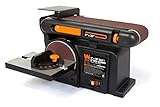
- Two-in-one sanding machine includes both a 4-by-36 inch belt and a 6-by-6 inch disc
- Belt tilts anywhere from 0 to 90 degrees
- Sturdy cast iron base prevents any heavy vibrations
- 4.3 Amp motor provides up to 3600 RPM
- Tension release lever provides for simple changes between sandpaper grits

Last update on 2026-10-27 / Affiliate links / Images from Amazon Product Advertising API
Source: WEN 6502T official specifications. Current product reference: WEN 6502T on Amazon. Read the exact unit’s current manual before operation; this article does not establish live inventory, suitability for metal sparks, or a test result.
Leave a Reply