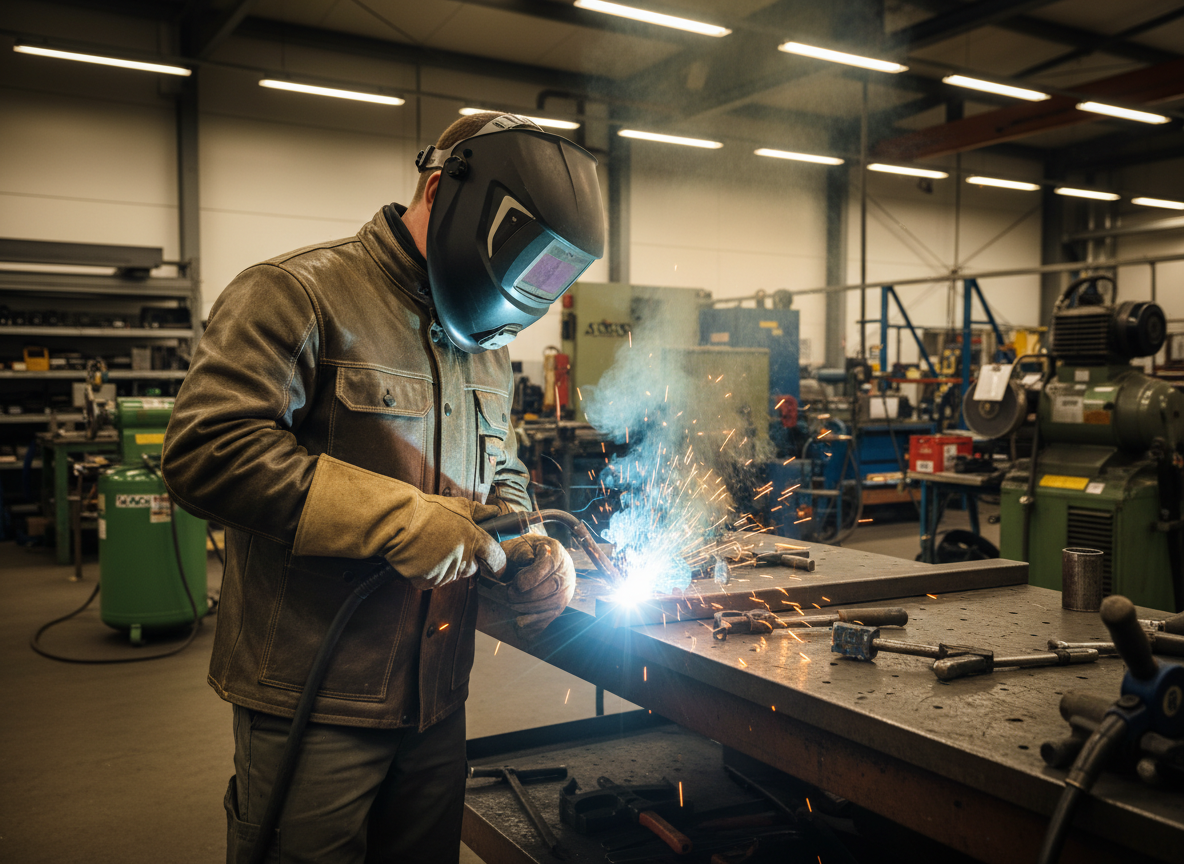
Welding Fume Exposure in 2025: What’s Changed and What PPE Actually Protects You

Welding fumes have always carried health risks, but 2025 brings a major shift in how OSHA, AWS, and safety professionals are treating long-term exposure. Injury rates in welding have dropped 15% since 2020, but chronic inflammation, respiratory diseases, and cumulative metal-fume toxicity are getting significantly more attention.

What’s driving the change?
Stricter exposure limits, new PPE technologies, and better data on how manganese, hexavalent chromium, nickel, and aluminum fumes impact long-term health.

This guide explains what’s new, what’s trending, and which respirators provide real protection—not just marketing.


Key Takeaways

  • Chronic inflammation from long-term fume exposure is a major 2025 focus
  • OSHA and ANSI Z49.1 have updated guidance for ventilation and fume extraction
  • PAPRs and tight-fitting respirators are becoming standard, not optional
  • Shops must document airflow, PPE compliance, and exposure reduction
  • Welders need gear that protects against manganese, aluminum oxides, and stainless fumes

What Changed in 2025

1. Chronic Inflammation Identified as a High-Priority Health Risk

Research now links long-term fume exposure to:

  • Chronic lung inflammation
  • Reduced lung function
  • Cardiovascular stress
  • Increased sensitivity to airborne metals

OSHA has signaled more aggressive enforcement on fume control, especially in enclosed fabrication environments.


2. Stronger Requirements for Fume Extraction & Ventilation

ANSI Z49.1 (Safety in Welding, Cutting, and Allied Processes) now emphasizes:

  • Mandatory local exhaust ventilation in most shop environments
  • Airflow documentation for enclosed welding stations
  • Regular fume monitoring for stainless, galvanized, and hardfacing work

Shops that relied on “general ventilation” are being pushed toward mechanical extraction.


3. PPE Expectations Increased Across Industries

Old disposable masks don’t cut it anymore. For metal fume exposure, the standard is shifting toward:

  • Elastomeric half-mask respirators with P100 filters
  • PAPRs for long-duration welding or stainless applications
  • Integrated hood systems for high-particulate shops

Shops are required to treat fume protection as “essential PPE,” not optional.


Where Welders Are Most at Risk

The highest fume loads appear in:

• MIG welding in confined areas

High particulate, high manganese content.

• Stainless steel welding (GMAW, GTAW, FCAW)

Hexavalent chromium risk.

• Hardfacing and high-heat processes

High metal concentration and oxide generation.

• Multi-pass structural welding

Sustained exposure on thick materials increases cumulative load.


Recommended PPE for Real Protection (Not Marketing Claims)

Below are two Miller respirators your audience already trusts and you want to sell. These are ideal for 2025’s stricter fume-control expectations.


Miller LPR-100 (295273 / 295274)

A low-profile, P100-rated respirator designed specifically for welding hoods.

Why it stands out:

    • Tight-seal fit designed for welding helmets
    • Filters block 99.97% of airborne particulates
    • Compact design prevents interference with PAPR hoses or helmets
    • Great for MIG, Stick, and TIG operations
    • Lower breathing resistance than many elastomeric masks

Where to Buy

ArcWeld Store:
Miller 295273 LPR-100 Gen. II Half Mask Respirator with Nuisance OV Relief, S/M Size

“>
Miller 295273 LPR-100 Gen. II Half Mask Respirator with Nuisance OV Relief, S/M Size

Miller 295273 LPR-100 Gen. II Half Mask Respirator with Nuisance OV Relief, S/M Size

$59.72

In Stock

View Product

Miller LPR-100 Gen. II Half Mask Respirator with P-100 Nuisance Organic Vapor Relief, M/L

“>
Miller LPR-100 Gen. II Half Mask Respirator with P-100 Nuisance Organic Vapor Relief, M/L

Miller LPR-100 Gen. II Half Mask Respirator with P-100 Nuisance Organic Vapor Relief, M/L

$59.72

In Stock

View Product

Amazon:

Miller LPR-100 Gen. II Half Mask Respirator, Nuisance OV Relief M/L – Welding Respirator Mask with Filters – P100 Respirator Mask for Filtrating Particulates & Aerosols – Respirator Under Helmet
  • Enhanced Protection with Nuisance OV Relief Filters: The Miller LPR-100 Gen. II Half Mask Respirator, Nuisance OV Relief M/L includes an added carbon layer feature to reduce nuisance-level organic vapor odors; Our respirator mask with filters helps ensure clean, breathable air for welders working in fume-intensive environments
  • Up to 99.97% Filtration: Upgrade your welding gear with our respirator mask; Strongly resistant to oil, the filters of our respirators help provide reliable filtration of airborne particles, including solid dust, metal fumes and mists
  • Compact Low-Profile Design for Welding Helmets: The slim design of our welding respirator under helmet offers a wide field of vision and fits easily under most welding helmets; Our respirator is designed to help provide full compatibility with your protective eyewear and headgear
  • Ergonomic Half-Mask Respirator for Extended Comfort: Crafted for long welding shifts, our half face respirator features minimal dead air space to reduce heat buildup; It also comes with a large non-return exhaust valve to help minimize user fatigue during high-demand tasks
  • Durable, Medical-Grade Materials: Made with latex- and silicone-free materials, this half mask face respirator is odor-free, hypoallergenic; It is also built to withstand demanding welding environments while providing user comfort and safety

Last update on 2025-12-05 / Affiliate links / Images from Amazon Product Advertising API

Miller LPR-100 Gen. II Half Mask Respirator, Nuisance OV Relief S/M – Welding Respirator Mask with Filters – P100 Respirator Mask for Filtrating Particulates & Aerosols – Respirator Under Helmet
  • Enhanced Protection with Nuisance OV Relief Filters: The Miller LPR-100 Gen. II Half Mask Respirator, Nuisance OV Relief S/M includes an added carbon layer feature to reduce nuisance-level organic vapor odors; Our respirator mask with filters helps ensure clean, breathable air for welders working in fume-intensive environments
  • Up to 99.97% Filtration: Upgrade your welding gear with our respirator mask; Strongly resistant to oil, the filters of our respirators help provide reliable filtration of airborne particles, including solid dust, metal fumes and mists
  • Compact Low-Profile Design for Welding Helmets: The slim design of our welding respirator under helmet offers a wide field of vision and fits easily under most welding helmets; Our respirator is designed to help provide full compatibility with your protective eyewear and headgear
  • Ergonomic Half-Mask Respirator for Extended Comfort: Crafted for long welding shifts, our half face respirator features minimal dead air space to reduce heat buildup; It also comes with a large non-return exhaust valve to help minimize user fatigue during high-demand tasks
  • Durable, Medical-Grade Materials: Made with latex- and silicone-free materials, this half mask face respirator is odor-free, hypoallergenic; It is also built to withstand demanding welding environments while providing user comfort and safety

Last update on 2025-12-05 / Affiliate links / Images from Amazon Product Advertising API

Disclosure: This article contains affiliate links. As an Amazon Associate, I earn from qualifying purchases.


Ventilation: What Actually Works in 2025

1. Local Exhaust Extraction (LEV)

Most effective. Pulls fumes at the arc before they reach the welder.

2. High-Volume Portable Fume Extractors

Good for small fabrication shops; less ideal for high-production cells.

3. PAPR Systems

Best for stainless or long-duration welding. (Optrel Helix Pure Air, 3M Adflo, Miller PAPR)

4. Clean-Air Booths

High-end solution for training centers and production facilities.


Why Shops Should Care

1. Non-compliance = OSHA fines

OSHA’s 2025 inspection priority includes fume exposure logs and ventilation plans.

2. Better PPE lowers long-term medical claims

Reduced inflammation = fewer chronic issues = lower insurance cost.

3. Certified welders are billing higher rates

Because the PPE requirements are stricter and more expensive.


Safety Notes (AWS/ANSI References)


FAQ

Do welders need a respirator in 2025?
For most shop work—yes. Exposure standards are stricter, and many shops mandate P100 or PAPR.

Is a disposable mask enough?
Not for welding. Disposable masks do not meet P100 fume protection standards.

Which is better, a PAPR or a tight-fitting respirator?
PAPR = best for long-duration or stainless welding.
P100 = excellent for general welding and a huge improvement over older PPE.

Does fume extraction replace respirators?
No. They work together. Extraction reduces airborne load; respirators protect your lungs directly.

Comments

Leave a Reply

Your email address will not be published. Required fields are marked *

More posts

Read with Kindle Unlimited