Tag: welding wire

  • Hobart Handler 140EZ MIG Welder Support: Parts Lookup and Buying Checks

    Hobart Handler 140EZ MIG Welder Support: Parts Lookup and Buying Checks

    Hobart Handler 140EZ MIG Welder Support

    The Hobart Handler 140EZ is a compact MIG setup, but support work still comes down to the same basics: confirm the machine variant, identify the gun and feeder parts you actually have, and verify consumable fit before placing an order. This guide is built for buyers, maintenance techs, and welders who need to replace worn items without guessing.

    Key Takeaways

    • Start with the machine support page before you buy parts or consumables.
    • Verify gun type, drive roll style, wire size, and contact tip fit before ordering.
    • Do not assume the package contents match a unit that has been modified in service.
    • Use filler metal pages as a selection starting point, not as a guarantee of procedure approval.
    • If a compatibility point is not confirmed on the support page, mark it as Unknown (Verify).

    What to Check on a Hobart Handler 140EZ Before Ordering Parts

    Before you order anything, inspect the machine as it sits in the shop. A unit that has been in service may have a different gun, cable length, liner, drive roll, or wire path than the original package. That affects what will fit.

    Check

    • Confirm the exact machine model on the nameplate.
    • Inspect the gun and cable for wear, cuts, heat damage, or a loose neck connection.
    • Look at the drive rolls and note the wire size marking if present.
    • Verify the installed contact tip size and thread style before buying replacements.
    • Check the wire spool size and wire type currently in use.

    Inspect

    • Feed path: look for dust, liner wear, or birdnesting signs.
    • Contact tip: check for arc instability, oval wear, or spatter buildup.
    • Nozzle: inspect for spatter closure, heat distortion, or missing insulator parts.
    • Drive system: verify whether the roll surface matches the wire you run.

    Verify

    • Confirm whether the installed gun is the HM-100 MIG gun referenced on the support page.
    • Verify whether the unit uses a SpoolRunner 150 arrangement or a standard feeder setup, if applicable to your machine. Unknown (Verify) if not confirmed by the support page or machine inspection.
    • Verify the wire diameter you intend to run before ordering tips, liners, or rolls.

    WSP Lookup: Hobart Handler 140EZ Support Page

    The primary starting point for this model is the Weld Support Parts support page here: Hobart Handler 140EZ MIG Welder Support.

    Use that page to review the model-specific support notes, listed package contents, and the consumable and accessory references tied to the Hobart Handler 140EZ. The page also references the HM-100 MIG gun, the SpoolRunner 150, drive rolls, and consumable part links. If a part or configuration is not explicitly confirmed there, treat it as Unknown (Verify).

    Practical buying check: compare the support page against your machine in the shop. If the machine has been repaired, upgraded, or altered, do not rely on memory or a prior invoice. Check the machine first, then match the part family.

    Troubleshooting Support: Common Ordering Mistakes to Avoid

    Most support problems happen before the order is placed. The wrong consumable or gun component may still look close enough to fit, but a close visual match is not enough.

    Check for these issues

    • Wrong wire diameter selected for tips and drive rolls.
    • Wrong gun family selected after a previous service swap.
    • Mixed consumable parts from different setups.
    • Assuming package contents are still original after ownership changes.
    • Replacing the liner or tip without checking the feeder condition.

    Inspect, then verify

    • Inspect the tip seat: confirm whether the existing tip threads or seats match the replacement part you plan to order.
    • Inspect the roll grooves: look for wear or polishing that suggests the roll has been used with a different wire size.
    • Verify the liner length and routing: if the gun cable has been replaced or shortened, liner fit may not match the original configuration. Unknown (Verify) if not documented.
    • Verify the consumable family: use the support page references, not guesswork from a similar Hobart machine.

    Drive Rolls, Tips, and Gun Parts: What to Match

    For a MIG feeder, the most common replacement items are drive rolls, contact tips, nozzles, liners, and the gun itself. Matching starts with the wire and ends with the feeder hardware.

    • Drive rolls: match roll type to wire type and wire size as confirmed on the machine.
    • Contact tips: match the tip to wire diameter and the correct gun family.
    • Nozzles and insulators: match the gun assembly shown on the support page or on the installed gun.
    • Liners: verify liner style and length before purchase. Unknown (Verify) if the machine has been modified.
    • Gun assembly: confirm whether you need the HM-100 MIG gun or another setup before ordering.

    Filler Metal Finder: Use It as a Starting Point

    If you are also selecting wire, use the Weld Support Parts filler metal content and wire selection resources as a starting point, not as a final approval document. A useful reference is this internal guide: Best MIG Wire for Stainless Steel (ER308L vs ER309L).

    That page helps frame selection decisions, but it does not replace procedure approval, WPS requirements, or base-metal review. For any production job, verify the required wire classification, shielding gas, and procedure requirements against your shop documentation. Unknown (Verify) if not documented.

    Buying Checks for Maintenance and Purchasing

    • Match the support page to the machine serial/model label.
    • Confirm whether the current gun and feeder parts are original or field-replaced.
    • Order by verified wire size and gun family, not by appearance.
    • Keep a record of the installed consumable part numbers after replacement.
    • When in doubt, stop and verify before opening the package for install.

    Safety Notes

    • Disconnect input power before inspection or part replacement.
    • Let the gun and nozzle cool before handling after welding.
    • Wear eye protection when checking the wire path, drive rolls, or contact tip area.
    • Do not run damaged gun cables, cracked nozzles, or worn liners in service.
    • Use the correct PPE and follow your shop lockout practices.

    FAQ

    How do I know which parts fit the Hobart Handler 140EZ?

    Start with the dedicated WSP support page for the model, then inspect the machine in the shop. Match the gun, consumables, and drive components to what is installed. If the part family is not confirmed, treat it as Unknown (Verify).

    Can I buy consumables based only on the model name?

    No. The model name is a starting point, not enough by itself. Confirm wire size, gun type, and the actual feeder setup before ordering tips, rolls, or liners.

    Is the SpoolRunner 150 definitely part of every Hobart Handler 140EZ package?

    No. The support page references the SpoolRunner 150, but package contents can vary by listing, revision, or prior modification. Verify the installed configuration before purchase.

    Can I use filler metal pages to approve a production weld procedure?

    No. Use filler metal pages to narrow down likely wire options only. Final approval must come from your WPS, procedure documents, or engineering requirements.

    Sources Checked

    All uncertain technical details should be verified against the machine in service and the referenced support page before ordering.

    Disclosure: As an Amazon Associate, Weld Support Parts may earn from qualifying purchases.

    Related Weld Support Guides

  • ER120S-G MIG / GMAW Filler Metal: Filler Metal Finder Notes

    ER120S-G MIG / GMAW Filler Metal: Filler Metal Finder Notes

    ER120S-G MIG / GMAW Filler Metal

    ER120S-G MIG / GMAW filler metal is a higher-strength low-alloy wire family used in qualified applications. Treat it as a selection starting point, not a final approval. Before ordering wire or putting arc on the joint, verify the WPS, code requirements, base metal grade, service conditions, and the manufacturer data sheet.

    This article is for welders, fabricators, maintenance buyers, and welding support teams who need a practical way to screen ER120S-G for a job. The goal is to reduce selection errors before wire hits the feeder.

    Key Takeaways

    • ER120S-G is part of the AWS A5.28 low-alloy solid wire family for MIG / GMAW.
    • The โ€œ-Gโ€ designation means the exact chemistry and properties are not fully fixed by a single specification path; you must verify the manufacturerโ€™s classification details.
    • Use it only where the WPS, code, and base metal requirements support it.
    • Do not assume one ER120S-G product is interchangeable with another. Manufacturer data sheets matter.
    • When in doubt, stop and verify before welding.

    How to Screen an ER120S-G Job

    Start with the joint requirement, not the wire spool. For high-strength low-alloy work, the job package should answer three questions: what base metal is being welded, what strength level is required, and what the service conditions are.

    Check: confirm the WPS number, applicable code, and whether the procedure already names ER120S-G or an approved alternate classification. If the WPS is missing, incomplete, or out of date, do not guess.

    Inspect: review the base metal identification on the traveler, mill cert, or maintenance documentation. If the base material grade is unclear, mark it Unknown (Verify) and pause selection.

    Verify: confirm whether the service environment includes low temperature, impact loading, cyclic loading, or any other condition that may affect filler metal selection. Those details can change the required weld deposit properties.

    Troubleshooting and Support Checks

    Wire selection problems

    If the part number, spool label, or purchase request says only โ€œhigh-strength wireโ€ or โ€œER120S-G equivalent,โ€ do not release the order yet.

    • Check: whether the exact filler metal is named in the WPS.
    • Inspect: the manufacturer data sheet for classification, recommended shielding gas, and application limits.
    • Verify: the wire diameter required by the procedure. If the size is not listed in your job information, mark it Unknown (Verify).

    Fit-up and weld quality problems

    When welds show excessive spatter, poor fusion, or irregular bead shape, the wire choice may be only part of the issue.

    • Check: the feeder setup, drive rolls, liner condition, and contact tip size.
    • Inspect: shielding gas flow and coverage at the arc.
    • Verify: that the travel speed, voltage, and wire feed settings match the WPS. If the procedure values are unavailable, do not rely on shop memory.

    Ordering and kitting problems

    Maintenance buyers often have to source wire before the welder sees the job. That is where mistakes happen.

    • Check: the spool size, diameter, and manufacturer line requested by the job.
    • Inspect: whether the order is for a qualified replacement or a first-time approval.
    • Verify: any internal substitution rules. If substitutions are not approved in writing, treat them as Unknown (Verify).

    WSP Filler Metal Finder Use

    The WSP filler metal finder is a starting point for selection, not a guarantee of procedure approval. Use it to narrow the candidate list, then confirm the final choice against the WPS and the manufacturerโ€™s data sheet.

    For ER120S-G, the listed family helps support search and screening, but it does not replace job-specific verification. Do not assume that a matching classification means the wire is automatically acceptable for every high-strength low-alloy application.

    Use the finder when you need to compare classifications, confirm that you are in the correct MIG / GMAW family, or cross-check possible substitutes. If the job details do not clearly define the application, keep the decision open until the welding engineer, supervisor, or code authority reviews it.

    ER120S-G Selection Notes

    The ER120S-G filler metal page is a useful reference for this family: ER120S-G MIG / GMAW Filler Metal.

    Based on the provided product information, this wire family is intended for higher-strength low-alloy steel applications. The job still needs confirmation of base metal, code, service conditions, and the exact data sheet from the manufacturer. Common search terms associated with this family include ER120S-G, ER100S-G, MIG / GMAW, and low-alloy steel, but those terms are only search aids. They are not proof of interchangeability.

    If the wire diameter, shielding gas, or specific manufacturer is not documented, treat that information as Unknown (Verify). Do not fill in the blanks from another job or from a similar part number.

    Practical Check List Before You Weld

    • Check the WPS number and revision.
    • Inspect the base metal identification.
    • Verify the service condition and required mechanical properties.
    • Confirm that ER120S-G is approved or allowed by the procedure.
    • Review the manufacturer data sheet for the exact product being used.
    • Check spool size, wire diameter, and shielding gas requirements.
    • Inspect the feeder, liner, tip, and drive rolls before starting.
    • Verify that the welder understands any preheat, interpass, or heat input limits.

    Safety Notes

    Use normal welding controls for arc flash, fume exposure, hot work, and fire risk. Higher-strength wire does not reduce the need for basic safety discipline. Follow the jobsite hot work rules, ventilation requirements, and personal protective equipment requirements. If the procedure, material identification, or service condition is unclear, stop and verify before welding.

    FAQ

    Is ER120S-G a procedure approval by itself?

    No. ER120S-G is a filler metal classification. Approval depends on the WPS, code, base metal, and service requirements.

    Can I substitute another wire family because it is โ€œclose enoughโ€?

    Not without written approval. Treat substitution as Unknown (Verify) until the WPS or welding authority confirms it.

    Does the WSP filler metal finder replace the manufacturer data sheet?

    No. The finder is a starting point for selection. Final use must be checked against the actual product data and the job requirements.

    What should I do if the base metal grade is not listed?

    Stop and verify the material grade before selecting wire. Do not assume the material from appearance or from a previous job.

    Sources Checked

    • WSP filler metal finder: https://www.weldsupportparts.com/filler-metal-finder.html
    • ER120S-G MIG / GMAW Filler Metal page: https://www.weldsupportparts.com/filler-metal-mig-er120s-g.html

    This draft uses only the provided Weld Support Parts filler metal pages and keeps selection guidance at a verification-first level.

    Disclosure: As an Amazon Associate, Weld Support Parts may earn from qualifying purchases.

  • ER80S-Ni1 MIG / GMAW Filler Metal: Filler Metal Finder Notes

    ER80S-Ni1 MIG / GMAW Filler Metal: Filler Metal Finder Notes

    ER80S-Ni1 MIG / GMAW Filler Metal

    ER80S-Ni1 is a nickel-bearing low-alloy solid wire used in MIG/GMAW applications where toughness and low-temperature performance may matter. It is also considered in some weathering steel applications when the job calls for a better color match or when the governing procedure allows this classification. That said, the wire classification alone does not approve the weld. The final decision still depends on the WPS, code requirements, base metal grade, joint design, shielding gas, and the manufacturer data sheet.

    Use this page as a selection aid, not as a procedure approval. Before ordering wire, verify the job requirements and confirm the exact product listing on the Weld Support Parts filler metal page.

    ER80S-Ni1 MIG / GMAW Filler Metal

    Key Takeaways

    • ER80S-Ni1 is a classification, not a complete welding procedure.
    • It is associated with low-alloy steel service where toughness requirements may be important.
    • Weathering steel color match may be a reason to review this wire, but match expectations must be verified against the job spec.
    • Confirm base metal grade, service temperature, and code rule before purchase.
    • Use the manufacturer data sheet and the approved WPS as the final reference.

    Where This Wire Fits

    For maintenance buyers and welding support teams, the practical question is not only โ€œWhat is the classification?โ€ but โ€œWhat is the approved use on this job?โ€ ER80S-Ni1 is commonly reviewed for low-alloy steel work and selected weathering steel applications. If the work involves low-temperature service, impact requirements, or matching existing weld appearance, check the project documents first. Unknown (Verify): exact mechanical property targets, shielding gas recommendation, and all-position limitations depend on the manufacturer and the WPS.

    Selection Check: Verify Before You Order

    1. Check the WPS. Confirm the filler classification, wire diameter, shielding gas, polarity, and technique listed for the job.
    2. Inspect the base metal callout. Verify the steel grade on the drawing, MTR, or repair package. Weathering steel is not a single universal category.
    3. Verify service conditions. Low-temperature exposure, impact loading, and cyclic service can change filler metal selection.
    4. Review code and customer requirements. A classification that looks suitable may still be disallowed by project rules.
    5. Confirm the manufacturer data sheet. Do not rely on the classification alone for final acceptance.

    Troubleshooting and Support Notes

    If the wire is already in house and the job is not welding as expected, work through the issue systematically.

    Check

    • Check the wire label against the purchase order and the WPS.
    • Check the spool condition for rust, contamination, or damage.
    • Check shielding gas type and flow.
    • Check drive rolls, liner condition, tip size, and contact tip wear.

    Inspect

    • Inspect the joint for mill scale, oil, moisture, or weathering products that can affect arc stability.
    • Inspect for incorrect polarity or loose connections.
    • Inspect for excessive stickout or inconsistent travel speed.
    • Inspect the weld surface for porosity, undercut, lack of fusion, or erratic bead profile.

    Verify

    • Verify the wire is the classification actually specified for the job.
    • Verify that the base metal really is the grade expected by the WPS.
    • Verify that preheat, interpass control, and heat input limits are being followed.
    • Verify whether the job requires impact testing or other mechanical property control.

    If defects persist after the basics are corrected, stop and compare the job to the approved WPS. Do not continue on a critical weld with an unverified filler choice.

    Filler Metal Finder Reference

    The Weld Support Parts filler metal finder is a starting point for narrowing the classification, process, and application. It should not be treated as a guaranteed procedure approval tool. Use it to help identify candidate wires, then confirm against the job documents and data sheet.

    Filler Metal Finder

    When searching for ER80S-Ni1, focus on the classification first, then verify wire diameter, spool size, and brand only after the technical requirement is confirmed. The keywords associated with this finder topic may include low-alloy steel, weathering steel, and low-temperature steels. Unknown (Verify): exact brand availability, diameters, and package sizes depend on the current listing.

    Practical Use Notes for Shop Teams

    For welders, this wire may be considered when a joint needs stronger toughness than a basic carbon steel filler provides, or when the procedure calls for a nickel-bearing low-alloy wire. For fabricators and maintenance buyers, the main risk is substitution. A similar-looking filler may not satisfy the same mechanical or code requirement.

    Before you substitute anything, confirm three things: the WPS allows it, the base metal matches, and the service condition supports the choice. If any one of those is uncertain, the correct answer is Unknown (Verify).

    Safety Notes

    • Follow the approved WPS and site hot-work rules.
    • Use proper ventilation and fume control for all GMAW operations.
    • Wear correct eye, hand, and body protection.
    • Handle wire and spools carefully to avoid cuts, entanglement, and contamination.
    • Do not weld on unverified material or service-critical repairs without approval.

    FAQ

    Is ER80S-Ni1 automatically approved for weathering steel?

    No. It may be reviewed for some weathering steel applications, but approval depends on the WPS, the exact base metal grade, and project requirements. Verify before use.

    Can I choose ER80S-Ni1 based on the classification alone?

    No. The classification is only a starting point. Confirm shielding gas, wire diameter, base metal, service temperature, and any required testing.

    What should I check first if weld quality is poor?

    Check the wire label, shielding gas, drive system, contact tip condition, and joint cleanliness. Then verify polarity and the WPS settings before changing the filler metal.

    Does this page guarantee suitability for low-temperature service?

    No. Low-temperature suitability depends on the approved procedure and the actual material requirements. Unknown (Verify): the exact toughness performance for a specific product and condition.

    Sources Checked

    Final note: this page is a support reference only. Use the approved documentation and the manufacturer data sheet before welding or ordering.

    Disclosure: As an Amazon Associate, Weld Support Parts may earn from qualifying purchases.

  • Lincoln Electric SuperArc LA-90 MIG Wire ER80S-D2/ER90S-D2, 0.045″, 500 lb Drum (ED001378): Product Breakdown

    Lincoln Electric SuperArc LA-90 MIG Wire ER80S-D2/ER90S-D2, 0.045″, 500 lb Drum (ED001378): Product Breakdown

    Product not found.
    “>Lincoln Electric SuperArc LA-90 MIG Wire ER80S-D2/ER90S-D2, 0.045", 500 lb Drum (ED001378)

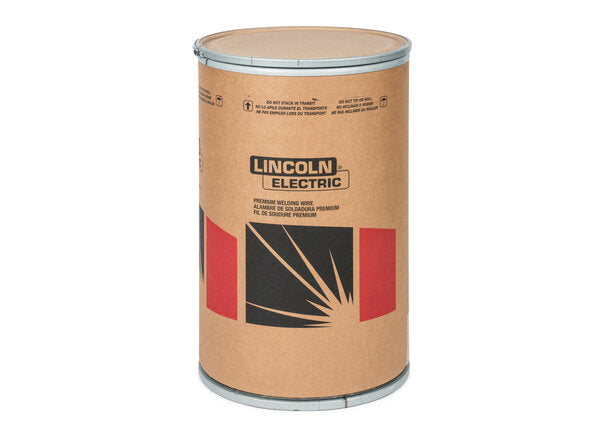
    Lincoln Electric SuperArc LA-90 MIG Wire ER80S-D2/ER90S-D2, 0.045″, 500 lb Drum (ED001378) is a low-alloy GMAW wire intended for higher-strength steel applications where the filler metal classification matters as much as the base metal and shielding gas. For buyers and weld support teams, the main point is simple: this is not a general-purpose wire. It is a classification-driven consumable that should be matched to the procedure, joint design, shielding gas, and deposit property requirements before release to production.

    Key Takeaways

    • Classification is the starting point: AWS A5.28 ER80S-D2 / ER90S-D2.
    • Wire diameter is 0.045 in, and the package is a 500 lb drum.
    • The listing identifies DC+ polarity and common shielding gas use, including 100% CO2 and argon/oxygen blends.
    • This product is aimed at higher-strength steel work, not general mild steel fill-in unless the procedure supports it.
    • Procedure approval, joint prep, and base metal verification still control the final answer. Unknown (Verify) when uncertain.

    What to Verify Before You Buy

    For maintenance buyers, the first filter is whether the wire classification matches the job. Check the WPS, base metal spec, and required deposited mechanical properties. ER80S-D2 and ER90S-D2 are not interchangeable by assumption. If your procedure calls for one range, confirm that the wire classification on the spool label and certification paperwork matches that requirement.

    Inspect: the wire package size, feed system capability, and storage space for a 500 lb drum. Large drums are efficient for high-volume work, but they create handling and feed-path requirements that smaller spools do not.

    Verify: drive roll setup, liner condition, inlet guide size, gun routing, and whether your feeder is configured for drum use. Unknown (Verify) if your feeder, drum adapter, or wire delivery kit is suitable for this package size.

    Support Check: Feedability and Setup

    Low-alloy solid wire performance is often limited by setup errors, not the wire itself. If the arc is unstable or feed speed is inconsistent, start with the wire path.

    • Check drive roll groove size against 0.045 in wire.
    • Inspect the liner for wear, contamination, or improper length.
    • Verify contact tip condition and bore size.
    • Check spool or drum brake tension so wire does not overrun or drag.
    • Inspect the inlet guide, gun cable bends, and any pinch points.

    If you need a more detailed feed system reference, use this internal guide: Lincoln Drive Roll Pressure Adjustment Guide. It covers wire feed slip, burnback, birdnesting, and wire shaving fixes.

    Shielding Gas and Polarity

    The product description identifies DC+ polarity and common use with 100% CO2 and argon/oxygen blends. That helps narrow selection, but it does not replace a procedure. Gas choice affects arc characteristics, spatter level, penetration profile, and bead shape. The exact procedure may require a specific blend, flow rate, or torch setup. Unknown (Verify) unless your WPS or governing document specifies it.

    Check: regulator condition, flow meter accuracy, hose integrity, and gas delivery at the gun. A wire can be correct and still perform poorly if shielding is inconsistent.

    Verify: polarity at the machine before loading the wire into production. Reversed polarity can create immediate performance problems and misleading troubleshooting.

    WSP Lookup and Filler Metal Selection

    If you are building a purchasing or support decision, use the available selection tools as starting points only. They help narrow the search, but they do not guarantee procedure approval.

    Use any filler metal finder output as a selection starting point, not as a substitute for your WPS, base metal qualification, or code requirement.

    Product and Parts Notes

    The allowed product for this draft is the ArcWeld listing for Lincoln Electric SuperArc LA-90 MIG Wire ER80S-D2/ER90S-D2, 0.045″, 500 lb Drum (ED001378). Use the ArcWeld product page when you need the vendor-facing product record and ordering reference.

    Product not found.

    “>View the ArcWeld product page

    The product shortcode provided for internal use is:

    Lincoln Electric SuperArc LA-90 MIG Wire ER80S-D2/ER90S-D2, 0.045", 500 lb Drum (ED001378)

    Lincoln Electric SuperArc LA-90 MIG Wire ER80S-D2/ER90S-D2, 0.045", 500 lb Drum (ED001378)

    SuperArcยฎ LA-90โ„ข is a premium, copper-coated low-alloy MIG (GMAW) wire from Lincoln Electric designed to meet 80,000โ€“90,000 psi tensile strength requirements for higher-strength steel applications. Classified to AWS A5.28 ER80S-D2 / ER90S-D2, LA-90 delivers strong, consistent as-welded mechanical performance across common shielding gas mixes, including 100% COโ‚‚ and argon/oxygen blends, with DC+ polarity. This list...

    View at Arc Weld Store

    Do not assume additional compatibility, certifications, or performance values beyond what is stated in the product record. Unknown (Verify) if a specific feeder, gun, or procedure package is not documented.

    Practical Troubleshooting Sequence

    1. Check the wire classification on the label against the WPS.
    2. Inspect the feed path from drum to contact tip.
    3. Verify polarity, gas type, and gas flow.
    4. Check the contact tip for wear or mismatch.
    5. Inspect the joint prep, mill scale, rust, oil, and moisture.
    6. Verify whether the issue follows the wire or stays with the machine setup.

    If the deposit profile is not meeting expectations, do not jump straight to a different wire class. First confirm that the setup matches the intended procedure. Many apparent filler metal problems are actually feed issues, shielding issues, or base metal prep issues.

    Safety Notes

    • Follow the applicable WPS, SDS, and site hot-work controls.
    • Handle the 500 lb drum with proper lifting equipment. Do not manually lift or reposition it without a safe method.
    • Keep hands clear of feed rollers and pinch points during setup.
    • Use eye, hand, and respiratory protection as required by the job and local exposure controls.
    • Confirm ventilation and fume control before welding on production parts.

    FAQ

    Is this wire for general mild steel welding?
    Not by default. It is classified as ER80S-D2 / ER90S-D2 and should be matched to the procedure and strength requirements. Unknown (Verify) for any mild steel application unless the WPS allows it.

    What polarity is listed for this wire?
    The product description identifies DC+ polarity.

    Can I use it with any shielding gas?
    No. The listing mentions common use with 100% CO2 and argon/oxygen blends, but the actual approved gas depends on your procedure. Treat gas references as a starting point only.

    What should I check first if feed is unstable?
    Check drive roll pressure, liner condition, contact tip wear, cable routing, and drum brake tension before replacing the wire.

    Sources Checked

    • ArcWeld product record: Lincoln Electric SuperArc LA-90 MIG Wire ER80S-D2/ER90S-D2, 0.045″, 500 lb Drum (ED001378)
    • Provided internal product reference shortcode
    • Provided internal links: drive roll pressure adjustment guide and related welding support articles

    Related Weld Support Guides

  • Best MIG Wire for Stainless Steel (ER308L vs ER309L)

    Wrong stainless wire shows up fast: sugaring, porosity, ugly wet-out, and corrosion problems later. This page is built for buyersโ€”pick the right wire grade the first time, with verified Amazon ASINs and manufacturer-backed specs.

    Key Takeaways

    • ER308L is the standard match for 304/304L and 308/308L stainless.
    • ER309L is the better choice for stainless-to-mild steel and many repair jobs on unknown stainless.
    • For cleaner beads and better wetting, consider ER308LSi (more silicon).
    • Stainless MIG typically runs best on tri-mixโ€”verify your wire’s datasheet.
    • Buy wire that clearly states AWS A5.9 / ASME SFA-A5.9 on the label.

    Comparison Table

    ModelKey SpecsBest ForAmazon
    Best Welds ER308L (.030 in)AWS A5.9 ER308L; low carbon “L”; solid wire304/308 stainless general workSee links below
    Blue Demon ER308LSi (.030 in)AWS A5.9 ER308LSi; higher Si for bead appearanceCosmetic welds, smoother wettingSee links below
    ER309L stainless MIG wireAWS A5.9 ER309L; dissimilar-metal fillerStainless to mild steel, unknown stainless repairsSee links below

    Table Links

    Best Welds ER308L (.030 in, 2 lb)

    No products found.

    Blue Demon ER308LSi (.030 in, 30 lb)

    No products found.

    ER309L stainless MIG wire (choose size/spool)

    No products found.


    Product Picks (Details)

    Best Welds ER308L (.030 in) โ€” Best for most 304/308 jobs

    If you’re welding common stainless (304/304L, 308/308L), ER308L is the default for a reason: it matches chemistry well and the low carbon helps reduce sensitization-related corrosion.

    What to verify on the label/datasheet

    • AWS classification: ER308L
    • Standard: AWS A5.9 / ASME SFA-A5.9
    • Wire diameter: 0.030 in (0.8 mm)

    No products found.

    Blue Demon ER308LSi (.030 in) โ€” Best for bead appearance and wetting

    ER308LSi is still a 308L wire, but with more silicon to help the puddle flow and lay down smoother. If you care about bead profile (food equipment, visible rails, shop work), this is often worth it.

    What to verify

    • AWS classification: ER308LSi
    • Standard: AWS A5.9 / ASME SFA-A5.9

    No products found.

    ER309L MIG wire โ€” Best for stainless-to-mild steel and unknown stainless repairs

    Use ER309L when you’re joining stainless to carbon steel, or when the base stainless grade is unknown and you need a more forgiving filler. It’s a common “repair wire” because it handles dilution better.

    What to verify

    • AWS classification: ER309L
    • Standard: AWS A5.9 / ASME SFA-A5.9

    No products found.


    Top Pick

    Top Pick for most buyers: ER308L (.030 in) in a spool size that matches your usage. It’s the correct match for the stainless most people are actually welding.


    Buying Guide: How to Choose Stainless MIG Wire

    1. Match the base metal
    • 304/308 โ†’ ER308L
    • 316 โ†’ ER316L
    • Stainless to mild steel โ†’ ER309L
    1. Pick diameter
    • 0.030 in: thinner material, better control
    • 0.035 in: general-purpose shop work
    1. Confirm gas
    • Many stainless solid wires run well on tri-mix can improve arc and wetting.
    1. Check packaging
    • AWS A5.9 marking, sealed spool, clean wire.

    FAQ

    Can I use ER308L on 316 stainless?No. Use ER316L for 316/316L to maintain corrosion resistance.

    Is ER308LSi “better” than ER308L?Not universally. It’s often better for appearance and wetting; ER308L is fine for general work.

    Do I need special rollers/liner for stainless wire?Often yesโ€”stainless is stiffer. Use the right drive rolls and keep the liner clean to prevent feeding issues.

    What polarity for stainless solid MIG wire?Typically DCEPโ€”verify on the spool.

    Safety Notes

    • Stainless welding fumes can contain hexavalent chromium. Use ventilation and a respirator as needed.
    • Wear ANSI Z87.1 eye protection and appropriate gloves/jacket.
    • Keep wire dry and sealed to reduce porosity.

  • Listen with Audible