Tag: welding tips

  • YESWELDER TIG Tungsten Manual Sharpener Holder (TSH-01): What It Does, What It Doesn’t, and Who It Fits

    YESWELDER TIG Tungsten Manual Sharpener Holder (TSH-01): What It Does, What It Doesn’t, and Who It Fits

    If your TIG arc is wandering, hard-starting, or “randomly” dipping out, tungsten prep is one of the first things to check. A consistent point isn’t magic—but it does remove one variable you can control.

    This post covers the YESWELDER manual tungsten sharpener holder (TSH-01): what it’s designed to do, what to compare before you buy, and where it fits in a real TIG workflow.

    Key Takeaways

    • This is a manual tool meant to help you get a more consistent tungsten point (not a powered grinder).
    • Confirm it matches the tungsten diameters you actually run (don’t assume).
    • Your grinding wheel choice and dust control matter as much as the holder itself.
    • Dedicated tungsten grinding is still the cleanest way to avoid cross-contamination.

    Product (Verified)

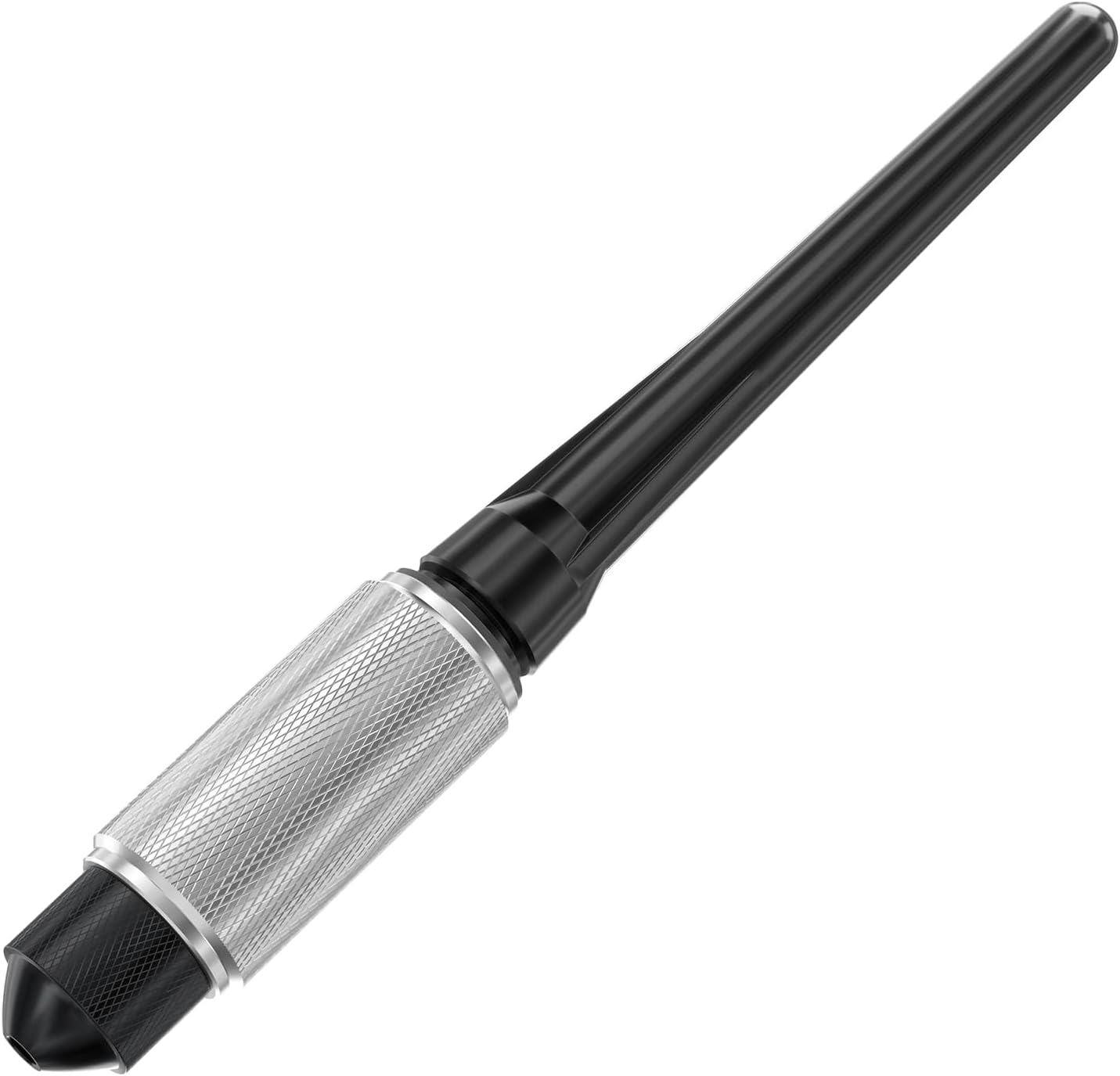
    YESWELDER TIG Tungsten Manual Sharpener Holder Welding Tungsten Polish Gripper 1/16” 3/32” 1/8” TSH-01
    • APPLICATION: Hold the TIG tungsten electrodes while sharpening and polishing it. Especially the short tungsten electrodes, which is dangerous and hot to hold, our sharpener holder is here to help you.
    • EFFICIENT: It not only can provide genuine protection for your hands but also can increase your working productivity. The long back cup can be installed on your welding torch as well.
    • CPMPATIABLE DIAMETER: It comes with three collets of 1/16”(1.6mm); 3/32”(2.4mm); 1/8”(3.2mm) diameter, which fit the most popular tungsten electrodes.
    • EASY ASSEMBLY: First, put the tungsten electrode into the correspoding collet, and then put them into the silver fixed sleeve, finally install the long back cup.
    • PACKAGE INCLUDES: 1 x tungsten sharpener holder; 3 x collets; 1 x plastic case.

    Last update on 2026-04-21 / Affiliate links / Images from Amazon Product Advertising API

    What this tool is (and isn’t) This is a handheld/manual tungsten sharpening holder. The core idea is simple: hold the electrode more consistently so you can grind a repeatable taper.

    It is not:

    • A powered sharpener
    • A substitute for a clean grinding setup
    • A guarantee of “better welds” (it just helps standardize prep)

    Where it fits in a TIG workflow A tungsten holder makes the most sense when:

    • Multiple people touch the same TIG setup and you want repeatable prep
    • You’re trying to reduce “freehand variability” on the grinder
    • You’re doing frequent regrinds and want a faster, more consistent routine

    If you only sharpen tungsten once in a while and already have a clean, dedicated wheel, you may not see a big change.

    Performance & Use The practical benefit is consistency. If you can hold the tungsten at a stable angle and keep the grind direction consistent, you reduce one common cause of unstable arcs: uneven points and contamination.

    What to compare before you buy

    • Supported tungsten diameters (verify it matches what you run most)
    • How it interfaces with your current grinding method (bench grinder vs other setup)
    • Ease of keeping tungsten dust contained (important for shop cleanliness)
    • Build quality of the clamping surfaces (avoid slipping/marring)
    • Storage/organization (small parts get lost fast in a welding cart)

    Comparable Amazon picks (optional)

    Common mistakes that make tungsten prep worse

    • Grinding on a wheel that’s also used for mild steel or other metals (contamination risk)
    • Grinding “around” the tungsten instead of lengthwise (can destabilize arc shape)
    • Skipping cleaning after accidental dips (regrind is usually faster than fighting it)
    • Letting dust build up around the grinder (mess + potential exposure)

    Safety notes (quick) Tungsten grinding creates fine dust. Use local ventilation or dust collection if possible, and don’t grind in the same area you prep food/drinks. If you’re using thoriated tungsten, follow your shop’s safety practices for dust control and disposal.

    Where to Buy (Amazon) YESWELDER TSH-01 (ASIN: B0C5QGFQ3F)
    https://www.amazon.com/YESWELDER-Tungsten-Sharpener-Welding-TSH-01/dp/B0C5QGFQ3F?tag=weldsupport-20

  • 6011 Rod: Best Practices for AC vs. DC Welding

    6011 Rod: Best Practices for AC vs. DC Welding

    Introduction

    In the world of welding, choosing the right electrode and current type is pivotal for achieving optimal results. One common question among welders is whether to run the 6011 electrode on AC or DC current. This decision significantly impacts the welding process and the final outcome. The 6011 electrode is crucial in welding for its versatility and effectiveness in penetrating rusted or dirty metals. Both experienced welders and newcomers, including fabricators, students, and engineers, often examine this electrode for its unique benefits.

    Types / Variants

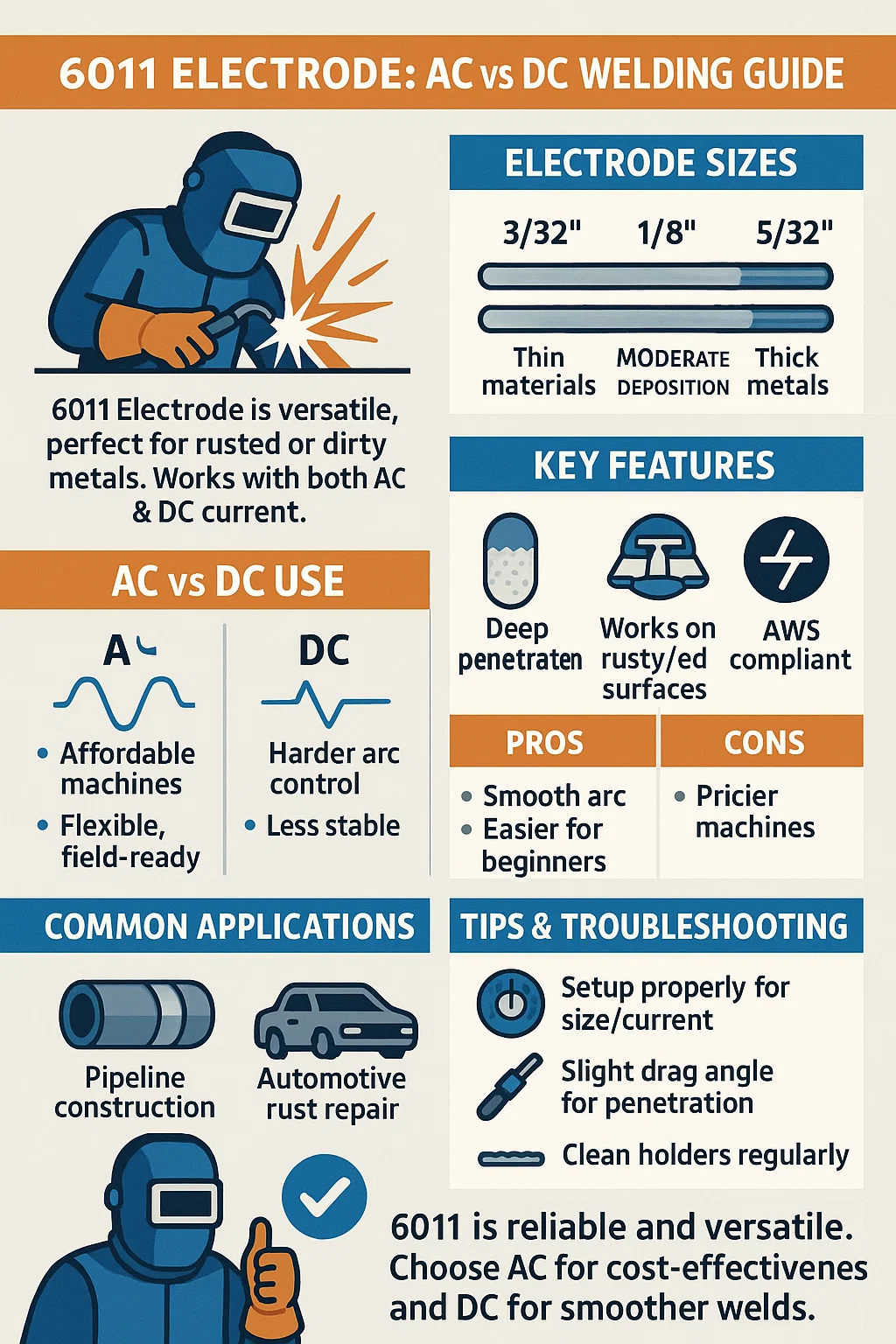
    While 6011 itself is a designated type of electrode, it comes in various sizes:

    • 1/8 inch: Typically used for medium-thickness metals.
    • 3/32 inch: Better suited for thinner materials.
    • 5/32 inch: Ideal for thicker metals requiring deeper penetration.

    Each size is chosen based on the metal thickness and desired penetration.

    Key Features or Specifications

    • Material: Cellulose-based coating
    • Deposition Rate: Moderate, providing a good balance between speed and control.
    • Compatibility: Usable with both AC and DC power sources, making it versatile for different settings.
    • Certifications: Often compliant with AWS (American Welding Society) standards.

    The main advantage of the 6011 electrode is its deep penetration capability, which is crucial for welding dirty or rusty materials.

    Usage & Compatibility

    AC Current Advantages:

    • Arc Stability: While more challenging, AC offers flexibility in stabilizing the arc.
    • Cost Effectiveness: Often more affordable than DC welding machines.
    • Versatility: Suitable for basic repairs and fabrication.

    DC Current Advantages:

    • Smoother Operation: Provides more stable arcs and smoother welds.
    • Easier for Beginners: Often easier to manage and control.
    • Directional Stability: Consistent electrode behavior.

    Disadvantages:

    • AC: Can be more difficult to control and produce less stable arcs.
    • DC: Equipment is usually more expensive.

    Best Use Case:

    6011 is predominantly used in the Shielded Metal Arc Welding (SMAW) process. Welders dealing with rusted or painted surfaces often lean towards using 6011 for its penetrating power, especially when cleaning the metal isn’t entirely feasible.

    Common Applications

    • Field Repairs: Known for effectiveness in less-than-ideal conditions.
    • Pipeline Construction: Excels in tasks demanding deep penetration.
    • Automotive Work: Handles rusted or imperfect surfaces effectively.

    The electrode’s adaptability makes it a staple in industries requiring durability and reliability.

    Tips & Best Practices

    • Setup: Ensure proper machine settings based on the electrode size and type of current.
    • Technique: Maintain a slight dragging angle for deeper penetration.
    • Maintenance: Regularly clean and inspect electrode holders for starch buildup.

    Troubleshooting:

    • Starting issues on AC: Adjust arc length and ensure connections are reliable.
    • Uneven weld bead: Review travel speed and heat settings.

    Conclusion

    Whether running 6011 on AC or DC depends on several factors, like equipment availability and specific project needs. AC is cost-effective and versatile for general repairs, whereas DC offers smoother operation suitable for detailed work. The 6011 electrode’s deep penetration and versatility make it indispensable for welding professionals and students. Understanding its advantages and applications allows for informed decisions tailored to individual project goals.


    Note for Readers: This post may contain affiliate links. If you purchase through them, we may earn a small commission at no cost to you. Thank you for supporting our site.


    Washington Alloy 6011 Stick Electrode 5LB Package (6011 3/32″)
    • Washington Alloy’s 6011 3/32″ Electrode
    • 60,000lbs Tensile strength
    • 5 Lb Package
    • All-position, Flux coated

    Last update on 2026-04-21 / Affiliate links / Images from Amazon Product Advertising API

    Washington Alloy 6011 Stick Electrode 5LB Package (6011 1/8″)
    • Washington Alloy’s 6011 1/8″ Electrode
    • 60,000lbs Tensile strength
    • 5 Lb Package
    • All-position, Flux coated

    Last update on 2026-04-21 / Affiliate links / Images from Amazon Product Advertising API

    Washington Alloy 6011 Stick Electrode 5LB Package (6011 5/32″)
    • Washington Alloy’s 6011 5/32″ Electrode
    • 60,000lbs Tensile strength
    • 5 Lb Package
    • All-position, Flux coated

    Last update on 2026-04-21 / Affiliate links / Images from Amazon Product Advertising API

    Washington Alloy 6011 10lbs Welding Stick Electrode (6011 1/8″ – 10 LBS.)
    • AWS A5.1 CLASS E6011
    • 10 LB Package – 6011
    • Tensile Strength (psi) 60,000

    Last update on 2026-04-21 / Affiliate links / Images from Amazon Product Advertising API

    Washington Alloy 6011 10lbs Welding Stick Electrode (6011 5/32″ – 10 LBS.)
    • AWS A5.1 CLASS E6011
    • 10 LB Package – 6011
    • Tensile Strength (psi) 60,000

    Last update on 2026-04-21 / Affiliate links / Images from Amazon Product Advertising API

Read with Kindle Unlimited