Rod storage looks simple until consumables get damaged, contaminated, or misplaced on the job. The AN RG-300-12 36″ Rod Guard, Pack of (1) is listed here as a replacement part reference for buyers and maintenance teams that need a basic storage or protection component for stick electrodes. The key question is not just whether it exists, but whether it matches the way your crew stores rods, handles boxes, and moves material between the bench, the truck, and the jobsite.
This guide focuses on replacement-part breakdown, what to inspect before ordering or installing, and how to verify that the part belongs in your support setup. Any unconfirmed technical detail should be treated as Unknown (Verify).
Key Takeaways
The product is identified as AN RG-300-12 36″ ROD GUARD, Pack of (1), ASIN B00VJ3A0CK.
Use this as a replacement part verification step, not as a substitute for confirming fit.
Do not assume rod diameter, closure style, mounting method, or material construction. If not documented in your source data, mark it Unknown (Verify).
Inspect the surrounding storage system, not just the guard itself. Damage often comes from impact, heat, or poor handling.
For purchasing teams, confirm the guard against the current asset list, carton labeling, and any internal maintenance record before release.
What This Part Is Used For
A rod guard is generally used to protect welding electrodes or related consumables during storage and handling. In a stick welding environment, that matters because rod condition affects usability. Moisture, contamination, bent packages, and crushed containers can create waste and slow the work.
For this specific listing, treat the function as a storage-protection component and verify all details that affect fit or use. If your operation relies on a particular holder, tube, bracket, or carry method, compare the guard to the existing unit before purchase.
Replacement Part Breakdown: What to Check
Before you approve this item as a replacement, work through a short breakdown process.
1) Identify the Existing Part
Check the current rod guard or storage tube for visible part markings.
Inspect the overall length and physical configuration of the installed item.
Verify whether the old part was damaged by impact, heat, wear, or missing hardware.
2) Confirm the Storage Requirement
Check whether the crew needs a guard for daily transport, bench storage, or long-term electrode protection.
Inspect the environment for moisture, dust, and physical handling risk.
Verify whether your process requires a sealed tube, open guard, or another form of protection. Unknown (Verify) if not documented.
3) Match the Replacement to the Application
Check the current mounting or carry method.
Inspect the replacement part dimensions against the removed part.
Verify that the replacement does not interfere with adjacent tools, holders, or storage racks.
Troubleshooting Before You Buy
When a rod guard is being replaced, the failure may not be the guard alone. Use this support checklist.
If Rods Are Getting Dirty or Damaged
Check the guard for cracks, open seams, or missing caps.
Inspect the storage area for contact with grinding dust, oil, or moisture.
Verify whether rods are being returned to a dry storage location after use.
If the Guard Was Lost or Mixed Up
Check jobsite labeling and inventory records.
Inspect the purchase history and part number references.
Verify the actual replacement before installation or issue to the crew.
If the Part Does Not Fit
Check whether the original part was modified.
Inspect the replacement against the original part side by side.
Verify dimensions, mounting points, and closure method directly from the source listing or receiving paperwork. Unknown (Verify) if not stated.
Product and Parts Reference
The available product reference for this article is the Amazon-registered item below. Use it as a procurement reference only after fit and application checks are complete.
AN RG-300-12 36″ ROD GUARD, Pack of (1)
ASIN: B00VJ3A0CK
Amazon shortcode:
No products found.
Do not assume compatibility with every rod storage setup. The identifying information confirms the listing, not your specific application. If you manage multiple stick welding stations, compare the old part, the equipment record, and the receiving label before ordering extras.
How Maintenance Buyers Should Verify the Part
For purchasing and maintenance teams, the best process is simple and repeatable:
Check the ASIN or item reference against the approved part list.
Inspect the old component, including length, shape, and attachment points.
Verify the replacement against the same physical sample or drawing.
Confirm the issue date of the order and the job location.
Document any unknown details as Unknown (Verify) instead of guessing.
That process prevents false matches and reduces returns. It also helps when a part number is referenced informally by the crew but not tied to a controlled asset record.
Safety Notes
Keep electrode storage dry and away from contaminants.
Do not use a damaged guard if it cannot protect the rods from dirt, impact, or moisture.
Handle welding consumables according to site procedure and the manufacturer’s instructions for the rod type in use.
If any feature of the guard is not clearly documented, treat it as Unknown (Verify) before field use.
FAQ
Is this a consumable or a replacement support part?
It is treated here as a replacement support part for rod storage and handling. Verify the exact role in your setup before purchase.
Can I assume the rod size or mounting method from the product name?
No. The product name includes “36″,” but any more detailed fit, mounting, or compatibility information is Unknown (Verify) unless it is confirmed in the source listing or your internal records.
What should I compare before ordering?
Compare the old part, any part number on the asset, the physical length, the attachment method, and the storage application. If any item is unclear, mark it Unknown (Verify).
Can this guide confirm procedure approval for specific electrodes?
No. It is a buyer and replacement-part guide only. Procedure approval, electrode handling, and storage requirements must come from your welding procedure, site rules, or manufacturer documentation.
Sources Checked
Allowed Amazon product reference: AN RG-300-12 36″ ROD GUARD, Pack of (1), ASIN B00VJ3A0CK
Provided internal link review for stick welding support context
No WSP lookup page was provided in the allowed sources for this task
No filler metal finder page was provided in the allowed sources for this task
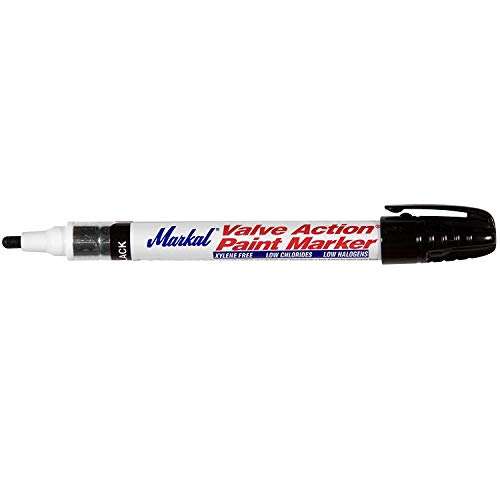
The Markal 96823, Valve Action Black Paint Marker, Pack of (1) is a shop marking tool for layout, identification, and field marking where a standard ink marker is not enough. The product information provided identifies it as a real paint marker with valve action, a replaceable fiber nib, and a stated dry time of about 3 minutes. For welders, fabricators, and maintenance teams, the main value is simple: a marker that lays down visible paint on work surfaces and is built for repeated use.
Key Takeaways
Valve action releases paint as needed for continuous marking.
The marker uses real paint, not standard pen ink.
Stated dry time is 3 minutes.
Lead-free and low halogens are listed features.
The fiber nib is replaceable, which supports full use of the marker body.
Overall product weight is listed as 0.1 pounds.
Where this marker fits in a welding and fabrication shop
A black paint marker is generally used for part identification, cut lines, fit-up notes, and general shop marking on surfaces where visibility matters. The valve-action design helps control paint flow, which is useful when marking long runs or repeated notes. If you need a mark that stays visible through handling, the real-paint format is usually more practical than a standard felt-tip marker.
This is not a process-control device. It does not approve materials, procedures, or weld parameters. Use it as a shop marking tool only.
Check, inspect, verify before use
Check the surface: Verify the material is suitable for paint marking. Clean, dry surfaces usually give better visibility. Unknown (Verify) on adhesion to coated, oily, or heavily oxidized surfaces.
Inspect the nib: Make sure the fiber nib is present, seated, and not damaged before first use.
Verify flow: Test on scrap or a non-critical area to confirm paint release before marking production parts.
Check drying time: The stated dry time is 3 minutes, but actual dry time can vary with surface condition, film thickness, temperature, and airflow. Verify on your actual work surface.
Inspect for contamination: If the marker has been stored open or in a dirty area, verify the nib is not clogged before relying on it for layout.
Troubleshooting and support
If the marker does not perform as expected, use a simple inspection sequence before replacing it.
No paint transfer: Check that the nib is fully engaged. Then verify the tip is primed per normal paint-marker practice. If flow does not start, inspect for clogging or drying at the nib.
Weak or uneven line: Verify the surface is not dusty, oily, or excessively rough. Inspect the nib for wear. The replaceable fiber nib is intended to support continued use once the tip wears.
Excessive paint release: Check whether the marker is being pressed too hard. Valve-action markers are meant to release paint as needed; too much pressure can flood the line.
Poor visibility: Verify the base material color and finish. Black paint may be difficult to read on dark or contaminated surfaces.
Handling and use notes
The listed features suggest a marker designed for straightforward manual use in the shop or field. Because it is a paint marker, treat it as a consumable that can dry out if left uncapped or handled incorrectly. Keep the cap secured when not in use. If the nib becomes worn, the replaceable tip supports continued use without discarding the entire body immediately.
Use the marker for identification and layout only. Do not assume the mark remains permanent under grinding, blasting, heat, solvent exposure, or weather. Unknown (Verify) on resistance to these conditions because no additional performance data was provided.
Product and parts notes
Provided product information for the Markal 96823 identifies these details:
Product type: Marker
Category: Paint
Marker style: Valve action
Nib: Fiber nib, replaceable
Paint type: Real paint
Lead status: Lead-free
Halogens: Low halogens
Dry time: 3 minutes
Overall product weight: 0.1 pounds
Any use beyond those statements should be treated as Unknown (Verify). Do not assume surface chemistry, temperature limits, or chemical resistance without a current manufacturer data sheet or direct product confirmation.
Safety notes
Use the marker in a ventilated area if you are sensitive to paint odors.
Avoid skin and eye contact with wet paint.
Keep away from ignition sources unless the manufacturer documentation states otherwise. Unknown (Verify) on flammability details.
Do not mark parts where paint contamination is prohibited without verifying downstream process requirements.
Follow local shop rules for solvent, paint, and waste handling.
FAQ
Is the Markal 96823 a standard ink marker? No. The provided product information identifies it as a real paint marker with valve action.
Can it be used on any metal surface? Unknown (Verify). Surface condition matters, and no full compatibility list was provided. Test on scrap or a non-critical area first.
Does the marker dry fast enough for shop use? The stated dry time is 3 minutes. Actual dry time can change based on surface, film thickness, and environment, so verify on the part being marked.
Can the nib be replaced? Yes. The provided information states that the fiber nib is replaceable.
Sources Checked
ArcWeld product page: Markal 96823, Valve Action Black Paint Marker, Pack of (1)
Provided product summary fields for features and dimensions
Related Arc Weld Part
Markal 96823, Valve Action Black Paint Marker, Pack of (1)
434-96823 Features: -Marks with real paint, dries in 3 minutes. -Nib releases paint as needed for continuous marking. -Lead-free, low halogens. -The fiber nib is replaceable to assure complete use of each marker. Product Type: -Markers. Category: -Paint. Dimensions: Overall Product Weight: -0.1 Pounds.
The Markal 96270, Silver Steak Markal PRO Holder, Pack of (1) is best treated as a consumable support item in a marking system, not as a standalone process-critical welding component. For maintenance buyers, shop leads, and support teams, the main question is simple: when a holder starts to fail, what should you inspect before you replace it, and what should you verify after it arrives?
This guide breaks the part down from a service and support angle. It does not assume undocumented compatibility, dimensions, or internal construction details. Where technical details are not confirmed here, they are listed as Unknown (Verify).
Key Takeaways
The Markal 96270 listing identifies a replacement holder item, but exact internal build details are Unknown (Verify).
Before ordering a replacement, inspect the current holder for wear, binding, cracked body parts, or poor lead/marking retention.
After receipt, verify fit, actuation, retention, and general condition before putting it into service.
Do not assume compatibility with other Markal holders or marking formats unless confirmed by the seller or your internal part records.
Use the Amazon product listing only as a product reference point; do not rely on it for undocumented repair guidance.
What This Part Is Used For
The product name indicates a Markal PRO holder associated with Silver Steak marking use. In practice, holders in this category are used to secure and present a marking stick or similar consumable in a controlled way. The exact operating method for this specific unit is Unknown (Verify), so support teams should confirm the current tool design before attempting repair, disassembly, or substitution.
If the holder is being used in a fabrication or maintenance environment, common failure symptoms include poor retention, inconsistent feed, damaged locking features, or a body that no longer holds alignment. Those symptoms do not prove the holder is the only problem. The marking stick, operator handling, storage conditions, or contamination can also be involved.
Inspection Checklist Before Replacement
Use this sequence before writing off the holder:
Inspect the body. Look for cracks, bent sections, gouges, or heat damage.
Check retention surfaces. Verify the part still grips the marking material consistently.
Check movement. If the holder has a sliding or advancing function, verify it moves without sticking.
Inspect for debris. Clean out dust, metal fines, and marker residue.
Verify operator handling. Check whether the tool is being dropped, over-tightened, or stored in a way that causes premature wear.
If any of these checks fail, document the condition with photos and note whether the problem is intermittent or continuous. That record helps avoid repeating the same failure after replacement.
Troubleshooting Support Steps
1) Holder will not retain the marking stick
Check: Confirm the stick type matches the holder’s intended size and format. Exact fit data is Unknown (Verify).
Inspect: Look for worn jaws, damaged guides, or missing internal parts.
Verify: Test with a known good marking stick from the same inventory lot if available.
2) Advancement feels stiff or inconsistent
Check: Make sure the unit is not loaded with broken fragments or compacted dust.
Inspect: Examine sliding interfaces for contamination, bending, or corrosion.
Verify: Clean the holder and repeat the movement test before replacing the unit.
3) Marking quality has declined
Check: Confirm the issue is not in the marking material itself.
Inspect: Review the tip presentation and whether the holder is keeping the stick aligned.
Verify: Compare output against a known good holder under the same operator and surface conditions.
Product and Parts Notes
The only confirmed product detail provided here is the Amazon ASIN reference for the Markal 96270, Silver Steak Markal PRO Holder, Pack of (1): B074WGYF21. No additional specifications, dimensions, or repair kits are verified in the source data available for this draft.
If you are building a replacement-part record, capture the following internally:
Original part name and ASIN reference
Observed failure mode
Date removed from service
Any matching model or lot data from packaging
Operator notes on fit, feel, and performance
Do not assume a “similar” holder will work as a direct substitute unless the vendor or your own verified records confirm it.
Support and Ordering Considerations
For buyers, the main risk is ordering on description alone. The product title suggests a specific Markal PRO holder variant, but the available source data does not confirm cross-compatibility with other holder bodies, refill formats, or accessories. Keep that uncertainty in the purchase record and verify against your own approved-use list before standardizing the part.
If the existing holder is failing repeatedly, review the root cause before replacement. Storage, contamination, impact damage, and incorrect loading are common contributors in marking tool service problems. A replacement part will not fix a handling issue.
Safety Notes
Wear appropriate hand protection when inspecting used marking tools with sharp or worn edges.
Do not force a jammed mechanism apart unless the tool design and service method are confirmed.
Keep solvents, compressed air, and cleaning methods compatible with your site procedures.
Remove the holder from service if cracks, breakage, or loose internal parts are found.
Use lockout, housekeeping, and tool-control practices where required by site policy.
FAQ
Is this a complete tool or a replacement support part?
The product name indicates a holder product. Exact internal configuration is Unknown (Verify), so confirm whether your application treats it as a complete tool, a replacement component, or a consumable support item.
Can I use it with other Markal products?
Not enough verified data is available here to confirm compatibility. Treat compatibility as Unknown (Verify) unless your internal part records or the seller confirm it.
What should I check before buying a replacement?
Inspect the existing holder for wear, binding, damage, and contamination. Verify the marking material type, the loading method, and any model identifiers from the old unit before placing an order.
What if the new holder still does not work properly?
Verify the marking stick or consumable, the loading method, and the operator technique. If the failure repeats, document the issue and compare the new part against the removed part for fit and function.
Sources Checked
Amazon product reference provided in the task: Markal 96270, Silver Steak Markal PRO Holder, Pack of (1), ASIN B074WGYF21
No WSP lookup page provided
No filler metal finder page provided
No internal links provided
Note: This draft intentionally avoids unverified specifications, pricing, certifications, and compatibility claims. Use internal records or supplier confirmation to complete any unresolved technical details.
Matched Replacement Option
No products found.
Disclosure: As an Amazon Associate, Weld Support Parts may earn from qualifying purchases.
Layout marks are part of the job. If the line is wrong, the cut is wrong, the fit-up is wrong, and the time loss shows up fast. The Markal 96100 Red-Riter Welders Pencil is used for metal layout and fabrication marking where a durable visible line is needed. For buyers and shop teams, the main question is not whether it writes. The question is what it does well, what it does not do, and how to verify it matches the job before you buy in quantity.
Key Takeaways
Use this type of marking pencil for layout work where standard shop markers may fail or become hard to read.
Confirm the marking surface, visibility, and cleanup method before using it on production parts.
Do not assume torch resistance or heat survival on every alloy, coating, or process without testing.
Pack quantity, packaging, and origin are provided by the listing; technical fit still needs shop verification.
What this product is for
The Markal 96100 Red-Riter is a welders pencil used for layout and fabrication marking. In a shop setting, that usually means part identification, cut lines, reference marks, and fit-up notes on metal. The red color improves contrast on many surfaces, but the actual readability depends on the base material, mill scale, finish, lighting, and whether the part is oily or dusty.
For maintenance buyers, this is a consumable marking tool, not a repair part. The listing is for a pack of 12. Beyond that, technical details such as core composition, marking temperature limit, or exact surface compatibility are Unknown (Verify) from the provided source set.
Practical check, inspect, verify
Before stocking or issuing this pencil to the shop, run a basic verification process.
Check the surface: Identify the most common materials in your workflow: carbon steel, stainless, coated plate, tube, or cast parts.
Inspect visibility: Test the red mark under shop lighting and on the actual base material, not just on clean test coupons.
Verify transfer: Make one layout mark, handle the part normally, and confirm the line remains readable through cutting, grinding, and fit-up handling.
Check cleanup: Confirm whether the mark must be removed before welding, painting, inspection, or coating.
Verify process fit: If the part will be exposed to heat, preheat, or torch work, test on scrap first. Do not assume the mark will survive unchanged.
Troubleshooting support
If the mark does not perform as expected, isolate the failure point.
Mark is too faint: Inspect the surface for oil, rust, mill scale, or heavy oxide. Clean the area and retest.
Mark wipes off too easily: Verify whether the part is handled with gloves, wiped with solvent, or exposed to abrasion before use.
Mark burns away during heat work: Check the actual process temperature at the mark location. Torch resistance claims should be verified in your own application.
Mark interferes with downstream work: Confirm whether your procedure requires removal before welding or coating.
This item is a marking tool, not a machine component. There are no replacement parts listed in the provided sources. If your team treats marking pencils as controlled consumables, confirm ordering units, storage method, and issue process internally. Product details such as exact lead construction, temperature performance, or certification status are Unknown (Verify) from the available source set.
The allowed Amazon registry reference for this product is ASIN B005YT1Z7O. The approved product shortcode is
No products found.
. No raw Amazon link is used here.
WSP lookup section
No WSP lookup page was provided for this topic. Because of that, there is no source lookup URL to cite or cross-check in this draft.
Safety notes
Do not use any marking tool on a part without understanding whether the mark must be removed before welding, coating, or final inspection.
Keep marking tools away from open flame, hot slag, and direct torch exposure unless you have verified performance in your own process.
Store consumables dry and clean to reduce contamination of marked parts.
If the mark is applied to a part that will go into a controlled process, verify the mark material will not create contamination or quality issues.
FAQ
Is the Markal 96100 Red-Riter suitable for all metal surfaces? No. Surface performance depends on the material, finish, contamination, and lighting. Test on the actual substrate before shop-wide use.
Does it have verified torch-resistant performance? The product is described as torch-resistant in the listing title, but the exact limit and application boundary are Unknown (Verify) from the provided sources. Validate it in your process before relying on the claim.
Is this a replacement part or a consumable? It is a consumable marking tool, not a machine replacement part. No spare components were provided in the source set.
Can it be used for fit-up and layout on fabricated assemblies? Yes, that is the intended use case. Still verify line visibility, durability, and cleanup requirements on your specific assembly and workflow.
Sources Checked
Provided Amazon registry reference for ASIN B005YT1Z7O
Allowed internal link: How to Identify and Replace Compatible TIG Torch Consumables for Optimal Welding Performance
Bottom line: the Markal 96100 Red-Riter is a layout consumable for welding and fabrication work. Verify its visibility, cleanup behavior, and heat exposure performance in your own shop before standardizing it across jobs.
Disclosure: As an Amazon Associate, Weld Support Parts may earn from qualifying purchases.
Choosing between soapstone vs welders pencil comes down to the job, the base material, and how much the mark has to survive heat, handling, or cleaning before weld-out. Both tools are common in fabrication shops, maintenance work, and field fit-up. Neither is universal. The better choice depends on visibility, surface condition, and how the mark will be used during layout, cutting, or weld prep.
Key Takeaways
Soapstone is the more common choice for rough layout on steel and other hot work areas.
Welders pencils can be better where a smaller, more controlled line is needed.
Heat resistance, mark visibility, and surface cleanliness matter more than tool preference.
Do not assume a marking tool is suitable for every metal or finish. Verify on scrap first.
For uncertain compatibility with your process, use Weld Support Parts lookup to check parts and accessory notes.
Soapstone: When it makes sense
Soapstone is widely used for weld layout because it leaves a visible mark on steel and can be applied quickly across plate, pipe, and structural members. It is useful for fit-up marks, cut lines, reference points, and general shop layout. In many shops, it is preferred for its ease of use and clear contrast on dark or scaled material.
For practical use, check the surface first. Heavy mill scale, rust, paint, oil, or slag can reduce line quality. If the mark has to stay visible through handling or preheat, inspect how the mark behaves on your actual base metal. Do not assume a line will survive grinding, brushing, or heating. Verify on scrap from the same job.
Welders pencil: When it makes sense
A welders pencil is typically used for more controlled layout work where a finer line is useful. That can help on tight fit-ups, small parts, and detailed marks where a broad soapstone line may be too heavy. In some applications, a pencil-style marker gives better point control and less material spread on the surface.
The downside is that fine marks can be harder to see on rough, dark, or dirty surfaces. If the part is scaled or the mark must be read from a distance, the line may be too light. Inspect legibility under actual shop lighting, not just at the bench. If the mark will be exposed to heat, verify how quickly it fades or changes.
Compare the two by job condition
Use soapstone when: you need quick layout on steel, a visible line on larger parts, or broad marks for cutting and fit-up.
Use a welders pencil when: you need a finer line, more precise placement, or a smaller marking footprint.
Neither is ideal when: the surface is oily, wet, heavily scaled, or finished in a way that requires a special marking method. In that case, check the process requirements and verify before marking production parts.
Troubleshooting and support: check, inspect, verify
If your layout marks are failing, work through the issue in a simple sequence.
Check the surface. Is the metal clean enough for the mark to adhere visually? Remove oil, water, loose scale, and dust.
Inspect the line quality. Is the line too wide, too light, or smearing under handling?
Verify visibility under real conditions. Look at the mark under the same lighting and viewing angle used in the shop or field.
Check heat exposure. If the mark disappears during preheat or tack welding, test a different tool on scrap.
Inspect the tool itself. Broken points, contamination, or worn edges can reduce line quality.
Verify with a trial mark. Before starting a production run, test the marking method on the actual material and finish.
If you need parts, accessories, or help finding the right item family, use the Weld Support Parts lookup. It is the right place to verify notes before you order or apply a tool to the job.
WSP lookup section
Weld Support Parts provides a lookup entry point for welding parts, accessories, and verified compatibility notes. For layout tools and related support items, start here: Find welding parts faster. Use the site to confirm whether the item or support part matches your machine, process, or application. Do not rely on assumption when the job depends on a specific marking method or accessory fit.
Practical shop guidance
If the work is structural steel, general fabrication, or repair welding, soapstone is often the default because it is simple and visible. If the work is detail-oriented, repetitive, or requires tighter line control, a welders pencil may be the better fit. Many shops keep both on hand because different jobs need different line styles.
Keep in mind that layout tools are only part of the control plan. A clear mark is not enough if the job traveler, drawing, or fit-up sequence is unclear. Verify dimensions, orientation, and reference edges before you mark. Once the line is on the part, re-check the part against the print or work order before cutting or welding.
Safety notes
Do not mark on hot metal unless the tool and process are intended for that condition. Verify first.
Keep marks away from critical surfaces if the process requires a clean finish or special coating prep.
Use ventilation and standard shop PPE during layout, grinding, or cleaning.
Do not assume any marking material is acceptable for every welding procedure or inspection standard. Check the job requirements.
FAQ
Is soapstone better than a welders pencil? Not always. Soapstone is usually better for broad, visible layout on steel. A welders pencil is better when you need a finer line. Choose based on the job.
Will soapstone hold up to welding heat? It can survive some heat exposure, but performance varies by surface condition and process. Verify on scrap under real job conditions before relying on it.
Can I use a welders pencil on dirty steel? It may work, but line visibility can be poor on scale, rust, oil, or paint. Clean the surface or test a different marking method.
Which one is better for precision layout? A welders pencil often gives better point control for tighter marks. Soapstone can still work for precision if the line width is acceptable and the surface is suitable.
Bottom line: soapstone vs welders pencil is not a contest with one winner. Use soapstone for fast, visible shop layout. Use a welders pencil for tighter control. Check the material, inspect the mark, and verify performance before the job moves forward.
Welding cable connectors are one of the most commonly mismatched components in welding setups. Connector size, amperage rating, cable gauge, polarity configuration, and machine-side receptacle type all affect compatibility. Using the wrong connector can cause overheating, intermittent arc starts, voltage drop, damaged receptacles, or unsafe cable heating.
This guide breaks down common welding cable connector types, fitment verification steps, compatibility concerns, inspection procedures, and common wrong-part mistakes before ordering replacement connectors or cable assemblies.
Key Takeaways
DINSE-style connectors are common on modern TIG, Stick, and multiprocess welders.
Connector size must match both cable gauge and machine receptacle size.
Tweco, Camlock, Stud, and DINSE connectors are not universally interchangeable.
Overheated connectors usually indicate loose crimps, undersized cable, or worn contact surfaces.
Always verify connector gender, amperage class, and cable size before ordering.
Machine manufacturers may use proprietary connector configurations.
Loose or oxidized connections increase resistance and arc instability.
What Welding Cable Connectors Do
Welding cable connectors provide a removable high-current electrical connection between the welding machine and the work lead, electrode holder, TIG torch, spool gun, or extension lead.
A properly fitted connector minimizes resistance while maintaining mechanical retention under vibration, heat, and repeated cable movement.
Are all DINSE connectors interchangeable? No. DINSE connectors vary by size class and pin diameter. Verify connector series before ordering.
Can I use a larger connector on smaller cable? Possibly, but cable retention and current transfer may suffer if the connector is not sized correctly.
Why does my connector get hot during welding? Usually due to resistance caused by loose crimps, oxidation, undersized cable, or worn contact surfaces.
Should both connector halves be replaced together? Recommended when wear or overheating exists on both mating surfaces.
Do imported inverter welders always use standard DINSE sizes? Unknown (Verify). Some imported machines use non-standard receptacle dimensions.
Next Step
Before ordering replacement welding cable connectors, verify machine receptacle size, cable gauge, amperage class, and connector family. Connector mismatch is one of the most common causes of overheating and intermittent welding performance problems.
%C2%AE-rogue-es-151ip-pro-stick-welder?utm_source=blog&utm_medium=internal&utm_campaign=esab-rogue-es-151ip-pro-stick-welder-guide”>ESAB Rogue ES 151iP PRO Stick Welder is a portable inverter-based welding power source built for Stick/SMAW, MMA pulse, and Live TIG/GTAW use. This guide focuses on ordering accuracy: input power, output range, electrode size limits, included items, TIG limitations, and the checks to make before you add it to a shop, field service truck, maintenance department, or training lab.
Key Takeaways
Arc Weld Store lists this model as ESAB Rogue ES 151IP PRO Stick Welder, SKU 0705002021.
The ESAB manual identifies the Rogue ES 151iP PRO as intended for MMA/SMAW/Stick, MMA pulse, and TIG/GTAW welding.
The 151iP PRO supports 120 V or 230 V single-phase input and automatically adjusts to the supplied input voltage when correctly protected.
For Stick welding, the ESAB manual lists a setting range of 20–150 A on 230 V and 20–110 A on 120 V.
Arc Weld Store notes that the Rogue ES 151iP PRO welds electrodes up to 3.2 mm, or 1/8 in.
Live TIG capability is available, but the TIG torch is sold separately; TIG torch model and consumable compatibility must be verified before ordering TIG accessories.
Product Overview
The ESAB Rogue ES 151iP PRO is a compact DC Stick/TIG power source for users who need a portable welder with controlled arc characteristics, dual-voltage flexibility, and pulse Stick capability. Arc Weld Store describes the machine as using high-performance power electronics and digital control to provide a precise, consistent arc. It is intended for professional users welding alloyed steel, non-alloyed steel, stainless steel, and cast iron.
For buyers comparing this machine to a higher-output Stick welder, the main ordering question is electrode size and available input power. The 151iP PRO is the smaller Rogue PRO option in this comparison, with Arc Weld Store noting electrode capacity up to 1/8 in. If your work regularly requires 5/32 in. electrodes, compare the
%C2%AE-rogue-es-151ip-pro-stick-welder?utm_source=blog&utm_medium=internal&utm_campaign=esab-rogue-es-151ip-pro-stick-welder-guide”>View this product at Arc Weld Store.
Best For
Maintenance crews needing a portable DC Stick welder for repair work.
Fabrication shops that want a compact SMAW power source for common electrodes up to 1/8 in.
Field service users who have access to suitable 120 V or 230 V single-phase power.
Training programs that need Stick and Live TIG capability in a small inverter package.
Users who want Pulse SMAW functionality to help manage heat input on thinner work or out-of-position welds.
Key Specs
Product
ESAB Rogue ES 151iP PRO Stick Welder
Arc Weld Store SKU
0705002021
Processes listed by ESAB manual
MMA / SMAW / Stick, MMA pulse, TIG / GTAW
Input voltage
230 V ±15%, 1-phase, 50/60 Hz; 120 V ±15%, 1-phase, 50/60 Hz
Stick setting range
20–150 A at 230 V; 20–110 A at 120 V
Live TIG setting range
10–150 A at 230 V; 10–140 A at 120 V
Stick duty cycle at 230 V
150 A / 26 V at 25%; 97 A / 23.9 V at 60%; 75 A / 23 V at 100%
Stick duty cycle at 120 V
110 A / 24.4 V at 25%; 70 A / 22.8 V at 60%; 55 A / 22.2 V at 100%
Maximum electrode size stated by Arc Weld Store
3.2 mm / 1/8 in.
Dimensions
15.8 x 6 x 10.4 in.
Weight
20.28 lb
Enclosure class
IP23S
Generator note
ESAB manual recommends generators with AVR or equivalent/better regulation and 7 kW rated power
Included equipment per ESAB manual
Power source, work clamp leadset, electrode holder leadset, power adapter, shoulder strap, instruction manual, quick start guide
TIG torch
Sold separately per Arc Weld Store product description
Compatibility / Fitment Notes
This is a welding power source, so the most important fitment checks are electrical supply, electrode size, process setup, cable connections, duty cycle, and accessory selection.
Input power: Confirm whether the jobsite or shop power is 120 V or 230 V single-phase and verify the rating plate before use.
Stick polarity: The ESAB manual states that Stick welding cable polarity depends on the electrode used; check the electrode packaging before connecting the electrode holder and work clamp.
Electrode capacity: Arc Weld Store states that the 151iP PRO welds electrodes up to 3.2 mm / 1/8 in.
Live TIG: The unit can TIG weld mild steel or stainless steel through Live TIG functionality, but TIG torch selection, torch connector, gas setup, tungsten size, cup size, and consumable family are not confirmed from the Arc Weld product page. Compatibility: Unknown (Verify).
Outdoor use: ESAB identifies IP23S enclosure class and states equipment marked IP23S is intended for indoor and outdoor use, but should not be operated in precipitation.
Before You Order
Confirm the exact product SKU needed: 0705002021.
Confirm available input voltage: 120 V or 230 V single-phase.
Confirm the circuit protection and wiring requirements against the ESAB manual and local electrical requirements.
Confirm your expected electrode diameter; this model is listed for electrodes up to 1/8 in.
Confirm the electrode type and required polarity from the electrode packaging.
Confirm whether your work requires more output than the 151iP PRO provides, especially if you routinely use 5/32 in. electrodes.
Confirm duty cycle requirements at the amperage you expect to run.
For Live TIG use, confirm torch model, connector style, shielding gas setup, regulator/flowmeter, tungsten size, cup size, collet size, and consumable family before ordering accessories.
Confirm whether the included work clamp leadset and electrode holder leadset lengths meet your setup needs.
For generator use, confirm the generator has AVR or equivalent/better regulation and adequate rated power.
Accessories / Compatible Products
Only order accessories after confirming process, electrode size, PPE needs, and TIG setup details. Do not assume TIG torch consumables fit this machine unless the torch model and consumable family are verified.
“>Black Stallion 25GL Goatskin TIG Welding Gloves — TIG glove option where dexterity is needed; verify size and application.
Weld Support Parts Breakdown Reference
No confirmed Weld Support Parts breakdown page was found for the ESAB Rogue ES 151iP PRO power source during source checking. Because the Arc Weld product page states that the TIG torch is sold separately and does not identify a torch model, TIG torch parts and consumables should be verified by torch model before ordering.
Common Applications
General steel maintenance welding.
Portable Stick welding on repair jobs where 120 V or 230 V single-phase power is available.
Stainless steel repair using suitable electrodes or verified Live TIG setup.
Cast iron repair where the correct electrode and procedure are selected.
Training environments where students need Stick setup, polarity checks, and arc control practice.
Thin-gauge or out-of-position Stick work where Pulse SMAW may help manage heat input and spatter.
Shipping / Returns Notes
Arc Weld Store lists this product as typically shipping within 1–2 business days, shipping from Corydon, Indiana, with free ground shipping to the lower 48 on qualifying orders. Returns are listed as accepted on unused items in original packaging. For ordering support, Arc Weld Store advises contacting sales@arcweldinc.com with the part number, equipment model, and application before opening an incorrect item.
FAQ
What is the Arc Weld Store SKU for the ESAB Rogue ES 151iP PRO?
Arc Weld Store lists the SKU as 0705002021.
Can the Rogue ES 151iP PRO run on 120 V and 230 V?
Yes. The ESAB manual lists the Rogue ES 151iP PRO for 120 V ±15% and 230 V ±15%, single-phase, 50/60 Hz input. Always verify the rating plate and electrical setup before use.
What size Stick electrodes can this welder run?
Arc Weld Store states that the Rogue ES 151iP PRO welds electrodes up to 3.2 mm / 1/8 in.
Does the ESAB Rogue ES 151iP PRO include a TIG torch?
No. Arc Weld Store states that the machine can TIG weld mild steel or stainless steel through Live TIG functionality, but the TIG torch is sold separately.
What comes with the Rogue ES 151iP PRO?
The ESAB manual lists the included equipment as the power source, work clamp leadset, electrode holder leadset, power adapter, shoulder strap, instruction manual, and quick start guide.
Should I buy the Rogue ES 151iP PRO or the Rogue ES 201iP PRO?
Choose based on verified output needs, electrode diameter, input power, and duty cycle. Arc Weld Store states that the 151iP PRO welds up to 1/8 in. electrodes, while the 201iP PRO is listed for electrodes up to 5/32 in.
Safety Notes
Read the ESAB instruction manual before installation, operation, maintenance, or troubleshooting.
Use appropriate welding PPE, including helmet, eye protection, gloves, protective clothing, and respiratory controls where required.
Keep your head out of welding fumes and use ventilation or local exhaust appropriate for the material, electrode, coating, and work area.
Do not operate equipment marked IP23S in precipitation.
Confirm grounding, circuit protection, polarity, and cable condition before welding.
Follow OSHA requirements, AWS safety guidance, ANSI Z49.1, local codes, employer safety procedures, and the electrode manufacturer’s SDS.
Sources Checked
Arc Weld Store product page for ESAB Rogue ES 151IP PRO Stick Welder, SKU 0705002021.
ESAB Rogue ES 151iP PRO / ES 201iP PRO instruction manual, document 0448 684 001 US.
ESAB Rogue ES 151iP manufacturer product page.
Arc Weld Store related product pages for ESAB Rogue ES 201iP PRO, Weldcote Klearview welding helmet, Revco GM1611 gloves, and Black Stallion 25GL gloves.
Weld Support Parts site search for relevant ESAB Rogue ES 151iP PRO breakdown support.
OSHA welding, cutting, and brazing safety references.
AWS welding safety resources and ANSI Z49.1 safety references.
The Miller Bobcat 265 is a truck-friendly engine-driven welder/generator built for maintenance, repair, farm, ranch, fabrication, structural work, auxiliary power, and field welding. This guide organizes the most useful Bobcat 265 accessories by job-site need: screen protection, remote start/stop, battery charging, running gear, covers, spool guns, weld leads, and power adapters.
The goal is simple: help Bobcat 265 owners identify compatible Miller part numbers, decide which accessories matter first, and avoid buying the wrong add-on for the wrong machine configuration.
No products found.
Key Takeaways
The Bobcat 265 supports Stick, DC TIG, MIG, flux-cored, air carbon arc gouging with 3/16-inch carbons, and plasma cutting when paired with compatible optional equipment.
The Bobcat 265 output range is 20–265 amps for DC Stick/TIG and 14–30 volts for MIG/flux-cored welding.
Auxiliary power is rated at 11,000 watts peak and 9,500 watts continuous.
Several accessories are model- or option-specific, especially battery charge/jump cables, LP tank mounting, gas cylinder mounting, ArcReach accessories, and remote start/stop fobs.
For most owners, the highest-priority accessories are a protective cover, screen protector, full KVA plug or adapter cord, weld leads, and the correct running gear or protective cage.
Amazon ASIN verification is required before adding AAWP boxes for accessories beyond the supplied main product ASIN.
Bobcat 265 Product Context
The Bobcat 265 is not just a welder. It is also a mobile generator platform, which changes the accessory strategy. A shop machine usually needs consumables and leads. A truck-mounted Bobcat also needs covers, cable management, lifting and mobility gear, power adapters, weather protection, and maintenance spares.
Miller lists the Bobcat 265 as a DC CC/CV engine-driven welder for Stick, TIG, MIG, flux-cored, gouging, and auxiliary power use. The data sheet also identifies a 10-pin receptacle for direct spool gun connection, full auxiliary power at any weld setting, optional ArcReach technology, optional battery charge/crank assist, and optional remote start/stop on Rehlko gas models.
On a field welder like the Bobcat 265, the first parts to suffer are usually not internal machine parts. They are the exposed accessories that take jobsite abuse.
Running gear and tires: punctures, bent handles, caster wear, and overloaded movement across rough ground.
Power plugs and adapters: heat, loose fit, cracked housings, and wrong NEMA configuration.
Common Misdiagnosis
Many Bobcat accessory problems look like welder problems at first. A hard-to-read display can look like an interface failure when the real issue is sun glare or a scratched screen. A tool that will not run properly can look like generator trouble when the real issue is the wrong plug, wrong adapter, or startup wattage. Poor MIG performance can look like a Bobcat issue when the actual limitation is the wire feeder, spool gun setup, liner, contact tip, shielding gas, or wire selection.
Before assuming the machine is faulty, check the accessory chain: leads, clamps, plugs, cable length, feeder setup, fob pairing, cover fit, and whether the part is intended for the exact Bobcat 265 configuration.
Best Bobcat 265 Accessories by Use Case
Use Case
Miller Part Number
Accessory
Fit / Compatibility Notes
Amazon ASIN Status
LCD protection
301742
Screen Protector Kit
Listed for Bobcat 265 and Trailblazer 330 engine-driven welders.
Unknown (Verify)
Sun glare and display weather protection
301714
Sun Shade
Compatible with all Bobcat 265 and Trailblazer 330 engine-driven welders per Miller data sheet.
Unknown (Verify)
Remote start spare or replacement
286385
Remote Start/Stop Fob
For Bobcat 265 units equipped with remote start/stop. Verify machine option before buying.
B004HF2R78 found on non-US Amazon result; US availability Unknown (Verify)
Full auxiliary power connection
119172
Full KVA Plug
120/240 V, 50 A NEMA 14-50P plug for full KVA receptacle.
Unknown (Verify)
Adapter for 240 V equipment
300517
Full KVA Adapter Cord
NEMA 14-50P to NEMA 6-50R. Useful for compatible Millermatic and Spectrum 240 V plug setups.
Unknown (Verify)
Gasoline engine maintenance
284083
Engine Tune-Up Kit for Rehlko CH730 gas
Includes air, fuel, and oil filters plus two spark plugs.
Unknown (Verify)
LP engine maintenance
252838
Engine Tune-Up Kit for Rehlko CH730 LP
Includes air, fuel, and oil filters plus two spark plugs.
Unknown (Verify)
Vanguard engine maintenance
293399
Engine Tune-Up Kit for Vanguard
Includes air, fuel, and oil filters plus two spark plugs.
Unknown (Verify)
Rough jobsite movement
301706
Off-Road Running Gear with Never Flat Tires
Includes four heavy-duty 15-inch tires and rugged handle.
Unknown (Verify)
Protection plus mobility
301707
Off-Road Running Gear with Protective Cage and Never Flat Tires
Adds rugged protective cage and cable holders.
Unknown (Verify)
Mixed-surface movement
301708
Multi-Terrain Running Gear with Never Flat Tires
Includes two 15-inch tires, two 8-inch rubber swivel casters, and heavy-duty handle.
Unknown (Verify)
Machine protection
301709
Protective Cage with Cable Holders
Can be used with running gear, gas cylinder mounting assembly, or trailer.
Unknown (Verify)
Gas shielding cylinder support
301711
Gas Cylinder Mounting Assembly
Gas models only. Not for use with LP tank mounting assembly. Not recommended with protective cover.
Unknown (Verify)
LP tank support
301710
Hose and LP Tank Mounting Assembly
LP model only. Not for use with gas cylinder mounting assembly. Not recommended with protective cover.
Unknown (Verify)
No cage / no running gear cover
301712
Protective Cover
For use without protective cage or running gear.
Cage or running gear cover
301713
Protective Cover
For use with protective cage and/or running gear.
Unknown (Verify)
Aluminum MIG expansion
300497
Spoolmate 200 Spool Gun
Rated 160 amps at 60% duty cycle with 20-foot cable per data sheet.
Unknown (Verify)
Higher-duty spool gun setup
130831
Spoolmatic 30A Spool Gun
Rated 200 amps at 100% duty cycle with 30-foot cable per data sheet.
Unknown (Verify)
Stick welding lead package
173851
2/0 Stick Cable Set, 50 ft.
50-foot electrode cable with holder and 50-foot work cable with clamp. 350 A, 100% duty cycle.
Unknown (Verify)
Longer stick lead package
043952
2/0 Stick Cable Set, 100/50 ft.
100-foot electrode cable with holder and 50-foot work cable with clamp. 300 A, 100% duty cycle.
Unknown (Verify)
Recommended Shop Setup
For a practical Bobcat 265 setup, start with protection and power connection accessories before buying process expansion gear. A screen protector, sun shade, correct protective cover, full KVA plug or adapter, and weld lead set protect the machine and make it usable on more jobs.
Budget setup: screen protector, correct protective cover, full KVA plug, and a basic stick lead set.
Best overall setup: screen protector, sun shade, protective cage with cable holders, full KVA adapter cord, and 2/0 weld leads.
Heavy-duty setup: off-road running gear with protective cage, cable holders, long weld leads, spare fob, and battery charge/jump cables if the machine has that option.
Aluminum upgrade path: Spoolmate 200 or Spoolmatic 30A, plus correct aluminum wire, shielding gas setup, and spare contact tips.
Generator-use setup: full KVA plug, full KVA adapter cord, properly rated extension cords, and a weather-protected storage plan.
Recommended Spare Quantity
Accessory / Spare
Recommended Quantity
Why Keep It
Screen Protector Kit 301742
2–3
Cheap protection for the LCD display area; replace when scratched or damaged.
Remote Start/Stop Fob 286385
1 spare
Useful for fleet trucks, shared machines, or jobsites where fobs get lost.
Full KVA Plug 119172
1
Useful when building or repairing power connection setups.
Full KVA Adapter Cord 300517
1
Helpful when running compatible 240 V welding or cutting equipment from the Bobcat.
Battery Charge/Jump Cables 300422
1 set
Only for Bobcat units equipped with battery charge/crank assist.
Engine Tune-Up Kit
1 kit per engine type
Match the kit to Rehlko gas, Rehlko LP, or Vanguard. Do not mix engine kits.
Protective Cover
1 correct cover
Choose 301712 or 301713 depending on cage/running gear configuration.
Accessory Fit Notes That Matter
Remote start/stop fob 286385 only makes sense for Bobcat machines equipped with remote start/stop.
ArcReach is optional and is not available on the Battery Charge/Crank Assist model according to the data sheet.
Battery charge/jump cables 300422 must be ordered separately for battery charge/crank assist use.
Gas cylinder mounting assembly 301711 is for gas models only and is not for use with the LP tank mounting assembly.
Hose and LP tank mounting assembly 301710 is for LP models only and is not for use with the gas cylinder mounting assembly.
Protective cover 301712 is for use without protective cage or running gear.
Protective cover 301713 is for use with protective cage and/or running gear.
Spool gun use depends on correct 10-pin connection, wire, gas, and process setup.
If Ignored
Ignoring accessory fit can get expensive. A wrong cover may not fit over running gear or a protective cage. A missing screen protector can leave the LCD display scratched by grinding dust and jobsite debris. A missing full KVA adapter can stop you from using compatible 240 V equipment. A missing battery charge/jump cable set can make the charge/crank assist option unusable when you actually need it.
The biggest risk is assuming every Bobcat 265 accessory fits every Bobcat 265 configuration. The LP model, gas model, ArcReach model, battery charge/crank assist model, and remote start/stop model do not all use the same add-ons.
Product Recommendations
Use the supplied Bobcat 265 ASIN for the main product box. Accessory ASINs should be added only after Amazon listing verification. The part numbers below are manufacturer-verified from the data sheet, but most accessory ASINs still need Amazon confirmation before AAWP shortcodes are inserted.
No products found.
Best First Add-On: Screen Protector Kit 301742
The screen protector is the easiest preventative accessory to justify because the Bobcat 265 uses a digital display for weld process, parameters, fuel level, maintenance, and machine-use information. If the screen is hard to read or scratched, setup and maintenance checks become more frustrating.
Amazon ASIN: Unknown (Verify)
Best Visibility Upgrade: Sun Shade 301714
The sun shade is a practical upgrade for truck beds, outdoor repair work, farm/ranch use, and construction sites where glare makes the display harder to read. It is listed as compatible with all Bobcat 265 and Trailblazer 330 engine-driven welders.
Amazon ASIN: Unknown (Verify)
Best Fleet Spare: Remote Start/Stop Fob 286385
A spare remote start/stop fob makes sense if the machine is shared across a crew or mounted on a truck where the operator is often away from the welder. Verify that the Bobcat 265 has remote start/stop before buying.
Amazon ASIN: Unknown (Verify)
Best Battery Assist Accessory: 25-Foot Battery Charge/Jump Cables 300422
The Bobcat 265 battery charge/crank assist option requires battery charge/jump cables to be ordered separately. This is not a universal Bobcat accessory. Buy it only for the correct battery charge/crank assist configuration.
Amazon ASIN: B004HF2R78 found on non-US Amazon search result. US availability: Unknown (Verify)
Comparison Table: Which Accessory Should You Buy First?
Priority
Accessory
Best For
Buy Before
1
Screen Protector Kit 301742
Preventing scratches and impact damage to the LCD area.
Cosmetic upgrades.
2
Protective Cover 301712 or 301713
Outdoor storage, truck beds, dust, rain, and shop grime.
Spool guns or process expansion.
3
Full KVA Plug 119172 or Adapter Cord 300517
Using the Bobcat as a practical generator platform.
Extra specialty accessories.
4
Weld Lead Set 173851 or 043952
Stick welding, field repairs, structural work, and farm repair.
Spool gun upgrades if Stick is your main use.
5
Sun Shade 301714
Outdoor work where glare affects the display.
Extra fobs unless you manage a crew.
6
Remote Start/Stop Fob 286385
Fleet trucks, shared machines, and noise/fuel control.
Only after verifying remote start/stop compatibility.
7
Spoolmate 200 or Spoolmatic 30A
Aluminum MIG expansion.
Only after confirming your process needs and setup.
8
Battery Charge/Jump Cables 300422
Battery charge/crank assist models.
Only if your Bobcat has that option.
Related Failures
Poor Stick arc starts caused by worn work clamp, undersized leads, loose lugs, or bad cable connections.
MIG wire feeding issues caused by wrong spool gun setup, drive roll mismatch, liner drag, or contact tip wear.
Display visibility problems caused by sun glare, scratches, dust, or missing screen protection.
Generator output complaints caused by wrong adapter, wrong plug, excessive extension cord length, or tool startup wattage.
Battery assist complaints caused by missing 300422 jump cables or buying the accessory for the wrong machine configuration.
Cover fit problems caused by ordering the no-cage cover for a machine with running gear or protective cage.
FAQ
Does the Bobcat 265 include weld leads?
Verify the specific package before buying. The data sheet lists Miller weld lead sets as accessories, including 173851 and 043952.
Does the Bobcat 265 support a spool gun?
Yes, the Bobcat 265 data sheet lists a standard 10-pin receptacle for simple spool gun connection and identifies Spoolmate 200 and Spoolmatic 30A as related accessories. Verify your exact setup, wire, gas, and gun before buying.
Which Bobcat 265 cover do I need?
Use 301712 for a machine without protective cage or running gear. Use 301713 for a machine with protective cage and/or running gear.
Do I need the 300422 battery charge/jump cables?
Only if your Bobcat 265 has the battery charge/crank assist option. The data sheet notes that battery charge/jump cables 300422 must be ordered separately.
Does ArcReach work on every Bobcat 265?
No. ArcReach is an option, and the data sheet notes that ArcReach is not available on the Battery Charge/Crank Assist model.
Can I use the gas cylinder mounting assembly on an LP Bobcat 265?
No. The gas cylinder mounting assembly 301711 is for gas models only. The LP model uses hose and LP tank mounting assembly 301710.
Should I buy Bobcat 265 accessories from Amazon?
Amazon can be useful for verified accessories, but part-number matching matters. Use the Miller part number, confirm machine compatibility, and do not rely on a listing title alone. If an ASIN cannot be verified, treat it as Unknown (Verify).
Safety Notes
Shut the welder down before installing covers, cages, screen protectors, plugs, adapters, or wiring accessories.
Do not cover a hot engine-driven welder immediately after operation.
Use properly rated plugs, cords, and adapters for auxiliary power loads.
Check tool startup wattage before assuming a generator can start and run the load.
Keep welding cables away from sharp edges, exhaust heat, moving tires, and pinch points.
Verify local rules for spark arrestors when operating in grassland, brush, forest-covered land, or regulated areas.
Use proper PPE for Stick, TIG, MIG, flux-cored, gouging, cutting, grinding, and generator maintenance work.
Sources Checked
Miller Bobcat 265 English data sheet, ED/4.46, issued January 2026.
MillerWelds Bobcat 265 LP product and accessories page.
Welding cable connectors are one of the most overlooked compatibility points in a welding setup. A mismatched connector can create overheating, voltage drop, intermittent arc starts, loose cable retention, or complete machine incompatibility.
This compatibility guide covers the most common welding cable connector types used on MIG, TIG, Stick, plasma, and work lead setups. It focuses on connector identification, fitment verification, amperage considerations, cable sizing, and common wrong-part mistakes.
Key Takeaways
Dinse-style connectors are the most common modern welding connector system.
Connector size must match both cable gauge and machine receptacle size.
Tweco-style, Cam-Lok, lug, and stud connections are still widely used.
Overheated connectors usually indicate loose fitment, undersized cable, or oxidation.
Never assume “universal fit” for welding cable connectors.
Verify polarity style, connector gender, cable size, and amperage rating before ordering.
What Welding Cable Connectors Do
Welding cable connectors transfer welding current between the machine, torch, electrode holder, work clamp, or extension leads. They also provide quick disconnect capability for portable welders and field setups.
A properly matched connector reduces resistance and heat buildup while maintaining stable arc performance. Poor connections increase resistance, which causes overheating, poor starts, unstable arc behavior, and connector damage.
Common Welding Cable Connector Types
Connector Type
Common Use
Typical Amperage Range
Verify Before Ordering
Notes
Dinse 10-25
Light TIG/Stick
Up to ~200A
Plug diameter and cable size
Common on inverter welders
Dinse 35-50
MIG/TIG/Stick
200A–400A
Machine receptacle size
Most common shop connector
Dinse 50-70
Industrial welders
400A+
Cable gauge and machine port
Heavy-duty applications
Tweco-style
Older MIG/Stick
Varies
Thread style and polarity setup
Still common in fabrication shops
Cam-Lok
Engine drives
High amperage
Male/female orientation
Field welding and power distribution
Stud/Lug
Transformer welders
Varies
Bolt size and lug dimensions
Often permanent installations
Compatibility Notes
Connector compatibility depends on several factors:
Machine connector receptacle size
Connector family (Dinse, Tweco, Cam-Lok, Stud)
Cable gauge
Maximum amperage
Polarity configuration
Torch or electrode holder compatibility
Connector gender/orientation
OEM machine design
Verify machine connector size before ordering. Some inverter welders use smaller Dinse 10-25 ports while industrial machines commonly use 35-50 or larger connectors.
Some TIG torch kits include 105Z57 or proprietary adapter blocks that may not directly fit every machine. Verify connector configuration before replacing torches or leads.
Common Symptoms of Incorrect Connector Fitment
Symptom
Likely Cause
Inspection Check
Proper Fix
Connector overheating
Loose fit or oxidation
Inspect contact surfaces
Replace damaged connector
Hard arc starts
High resistance connection
Check connector seating
Clean or replace connector
Voltage drop
Undersized cable or connector
Verify cable gauge
Upgrade cable/connector size
Intermittent arc
Loose locking mechanism
Inspect twist-lock engagement
Replace worn connector
Burned connector body
Overloaded amperage
Check duty cycle and amp draw
Install higher-rated connector
What Usually Wears Out First
Connector contact surfaces
Twist-lock retention tabs
Insulating sleeves
Cable strain reliefs
Crimped lug terminations
Oxidized copper contact points
Heat cycling and repeated disconnects gradually loosen connector tolerances. Once the fit becomes loose, resistance increases rapidly and connector overheating usually follows.
MIG weld porosity is often blamed on shielding gas settings, but a blocked nozzle can cause the same problem. When spatter builds up inside the MIG gun nozzle, shielding gas flow can become restricted, uneven, or turbulent. The result may be pinholes, black soot, erratic arc behavior, and poor bead appearance.
This guide explains how nozzle spatter buildup causes gas coverage problems, what to check first, and how to clean and prevent buildup without damaging the gun consumables.
Key Takeaways
Spatter inside the MIG nozzle can restrict shielding gas and cause porosity.
A nozzle that looks acceptable from the outside may be blocked internally.
Nozzle gel can reduce spatter adhesion, but it should not be over-applied.
Contact tip, diffuser, and nozzle condition should be checked together.
Porosity troubleshooting should include gas leaks, flow rate, wind, base metal cleanliness, and consumable buildup.
Problem / Context
A MIG nozzle collects spatter during normal welding. If the buildup is not removed, it can narrow the gas path around the contact tip and diffuser. Shielding gas may still be flowing at the regulator, but the gas envelope at the weld puddle may be weak or uneven.
This issue is common when welding with short-circuit transfer, welding in tight corners, using excessive wire stickout, welding on dirty material, or running settings that create heavy spatter. It can also happen when the nozzle is dipped too deeply into anti-spatter compound.
Root Causes
Internal nozzle buildup: Spatter collects inside the nozzle and blocks the gas path.
Dirty diffuser: Spatter or debris around diffuser holes disrupts gas flow.
Damaged contact tip: A worn or oversized tip can cause unstable wire feeding and more spatter.
Excessive nozzle gel: Too much compound can contaminate the nozzle, contact tip, or weld area.
Incorrect settings: Voltage, wire speed, stickout, and travel angle can all affect spatter level.
External gas problems: Wind, leaks, low cylinder pressure, incorrect gas mix, or poor flow rate can also cause porosity.
Solution
Remove the nozzle and inspect the inside, not just the outside edge. If spatter is narrowing the opening or covering diffuser holes, clean the nozzle before adjusting the machine. Use proper MIG pliers or a nozzle cleaning tool rather than striking the nozzle against the workbench.
Turn off the welder before removing or servicing gun consumables.
Remove the nozzle and clear spatter from the inside wall.
Inspect the contact tip for wear, burnback, keyholing, or blocked wire passage.
Check the diffuser or gas ports for spatter blockage.
Reinstall consumables securely without cross-threading.
Apply nozzle gel lightly if used, keeping it away from the contact tip bore and weld joint.
Run a short test weld and inspect for porosity before continuing production work.
Specs / Verification Notes
Item to Verify
What to Check
Notes
MIG gun model
Nozzle, tip, and diffuser compatibility
Unknown (Verify)
Wire size
Contact tip size matches wire diameter
Unknown (Verify)
Shielding gas
Correct gas or gas mix for process
Unknown (Verify)
Gas flow
Flow at the gun, not only at the regulator
Unknown (Verify)
Nozzle condition
Internal spatter, deformation, loose fit
Replace if damaged
Diffuser condition
Blocked gas holes or damaged threads
Replace if damaged
Product Section
Nozzle gel can help reduce weld spatter adhesion inside a MIG nozzle. It should be used as a support item, not as a substitute for correct settings, clean consumables, and proper shielding gas coverage. Verify current product size, seller, and safety information before purchase.
No products found.
Comparison Table
Approach
Best Use
Risk
Routine nozzle cleaning
Daily MIG gun maintenance
May be skipped when production is rushed
Nozzle gel
Reducing spatter adhesion
Over-application can create contamination risk
Replacing nozzle
Damaged, distorted, or heavily packed nozzle
Wrong nozzle can affect gas coverage
Changing weld settings
Reducing excessive spatter at the source
Incorrect changes can create new weld defects
Safety Notes
Allow the nozzle and contact tip to cool before handling. MIG gun front-end parts can remain hot after welding.
Use safety glasses when removing spatter because fragments can break loose during cleaning.
Follow the product SDS for nozzle gel or anti-spatter compound handling and storage.
Keep anti-spatter compounds away from open flames unless the product documentation confirms safe use conditions.
Follow OSHA welding, cutting, and brazing requirements and ANSI Z49.1 safety guidance for welding, cutting, and allied processes.
FAQ
Can nozzle spatter cause MIG porosity?
Yes. Heavy spatter buildup inside the nozzle can interfere with shielding gas coverage and contribute to porosity.
How often should a MIG nozzle be cleaned?
Clean it whenever spatter buildup is visible inside the nozzle or when weld quality changes. High-spatter applications may require frequent cleaning during the job.
Can too much nozzle gel cause problems?
Yes. Excessive gel can collect debris or contaminate the contact tip and work area. Use a light amount and keep it out of the wire path.
Should the contact tip be replaced when cleaning the nozzle?
Inspect it at the same time. Replace the contact tip if it is worn, blocked, burned back, loose, or no longer feeding wire consistently.
What should be checked if the nozzle is clean but porosity remains?
Check gas flow at the gun, gas leaks, wind, base metal contamination, wire condition, polarity, and the correct gas type for the wire and process.
Next Step
If MIG porosity appears suddenly, remove the nozzle and inspect the gas path before changing the welder settings. Clean the nozzle, check the diffuser and contact tip, verify gas flow, then make a short test weld on clean material.
Sources Checked
Amazon product page for Forney Nozzle Gel 16 Oz, ASIN B00IOX4GBE
OSHA 1910.252 welding, cutting, and brazing general requirements
OSHA Eye Protection against Radiant Energy during Welding and Cutting fact sheet
AWS Eye and Face Protection for Welding and Cutting Operations fact sheet
ANSI Z49.1 safety guidance for welding, cutting, and allied processes
Manage Consent
To provide the best experiences, we use technologies like cookies to store and/or access device information. Consenting to these technologies will allow us to process data such as browsing behavior or unique IDs on this site. Not consenting or withdrawing consent, may adversely affect certain features and functions.
Functional
Always active
The technical storage or access is strictly necessary for the legitimate purpose of enabling the use of a specific service explicitly requested by the subscriber or user, or for the sole purpose of carrying out the transmission of a communication over an electronic communications network.
Preferences
The technical storage or access is necessary for the legitimate purpose of storing preferences that are not requested by the subscriber or user.
Statistics
The technical storage or access that is used exclusively for statistical purposes.The technical storage or access that is used exclusively for anonymous statistical purposes. Without a subpoena, voluntary compliance on the part of your Internet Service Provider, or additional records from a third party, information stored or retrieved for this purpose alone cannot usually be used to identify you.
Marketing
The technical storage or access is required to create user profiles to send advertising, or to track the user on a website or across several websites for similar marketing purposes.