Tag: welder PPE
-

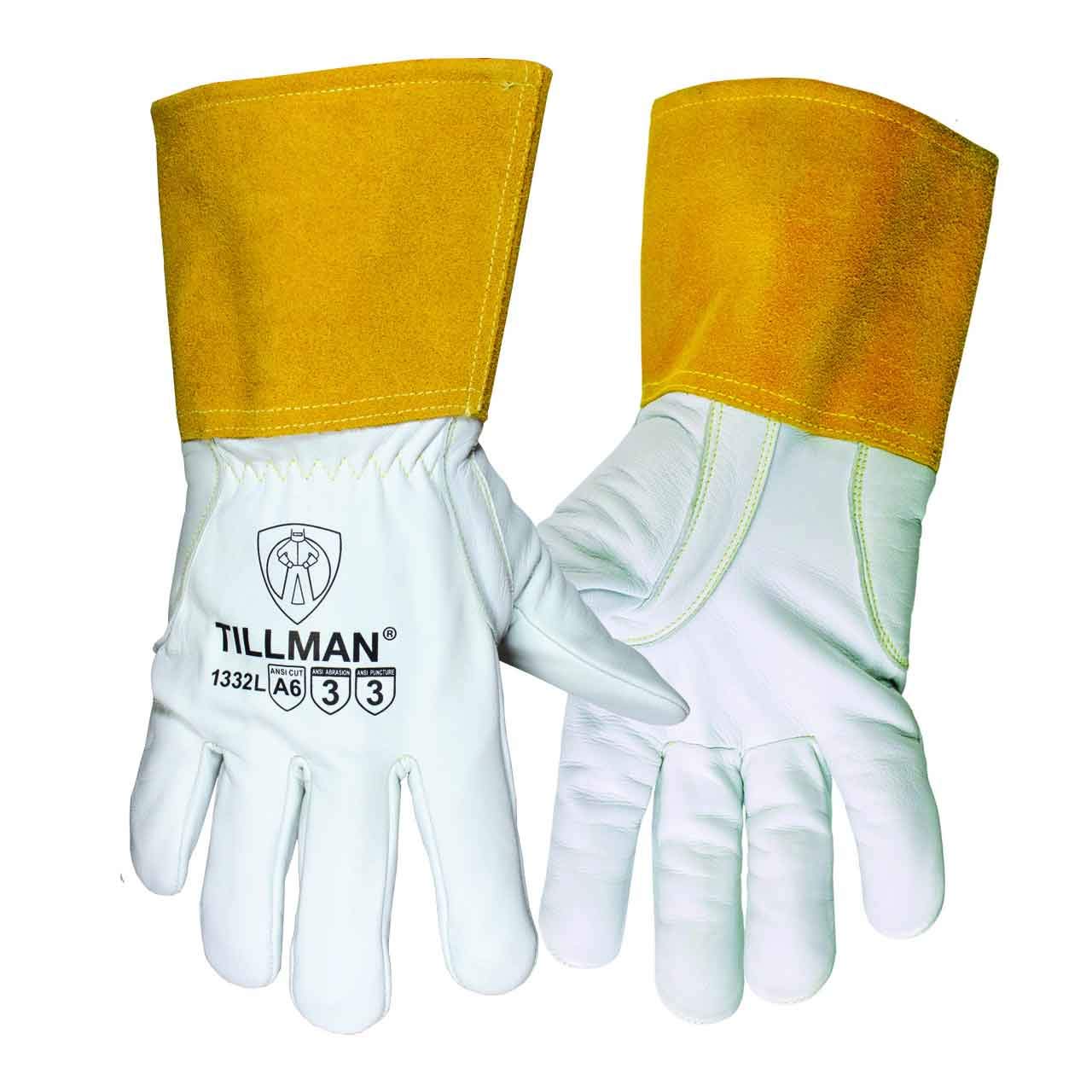
Tillman 1332 Premium Goatskin TIG Gloves with ANSI A6 Cut Resistance, Large: Product Breakdown
“>
The Tillman 1332 Premium Goatskin TIG Gloves with ANSI A6 Cut Resistance, Large are positioned for welders who need a glove that supports fine control during TIG work while adding a higher level of cut protection for handling sharp material. For shops that move between setup, fit-up, light fabrication, and torch work, the practical question is not just whether the glove feels good in hand. It is whether the glove helps reduce cuts, supports grip, and still lets the user feel the work.
This breakdown stays focused on what matters in the shop: fit, dexterity, cut resistance, use-case fit, and what to check before putting the gloves into rotation. Some technical details are not confirmed in the provided source material, so those are marked Unknown (Verify).
Key Takeaways
- Premium goatskin is selected for softness and flexibility, which supports fingertip control during TIG work.
- ANSI/ISEA 105 A6 cut resistance is a meaningful indicator for handling sharp sheet edges and fabricated parts, but it does not make the glove cut-proof.
- Large size may improve comfort for some users, but fit should be checked at the fingers, palm, and cuff before production use.
- This glove is best viewed as a TIG support glove for handling and setup tasks, not as a replacement for task-specific PPE where higher heat or impact exposure exists.
What the Glove Is Built to Do
Based on the provided product description, the Tillman 1332 is intended to balance dexterity with cut resistance. That matters in TIG environments because the operator often handles sharp coupons, tacked assemblies, clamps, filler rod packaging, and sheet material before the arc is ever started. A glove that is too bulky can slow fit-up and reduce control. A glove that is too light may expose the hand to edge cuts during handling.
Premium goatskin is commonly used where softness and tactile feel matter. In practical terms, that can help with torch handling, small part manipulation, and general shop work. The cut-resistance claim is the main differentiator here. ANSI/ISEA 105 A6 indicates a high cut-resistance level relative to lower-rated gloves, but it should still be treated as a risk reduction feature, not a guarantee.
Practical Check, Inspect, Verify Steps
Before assigning these gloves to a welder or fabricator, use the following checks.
Check
- Check glove size against the user’s hand. Large should not collapse at the fingertips or create excess material in the palm.
- Check whether the glove allows normal torch grip, trigger control, and filler rod handling without forcing the wrist into an awkward angle.
- Check whether the work includes frequent handling of sharp edges, burrs, or sheet metal where cut resistance is relevant.
Inspect
- Inspect stitching, seams, and finger gussets before first use.
- Inspect the palm and fingertips for weak spots, finish defects, or early wear.
- Inspect for contamination from oil, grinding dust, or metal fines that could affect grip.
Verify
- Verify the glove meets the internal task requirement for the job. If the job includes heavy heat exposure, grinding sparks, or severe abrasion, Unknown (Verify) if this glove is the correct PPE choice.
- Verify the cut hazard present at the workstation. A6 helps, but the user still needs safe handling methods.
- Verify local PPE rules, supervisor approval, and task-specific risk assessment before broad rollout.
Troubleshooting and Support Considerations
If a user reports that the glove is not performing well, start with the work conditions rather than the glove alone.
If dexterity feels too low
- Check whether the glove is the correct size.
- Inspect for excessive break-in stiffness or contamination.
- Verify whether the task requires finer control than a cut-resistant glove can comfortably support.
If cut protection still appears inadequate
- Check the actual hazard: sharp edges, burrs, or unfinished parts can exceed the user’s handling technique.
- Inspect the glove for wear through the fingertips or palm.
- Verify whether a different control method, part deburring step, or higher-protection PPE is needed.
If grip is inconsistent
- Check for oil, coolant, or fine dust on the glove surface.
- Inspect whether the material is worn smooth from repeated handling.
- Verify that the glove is being used for the right task; a glove designed for TIG support may not suit wet or heavily abrasive conditions.
Product and Parts Notes
This draft is based on the provided ArcWeld product listing for the Tillman 1332 Premium Goatskin TIG Gloves with ANSI A6 Cut Resistance, Large. The available description indicates premium goatskin construction and ANSI/ISEA 105 A6 cut resistance. Other technical details such as liner content, cuff style, insulation, and heat-rating claims are Unknown (Verify) because they were not supplied in the source material.
Use the product page as the primary reference when confirming whether the glove is suitable for a given TIG workflow, especially if the user is selecting gloves for production work, maintenance outages, or repetitive handling of cut metal.
Related product reference:
Tillman 1332 Premium Goatskin TIG Gloves with ANSI A6 Cut Resistance, Large
The Tillman 1332 Premium Goatskin TIG gloves are built for welders who need a balance of dexterity and serious cut protection during TIG setup, handling sharp material, and light fabrication work. Made with premium goatskin for a soft, flexible feel, these gloves are designed to maintain fingertip control while adding ANSI/ISEA 105 A6 cut resistance to help reduce risk when working around sheet metal edges and bur…
View at Arc Weld StoreFor users comparing glove styles, the internal article below may help as a related reference point for goatskin glove construction in TIG or MIG support work:
How Maintenance Buyers Should Evaluate This Glove
Maintenance buyers should treat this glove as a task-specific hand protection option for light fabrication, TIG setup, and material handling where cut resistance matters. The first filter is the actual hand hazard at the jobsite. If the main risk is sharp edges, the A6 rating is relevant. If the main risk is thermal exposure or heavy abrasion, additional review is needed.
Use a short pilot test with real users. Ask three things: does the glove fit correctly, does it preserve torch control, and does it reduce nuisance cuts during handling? Those answers are more useful than a catalog description alone.
Safety Notes
- Cut-resistant gloves reduce risk; they do not eliminate it.
- Keep hands away from sharp edges, moving parts, and hot surfaces.
- Do not assume a TIG glove is suitable for grinding, heavy heat, or every fabrication task.
- Replace gloves that show wear, seam damage, or loss of dexterity.
- Follow site PPE rules and task hazard analysis before use.
FAQ
Is the Tillman 1332 glove meant only for TIG welding?
No. Based on the source description, it is best suited for TIG support work and handling tasks where dexterity and cut resistance matter. Exact task limits are Unknown (Verify).
Does ANSI A6 mean the glove is cut-proof?
No. ANSI/ISEA 105 A6 means the glove has a high cut-resistance level, but sharp edges and improper handling can still cause injury.
Can this glove replace general welding PPE?
No. It should be evaluated as one part of the PPE program. Other hazards such as heat, sparks, abrasion, and impact may require different protection.
What should I verify before buying for a crew?
Verify fit, task compatibility, and site PPE requirements. Also verify whether users need more heat resistance or more abrasion resistance than this glove is intended to provide.
Sources Checked
- ArcWeld product page: Tillman 1332 Premium Goatskin TIG Gloves with ANSI A6 Cut Resistance, Large
- Internal article: Tillman 48 MIG Gloves Review: Goatskin Fleece Comfort
Note: No WSP lookup page or filler metal finder page was provided for this draft. No assumptions were made about certifications, compatibility, pricing, or availability.
Related Weld Support Guides