Tag: torch maintenance

  • TIG Torch Gets Too Hot During Welding

    TIG Torch Gets Too Hot During Welding

    If you are dealing with tig torch overheating, treat it as a setup or duty-cycle problem first. Excess heat at the torch can damage the body, burn consumables, and reduce shielding gas performance. The cause is usually current demand, poor cooling, loose connections, restricted gas flow, or a torch body that is not suited to the job.

    Key Takeaways

    • High heat at the torch usually points to too much amperage for the torch setup, poor technique, or worn parts.
    • Check torch body condition, cable routing, connections, gas flow, and consumables before replacing major parts.
    • Overheating can shorten tungsten life, damage collets and cups, and increase the chance of arc instability.
    • Use replacement parts that match the torch family and amperage requirement. Compatibility details not listed here are Unknown (Verify).

    Troubleshooting: Why the Torch Is Getting Too Hot

    1. Amperage is too high for the torch body

    Running more current than the torch can handle will build heat quickly. This is the first item to check when the handle, head, or cable becomes uncomfortable to touch during normal welding intervals. If the torch is near its limit, reduce amperage or move to a torch body designed for the job. Exact duty-cycle limits for your setup are Unknown (Verify).

    2. Torch body is worn or damaged

    Internal wear, loose fittings, or heat damage can make the torch run hotter than normal. Inspect the body for cracking, loose head alignment, damaged insulators, and signs of prior overheating. If the torch body has been degraded, repair or replacement is the correct fix, not higher gas flow or a larger cup alone.

    3. Poor electrical contact is creating resistance heat

    Loose collet bodies, worn consumables, dirty threads, and poor connections in the power path can add resistance and create local heat. Clean and tighten all serviceable joints. Replace parts that no longer hold properly.

    4. Shielding gas coverage is not stable

    Restricted gas flow, leaks, or a damaged cup can force longer arc time and higher heat input at the torch. Check the gas line, fittings, regulator, and nozzle area for leaks or blockage. If the gas stream is unstable, the arc can become harder to control and increase torch load.

    5. Cable routing is adding heat and strain

    A tight bend, twisted lead, or cable dragged across hot work can raise torch temperature and reduce performance. Route the torch lead with a smooth bend radius and keep it away from direct contact with hot metal. If the cable insulation is damaged, remove the torch from service.

    6. Duty cycle is being exceeded

    Even a torch that is correctly sized can overheat if it is used beyond its intended duty cycle. Shorten arc time, add cool-down breaks, or shift to a torch setup that is better matched to the amperage and joint size. Published duty-cycle data for the exact setup is Unknown (Verify).

    Support Checks That Help Isolate the Problem

    • Inspect the tungsten, collet, collet body, cup, and back cap for discoloration or heat damage.
    • Check whether the torch overheats faster on long beads than on tack work.
    • Compare heat buildup at low and high amperage to see whether the issue tracks current demand.
    • Confirm gas flow is consistent at the torch and not restricted by kinks or damaged fittings.
    • Verify that the torch body matches the welding process and current range. Exact compatibility is Unknown (Verify) unless documented by the manufacturer.

    Parts and Replacement Considerations

    If the torch body itself is the weak point, replacing it can solve recurring heat problems better than swapping consumables repeatedly. For a rigid air-cooled option, one available part is the Weldtec WT-26 Rigid Torch Body, 200A Air Cooled, 70 Degree Head for Reliable Welding.

    This part is provided through the allowed ArcWeld product link:

    Weldtec WT-26 Rigid Torch Body, 200A Air Cooled, 70 Degree Head for Reliable Welding

    Weldtec WT-26 Rigid Torch Body, 200A Air Cooled, 70 Degree Head for Reliable Welding

    Introducing the Weldtec WT-26 Torch Body, a top-tier choice for professionals in need of a reliable and durable welding solution. Designed for use with gas and capable of handling up to 200 amps, this rigid torch body ensures exceptional performance in a variety of applications. The WT-26 features a standard 70-degree head, which allows for increased maneuverability and accessibility in tight spaces. With its air-…

    View at Arc Weld Store

    Use this only if it matches your torch family and welding setup. Exact compatibility with your machine, leads, and gas setup is Unknown (Verify).

    How to Reduce Torch Heat During Welding

    • Lower amperage if the weld procedure allows it.
    • Shorten arc time and allow cooling breaks.
    • Keep the torch lead straight enough to avoid sharp bends and pinch points.
    • Replace worn consumables before they create resistance or unstable arc behavior.
    • Check all gas and power connections before continuing production work.
    • Use a torch body that is sized for the application instead of pushing a smaller torch past its limit.

    Safety Notes

    • Stop welding if the torch body, cable, or connector becomes excessively hot to touch.
    • Do not handle damaged insulation, cracked housings, or burnt consumables without proper cooldown.
    • Hot torches can cause burns even after the arc is off.
    • Use proper PPE and follow the machine and torch manufacturer instructions.
    • If overheating is repeated, remove the torch from service until the cause is corrected.

    FAQ

    Why does my TIG torch get hot so fast?

    Common causes are high amperage, poor duty-cycle management, worn parts, loose connections, restricted gas flow, or a torch body that is not suited to the application.

    Can a bad tungsten make the torch overheat?

    Yes, indirectly. A poor tungsten setup can make the arc unstable and increase heat load on the torch and consumables.

    Should I replace the torch or just the consumables?

    If the torch body is cracked, loose, or repeatedly overheating under normal use, replacement may be the better option. If the issue is worn consumables or loose fittings, start there first.

    Is the WT-26 right for every TIG setup?

    Unknown (Verify). Match the torch body to your amperage, process, lead configuration, and machine requirements before ordering.

    Sources Checked

    • Allowed ArcWeld product:
      Weldtec WT-26 Rigid Torch Body, 200A Air Cooled, 70 Degree Head for Reliable Welding

      Weldtec WT-26 Rigid Torch Body, 200A Air Cooled, 70 Degree Head for Reliable Welding

      Introducing the Weldtec WT-26 Torch Body, a top-tier choice for professionals in need of a reliable and durable welding solution. Designed for use with gas and capable of handling up to 200 amps, this rigid torch body ensures exceptional performance in a variety of applications. The WT-26 features a standard 70-degree head, which allows for increased maneuverability and accessibility in tight spaces. With its air-…

      View at Arc Weld Store
    • Allowed internal link: Aluminum ER 5554 3/64″ X 5lb. MIG Welding Wire Spool By Washington Alloy – Weld Support Parts Blog

    Related Weld Support Guides

  • How to Identify and Replace Compatible TIG Torch Consumables for Optimal Welding Performance

    Correct TIG torch consumables affect arc stability, shielding gas coverage, tungsten control, heat handling, and weld consistency. The wrong collet, cup, gas lens, back cap, or tungsten size can cause poor starts, arc wandering, porosity, overheating, loose tungsten, and premature torch damage.

    TIG consumables are not universal. Parts must be matched to the torch series, torch head design, tungsten diameter, gas setup, cup style, and manufacturer fitment data. If the torch model, part number, or consumable family cannot be confirmed, the correct compatibility answer is: Unknown (Verify).

    Key Takeaways

    • Do not order by appearance alone. Many TIG consumables look similar but use different threads, tapers, lengths, or seating surfaces.
    • Identify the torch first. Confirm torch series, cooling type, head size, and OEM part number before matching front-end parts.
    • Match the full consumable stack. Cup, collet, collet body or gas lens, back cap, insulator, and tungsten diameter must work together.
    • Gas lens parts are not always interchangeable with standard collet bodies. Cup style and insulator requirements may change.
    • Machine model alone is not enough. A welder may accept several torch assemblies with different front-end consumables.
    • Replace damaged consumables early. Burned collets, cracked cups, worn gas lenses, and damaged threads cause repeat weld defects.

    Start by Identifying the TIG Torch

    The torch determines the consumable family. Before replacing parts, confirm the exact torch type instead of assuming compatibility from the welding machine model.

    Identification Point What to Check Why It Matters
    Torch series Look for markings on the handle, torch head, cable label, or package documentation. Consumables are usually organized by torch family and head size.
    Cooling type Air-cooled or water-cooled. Water-cooled and air-cooled torches may use different bodies, heads, cables, and duty ratings.
    Torch head style Rigid, flex, valve, pencil, modular, or specialty head. Some head designs require specific insulators, back caps, or cup systems.
    Amperage rating Verify from OEM torch documentation. Undersized torch parts can overheat during high-amperage welding.
    Connector configuration Dinse, gas-through Dinse, lug, separate gas line, water lines, remote lead, or proprietary connector. Important when replacing the full torch assembly, not just front-end consumables.
    Cable length Confirm original length if replacing the torch or lead assembly. Length affects voltage drop, handling, cooling, and machine setup.

    Common TIG torch families are often sold in small-head and large-head groups, but visual similarity does not prove fitment. Always verify the actual torch model and consumable family using OEM documentation or confirmed supplier fitment data.

    Know the TIG Consumable Stack

    A TIG torch front end works as a stack. If one part is mismatched, the entire assembly may leak gas, fail to clamp the tungsten, or seat incorrectly.

    Consumable Function Compatibility Checks Replace When
    Back cap Compresses the collet and seals the rear of the torch. Thread type, cap length, torch series, rear seal or O-ring style. Threads are worn, cap is cracked, O-ring leaks, or tungsten will not tighten.
    Collet Grips the tungsten electrode. Tungsten diameter, torch series, taper style, material, length. Tungsten slips, collet is split, burned, distorted, or discolored from overheating.
    Collet body Holds the collet and directs shielding gas through the cup. Torch series, thread size, tungsten diameter, standard cup compatibility. Threads are damaged, gas holes are blocked, seat is worn, or gas flow is uneven.
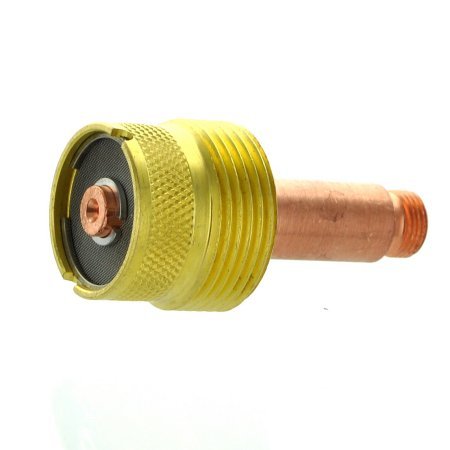
    Gas lens Uses screens or diffusers to improve shielding gas flow. Torch series, tungsten diameter, cup type, insulator requirements, stickout needs. Screen is clogged, crushed, contaminated, overheated, or flow pattern is unstable.
    Cup/nozzle Directs shielding gas around the tungsten and weld puddle. Cup thread or slip fit, size, length, material, gas lens or standard body match. Cracked, chipped, contaminated, overheated, loose, or wrong size for the joint.
    Insulator/gasket Seals and electrically isolates parts at the torch head. Torch head, cup style, gas lens style, shoulder height, seating surface. Cracked, burned, flattened, missing, or causing gas leaks.
    Tungsten electrode Carries the arc and controls arc shape. Diameter, alloy type, current type, amperage range, polarity, tip preparation. Contaminated, split, balled incorrectly, unstable arc, or ground to improper geometry.

    Compatibility Verification Checklist

    Use this checklist before ordering or installing replacement TIG torch consumables.

    Verification Item Status to Confirm
    Torch series Confirmed from torch marking, OEM manual, or verified supplier fitment data.
    Machine model Confirmed if replacing the full torch or connector-side assembly.
    Connector type Confirmed for complete torch replacement: Dinse size, gas-through style, lug, water lines, or proprietary plug.
    Amperage rating Confirmed from torch and machine documentation.
    Wire size Not applicable to TIG torch front-end consumables. For TIG filler rod, verify filler diameter separately from torch parts.
    Gas type Confirmed for the welding procedure. TIG commonly uses inert shielding gas, but gas selection must match the application and procedure.
    Cable length Confirmed when replacing the torch assembly or lead package.
    Consumable family Confirmed for standard collet body, gas lens, large-diameter gas lens, stubby kit, or specialty cup system.
    OEM part number Confirmed when available. If unavailable: Unknown (Verify).
    Connector configuration Confirmed before replacing any torch package, adapter, or power cable.

    Standard Collet Body vs Gas Lens: Do Not Mix Parts Blindly

    Standard collet body setups and gas lens setups may use different cups, insulators, and part lengths. A cup that fits a standard body may not fit a gas lens. A gas lens may also require a different insulating gasket or cup style depending on the torch family.

    Setup Typical Use Fitment Risk
    Standard collet body General TIG welding where standard gas coverage is sufficient. Using the wrong cup thread or tungsten diameter can cause gas leaks or poor tungsten clamping.
    Gas lens Improved gas coverage, longer tungsten stickout, stainless, titanium, or tight joint access when procedure-appropriate. Requires matching gas lens cup, tungsten diameter, and correct insulator for the torch.
    Stubby setup Shorter front-end length for access in tight spaces. Stubby kits are torch-family specific. Universal fitment: Unknown (Verify).
    Large gas lens setup Higher shielding coverage for specific applications. May require special cups and insulators. Fitment must be verified before installation.

    How to Identify Worn or Incorrect TIG Consumables

    Bad TIG consumables often create symptoms that look like gas problems, tungsten problems, or machine problems. Inspect the torch front end before changing machine settings.

    Symptom Likely Consumable Issue Inspection Step
    Tungsten slips or moves Wrong collet size, overheated collet, damaged back cap, worn collet taper. Confirm tungsten diameter and inspect the collet for cracks, burn marks, and loss of spring tension.
    Porosity or gray weld surface Cracked cup, missing insulator, gas lens clogging, gas leak at torch head. Inspect cup, gasket, collet body holes, gas lens screens, and torch seals.
    Arc wandering Contaminated tungsten, wrong tungsten diameter, loose collet, worn collet body. Regrind tungsten correctly and verify collet/body match.
    Cup overheats or cracks Excessive amperage for torch setup, poor gas flow, cup too close, wrong cup style. Verify torch rating, cup size, stickout, and cooling condition.
    Gas flow sounds turbulent Damaged gas lens, blocked holes, wrong cup, missing insulator. Remove front-end parts and inspect gas passages for spatter, oxide, dust, and screen damage.
    Back cap bottoms out before tightening Wrong collet length, wrong back cap, mismatched torch family. Compare new and old parts side-by-side and verify OEM fitment.

    Step-by-Step Replacement Procedure

    1. Shut down the machine. Turn off welding power and shielding gas before disassembly.
    2. Let the torch cool. Ceramic cups, collets, and torch heads can stay hot after welding.
    3. Remove the back cap. Loosen slowly and remove the tungsten so it does not fall or break.
    4. Disassemble the front end. Remove the cup, collet body or gas lens, collet, and insulator if needed.
    5. Inspect every sealing surface. Look for cracked ceramic, burned O-rings, damaged threads, missing insulators, and clogged gas passages.
    6. Compare old and new parts. Confirm length, taper, thread, tungsten diameter, cup fit, and torch family.
    7. Install the matching collet body or gas lens. Thread it in by hand first. Do not force mismatched threads.
    8. Install the correct collet. Match the collet to the tungsten diameter being used.
    9. Insert clean tungsten. Use the tungsten alloy, diameter, and tip preparation required by the welding procedure and machine manufacturer.
    10. Tighten the back cap gently. Tighten enough to hold the tungsten securely. Excessive force can distort the collet.
    11. Install the correct cup. Confirm that it seats squarely and does not wobble.
    12. Check gas flow. Test flow with the torch pointed away from people and confirm stable shielding before welding.
    13. Run a test bead. Verify arc stability, gas coverage, tungsten hold, and torch temperature before returning to production work.

    How to Avoid Ordering the Wrong TIG Torch Consumables

    • Do not rely only on cup color. Cup material and color do not confirm thread or torch fitment.
    • Do not rely only on torch handle shape. Handles are often replaced and may not identify the torch head.
    • Save old parts until fitment is confirmed. Compare dimensions, threads, and seating surfaces before discarding the original consumables.
    • Match tungsten diameter across the whole stack. Collet and collet body or gas lens must match the electrode diameter.
    • Verify gas lens kits carefully. Gas lens conversion may require a different cup and insulator.
    • Use OEM part numbers when possible. If the part number cannot be verified, mark the fitment as Unknown (Verify).
    • Check full torch replacement separately. Front-end consumables and machine-side connectors are different compatibility questions.

    Common Replacement Mistakes

    </

    Mistake Result Correction
    Installing the wrong collet diameter Tungsten slips, arcs inconsistently, or will not tighten. Match collet size to tungsten diameter.
    Using a standard cup on an incompatible gas lens Poor seating, leaks, or damaged threads. Verify cup family for the gas lens being used.
  • Cutting Tip Slag Blockage Symptoms

    Cutting Tip Slag Blockage Symptoms

    A cutting tip partially blocked by slag or debris can disrupt oxygen flow instantly and create poor cut quality, unstable preheat flames, excessive drag lines, heavy slag buildup, and difficult pierces. Oxy-fuel cutting tips rely on balanced preheat and cutting oxygen flow. Even small restrictions inside the oxygen or preheat passages can change flame shape and cutting performance dramatically.

    Common Symptoms

    • Heavy slag hanging on the bottom of cuts.
    • Uneven or wandering cut lines.
    • Preheat flames look uneven or distorted.
    • Torch pops or backfires during cutting.
    • Difficulty piercing thicker material.
    • Excessive drag lines or rough cut surfaces.
    • Cutting oxygen stream appears weak or scattered.

    Likely Causes

    • Slag contamination: Molten metal splash can partially block oxygen or preheat ports.
    • Improper tip cleaning: Oversized tip cleaners can damage or enlarge precision orifices.
    • Backfire contamination: Repeated backfires can force debris into the tip passages.
    • Overheating: Excessive heat can distort the tip face or internal passages.
    • Poor gas filtration: Dirty regulators or hoses may introduce contamination into the torch system.
    • Physical damage: Dropped torches or impact damage can deform the tip orifices.

    Inspection Steps

    1. Shut off gas supply and allow the torch to cool fully.
    2. Inspect the cutting oxygen orifice and preheat holes under good lighting.
    3. Check for slag buildup, discoloration, or damaged tip edges.
    4. Use the correct size tip cleaner only.
    5. Inspect hoses, flashback arrestors, and regulators for contamination.
    6. Verify proper gas pressure settings after reinstalling the tip.

    Visual Wear Indicators

    • Rounded or enlarged oxygen orifice.
    • Distorted preheat flame pattern.
    • Heat discoloration near the tip face.
    • Uneven slag accumulation around the ports.
    • Pitted or damaged tip seating surfaces.

    Common Wrong-Part Mistakes

    • Using incorrect tip sizes for the material thickness.
    • Mixing propane and acetylene tip styles incorrectly.
    • Using oversized tip cleaners that damage the orifices.
    • Ignoring worn torch seats when replacing tips only.

    Field Fix vs Proper Fix

    Field fix: Clean the tip carefully using the correct cleaners and confirm proper gas pressures. Proper fix: Replace damaged tips, service contaminated torch systems, repair worn seats, and verify gas compatibility with the installed tip design.

    Ignored Failure Consequences

    Continuing to cut with a blocked tip can increase backfire risk, overheat the torch head, damage regulators, waste gas, reduce cut quality, and create unsafe cutting conditions.

    Safety Notes

    Never clean oxy-fuel tips with drill bits or hardened steel objects. Incorrect cleaning can permanently damage the orifices. Always shut off gas supply and bleed the system before servicing cutting equipment.

    Sources Checked

    • Lincoln Electric accessories catalog
    • Uploaded welding safety catalogs
    • Existing oxy-fuel troubleshooting references
  • Cutting Torch Oxygen Lever Sticking Causes

    Cutting Torch Oxygen Lever Sticking Causes

    A cutting torch oxygen lever that sticks, binds, or fails to return smoothly is usually caused by internal contamination, damaged valve components, dried lubrication, heat distortion, worn springs, or regulator contamination entering the torch body. A sticking oxygen lever can affect cutting oxygen flow instantly, causing poor cuts, unstable flame behavior, operator fatigue, and unsafe torch handling conditions.

    Common Symptoms

    • Oxygen lever feels stiff or hard to depress.
    • Lever does not return smoothly after cutting.
    • Cutting oxygen flow surges or hesitates.
    • Torch cut quality changes during operation.
    • Lever binds more as the torch heats up.
    • Operator must manually pull the lever back up.

    Likely Causes

    • Internal contamination: Dirt, metal particles, or degraded seals inside the oxygen valve assembly can cause sticking.
    • Heat distortion: Excessive torch overheating may warp internal components or dry out lubrication.
    • Damaged return spring: Weak or damaged springs prevent smooth lever return.
    • Improper lubrication: Oxygen-compatible components require proper handling. Incorrect lubricants can create dangerous contamination risks.
    • Regulator contamination: Moisture, oil, or debris entering the oxygen system can damage torch internals.
    • Physical damage: Dropped torches or bent lever assemblies may bind mechanically.

    Inspection Steps

    1. Shut off gas supply and bleed the system fully before inspection.
    2. Inspect the oxygen lever pivot for visible damage or contamination.
    3. Check for heat discoloration around the torch head and valve body.
    4. Verify regulator and hose connections are clean and dry.
    5. Inspect oxygen hoses for internal deterioration or contamination.
    6. Test lever movement cold and after brief heating cycles.

    Common Wrong-Part Mistakes

    • Installing incorrect valve kits or seal materials.
    • Using non-approved lubricants in oxygen systems.
    • Replacing regulators when the torch valve assembly is the actual problem.
    • Ignoring contaminated hoses or flashback arrestors.

    Field Fix vs Proper Fix

    Field fix: Clean external pivot points carefully and verify the torch is not overheating during use. Proper fix: Rebuild or replace damaged oxygen valve components, remove contaminated hoses or regulators, and service the torch using oxygen-compatible repair procedures only.

    Ignored Failure Consequences

    Ignoring a sticking oxygen lever can lead to unstable cuts, torch overheating, flashback risks, oxygen leaks, operator fatigue, and accelerated internal valve damage.

    Safety Notes

    Never use petroleum-based lubricants on oxygen system components. Oxygen contamination can create severe fire and explosion hazards. Always bleed pressure from regulators and hoses before servicing oxy-fuel equipment.

    Sources Checked

    • Lincoln Electric accessories and welding support catalogs
    • General oxy-fuel torch maintenance references
    • Uploaded welding safety catalogs
  • Oxy-Fuel Hose Leak Inspection Guide

    Oxy-Fuel Hose Leak Inspection Guide

    An oxy-fuel hose leak should be treated as an immediate safety problem, not a minor nuisance. Leaks most often show up at hose fittings, regulator connections, torch inlets, cracked hose jackets, worn check valves, flashback arrestors, or damaged crimp ends. If oxygen or fuel gas is leaking, shut the cylinders off, bleed pressure from the system, ventilate the area, and inspect before relighting the torch.

    Common Symptoms

    • Hissing sound near regulator, hose, torch, or fittings.
    • Fuel-gas odor around the work area.
    • Flame changes when the hose is moved.
    • Regulator pressure drops while the torch valves are closed.
    • Bubbles appear during approved leak-solution testing.
    • Hose jacket is cracked, burned, cut, soft, swollen, or oil-contaminated.

    Likely Leak Points

    • Cylinder valve to regulator: Damaged seats, loose regulator nuts, dirt, or wrong connections can leak at the cylinder outlet.
    • Regulator outlet fittings: Loose hose nuts, worn sealing faces, or cross-threaded fittings can leak under pressure.
    • Hose crimp ends: Repeated bending near the ferrule can crack the hose internally.
    • Flashback arrestors and check valves: Damaged threads or worn seals can leak at either side of the device.
    • Torch inlet connections: Loose nuts or damaged threads can leak where hoses attach to the torch handle.
    • Hose body: Burns, cuts, abrasion, dry cracking, or chemical contamination can create pinhole leaks.

    Inspection Steps

    1. Close both cylinder valves.
    2. Open torch valves briefly to bleed system pressure, then close the torch valves.
    3. Back out regulator adjusting screws before repressurizing.
    4. Visually inspect the full hose length for burns, cuts, kinks, swelling, oil, grease, and abrasion.
    5. Check all fitting threads, nuts, crimp sleeves, flashback arrestors, and torch inlets.
    6. Repressurize one gas side at a time.
    7. Apply approved leak detection solution to fittings and suspect hose areas.
    8. Watch for growing bubbles. Any bubble formation means repair or replacement is required.
    9. Do not use a flame to check for leaks.

    Regulator Drop Test

    With the torch valves closed and the system pressurized, close the cylinder valve and watch the working-pressure gauge. A pressure drop can indicate a downstream leak in the regulator outlet, hose, arrestor, check valve, or torch valve. Test oxygen and fuel-gas sides separately so the leak path is easier to isolate.

    What To Verify Before Ordering Hose

    • Gas service: oxygen/fuel-gas twin hose or single-line hose.
    • Fuel type: acetylene, propane, propylene, natural gas, or alternate fuel.
    • Hose grade required for the fuel gas being used.
    • Inside diameter and length.
    • Fitting size and thread direction.
    • Compatibility with regulators, torch handle, check valves, and flashback arrestors.

    Common Wrong-Part Mistakes

    • Using hose not rated for the fuel gas.
    • Mixing oxygen and fuel-gas fittings incorrectly.
    • Reusing damaged hose nuts or crushed sealing faces.
    • Skipping check valves or flashback arrestors after hose replacement.
    • Repairing hose with tape instead of replacing the damaged assembly.

    Field Fix vs Proper Fix

    Field fix: Tighten a loose fitting only after depressurizing the system and confirming the threads and sealing surfaces are undamaged. Proper fix: Replace leaking hose assemblies, damaged fittings, failed check valves, leaking flashback arrestors, or contaminated regulators. Do not tape, clamp, or splice damaged oxy-fuel hose unless the repair method is approved by the hose and equipment manufacturer.

    Ignored Failure Consequences

    Ignoring an oxy-fuel hose leak can lead to fire, flashback, regulator damage, unstable flame settings, oxygen-enriched clothing or work areas, fuel-gas accumulation, and serious injury. Fuel-gas leaks are especially hazardous in pits, confined spaces, vehicles, and poorly ventilated shops.

    Safety Notes

    • Keep oil and grease away from oxygen equipment.
    • Never check leaks with an open flame.
    • Ventilate the area before relighting any torch.
    • Do not use damaged, burned, cracked, swollen, or contaminated hose.
    • Keep cylinders closed when equipment is not in use.
    • Use proper PPE for oxy-fuel cutting and heating work.

    Sources Checked

    • Uploaded welding accessory catalogs
    • Uploaded welding PPE and safety catalog references
    • Existing oxy-fuel troubleshooting coverage on the blog

  • TIG Torch Slipping Tungsten? Your Collet Body Is Worn (Here’s the Fix)

    Intro

    You’re TIG welding and the tungsten keeps slipping out of the collet. You tighten the back cap, it holds for a few seconds, then slides again. The arc starts inconsistent, the puddle wanders, and your bead looks rough. The problem isn’t the tungsten—it’s a worn collet body that can’t grip anymore.

    Key Takeaways

    • Tungsten slipping is almost always caused by a worn or damaged collet body, not the tungsten itself
    • A collet body wears from repeated insertion and removal of tungsten
    • Replacement collet bodies are cheap ($5–$15) and take 30 seconds to swap
    • Gas coverage improves dramatically with a fresh collet body
    • Keep spares on hand for every torch size you use

    The Problem

    A worn collet body shows up as:

    • Tungsten slides out even when the back cap is tight
    • Inconsistent arc initiation
    • Poor gas coverage (visible oxidation on the weld)
    • Difficulty maintaining arc length
    • Collet body threads are stripped or loose

    The collet is a small tapered sleeve that grips the tungsten. Every time you insert or remove tungsten, the collet compresses and expands. Over hundreds of cycles, the taper wears out. The grip weakens. Eventually, no amount of back cap tightening will hold the tungsten in place.

    Why It Matters

    A slipping tungsten means an unstable arc. Your puddle control suffers. Weld quality drops. On precision work (aerospace, stainless, thin-wall), a wandering arc is a reject. On production runs, it’s rework and lost time. Plus, a loose tungsten can break mid-weld and contaminate your shielding gas.

    The Fix

    1. Disconnect the torch and let it cool. Safety first.
    1. Unscrew the back cap and remove the old collet body.
    1. Inspect the threads. If they’re stripped, you may need a new torch head (rare).
    1. Install the new collet body. Slide it in and hand-tighten the back cap.
    1. Insert tungsten and tighten firmly. The tungsten should not move when you pull on it.
    1. Test the arc. You should see immediate improvement in arc stability and gas coverage.

    Why This Product Solves It

    The TIG Gas Lens Collet Body #17, 18, 26 Torch 2PK (45V27-1/8″) is a direct replacement for standard TIG torches and includes a gas lens design that improves shielding gas flow. The tapered bore is precision-machined to grip tungsten consistently, and the gas lens allows larger tungsten stick-out for better visibility and control. Two-pack means you have a spare.

    Product Link:  Product not found.

    “>
    Product not found.
     

    What to Check Before You Buy

    • Torch series: This fits #17, #18, and #26 torches (most common sizes)
    • Tungsten size: This collet is sized for 1/8″ (3.2mm) tungsten
    • Gas lens compatibility: Confirm your torch head accepts a gas lens (most do)
    • Thread type: Standard collet body threads (verify if you have an older torch)

    Real-World Use

    A TIG fabricator working on stainless tubing noticed poor gas coverage and arc wander. Swapped the collet body. Tungsten stayed put, arc was stable, and the bead came out clean. One collet body lasted 18 months before needing replacement.

    Common Mistakes

    • Tightening the back cap excessively (damages the new collet body)
    • Using the wrong collet size for your tungsten diameter (loose fit)
    • Not replacing the collet body when it’s visibly worn (keeps struggling with slipping)
    • Forgetting to clean the collet body threads before installation (cross-threading)
    • Buying a single collet body instead of keeping spares (downtime when it fails)

    Safety Notes

    Always let the torch cool before handling. Collet bodies get hot during welding. Wear gloves when removing hot components. If tungsten slips during welding, stop immediately—a loose electrode can break and contaminate your argon supply.

    Always follow the manufacturer’s instructions and your shop’s safety procedures. If you’re unsure about fitment or ratings, verify before you buy or install.

    Related Reading

  • TIG Gas Lens Cups Cracking? Replace Them Before Porosity Hits

    Intro

    Your TIG welds are starting to show porosity or inconsistent gas coverage. You’ve checked your argon flow, regulator pressure, and torch angle. Everything checks out—except the welds still look rough.

    The problem might be hiding in plain sight: a cracked or worn gas lens cup.

    A damaged gas lens cup disrupts shielding gas flow, allowing air to contaminate the weld pool. Even a hairline crack can cause porosity that ruins structural welds. Unlike contact tips, gas lens cups get less attention—but they’re just as critical.

    Key Takeaways

    • Cracked or worn gas lens cups allow air into the shielding gas stream
    • Porosity, discoloration, and rough beads are signs of gas coverage failure
    • Gas lens cups wear faster with high amperage or prolonged duty cycles
    • Replacement is quick and inexpensive—$2–$8 per cup
    • Proper fitment requires matching your torch size and collet type

    The Problem

    A gas lens cup (also called a ceramic cup or nozzle) sits at the end of your TIG torch and directs shielding gas around the weld pool. Over time, thermal cycling and spatter impact cause:

    • Cracks: Hairline fractures that let air seep in
    • Erosion: The ceramic wears thin, reducing gas flow efficiency
    • Discoloration: Brown or white deposits indicate heat stress and gas leakage
    • Porosity: Air contamination creates gas pockets in the weld

    A cracked cup might look minor, but even a 1mm hairline fracture is enough to ruin a structural weld.

    Why It Matters

    Porosity from a bad gas lens cup is expensive:

    • Rework: Cutting out and re-welding porosity costs hours of labor
    • Inspection failures: Radiographic or ultrasonic testing will reject porosity
    • Safety risk: Porosity weakens the joint and can cause failure under load
    • Material waste: Scrap parts and wasted filler material
    • Reputation: Failed welds on customer parts damage trust

    A $5 replacement cup prevents all of this.

    The Fix

    Replace your gas lens cup as part of routine torch maintenance:

    1. Stop the welder and let the torch cool (5–10 minutes for high-amperage work)
    2. Unscrew the nozzle from the torch head (usually hand-tight or with a small wrench)
    3. Remove the collet body (the small metal piece holding the cup)
    4. Slide out the old cup and inspect the collet body for damage
    5. Install the new cup (check the size: 3/8″, 7/16″, 1/2″, etc.)
    6. Re-assemble: Collet body → new cup → nozzle
    7. Hand-tighten and resume welding

    Total time: 3–5 minutes.

    Why This Product Solves It

    The CK TIG Gas Lens Collet Body (available in multiple sizes) is a precision replacement for standard TIG torches (#17, #18, #26). It includes the collet body and gas lens cup assembly, ensuring proper gas flow and consistent shielding.

    Key benefits:

    • Precision fit: Engineered for standard torch sizes
    • Improved gas coverage: Larger diameter design provides better shielding gas distribution
    • Durability: Quality ceramic resists thermal cracking
    • Compatibility: Works with most standard TIG torches
    • Affordable: Packs of 2 cover extended service intervals

    Replace every 100–200 hours of welding or immediately if you see porosity or discoloration.

    What to Check Before You Buy

    • Torch size: Standard torches are #17, #18, or #26 (small torches are #9, #20, #24W, #25)
    • Cup size: Available in 3/8″ (3/32″), 7/16″ (1/8″), 1/2″ (5/32″), and larger
    • Collet type: Standard collet body vs. gas saver (gas saver is more efficient but less common)
    • Fitment: Unknown (Verify) — confirm your torch model and cup size before ordering

    Real-World Use

    A stainless steel fabrication shop doing heavy TIG work at 150–200 amps noticed porosity on every other weld. They replaced the gas lens cup and the porosity disappeared. The old cup had a hairline crack invisible to the naked eye. Now they replace cups every 150 hours as preventive maintenance.

    Common Mistakes

    • Ignoring discoloration: Brown or white staining on the cup is a sign of gas leakage—replace it immediately
    • Wrong cup size: Installing a 3/8″ cup on a 1/2″ collet body leaves gaps and allows air in
    • Over-tightening the nozzle: Hand-tight is enough; over-tightening can crack the cup
    • Not cleaning the torch head: Spatter and oxidation on the torch head can interfere with gas flow—clean it when you replace the cup
    • Waiting for complete failure: Replace cups at the first sign of porosity, not after multiple failed welds

    Safety Notes

    • Always wear ANSI Z87.1-rated safety glasses or a helmet when welding
    • Let the torch cool for 5–10 minutes before removing the cup—ceramic cups retain heat and can cause burns
    • Ensure proper ventilation; TIG welding produces fumes that require respiratory protection (OSHA guidelines)
    • Never touch the cup or nozzle immediately after welding

    Always follow the manufacturer’s instructions and your shop’s safety procedures. If you’re unsure about fitment or ratings, verify before you buy or install.

    Where to Buy

    Available at ArcWeld.store (stock and shipping: Unknown – verify)

  • Try Amazon Prime Free