Tag: TIG torch parts

  • TIG Torch Consumable Wear Signs: Cup Cracks, Collet Slip, Gas Lens Clogs, and Dirty Tungsten

    Worn TIG torch consumables usually show up as dirty tungsten, rough arc starts, porosity, black soot, poor gas coverage, tungsten slipping, cup cracking, and inconsistent bead color. The problem is often not the welder. It is usually in the torch front end: cup, collet, collet body, gas lens, back cap, O-ring, insulator, or tungsten.

    Start by checking the parts that control gas flow and tungsten grip. A cracked cup leaks shielding gas. A worn collet lets the tungsten slide or sit off-center. A clogged gas lens disrupts argon flow. A damaged back cap O-ring can pull air into the torch. If the tungsten turns black, the weld gets sooty, or the arc wanders after consumables heat up, inspect the torch before changing amperage or blaming the machine.

    Related TIG support checks include why TIG tungsten turns black, TIG porosity troubleshooting, TIG cup size selection, and sooty TIG weld gas coverage fixes.

    Common Symptoms

    SymptomLikely Worn ConsumableFirst Check
    Tungsten slips or pulls backCollet, collet body, back capInspect collet grip and correct tungsten size
    Black or gray tungstenCup, gas lens, O-ring, gas leakVerify argon flow and post-flow
    Porosity appears suddenlyCracked cup, clogged gas lens, leaking torchInspect cup and gas lens screen
    Arc wandersContaminated tungsten, loose collet, worn collet bodyRegrind tungsten and check clamp force
    Soot around weldPoor gas coverage, damaged cup, turbulent flowCheck cup size, gas lens, and torch angle
    Cup keeps crackingOverheating, impact, wrong cup setupCheck amperage, cup fit, and torch cooling

    What Each TIG Consumable Does

    • Cup/nozzle: directs shielding gas around the tungsten and weld pool.
    • Collet: grips the tungsten when the back cap is tightened.
    • Collet body: holds the collet and positions the tungsten in the torch.
    • Gas lens: smooths gas flow and improves coverage, especially with longer stickout.
    • Back cap: tightens the collet and seals the rear of the torch.
    • O-rings and insulators: prevent gas leaks and keep torch parts sealed and aligned.
    • Tungsten: carries the arc; contamination or overheating changes arc shape immediately.

    Visual Wear Indicators

    PartWear SignsReplace When
    CupCracks, chips, white/brown heat marks, spatter, metal dustCracked, leaking, loose, or no longer shielding evenly
    ColletSplit end spread open, burn marks, weak grip, oval boreTungsten slips or will not center
    Collet bodyDamaged threads, poor seating, discoloration, loose fitCollet will not tighten or tungsten sits crooked
    Gas lensClogged screen, dark deposits, crushed mesh, blocked holesGas flow becomes uneven or soot/porosity continues
    Back capCracked body, damaged threads, missing or flat O-ringGas leaks or tungsten will not clamp correctly
    Insulator/gasketBurned edges, cracks, missing seal, loose cup fitCup leaks, torch heats unevenly, or gas coverage fails

    Inspection Steps

    1. Let the torch cool. Ceramic cups, tungsten, and copper parts can stay hot after short welds.
    2. Remove the cup. Check for cracks, chips, dirt, and signs of gas leakage.
    3. Remove the tungsten. If it is black, crusted, split, balled unexpectedly, or contaminated, regrind or replace it.
    4. Inspect the collet. Match it to the tungsten diameter. Replace it if grip is weak or the split end is distorted.
    5. Inspect the collet body or gas lens. Look for blocked screens, damaged threads, and heat discoloration.
    6. Check the back cap and O-ring. A damaged seal can cause gas coverage problems that look like bad argon.
    7. Reassemble with matching parts. Do not mix standard cups with gas lens hardware unless the setup is designed for it.
    8. Test gas flow at the cup. Confirm steady argon flow before striking an arc.
    9. Run one test bead. Keep amperage and travel unchanged so the consumable change is the isolated variable.

    Test Procedures

    Tungsten grip test: Install the correct tungsten and tighten the back cap normally. If the tungsten slides with light hand pressure, inspect the collet, collet body, and back cap threads.

    Gas coverage test: Weld a short bead with clean tungsten, clean base metal, and no drafts. If bead color improves after replacing the cup or gas lens, the old consumable was disturbing gas flow.

    Post-flow test: Watch the tungsten after arc stop. If it turns blue, gray, or black quickly, check post-flow, back cap seal, cup damage, gas lens blockage, and hose leaks.

    Field Fix vs Proper Fix

    ProblemField FixProper Fix
    Tungsten slippingTighten back cap slightlyReplace worn collet and verify tungsten diameter
    Dirty gas lensBrush or blow out lightlyReplace clogged or damaged screen assembly
    Cracked cupSwap cup immediatelyMatch cup type to torch, amperage, and joint access
    Black tungstenIncrease post-flowRepair leaks and replace bad cup, O-ring, or gas lens
    Arc wandersRegrind tungstenFix collet grip, tungsten contamination, and gas coverage

    Common Wrong-Part Mistakes

    • Buying TIG cups by size number only without confirming torch series.
    • Using a 17/18/26 collet on a 9/20-style torch or the reverse.
    • Installing a gas lens without the matching cup and insulator setup.
    • Using a collet that does not match tungsten diameter.
    • Replacing tungsten repeatedly while ignoring a leaking back cap O-ring.
    • Running long tungsten stickout with a standard collet body when gas lens coverage is needed.

    Compatibility Notes

    TIG consumables must match the torch family, tungsten diameter, cup style, gas lens or standard collet body setup, and back cap style. Common 17/18/26-style consumables are larger than 9/20-style consumables and should not be treated as interchangeable. If the torch has been replaced in the field, do not order consumables by welder model alone.

    Related Failure Paths

    • TIG porosity from cracked cups, poor gas lens flow, or leaking O-rings.
    • Dirty tungsten from insufficient post-flow or gas leakage.
    • Arc wander from weak collet grip or contaminated tungsten.
    • Black soot from turbulent argon flow or damaged front-end parts.
    • Cup overheating from excess amperage, wrong cup setup, or poor torch cooling.

    Safety Notes

    • Let hot torch parts cool before disassembly.
    • Use eye protection when grinding tungsten or cleaning cups.
    • Disconnect power before deeper torch or machine service.
    • Secure argon cylinders and use ventilation during test welds.
    • Follow shop procedures for thoriated tungsten handling and grinding dust control.

    Sources Checked

    • Weld Support Parts TIG cup, gas lens, tungsten discoloration, and porosity support pages.
    • ESAB/TBi TIG torch consumable guidance.
    • Grainger TIG gas lens and collet body descriptions.
    • Weldmonger TIG torch consumables overview.
  • How to Fix an Unstable TIG Arc from Poor Tungsten Prep

    A wandering TIG arc is often blamed on gas flow, amperage, or the machine. Those issues can matter, but the tungsten electrode is one of the first places to check. A contaminated, poorly ground, or incorrectly shaped tungsten can make the arc drift, split, sputter, or pull away from the joint.

    This guide covers how to identify tungsten-prep problems, what usually causes them, and what to verify before replacing torch parts or changing machine settings.

    Key Takeaways

    • A TIG arc that wanders, flickers, or splits can often be traced to tungsten contamination or poor grind direction.
    • Grinding marks should run lengthwise with the tungsten, not around it.
    • A dipped tungsten should be cut back or re-ground before welding continues.
    • Use a dedicated tungsten grinder or wheel to reduce cross-contamination from steel, aluminum, or abrasive debris.
    • Verify torch setup, gas coverage, and electrode size before assuming the welder is the problem.

    Problem / Context

    An unstable TIG arc can show up as arc wander, inconsistent starting, dirty weld edges, excessive tungsten balling, black peppering near the weld, or a weld puddle that does not stay centered under the electrode.

    These symptoms are common after the tungsten touches the weld puddle, filler rod, work clamp area, or a contaminated bench grinder. The issue may also appear after switching from aluminum to stainless or carbon steel without cleaning the electrode properly.

    Root Causes

    • Contaminated tip: The tungsten touched the puddle, filler wire, base metal, or dirty work surface.
    • Wrong grind direction: Circular grinding marks can encourage the arc to wander around the tip.
    • Shared grinding wheel: A wheel used for steel or aluminum can embed unwanted material into the electrode.
    • Overheated tungsten: Excessive amperage, poor torch cooling, or too small an electrode can damage the tip.
    • Incorrect stickout: Long stickout without enough gas coverage can oxidize the tungsten and destabilize the arc.
    • Loose torch parts: A loose collet, damaged collet body, or poor gas lens seating can create inconsistent current transfer or shielding.

    Solution

    Start by removing any contaminated portion of the tungsten. Do not simply grind over a dipped tip if filler metal or base metal has fused into it. Cut back the contaminated section, then re-grind the electrode.

    • Use a dedicated tungsten grinder or a wheel reserved only for tungsten.
    • Grind lengthwise so the grind lines run from the body of the tungsten toward the point.
    • Keep the electrode centered while grinding to avoid an off-center point.
    • Use a consistent included angle for the job instead of changing tip shape randomly between welds.
    • For DC TIG on steel or stainless, use a pointed or slightly truncated point as required by the procedure.
    • For AC aluminum, follow the machine and tungsten manufacturer guidance for electrode type and tip preparation.

    Specs / Verification Notes

    Item to VerifyWhat to CheckNotes
    Tungsten typeConfirm electrode material and color codeUnknown (Verify)
    Tungsten diameterMatch electrode size to amperage rangeUnknown (Verify)
    Grind directionLengthwise grind marksAvoid circular grind marks
    Grinding wheelDedicated tungsten wheel or sharpenerDo not share with general metal grinding
    Torch partsCollet, collet body, cup, gas lens, back capReplace damaged consumables
    Shielding gasCorrect gas, flow rate, hose condition, leaksUnknown (Verify)

    Product Section

    A tungsten sharpener can help keep grind angle and grind direction more consistent than freehand grinding on a shared bench wheel. Verify compatibility with the rotary tool, tungsten diameters, and wheel size before purchasing.

    3mirrors Tungsten Electrode Sharpener Grinder Head TIG Welding Tool w/Cut-Off Slot Multi-Angle & Offsets, Horizontal Hole, 4 Copper Screw Holes & 2X CNC Mandrel & 5X 25mm Diamond Wheels, ALUMINUM
    • Our Tungsten Electrode Sharpener fits most all Rotary Tools with a 3/4-12 thread, compatible for Black and Decker, Milwaukee, Bosch Dremel and More! (Package No Rotary Tools Included). Product designed by professional 3D CAD, made of T-6061 aluminum alloy, CNC finishing, Durable and Easy to use.
    • ALUMINUM Grinder Head comes with 4 Brass Tungsten Guide Screws: 040″, 1/16″, 3/32″ and 1/8″ (1mm, 1.6mm, 2.4mm, 3.2mm). The guides ensure concentricity and multi-offset. Increase the utilization of the grinding wheel.
    • A tungsten sharpening tool has four angled holes on it for use. 22.5ยฐ, 20ยฐ, 15ยฐ and 10ยฐ (45ยฐ, 40ยฐ, 30ยฐ, 20ยฐ Tips Angle respectively). Precise control makes Upgraded grinding tools will grind a More perfect tungsten tip angle. All holes are designed to use the same height as the diamond wheel. Needn’t set the height repeatedly, it is very easy to align the diamond wheel and the 2mm slit.
    • This Upgrade version tool adds a Horizontal Hole so that cleaning up tungsten electrodes that have picked up metal during welding easily. The tungsten sharpening tool also has tungsten cut-off port processing. After the tungsten you are using is worn or contaminated, you can use the cut-off port for cutting so that you can use it again. Upgraded Brass Guides & Mandrels are CNC forging, Will have higher accuracy.
    • 3mirrors Tungsten Electrode Sharpener tool is essential for real professionals. Will save you a lot of time and give you precise tips. The open design makes the grinding wheel installation more convenient. Wearing a mask and other protective gear is recommended unless you are grinding in full-sealed space.

    Last update on 2026-05-19 / Affiliate links / Images from Amazon Product Advertising API

    Comparison Table

    MethodBest UseRisk
    Dedicated tungsten sharpenerRepeatable tungsten prepMust verify tool compatibility
    Dedicated bench wheelShop setup with controlled workflowEasy to contaminate if others use it
    Shared grinderEmergency field use onlyHigh contamination risk
    Hand fileMinor cleanup onlySlow and inconsistent for full prep

    Safety Notes

    • Use eye and face protection suitable for grinding and welding. OSHA notes that welding and cutting can expose workers to radiant energy that can injure the eyes.
    • Use the correct welding lens shade for the TIG amperage and work conditions.
    • Control grinding dust, especially when preparing thoriated tungsten. Follow shop safety procedures and applicable SDS guidance.
    • Do not grind tungsten near open containers, flammables, or clean assembly areas where dust contamination is a concern.
    • Follow ANSI Z49.1 safety guidance for welding, cutting, and allied processes where applicable.

    FAQ

    Can a dirty tungsten really make the arc wander?

    Yes. Contamination on the electrode tip can change how the arc starts and where it anchors. A dipped tungsten should be corrected before continuing the weld.

    Should tungsten be ground in a circle or lengthwise?

    Lengthwise grinding is preferred for TIG electrode preparation. The grind marks should run along the tungsten, not around it.

    Can one grinder wheel be used for tungsten and steel?

    It is not recommended. A shared grinding wheel can transfer contaminants into the tungsten and create arc stability problems.

    Why does the tungsten keep balling up on DC TIG?

    Possible causes include wrong polarity, excessive amperage for the electrode size, poor tip prep, contaminated tungsten, or incorrect tungsten type. Verify machine polarity and electrode size first.

    Does a gas lens fix tungsten contamination?

    No. A gas lens can improve shielding coverage in the right setup, but it will not fix a contaminated or poorly ground tungsten.

    Next Step

    If the TIG arc is unstable, remove and inspect the tungsten before changing machine settings. Cut back contamination, re-grind lengthwise on a dedicated wheel or sharpener, then verify torch parts and gas coverage before restarting the weld.

    Sources Checked

    • Amazon product page for 3mirrors Aluminum Tungsten Electrode Sharpener Grinder Head, ASIN B09F9J7GSV
    • OSHA Eye Protection against Radiant Energy during Welding and Cutting fact sheet
    • OSHA Welding, Cutting, and Brazing standards overview
    • AWS welding lens shade safety guidance
    • Diamond Ground Products tungsten electrode guidebook
  • Weldmark 13N26 TIG Collet Body Review: .040″ Replacement Parts for #9, #20, and #25 TIG Torches

    If your TIG torch setup uses a #9, #20, or #25 style torch, the Weldmark 13N26 collet body is a small but important consumable to keep on hand. This 5-pack is made for .040″ tungsten setups and helps hold the collet and tungsten in the proper position during TIG welding.

    Weldmark TIG Collet Body #9, 20, 25 Torch Pk = 5 (13N26 – .040″)
    • Weldmark by CK Worldwide
    • Used with #9, 20, and 25 Tig Torches

    Last update on 2026-05-19 / Affiliate links / Images from Amazon Product Advertising API

    Key Takeaways

    • Fits #9, #20, and #25 TIG torch styles.
    • Made for .040″ tungsten setups.
    • Sold as a 5-pack.
    • Useful for shop inventory, repair kits, and TIG consumable drawers.
    • Verify torch compatibility before ordering.

    What This Product Is

    The Weldmark 13N26 is a TIG torch collet body. It threads into the front end of a compatible TIG torch and works with the collet, tungsten, cup, and back cap to hold the electrode securely.

    This part is listed for:

    ItemDetail
    ProductWeldmark TIG Collet Body
    Part Number13N26
    Tungsten Size.040″
    Torch Fitment#9, #20, #25
    Pack Size5
    ASINB071LQVCMK

    Best For

    This part is best for welders who already run #9, #20, or #25 TIG torches and need replacement front-end consumables.

    Common use cases:

    • TIG torch maintenance
    • Replacing worn collet bodies
    • Stocking consumables for a fab shop
    • Keeping spare TIG parts in a service kit
    • Supporting .040″ tungsten applications

    Pros and Cons

    Pros

    • Comes in a 5-pack
    • Common TIG consumable size
    • Fits popular #9, #20, and #25 torch styles
    • Small part that is easy to stock in bulk

    Cons

    • Only for .040″ tungsten
    • Not universal across all TIG torches
    • Specs should be verified against your torch setup before buying

    Compatibility Notes

    This listing indicates compatibility with #9, #20, and #25 TIG torches. Before ordering, confirm:

    • Your torch series
    • Tungsten diameter
    • Existing collet body part number
    • Cup and collet compatibility

    If you are switching tungsten sizes, you may also need matching collets and cups.

    Where to Buy

    Amazon option:

    Weldmark TIG Collet Body #9, 20, 25 Torch Pk = 5 (13N26 – .040″)
    • Weldmark by CK Worldwide
    • Used with #9, 20, and 25 Tig Torches

    Last update on 2026-05-19 / Affiliate links / Images from Amazon Product Advertising API

    Affiliate disclosure: As an Amazon Associate, Weld Support Parts may earn from qualifying purchases.

    Safety Notes

    TIG torch consumables are small parts, but they still affect weld quality and torch reliability. Always inspect your torch front end before welding.

    Basic checks:

    • Confirm all torch parts are tight before use.
    • Do not weld with damaged cups, collets, or collet bodies.
    • Wear proper welding PPE.
    • Use ANSI Z87.1-rated eye protection when grinding, cutting, or working near welding operations.
    • Follow your machine, torch, and tungsten manufacturerโ€™s setup guidance.

    FAQ

    What torch does the Weldmark 13N26 fit?

    This listing identifies it for #9, #20, and #25 TIG torch styles.

    What tungsten size is this for?

    This version is for .040″ tungsten.

    Is this a single part or a pack?

    This listing is for a 5-pack.

    Will this fit every TIG torch?

    No. TIG torch parts are not universal. Verify your torch series and part number before ordering.

    What other parts may I need with it?

    Depending on your setup, you may also need matching collets, cups, back caps, and tungsten.

    Sources Checked

    • Uploaded Arc Weld / Amazon inventory export
    • Product title and ASIN from inventory file
    • Unknown specs not confirmed beyond uploaded product data

  • Best TIG Gas Lens Kit for Sooty Welds (Clean Shielding)

    Black soot and dirty tungsten usually point back to shielding gas coverageโ€”either turbulence, leaks, or a setup that canโ€™t maintain a stable argon envelope. A gas lens kit is one of the simplest upgrades to stabilize coverage, especially with longer stickout or tight joints.
    Not sure if this is your issue? See the full troubleshooting guide โ†’ TIG Welds Turning Black and Sooty? Fix Gas Coverage Fast

    STARTECHWELD 45V26 TIG Gas Lens 3/32โ€ Gas Lens collet body Fit TIG WP17, WP18, WP26 (5 Pack) 45V26
    • TIG Gas Lens 45V26 Tig Torch Gas Lens 3/32โ€
    • Work With: TIG 17, 18, 26 Series Torches
    • 3/32″ Tungsten Electrodes Standard 10N Series Collet
    • 54N Series Gas Lens Ceramic Cups Setup
    • Pack of 5

    Last update on 2026-05-19 / Affiliate links / Images from Amazon Product Advertising API

    Key Takeaways

    • A gas lens helps create more stable, laminar shielding gas flow
    • Better coverage can reduce soot, oxidation, and tungsten contamination
    • Match the kit to your torch family (commonly 17/18/26 style)
    • Replace damaged screens/cupsโ€”dirty hardware can cause โ€œmysteryโ€ contamination
    • If specs arenโ€™t clearly listed, treat it as Unknown (Verify) before buying

    Product Picks (verify fitment before ordering)

    1) 45V26 TIG Gas Lens (3/32 in) โ€” TOP PICK (Most common fix)

    Short description: A standard 45V26-reference gas lens collet body for common 17/18/26-style TIG torches.
    Key specs (manufacturer verified): Ref number 45V26; intended for 3/32 in (2.4 mm) tungsten; torch family 17/18/26 (Verify exact torch compatibility).
    Best for: Most welders seeing soot/dirty tungsten after switching cups, changing stickout, or fighting inconsistent coverage.
    ArcWeld link: N/A
    Amazon:

    STARTECHWELD 45V26 TIG Gas Lens 3/32โ€ Gas Lens collet body Fit TIG WP17, WP18, WP26 (5 Pack) 45V26
    • TIG Gas Lens 45V26 Tig Torch Gas Lens 3/32โ€
    • Work With: TIG 17, 18, 26 Series Torches
    • 3/32″ Tungsten Electrodes Standard 10N Series Collet
    • 54N Series Gas Lens Ceramic Cups Setup
    • Pack of 5

    Last update on 2026-05-19 / Affiliate links / Images from Amazon Product Advertising API

    2) 17/18/26 Gas Lens Kit (cups + lens + collets)

    Short description: A bundled kit can be the fastest way to replace multiple wear items at once (cups, collets, lens).
    Key specs: Unknown (Verify)
    Best for: If your cup is chipped, your lens screen is dirty, and you want a clean reset.
    ArcWeld link: N/A
    Amazon:
    Unknown (Verify)

    Still deciding? Compare these options below.

    STARTECHWELD 45V26 TIG Gas Lens 3/32โ€ Gas Lens collet body Fit TIG WP17, WP18, WP26 (5 Pack) 45V26
    • TIG Gas Lens 45V26 Tig Torch Gas Lens 3/32โ€
    • Work With: TIG 17, 18, 26 Series Torches
    • 3/32″ Tungsten Electrodes Standard 10N Series Collet
    • 54N Series Gas Lens Ceramic Cups Setup
    • Pack of 5

    Last update on 2026-05-19 / Affiliate links / Images from Amazon Product Advertising API

    3) Jumbo Cup Gas Lens Kit (for longer stickout)

    Short description: Larger cups can improve coverage in joints where you need extra tungsten stickout.
    Key specs: Unknown (Verify)
    Best for: Corners, fillets, and tight access where coverage breaks down.
    ArcWeld link: N/A
    Amazon:
    Unknown (Verify)

    Buying Guide: How to Choose

    • Torch family fit (17/18/26 vs other): Donโ€™t assumeโ€”verify your torch style before ordering.
    • Tungsten diameter: Match the lens/collet body to your tungsten size (common: 1/16 in, 3/32 in, 1/8 in).
    • Cup size and access: Bigger cups can help coverage but may not fit tight joints.
    • Quality and consistency: If listings donโ€™t clearly state reference numbers (like 45V26) and fitment, treat as Unknown (Verify).

    FAQ

    What does a gas lens actually change?
    It helps straighten and stabilize gas flow, so coverage is less turbulent and more consistent.

    Can too much gas cause soot?
    Yes. Excess flow can create turbulence that pulls air into the shield.

    Do I still need to regrind tungsten after soot shows up?
    Yes. Once contaminated, itโ€™s faster and more reliable to regrind than to โ€œburn it clean.โ€

    Will a gas lens fix leaks or bad gas?
    No. Fix leaks, confirm 100% argon, and check connections first.

    Safety Notes

    Use appropriate PPE and ensure eye protection meets ANSI Z87.1. Maintain ventilationโ€”shielding issues can tempt people to hover and โ€œtestโ€ the arc repeatedly, increasing UV exposure.

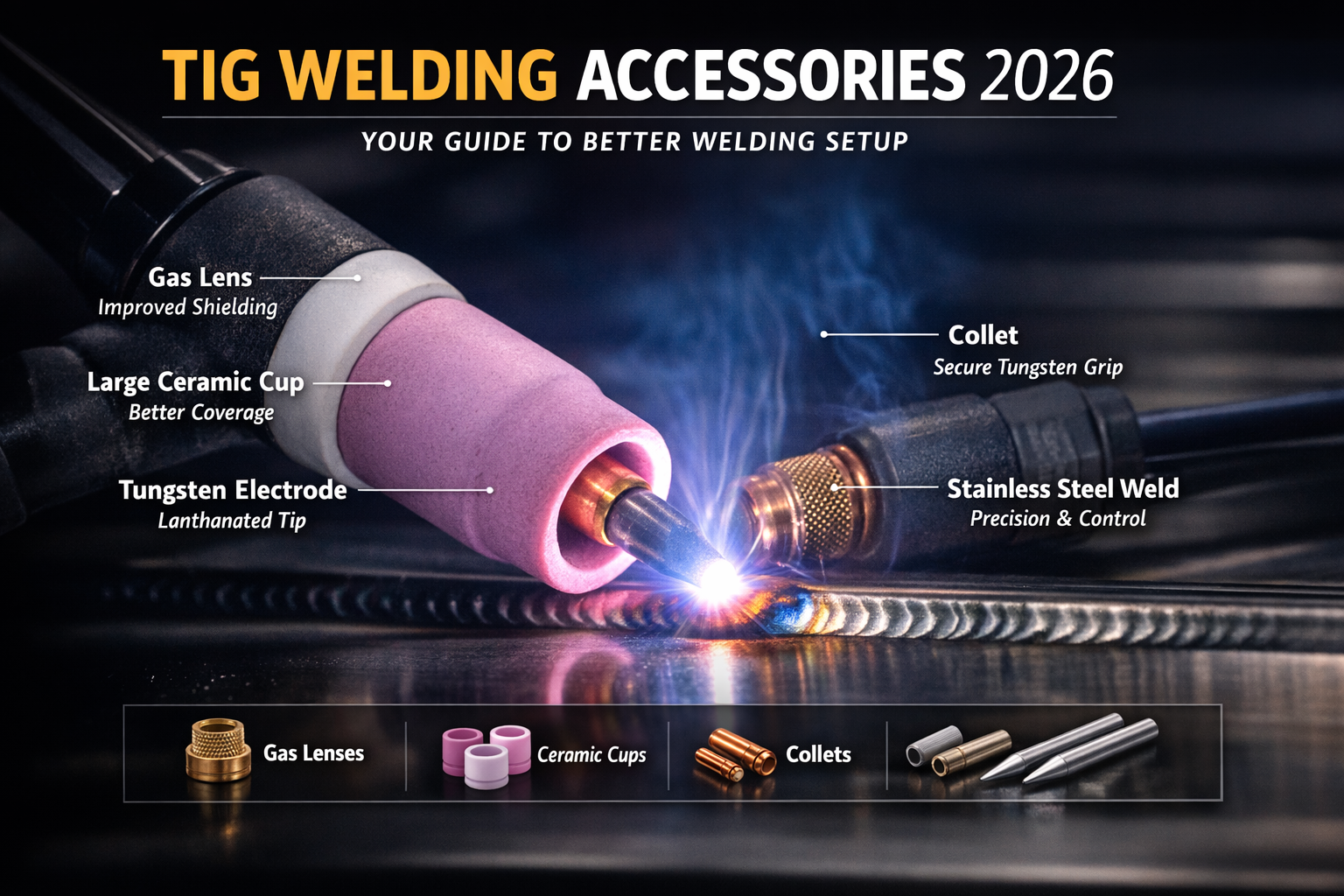
  • TIG Welding Accessories: Choosing the Right Setup for 2026

    TIG Welding Accessories: Choosing the Right Setup for 2026

    Selecting TIG welding accessories can make or break your results. The right setup improves arc stability, shielding coverage, and long-term torch reliabilityโ€”while the wrong parts waste time and money.

    Key Takeaways

    • Match collet, cup, and tungsten size to your torch series
    • Gas lens kits improve shielding and weld quality for most jobs
    • Verify compatibility for 17/18/26 vs. 9/20 series torches
    • Tungsten type and prep matter for steel, stainless, and aluminum
    • Accessory kits offer valueโ€”but confirm genuine components

    Performance & Use

    TIG welding demands tight arc control and consistent shielding gas coverage. Accessories such as gas lens kits and high-quality alumina cups help maintain a stable arc and reduce atmospheric contamination.

    Gas lenses straighten gas flow and allow greater tungsten stick-out without losing coverage. This is especially useful for stainless steel and critical welds where porosity is unacceptable.

    For aluminum, larger cups are common to improve shielding. Pure tungsten was historically used on AC aluminum, but many welders now use 2% lanthanated or other modern blends depending on machine settings. Always verify manufacturer recommendations for your specific power source.


    Durability & Build

    Accessory quality varies significantly. Genuine parts from manufacturers such as CK Worldwide and Weldcraft generally provide better fit and longer service life than low-cost generics.

    Inspect:

    • Cups for cracks or uneven glazing
    • Collets for proper tungsten grip
    • Threads for clean engagement

    Avoid mixing brands unless compatibility is confirmed. Poor fit leads to gas leaks and unstable arcs.


    Power / Specs

    AccessoryTypical RangeNotes
    Collet Size1/16″โ€“1/8″Must match tungsten diameter
    Cup Size#4โ€“#8 (standard), #12+ (large gas lens)Process dependent
    Gas LensStandard or LargeImproves shielding coverage
    Tungsten Type2% Thoriated, 2% Lanthanated, PureMatch material & polarity
    Torch Series17/18/26, 9/20Not interchangeable

    Unknown (Verify):

    • Exact kit contents
    • Part numbers
    • Included accessories
    • Country of origin
    • Warranty details

    Who Itโ€™s For

    Best for welders upgrading from a basic TIG setup, professionals seeking improved arc control, and anyone welding stainless or aluminum where shielding matters.

    Not necessary for shops running MIG or stick only.


    Quick FAQ

    Q: Can I use any collet with my torch?
    No. Torch series and tungsten size must match. 17/18/26 components do not fit 9/20 torches.

    Q: Do gas lens kits fit all torches?
    No. Confirm series and thread type before ordering.

    Q: What tungsten is recommended for stainless?
    2% lanthanated or 2% thoriated are common. Verify based on alloy and polarity.

    Q: Are generic kits reliable?
    Quality varies. Genuine parts are preferred for consistent fit and safety.

    Q: Does cup size affect weld quality?
    Yes. Larger cups improve shielding but require increased gas flow.

    Q: How do I confirm compatibility?
    Reference your torch manual or supplier documentation before purchase.


    Safety Notes

    • Wear ANSI Z87.1 safety glasses when grinding tungsten
    • Use a dedicated tungsten grinding wheel to prevent contamination
    • Provide proper fume extraction when welding stainless
    • Turn off power before changing torch components


Watch with Prime Video