Tag: TIG gloves

  • Welding Glove Heat Damage Inspection Guide: Burn-Through, Hard Leather, Seam Failure, and Liner Damage

    If welding gloves are stiff, cracked, burned through, oil-soaked, seam-split, shrunken, brittle, or thin at the palm and fingers, remove them from welding service. Heat-damaged gloves lose insulation, grip, dexterity, and electrical protection. The risk is not just a hot hand. Failed gloves can expose skin to spatter, slag, arc heat, sharp metal, hot workpieces, and shock hazards from damp or compromised insulation.

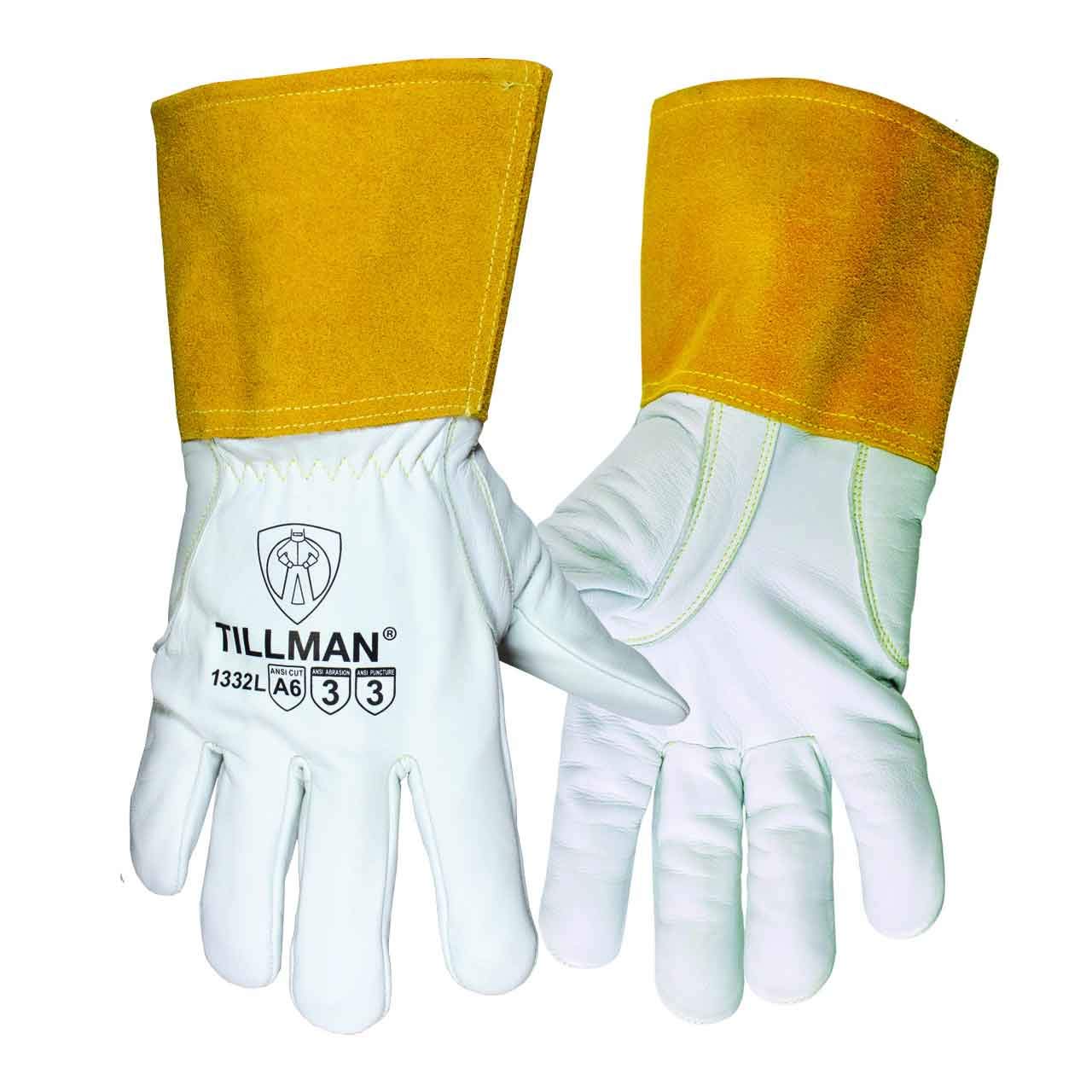
    The fast inspection is to check the palm, thumb crotch, fingertips, seams, cuff, liner, back of hand, and any reinforced heat zones before every shift and after high-exposure work. Do not tape burned gloves, keep using gloves with holes, or substitute thin TIG gloves for high-spatter stick, flux-core, gouging, or overhead MIG work. For related PPE checks, see welding safety equipment inspection checklist, Tillman gloves for MIG, TIG, or stick welding fit, and TIG welding fingertip heat shield use.

    Common Symptoms

    • Leather feels hard, glassy, curled, shrunken, or brittle.
    • Fingertips are thin, shiny, darkened, cracked, or burned through.
    • Thumb crotch is split from torch/gun handling and heat cycling.
    • Palm insulation feels compressed, lumpy, missing, or uneven.
    • Stitching is burned, frayed, broken, or pulled open.
    • Liner bunches up, melts, separates, tears, or exposes hot spots.
    • Cuff is scorched, shortened, curled, or no longer covers the wrist.
    • Glove smells burned, oily, solvent-contaminated, or chemical-soaked.
    • Spatter sticks to the leather instead of brushing off.
    • Hands feel heat faster than they did with the same process and settings.

    Likely Causes

    CauseWhat It DamagesQuick Check
    Excessive radiant heatLeather dries, shrinks, stiffens, and cracksCheck back of hand, palm, and cuff browning
    Molten spatter or slagBurn holes and seam failureInspect fingertips, cuff opening, and seam channels
    Wrong glove for processToo little insulation for heat loadCompare TIG, MIG, stick, flux-core, gouging, and cutting exposure
    Wet or damp glovesReduced insulation and shock riskFeel liner and cuff for moisture before welding
    Oil or solvent contaminationFire risk and leather breakdownSmell glove and check dark oily patches
    Dragging hot metalPalm thinning and burn-throughLook for smooth shiny wear on palm and fingers
    Repeated high-duty workCompressed insulation and hard leatherCompare heat feel to a new glove of same type
    Poor storageMoisture, cracking, chemical contaminationCheck gloves stored near coolant, oil, rain, or grinding dust

    Fast Inspection Sequence

    1. Let gloves cool before inspection. Do not inspect while hot enough to burn skin.
    2. Check both gloves, not only the torch hand. The filler hand, stinger hand, or workpiece hand may be more damaged.
    3. Flex every finger and the thumb crotch. Replace gloves that crack or expose thin leather when flexed.
    4. Press the fingertips and palm. Replace gloves with thin, hard, missing, or compressed insulation.
    5. Open the cuff and inspect the liner for tears, melting, loose material, or trapped slag.
    6. Pull lightly on seams. Replace gloves if stitching separates or heat-damaged thread breaks.
    7. Check for dampness, oil, grease, solvent, coolant, or anti-spatter contamination.
    8. Verify the glove type matches the process: TIG, MIG, stick, flux-core, plasma, gouging, or material handling.
    9. Remove failed gloves from the welding area so they are not reused by another operator.
    10. Document repeat failure patterns by process, station, amperage, position, and exposure.

    Visual Wear Indicators

    • Burn-through: Any hole in palm, finger, cuff, thumb, or back of hand is a replacement condition.
    • Heat hardening: Leather that stays stiff after flexing has lost protective value and dexterity.
    • Seam failure: Broken stitching lets heat and sparks enter the glove even if the leather still looks usable.
    • Liner failure: Torn, melted, bunched, or missing liners create direct hot spots.
    • Cuff failure: Shortened, curled, or split cuffs expose the wrist and sleeve overlap area.
    • Spatter craters: Deep pits and embedded metal show the leather has taken repeated molten-metal impact.
    • Oil saturation: Dark, wet, greasy patches increase fire risk and should not be welded through.
    • Shrinkage: Gloves that tighten after heat exposure can reduce circulation and force poor hand position.

    Test Procedures

    • Flex test: Bend each finger and the thumb crotch. Cracking, powdering, or splitting means the leather is heat-damaged.
    • Pinch test: Pinch fingertips and palm padding. Thin spots, hard spots, and uneven liner thickness are failure signs.
    • Seam pull test: Gently tension the seams. Replace gloves if thread breaks, pulls loose, or exposes liner.
    • Moisture test: Feel inside the cuff and liner. Damp gloves should not be used for welding.
    • Contamination test: Smell and wipe suspect areas. Oil, solvent, fuel, coolant, and chemical residue require removal from service.
    • Process-match test: Compare glove type to actual job. A glove that is fine for TIG may be wrong for overhead flux-core or carbon arc gouging.

    Root Cause Analysis

    Welding glove heat damage usually follows one of three paths. The first is normal wear from repeated heat cycles. Leather dries, stiffens, shrinks, and loses flexibility. The second is direct molten-metal damage from spatter, slag, grinding sparks, or hot workpieces. The third is wrong-PPE selection, where the glove does not have enough insulation, cuff coverage, leather thickness, or seam protection for the process.

    Gloves fail faster when operators use them as hot-metal handling pads, rest them on hot tables, store them wet, or expose them to oil and solvents. A glove can still look mostly intact and fail the job if the fingertips are thin, the liner is compressed, or the thumb seam is split. Inspection has to check structure, insulation, dryness, contamination, and process fit.

    Compatibility Notes

    Do not order welding gloves by size alone. Verify process, heat level, spatter level, welding position, required dexterity, cuff length, liner type, leather type, stitching, cut/puncture requirement, and site PPE standard. TIG gloves prioritize feel and dexterity. MIG gloves balance dexterity with insulation. Stick, flux-core, overhead welding, plasma cutting, and gouging usually require heavier heat and spatter protection.

    For Lincoln glove examples, catalog data separates gloves by TIG/flame, MIG/MAG, MMA, fabrication work, heavy welding applications, thermal insulation, molten-metal splash resistance, and European PPE standards. That does not make any glove universal. Treat glove fitment as Unknown (Verify) until the welding process, exposure level, and job hazard assessment are confirmed.

    What To Verify Before Ordering

    • Welding process: TIG, MIG, stick, flux-core, plasma, gouging, cutting, grinding, or hot handling.
    • Heat exposure: intermittent, production, overhead, high-amperage, preheated parts, or radiant heat.
    • Spatter and slag exposure level.
    • Required dexterity for filler rod, torch, gun, stinger, grinder, or workpiece handling.
    • Leather type: goatskin, cowhide, split leather, grain leather, elk, pigskin, or specialty aluminized back.
    • Liner type: unlined, fleece, cotton, foam, Kevlar, or thermal layer.
    • Cuff length and sleeve overlap.
    • Seam reinforcement and thread type.
    • Applicable ANSI, AWS, EN, CE, OSHA, or employer PPE requirements.
    • Contamination exposure from oil, solvent, coolant, water, paint, or coatings.

    Common Wrong-PPE Mistakes

    • Using thin TIG gloves for stick welding, overhead MIG, flux-core, or gouging.
    • Continuing to weld with stiff gloves because there is no visible hole yet.
    • Repairing burn-through with tape, wire, or scrap leather.
    • Using damp gloves after rain, sweat saturation, or wet storage.
    • Using oil-soaked gloves around sparks or molten metal.
    • Handling hot parts with welding gloves and then blaming the glove for early failure.
    • Ignoring cuff damage that exposes the wrist and sleeve gap.
    • Buying the same glove again without checking whether the process changed.

    Field Fix vs Proper Fix

    ProblemField FixProper Fix
    Minor dry dirtBrush off loose debrisStore clean and dry away from oil and moisture
    Small seam frayRemove from high-heat workReplace if seam strength or protection is compromised
    Burn-through holeStop using gloveReplace immediately
    Wet gloveLet dry fully away from direct flameUse dry spare gloves and fix storage problem
    Heat hardeningMove to non-welding handling only if allowedReplace with glove matched to heat exposure
    Oil contaminationRemove from welding areaReplace and correct contamination source

    Related Failure Paths

    • Hand burns: Thin leather, holes, compressed liners, or wrong glove type expose skin to heat and spatter.
    • Electrical shock risk: Wet or damaged gloves reduce insulation value.
    • Arc control problems: Stiff gloves reduce torch, filler rod, gun, or electrode control.
    • Sleeve burns: Short or curled cuffs leave a gap between glove and sleeve.
    • Fire risk: Oil-soaked gloves and jackets can ignite around sparks or molten metal.
    • Production downtime: Repeated glove failures usually mean wrong glove selection or unmanaged heat exposure.

    Safety Notes

    • Use dry welding gloves in good condition.
    • Do not weld with holes, burn-through, damp liners, oil contamination, or failed seams.
    • Wear safety glasses under the hood when grinding, chipping, or handling damaged gloves and slag.
    • Do not use synthetic general-purpose gloves for welding heat and spatter exposure.
    • Let hot metal cool or use proper tools instead of using gloves as hot pads.
    • Match glove type to welding process, position, amperage, and spatter exposure.
    • Follow the site hazard assessment, manufacturer instructions, OSHA requirements, and ANSI/AWS welding safety practices.

    Sources Checked

    Sources checked include welding PPE inspection guidance, AWS/ANSI welding safety references, glove selection guidance, Lincoln glove catalog data, and related Weld Support Parts PPE articles. Final glove replacement must be verified by process, heat level, spatter level, cuff coverage, liner type, leather type, glove size, site PPE rules, and documented hazard assessment.

  • Black Stallion GX5015 TIG/Mechanics Gloves Review & Buying Guide (L & XL)

    Black Stallion GX5015 TIG/Mechanics Gloves Review & Buying Guide (L & XL)

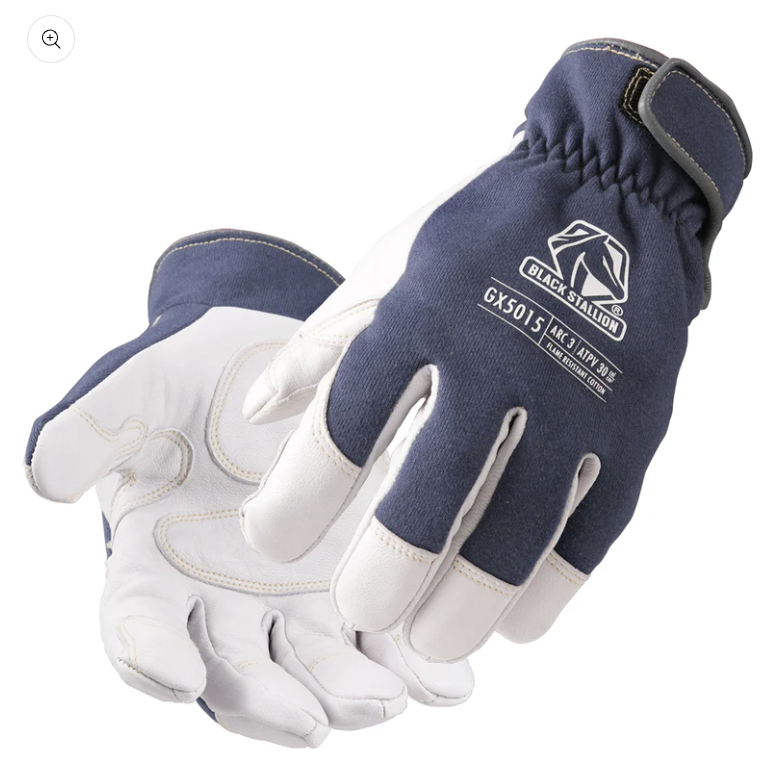
    The Black Stallion GX5015 series blends TIG-glove dexterity with mechanics-glove structure โ€” now with a verified ARC 3 rating and an ATPV of 30 cal/cmยฒ, making these one of the safest crossover TIG/mechanics gloves in their class.

    If you weld stainless, carbon steel, or aluminum and need a glove that handles fit-up, layout, and light fabrication while still meeting arc-flash PPE requirements, the GX5015 checks the boxes.

    Below is the full review of the Large (GX5015-L) and X-Large (GX5015-XL) models.


    Key Takeaways

    • ARC Rating: 3 โ€” suitable for tasks requiring arc-flash category 3 PPE.
    • ATPV 30 cal/cmยฒ โ€” strong thermal protection for incidental electrical arc exposure.
    • Goatskin palm delivers excellent feel for TIG tacks, fit-up, and fine-control tasks.
    • FR cotton back increases heat resistance vs. synthetic mechanics gloves.
    • True-to-size fit available in Large and X-Large.

    What These Gloves Solve

    Regular mechanics gloves can melt or shrink under heat. Basic TIG gloves feel great but lack structure and impact support.

    The GX5015 bridges that gap:

    • Better structure and durability than TIG gloves.
    • Better heat performance vs. standard mechanics gloves.
    • ARC 3 / ATPV-30 protection for shops that require electrical arc compliance.

    These are a strong choice for TIG-first welders who also handle tools, grinders, fabrication, and general shop work.


    Features & Materials

    Palm: Premium goatskin โ€” smooth, tactile, reinforced.
    Back: FR cotton with ARC 3 rating and ATPV 30 cal/cmยฒ performance.
    Cuff: Slip-on, quick-access style.
    Fit: Snug TIG-style feel with stable mechanics-glove support.
    Stitching: Kevlarยฎ thread.
    Use Cases: TIG welding, stainless/aluminum, layout, bench work, fit-up, tool handling, shop maintenance.


    Size Options Reviewed

    GX5015-L โ€” Large

    ArcWeld Store:
    Black Stallion GX5015L, Large ARC-Rated Goatskin & FR Cotton Tig & Mechanics Glove (1 Pair)

    “>
    Black Stallion GX5015L, Large ARC-Rated Goatskin & FR Cotton Tig & Mechanics Glove (1 Pair)

    Black Stallion GX5015L, Large ARC-Rated Goatskin & FR Cotton Tig & Mechanics Glove (1 Pair)

    $33.49

    Sold Out

    View Product

    Amazon (ASIN: B079J6JV95):

    Black Stallion (GX5015 ARC-Rated Mechanics Glove, Premium Grain Goatskin Leather Palm, Flame Resistant Cotton Back & Fleece Lining, Abrasion Resistant, Kevlar Stitching, Large, White/Navy
    • DURABLE GOATSKIN & FR PROTECTION: Made from premium goatskin on the palm and fingertips with a flame-resistant cotton back, these ARC-rated mechanics gloves protect hands from sparks, heat, and abrasion while maintaining dexterity for welding and industrial work.
    • FLAME RESISTANT PROPERTIES: Featuring a flame resistant cotton backing and fleece lining, these gloves offer breathable protection against sparks and light spatter – perfect for utilizing in light-duty welding or warm shop conditions without overheating.
    • KEVLAR-REINFORCED STITCHING: This MIG glove features both heat- and cut-resistant Kevlar thread to strengthen high-stress seams. Combined with goatskin reinforcements, it delivers superior durability, protection, and comfort for tough jobs.
    • ENHANCED GRIP & CONTROL: Designed with a seamless index finger and reinforced stress zones between the thumb and index, these gloves improve hand movement and tool control, helping you handle equipment with confidence during repetitive tasks.
    • QUALITY ADVANTAGE: While our commitment to innovation drives us forward, it is our dedication to quality that defines us. From concept, to development, to finished product, Black Stallion designs, engineers, and tests the smallest details of material and construction to ensure the highest quality standards are met.

    Last update on 2026-06-04 / Affiliate links / Images from Amazon Product Advertising API


    GX5015-XL โ€” X-Large

    ArcWeld Store:
    Black Stallion GX5015XL, X-Large ARC-Rated Goatskin & FR Cotton Tig & Mechanics Glove (1 Pair)

    “>
    Black Stallion GX5015XL, X-Large ARC-Rated Goatskin & FR Cotton Tig & Mechanics Glove (1 Pair)

    Black Stallion GX5015XL, X-Large ARC-Rated Goatskin & FR Cotton Tig & Mechanics Glove (1 Pair)

    $30.98

    In Stock

    View Product

    Amazon (ASIN: B079YYG1WX):

    Black Stallion (GX5015 ARC-Rated Mechanics Glove, Premium Grain Goatskin Leather Palm, Flame Resistant Cotton Back & Fleece Lining, Abrasion Resistant, Kevlar Stitching, X-Large, White/Navy
    • DURABLE GOATSKIN & FR PROTECTION: Made from premium goatskin on the palm and fingertips with a flame-resistant cotton back, these ARC-rated mechanics gloves protect hands from sparks, heat, and abrasion while maintaining dexterity for welding and industrial work.
    • FLAME RESISTANT PROPERTIES: Featuring a flame resistant cotton backing and fleece lining, these gloves offer breathable protection against sparks and light spatter – perfect for utilizing in light-duty welding or warm shop conditions without overheating.
    • KEVLAR-REINFORCED STITCHING: This MIG glove features both heat- and cut-resistant Kevlar thread to strengthen high-stress seams. Combined with goatskin reinforcements, it delivers superior durability, protection, and comfort for tough jobs.
    • ENHANCED GRIP & CONTROL: Designed with a seamless index finger and reinforced stress zones between the thumb and index, these gloves improve hand movement and tool control, helping you handle equipment with confidence during repetitive tasks.
    • QUALITY ADVANTAGE: While our commitment to innovation drives us forward, it is our dedication to quality that defines us. From concept, to development, to finished product, Black Stallion designs, engineers, and tests the smallest details of material and construction to ensure the highest quality standards are met.

    Last update on 2026-06-04 / Affiliate links / Images from Amazon Product Advertising API


    Comparison Table

    ModelKey SpecsBest For
    GX5015-L (Large)ARC 3, ATPV 30, goatskin palm, FR cotton back, Kevlar stitchingTIG, light fab, electrical-arc compliant shops
    GX5015-XL (X-Large)ARC 3, ATPV 30, same constructionBigger hands, daily TIG work, shop tasks

    Safety Notes

    • Rated ARC 3 / ATPV 30 cal/cmยฒ โ€” meets many shop PPE requirements; always confirm with your safety program.
    • Not a replacement for full high-heat welding gloves (stick/flux-core at high amps).
    • Use with ANSI Z87.1+ eye protection, FR clothing, sleeves, and proper shop PPE.

    FAQ

    Are these safe for electrical-arc hazards?
    Yes โ€” ARC 3 with ATPV 30 cal/cmยฒ. Always confirm with your facilityโ€™s PPE matrix.

    Good for high-heat TIG?
    Suitable for light-to-moderate TIG heat. For continuous high-amp (>150โ€“200 A), choose full leather TIG gloves.

    Do they last?
    Goatskin holds up better than many synthetic mechanics gloves. Heavy grinding will shorten life but general fab use is fine.

    Do they fit true?
    Yes โ€” Large fits most welders; XL is for bigger hands without being loose.


    Sources Checked

    • Black Stallion PPE documentation
    • Distributor spec sheets showing ARC 3 / ATPV 30
    • ArcWeld Store product listings
    • Amazon ASIN data (B079J6JV95 / B079YYG1WX)

Stream with Amazon Music