Washington Alloy 308L Welding Electrode 10 LB Stick Package – High Quality Stainless Steel Welding
$103.00 – 1/8" – 10 LBS.
In Stock
View Product
$103.00 – 1/8" – 10 LBS.
In Stock
View Product
Porosity in stick welding shows up as gas pockets in the weld metal. The usual causes are moisture, contamination, poor technique, or unstable shielding from the electrode. Use this checklist to isolate the cause before you change settings or replace parts.
If porosity keeps returning after cleaning and technique corrections, check whether the electrode matches the job. This draft includes one available product option from Weld Support Parts:
Product: Washington Alloy 308L Welding Electrode 10 LB Stick Package – High Quality Stainless Steel Welding
Use case: Stainless steel welding applications only as described by the product listing. Other compatibility details are Unknown (Verify).
Shopify handle: 308l-welding-electrode-10lb
Shortcode:
Elevate your welding projects with the Washington Alloy 308L-16 10lbs Welding Stick Electrode. Designed for stainless steel applications, this high-quality electrode ensures superior arc stability and a clean finish for every weld. Whether you're a professional welder or a DIY enthusiast, this product is a must-have in your welding toolkit. The 308L welding electrode is known for its excellent low carbon content,…
View at Arc Weld StoreNote: Confirm base material, procedure, polarity, and storage requirements before use.
It usually appears as small holes, pinholes, or worm-like voids in the weld bead or after grinding.
Yes. Moisture in the electrode, base metal, or surrounding environment is a common cause.
Not first. Check contamination, electrode condition, arc length, and ground quality before changing amperage.
Yes. A long arc increases exposure to air and can make porosity worse.
Start with electrode dryness, joint cleanliness, and arc length.
If porosity continues after these checks, stop and verify the procedure, consumable condition, and machine setup before production welding.
$87.78
In Stock
View Product
MIG porosity is gas trapped in the weld metal as it solidifies. It usually shows up as pinholes, worm tracks, or a rough weld surface. The main causes are shielding gas problems, contamination, incorrect gun setup, and poor technique.
If shielding gas is not reaching the arc, air will mix into the weld pool. That creates porosity. Common reasons include an empty cylinder, a closed valve, a leaking hose, loose fittings, or a damaged gun neck.
Stickout that is too long reduces shielding effectiveness and can make the arc unstable. Long stickout also increases electrical resistance and can change the way the wire melts.
Rust, oil, mill scale, paint, galvanizing residue, moisture, and cutting fluids can all cause porosity. Contamination vaporizes in the arc and gets trapped in the weld.
Condensation, wet storage, or damp wire can introduce hydrogen and other gases into the weld. This can create visible porosity or internal defects.
Too much angle or moving too fast can pull shielding gas away from the puddle. That leaves the weld exposed to the atmosphere.
Spatter, soot, and debris in the nozzle can disrupt gas coverage. A restricted nozzle can cause erratic shielding even when gas flow looks normal at the regulator.
Fans, open doors, shop airflow, and outdoor wind can blow shielding gas away from the weld zone. Gasless flux-cored wire can reduce this issue, but it does not solve contamination on the workpiece.
Look at the porosity pattern. Scattered pinholes often point to contamination or gas disturbance. Linear porosity can point to travel issues, nozzle problems, or gas coverage loss along the weld path.
Verify the cylinder is open, the regulator is set correctly, and the flowmeter is working. Inspect hoses, fittings, and the gun for leaks. Unknown (Verify): specific recommended flow rate depends on wire type, joint position, and shielding gas mix.
Remove spatter and buildup from the nozzle, diffuser, and tip. Make sure gas ports are not blocked. Replace worn parts if cleaning does not restore a clear gas path.
Keep wire stickout within the range recommended for your process and consumable. If porosity appears after a setup change, reduce stickout and re-test.
Remove oil, rust, paint, moisture, and heavy scale before welding. Clean beyond the weld zone so contamination does not get pulled into the arc.
If possible, block crossflow from fans or doors. For field work, reposition the setup or use wind protection that does not disturb the arc.
Use steady travel speed and maintain a consistent torch angle. Avoid weaving so wide that the shielding gas cannot cover the full puddle.
If you need a wire option for gasless MIG work, this product may be relevant for certain applications:
The Washington Alloy E71T-GS Gasless Mig Welding Wire is your go-to solution for all your welding needs. This 11 LB. spool, with a diameter of .045 inches, is engineered to deliver excellent results in various welding applications without the hassle of gas tanks. Ideal for both professionals and home users alike, this high-performance welding wire is designed to make your welding experience smoother and more effec…
View at Arc Weld StoreWashington Alloy E71T-GS .045 Gasless MIG Welding Wire 11 LB Spool for Easy Welding Tasks. Verify suitability for your material, thickness, polarity, and procedure before use.
Shielding gas loss or contamination is the most common cause. Start with gas delivery, nozzle condition, and airflow around the weld.
Yes. Rust, oil, paint, moisture, and mill scale can all create gas pockets in the weld.
Yes. Excessive stickout can reduce shielding gas effectiveness and destabilize the arc.
Not automatically. Gasless wire can help when wind makes gas shielding difficult, but dirty material, poor technique, and moisture can still cause defects.
If your TIG welds are coming out black, sooty, or “dirty,” you’re not alone—this is one of the most common early warning signs of shielding gas problems. It usually shows up mid-bead when everything seems set correctly. Here’s why it happens and how to fix it.
Black soot is typically a sign that your weld puddle (and/or hot tungsten) is seeing oxygen and contaminants because shielding gas coverage is breaking down. That can come from too little flow, turbulent flow, a leak, a blocked cup/screen, or drafts pulling the argon away.
On steel, poor shielding can leave soot and surface oxidation; on stainless, it can show up as heavy discoloration; on aluminum, it often stacks with porosity and “dirty” looking puddle behavior. The key point: argon has to form a stable envelope around the tungsten and puddle—when it doesn’t, contamination happens fast.
If you’re chasing shielding issues, don’t “test” by hovering the torch and blasting gas near your face. Keep your hood down and gloves on—hot tungsten and UV exposure are still hazards even during quick checks.
When soot shows up, experienced TIG welders don’t keep pushing the bead hoping it clears. They stop, regrind the tungsten, and do a fast gas-system sanity check: flow, leaks, cup/lens condition, and drafts. If they’re working with longer stickout or tight joints, they often move straight to a gas lens setup because it reduces sensitivity to small technique changes.
Intro
Your MIG welds are porous, and you can see the problem: the shielding gas isn’t covering the weld pool. The arc is exposed, hydrogen from the air contaminates the molten metal, and porosity results. The fix isn’t always a regulator adjustment—it’s often a worn or wrong nozzle. A damaged nozzle restricts gas flow and creates dead zones where the arc isn’t protected. This guide shows you how to diagnose and fix it in 5 minutes.
Key Takeaways
The Problem
A MIG nozzle is a copper tube that directs shielding gas around the arc. Over time, spatter welds itself to the nozzle, restricting the gas opening. When the orifice is blocked or worn, gas coverage becomes inconsistent.
What happens:
You’ll see:
Why It Matters
Porosity is a weld defect. In structural work, it can fail X-ray or ultrasonic inspection. In production, rework costs time and material. A $5 nozzle replacement prevents hours of grinding and rewelding. It also improves weld aesthetics and reduces spatter cleanup.
The Fix
Why This Product Solves It
The Miller Nozzle Replacement – N-A5800C AccuLock S Large Thread-On Nozzle, 5/8″ Orifice, Copper is a direct replacement for Miller AccuLock S guns. It’s made from high-quality copper, which conducts heat efficiently and resists spatter adhesion better than steel. The 5/8″ orifice is standard for most MIG work, providing optimal gas coverage. A pack of 10 ensures you always have replacements ready.
Product Link:
$205.55 – Pack of 10 In Stock
Miller Nozzle Replacement – N-A5800C AccuLock S Large Thread-On Nozzle, 5/8" Orifice, Copper
$205.55 – Pack of 10
In Stock
View ProductWhat to Check Before You Buy
Real-World Use
A pipeline crew was struggling with porosity on 3/8″ structural steel. They’d checked gas pressure (correct), wire feed (smooth), and base metal (clean). The nozzle had 6 months of spatter buildup—so thick it looked like a different part. After cleaning and replacing with a fresh nozzle, porosity disappeared. The old nozzle’s orifice had shrunk from 5/8″ to nearly 1/2″ due to spatter.
Common Mistakes
Safety Notes
Always follow the manufacturer’s instructions and your shop’s safety procedures. If you’re unsure about fitment or ratings, verify before you buy or install.
Related Reading

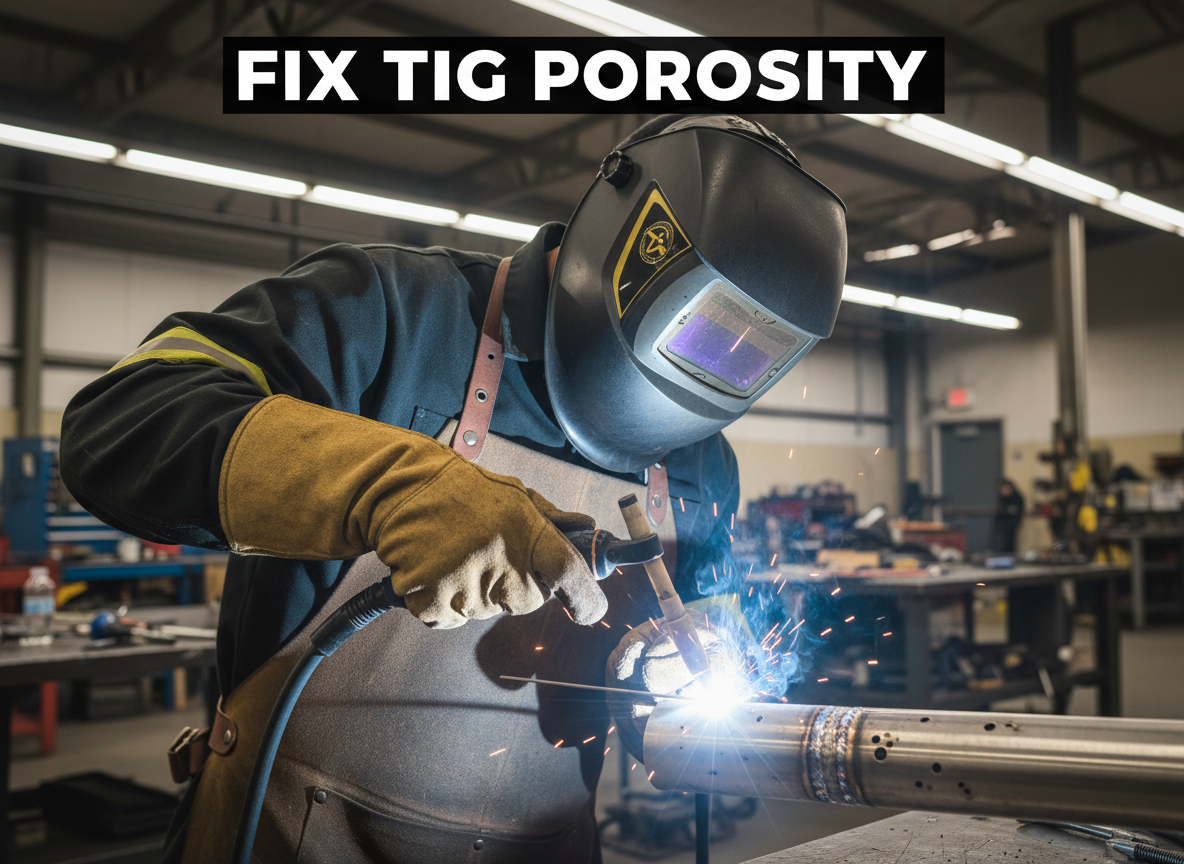
Porosity in TIG welds—those small gas pockets trapped in the bead—kills strength and fails inspections. The good news: most porosity is caused by three fixable issues: contaminated gas, weak shielding coverage, or dirty base metal. Fix these, and your welds clean up fast.
What you’ll see:
Likely causes (ranked by frequency):
Step 1: Check Gas Flow (Free)
Step 2: Inspect the Torch and Gas Lens (Free)
Step 3: Clean the Base Metal (Free)
Step 4: Test Arc Length and Technique (Free)
Step 5: Check Filler Wire and Tungsten (Low Cost)
1. Adjustment (Free)
2. Consumable Replacement (~$10–$30)
3. Gas Lens Collet Body Replacement (~$15–$25)
Why a gas lens collet body works: A gas lens is a small brass component inside the torch that organizes the shielding gas flow into a smooth, laminar stream. Over time, spatter and oxidation clog the lens, creating turbulence and weak coverage. Replacing it restores full shielding and eliminates porosity caused by weak gas coverage.
When to use it:
When NOT to use it:
What to check before buying:
Last update on 2026-06-26 / Affiliate links / Images from Amazon Product Advertising API
If you prefer a larger pack or different torch size, consider:
Q: What causes porosity in TIG welding? Porosity is caused by gas entrapment—usually from weak shielding (low gas flow, damaged gas lens, wind), contaminated base metal, or a dipped tungsten. Fix shielding and cleanliness first.
Q: How do I know if my gas lens is bad? Look inside the torch nozzle. If you see spatter buildup, cracks, or heavy discoloration, replace it. A clean lens should look bright and smooth.
Q: Can I fix porosity by adjusting amperage? No. Amperage doesn’t cause porosity—gas coverage and cleanliness do. Adjust gas flow, clean the base metal, and check the torch instead.
Q: How often should I replace my gas lens? Every 50–100 hours of welding, or whenever you see visible spatter or discoloration. Shops doing high-volume work replace them weekly.
Q: Will a new gas lens fix all my porosity? Only if the porosity is caused by weak shielding. If the base metal is dirty or gas flow is low, a new lens alone won’t fix it. Address all three: gas flow, cleanliness, and torch condition.
For more TIG troubleshooting and gear guidance, check out these related posts:
For more welding fixes and gear options, see our full resource page: https://blog.weldsupportparts.com/links/
Intro
Your TIG welds are starting to show porosity or inconsistent gas coverage. You’ve checked your argon flow, regulator pressure, and torch angle. Everything checks out—except the welds still look rough.
The problem might be hiding in plain sight: a cracked or worn gas lens cup.
A damaged gas lens cup disrupts shielding gas flow, allowing air to contaminate the weld pool. Even a hairline crack can cause porosity that ruins structural welds. Unlike contact tips, gas lens cups get less attention—but they’re just as critical.
Key Takeaways
The Problem
A gas lens cup (also called a ceramic cup or nozzle) sits at the end of your TIG torch and directs shielding gas around the weld pool. Over time, thermal cycling and spatter impact cause:
A cracked cup might look minor, but even a 1mm hairline fracture is enough to ruin a structural weld.
Why It Matters
Porosity from a bad gas lens cup is expensive:
A $5 replacement cup prevents all of this.
The Fix
Replace your gas lens cup as part of routine torch maintenance:
Total time: 3–5 minutes.
Why This Product Solves It
The CK TIG Gas Lens Collet Body (available in multiple sizes) is a precision replacement for standard TIG torches (#17, #18, #26). It includes the collet body and gas lens cup assembly, ensuring proper gas flow and consistent shielding.
Key benefits:
Replace every 100–200 hours of welding or immediately if you see porosity or discoloration.
What to Check Before You Buy
Real-World Use
A stainless steel fabrication shop doing heavy TIG work at 150–200 amps noticed porosity on every other weld. They replaced the gas lens cup and the porosity disappeared. The old cup had a hairline crack invisible to the naked eye. Now they replace cups every 150 hours as preventive maintenance.
Common Mistakes
Safety Notes
Always follow the manufacturer’s instructions and your shop’s safety procedures. If you’re unsure about fitment or ratings, verify before you buy or install.
Where to Buy
Available at ArcWeld.store (stock and shipping: Unknown – verify)
Intro
Your MIG welds are coming out porous, weak, or with inconsistent penetration. You’ve checked your gas flow, wire speed, and voltage—everything looks right. The culprit? A worn contact tip.
A degraded contact tip creates poor electrical contact with the wire, causing arc instability and incomplete fusion. This is one of the most overlooked failure points in MIG welding, and it’s costing you time and rework.
Key Takeaways
The Problem
A contact tip is a consumable that wears with every pass. As current flows through it to the wire, the tip gradually erodes and pits. When it gets too worn, it can’t maintain consistent electrical contact, causing:
Most shops don’t replace tips until they fail completely—by then, you’ve already scrapped parts.
Why It Matters
Worn contact tips don’t just make bad welds; they cost money:
A $5–$15 contact tip replacement takes 2 minutes and prevents all of this.
The Fix
Replace your contact tip as part of routine maintenance:
That’s it. Total time: under 2 minutes.
Why This Product Solves It
The Bernard AccuLock S Contact Tip is a direct replacement for Miller AccuLock S guns (MDX-100, MDX-250, and compatible systems). It maintains precise electrical contact with the wire, delivering stable arc and consistent penetration.
Key benefits:
Replace every 50–100 hours or when you notice spatter or porosity. Preventive replacement beats troubleshooting a failed tip mid-job.
What to Check Before You Buy
Real-World Use
A fabrication shop running steady MIG work replaces contact tips every 2–3 weeks. One worn tip caused 4 hours of rework on a structural assembly before they realized the problem. Now they replace tips every 50 hours as preventive maintenance. No more porosity, no more downtime.
Common Mistakes
Safety Notes
Always follow the manufacturer’s instructions and your shop’s safety procedures. If you’re unsure about fitment or ratings, verify before you buy or install.
Where to Buy
Available at ArcWeld.store (stock and shipping: Unknown – verify)