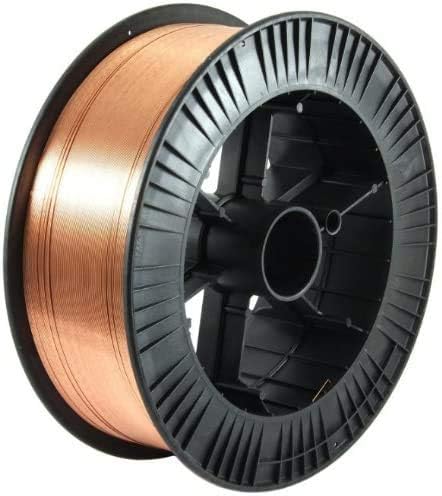
Tag: MIG welding wire

  • Washington Alloy 2 Lb. Spool Mig Welding Wire 308L Stainless Steel (.035 X 2lb.): Replacement Part Breakdown

    This guide covers the Washington Alloy 2 lb. spool MIG welding wire in 308L stainless steel, .035 diameter, as a replacement consumable for maintenance and fabrication work. The main question is not whether the wire exists on the shelf, but whether it is the right filler metal for the job, the feeder, and the base metal condition. For stainless work, selection errors usually show up as poor wetting, slag or soot issues, contamination, or welds that do not meet the service requirement.

    Product reference: Washington Alloy 2 Lb. Spool Mig Welding Wire 308L Stainless Steel (.035 X 2lb.) ASIN B081X4F6BV. Use the product page as the item reference only. Do not assume process approval, machine compatibility, or base-metal coverage without checking the actual welding procedure or weld requirement.

    Key Takeaways

    • 308L stainless MIG wire is a filler metal choice, not a universal stainless solution.
    • .035 wire size must match the feeder setup, drive rolls, liner, and contact tip condition.
    • Use it only when the weld requirement, shielding gas, and base metal call for 308L stainless filler.
    • Verify storage and handling first; stainless wire contamination can create avoidable defects.
    • If the base metal or procedure is unclear, stop and verify before welding.

    What this wire is used for

    308L stainless filler is commonly selected when joining compatible stainless materials. The โ€œLโ€ designation indicates low carbon, which is used to reduce the risk of sensitization in the weld zone. That does not mean it is interchangeable with every stainless grade or every joint. The correct choice depends on the base metal, service environment, corrosion requirement, and the approved welding procedure. If any of those inputs are unknown, treat the filler selection as Unknown (Verify).

    Check: confirm the base metal grade from drawings, tags, or material certs.
    Inspect: look for contamination, rust, carbon steel residue, oil, or chloride-bearing cleaners.
    Verify: confirm whether the job calls for 308L, 309L, or a different filler before loading the spool.

    Fit-up and machine support checks

    A 2 lb spool in .035 diameter may be correct for bench work, repair work, or light fabrication, but the feeder setup still matters. Do not assume the spool will run well just because it fits the hub. Check the drive rolls, liner, torch cable routing, contact tip size, and tension. If the wire birds-nests, hesitates, or feeds inconsistently, the issue is often mechanical rather than chemical.

    • Check: drive roll groove size against .035 wire.
    • Inspect: liner wear, debris, and sharp bends in the gun cable.
    • Verify: contact tip bore is correct for the wire size and not worn oversize.
    • Check: spool brake tension and feed pressure before changing settings.

    Troubleshooting support section

    If weld quality is inconsistent, isolate the problem in order: material, wire, shielding gas, feeder, then technique. Stainless MIG issues are often traced to poor surface preparation or the wrong gas setup, not the spool itself.

    Common symptoms and what to check

    • Poor bead wetting: Check base-metal cleanliness, joint fit-up, and whether the filler choice matches the job. Verify shielding gas setup.
    • Excessive spatter or soot: Inspect gas coverage, nozzle condition, and stickout. Verify the machine is configured for the process in use.
    • Wire feeding problems: Check liner, drive roll tension, and tip wear. Verify the spool is installed without side loading.
    • Discoloration or contamination: Inspect storage, handling, and whether stainless wire has been exposed to carbon steel dust or moisture.

    Product and parts considerations

    This is a consumable wire product, not a complete system. The spool is only one part of the welding chain. For support teams and buyers, the real replacement question is whether the feeder package, gun parts, and gas setup support stainless wire reliably.

    Before purchasing, confirm the following:

    • Wire diameter: .035
    • Material type: 308L stainless
    • Spool size: 2 lb
    • Machine feed capability for small stainless spools: Unknown (Verify)
    • Shielding gas requirement: Unknown (Verify)
    • Base metal compatibility for the job: Unknown (Verify)

    If any of those values do not match the welding instruction, do not force the part into service. A wire can be physically compatible with the feeder and still be wrong for the weld requirement.

    How to evaluate before you install the spool

    1. Check the label. Confirm the wire type, diameter, and spool weight before opening the package.
    2. Inspect the package. Look for damage, moisture exposure, or visible contamination.
    3. Verify the machine setup. Confirm drive rolls, liner, and tip size for .035 wire.
    4. Clean the work area. Keep stainless wire away from carbon steel grinding dust.
    5. Test feed. Run a short feed test before striking an arc.
    6. Verify weld result. Inspect bead appearance, fusion, and discoloration after the first test weld.

    Internal support references

    For related stainless wire selection guidance, see Best MIG Wire for Stainless Steel (ER308L vs ER309L). That article is a selection reference, not a procedure approval. For surface preparation support, see Stainless Steel Wire Wheel Brush for Welding Surface Prep.

    Related content on stainless welding also includes Best Flux Core Wire for Stainless Steel Welding. Use it only as a comparison point when evaluating process options.

    Safety notes

    • Use approved PPE for MIG welding, including eye, hand, and body protection.
    • Stainless welding can generate fumes that require adequate ventilation or local exhaust.
    • Keep stainless consumables away from carbon steel contamination.
    • Do not rely on general assumptions for process approvals, gas mix, or corrosion performance.
    • Follow the site weld procedure and supervisor instructions where applicable.

    FAQ

    Is this wire automatically correct for all stainless steel jobs?

    No. 308L is a specific stainless filler choice. Confirm the base metal and weld requirement before use. If the specification is not available, mark it as Unknown (Verify).

    Can I use .035 wire in any MIG machine?

    Not automatically. The machine must support the spool format, wire size, liner, drive rolls, and torch configuration. Verify the feeder package before purchase or installation.

    What should I check if the wire feeds poorly?

    Check the drive rolls, liner, contact tip, spool tension, and cable routing first. Feeding problems are often mechanical rather than caused by the wire alloy.

    Does 308L mean the wire is approved for my application?

    No. Alloy designation alone does not approve a weld. The final decision depends on the welding procedure, joint design, service environment, and base metal.

    Sources Checked

    • Amazon product reference for Washington Alloy 2 Lb. Spool Mig Welding Wire 308L Stainless Steel (.035 X 2lb.), ASIN B081X4F6BV
    • Weld Support Parts internal article: Best MIG Wire for Stainless Steel (ER308L vs ER309L)
    • Weld Support Parts internal article: Stainless Steel Wire Wheel Brush for Welding Surface Prep
    • Weld Support Parts internal article: Best Flux Core Wire for Stainless Steel Welding

    Bottom line: treat this spool as a targeted stainless filler metal option, not a universal replacement part. Confirm the job requirements, verify the feeder setup, and keep the wire clean from the moment it is opened.

    Matched Replacement Option

    No products found.

    Disclosure: As an Amazon Associate, Weld Support Parts may earn from qualifying purchases.

    Related Weld Support Guides

  • Washington Alloy 33 Lb. Spool Mig Welding Wire 80S-D2 Mild Steel (.045 X 33 lb.): Product Breakdown

    Washington Alloy 33 Lb. Spool Mig Welding Wire 80S-D2 Mild Steel (.045 X 33 lb.): Product Breakdown

    Product not found.
    “>Washington Alloy 33 Lb. Spool Mig Welding Wire 80S-D2 Mild Steel (.045 X 33 lb.)

    Washington Alloy 33 Lb. Spool Mig Welding Wire 80S-D2 Mild Steel (.045 X 33 lb.) is a solid MIG wire aimed at joining and buildup work on mild steel and some low alloy steels. The product description identifies it as 80S-D2 wire and notes use on problem steels, including material with higher sulfur content and certain carbon and low alloy Cr-Mo base metals. Treat that description as a starting point, not a procedure approval. Final suitability depends on the base metal, joint design, shielding gas, welding position, and code or customer requirements.

    If you are buying wire for production, maintenance, or repair work, the first question is not spool size. It is whether the filler metal matches the job. Check the work order, the base metal identification, and the required weld properties before loading the gun.

    Key Takeaways

    • 80S-D2 is described as a low alloy solid MIG wire for mild steel and select low alloy steels.
    • The product description points to higher strength output, stable arc, low spatter, and a flat bead profile.
    • .045 in. wire is a common production diameter, but machine settings and feed system capacity must be verified.
    • Do not assume this wire is approved for every carbon or Cr-Mo repair. Verify the procedure first.
    • When the job is critical, confirm weld procedure, shielding gas, and mechanical property targets before welding.

    What This Wire Is Intended For

    Based on the supplied product information, this wire is meant for general welding on mild steel and low alloy steels where a stronger deposit is desired than a basic mild steel filler may provide. The description also mentions good arc stability and low spatter. That can help in production work, but only if the machine, drive rolls, liner, and gas coverage are set correctly.

    Use the product page as the primary reference for the sellerโ€™s intended use:

    Washington Alloy 33 Lb. Spool Mig Welding Wire 80S-D2 Mild Steel (.045 X 33 lb.)

    Washington Alloy 33 Lb. Spool Mig Welding Wire 80S-D2 Mild Steel (.045 X 33 lb.)

    80S-D2 is a low alloy designed to produce high strengths on a wide range of base metals such as problem steels containing high sulfur to the basic carbon and low alloy Cr-Mo base metals. Its silicon level with molybdenum and manganese gives you excellent arc stability, low spatter, yielding a flat bead with excellent impact values and high ductile tensile strengths in the 100,000 psi range. 80S-D2 produces X-ray q…

    View at Arc Weld Store

    Where It May Fit in the Shop

    Typical decision points for a shop buyer or lead welder include maintenance welds, fabrication on mild steel structures, repair work on unknown or mixed-condition carbon steel, and selected low alloy applications. That said, โ€œproblem steelsโ€ is a broad label. It does not replace material verification. If the base metal is unknown, suspect, or heat-treated, inspect the job requirements before choosing wire.

    Troubleshooting and Support Checks

    When a weld does not look right, work through the system in order.

    1) Check the base metal

    • Check: Is the base metal mild steel, low alloy steel, or something else?
    • Inspect: Look for mill scale, rust, oil, galvanizing, coatings, or prior repairs.
    • Verify: Confirm the material spec or job ticket before assuming 80S-D2 is appropriate.

    2) Check the procedure

    • Check: Is there a WPS or repair instruction for this joint?
    • Inspect: Confirm joint type, thickness, position, and preheat requirements if any are listed.
    • Verify: Do not use this article or the product description as procedure approval. Unknown (Verify).

    3) Check the machine and feed path

    • Check: Is the feeder sized and set up for .045 wire?
    • Inspect: Look at drive roll type, liner condition, contact tip wear, and spool tension.
    • Verify: Wire feed must be smooth and consistent before production welding starts.

    4) Check shielding gas and coverage

    • Check: Is the gas type set for the wire and procedure being used?
    • Inspect: Leaks, flow restriction, loose fittings, damaged nozzles, and excessive stickout.
    • Verify: Gas selection is not provided in the source data. Unknown (Verify).

    5) Check weld appearance

    • Check: Does the bead show excessive spatter, undercut, porosity, or poor tie-in?
    • Inspect: Travel speed, voltage, wire feed speed, and gun angle.
    • Verify: If defects continue, stop and correct the root cause before continuing.

    Selection Notes for Buyers

    For purchasing, the main value of a wire like this is its application range and the expected deposit behavior. The supplied description claims strong mechanical performance in the 100,000 psi range and good impact values, but those statements should be treated as manufacturer or seller claims unless your own procedure, test report, or spec sheet confirms them. Unknown (Verify).

    Also verify spool handling details before ordering. The product title lists a 33 lb. spool and .045 diameter, but any other machine compatibility details are not provided here. Unknown (Verify).

    How to Use Internal Guidance Pages

    If you are still deciding between filler metals, use the Weld Support Parts blog library as a selection aid. These pages help compare wire families and identify likely candidates, but they are not guaranteed approvals for your job.

    Use these pages to compare wire families, then verify against the job spec. Selection aid only. Not procedure approval.

    Safety Notes

    • Ventilation matters. Fume control is required for MIG welding operations.
    • Clean the work area before welding to reduce spatter ignition and contaminant-related porosity.
    • Wear appropriate eye, hand, body, and hearing protection.
    • Do not weld on unknown plated, coated, or contaminated material without verifying the hazard.
    • Follow shop lockout, hot work, and fire watch rules where required.

    FAQ

    Is Washington Alloy 80S-D2 the same as a basic ER70S-6 wire?

    No. The product is identified as 80S-D2, which is a different filler metal designation from ER70S-6. Compare the job requirements before choosing between them.

    Can I use this wire on any mild steel repair?

    No. Base metal condition, thickness, joint design, shielding gas, and procedure requirements all matter. Verify the repair specification first.

    Does the product description guarantee high-strength welds?

    No. The description claims high-strength performance, but actual results depend on procedure, machine setup, and base metal. Unknown (Verify).

    Is .045 in. wire always the right size for production work?

    No. Wire diameter must match the welding machine, feeder, transfer mode, and part thickness. Verify the setup before use.

    Sources Checked

    • Washington Alloy 33 Lb. Spool Mig Welding Wire 80S-D2 Mild Steel (.045 X 33 lb.) product page:
      Product not found.
    • Weld Support Parts internal article: Blue Demon ER70S-6 Mild Steel MIG Welding Wire (ER70S-6)
    • Weld Support Parts internal article: E70S-6 Solid MIG Wire vs E71T-1 Flux Core Wire
    • Weld Support Parts internal article: Best MIG Wire for Stainless Steel (ER308L vs ER309L)

    Related Weld Support Guides

  • Washington Alloy 2 Lb. Spool Mig Welding Wire 308L Stainless Steel (.030 X 2lb.): Replacement Part Breakdown

    No products found.

    Washington Alloy 2 Lb. Spool Mig Welding Wire 308L Stainless Steel (.030 X 2lb.) is a stainless MIG wire entry that buyers often evaluate as a replacement consumable for light-duty stainless work. For maintenance buyers and welding support teams, the main job is not just identifying the wire by name. It is confirming whether the wire diameter, stainless grade, spool size, and feeder setup match the application before the job starts.

    This breakdown focuses on practical checks. It does not assume machine settings, base metal compatibility, or certification status beyond what is provided in the product title and ASIN registry reference. Where details are not confirmed, they are marked Unknown (Verify).

    Key Takeaways

    • This is a stainless MIG welding wire identified as 308L in .030 in. diameter and 2 lb. spool form.
    • The ASIN provided is B081X76HSY. Use the allowed product listing reference for purchase verification.
    • Compatibility depends on feeder drive setup, liner condition, contact tip size, shielding gas, and job requirements. Verify all of these before loading wire.
    • Do not assume the wire is correct for all stainless grades or all transfer modes. Verify the base metal and procedure first.

    Product and Parts Breakdown

    The product name indicates three important points: wire type, wire size, and spool weight. That is the first level of verification for a replacement consumable.

    • Wire type: Stainless steel MIG wire, 308L designation.
    • Wire diameter: .030 in. This is commonly written as 0.030 in. Verify the machineโ€™s drive rolls and contact tip size before use.
    • Spool weight: 2 lb. Verify whether your wire feeder accepts this spool format without adapters or additional spindle hardware.
    • Brand/product family: Washington Alloy, per the provided product name.
    • ASIN: B081X76HSY.

    If your maintenance team is replacing a depleted wire package, check the feeder path first. A stainless wire can feed poorly if the liner is worn, the tip is undersized, or the drive roll tension is too high. A bad feed path often gets mistaken for a bad spool.

    Inspect: drive rolls, inlet guide, liner, gun cable routing, and contact tip condition. Verify: the wire path is clean and sized for .030 in. wire before loading the new spool.

    Fitment and Use Checks

    For buyers, the important question is not only โ€œis it stainless wire?โ€ but โ€œwill it feed and perform in this setup?โ€ Start with the machine configuration and work outward.

    1. Check wire diameter. Confirm the machine is set up for .030 in. wire. If the feeder is currently configured for .035 in. or another size, change the tip, drive roll groove, and related hardware as required.
    2. Inspect drive rolls. Stainless wire usually needs consistent feed pressure without deformation. Too much tension can flatten the wire and increase birdnest risk.
    3. Verify liner condition. A contaminated or worn liner can create unstable feed and arc variation. Replace or clean only according to the equipment manual.
    4. Check spool fit. The spool is 2 lb. Verify spindle size, brake drag, and hub retention. Unknown (Verify): whether your specific feeder needs an adapter.
    5. Confirm shielding gas. The correct gas mix depends on the procedure and base metal. Unknown (Verify): gas specification for this exact application.

    When a stainless wire does not run correctly, do not jump to voltage changes first. Inspect the feed path, then the contact tip, then the liner. Most early feed complaints are mechanical, not electrical.

    Troubleshooting and Support

    Use this sequence when a new spool does not perform as expected.

    Issue: Wire hesitates or feeds inconsistently

    • Check: spool rotation on the spindle.
    • Inspect: drive roll slip, liner blockage, and gun cable kinks.
    • Verify: the contact tip is .030 in. and not worn oversize.

    If the spool over-runs when feeding stops, reduce brake drag carefully. If the wire birdnests, reduce drive pressure and confirm the liner path is smooth.

    Issue: Arc is unstable or harsh

    • Check: polarity and machine setup against the procedure.
    • Inspect: tip wear, stickout consistency, and gun consumable cleanliness.
    • Verify: the wire surface is clean and dry before loading.

    Stainless wire can show problems quickly if contamination is present. Keep the spool sealed until needed and do not handle the wire with oily gloves.

    Issue: Excess spatter or poor bead appearance

    • Check: shielding gas flow and nozzle condition.
    • Inspect: nozzle buildup, tip spatter, and workpiece contamination.
    • Verify: base metal preparation is adequate for stainless work.

    For surface prep guidance, see the related article on Stainless Steel Wire Wheel Brush for Welding Surface Prep: 8mm Rotary Drill Attachment.

    Related Stainless Wire Guidance

    If your team is comparing stainless wire options, review the article on Best MIG Wire for Stainless Steel (ER308L vs ER309L). It helps separate selection logic from brand preference. That matters when the replacement part must match the job, not just the box label.

    For broader stainless process planning, the article on Best Flux Core Wire for Stainless Steel Welding can help clarify when flux-core and solid wire are being confused in procurement.

    For a different Washington Alloy spool format, see Aluminum ER 5554 3/64โ€ X 5lb. MIG Welding Wire Spool By Washington Alloy. It is not the same product, but it is useful as a comparison point for spool size and inventory handling.

    Safety Notes

    • Wear eye protection when loading wire and trimming the leader end.
    • Keep hands clear of the drive rolls and wire path during feed tests.
    • Do not use damaged spools, crushed packaging, or visibly contaminated wire.
    • Follow the welding procedure, machine manual, and site safety rules for stainless welding.
    • Unknown (Verify): exact consumable disposal and storage requirements for your facility.

    FAQ

    Is this wire confirmed for every stainless job?

    No. The product title identifies 308L stainless MIG wire, but job compatibility still depends on the base metal, procedure, shielding gas, and machine setup. Verify before use.

    Will .030 in. wire feed through any MIG gun?

    No. The gun must be set up for .030 in. wire with the correct contact tip, liner condition, and drive roll groove. Verify the feeder hardware first.

    Can a 2 lb. spool fit any wire feeder?

    Not automatically. Spindle and hub fit vary by feeder design. Unknown (Verify): adapter requirement for your machine.

    What is the best way to avoid feeding problems?

    Inspect the liner, drive rolls, contact tip, and spool brake before welding. Clean feed paths and correct sizing prevent most issues.

    Sources Checked

    • Provided product reference: Washington Alloy 2 Lb. Spool Mig Welding Wire 308L Stainless Steel (.030 X 2lb.)
    • Provided ASIN registry reference: B081X76HSY
    • Allowed internal links on stainless wire selection, surface prep, and related Washington Alloy spool content

    For purchase verification, use the allowed product reference associated with ASIN B081X76HSY. Do not assume fit or procedure settings until the feeder, consumables, and job specification are verified.

    Matched Replacement Option

    No products found.

    Disclosure: As an Amazon Associate, Weld Support Parts may earn from qualifying purchases.

    Related Weld Support Guides

  • Washington Alloy THF-700HT Hard-Face MIG Wire Review (2025): Built for Wear Resistance

    Washington Alloy THF-700HT Hard-Face MIG Wire Review (2025): Built for Wear Resistance

    Intro
    Hard-facing wire doesnโ€™t just join metal โ€” it rebuilds it. Washington Alloyโ€™s THF-700HT flux-cored MIG wire is engineered for abrasion resistance and metal recovery in industrial repair work. From loader buckets to crusher parts, this wire keeps production moving where standard filler metals fail.


    Key Takeaways

    • Type: Flux-cored hard-facing wire (gas-shielded).
    • Composition: Iron-based alloy with chromium and carbon for wear protection.
    • Diameter / Spool: .045 in (1.1 mm) ร— 33 lb (15 kg).
    • Hardness: ~55โ€“60 HRC after cooling โ€” ideal for metal-to-metal wear.
    • Applications: Earth-moving equipment, agricultural blades, crusher rolls, and heavy fabrication repair.

    Why Use Hard-Face Wire

    THF-700HT is designed for severe abrasion under moderate impact. The self-shielded flux core allows outdoor repair without external shielding gas, making it a reliable choice for field maintenance. Operators report a smooth arc, good slag release, and minimal spatter โ€” critical when youโ€™re rebuilding high-value components on tight downtime.


    Performance and Best Uses

    • Excellent metal recovery: high deposition rate and dense overlay.
    • Good for carbon or low-alloy base metals.
    • One-pass or multi-layer capable: each layer retains hardness after cooling.
    • Shielding gas required: 100% Co2 or 75/25 Argon/Co2, and run on DC-electrode positive polarity.

    Comparison Table

    ModelKey SpecsBest ForArcWeld StoreAmazon
    Washington Alloy THF-700HT-173.045 in (1.1 mm) ร— 33 lb โ€ข Flux-Cored โ€ข Hardness 55โ€“60 HRC โ€ข DC+Rebuilding worn parts โ€ข Outdoor repairs โ€ข Earth-moving & crusher components Washington Alloy THF-700HT-173  Hard Face Flux-Cored Mig Wire .045 x 33 Lb. Spool “>View at Arc Weld StoreAmazon Listing

    Safety Notes

    Follow AWS A5.21 and manufacturer recommendations for fume extraction and ventilation. Use appropriate PPE: welding helmet (ANSI Z87.1), FR gloves, and sleeves. Hard-facing fumes may contain chromium and manganese โ€” maintain air quality per OSHA 1910.252 standards.


    FAQ

    Q: Can this wire run on a 200 A MIG machine?
    A: Yes. It performs best between 180โ€“250 A with 20โ€“25 V, depending on feed speed.

    Q: Does it need a shielding gas?
    A: Yes. THF-700HT is gas-shielded flux-cored wire, use 100% CO2 or 75% Argon / 25% CO2

    Q: Can I machine the overlay afterward?
    A: Limited โ€” the deposit is very hard. Use grinding rather than cutting tools.

    Q: What base metals work best?
    A: Mild or low-alloy steels โ€” avoid high-carbon or hardened substrates without preheat.


    Where to Buy
    Washington Alloy THF-700HT-173  Hard Face Flux-Cored Mig Wire .045 x 33 Lb. Spool

    “>
    Washington Alloy THF-700HT-173  Hard Face Flux-Cored Mig Wire .045 x 33 Lb. Spool

    Washington Alloy THF-700HT-173 Hard Face Flux-Cored Mig Wire .045 x 33 Lb. Spool

    $306.09

    In Stock

    View Product


    If unavailable, there is a 10# version as well at:

    No products found.

    Disclosure: we may earn a small commission at no extra cost to you.)

  • Read with Kindle Unlimited