Tag: metal removal

  • Carbon Arc Gouging Electrode Sticking Causes

    Carbon Arc Gouging Electrode Sticking Causes

    A carbon arc gouging electrode that sticks to the workpiece usually indicates low amperage, poor air supply, incorrect polarity, worn electrode setup, contaminated base metal, or improper torch angle. Gouging systems rely on enough current and compressed air volume to maintain a stable arc while blowing molten metal away from the carbon electrode. When either condition fails, the electrode can freeze into the cut or drag heavily across the work surface.

    Common Symptoms

    • Carbon rod freezes to the workpiece.
    • Arc extinguishes repeatedly during gouging.
    • Heavy sparking without proper metal removal.
    • Electrode overheats or burns unevenly.
    • Excessive carbon transfer into the base metal.
    • Gouge becomes shallow, erratic, or rough.

    Likely Causes

    • Amperage too low: Insufficient current prevents stable carbon arc formation.
    • Inadequate compressed air: Low PSI or restricted airflow fails to clear molten metal away from the arc.
    • Incorrect polarity: Most carbon arc gouging setups use DCEP for stable performance and carbon consumption control.
    • Poor work clamp connection: Weak grounding creates unstable arc transfer and sticking.
    • Excessive electrode extension: Long stickout overheats the carbon and weakens arc stability.
    • Improper torch angle: Incorrect travel angle can trap molten metal beneath the carbon rod.

    Inspection Steps

    1. Verify compressed air pressure and hose condition.
    2. Inspect torch air ports for slag blockage or debris.
    3. Check polarity and output amperage settings.
    4. Inspect the work clamp connection on clean metal.
    5. Verify electrode size matches machine output capacity.
    6. Inspect the torch head and cable for overheating damage.

    Compatibility Notes

    • Small inverter welders may not provide enough output for larger carbon electrodes.
    • Air compressor recovery rate matters as much as static PSI.
    • Torch cable size must support sustained gouging current.
    • Incorrect electrode diameter can overload smaller machines.

    Field Fix vs Proper Fix

    Field fix: Increase amperage slightly, shorten stickout, improve grounding, and confirm adequate airflow. Proper fix: Match the electrode diameter to the machine output, repair restricted air systems, replace damaged torch components, and verify power source duty cycle capability.

    Ignored Failure Consequences

    Repeated sticking overheats gouging torches, damages carbon holders, contaminates weld prep surfaces with carbon deposits, and can overload power source components during heavy industrial use.

    Safety Notes

    Carbon arc gouging produces intense arc flash, molten metal spray, noise, and heavy fume generation. Use full face and body protection, hearing protection, and proper fume extraction. Inspect compressed air hoses regularly for damage before operation.

    Sources Checked

    • Lincoln Electric equipment and gouging accessory catalog references
    • Lincoln accessories catalog
    • Uploaded welding equipment catalogs and safety references
  • Carbon Arc Gouging vs. Hypertherm Plasma Gouging: Whatโ€™s the Better Choice?

    Carbon Arc Gouging vs. Hypertherm Plasma Gouging: Whatโ€™s the Better Choice?

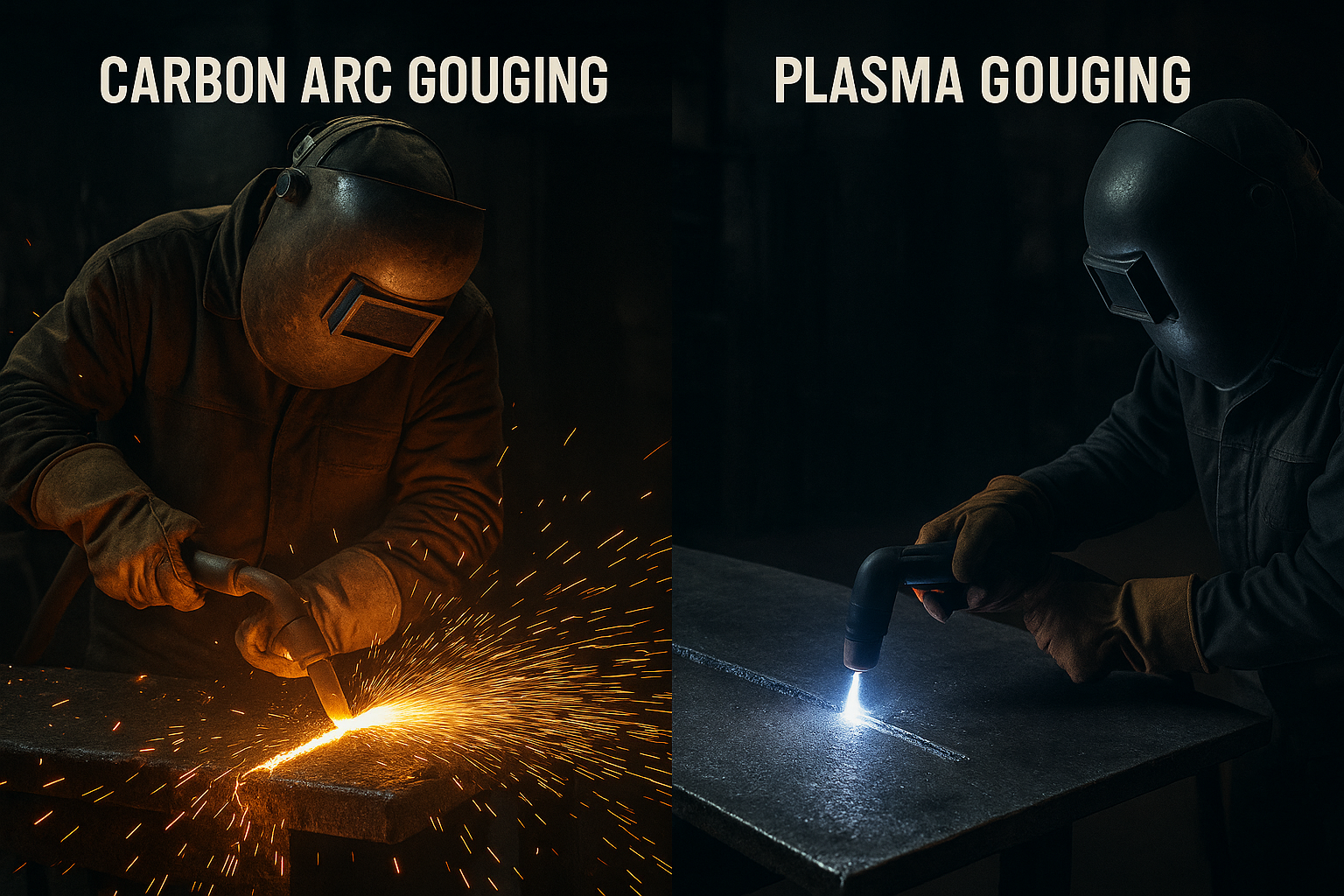
    Carbon arc gouging and plasma gouging both remove metal fastโ€”but they serve different jobs, budgets, and shop environments. This guide breaks down how each process works, when to use one over the other, and what to expect for performance, cost, and safety.


    Key Takeaways

    • Carbon arc gouging is cheaper to operate and works anywhere you have adequate air and amperage.
    • Plasma gouging (Hypertherm) delivers cleaner, more precise results with less post-grinding.
    • Plasma gouging has higher equipment cost but faster learning curve and less mess.
    • Carbon arc is loud, dirty, and requires high current; plasma is cleaner but more expensive to maintain.
    • For production shops and precision repair work, plasma wins. For heavy removal at lowest cost, carbon arc is still king.

    Where to Buy

    Arc Weld Store โ€“ Recommended:
    Carbon arc torches, gouging carbons, and air systems:
    https://www.arcweld.store/collections/esab-carbon-arc-slice-torch


    How Each Process Works

    Carbon Arc Gouging (CAC-A)

    Carbon arc gouging uses a graphite/carbon electrode to melt the base metal with high amperage while compressed air blows the molten metal away.

    Typical Specs (Manufacturer Ranges, AWS C5.3):

    • Current: 300โ€“1200 A depending on electrode size
    • Voltage: 35โ€“55 V
    • Air Pressure: ~80โ€“100 psi
    • Air Flow: ~20 cfm minimum
    • Electrode Types: DC+, copper-coated carbons
    • Noise: 110โ€“125 dB (hearing protection required)

    Strengths

    • Lowest equipment cost
    • Removes large volumes of metal quickly
    • Works indoors/outdoors, even in dirty field conditions
    • Repair shops & fab shops already wired for high amps

    Weak Points

    • Extremely loud
    • Heavy spatter and carbon dust
    • Large heat-affected zone
    • More grinding required after gouging

    Hypertherm Plasma Gouging

    Plasma gouging uses a constricted plasma arc to heat and remove metal with very controlled airflow. Hypertherm systems (Powermax series) are the industry standard.

    Typical Specs (Hypertherm Powermax):

    • Output: 45โ€“125 A depending on system
    • Gouge Depth: Light to medium removal
    • Air Pressure: ~90โ€“120 psi (per model spec sheet)
    • Duty Cycle: Model-dependent; most 60โ€“100% at rated output
    • Noise: Lower than carbon arc; still requires hearing protection

    Strengths

    • Very controlled and predictable gouge
    • Reduced post-grinding
    • Less carbon contamination
    • Quieter and cleaner than CAC-A
    • Works extremely well on stainless and aluminum

    Weak Points

    • Higher equipment cost
    • Consumables are more expensive
    • Not ideal for deep, aggressive removal
    • Requires dry, clean air supply

    Which One Should You Use?

    If you need maximum metal removal at lowest cost โ†’ Choose Carbon Arc Gouging

    Great for:

    • Heavy plate bevels
    • Removing welds on thick structural steel
    • Field repair
    • Shops already running 600โ€“1000 A power sources

    If you need cleaner, controlled gouges with minimal cleanup โ†’ Choose Hypertherm Plasma Gouging

    Great for:

    • Stainless & aluminum work
    • Pressure vessel repairs
    • Precision removal (cracks, isolated welds)
    • Indoor fabrication environments
    • Operators needing fast training curve

    Comparison Table

    Model/ProcessKey SpecsBest For
    CAC-A Carbon Arc Torch (Generic Industrial)300โ€“1200 A, 80โ€“100 psiHeavy gouging, lowest cost
    Hypertherm Powermax 65/85 Gouging65โ€“85 A plasma gouging, precise removalClean, controlled gouging

    Practical Considerations & Setup

    Air System Requirements

    Both processes require dry, steady airflow. Plasma is more sensitiveโ€”wet air destroys consumables.

    • Install a dryer or desiccant if plasma gouging.
    • Carbon arc tolerates โ€œshop airโ€ but still benefits from dryness.

    Power Requirements

    • Carbon arc requires sizable 3-phase machines or engine drives.
    • Plasma gouging can run on standard Hypertherm Powermax units (45โ€“125 A).

    Skill Level

    • Carbon arc demands better hand control to avoid digging.
    • Plasma gouging is easier to learn; the arc is more stable and directional.

    Safety Notes

    • Use ANSI Z87.1-rated eye protection (shade per AWS F2.2 recommendationsโ€”typically shade 10โ€“12 for CAC-A, 8โ€“10 for plasma).
    • Wear full PPE, flame-resistant clothing, and hearing protection (both processes exceed 100 dB).
    • Ensure adequate ventilation; carbon arc creates carbon dust and fumes.
    • Follow manufacturer guidelines for electrode size, air pressure, and duty cycle (Hypertherm, AWS C5.3 for CAC-A).

    FAQ

    Is plasma gouging as fast as carbon arc gouging?
    No. Plasma is cleaner and more controlled, but CAC-A removes metal significantly faster.

    Is carbon arc gouging bad for stainless?
    It can leave carbon contamination. Plasma is preferred for stainless/aluminum.

    Can you gouge outdoors with plasma?
    Yes, but wind can disrupt arc stability more than CAC-A.

    Does Hypertherm sell dedicated gouging consumables?
    Yesโ€”consult the Hypertherm Powermax series gouging nozzle and shield charts.


    Sources Checked

    • Hypertherm Powermax 45/65/85/105 Spec Sheets
    • AWS C5.3: Recommended Practices for Air Carbon Arc Cutting and Gouging
    • Manufacturer data for carbon electrodes and torches

    Where to Buy
    Arc Weld Store:

    https://www.arcweld.store/collections/esab-carbon-arc-slice-torch

Try Amazon Prime Free