Tag: Magnum PRO

  • Lincoln Electric KP2742-1-38R, 3/8″ Bore Magnum PRO 1/8″ Recessed Nozzle: Product Breakdown

    Lincoln Electric KP2742-1-38R, 3/8″ Bore Magnum PRO 1/8″ Recessed Nozzle: Product Breakdown

    Product not found.
    “>Lincoln Electric KP2742-1-38R, 3/8" Bore Magnum PRO 1/8" Recessed Nozzle

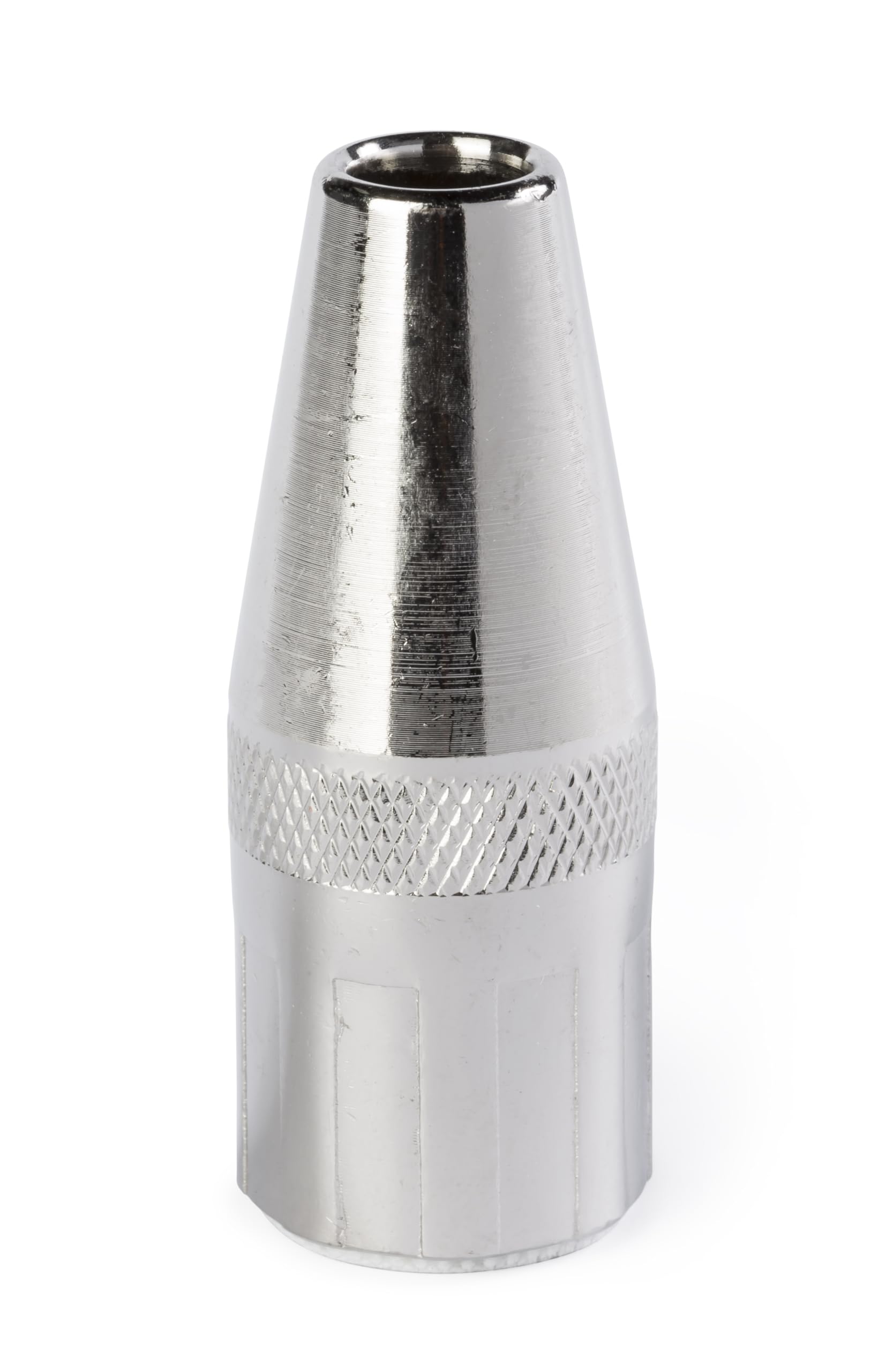
    The Lincoln Electric KP2742-1-38R, 3/8" Bore Magnum PRO 1/8" Recessed Nozzle is a front-end MIG consumable used to shape shielding gas coverage at the weld joint while keeping the nozzle profile more protected than a flush design. In shop and field work, that matters when the gun is pushed into tight joints, around fixtures, or into higher-spatter conditions where the front end takes frequent abuse.

    This part is not a universal fix for gas coverage problems. It is a nozzle with a specific recess geometry that may help in certain applications, but it still has to be matched to the gun front end, contact tip setup, and welding procedure. If those variables are off, the nozzle will not correct them.

    Key Takeaways

    • Recessed nozzles are used to protect the front end and influence shielding gas coverage.
    • This product is listed as a Magnum PRO recessed gas nozzle with a 1/8 in recess and 3/8 in bore.
    • Do not assume compatibility beyond the listed product family. Verify gun model, front-end stack-up, and consumable series before ordering.
    • Use it as part of a controlled setup: contact tip stickout, nozzle condition, gas flow, and work angle still matter.
    • If the weld is unstable, inspect the whole front end before replacing consumables repeatedly.

    What This Nozzle Is Meant To Do

    A recessed nozzle places the nozzle face back from the front edge of the contact tip area. That geometry can help in tighter access and can reduce direct impact from spatter or collision. In practice, the goal is usually to balance shielding gas coverage with physical protection of the consumable stack.

    For maintenance buyers and weld support teams, the main question is not whether recessed nozzles are generally useful. The question is whether this specific nozzle profile fits the gun setup and the work being done. That needs verification.

    Product/Parts Section

    Product listed: Lincoln Electric KP2742-1-38R, 3/8" Bore Magnum PRO 1/8" Recessed Nozzle

    Type: Gas nozzle / front-end consumable

    Listed recess: 1/8 in

    Listed bore: 3/8 in

    Compatibility: Unknown (Verify). Confirm against the exact Magnum PRO gun and front-end consumable system before use.

    Best-fit use cases: Tight access, spatter-prone work, and applications where nozzle protection is a priority. Final suitability depends on the procedure and gun setup.

    Use the provided product page as the primary reference for the listing:

    Product not found.

    “>Lincoln Electric KP2742-1-38R product page

    How To Inspect Before Installation

    Before putting any recessed nozzle into service, check the front-end stack as a unit.

    • Inspect the nozzle bore. Look for spatter buildup, oval wear, cracks, or distortion.
    • Check the recess depth and seating. Confirm the nozzle installs fully and seats as intended on the matching front end.
    • Verify the contact tip protrusion. The tip position affects arc access and shielding behavior. Do not assume the nozzle alone will control it.
    • Inspect insulators and retaining parts. Heat damage or carbon tracking can create intermittent shielding problems.
    • Check the diffuser and gun neck. If these are damaged, the nozzle will not perform consistently.

    If the old nozzle failed due to repeated arc strikes or heavy spatter, inspect the weld parameters and gun technique before assuming the replacement will last longer.

    Troubleshooting Support

    Use these checks when the weld shows porosity, erratic shielding, excessive spatter, or rapid nozzle wear.

    Shielding gas seems weak

    • Check: Gas flow at the regulator and the gun end.
    • Inspect: Nozzle spatter buildup that can disturb gas exit.
    • Verify: Hose leaks, loose fittings, and damaged O-rings or seals.

    Nozzle is overheating or clogging fast

    • Check: Arc length and tip-to-work distance.
    • Inspect: Contact tip wear, liner condition, and burnback signs.
    • Verify: Whether the process settings are producing excessive spatter for the joint.

    Arc access is poor in the joint

    • Check: Whether a recessed nozzle is the right geometry for the joint.
    • Inspect: Gun angle, work clearance, and fixture interference.
    • Verify: That the gun model and consumable stack are correct for this nozzle family.

    When troubleshooting, replace only the worn item if the rest of the front end is sound. If the same issue returns, document the setup and review procedure controls.

    Practical Verify Steps For Buyers And Supervisors

    • Verify the exact gun family. Do not order by nozzle appearance alone.
    • Verify the consumable stack. Tip, diffuser, insulator, and nozzle must work together.
    • Verify process needs. Recessed nozzles are not automatically the best choice for every transfer mode or joint type.
    • Verify maintenance frequency. If spatter is heavy, plan inspection intervals instead of waiting for failure.
    • Verify operator feedback. Note whether welders are seeing better access, less damage, or more buildup.

    Safety Notes

    • Allow the gun to cool before handling a nozzle after welding.
    • Do not clean hot spatter with bare hands or unsuitable tools.
    • Lock out or control the welding power source as required by site procedure before service.
    • Use PPE when inspecting or changing front-end parts.
    • Do not force a nozzle onto a mismatched front end.

    Safety depends on the complete welding setup, not just the nozzle. Follow site welding procedures and the equipment manual.

    FAQ

    Is the KP2742-1-38R a universal MIG nozzle?

    No. Compatibility is Unknown (Verify). Confirm the exact Magnum PRO gun and front-end parts before ordering or installation.

    What does the 1/8 in recess change?

    It places the nozzle face back from the front edge of the consumable stack. That can help with protection and access, but the final effect depends on the gun, joint, and procedure.

    Will this nozzle fix porosity by itself?

    No. Porosity can come from gas flow, leaks, nozzle contamination, poor stickout, or process settings. Inspect the full system first.

    Should I choose a recessed nozzle for every MIG job?

    No. Recessed nozzles are a setup choice, not a universal default. Use them when the access, spatter, and protection needs justify the geometry.

    Sources Checked

“>
Product not found.

No WSP lookup page was provided for this task, and no filler metal finder page was provided.

Related Arc Weld Part

Lincoln Electric KP2742-1-38R, 3/8" Bore Magnum PRO 1/8" Recessed Nozzle

Lincoln Electric KP2742-1-38R, 3/8" Bore Magnum PRO 1/8" Recessed Nozzle

Lincoln Electric KP2742-1-38R is a Magnum PRO recessed gas nozzle with a 1/8 in recess, designed to focus shielding gas coverage while keeping the nozzle profile more protected in tight or high-spatter work. The recessed design helps reduce nozzle damage and can improve consistency when you need controlled stickout and stable shielding at the front end of the gun. This is a nozzle/insulator-style front-end consuma…

View at Arc Weld Store

Related Weld Support Guides

  • Lincoln Electric KP2742-1-62R, Magnum PRO Recessed (1/8″) Gas Nozzle, Pack of (1): Replacement Part Breakdown

    The Lincoln Electric KP2742-1-62R Magnum PRO recessed gas nozzle is a consumable support part used on compatible MIG gun assemblies. For maintenance teams, the main issue is not just ordering the nozzle; it is confirming the gun style, thread/interface, recess requirement, and wear pattern before replacement. A wrong nozzle can create shielding gas problems, contact tip interference, spatter buildup, or a poor fit that keeps the gun down longer than the part itself should.

    This guide stays focused on practical replacement-part checks. It does not assume compatibility beyond the product listing. If your gun setup, liner package, or drive configuration is not confirmed, treat those details as Unknown (Verify).

    Key Takeaways

    • The KP2742-1-62R is a replacement gas nozzle, not a complete gun.
    • Recessed nozzle geometry affects access, spatter exposure, and how far the contact tip sits back from the work.
    • Fitment should be verified against the gun body, diffuser, tip holder, and thread style before installation.
    • If the old nozzle shows heavy spatter, heat distortion, or loose fit, inspect the rest of the front-end consumables before reassembling.
    • Use Unknown (Verify) for any gun compatibility detail not confirmed by the manufacturer documentation or your internal part records.

    What to Check Before Ordering

    For support buyers and shop leads, the first step is to confirm exactly what is worn out. Do not replace a nozzle by appearance alone.

    • Inspect the current nozzle: Look for arc strikes, ovalized bore, packed spatter, or heat discoloration.
    • Verify the gun model: Match the gun family and front-end system. If the gun is Lincoln Magnum PRO and the part number is KP2742-1-62R, verify the complete assembly stack, not just the brand name.
    • Check the recess requirement: Recessed nozzles change stickout and access. Confirm whether recessed geometry is required for the weld joint, joint access, or spatter control.
    • Verify the diffuser and tip style: A nozzle that fits the outer housing may still conflict with the diffuser or tip holder. Unknown (Verify) if the exact mating parts are not in your records.

    Install and Support Checks

    Use these checks during replacement and startup.

    1. Check the threads or retention method: Start the nozzle by hand. It should seat smoothly. Do not force cross-threaded parts.
    2. Inspect the gas path: Make sure the nozzle interior is clear of spatter, grease, and damaged seals.
    3. Verify tip position: Confirm the contact tip is centered and not contacting the nozzle wall. Any rub mark after a short test run indicates a fit issue.
    4. Check gas coverage at the first weld: Run a short bead on scrap and inspect for porosity, soot, or unstable arc starts. If the weld surface changes after nozzle replacement, verify shielding gas flow, leaks, and front-end alignment.
    5. Inspect after cooling: Recheck tightness once the gun has cycled through heat. Some loose conditions show up only after the first warm-up period.

    Troubleshooting Signs That Point to the Nozzle

    Not every arc problem is a nozzle problem, but the nozzle is often part of the failure chain.

    • Heavy spatter buildup: Often indicates excessive heat, poor gas coverage, or a damaged nozzle interior.
    • Poor gas shielding: Check for blocked flow, cracked nozzle, loose fit, or incorrect recess setup.
    • Burnback near the front end: Inspect the contact tip, stickout, and nozzle position. Do not assume the nozzle is the only cause.
    • Intermittent arc instability: Verify liner condition, drive roll tension, and wire feed consistency. For a related front-end maintenance reference, see the Lincoln Magnum PRO Gun Liner Replacement Guide.

    Replacement-Part Breakdown

    The Amazon registry item for this article is the Lincoln Electric KP2742-1-62R, Magnum PRO Recessed (1/8″) Gas Nozzle, Pack of (1), ASIN B008BJMKE6, with shortcode

    No products found.

    . No additional product specifications should be assumed unless they are confirmed from the manufacturer or internal part records.

    Use this item as a front-end consumable replacement when your existing nozzle is worn, damaged, or no longer maintaining consistent shielding gas coverage. If you are supporting a production line, confirm whether the replacement interval is based on appearance, weld count, or a maintenance trigger. Unknown (Verify) if no internal standard exists.

    Support Workflow for Maintenance Buyers

    A practical store-room process reduces mismatch and returns.

    • Check the old part number: Read the stamping or packaging if available.
    • Inspect the mating components: Verify the tip, diffuser, and nozzle seat for wear or spatter damage.
    • Match the gun family: Confirm the front-end stack against shop records.
    • Verify the failure mode: Replacing a nozzle will not solve liner drag, birdnesting, or drive-roll issues. For those checks, use the liner guide above.

    Safety Notes

    • Let the gun cool before handling the nozzle. Hot consumables can cause burns.
    • De-energize the welding system before front-end service.
    • Do not run a damaged nozzle if it restricts shielding gas or contacts the workpiece unexpectedly.
    • After replacement, verify gas flow and perform a short test weld on scrap before returning the gun to production.

    FAQ

    Is the KP2742-1-62R a complete torch or gun?
    No. It is a replacement gas nozzle only. Confirm the rest of the front-end parts separately.

    Will this nozzle fit every Lincoln Magnum PRO gun?
    Unknown (Verify). Fit depends on the exact gun model, front-end components, and retention style. Confirm against your existing assembly and manufacturer documentation.

    What if the nozzle keeps filling with spatter after replacement?
    Inspect gas coverage, tip condition, stickout, and heat input. Also verify the liner and wire feed system. A nozzle replacement alone may not solve the problem.

    Should I use recessed nozzle geometry for all jobs?
    No. Recessed geometry is application-specific. Verify the required access, joint profile, and shielding needs before standardizing it across jobs.

    Sources Checked

    • Provided Amazon registry product reference for ASIN B008BJMKE6
    • Weld Support Parts internal article: Lincoln Magnum PRO Gun Liner Replacement Guide
    • Task-provided product title and slug

    Disclosure: As an Amazon Associate, Weld Support Parts may earn from qualifying purchases.

    Related Weld Support Guides

  • Lincoln Magnum Gun Trigger Sticking Causes: Switch, Handle, Leads, and Feeder Checks

    If a Lincoln Magnum MIG gun trigger sticks, stays partly engaged, feeds wire after release, double-clicks, or only works when squeezed hard, do not assume the whole welder is bad. Most trigger problems are in the gun handle, trigger switch, trigger leads, strain relief, connector seating, or contamination inside the handle. The safe first step is to stop welding, disconnect input power, remove the gun from service, and verify whether the trigger is mechanically sticking or electrically staying closed.

    A stuck trigger can keep the wire drive, output, or gas circuit active depending on the feeder and machine. Common causes include spatter dust in the handle, a cracked trigger lever, worn trigger return spring, failed microswitch, pinched trigger wires, damaged control leads at the cable strain relief, loose gun connector, incorrect trigger plug seating, or a feeder-side trigger/interlock problem. For related MIG gun identification and wire-feed symptoms, see how to identify your MIG gun, MIG wire feed slipping troubleshooting, and MIG burnback troubleshooting.

    Common Symptoms

    • Trigger does not return fully after release.
    • Wire keeps feeding after the operator lets go of the trigger.
    • Gun works only when the trigger is pulled at a certain angle.
    • Trigger feels gritty, sticky, loose, or cracked.
    • Wire feed starts and stops when the cable is flexed near the handle.
    • Gas solenoid clicks inconsistently when the trigger is pulled.
    • Machine output or wire feed stays active until the gun is unplugged.
    • Trigger works cold but sticks after the handle gets hot.
    • Trigger lever moves normally, but the switch does not click consistently.

    Likely Causes

    CauseWhat It DoesQuick Check
    Spatter dust or shop debris inside handlePrevents full trigger returnTrigger feels gritty or slow
    Cracked trigger leverLever binds in the handle or fails to press switch squarelyInspect pivot and trigger face
    Weak or missing return springTrigger does not snap backRelease trigger and watch return travel
    Failed trigger switchElectrical contacts stay open, closed, or intermittentContinuity test switch while actuating
    Pinched trigger leadsShorts trigger circuit or cuts out when handle movesInspect wires inside handle and strain relief
    Broken control lead near cable strain reliefTrigger works only when cable is bent a certain wayFlex cable while testing continuity
    Loose gun connector or trigger plugMachine does not read trigger consistentlyReseat gun and trigger connector fully
    Trigger interlock or feeder-side faultWire feeds without normal trigger commandRemove gun; if fault remains, inspect feeder/machine

    Fast Safety Check

    1. Stop welding immediately if the wire keeps feeding after trigger release.
    2. Point the gun away from people and the work area.
    3. Turn the welder off and disconnect input power before opening the gun handle.
    4. Clip the wire at the contact tip so the gun cannot unexpectedly feed into a part or person.
    5. Unplug the gun trigger connector or remove the gun from the feeder where applicable.
    6. Do not continue welding with a sticking trigger. A stuck trigger is a control fault, not an adjustment issue.

    Inspection Steps

    • Trigger lever: Look for cracks, melted edges, worn pivot points, missing spring action, or a lever rubbing the handle shell.
    • Handle shell: Check for crushed plastic, missing screws, stripped screw posts, or handle halves pinching the trigger.
    • Switch body: Verify the switch clicks cleanly and returns every time. A weak or inconsistent click usually means replacement.
    • Trigger leads: Inspect for broken insulation, splices, crushed wires, loose terminals, or wires routed under the trigger lever.
    • Strain relief: Flex the cable near the handle. If the trigger signal cuts in or out, suspect broken conductors inside the cable.
    • Gun connector: Confirm the gun is fully seated in the feeder and the trigger plug is fully engaged where the gun uses a separate trigger plug.
    • Feeder controls: Check for 2T/4T trigger mode, trigger interlock, spool gun selector, or machine-side control settings before condemning the gun.

    Test Procedures

    1. Mechanical return test: With the machine off, pull and release the trigger ten times. It should return sharply without dragging.
    2. Handle-open inspection: Open the handle only after power is disconnected. Look for debris, melted plastic, pinched wires, and broken switch mounting tabs.
    3. Continuity test: Test the trigger switch leads with a meter. The circuit should change state only when the trigger is pulled.
    4. Cable-flex test: While watching the meter, flex the cable near the handle and rear connector. Continuity should not change unless the trigger is pulled.
    5. Gun-removal test: If the machine feeds or stays energized with the gun removed, the problem is not the gun trigger. Move to feeder or machine troubleshooting.
    6. Connector test: Reseat the gun and trigger plug, then test again. A loose connector can mimic a failing switch.

    Root Cause Analysis

    A Magnum gun trigger is a low-voltage control point that tells the feeder or machine to start the wire drive and related welding functions. When the trigger lever sticks mechanically, the switch may remain pressed. When the switch contacts fail electrically, the trigger can act stuck even if the lever moves freely. When trigger leads short together inside the handle or cable, the machine may see a constant trigger command.

    Heat and contamination make the problem worse. A gun used around heavy spatter, grinding dust, anti-spatter residue, and overhead welding can collect debris inside the handle. If the cable has been pulled around sharp corners, the trigger conductors can break or short near the strain relief. Lincoln Magnum and Magnum PRO guns are repairable in many cases, but the correct trigger or handle assembly depends on the exact gun family.

    Compatibility Notes

    Do not order a Lincoln Magnum trigger switch by machine model alone. Verify the actual gun installed on the machine. POWER MIG, LN feeders, portable wire feeders, and replacement guns may use Magnum 100L, Magnum PRO 100L, Magnum 250L, Magnum PRO 250L, Magnum 300/400, Magnum PRO Curve, Magnum PRO HDE, spool guns, or older gun assemblies. Earlier machines may have shipped with different gun families than later replacements.

    Also confirm whether the problem is the trigger lever, the switch, the housing assembly, the cable control leads, the rear connector, or the machine-side trigger circuit. Some trigger-related parts are switch-only repairs. Others are trigger-and-housing assemblies or locking trigger kits. If the exact gun name, gun part number, cable length, and connector style cannot be confirmed, mark the part as Unknown (Verify) before ordering.

    What To Verify Before Ordering

    • Lincoln machine model and machine code number.
    • Installed gun name, not just the welder name.
    • Gun part number, cable length, and amperage class.
    • Whether the gun is Magnum, Magnum PRO, Magnum PRO Curve, Magnum PRO HDE, spool gun, or fume gun.
    • Trigger style: standard trigger, locking trigger, spool gun trigger, or trigger/housing assembly.
    • Trigger connector type at the machine or feeder.
    • Condition of handle shell, switch, trigger leads, and strain relief.
    • Whether the fault disappears when the gun is unplugged from the machine.

    Common Wrong-Part Mistakes

    • Ordering a trigger switch for the welder model instead of identifying the gun.
    • Assuming Magnum 100L, Magnum PRO 100L, and Magnum PRO 250L use the same trigger repair part.
    • Replacing the switch when the real failure is a broken trigger lead at the strain relief.
    • Replacing the full gun when the handle switch assembly is serviceable.
    • Ignoring machine trigger interlock or 4T settings that can look like a stuck trigger.
    • Using cleaner or lubricant that attacks plastic handle parts or leaves conductive residue.

    Field Fix vs Proper Fix

    ProblemField FixProper Fix
    Debris under triggerBlow out handle area with dry air after power is disconnectedOpen handle, clean, inspect trigger, and replace damaged parts
    Trigger lever bindsStop using the gunReplace trigger lever or trigger/housing assembly
    Switch contacts intermittentReseat connectors and testReplace correct trigger switch or assembly
    Wire feeds when cable is flexedKeep cable still only long enough to diagnoseRepair or replace damaged control leads/cable assembly
    Wire feeds with gun removedDo not reconnect gun until isolatedTroubleshoot feeder, trigger interlock, relay, board, or machine-side circuit

    Related Failure Paths

    • Wire feed will not start: Trigger switch open, broken trigger lead, loose plug, or machine-side trigger circuit fault.
    • Wire feed will not stop: Trigger switch stuck closed, shorted trigger leads, interlock setting, or feeder-side stuck control circuit.
    • Burnback: A trigger that cuts in and out can interrupt feed while the arc is still hot.
    • Gas flow issues: If the gas solenoid does not actuate when the trigger is pulled, the gun cable assembly or machine circuit must be separated by testing.
    • Arc instability: Intermittent trigger signal can look like a wire-feed or contact-tip problem.

    Safety Notes

    • Disconnect input power before opening the gun handle or testing trigger wiring.
    • Do not weld with a trigger that sticks closed or feeds wire after release.
    • Keep hands away from drive rolls and the contact tip during trigger testing.
    • Do not bypass the trigger switch to keep working. That removes operator control.
    • Use dry gloves and eye protection when handling the gun and clipped wire.
    • If the fault remains with the gun unplugged, use a qualified Lincoln service facility or technician.

    Sources Checked

    Sources checked include Lincoln Magnum and Magnum PRO gun manuals, Lincoln POWER MIG troubleshooting references, the Lincoln 2024 expendable parts guide, and related Weld Support Parts MIG gun troubleshooting articles. Final trigger replacement must be verified by exact gun family, gun part number, handle style, trigger connector, cable condition, and machine-side trigger behavior.

  • Watch with Prime Video