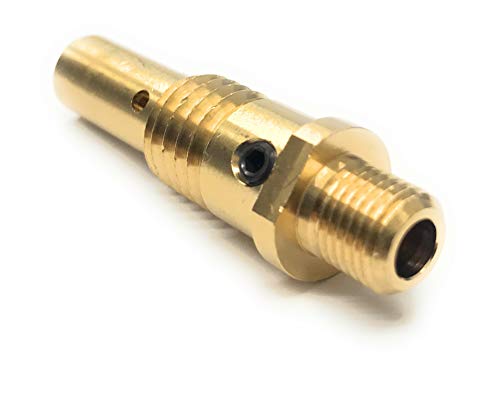
Tag: Magnum 250L

  • S19418-1 Lincoln Style Gas Diffuser Pack of 2 – Arc Weld by Masterweld: Product Breakdown

    S19418-1 Lincoln Style Gas Diffuser Pack of 2 – Arc Weld by Masterweld: Product Breakdown

    Product not found.
    “>S19418-1 Lincoln Style Gas Diffuser Pack of 2 - Arc Weld by Masterweld

    The S19418-1 Lincoln Style Gas Diffuser Pack of 2 – Arc Weld by Masterweld is a replacement support part for a specific Lincoln Style gun configuration. Based on the product description provided, it is intended for the Magnum 250L Classic Series Gun and does not work with PRO series guns. That is the first fitment check any buyer should confirm before ordering or installing the part.

    For welders, maintenance buyers, and support teams, the practical question is not just “what is it?” but “will it fit my gun, and will it restore stable shielding gas flow at the diffuser end?” The answer depends on the gun model, consumable setup, and correct installation. Unknown (Verify) for any detail not stated in the source product description.

    Key Takeaways

    • Product: S19418-1 Lincoln Style Gas Diffuser Pack of 2 – Arc Weld by Masterweld.
    • Source description identifies it as a Lincoln Style gas diffuser.
    • Stated fitment: Magnum 250L Classic Series Gun.
    • Stated exclusion: Does not work with PRO series guns.
    • Pack quantity: 2, per product name.
    • Any further compatibility detail is Unknown (Verify) unless confirmed from the product page or gun documentation.

    What a Gas Diffuser Does

    A gas diffuser is a consumable support component at the front end of a MIG gun. Its job is to help route shielding gas into the weld zone and support the front-end consumable stack. When a diffuser is worn, damaged, blocked, or mismatched to the gun, the result can be poor gas coverage, unstable arc behavior, spatter issues, or inconsistent contact tip performance.

    This part should be treated as a fitment-controlled component. In MIG welding, “Lincoln Style” does not automatically mean universal compatibility across every Lincoln-branded or Lincoln-style gun. Verify the exact gun series and front-end consumables before purchase.

    Before You Buy: Verify Fitment

    Use the following checks before placing the order:

    • Check the gun model. Confirm whether the gun is a Magnum 250L Classic Series Gun.
    • Inspect the series designation. Confirm the gun is not a PRO series gun.
    • Review the consumable layout. Compare the front-end parts on the gun now with the replacement being considered.
    • Verify thread, body, and interface details. Unknown (Verify) unless listed by the seller or the OEM gun documentation.
    • Confirm quantity needed. The product name indicates a pack of 2, which may suit maintenance stock or service kits.

    If the gun serial number, front-end configuration, or service history is unclear, do not assume interchangeability. A wrong diffuser can create repeat service calls and wasted consumables.

    Installation and Service Checks

    Before replacing the diffuser, follow basic service discipline:

    • Power down the welding power source. Isolate the equipment before handling front-end parts.
    • Allow the gun to cool. Hot consumables can cause burns.
    • Inspect the nozzle and tip area. Look for spatter buildup, heat damage, or cross-threading.
    • Verify the diffuser seating surfaces. Any damage at the interface can affect gas coverage and retention.
    • Replace worn associated parts as needed. A new diffuser may not correct problems caused by a damaged nozzle, contact tip, liner, or gas hose. Those causes are Unknown (Verify) unless proven by inspection.

    After installation, test the gun in a controlled setting. Verify arc start, gas coverage, and front-end retention. If the arc remains erratic or shielding is still poor, inspect the full consumable stack instead of assuming the diffuser is defective.

    Troubleshooting Support: What to Check

    If a front-end issue continues after replacement, work through the following steps:

    • Check for improper series match. Verify the gun is the correct Magnum 250L Classic Series configuration.
    • Inspect for missing or damaged consumables. A damaged contact tip or nozzle can mimic diffuser problems.
    • Verify gas delivery upstream. Gas flow problems may originate in the hose, fittings, regulator, or supply line.
    • Check for contamination. Dirt, spatter, or debris can block gas passages.
    • Inspect assembly torque and fit. Over-tightening or loose assembly can create leakage or poor retention.

    If the symptoms persist, document the gun model, part numbers, and observed failure mode before requesting support. That makes it easier to confirm whether the diffuser is the correct replacement or whether another front-end component is the real cause.

    Product / Parts Notes

    This listing is for the S19418-1 Lincoln Style Gas Diffuser Pack of 2 – Arc Weld by Masterweld. The product description supplied states only the following actionable fitment point: it is for a Magnum 250L Classic Series Gun and does not work with PRO series guns. Any additional compatibility claims would be Unknown (Verify).

    Buyers should not infer cross-compatibility from the phrase “Lincoln Style” alone. That term is useful as a starting point, not as final proof of fitment. Match the actual front-end architecture of the gun before stocking the part for maintenance use.

    Related Technical Reference

    For a broader view of MIG support materials and how consumable selection affects welding setup, see this related article: Aluminum ER 5554 3/64″ X 5lb. MIG Welding Wire Spool By Washington Alloy – Weld Support Parts Blog.

    Safety Notes

    • De-energize welding equipment before servicing front-end parts.
    • Wear gloves when handling used nozzles, tips, and diffusers.
    • Do not force mismatched parts into the gun assembly.
    • Verify shielding gas flow only in a controlled work area.
    • If damaged parts show heat distortion or seized threads, replace the affected components rather than reusing them.

    FAQ

    Q: What gun does this diffuser fit?
    A: The provided source description says it is for a Magnum 250L Classic Series Gun. Exact fitment beyond that is Unknown (Verify).

    Q: Will it work with PRO series guns?
    A: No. The source description explicitly says it does not work with PRO series guns.

    Q: Is this a full consumable kit?
    A: No. This is identified as a gas diffuser pack of 2. Any included accessory detail beyond that is Unknown (Verify).

    Q: What should I inspect if the weld still has shielding problems after replacement?
    A: Check the nozzle, contact tip, liner, gas hose, fittings, and gas supply before assuming the diffuser is the only issue.

    Sources Checked

    “>S19418-1 Lincoln Style Gas Diffuser Pack of 2 – Arc Weld by Masterweld
  • Internal reference: Aluminum ER 5554 3/64″ X 5lb. MIG Welding Wire Spool By Washington Alloy – Weld Support Parts Blog

Bottom line: this part is a straightforward front-end replacement, but its value depends on correct fitment. Confirm the gun series, verify that the gun is not a PRO series model, and inspect the entire front-end assembly during service. That is the practical way to avoid downtime and repeat failures.

Related Arc Weld Part

S19418-1 Lincoln Style Gas Diffuser Pack of 2 - Arc Weld by Masterweld

S19418-1 Lincoln Style Gas Diffuser Pack of 2 – Arc Weld by Masterweld

Lincoln Style gas diffuser for Magnum 250L Classic Series Gun – Does not work with PRO series guns

View at Arc Weld Store

Related Weld Support Guides

  • Lincoln Magnum PRO Gun Liner Replacement Guide: Wire Drag, Burnback, Birdnesting, and Fitment Checks

    Replace the liner in a Lincoln Magnum PRO MIG gun when wire feed gets worse with gun-cable bends, wire stutters with the contact tip removed, burnback repeats, metal dust comes out of the cable, or the liner has been contaminated by rusty wire, aluminum shavings, or crushed wire. The liner must match the actual gun family, wire diameter, wire type, and cable length. Do not order by welder model alone.

    The fast check is to remove the contact tip, straighten the gun cable, and jog wire through the gun. If feed improves with the tip removed, replace the contact tip first. If feed still drags, pulses, shaves, or stops with the tip removed, inspect or replace the liner. If the issue only appears when the gun lead is bent, the liner or cable path is the likely restriction.

    For related feed-path troubleshooting, compare this guide with MIG wire feed stuttering fixes, MIG wire feed slipping troubleshooting, MIG contact tip burnback troubleshooting, and the Lincoln MIG gun selection chart.

    Common Symptoms

    SymptomLikely Liner IssueFirst Check
    Wire stutters with gun cable bentDirty, worn, or kinked linerStraighten cable and jog wire again
    Feed still drags with contact tip removedLiner restriction or cable damageBlow out liner or replace it
    Birdnesting at feederDownstream drag from liner or tipRemove tip and test feed path
    Burnback into contact tipWire slows before reaching arcReplace tip, then test liner drag
    Wire shavings inside feederWrong drive pressure or liner packed with debrisCheck roll tension and liner condition
    Aluminum wire bucklesWrong liner type or too much push distanceVerify aluminum liner and gun length

    Compatibility Notes

    Lincoln Magnum PRO liners are not universal across every gun. Magnum PRO 100L, PRO 175L, 250L, PRO 250L, Curve, Barrel, HDE, AL, and fume guns use different liner paths and expendable systems. The Lincoln parts guide lists Magnum PRO 100L and 175L liners such as KP35-40-15 for 0.023–0.035 in steel wire, KP45-40-15 for 0.035–0.045 in steel wire, and KP1959-1 for 0.035 in aluminum wire on 15 ft guns. It also notes aluminum wire has a recommended maximum cable length of 10 ft for that setup.

    For WSP breakdown verification, compare the installed gun to the Lincoln Magnum PRO 100L K3080-1 breakdown, Lincoln Magnum 100L K530-6 breakdown, and Lincoln Magnum 250L breakdown. The Magnum 250L page lists liner assemblies by wire range, including 0.025–0.030, 0.030–0.035, 0.035–0.045, and 0.035–3/64 in Teflon aluminum options. Verify before ordering.

    What To Verify Before Ordering

    • Actual gun model, not just welder model.
    • Gun length: 10 ft, 15 ft, 25 ft, or other.
    • Wire diameter: 0.023, 0.030, 0.035, 0.040, 0.045, 3/64, 1/16, or larger.
    • Wire type: solid steel, stainless, flux-cored, aluminum, or hardfacing wire.
    • Liner type: steel liner, Teflon/PTFE, or application-specific conduit.
    • Front-end system: contact tip, diffuser, nozzle, and gun tube style.
    • Backend connector and feeder adapter if the gun has been changed.

    Inspection Steps Before Replacement

    1. Disconnect input power. Do not service the feeder or gun with the machine energized.
    2. Remove the wire spool tension from the gun path. Clip the wire and pull contaminated wire out carefully.
    3. Remove the nozzle, diffuser if required, and contact tip. A packed tip can mimic a bad liner.
    4. Jog wire with the tip removed. If feed is still rough, the restriction is upstream of the tip.
    5. Straighten the gun cable. Tight loops make liner drag worse and can hide a kinked liner.
    6. Inspect drive-roll pressure. Excess pressure can flatten wire and fill the liner with shavings.
    7. Blow out the liner only if it is serviceable. Use clean dry air from the feeder end toward the front end. Replace if rust, copper dust, aluminum shavings, or heavy debris remains.
    8. Replace the liner if kinked, worn, contaminated, or wrong size. Replacement is usually faster than trying to save a damaged liner.

    Basic Replacement Procedure

    1. Confirm the replacement liner part number against the gun model, cable length, and wire diameter.
    2. Lay the gun cable as straight as possible on the bench or floor.
    3. Remove the contact tip and front-end parts required by that gun design.
    4. Remove the backend liner retaining nut, set screw, or connector hardware according to the gun manual.
    5. Pull the old liner out from the rear of the gun. If it binds hard, stop and inspect for cable damage.
    6. Feed the new liner through the rear of the gun with the cable straight. Do not force it through a kink.
    7. Seat the liner fully at the backend and reinstall retaining hardware.
    8. Trim the liner only according to the gun instructions. A liner cut too short can create feed gaps; a liner left too long can buckle or bind.
    9. Reinstall diffuser, contact tip, nozzle, and wire.
    10. Set drive-roll pressure to the minimum tension that feeds consistently without slipping or flattening wire.
    11. Test-feed with the gun straight, then with a normal working bend.

    Field Fix vs Proper Fix

    ProblemField FixProper Fix
    Feed improves with tip removedReplace contact tipInspect diffuser/nozzle and verify tip size
    Wire drags with tip removedBlow out linerReplace liner and inspect cable for kinks
    Wire shavings appearReduce drive-roll pressureClean feeder, replace packed liner, verify roll type
    Aluminum birdnestsStraighten cable and reduce pressureUse correct aluminum liner, U-groove rolls, and short gun/spool gun setup
    Burnback repeatsReplace tipFix liner drag, feed speed, stickout, and heat buildup

    Common Wrong-Part Mistakes

    • Ordering a liner by wire diameter but not gun length.
    • Ordering by POWER MIG or welder model instead of the installed Magnum gun model.
    • Using a steel liner for aluminum wire when the setup needs Teflon/PTFE or spool-gun style support.
    • Installing a 0.035–0.045 liner for 0.030 wire and creating feed instability.
    • Cutting the liner too short at the front end.
    • Replacing the liner but leaving a worn contact tip, wrong drive roll, or over-tight spool brake in service.

    Related Failure Paths

    • Contact tip burnback from slowed wire delivery.
    • Birdnesting from liner drag or excessive drive-roll pressure.
    • Arc sputter from inconsistent wire speed at the puddle.
    • Porosity from loose gun seating or gas-flow disruption during service.
    • Aluminum wire shaving from wrong liner or roll pressure.
    • Drive motor strain from a blocked liner or spool brake drag.

    Safety Notes

    • Disconnect input power before servicing the gun, feeder, or drive rolls.
    • Wear eye protection when clipping wire or blowing debris from a liner.
    • Do not point the gun at yourself or another person while jogging wire.
    • Replace damaged gun cable assemblies instead of forcing a liner through a crushed cable.
    • If feed remains erratic after liner, tip, drive-roll, and spool checks, have the welder inspected by a qualified service technician.

    Sources Checked

    • Lincoln Electric 2024 Expendable Parts Guide.
    • Weld Support Parts Lincoln Magnum PRO 100L, Magnum 100L, and Magnum 250L breakdown pages.
    • Weld Support Parts Lincoln gun selection chart.
    • Weld Support Parts MIG liner, wire feed stutter, wire feed slipping, and burnback support pages.
  • Watch with Prime Video