Tag: layout tools

  • Markal 96100 Red-Riter Welders Pencil for Torch-Resistant Marks During Metal Layout and Fabrication, Red (Pack of 12) Made in USA: Replacement Part Breakdown

    Markal 96100 Red-Riter Welders Pencil for Torch-Resistant Marks During Metal Layout and Fabrication, Red (Pack of 12) Made in USA

    Layout marks are part of the job. If the line is wrong, the cut is wrong, the fit-up is wrong, and the time loss shows up fast. The Markal 96100 Red-Riter Welders Pencil is used for metal layout and fabrication marking where a durable visible line is needed. For buyers and shop teams, the main question is not whether it writes. The question is what it does well, what it does not do, and how to verify it matches the job before you buy in quantity.

    Key Takeaways

    • Use this type of marking pencil for layout work where standard shop markers may fail or become hard to read.
    • Confirm the marking surface, visibility, and cleanup method before using it on production parts.
    • Do not assume torch resistance or heat survival on every alloy, coating, or process without testing.
    • Pack quantity, packaging, and origin are provided by the listing; technical fit still needs shop verification.

    What this product is for

    The Markal 96100 Red-Riter is a welders pencil used for layout and fabrication marking. In a shop setting, that usually means part identification, cut lines, reference marks, and fit-up notes on metal. The red color improves contrast on many surfaces, but the actual readability depends on the base material, mill scale, finish, lighting, and whether the part is oily or dusty.

    For maintenance buyers, this is a consumable marking tool, not a repair part. The listing is for a pack of 12. Beyond that, technical details such as core composition, marking temperature limit, or exact surface compatibility are Unknown (Verify) from the provided source set.

    Practical check, inspect, verify

    Before stocking or issuing this pencil to the shop, run a basic verification process.

    • Check the surface: Identify the most common materials in your workflow: carbon steel, stainless, coated plate, tube, or cast parts.
    • Inspect visibility: Test the red mark under shop lighting and on the actual base material, not just on clean test coupons.
    • Verify transfer: Make one layout mark, handle the part normally, and confirm the line remains readable through cutting, grinding, and fit-up handling.
    • Check cleanup: Confirm whether the mark must be removed before welding, painting, inspection, or coating.
    • Verify process fit: If the part will be exposed to heat, preheat, or torch work, test on scrap first. Do not assume the mark will survive unchanged.

    Troubleshooting support

    If the mark does not perform as expected, isolate the failure point.

    • Mark is too faint: Inspect the surface for oil, rust, mill scale, or heavy oxide. Clean the area and retest.
    • Mark wipes off too easily: Verify whether the part is handled with gloves, wiped with solvent, or exposed to abrasion before use.
    • Mark burns away during heat work: Check the actual process temperature at the mark location. Torch resistance claims should be verified in your own application.
    • Mark interferes with downstream work: Confirm whether your procedure requires removal before welding or coating.

    For a related consumables reference, see 17-Piece TIG Welding Torch Kit for WP-17/18/26: Complete Consumables Breakdown and How to Identify and Replace Compatible TIG Torch Consumables for Optimal Welding Performance. Those guides cover the same kind of shop discipline: identify the job, verify the fit, and do not assume compatibility.

    Product and parts note

    This item is a marking tool, not a machine component. There are no replacement parts listed in the provided sources. If your team treats marking pencils as controlled consumables, confirm ordering units, storage method, and issue process internally. Product details such as exact lead construction, temperature performance, or certification status are Unknown (Verify) from the available source set.

    The allowed Amazon registry reference for this product is ASIN B005YT1Z7O. The approved product shortcode is

    Markal 96100 Red-Riter Welders Pencil for Torch-Resistant Marks During Metal Layout and Fabrication, Red (Pack of 12) Made in USA
    • Highly visible red color for aluminum or other bright metals
    • The soapstone alternative: marks resists torch flames; will not rub, burn or blow off
    • Economical, high-strength pencil is ideal for marking all types of metal surfacesโ€“ even oily, rusty or wet surfaces
    • High-strength, hex-shaped pencil reduces barrel roll unlike competitive brands
    • Pre-sharpened pencils can be easily resharpened with any standard pencil sharpener

    Last update on 2026-07-14 / Affiliate links / Images from Amazon Product Advertising API

    . No raw Amazon link is used here.

    WSP lookup section

    No WSP lookup page was provided for this topic. Because of that, there is no source lookup URL to cite or cross-check in this draft.

    Safety notes

    • Do not use any marking tool on a part without understanding whether the mark must be removed before welding, coating, or final inspection.
    • Keep marking tools away from open flame, hot slag, and direct torch exposure unless you have verified performance in your own process.
    • Store consumables dry and clean to reduce contamination of marked parts.
    • If the mark is applied to a part that will go into a controlled process, verify the mark material will not create contamination or quality issues.

    FAQ

    Is the Markal 96100 Red-Riter suitable for all metal surfaces?
    No. Surface performance depends on the material, finish, contamination, and lighting. Test on the actual substrate before shop-wide use.

    Does it have verified torch-resistant performance?
    The product is described as torch-resistant in the listing title, but the exact limit and application boundary are Unknown (Verify) from the provided sources. Validate it in your process before relying on the claim.

    Is this a replacement part or a consumable?
    It is a consumable marking tool, not a machine replacement part. No spare components were provided in the source set.

    Can it be used for fit-up and layout on fabricated assemblies?
    Yes, that is the intended use case. Still verify line visibility, durability, and cleanup requirements on your specific assembly and workflow.

    Sources Checked

    • Provided Amazon registry reference for ASIN B005YT1Z7O
    • Allowed internal link: 17-Piece TIG Welding Torch Kit for WP-17/18/26: Complete Consumables Breakdown
    • Allowed internal link: How to Identify and Replace Compatible TIG Torch Consumables for Optimal Welding Performance

    Bottom line: the Markal 96100 Red-Riter is a layout consumable for welding and fabrication work. Verify its visibility, cleanup behavior, and heat exposure performance in your own shop before standardizing it across jobs.

    Disclosure: As an Amazon Associate, Weld Support Parts may earn from qualifying purchases.

    Related Weld Support Guides

  • Soapstone vs Welders Pencil for Layout

    Find welding parts faster.

    Choosing between soapstone vs welders pencil comes down to the job, the base material, and how much the mark has to survive heat, handling, or cleaning before weld-out. Both tools are common in fabrication shops, maintenance work, and field fit-up. Neither is universal. The better choice depends on visibility, surface condition, and how the mark will be used during layout, cutting, or weld prep.

    Key Takeaways

    • Soapstone is the more common choice for rough layout on steel and other hot work areas.
    • Welders pencils can be better where a smaller, more controlled line is needed.
    • Heat resistance, mark visibility, and surface cleanliness matter more than tool preference.
    • Do not assume a marking tool is suitable for every metal or finish. Verify on scrap first.
    • For uncertain compatibility with your process, use Weld Support Parts lookup to check parts and accessory notes.

    Soapstone: When it makes sense

    Soapstone is widely used for weld layout because it leaves a visible mark on steel and can be applied quickly across plate, pipe, and structural members. It is useful for fit-up marks, cut lines, reference points, and general shop layout. In many shops, it is preferred for its ease of use and clear contrast on dark or scaled material.

    For practical use, check the surface first. Heavy mill scale, rust, paint, oil, or slag can reduce line quality. If the mark has to stay visible through handling or preheat, inspect how the mark behaves on your actual base metal. Do not assume a line will survive grinding, brushing, or heating. Verify on scrap from the same job.

    Welders pencil: When it makes sense

    A welders pencil is typically used for more controlled layout work where a finer line is useful. That can help on tight fit-ups, small parts, and detailed marks where a broad soapstone line may be too heavy. In some applications, a pencil-style marker gives better point control and less material spread on the surface.

    The downside is that fine marks can be harder to see on rough, dark, or dirty surfaces. If the part is scaled or the mark must be read from a distance, the line may be too light. Inspect legibility under actual shop lighting, not just at the bench. If the mark will be exposed to heat, verify how quickly it fades or changes.

    Compare the two by job condition

    Use soapstone when: you need quick layout on steel, a visible line on larger parts, or broad marks for cutting and fit-up.

    Use a welders pencil when: you need a finer line, more precise placement, or a smaller marking footprint.

    Neither is ideal when: the surface is oily, wet, heavily scaled, or finished in a way that requires a special marking method. In that case, check the process requirements and verify before marking production parts.

    Troubleshooting and support: check, inspect, verify

    If your layout marks are failing, work through the issue in a simple sequence.

    • Check the surface. Is the metal clean enough for the mark to adhere visually? Remove oil, water, loose scale, and dust.
    • Inspect the line quality. Is the line too wide, too light, or smearing under handling?
    • Verify visibility under real conditions. Look at the mark under the same lighting and viewing angle used in the shop or field.
    • Check heat exposure. If the mark disappears during preheat or tack welding, test a different tool on scrap.
    • Inspect the tool itself. Broken points, contamination, or worn edges can reduce line quality.
    • Verify with a trial mark. Before starting a production run, test the marking method on the actual material and finish.

    If you need parts, accessories, or help finding the right item family, use the Weld Support Parts lookup. It is the right place to verify notes before you order or apply a tool to the job.

    WSP lookup section

    Weld Support Parts provides a lookup entry point for welding parts, accessories, and verified compatibility notes. For layout tools and related support items, start here: Find welding parts faster. Use the site to confirm whether the item or support part matches your machine, process, or application. Do not rely on assumption when the job depends on a specific marking method or accessory fit.

    Practical shop guidance

    If the work is structural steel, general fabrication, or repair welding, soapstone is often the default because it is simple and visible. If the work is detail-oriented, repetitive, or requires tighter line control, a welders pencil may be the better fit. Many shops keep both on hand because different jobs need different line styles.

    Keep in mind that layout tools are only part of the control plan. A clear mark is not enough if the job traveler, drawing, or fit-up sequence is unclear. Verify dimensions, orientation, and reference edges before you mark. Once the line is on the part, re-check the part against the print or work order before cutting or welding.

    Safety notes

    • Do not mark on hot metal unless the tool and process are intended for that condition. Verify first.
    • Keep marks away from critical surfaces if the process requires a clean finish or special coating prep.
    • Use ventilation and standard shop PPE during layout, grinding, or cleaning.
    • Do not assume any marking material is acceptable for every welding procedure or inspection standard. Check the job requirements.

    FAQ

    Is soapstone better than a welders pencil?
    Not always. Soapstone is usually better for broad, visible layout on steel. A welders pencil is better when you need a finer line. Choose based on the job.

    Will soapstone hold up to welding heat?
    It can survive some heat exposure, but performance varies by surface condition and process. Verify on scrap under real job conditions before relying on it.

    Can I use a welders pencil on dirty steel?
    It may work, but line visibility can be poor on scale, rust, oil, or paint. Clean the surface or test a different marking method.

    Which one is better for precision layout?
    A welders pencil often gives better point control for tighter marks. Soapstone can still work for precision if the line width is acceptable and the surface is suitable.

    Sources Checked

    Bottom line: soapstone vs welders pencil is not a contest with one winner. Use soapstone for fast, visible shop layout. Use a welders pencil for tighter control. Check the material, inspect the mark, and verify performance before the job moves forward.

  • Strong Hand Tools MET11 Mini MagTab Review (2025)

    Strong Hand Tools MET11 Mini MagTab Review (2025)

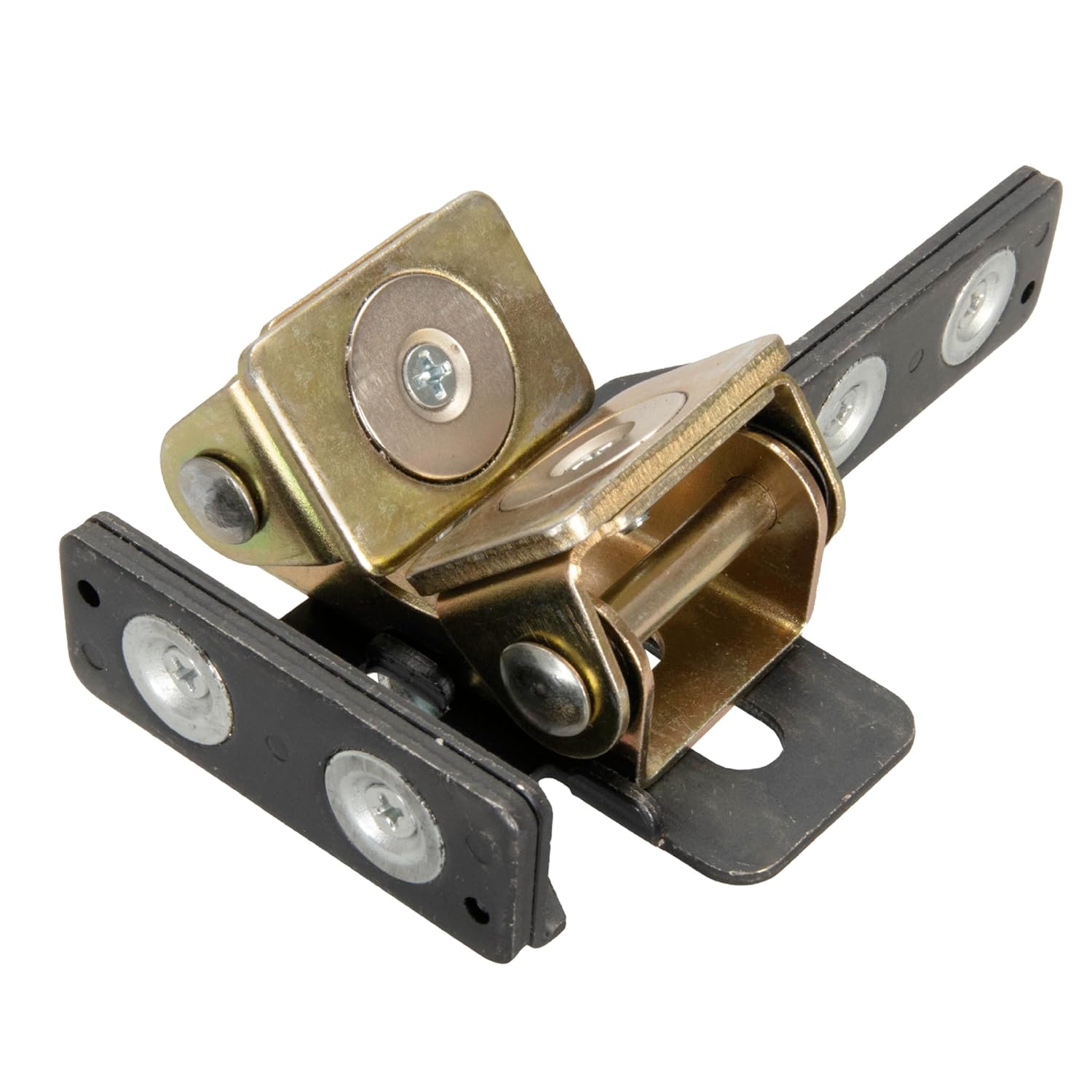
    The Strong Hand Tools MET11 Mini MagTab is one of those small, under-$20 fixtures that ends up earning a permanent place on the bench. Itโ€™s a compact magnetic clamp designed for holding tabs, flat bar, flanges, and small brackets square during tack welding. For layout, light fab, and repeated parts alignment, the Mini MagTab solves a real problem: securing small pieces accurately without bulky clamps.


    Key Takeaways

    • Holds small brackets, tabs, and flat bar square during fit-up.
    • Compact design fits places larger magnets canโ€™t.
    • Adjustable V-shaped face for tubing and irregular parts.
    • Replaceable pads extend service life.
    • Ideal for TIG and MIG layout work where speed and accuracy matter.

    What the Mini MagTab Solves

    Regular welding magnets struggle with:

    • Small parts
    • Tight spaces
    • Consistent 90ยฐ alignment
    • Thin materials that shift under clamp pressure

    The MET11 addresses these issues by combining a precision 90ยฐ face, a pivoting V-block, and a low-profile body that doesnโ€™t fight you during tack welding. Itโ€™s built for repetitive work and small-part fabrication โ€” handrails, brackets, gussets, race-car tabs, control-arm brackets, or anything where placement accuracy matters.


    Features & Build

    Body: Steel housing with replaceable pads
    Magnet Type: Permanent magnet
    Faces: 90ยฐ fixed face + adjustable V-face
    Adjustment: Slotted hardware for micro-alignment
    Applications: Brackets, tabs, 1/2″โ€“1-1/2″ tube, flat bar, sheet fab
    Heat Considerations: As with all magnetic fixtures, avoid excessive heat exposure; remove before completing full welds.


    Performance in the Shop

    The MET11 shines when:

    • Holding two small parts at 90ยฐ
    • Aligning tabs on round tube
    • Keeping parts from drifting while tacking
    • Doing repetitive work where speed matters

    The magnet strength is balanced โ€” strong enough to hold parts reliably, but not so aggressive that it โ€œsnapsโ€ pieces out of alignment.


    Best Use Cases

    • Tube-frame tabs
    • Brackets on square or round tube
    • Jigging small assemblies
    • Motorcycle fabrication
    • Sheet metal fit-ups
    • Fixture work on limited-space tables

    Where to Buy

    Strong Hand Tools, MagTab 2.0, Adjustable Magnetic Tab Holder, 6 x Replaceable Magnets, Knurled Knob, Slotted Bracket, Adjustable Magnetic V-Pad Base, Magnetic Tack Welding Tool, MET11
    • 6 replaceable magnets for 3x STRONGER magnetic holding force than the Standard MagTab
    • Magnetic pull force from 22 ~ 44 lb. (10 ~ 20 kg) based on flat surface with the two larger magnets
    • Knurled knob provides comfrotable and easy grip
    • Slot on hte bracket for workpiece alignment
    • Dim: 4.5โ€ณ x 2.6โ€ณ x 2โ€ณ

    Last update on 2026-07-14 / Affiliate links / Images from Amazon Product Advertising API


    Comparison Table

    FeatureStrong Hand MET11 Mini MagTabStandard Magnet Square
    SizeCompact, fits small partsBulky for small fab
    AlignmentPrecise 90ยฐ + adjustable VFixed 90ยฐ only
    PadsReplaceableUsually not replaceable
    Tube SupportYes (V-block)Limited
    Best ForTabs, brackets, tube workGeneral layout

    Safety Notes

    • Keep magnets away from high heat; prolonged exposure can weaken magnetic force.
    • Do not rely on magnets for load-bearing support โ€” use mechanical clamping when welding beyond tacking.
    • Maintain clean surfaces; metal dust reduces holding strength.
    • Always follow ANSI Z49.1 welding safety guidelines.

    FAQ

    Can the Mini MagTab hold heavy parts?
    Itโ€™s designed for small and medium-light parts. For thicker brackets, pair it with a mechanical clamp.

    Can it be used on stainless or aluminum?
    The magnet wonโ€™t stick directly to non-ferrous metals, but it can support steel fixtures that hold stainless/aluminum parts in place.

    Does the heat from TIG arcs damage it?
    Prolonged heat will weaken any magnet. Remove the MagTab after tack welding.

    Are the pads useful long term?
    Yes โ€” the replaceable pads extend life and keep the faces accurate.


    Sources Checked

    • Strong Hand Tools product materials
    • Manufacturer datasheets

Stream with Amazon Music