Tag: grinding safety

  • Flap Disc Edge Wear Troubleshooting

    Flap Disc Edge Wear Troubleshooting

    Flap disc edge wear usually happens when the grinder angle is too steep, pressure is excessive, the wrong disc type is being used, or the operator is grinding primarily on the disc edge instead of the face. Premature edge wear reduces abrasive life, creates uneven grinding performance, increases heat buildup, and can damage both the workpiece and grinder.

    Common Symptoms

    • Outer edge of the flap disc wears much faster than the center.
    • Grinding becomes uneven or difficult to control.
    • Disc cuts aggressively at first but loses performance quickly.
    • Visible flap tearing or uneven flap separation.
    • Increased vibration during grinding.
    • Excessive heat discoloration on the workpiece.

    Likely Causes

    • Grinding angle too steep: Excessive angle concentrates force on the outer edge of the disc.
    • Too much pressure: Heavy force overheats and overloads the abrasive flaps.
    • Incorrect flap disc style: Type 27 and Type 29 discs perform differently depending on grinding angle and application.
    • Wrong grit selection: Coarse grits used for finishing work can wear unevenly.
    • Improper grinder RPM: Overspeeding increases edge stress and heat generation.
    • Using the edge like a grinding wheel: Flap discs are designed primarily for face contact, not aggressive edge digging.

    Inspection Steps

    1. Inspect flap wear pattern across the full disc face.
    2. Verify grinder RPM matches the flap disc rating.
    3. Check grinding angle during operation.
    4. Inspect for excessive heat discoloration or flap glazing.
    5. Verify correct flap disc style and grit for the application.
    6. Inspect grinder spindle and backing flange condition.

    Visual Wear Indicators

    • Outer edge worn down faster than the center.
    • Missing or torn abrasive flaps.
    • Glazed abrasive surface from overheating.
    • Uneven flap height around the disc.
    • Discoloration from excessive grinding heat.

    Common Wrong-Part Mistakes

    • Using Type 27 discs where Type 29 geometry is more appropriate.
    • Running flap discs above rated RPM.
    • Using coarse grinding discs for fine finishing applications.
    • Using worn backing flanges that create disc instability.

    Field Fix vs Proper Fix

    Field fix: Reduce grinding pressure, flatten the grinder angle slightly, and rotate the disc contact area more evenly. Proper fix: Select the correct flap disc geometry, grit, RPM range, and grinder setup for the application while correcting operator technique issues.

    Ignored Failure Consequences

    Ignoring uneven edge wear reduces abrasive life, increases grinding cost, creates inconsistent surface finish quality, overheats the workpiece, and increases vibration-related grinder wear.

    Safety Notes

    Always follow abrasive RPM ratings and grinder compatibility requirements. Use face shields, gloves, hearing protection, and safety glasses when grinding. Never use damaged or delaminating flap discs.

    Sources Checked

    • Norton abrasive solutions catalog
    • Weiler abrasive catalog
    • Lincoln welding accessories catalog
  • Grinding Wheel Wobble Causes and Troubleshooting

    Grinding Wheel Wobble Causes and Troubleshooting

    A grinding wheel that wobbles during operation is usually caused by damaged flanges, incorrect wheel mounting, bent spindles, worn bearings, improper wheel storage, or using the wrong wheel for the grinder. Even minor wheel runout can reduce grinding accuracy, overload bearings, increase vibration, and create a dangerous wheel failure risk at operating RPM.

    Common Symptoms

    • Visible side-to-side wheel movement during rotation.
    • Vibration through the grinder body or handle.
    • Uneven grinding marks or gouging.
    • Premature edge wear on flap discs or grinding wheels.
    • Difficulty maintaining straight cuts.
    • Excessive operator fatigue from vibration.

    Likely Causes

    • Improper wheel mounting: Dirt, burrs, or metal debris trapped behind the wheel prevent proper seating.
    • Damaged mounting flanges: Bent or worn flanges create uneven clamping pressure.
    • Bent spindle shaft: Impact damage from dropped grinders commonly bends spindle assemblies.
    • Worn grinder bearings: Bearing play allows oscillation under load.
    • Wheel damage: Cracked, warped, moisture-damaged, or expired wheels may not rotate true.
    • Incorrect wheel selection: Oversized or incompatible wheels create instability and imbalance.

    Inspection Steps

    1. Disconnect grinder power before inspection.
    2. Remove the wheel and clean both flange surfaces completely.
    3. Inspect the abrasive wheel for cracks, chips, or uneven wear.
    4. Check spindle runout manually while rotating the shaft slowly.
    5. Verify wheel RPM rating exceeds grinder RPM.
    6. Inspect arbor fitment and mounting hardware compatibility.

    Common Wrong-Part Mistakes

    • Installing wheels with incorrect arbor sizes.
    • Running cut-off wheels sideways as grinding wheels.
    • Using missing or incorrect flange washers.
    • Using moisture-damaged abrasive wheels from poor storage.

    Field Fix vs Proper Fix

    Field fix: Remove and remount the wheel correctly, clean flange surfaces, and replace visibly damaged abrasives. Proper fix: Replace bent spindles, worn bearings, damaged flanges, or incorrect wheel assemblies. Persistent wobble should never be ignored on high-speed grinders.

    Ignored Failure Consequences

    Operating with a wobbling grinding wheel increases the chance of wheel breakage, grinder damage, poor surface finish, operator fatigue, and severe injury from abrasive wheel fragmentation.

    Safety Notes

    Always follow abrasive RPM ratings and mounting instructions. Never use cracked wheels. Use face shields, gloves, hearing protection, and safety glasses when troubleshooting grinders and abrasive equipment.

    Sources Checked

    • Norton welding abrasive solutions catalog
    • Weiler abrasive and surface conditioning catalog
    • Lincoln Electric welding accessories catalog
  • Welding Safety Glasses Guide 2025 | Shade Numbers, ANSI Z87.1 & UV Protection

    Welding Safety Glasses Guide 2025 | Shade Numbers, ANSI Z87.1 & UV Protection

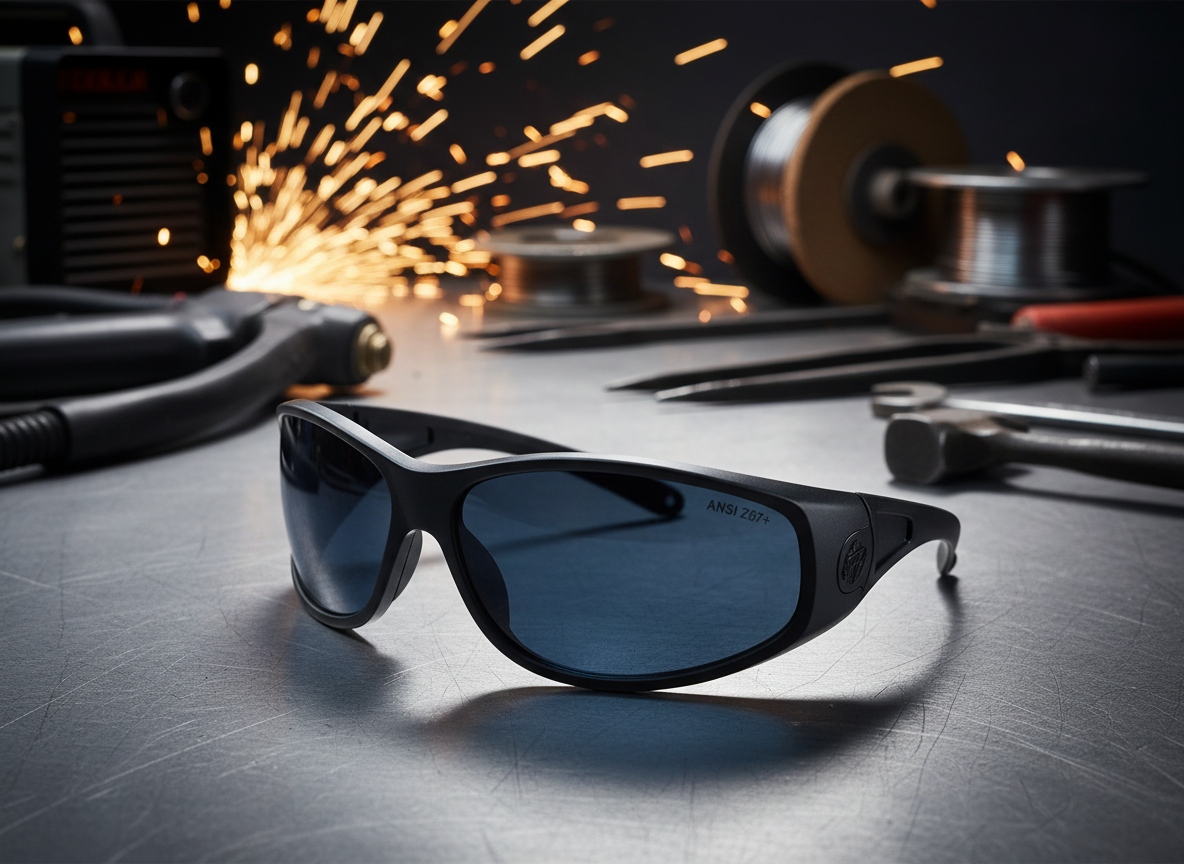
    Welding safety glasses protect against UV radiation, infrared light, and impact hazards during grinding and fabrication. Choosing the right glasses depends on process type, shade number, and ANSI Z87.1 certificationโ€”not just lens color.

    ANSI Z87.1 Certification Requirements

    Impact Protection Levels

    Basic Impact (Z87) – Protects against low-velocity impact (1โ€ steel ball at 150 ft/sec) – Suitable for: General shop work, light grinding, non-welding tasks

    High Impact (Z87+) – Protects against high-velocity impact (1/4โ€ steel ball at 150 ft/sec) – Required for: Welding, grinding, chipping, cutting – Marking: โ€œZ87+โ€ stamped on frame and lens

    Side Shield Requirement: – All welding safety glasses must have side shields or wraparound design – Prevents spatter and debris from entering around lens edges

    Shade Number Selection by Process

    ProcessAmperage RangeShade NumberLens Type
    Oxy-fuel cuttingN/A#3-#6Fixed shade
    TIG (GTAW)10-50A#8-#10Fixed or auto-darkening
    TIG (GTAW)50-150A#10-#12Fixed or auto-darkening
    MIG (GMAW)60-160A#10-#12Fixed or auto-darkening
    MIG (GMAW)160-250A#12-#14Fixed or auto-darkening
    Stick (SMAW)60-160A#10-#12Fixed shade
    Stick (SMAW)160-250A#12-#14Fixed shade
    Plasma cutting20-40A#4-#5Fixed shade
    Plasma cutting40-80A#5-#8Fixed shade

    Note: Safety glasses are supplemental protection worn under welding helmets or for indirect arc exposure (helper/observer).

    Lens Types & Technologies

    Fixed Shade Lenses

    • Pros: No batteries, consistent darkness, low cost
    • Cons: Single shade only, must swap lenses for different processes
    • Best for: Dedicated single-process work, backup glasses
    • Cost: $10-$30

    Auto-Darkening Lenses

    • Pros: Adjustable shade range, no lens swapping
    • Cons: Battery replacement, higher cost
    • Shade range: Typically #5-#13
    • Reaction time: 0.0001-0.00004 seconds
    • Best for: Multi-process shops, frequent shade changes
    • Cost: $50-$150

    Passive IR/UV Protection (Clear Lenses)

    • Function: Blocks UV and infrared without visible light darkening
    • Use case: Grinding, fabrication, indirect arc exposure (helper/observer)
    • Shade equivalent: #1.5-#2
    • Best for: Non-welding tasks requiring impact protection

    UV & IR Protection Standards

    UV Protection (200-400nm wavelength): – All welding lenses must block 99.9%+ UV radiation – Permanent damage occurs from unprotected UV exposure (arc eye/welderโ€™s flash)

    Infrared Protection (780nm-1mm wavelength): – Blocks heat radiation from welding arc – Prevents retinal damage and cataracts from prolonged exposure

    Visible Light Transmission: – Shade #3: 14.3% transmission (light tint) – Shade #8: 0.58% transmission (moderate darkness) – Shade #12: 0.0018% transmission (very dark)

    Lens Coatings & Features

    Anti-Fog Coating

    • Purpose: Prevents condensation in humid environments or when wearing respirator
    • Best for: Summer welding, enclosed spaces, respirator use
    • Limitation: Coating wears off after 6-12 months

    Anti-Scratch Coating

    • Purpose: Extends lens life in high-abrasion environments
    • Best for: Grinding, fabrication, production shops
    • Hardness rating: 4-6H pencil hardness (military spec MIL-PRF-32432)

    Polarized Lenses

    • Purpose: Reduces glare from reflective surfaces (polished stainless, aluminum)
    • Best for: TIG welding on reflective materials
    • Limitation: Not necessary for carbon steel or general fabrication

    Frame Styles & Fit

    Wraparound Design

    • Coverage: Maximum side and peripheral protection
    • Best for: Grinding, cutting, high-spatter welding
    • Fit: Snug to face, minimal gap around edges

    Over-the-Glass (OTG) Design

    • Purpose: Fits over prescription eyeglasses
    • Best for: Welders who wear corrective lenses
    • Limitation: Bulkier, may not fit all prescription frame sizes

    Prescription Welding Glasses

    • Purpose: Combines corrective lenses with welding shade
    • Best for: Full-time welders who need vision correction
    • Cost: $150-$400 (requires optometrist fitting)

    When to Wear Safety Glasses vs. Helmet

    Safety Glasses (Supplemental Protection)

    • Grinding, cutting, or fabrication (no arc)
    • Indirect arc exposure (helper/observer 10+ feet from arc)
    • Under welding helmet as secondary protection
    • Oxy-fuel cutting or brazing (low UV output)

    Welding Helmet (Primary Protection)

    • Direct arc exposure (TIG, MIG, stick, flux-core)
    • Primary welder performing arc welding
    • Required for all arc welding processes per OSHA 1910.252

    OSHA Requirement: Safety glasses must be worn under welding helmets in environments with grinding, chipping, or multiple welding stations.

    Common Mistakes

    Using non-certified safety glasses for welding
    Fashion sunglasses or non-Z87+ glasses donโ€™t block UV/IR radiation. Result: arc eye (photokeratitis) and permanent retinal damage. Always verify Z87+ marking.

    Wrong shade number for amperage
    Shade #3 glasses for 150A MIG = retinal burn risk. Shade #12 for oxy-fuel cutting = canโ€™t see work. Match shade to process and amperage.

    Skipping safety glasses under helmet
    Grinding debris or spatter can enter under helmet. OSHA requires safety glasses as secondary protection in multi-hazard environments.

    Buying Checklist

    • โœ“ ANSI Z87+ certification marked on frame and lens
    • โœ“ Shade number matches process and amperage range
    • โœ“ UV/IR protection rated for welding (99.9%+ UV block)
    • โœ“ Side shields or wraparound design for peripheral protection
    • โœ“ Anti-fog coating if working in humid environments
    • โœ“ Anti-scratch coating for grinding/fabrication work
    • โœ“ Comfortable fit (no pressure points, secure without slipping)
    • โœ“ OTG design if wearing prescription glasses

Watch with Prime Video