Tag: gas apparatus

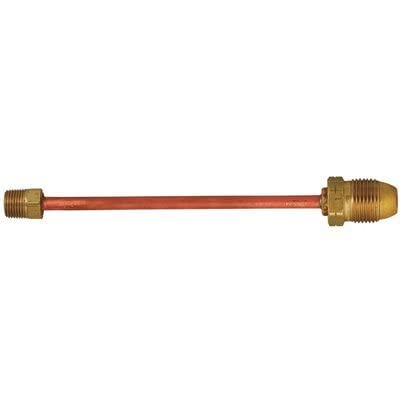
  • Rego 912JS20 20″ Pigtail Hose, 1/4″ Tube, 1/4″ MNPT x MPOL, Short Nipple, 7/8″ Hex: Product Breakdown

    Rego 912JS20 20″ Pigtail Hose, 1/4″ Tube, 1/4″ MNPT x MPOL, Short Nipple, 7/8″ Hex: Product Breakdown

    Product not found.
    “>Rego 912JS20 20" Pigtail Hose, 1/4" Tube, 1/4" MNPT x MPOL, Short Nipple, 7/8" Hex

    The Rego 912JS20 is a compact pigtail assembly used in LP gas service connections. The product title identifies the key geometry: 20-inch length, 1/4-inch tube, 1/4-inch male NPT on one end, male POL on the other, and a short nipple with a 7/8-inch hex for wrench access. For buyers and maintenance teams, the main question is not only whether the part fits the connection, but whether it fits the service condition, regulator arrangement, and inspection standard used on site.

    This is a practical breakdown for selection and field use. It does not replace the equipment manual, local code requirements, or the gas system ownerโ€™s procedure. If any connection detail is unclear, use Unknown (Verify) and confirm before installation.

    Key Takeaways

    • The Rego 912JS20 is a pigtail assembly for LP gas service connections.
    • It is identified as a 20-inch assembly with 1/4-inch tube construction.
    • One end is 1/4-inch MNPT; the other end is MPOL.
    • The short nipple and 7/8-inch hex suggest easier wrench access in tight spaces.
    • Final suitability depends on gas type, regulator interface, seal method, and system requirements. Unknown (Verify).

    What the part is for

    A pigtail hose links a cylinder or supply point to downstream gas equipment. In LP gas service, the part must match the connection style at both ends and must be suitable for the gas service conditions. The Rego 912JS20 is presented as a compact connection component for regulator and cylinder connection applications.

    Use this kind of assembly when the system needs a short, serviceable connector rather than a rigid direct connection. The short nipple and hex feature are relevant where wrench clearance is limited. That does not remove the need for proper tightening access, leak testing, and visual inspection after installation.

    Fit-up checks before purchase

    Before ordering, verify the following points against the equipment already in service:

    • Connection type at the inlet: Confirm the system uses 1/4-inch MNPT. Do not assume thread form from appearance alone.
    • Connection type at the outlet: Confirm the mating side is MPOL. If the cylinder or regulator uses a different interface, this part will not be correct.
    • Length requirement: Confirm 20 inches is enough for routing without strain, kinking, or side loading.
    • Space for tightening: Check whether the 7/8-inch hex gives adequate wrench access in the installed position.
    • Service condition: Verify the hose routing will avoid sharp edges, heat exposure, and contact with moving parts.

    If any of those points are uncertain, mark the requirement as Unknown (Verify) and compare against the current assembly or the equipment manual.

    Installation and inspection steps

    Use a consistent field process. Do not rely on visual similarity alone.

    1. Inspect the packaging and part marking. Confirm the received part matches the purchase description and the intended connection style.
    2. Check both ends before installation. Verify the 1/4-inch MNPT end and the MPOL end are clean, undamaged, and free of galling or debris.
    3. Inspect the hose body. Look for cuts, abrasion, twists, flattening, swelling, or any sign of damage from shipping or storage.
    4. Verify routing. Place the hose so it is not stretched tight, not sharply bent, and not rubbing against adjacent hardware.
    5. Tighten with proper access. Use the short nipple hex only as intended for service access. Do not force tools if the fit-up is poor.
    6. Leak-test after installation. Follow the siteโ€™s approved leak-test method immediately after assembly and again after the system is pressurized.
    7. Recheck after use. Inspect for looseness, wear, heat discoloration, or abrasion during regular service intervals.

    Troubleshooting support

    If a connection does not assemble cleanly, stop and verify the mismatch before applying more torque.

    Problem: Threads do not start by hand

    • Check thread type and size. Unknown (Verify) if the mating component is not clearly identified.
    • Inspect for cross-threading, debris, or damaged threads.
    • Do not use tools to force the first engagement.

    Problem: Assembly will not seal after tightening

    • Verify the mating side is the correct connection style for the service.
    • Inspect sealing surfaces and confirm the correct seal method is being used for the system.
    • Leak-test with the approved method. Do not depend on smell, sound, or visual judgment alone.

    Problem: Hose routing is too tight

    • Verify the 20-inch length is appropriate for the installation layout.
    • Check for unnecessary bends or forced alignment at the regulator or cylinder end.
    • Replace with a correctly sized assembly if the line is under tension.

    Product and parts notes

    Product: Rego 912JS20 20″ Pigtail Hose, 1/4″ Tube, 1/4″ MNPT x MPOL, Short Nipple, 7/8″ Hex

    Use case: LP gas regulator and cylinder connection applications, subject to system verification.

    Key selection points: connection style, hose length, wrench access, and service routing.

    Uncertain technical details: gas compatibility, pressure rating, specific materials, and certification status are Unknown (Verify) from the provided source data.

    Safety notes

    • Do not install any gas connection component without confirming the correct connection type and service application.
    • Leak-test every connection after installation and after any maintenance work on the gas train.
    • Keep the hose away from heat, abrasion points, and moving equipment.
    • Replace any hose that shows cracking, damage, corrosion at the ends, or deformation.
    • Follow site procedures and local requirements for LP gas work. Unknown (Verify) where the governing standard is not specified.

    FAQ

    Is the Rego 912JS20 a direct replacement for every LP gas pigtail?

    No. It is only suitable where the connection type, hose length, and service arrangement match the equipment. Verify all fit-up details before use.

    Can the short nipple and 7/8-inch hex be used to solve a poor layout?

    They may help with wrench access, but they do not correct a bad routing plan. If the hose is forced into position, change the layout or select a different assembly.

    What should be checked after installation?

    Verify thread engagement, final wrench access, hose routing, and leak integrity. Reinspect after the system is placed back in service.

    Is the gas compatibility confirmed in the source data?

    No. Gas compatibility is not fully specified in the provided source details and should be treated as Unknown (Verify).

    Sources Checked

    • ArcWeld product page: Rego 912JS20 20″ Pigtail Hose, 1/4″ Tube, 1/4″ MNPT x MPOL, Short Nipple, 7/8″ Hex
    • Provided source description for the Rego 912JS20 assembly

    Related Arc Weld Part

    Rego 912JS20 20" Pigtail Hose, 1/4" Tube, 1/4" MNPT x MPOL, Short Nipple, 7/8" Hex

    Rego 912JS20 20" Pigtail Hose, 1/4" Tube, 1/4" MNPT x MPOL, Short Nipple, 7/8" Hex

    Rego 912JS20 pigtail assembly with a 20" length and 1/4" tube, designed to connect LP gas service using a 1/4" male NPT inlet and a male POL outlet. Includes a short nipple with a 7/8" hex for secure wrench tightening and serviceability in tight spaces. Intended for regulator and cylinder connection applications where a compact, durable pigtail is required. Verify gas compatibility, leak-test all connections after…

    View at Arc Weld Store
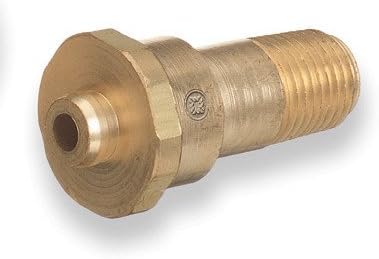
  • Western 603, 1/4″ NPT X 1 3/4″ Long Male Brass Regulator Nipple CGA 660: Product Breakdown

    Western 603, 1/4″ NPT X 1 3/4″ Long Male Brass Regulator Nipple CGA 660: Product Breakdown

    Product not found.
    “>Western 603, 1/4" NPT X 1 3/4" Long Male Brass Regulator Nipple CGA 660

    The Western 603, 1/4" NPT x 1 3/4" long male brass regulator nipple CGA 660 is a gas apparatus support part used in compressed gas connections. For buyers and maintenance teams, the main job is not just to identify the fitting by name. The job is to verify thread form, connection standard, service conditions, and sealing method before installation. In compressed gas work, a part that looks close enough is not acceptable.

    This breakdown stays within the available product information. The source listing identifies the part as a Western brass regulator nipple with a 1/4" NPT connection, 1 3/4" length, and CGA 660 designation. Other technical details such as pressure rating, finish, exact end geometry, and approved gas service are Unknown (Verify).

    Key Takeaways

    • Verify the regulator side and cylinder side connection before ordering or installing.
    • 1/4" NPT indicates a threaded pipe connection, but the mating component still has to be confirmed on the actual assembly.
    • CGA 660 is a connection standard, not a substitute for visual inspection or system verification.
    • Brass is listed as the material. If your gas service has material restrictions, verify compatibility before use.
    • Unknown (Verify) details should be confirmed from the regulator documentation, gas supplier guidance, and site procedure.

    What This Part Is

    The Western 603 is a regulator nipple used as a connection component in gas apparatus. In practical terms, it is part of the interface between a regulator and the rest of the gas delivery system. The available listing identifies it as a male brass nipple with 1/4" NPT and CGA 660 designation. That is enough to start a purchasing review, but not enough to approve installation by itself.

    For maintenance buyers, this means the part should be treated as a configuration item. Match the connection standard, confirm the thread, and compare the installed component to the drawing, regulator data plate, or service record. Do not assume that every CGA-marked part is interchangeable.

    Inspection and Verification Before Use

    Use the following checks before releasing the part to service:

    • Check the thread designation: confirm the assembly requires 1/4" NPT. If the mating port is not NPT, stop and verify.
    • Inspect the body material: the listing indicates brass. Verify that brass is acceptable for the gas service and environmental conditions at your site.
    • Inspect the connection ends: look for nicks, deformation, burrs, or cross-threading damage.
    • Verify the CGA number: confirm the system specification calls for CGA 660. Do not rely on visual similarity alone.
    • Check for contamination: remove oil, debris, sealant residue, and shipping debris before installation if your procedure allows cleaning.

    If any item does not match the job requirement, set the part aside and verify against the gas equipment record or supplier documentation. Unknown (Verify) is the correct status until the system is confirmed.

    Troubleshooting and Support Checks

    If a new or replacement nipple does not fit correctly, work through the problem in a controlled way.

    • Check: Does the male end start cleanly by hand? If not, verify thread size and thread type before forcing the fit.
    • Inspect: Are the threads damaged, galled, or contaminated? A poor thread start usually means the part or the mating port needs repair or replacement.
    • Verify: Is the mating component actually CGA 660? Recheck the regulator, adapter, or cylinder connection callout.
    • Check: Is the installation procedure requiring a sealant, or does the system call for a dry thread approach? Follow the procedure for the specific gas system. Unknown (Verify) if not documented.
    • Inspect: After assembly, look for alignment issues or mechanical stress in the connected hardware.
    • Verify: Perform whatever leak test your site procedure requires before returning the system to service.

    If the connection repeatedly fails to assemble cleanly, stop and compare the installed part to the parts list. Do not correct thread mismatch by over-tightening or by mixing incompatible adapters.

    Purchasing and Parts Control Notes

    For buyers, the most useful purchasing control is document matching. Order the part only when the following are confirmed:

    • the required thread size is 1/4" NPT;
    • the required CGA designation is 660;
    • the expected body material is brass;
    • the application matches the regulator and gas service record.

    If any of those items are missing from the purchase request, return it for clarification. A regulator nipple is a small part, but it can stop an entire gas system when it is wrong.

    Product / Parts Notes

    The source product is the Western 603, 1/4" NPT x 1 3/4" long male brass regulator nipple CGA 660. The listing also states that Western offers complete lines of CGA connections, fittings, valves, manifold components, pigtails, and safety and convenience products in brass and stainless steel. That statement describes the brand range, not a guarantee that every related part is interchangeable with this nipple.

    Use the product page as the primary reference for identification only. Final acceptance should still depend on the specific regulator, cylinder connection, and site procedure. If a required specification is not present in the source information, mark it Unknown (Verify) and confirm it before use.

    Safety Notes

    • Compressed gas systems require strict handling. Follow all site and supplier safety rules.
    • Do not force threaded gas connections.
    • Do not mix fittings based on appearance only.
    • Keep oil, grease, and other contaminants away from gas connection surfaces unless your written procedure states otherwise.
    • If a leak, thread mismatch, or damaged connection is found, remove the part from service until verified.

    Westernโ€™s source note emphasizes that compressed gas users should adhere to all safety guidelines and practices. That warning should be treated as a baseline requirement, not a general reminder.

    FAQ

    Is the Western 603 ready for any CGA 660 system?
    No. The part is identified as CGA 660, but final suitability depends on the full gas assembly, thread match, and site procedure. Verify before use.

    Can I assume 1/4" NPT will fit any regulator port?
    No. NPT is specific, and the mating port must also be confirmed as 1/4" NPT. If the mating thread is unknown, inspect and verify.

    Is brass always acceptable for compressed gas service?
    No. The listing says brass, but gas compatibility requirements vary by service. Confirm against the gas specification and equipment manual. Unknown (Verify) if not documented.

    What should I do if the part threads in poorly?
    Stop installation, inspect both threads, and verify the part number and CGA designation. Do not force the connection or use it as a workaround.

    Sources Checked

    • ArcWeld product listing: Western 603, 1/4" NPT X 1 3/4" Long Male Brass Regulator Nipple CGA 660
    • Provided source idea and product short description

    Related Arc Weld Part

    Western 603, 1/4" NPT X 1 3/4" Long Male Brass Regulator Nipple CGA 660

    Western 603, 1/4" NPT X 1 3/4" Long Male Brass Regulator Nipple CGA 660

    WES603 Features: -Western has complete lines of CGA connections, fitting, valves, manifold components, pigtail, safety and convenience products. Brass and stainless steel.. -WESTERN. -Safety First Western strongly encourages users of compressed gases to adhere to all safety guidelines and practices. Only an absolute and constant respect for compressed gases is acceptable for safe operations. Refer to the Western s…

    View at Arc Weld Store
  • Miller 296102, Field Kit, Regulator Board Ground Tb Gas: Product Breakdown

    Miller 296102, Field Kit, Regulator Board Ground Tb Gas: Product Breakdown

    Product not found.
    “>Miller 296102, Field Kit, Regulator Board Ground Tb Gas

    Miller 296102 is a genuine field kit for the regulator board and ground-related assembly used on Trailblazer gas units. For maintenance buyers and welding support teams, the main value of this part is straightforward: it is an OEM replacement intended to correct electrical or grounding issues without guessing at fitment. When the original regulator board/ground assembly is failing, a correct replacement helps restore stable generator output and weld performance.

    This is not a generic repair item. It is a manufacturer-issued replacement that supersedes Miller part 273988. That matters because field repairs on engine-driven welders often fail when the replacement is close but not exact. If you are working from a unit serial number, service record, or teardown note, verify the current OEM part callout before ordering.

    Key Takeaways

    What this part is used for

    The available product information indicates this kit supports restoration of stable power generation and weld output on Trailblazer gas machines. In practice, the board and ground path are part of the machineโ€™s electrical control and reference system. When either is compromised, symptoms can include erratic weld output, unstable generator behavior, or intermittent performance. Exact failure mode depends on the machine condition. Unknown (Verify) if your unit has additional damage, previous repairs, or modified wiring.

    Check, inspect, verify before ordering

    Use the following sequence before you commit to the part.

    1. Check the machine identity. Verify the Trailblazer gas model and record the serial number.
    2. Inspect the existing board/ground area. Look for heat damage, loose terminals, corrosion, vibration wear, or signs of a prior repair.
    3. Verify the parts breakdown. Confirm that Miller 296102 is the current OEM callout and that it supersedes 273988 for your exact unit.
    4. Test symptoms carefully. If output is unstable, rule out battery condition, cabling, grounding, engine speed issues, and damaged connectors before replacing the assembly.
    5. Document before removal. Photograph wire routing, terminal positions, and ground locations so reassembly matches the original configuration.

    Troubleshooting support path

    If the machine is still producing inconsistent power, isolate the issue in layers.

    If you do not have a current parts listing for the exact unit, Unknown (Verify) whether a serial-specific revision applies. Do not assume that a Trailblazer gas machine uses the same board across all builds.

    Product and parts notes

    Miller 296102 is listed as a field kit, which signals a repair-oriented package rather than a broad service assembly. For buyers, that means the part should be treated as a targeted OEM solution for the board/ground area. The source information does not provide full kit contents. Unknown (Verify) what hardware, leads, or instructions are included. Confirm packaging against your receiving inspection before sending the job to the floor.

    Because this is an electrical repair component, do not mix it with non-OEM substitutes unless the service documentation specifically allows it. Incorrect grounding or board substitution can create repeat failures that are harder to diagnose than the original problem.

    How to verify correct fitment on the job

    1. Match the machine model name and type first.
    2. Match the serial number to the parts breakdown if available.
    3. Confirm the old number 273988 is actually the superseded reference for your machine.
    4. Inspect the mounting points and harness layout before removing the old assembly.
    5. After installation, test weld output and generator behavior under normal operating conditions.

    If the machine still behaves unpredictably after replacement, revisit the wiring harness, connectors, and engine-side controls. A board can be correct and still not solve a system-level fault.

    Safety notes

    FAQ

    Is Miller 296102 an OEM replacement?
    Yes. The provided product description identifies it as a genuine manufacturer-issued replacement.

    What does it replace?
    It supersedes Miller part 273988, based on the source information provided.

    Will this part fix any Trailblazer gas output problem?
    No. It addresses the regulator board/ground area. Fuel, engine speed, wiring, or load problems can create similar symptoms and should be checked first.

    Do I need the exact serial number to order it?
    You should verify model and serial-specific parts data before ordering. Unknown (Verify) if a specific revision applies to your machine.

    Sources Checked

    Related Arc Weld Part

    Miller 296102, Field Kit, Regulator Board Ground Tb Gas

    Miller 296102, Field Kit, Regulator Board Ground Tb Gas

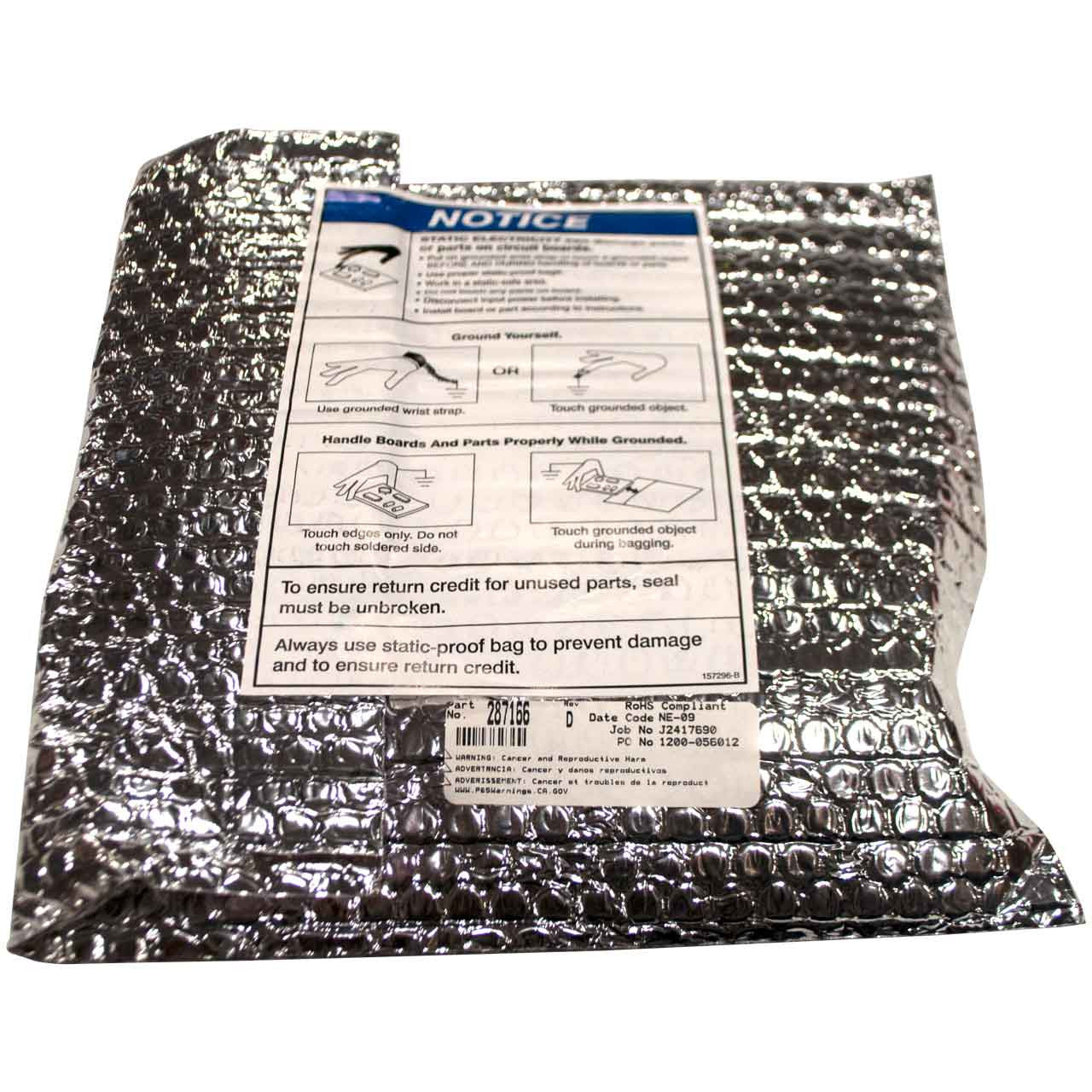
    Miller 296102 is a genuine Trailblazer (gas) regulator board ground field kit designed to restore stable power generation and weld output when the original regulator board/ground assembly is failing. This kit is the manufacturer-issued replacement that supersedes Miller part 273988, making it the correct choice when you need an OEM-fit electrical repair instead of risking aftermarket fitment or incorrect electrica…

    View at Arc Weld Store
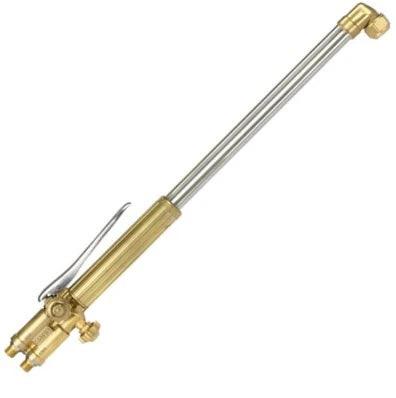
  • Victor 0381-1621 ST900FC Torch Assembly: Review & Buying Guide

    Victor 0381-1621 ST900FC Torch Assembly: Review & Buying Guide

    Victorโ€™s ST900FC is a workhorse torch handle for oxy-fuel cutting and heating. Itโ€™s the current flow-control version of the classic 100-series design, built for reliability in fabrication shops, maintenance departments, and field repair work. This guide covers specs, performance details, and selection notes for welders and fabricators.


    Key Takeaways

    • Heavy-duty Victor 0381-1621 torch assembly
    • Part of Victorโ€™s ST900FC line with built-in Flash-Guardยฎ check valves
    • Compatible with standard Victor cutting attachments (CA1350, CA2460 series, etc.)
    • Brass body, high-flow valves, rugged construction for shop or field use
    • Solid choice for oxy-fuel cutting, gouging, and preheat/heating work

    What the ST900FC Solves

    1. Flashback protection

    Built-in Flash-Guardยฎ check valves help meet OSHA/ANSI recommendations for flashback prevention.

    2. Consistent flow control

    High-flow needle valves allow smoother oxygen/fuel metering than older economy torch bodies.

    3. Shop-grade durability

    Brass body and metal valve assemblies handle frequent usage, heat cycling, and impacts better than light-duty consumer torches.


    Specs (per manufacturer data)

    • Model: Victor ST900FC
    • Part Number: 0381-1621
    • Body Material: Brass
    • Valves: High-flow needle valves
    • Safety: Integrated Flash-Guardยฎ check valves
    • Fuel Compatibility: Oxy-acetylene (primary), oxygen/propane with proper tips
    • Use Case: Cutting, heating, light gouging (with appropriate equipment)

    Unknown specs: Overall length, maximum pressure ratings, included tip(s), packaging weight.
    Verify: Victor spec sheet, ESAB/Victor product catalog, distributor listings.


    Performance Notes

    • Smooth oxygen/fuel adjustment for precise flame shaping
    • Stable during sustained cutting and heating
    • Good ergonomics and heat dissipation for extended shop use
    • Works well with Victorโ€™s 000โ€“6 cutting tips for mild steel plate
    • For propane use, ensure propane-rated tips are installed

    Where to Buy

    ArcWeld Store (preferred):

    Amazon

    No products found.


    Disclosure: This article contains affiliate links. As an Amazon Associate, I earn from qualifying purchases.


    Comparison Table

    ModelKey SpecsBest For
    Victor ST900FC (0381-1621)Brass body, Flash-Guard check valves, high-flow valvesOxy-fuel cutting & heating

    Safety Notes (ANSI/AWS References)

    • Use flashback arrestors or check valves per ANSI Z49.1 and OSHA 1910.253.
    • Open oxygen valves slowly to avoid pressure shock.
    • Purge hoses before lighting the torch.
    • Wear Z87.1-rated eye/face protection.
    • Use fuel-specific tips โ€” propane tips differ from acetylene tips.

    FAQ

    Does the ST900FC include a cutting attachment?
    Yes, because this is a one piece torch. Most boxed assemblies include only the torch handle. Cutting attachments are typically sold separately.

    Is it compatible with my existing Victor tips?
    Yes โ€” when used with the correct Victor cutting attachment. It uses 1 Series tips.

    Can I run propane?
    Yes. Use propane-rated cutting/heating tips and proper hose ratings.

    Is this considered a heavy-duty torch?
    Yes. The ST900FC is in Victorโ€™s heavy-duty line.

  • Try Amazon Prime Free