Tag: forearm burns

  • Welding Sleeve PPE: How to Stop Forearm Burns from Sparks and Spatter

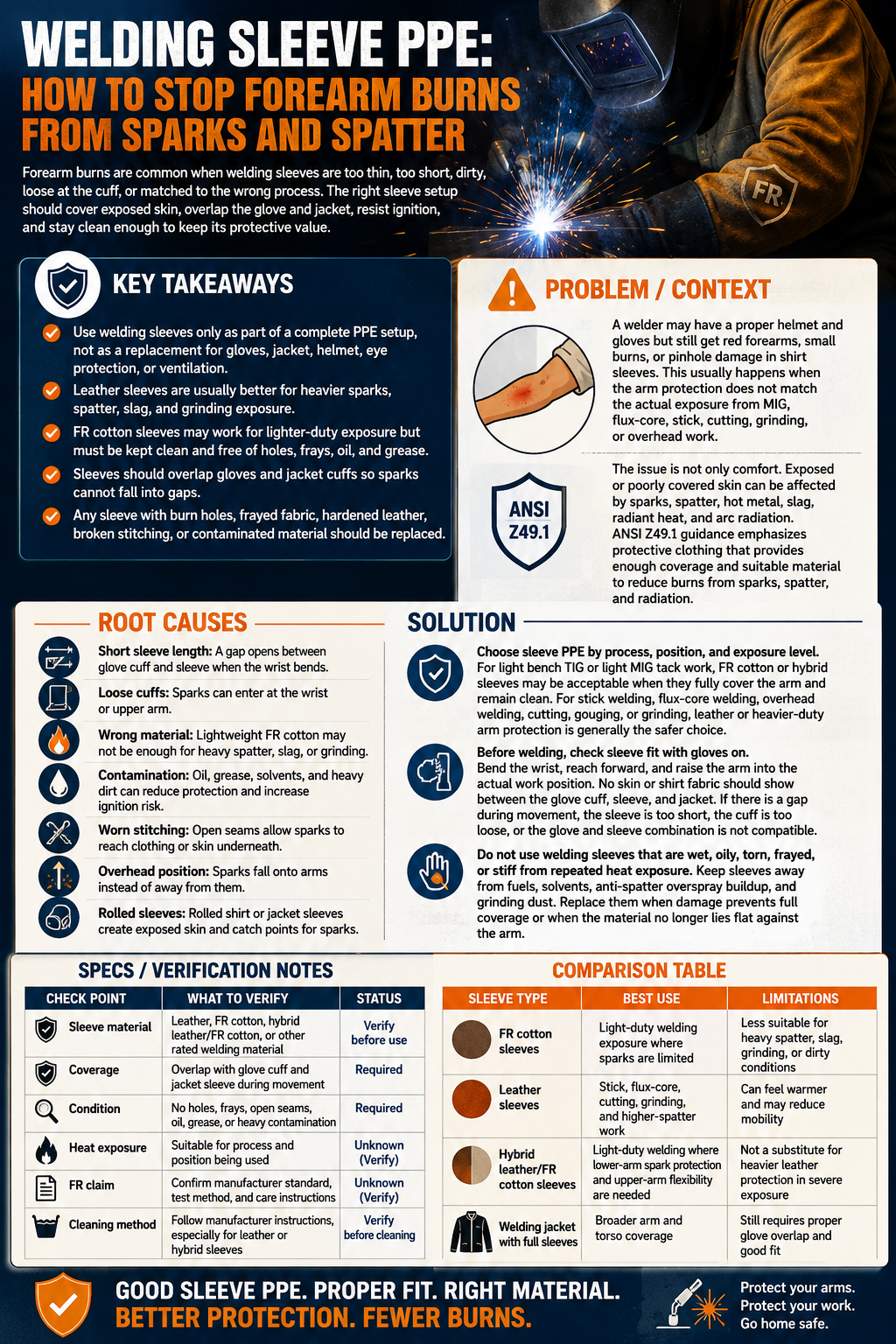
    Welding Sleeve PPE: How to Stop Forearm Burns from Sparks and Spatter

    Forearm burns are common when welding sleeves are too thin, too short, dirty, loose at the cuff, or matched to the wrong process. The right sleeve setup should cover exposed skin, overlap the glove and jacket, resist ignition, and stay clean enough to keep its protective value.

    Key Takeaways

    • Use welding sleeves only as part of a complete PPE setup, not as a replacement for gloves, jacket, helmet, eye protection, or ventilation.
    • Leather sleeves are usually better for heavier sparks, spatter, slag, and grinding exposure.
    • FR cotton sleeves may work for lighter-duty exposure but must be kept clean and free of holes, frays, oil, and grease.
    • Sleeves should overlap gloves and jacket cuffs so sparks cannot fall into gaps.
    • Any sleeve with burn holes, frayed fabric, hardened leather, broken stitching, or contaminated material should be replaced.

    Problem / Context

    A welder may have a proper helmet and gloves but still get red forearms, small burns, or pinhole damage in shirt sleeves. This usually happens when the arm protection does not match the actual exposure from MIG, flux-core, stick, cutting, grinding, or overhead work.

    The issue is not only comfort. Exposed or poorly covered skin can be affected by sparks, spatter, hot metal, slag, radiant heat, and arc radiation. ANSI Z49.1 guidance emphasizes protective clothing that provides enough coverage and suitable material to reduce burns from sparks, spatter, and radiation.

    Root Causes

    • Short sleeve length: A gap opens between glove cuff and sleeve when the wrist bends.
    • Loose cuffs: Sparks can enter at the wrist or upper arm.
    • Wrong material: Lightweight FR cotton may not be enough for heavy spatter, slag, or grinding.
    • Contamination: Oil, grease, solvents, and heavy dirt can reduce protection and increase ignition risk.
    • Worn stitching: Open seams allow sparks to reach clothing or skin underneath.
    • Overhead position: Sparks fall onto arms instead of away from them.
    • Rolled sleeves: Rolled shirt or jacket sleeves create exposed skin and catch points for sparks.

    Solution

    Choose sleeve PPE by process, position, and exposure level. For light bench TIG or light MIG tack work, FR cotton or hybrid sleeves may be acceptable when they fully cover the arm and remain clean. For stick welding, flux-core welding, overhead welding, cutting, gouging, or grinding, leather or heavier-duty arm protection is generally the safer choice.

    Before welding, check sleeve fit with gloves on. Bend the wrist, reach forward, and raise the arm into the actual work position. No skin or shirt fabric should show between the glove cuff, sleeve, and jacket. If there is a gap during movement, the sleeve is too short, the cuff is too loose, or the glove and sleeve combination is not compatible.

    Do not use welding sleeves that are wet, oily, torn, frayed, or stiff from repeated heat exposure. Keep sleeves away from fuels, solvents, anti-spatter overspray buildup, and grinding dust. Replace them when damage prevents full coverage or when the material no longer lies flat against the arm.

    Specs / Verification Notes

    Check PointWhat to VerifyStatus
    Sleeve materialLeather, FR cotton, hybrid leather/FR cotton, or other rated welding materialVerify before use
    CoverageOverlap with glove cuff and jacket sleeve during movementRequired
    ConditionNo holes, frays, open seams, oil, grease, or heavy contaminationRequired
    Heat exposureSuitable for process and position being usedUnknown (Verify)
    FR claimConfirm manufacturer standard, test method, and care instructionsUnknown (Verify)
    Cleaning methodFollow manufacturer instructions, especially for leather or hybrid sleevesVerify before cleaning

    Comparison Table

    Sleeve TypeBest UseLimitations
    FR cotton sleevesLight-duty welding exposure where sparks are limitedLess suitable for heavy spatter, slag, grinding, or dirty conditions
    Leather sleevesStick, flux-core, cutting, grinding, and higher-spatter workCan feel warmer and may reduce mobility
    Hybrid leather/FR cotton sleevesLight-duty welding where lower-arm spark protection and upper-arm flexibility are neededNot a substitute for heavier leather protection in severe exposure
    Welding jacket with full sleevesBroader arm and torso coverageStill requires cuff overlap and regular inspection

    Safety Notes

    ANSI Z49.1 and AWS welding safety guidance emphasize suitable protective clothing, gloves, eye protection, face protection, and full coverage against burns, sparks, spatter, radiation, and related hazards. Sleeve PPE should be selected as part of a full hazard assessment, not by comfort alone.

    • Wear dry, hole-free welding gloves in good condition.
    • Keep sleeves down and avoid exposed skin at the wrist, forearm, or upper arm.
    • Do not weld in synthetic street clothing that can melt or ignite.
    • Use leather spats or boot protection when sparks can enter boot tops or pant legs.
    • Use proper ventilation and respiratory protection where fumes, coatings, or confined spaces create additional hazards.
    • Follow employer safety rules, equipment manuals, SDS information, and applicable OSHA, ANSI, and AWS guidance.

    FAQ

    Are FR cotton sleeves enough for MIG welding?

    Sometimes. FR cotton sleeves may be suitable for light-duty MIG work with limited sparks and spatter. For heavier MIG, flux-core, overhead work, cutting, or grinding, leather or heavier-duty arm protection is usually the better choice.

    Should welding sleeves go over or under gloves?

    The setup should prevent sparks from entering the cuff area. In many cases, the glove cuff overlaps the sleeve at the wrist. The correct setup depends on glove style, sleeve cuff design, and work position. Check for exposed gaps while moving before welding.

    Can dirty welding sleeves still be used?

    Dirty sleeves should be treated carefully. Oil, grease, solvents, and heavy buildup can reduce protection and increase fire risk. Follow the manufacturer cleaning instructions. Replace contaminated sleeves when they cannot be safely cleaned.

    Do welding sleeves protect against arc flash?

    They help cover skin against radiation exposure, but they do not replace a welding helmet, proper filter shade, safety glasses, curtains, or full protective clothing. Arc radiation protection requires complete coverage of exposed skin and proper eye and face protection.

    When should welding sleeves be replaced?

    Replace sleeves when they have holes, burns, frayed edges, open seams, hardened leather, loose elastic, contamination, or any condition that prevents full coverage and proper fit.

    Next Step

    Inspect current welding sleeves before the next job. Confirm material, coverage, cuff overlap, cleanliness, and process suitability. If the sleeves are damaged, too short, or too light for the work, replace them before welding continues.

    Sources Checked

    • ANSI Z49.1 welding and cutting safety guidance summary from ANSI
    • AWS Fact Sheet No. 33, Personal Protective Equipment for Welding and Cutting
    • AWS Welding Digest PPE selection guidance
    • John Tillman 9215 manufacturer product page for sleeve material and use limitations
    • Airgas Tillman 9215 product listing for third-party spec comparison
Read with Kindle Unlimited