Tag: ER80S-D2

  • ER80S-D2 TIG / GTAW Filler Metal: Filler Metal Finder Notes

    ER80S-D2 TIG / GTAW Filler Metal: Filler Metal Finder Notes

    ER80S-D2 TIG / GTAW Filler Metal

    ER80S-D2 is a low-alloy TIG/GTAW filler metal used in higher-strength steel applications where the weld procedure calls for a molybdenum-bearing filler. Treat the Weld Support Parts listing as a starting point for selection, not as approval to weld. Before ordering or striking an arc, verify the WPS, base metal grade, service conditions, and the manufacturer data sheet. If the procedure, material, or service environment is outside your control, stop and confirm the requirements first.

    Key Takeaways

    • ER80S-D2 is a filler metal support choice for TIG/GTAW work on higher-strength steel.
    • The WSP filler metal page should be used as a selection starting point, not as a blanket procedure approval.
    • Verify the WPS, joint design, preheat, interpass control, and final mechanical/property requirements before welding.
    • Do not assume ER80S-D2 is interchangeable with ER70S-2 or ER100S-G without engineering review.
    • If the base metal is unknown or the service condition is critical, confirm with the job spec and manufacturer data sheet first.

    What ER80S-D2 Is Used For

    The WSP filler metal page identifies ER80S-D2 as a molybdenum-bearing low-alloy TIG rod for higher-strength steel applications, including some 4130 work. That makes it relevant when a procedure needs greater strength potential than a plain carbon steel filler, but the exact fit depends on the base metal, thickness, joint restraint, and code requirements.

    Do not select filler metal by classification alone. The same class can be used in different ways depending on the WPS. Check whether the job calls for a matching strength level, specific chemical limits, or a certain heat treatment path after welding. If those requirements are not documented, treat the application as Unknown (Verify).

    Selection Check: Verify Before You Order

    Use this practical check before assigning ER80S-D2 to a job:

    • Check the WPS: Verify that ER80S-D2 is listed by classification or approved equivalent.
    • Inspect the base metal: Confirm the material grade, mill certs, or positive material identification if needed.
    • Verify service conditions: Review whether the part sees pressure, impact loading, fatigue, low temperature, or post-weld heat treatment.
    • Confirm joint requirements: Review bevel angle, root opening, fit-up, and whether back purging or backing bars are required.
    • Review consumable control: Use only filler wire that matches the required diameter and packaging condition for the job. Diameter availability is Unknown (Verify) unless confirmed by the listing or distributor.

    Troubleshooting Support: If the Filler Choice Is Unclear

    If you are unsure whether ER80S-D2 is the right starting point, work through the problem in order.

    • Check: The base metal specification and thickness range.
    • Inspect: The WPS for minimum tensile strength, impact requirements, and heat input limits.
    • Verify: Whether the application is standard fabrication, repair, or code work with additional restrictions.
    • Check: If the job actually needs a different low-alloy filler such as ER100S-G or a more common carbon steel filler like ER70S-2.
    • Verify: Any required preheat, interpass temperature, or post-weld heat treatment with the procedure owner or engineer.

    When the filler metal, base metal, or end use does not line up cleanly, do not guess. A filler metal support listing cannot override the WPS or the code. If the job packet is incomplete, label the requirement Unknown (Verify) and escalate it before work starts.

    Filler Metal Finder Notes

    Use the WSP Filler Metal Finder as a starting point for narrowing down options by process, classification, and application. It is useful for support teams and buyers who need to identify a candidate filler metal quickly, but it does not replace procedure approval.

    For this product page, the direct listing is here: ER80S-D2 TIG / GTAW Filler Metal. Use that page to review the current WSP description, then confirm the selection against the job documents and the manufacturer data sheet before purchase or use.

    Practical use case: if a fabricator asks for a filler for a higher-strength low-alloy steel job and the paperwork references ER80S-D2, the finder page can help the buyer identify the classification quickly. If the paperwork is missing, the finder page alone is not enough. Confirm the job by WPS, base metal, and service conditions first.

    Support Team Review Steps

    For maintenance buyers and welding support teams, use a short review process:

    1. Check the request: Identify the process, classification, and base metal.
    2. Inspect the paperwork: Look for a WPS, procedure number, or engineering note.
    3. Verify the end use: Determine whether the weld is structural, repair, or non-critical fabrication.
    4. Confirm the consumable: Match the purchase request to the WSP filler metal page and the job documentation.
    5. Escalate gaps: If any key detail is missing, mark it Unknown (Verify) and get clarification.

    This process prevents common errors such as selecting a filler based on habit, using a similar-looking rod without confirming classification, or assuming one job’s filler will work on another job with different mechanical requirements.

    Safety Notes

    • Follow the WPS and site safety rules for ventilation, shielding gas, arc exposure, and hot metal handling.
    • Verify that the electrode, torch setup, and gas selection match the procedure. Specific gas recommendations are Unknown (Verify) unless stated by the approved procedure or manufacturer.
    • Do not rely on filler classification alone when the part is safety-critical.
    • Keep filler metal clean and dry. If packaging condition is damaged or contamination is suspected, inspect and verify before use.
    • If there is any question about crack sensitivity, preheat, or hydrogen control, stop and confirm the requirement with the WPS owner or engineer.

    FAQ

    Is ER80S-D2 the same as ER70S-2?
    No. They are different classifications and should not be treated as interchangeable without WPS and engineering approval. Verify the required strength and chemistry before substituting.

    Can ER80S-D2 be used on 4130?
    The WSP listing notes some 4130 work, but that is not a blanket approval. Confirm the exact 4130 condition, joint design, preheat, and service requirements first. If the procedure is missing, the answer is Unknown (Verify).

    Does the filler metal page approve the weld procedure?
    No. The filler metal page is a selection aid only. The WPS, code requirements, and manufacturer data sheet control the job.

    What diameter should I order?
    Unknown (Verify). Confirm the required wire diameter from the WPS or purchase request before ordering.

    Sources Checked

    Note: All uncertain technical details are marked Unknown (Verify). Confirm the WPS, base metal, service conditions, and manufacturer data sheet before welding.

    Disclosure: As an Amazon Associate, Weld Support Parts may earn from qualifying purchases.

  • ER80S-D2 MIG / GMAW Filler Metal: Filler Metal Finder Notes

    ER80S-D2 MIG / GMAW Filler Metal: Filler Metal Finder Notes

    ER80S-D2 MIG / GMAW Filler Metal

    ER80S-D2 MIG / GMAW filler metal is a low-alloy wire used where the weld deposit needs higher tensile strength and added molybdenum compared with general-purpose mild steel wires. It is typically considered for high-strength carbon and low-alloy steels, but it should not be treated as a default choice. The correct wire depends on the WPS, base metal, service conditions, joint design, shielding gas, and required mechanical properties.

    Use the WSP filler metal page as a starting point, not as a procedure approval. Confirm the classification, base metal, and service requirements before ordering wire or welding production parts.

    Key Takeaways

    • ER80S-D2 is a classification, not a blanket approval for all low-alloy jobs.
    • Confirm the WPS and code requirements first.
    • Verify the base metal grade and thickness range before selection.
    • Check shielding gas requirements and procedure parameters against the manufacturer data sheet.
    • When details are uncertain, mark them as Unknown (Verify) and stop before production welding.

    How to Use the Filler Metal Finder Page

    The Weld Support Parts filler metal finder page is useful when you are narrowing down a starting point for wire selection. It is not a substitute for code compliance or a qualified WPS. Use the page to compare the listed classification, process, and base material family, then move to the manufacturer data sheet and your internal welding documentation.

    Open the filler metal finder page and confirm these items:

    • Process: MIG / GMAW
    • Classification: ER80S-D2
    • AWS spec: AWS A5.28
    • Base material family: High-strength carbon and low-alloy steels

    If your application does not match those basic categories, do not assume the wire is suitable. Verify the actual specification or use a different filler metal family.

    Selection Checks Before Ordering

    Follow a short check-inspect-verify sequence before you place an order.

    • Check: The WPS for the required filler classification.
    • Inspect: The base metal identification on drawings, material certs, or job travelers.
    • Verify: The service condition. If the part sees elevated stress, impact loading, fatigue, or temperature exposure, review the weld metal requirements carefully.
    • Check: Shielding gas type and transfer mode requirements in the procedure.
    • Inspect: Wire diameter and spool size requirements. The listed sizes for this product family may include .030 in, .035 in, and .045 in, but confirm the exact size on the product page and data sheet before purchase.
    • Verify: The manufacturer name and data sheet for the exact wire you intend to use.

    If any item is missing, the correct action is not to guess. Mark the unknown detail as Unknown (Verify) and stop until the documentation is complete.

    Troubleshooting Common Selection Problems

    Problem: The wire classification looks right, but the job still fails review

    Check: Whether the WPS actually allows ER80S-D2 for that joint and base metal combination.

    Inspect: Any project-specific customer requirements, postweld heat treatment requirements, or impact testing requirements.

    Verify: Whether a different filler classification is required by code or contract. If the answer is unknown, treat it as Unknown (Verify) and route it to welding engineering or QA.

    Problem: The base metal is low-alloy, but the exact grade is not confirmed

    Check: Heat numbers, mill certs, or material markings.

    Inspect: Whether the material is actually carbon steel, HSLA, or another alloy family.

    Verify: The grade before using ER80S-D2 as a selection baseline. A general family match is not enough for production release.

    Problem: The filler metal finder page gives a starting point, but no final answer

    Check: The page description and classification fields.

    Inspect: The manufacturer data sheet for the specific wire brand.

    Verify: Procedure approval through your WPS, PQR, or responsible welding authority. Finder pages are support tools, not approval documents.

    Practical Purchasing Notes

    When buying ER80S-D2 wire, keep the ordering record tied to the actual job requirements. Do not order only from memory or from a past job that happened to use a similar classification.

    • Record the WPS number or internal reference.
    • Record the base metal grade and thickness.
    • Record the required wire diameter.
    • Record the shielding gas from the approved procedure.
    • Record the manufacturer and data sheet revision, if known. If unknown, mark Unknown (Verify).

    This avoids mix-ups between similar low-alloy wires and helps maintenance buyers prevent nonconforming stock from reaching the floor.

    Safety Notes

    • Do not weld from a filler metal description alone.
    • Review the WPS, SDS, and manufacturer data sheet before use.
    • Use proper ventilation and fume control for GMAW welding.
    • Verify storage condition and spool handling before loading wire.
    • If the job has critical service requirements, involve welding engineering or QA before starting production.

    FAQ

    Is ER80S-D2 a direct replacement for ER70S-2?

    No. They are not interchangeable by assumption. ER80S-D2 is a low-alloy wire with different intended mechanical property behavior. Check the WPS and verify the required classification before substituting anything.

    Can I use ER80S-D2 on any low-alloy steel?

    No. Base metal family alone is not enough. Inspect the exact grade and service condition, then verify that the procedure permits this wire.

    What should I do if the wire size is not listed in my internal notes?

    Check the product page and manufacturer data sheet. If the size still cannot be confirmed, treat it as Unknown (Verify) and do not order until confirmed.

    Is the filler metal finder page a final approval source?

    No. It is a starting point for selection only. Verify against the WPS, code requirements, and manufacturer documentation.

    Sources Checked

    Final note: ER80S-D2 is a useful starting point for higher-strength carbon and low-alloy welds, but the correct answer still comes from the procedure and the material documentation. Check the facts, inspect the material, and verify the approval path before welding.

    Disclosure: As an Amazon Associate, Weld Support Parts may earn from qualifying purchases.

  • Lincoln Electric SuperArc LA-90 MIG Wire ER80S-D2/ER90S-D2, 0.045″, 500 lb Drum (ED001378): Product Breakdown

    Lincoln Electric SuperArc LA-90 MIG Wire ER80S-D2/ER90S-D2, 0.045″, 500 lb Drum (ED001378): Product Breakdown

    Product not found.
    “>Lincoln Electric SuperArc LA-90 MIG Wire ER80S-D2/ER90S-D2, 0.045", 500 lb Drum (ED001378)

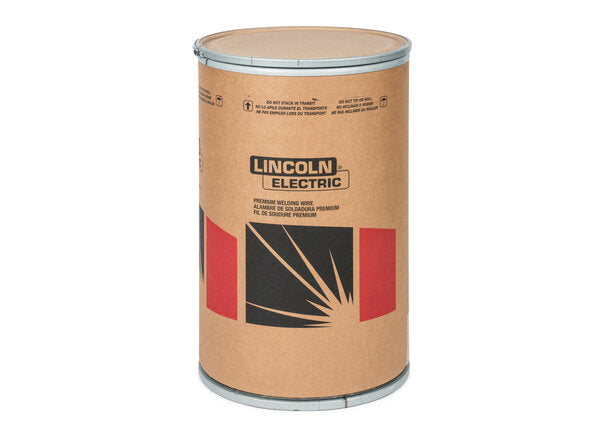
    Lincoln Electric SuperArc LA-90 MIG Wire ER80S-D2/ER90S-D2, 0.045″, 500 lb Drum (ED001378) is a low-alloy GMAW wire intended for higher-strength steel applications where the filler metal classification matters as much as the base metal and shielding gas. For buyers and weld support teams, the main point is simple: this is not a general-purpose wire. It is a classification-driven consumable that should be matched to the procedure, joint design, shielding gas, and deposit property requirements before release to production.

    Key Takeaways

    • Classification is the starting point: AWS A5.28 ER80S-D2 / ER90S-D2.
    • Wire diameter is 0.045 in, and the package is a 500 lb drum.
    • The listing identifies DC+ polarity and common shielding gas use, including 100% CO2 and argon/oxygen blends.
    • This product is aimed at higher-strength steel work, not general mild steel fill-in unless the procedure supports it.
    • Procedure approval, joint prep, and base metal verification still control the final answer. Unknown (Verify) when uncertain.

    What to Verify Before You Buy

    For maintenance buyers, the first filter is whether the wire classification matches the job. Check the WPS, base metal spec, and required deposited mechanical properties. ER80S-D2 and ER90S-D2 are not interchangeable by assumption. If your procedure calls for one range, confirm that the wire classification on the spool label and certification paperwork matches that requirement.

    Inspect: the wire package size, feed system capability, and storage space for a 500 lb drum. Large drums are efficient for high-volume work, but they create handling and feed-path requirements that smaller spools do not.

    Verify: drive roll setup, liner condition, inlet guide size, gun routing, and whether your feeder is configured for drum use. Unknown (Verify) if your feeder, drum adapter, or wire delivery kit is suitable for this package size.

    Support Check: Feedability and Setup

    Low-alloy solid wire performance is often limited by setup errors, not the wire itself. If the arc is unstable or feed speed is inconsistent, start with the wire path.

    • Check drive roll groove size against 0.045 in wire.
    • Inspect the liner for wear, contamination, or improper length.
    • Verify contact tip condition and bore size.
    • Check spool or drum brake tension so wire does not overrun or drag.
    • Inspect the inlet guide, gun cable bends, and any pinch points.

    If you need a more detailed feed system reference, use this internal guide: Lincoln Drive Roll Pressure Adjustment Guide. It covers wire feed slip, burnback, birdnesting, and wire shaving fixes.

    Shielding Gas and Polarity

    The product description identifies DC+ polarity and common use with 100% CO2 and argon/oxygen blends. That helps narrow selection, but it does not replace a procedure. Gas choice affects arc characteristics, spatter level, penetration profile, and bead shape. The exact procedure may require a specific blend, flow rate, or torch setup. Unknown (Verify) unless your WPS or governing document specifies it.

    Check: regulator condition, flow meter accuracy, hose integrity, and gas delivery at the gun. A wire can be correct and still perform poorly if shielding is inconsistent.

    Verify: polarity at the machine before loading the wire into production. Reversed polarity can create immediate performance problems and misleading troubleshooting.

    WSP Lookup and Filler Metal Selection

    If you are building a purchasing or support decision, use the available selection tools as starting points only. They help narrow the search, but they do not guarantee procedure approval.

    Use any filler metal finder output as a selection starting point, not as a substitute for your WPS, base metal qualification, or code requirement.

    Product and Parts Notes

    The allowed product for this draft is the ArcWeld listing for Lincoln Electric SuperArc LA-90 MIG Wire ER80S-D2/ER90S-D2, 0.045″, 500 lb Drum (ED001378). Use the ArcWeld product page when you need the vendor-facing product record and ordering reference.

    Product not found.

    “>View the ArcWeld product page

    The product shortcode provided for internal use is:

    Lincoln Electric SuperArc LA-90 MIG Wire ER80S-D2/ER90S-D2, 0.045", 500 lb Drum (ED001378)

    Lincoln Electric SuperArc LA-90 MIG Wire ER80S-D2/ER90S-D2, 0.045", 500 lb Drum (ED001378)

    SuperArc® LA-90™ is a premium, copper-coated low-alloy MIG (GMAW) wire from Lincoln Electric designed to meet 80,000–90,000 psi tensile strength requirements for higher-strength steel applications. Classified to AWS A5.28 ER80S-D2 / ER90S-D2, LA-90 delivers strong, consistent as-welded mechanical performance across common shielding gas mixes, including 100% CO₂ and argon/oxygen blends, with DC+ polarity. This list...

    View at Arc Weld Store

    Do not assume additional compatibility, certifications, or performance values beyond what is stated in the product record. Unknown (Verify) if a specific feeder, gun, or procedure package is not documented.

    Practical Troubleshooting Sequence

    1. Check the wire classification on the label against the WPS.
    2. Inspect the feed path from drum to contact tip.
    3. Verify polarity, gas type, and gas flow.
    4. Check the contact tip for wear or mismatch.
    5. Inspect the joint prep, mill scale, rust, oil, and moisture.
    6. Verify whether the issue follows the wire or stays with the machine setup.

    If the deposit profile is not meeting expectations, do not jump straight to a different wire class. First confirm that the setup matches the intended procedure. Many apparent filler metal problems are actually feed issues, shielding issues, or base metal prep issues.

    Safety Notes

    • Follow the applicable WPS, SDS, and site hot-work controls.
    • Handle the 500 lb drum with proper lifting equipment. Do not manually lift or reposition it without a safe method.
    • Keep hands clear of feed rollers and pinch points during setup.
    • Use eye, hand, and respiratory protection as required by the job and local exposure controls.
    • Confirm ventilation and fume control before welding on production parts.

    FAQ

    Is this wire for general mild steel welding?
    Not by default. It is classified as ER80S-D2 / ER90S-D2 and should be matched to the procedure and strength requirements. Unknown (Verify) for any mild steel application unless the WPS allows it.

    What polarity is listed for this wire?
    The product description identifies DC+ polarity.

    Can I use it with any shielding gas?
    No. The listing mentions common use with 100% CO2 and argon/oxygen blends, but the actual approved gas depends on your procedure. Treat gas references as a starting point only.

    What should I check first if feed is unstable?
    Check drive roll pressure, liner condition, contact tip wear, cable routing, and drum brake tension before replacing the wire.

    Sources Checked

    • ArcWeld product record: Lincoln Electric SuperArc LA-90 MIG Wire ER80S-D2/ER90S-D2, 0.045″, 500 lb Drum (ED001378)
    • Provided internal product reference shortcode
    • Provided internal links: drive roll pressure adjustment guide and related welding support articles

    Related Weld Support Guides

Read with Kindle Unlimited