Bernard NT-3800C Centerfire Welding Nozzle – Tapered MiniFlush 3/8" for Large Diffuser
$42.89
Sold Out
View Product
$42.89
Sold Out
View Product
Front-end MIG gun parts wear out in service. A worn nozzle or diffuser can cause poor gas coverage, inconsistent wire feeding, excess spatter, and unstable arc starts. This guide covers when to replace these parts, what to inspect, and how to troubleshoot common front-end problems.
The nozzle directs shielding gas around the weld zone and helps protect the contact tip and diffuser. Replace it when you see any of the following:
If the nozzle is still structurally sound, cleaning may extend service life. If it has lost shape or fit, replace it.
The diffuser routes gas to the nozzle and supports the contact tip. Replace it if you find:
A damaged diffuser can look like a nozzle problem. If cleaning the nozzle does not restore performance, inspect the diffuser closely.
Possible causes:
Start by checking gas flow, contact tip condition, and nozzle cleanliness before replacing more parts.
Possible causes:
If the front end looks good, move upstream to the liner and drive system.
Possible causes:
Confirm gas flow at the source and inspect the gun body before assuming the nozzle is the only problem.
Possible causes:
Burnback can damage the diffuser and tip seat. Replace damaged parts before returning the gun to service.
If you need a replacement nozzle for a large centerfire diffuser, the ArcWeld-listed option is below.
Enhance your welding performance with the Bernard NT-3800C Centerfire Nozzle. Specifically designed as a tapered, MiniFlush accessory for large centerfire diffusers, this nozzle ensures precision and efficiency in every weld. The Bernard NT-3800C is your go-to centerfire welding nozzle, featuring a built-in spatter shield. This essential design element minimizes spatter, promoting a cleaner workspace and reducing…
View at Arc Weld StoreProduct noted: Bernard NT-3800C Centerfire Welding Nozzle – Tapered MiniFlush 3/8″ for Large Diffuser
Use case: Large centerfire diffuser front-end nozzle replacement. Compatibility details beyond the product title are Unknown (Verify).
There is no fixed interval. Replace it when spatter, damage, or poor fit affects gas coverage or weld quality.
Look for stripped threads, burn damage, cracks, gas leaks, or a nozzle that will not seat correctly.
Yes, if the nozzle is still round, undamaged, and maintains proper fit. Replace it when cleaning no longer restores function.
Check the contact tip, liner, drive rolls, gas supply, and torch setup. Front-end wear is only one possible cause.
Note: Exact compatibility, dimensions, and application limits for the listed nozzle are Unknown (Verify) unless confirmed by the equipment manufacturer or the product detail page.
MIG weld porosity is often blamed on shielding gas settings, but a blocked nozzle can cause the same problem. When spatter builds up inside the MIG gun nozzle, shielding gas flow can become restricted, uneven, or turbulent. The result may be pinholes, black soot, erratic arc behavior, and poor bead appearance.
This guide explains how nozzle spatter buildup causes gas coverage problems, what to check first, and how to clean and prevent buildup without damaging the gun consumables.
A MIG nozzle collects spatter during normal welding. If the buildup is not removed, it can narrow the gas path around the contact tip and diffuser. Shielding gas may still be flowing at the regulator, but the gas envelope at the weld puddle may be weak or uneven.
This issue is common when welding with short-circuit transfer, welding in tight corners, using excessive wire stickout, welding on dirty material, or running settings that create heavy spatter. It can also happen when the nozzle is dipped too deeply into anti-spatter compound.
Remove the nozzle and inspect the inside, not just the outside edge. If spatter is narrowing the opening or covering diffuser holes, clean the nozzle before adjusting the machine. Use proper MIG pliers or a nozzle cleaning tool rather than striking the nozzle against the workbench.
| Item to Verify | What to Check | Notes |
|---|---|---|
| MIG gun model | Nozzle, tip, and diffuser compatibility | Unknown (Verify) |
| Wire size | Contact tip size matches wire diameter | Unknown (Verify) |
| Shielding gas | Correct gas or gas mix for process | Unknown (Verify) |
| Gas flow | Flow at the gun, not only at the regulator | Unknown (Verify) |
| Nozzle condition | Internal spatter, deformation, loose fit | Replace if damaged |
| Diffuser condition | Blocked gas holes or damaged threads | Replace if damaged |
Nozzle gel can help reduce weld spatter adhesion inside a MIG nozzle. It should be used as a support item, not as a substitute for correct settings, clean consumables, and proper shielding gas coverage. Verify current product size, seller, and safety information before purchase.
No products found.
| Approach | Best Use | Risk |
|---|---|---|
| Routine nozzle cleaning | Daily MIG gun maintenance | May be skipped when production is rushed |
| Nozzle gel | Reducing spatter adhesion | Over-application can create contamination risk |
| Replacing nozzle | Damaged, distorted, or heavily packed nozzle | Wrong nozzle can affect gas coverage |
| Changing weld settings | Reducing excessive spatter at the source | Incorrect changes can create new weld defects |
Yes. Heavy spatter buildup inside the nozzle can interfere with shielding gas coverage and contribute to porosity.
Clean it whenever spatter buildup is visible inside the nozzle or when weld quality changes. High-spatter applications may require frequent cleaning during the job.
Yes. Excessive gel can collect debris or contaminate the contact tip and work area. Use a light amount and keep it out of the wire path.
Inspect it at the same time. Replace the contact tip if it is worn, blocked, burned back, loose, or no longer feeding wire consistently.
Check gas flow at the gun, gas leaks, wind, base metal contamination, wire condition, polarity, and the correct gas type for the wire and process.
If MIG porosity appears suddenly, remove the nozzle and inspect the gas path before changing the welder settings. Clean the nozzle, check the diffuser and contact tip, verify gas flow, then make a short test weld on clean material.
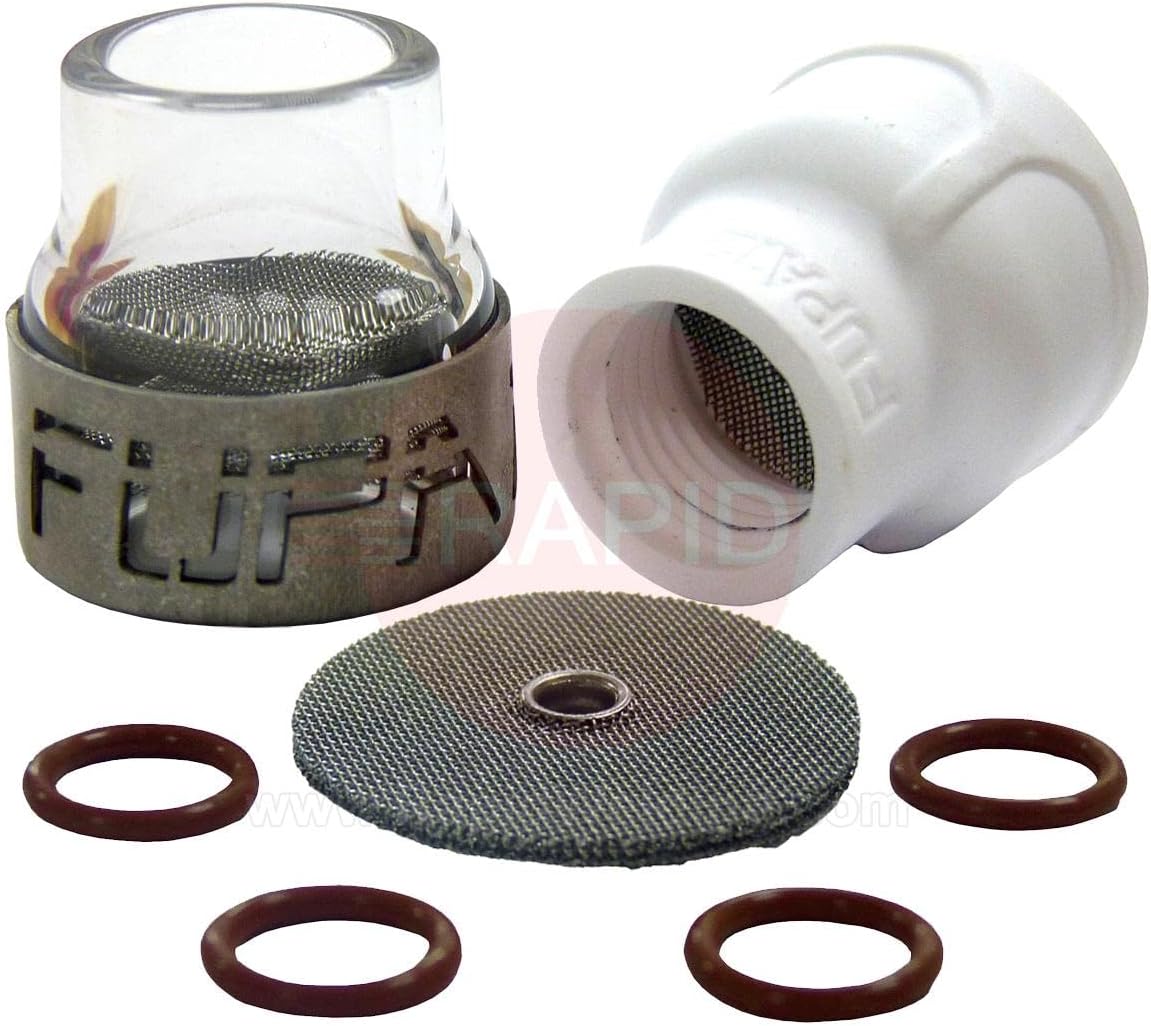
If you’re running TIG and you’re trying to improve coverage, visibility at the puddle, or consistency on longer beads, your cup setup matters more than most people think. A cup kit is not a magic fix, but it can reduce variables—especially when you’re troubleshooting gas coverage problems that look like “tungsten issues” or “bad filler” but are actually shielding-related.
This post covers one specific Amazon kit so you can verify what you’re buying, compare it to alternatives, and avoid guessing on fitment.
No products found.
Amazon listing title: Furick Cup Dual FUPA #12 Welding Cup Kit w/Titanium Diffuser
Verified ASIN: B09717HYGY
Amazon URL used to confirm ASIN:https://www.amazon.com/Furick-Cup-Welding-Titanium-Diffuser/dp/B09717HYGY?tag=weldsupport-20
This is a TIG cup kit built around a #12 cup format with a diffuser component. In practice, cup/diffuser setups are used to shape and stabilize shielding gas flow at the nozzle, which can help when you’re pushing cup size, stickout, or trying to keep coverage stable around corners and transitions.
Unknown (Verify): exact torch series compatibility (WP-17/18/26 vs WP-9/20), included parts list, and whether any adapters are required. Confirm on the listing and/or manufacturer documentation before buying.
If your issue is actually gas supply, leaks, contaminated tungsten, or poor prep, a new cup kit won’t solve it. Treat this as a consumable/torch-end choice, not a process substitute.
Cup setups affect how forgiving your shielding is. The right setup can make your results more repeatable; the wrong setup can make it harder to see what’s actually going wrong.
(Verified ASINs; plain affiliate links only.)
Shielding gas displaces oxygen. Use ventilation appropriate for the space, and do not treat “no visible smoke” as “safe air.” If you’re welding stainless or anything with coatings, fume control matters.