Tag: depressed center wheel
-
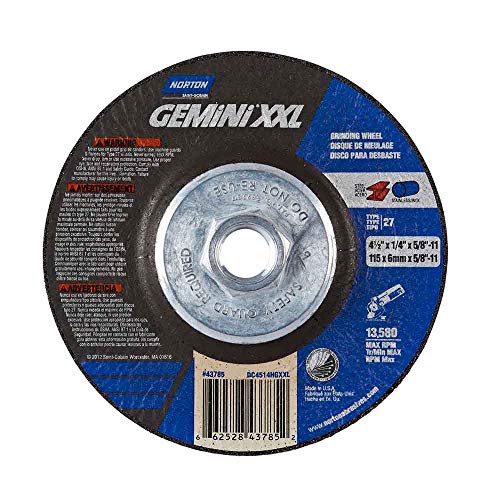
Norton 43785, 4.5″ x 1/4″ x 5/8-11 in. Gemini XXL, Pack of (10): Product Breakdown
“>
Depressed center grinding wheels are standard consumables in weld shops, fabrication bays, and maintenance crews that spend time on right-angle grinding. The Norton 43785, 4.5″ x 1/4″ x 5/8-11 in. Gemini XXL, Pack of (10) is one of those shop items that needs to be checked as a fit-and-use decision, not just a part number match. For buyers and end users, the practical questions are simple: does it fit the grinder, does it match the task, and is it being used within the tool’s guard and speed limits? The product listing identifies this as a depressed center wheel. Beyond that, any material-specific or performance-specific detail is Unknown (Verify) unless confirmed on the vendor page or in your own purchasing record.
Key Takeaways
- This is a depressed center wheel, commonly referred to as Type 27, 28, or 29 depending on shape and use case.
- The 5/8-11 mounting thread is a key fit check for the grinder spindle. Verify the tool spindle before ordering.
- Pack size is 10 wheels. Confirm your usage rate before committing to bulk inventory.
- The wheel is intended for right-angle grinding applications, but the exact work range for your process is Unknown (Verify).
- Use the product page as the primary source for the part number and listed configuration, and verify all grinder compatibility in the field.
What This Part Is Used For
Depressed center wheels are built to let the flange or lock nut recess into the wheel body. That shape helps the operator approach a workpiece at an angle without the hardware interfering with the grind. In practice, this makes the wheel useful for weld cleanup, edge dressing, material removal, and other severe right-angle grinding tasks. The exact applications still depend on the wheel specification, machine rating, and operator technique. If the job involves heavy stock removal, root pass cleanup, bevel preparation, or surface blending, verify the wheel grade and intended use before installation.
Do not assume that all 4-1/2 inch grinding wheels behave the same. Diameter alone does not guarantee compatibility with a given grinder, guard, or work method. Verify all three: wheel size, thread fit, and the machine’s rated speed.
Product and Parts Breakdown
The product title gives the key buying identifiers:
- Brand: Norton
- Part number: 43785
- Wheel size: 4.5 inch by 1/4 inch
- Mount: 5/8-11
- Wheel style: Gemini XXL
- Pack quantity: 10
Everything beyond those listed identifiers should be treated as Unknown (Verify) unless your sourcing record or product page confirms it. That includes exact abrasive composition, application rating, grain type, maximum RPM, and material compatibility.
If your maintenance team is comparing this wheel to other Norton Gemini wheels, use the internal review as a related reference point only: Norton Gemini Fast Cut Grinding Wheel Review (4-1/2″ × 1/4″ × 7/8″, Pack of 25). That article may help with broader shopping context, but it is not a substitute for checking the exact part number and mount size.
How to Check Fit Before You Buy or Install
Use a short verification routine before the wheel is accepted into service:
- Check the spindle thread. Verify the grinder spindle is 5/8-11. If it is not, stop and select the correct mount.
- Inspect wheel diameter. Confirm the tool guard is sized for a 4.5 inch wheel.
- Inspect thickness. The title shows 1/4 inch. Verify your guard, flange stack, and work access can accommodate that thickness.
- Verify tool speed rating. Match the grinder’s rated speed to the wheel’s label. If the wheel label is unavailable, treat the speed rating as Unknown (Verify) and do not install until confirmed.
- Inspect the wheel face. Reject any wheel with cracks, chips, moisture damage, distortion, or obvious contamination.
Troubleshooting Support
If the wheel is not performing as expected, work through the following checks before blaming the wheel.
Wheel does not fit the grinder
- Check: spindle thread size.
- Inspect: flange and lock nut configuration.
- Verify: the grinder is designed for a 5/8-11 mounted wheel, not another arbor pattern or quick-change system.
Wheel feels unstable or vibrates
- Check: wheel seating on the flange.
- Inspect: damaged flanges, dirty mounting surfaces, bent spindle, or guard interference.
- Verify: the wheel is mounted in the correct orientation and fully tightened per the grinder manufacturer instructions.
Grinding rate is lower than expected
- Check: the workpiece material and condition.
- Inspect: glazing, loading, or edge wear on the wheel face.
- Verify: the wheel type is appropriate for the material and the operator is using the correct angle and pressure. If the wheel type is unknown, treat the performance expectation as Unknown (Verify).
Safety Notes
- Wear face protection, eye protection, gloves, hearing protection, and suitable clothing.
- Use the grinder guard. Do not remove or bypass it.
- Do not exceed the wheel’s marked speed rating. If the rating is unavailable, stop and verify before use.
- Do a brief no-load spin check after installation and stand clear of the wheel plane.
- Remove damaged wheels from service immediately.
Buyer Guidance for Maintenance Teams
For storeroom control, pack quantity matters. A pack of 10 can reduce reordering time, but only if the wheel is a known fit for your most common grinders. If your fleet includes mixed spindle sizes, do not assume this part will cover all units. Standardize by machine class, then stock accordingly. If the wheel is intended for a specific task cell, label the bin with both the part number and the confirmed grinder model after verification.
For comparison shopping, use product title, spindle size, and wheel diameter as the primary controls. Do not build a purchase decision from brand name alone. If a specification is not stated in the source provided, mark it Unknown (Verify) in your internal record.
FAQ
Q: Is the Norton 43785 wheel a Type 27 wheel?
A: The listing describes a depressed center wheel. Depressed center wheels are commonly referred to as Type 27, 28, or 29 depending on shape and use. Exact shape designation for this part is Unknown (Verify) unless the product page states it directly.Q: Will this wheel fit any 4.5 inch grinder?
A: No. You must verify spindle thread, guard clearance, and machine speed rating. A 4.5 inch wheel with a 5/8-11 mount will not fit every grinder.Q: Can this wheel be used for cutting as well as grinding?
A: The source describes it as a depressed center wheel used for grinding and cutting applications, but exact task approval depends on the wheel’s verified label and your tool setup. Confirm before use.Q: Is the abrasive type or material rating confirmed here?
A: No. Abrasive formulation, work material rating, and performance limits are Unknown (Verify) from the provided source.Sources Checked
- ArcWeld product page: Norton 43785, 4.5″ x 1/4″ x 5/8-11 in. Gemini XXL, Pack of (10)
- Internal related article: Norton Gemini Fast Cut Grinding Wheel Review (4-1/2″ × 1/4″ × 7/8″, Pack of 25)
All uncertain technical details in this draft are marked Unknown (Verify). Verify actual wheel labeling, machine compatibility, and operating limits before purchase or use.
Related Arc Weld Part
Norton 43785, 4.5" x 1/4" x 5/8-11 in. Gemini XXL, Pack of (10)
Depressed center wheels may also be referred to as raised hub wheels or by their shape designation Type 27, 28 or 29, with Type 27 being the most popular. The depressed center design allows the flange/lock nut to recess within the wheel so that it can be used for various grinding and cutting applications. Depressed center wheels are designed to handle the most severe right angle grinding applications from heavy st…
View at Arc Weld StoreRelated Weld Support Guides