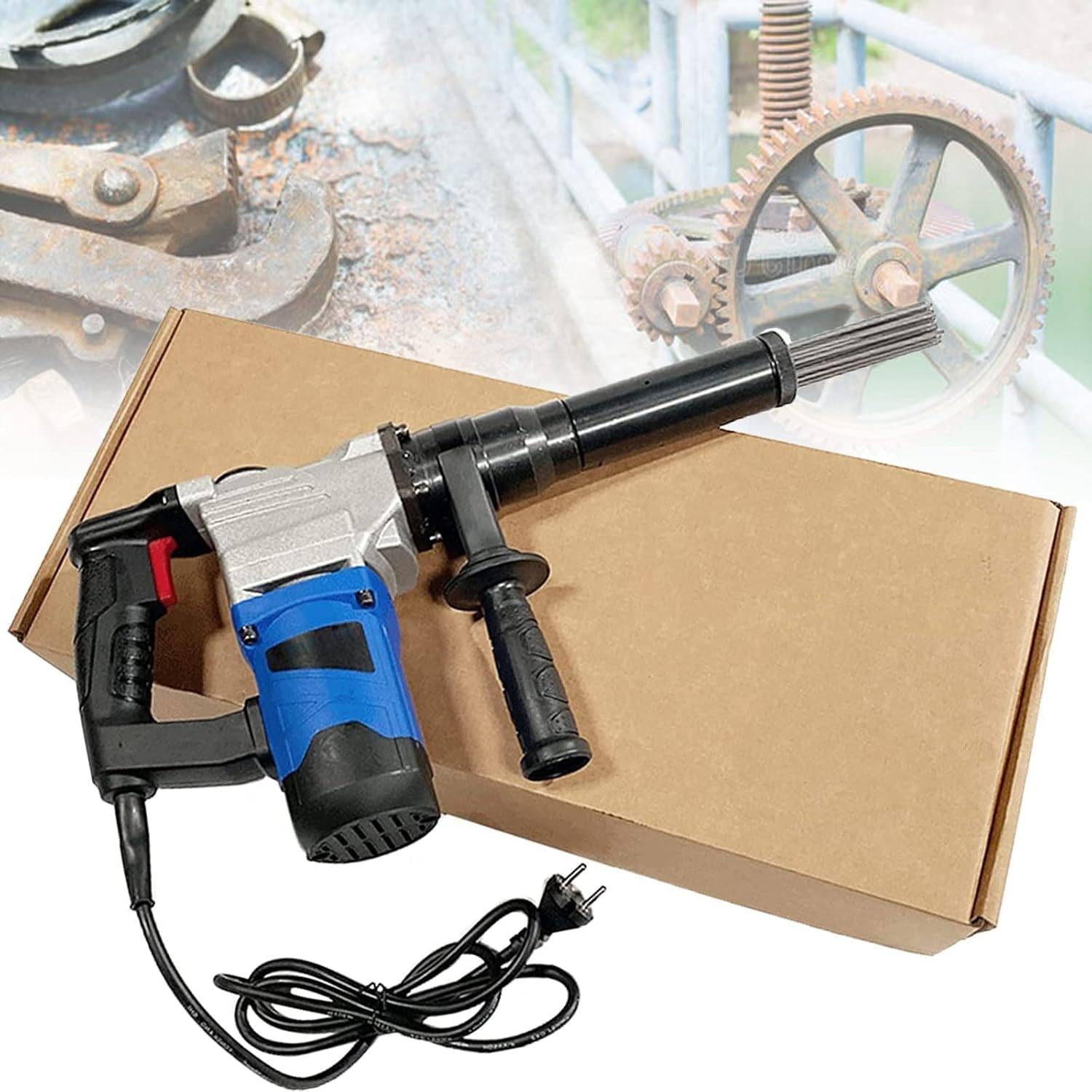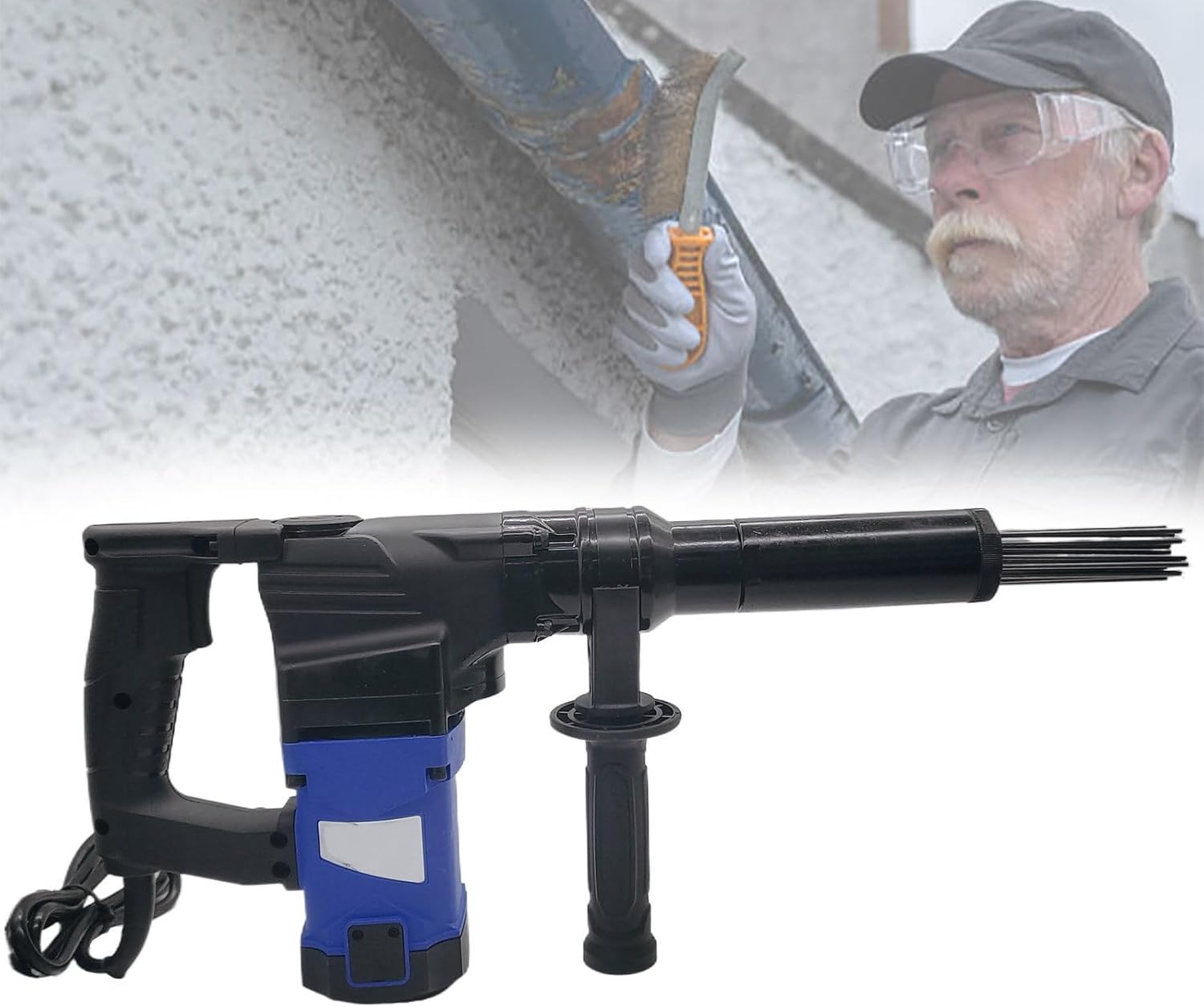
Needle scalers are not “finish tools.” They’re for aggressive removal of weld slag, rust, and stubborn coatings where a flap disc, wire wheel, or scraper is slow—or where you’re trying to get into irregular surfaces and corners.
This post covers what to verify before buying the Beachtiful Electric Needle Scaler (1100W), where it fits in a welding workflow, and what it will not do (so you don’t buy it expecting grinder-like results).
No products found.
What a needle scaler is best at
A needle scaler uses a bundle of moving needles to “chip” at surface contamination. In welding/fab work, it’s typically used for:
- Slag removal after certain processes (especially where slag is heavy or access is awkward)
- Rust and coating removal during repair prep
- Cleaning irregular surfaces where a disc can’t sit flat
It’s not a replacement for final surface conditioning. Most jobs still need a follow-up pass (wire wheel, flap disc, sanding) depending on your finish requirements.
Performance & Use
What to compare before you buy
- Power and duty expectations: The listing states “1100W” in the title; verify the electrical requirements and whether it matches your shop power.
- Needle replacement availability: Confirm replacement needle sets are easy to source (Unknown (Verify) unless clearly listed).
- Vibration and control: Needle scalers can be fatiguing. Look for grip/handle design that supports two-hand control.
- Access vs grinder: If you mainly need flat-surface blending, a flap disc may be faster. If you need corners/irregular surfaces, the scaler can win.
- Noise and debris management: Plan for hearing protection and eye/face protection. Debris can eject unpredictably.
Comparable Amazon picks (optional)
- Beachtiful Electric Needle Scaler, 1100W Handheld Rust Remover (ASIN: B0D5CTDVBG)
https://www.amazon.com/Beachtiful-Electric-Handheld-Derusting-Metalworks/dp/B0D5CTDVBG?tag=weldsupport-20 - SWANSOFT Electric Needle Scaler, 1100W Rust Removal (ASIN: B0CM8LGSKC)
https://www.amazon.com/SWANSOFT-High-Power-Industrial-Removal-Electric/dp/B0CM8LGSKC?tag=weldsupport-20
Where this fits in a welding workflow
A practical sequence (common repair/fab reality):
- Gross removal: needle scaler for heavy slag/rust/coating
- Refine: wire wheel or flap disc to smooth and prep for weld/paint
- Final prep: wipe/clean per your coating or weld procedure requirements (process-specific)
Safety notes worth taking seriously
- Eye/face protection is non-negotiable. Needle scalers throw sharp debris. Use at least safety glasses; a face shield is often the better call.
- Hearing protection: These tools are loud in real use.
- Gloves and sleeves: Helps with vibration and protects from sharp chips.
- Check what you’re removing. If you’re stripping unknown coatings, treat dust as hazardous until verified otherwise.
Who should buy this
Good fit if you:
- Do repair work where rust/coatings are common.
- Need a tool that can clean irregular surfaces faster than discs alone.
Skip if you:
- Mostly do clean new fab where a flap disc/wire wheel already covers your prep needs.
- Expect a needle scaler to leave a “ready-to-paint” finish without follow-up.
Where to buy (verified)
Beachtiful Electric Needle Scaler, 1100W Handheld Rust Remover (listing title as shown in search results)
Verified ASIN: B0D5CTDVBG
Amazon verification URL: https://www.amazon.com/Beachtiful-Electric-Handheld-Derusting-Metalworks/dp/B0D5CTDVBG?tag=weldsupport-20