Tag: buying guide

  • ESAB Sentinel A50 Helmet Parts Breakdown: Parts Lookup and Buying Checks

    ESAB Sentinel A50 Helmet Parts Breakdown: Parts Lookup and Buying Checks

    ESAB Sentinel A50 Helmet Parts Breakdown

    If you are maintaining an ESAB Sentinel A50, the most useful first step is a parts-level inspection. Helmets fail in small ways before they fail outright: scratched cover lenses, loose headgear pivots, worn seals, cracked shells, or a lens cover that no longer seats correctly. This guide is built to help welders, fabricators, and maintenance buyers work through those checks before ordering replacement parts.

    Key Takeaways

    • Start with the worn component, not the whole helmet.
    • Confirm the exact helmet model before ordering any replacement part.
    • Inspect cover lenses, shell, headgear, and retention points separately.
    • Use the Weld Support Parts lookup page as the first reference for the ESAB Sentinel A50.
    • If a fitment detail is not confirmed, treat it as Unknown (Verify).

    What to Check on an ESAB Sentinel A50 Before You Buy

    The Sentinel A50 is a welding helmet system, so parts buying should be done by function. Do not assume that a damaged front lens means the shell or internal assembly also needs replacement. Work through the helmet in sections.

    1) Cover lens condition

    Inspect the outer cover lens for pitting, arc spatter damage, deep scratches, heat distortion, or clouding that reduces visibility. If the lens is only dirty, clean it first. If the lens is etched or warped, replacement is usually the correct next step.

    Check: remove the lens and compare the seating edges. Confirm it sits flat and does not buckle at the frame. Inspect: the locking tabs or retention points for wear. Verify: the replacement lens matches the helmet listing for ESAB Sentinel A50, not a similar shell shape.

    2) Shell condition

    Look for cracks, impact marks, melted areas, and deformation around the lens opening. The shell is the structural part of the helmet. Once it is cracked or distorted, the helmet may no longer protect or fit correctly.

    Check: outside corners, top ridge, and front opening. Inspect: for stress whitening near fastener points. Verify: whether the shell is available as a separate replacement on the WSP lookup page.

    3) Headgear wear

    Headgear problems often show up as poor balance, slipping, or a helmet that will not hold its set position. Examine the headband padding, adjustment tracks, pivot points, and tightening hardware.

    Check: whether the helmet stays in position during normal head movement. Inspect: cracked adjustment teeth, stretched straps, or broken mounting lugs. Verify: the headgear part description before ordering; headgear assemblies are model-specific and should not be assumed interchangeable.

    4) Internal retention and interface points

    Any lens carrier, gasket, seal, or mounting interface must be checked for deformation. Small damage here can cause repeated lens movement, light leakage, or poor fit after a new part is installed.

    Check: how the part locks into place. Inspect: for missing clips, loose screws, or rounded attachment points. Verify: whether the helmet needs a complete subassembly or a single part.

    WSP Lookup Section

    Use the Weld Support Parts product page for the ESAB Sentinel A50 as the starting point for identification and part matching: ESAB Sentinel A50 Helmet Parts Breakdown.

    This page is the correct place to confirm the available replacement categories for this helmet, including cover lens, shell, headgear, and related helmet parts. If a detail is not explicit on the listing, mark it Unknown (Verify) and do not guess.

    Buying check: before placing an order, compare the helmet nameplate, product listing title, and the damaged component itself. If your old part has a molded number or printed identifier, record it and verify it against the listing or support documentation.

    Troubleshooting Support: Common Ordering Mistakes

    Wrong helmet family

    Sentinel-style helmets can look similar across model lines. A part that looks close may still not fit.

    Check: the exact ESAB model name on the helmet. Inspect: the part shape and mounting pattern. Verify: compatibility directly on the WSP page or with the removed part in hand.

    Buying only the visible damaged piece

    A lens that is repeatedly loose may indicate a frame, retainer, or shell issue. Do not replace the lens alone if the mounting system is damaged.

    Check: whether the problem repeats after cleaning and reinstalling. Inspect: adjacent parts for wear. Verify: if the frame or shell needs replacement instead of the lens only.

    Assuming all headgear assemblies are the same

    Headgear shape, pivot style, and mounting location can vary. Treat all headgear replacements as model-specific until confirmed.

    Check: bolt pattern and pivot points. Inspect: the original part for part numbers. Verify: fitment before purchase.

    How to Order the Right Part

    1. Identify the helmet as an ESAB Sentinel A50.
    2. Remove the damaged part and inspect it on the bench.
    3. Record any molded number, printed code, or visible hardware pattern.
    4. Open the WSP lookup page and compare the part category.
    5. Use Unknown (Verify) for any detail not confirmed by the listing.
    6. Order only after the replacement path is clear.

    Safety Notes

    • Do not weld with a helmet that has a cracked shell or a loose lens retention system.
    • Do not assume a damaged lens is only cosmetic; reduced visibility is a safety issue.
    • Replace worn headgear that no longer holds position or causes the helmet to shift during use.
    • After replacement, check the helmet on the head before returning it to service.

    FAQ

    How do I know whether I need a cover lens or a full helmet part replacement?

    If the problem is isolated to scratches, spatter, or clouding, start with the cover lens. If the shell is cracked, warped, or the lens will not seat correctly, inspect the surrounding parts and verify whether a larger assembly is needed.

    Can I use a similar-looking ESAB part from another helmet?

    Do not assume fitment. Similar shape does not confirm compatibility. Compare the exact model and check the WSP listing. If it is not confirmed, mark it Unknown (Verify).

    What should I do if my headgear feels loose after adjustment?

    Inspect the pivot points, adjustment teeth, straps, and mounting hardware. If wear is visible or the helmet will not hold position, verify whether the headgear assembly needs replacement.

    Is the WSP page enough to confirm every replacement part?

    It is the correct starting point for part lookup, but any unclear detail should be verified against the removed part, helmet markings, or support records before ordering.

    Sources Checked

    • Weld Support Parts: ESAB Sentinel A50 Helmet Parts Breakdown
    • Internal reference: ESAB Sentinel A50 Welding Helmet Review
    • Internal reference: 3M Speedglas G5-02 Welding Helmet Support Guide: Fitment, Lens Protection, and Ordering Checks
    • Internal reference: Lincoln Viking 3350 Welding Helmet Review and Buying Guide

    For maintenance buyers, the main rule is simple: confirm the model, inspect the damaged part, and verify the replacement category before ordering. That keeps the job focused, reduces returns, and avoids putting a helmet back into service with an unconfirmed part match.

    Disclosure: As an Amazon Associate, Weld Support Parts may earn from qualifying purchases.

    Related Weld Support Guides

  • ESAB PT-38 Torch Parts Breakdown: Parts Lookup and Buying Checks

    ESAB PT-38 Torch Parts Breakdown: Parts Lookup and Buying Checks

    ESAB PT-38 Torch Parts Breakdown

    If you are maintaining an ESAB PT-38 torch, the main job is not just finding a part number. The job is matching the torch body, head, consumables, shields, and accessory rows to the exact setup on the machine before you order. A wrong consumable can look close enough to install and still fail in cut quality, arc stability, or wear life.

    This guide is a practical parts-lookup and buying-check article for the ESAB PT-38 Torch Parts Breakdown. Use it to verify what you have, compare the layout to the Weld Support Parts lookup page, and avoid ordering by appearance alone.

    Key Takeaways

    • Start with the torch family and item-number lookup, not the part photo.
    • Verify the torch model, amperage class, and cut process before ordering consumables.
    • Check the nozzle, electrode, shield, retaining cap, swirl ring, and handle-side accessories as a set.
    • If any fitment detail is unclear, treat it as Unknown (Verify) until you confirm it against the lookup page or the torch itself.
    • Use the parts breakdown for replacement planning, not as proof that two similar-looking parts are interchangeable.

    What the PT-38 parts breakdown is good for

    The Weld Support Parts page for the ESAB PT-38 is a lookup reference for replacement parts, consumables, kits, and accessory rows with item-number lookup. That makes it useful for maintenance buyers and shop support teams who need to match what is installed on the torch to what should be ordered next.

    Use the page to identify:

    • Consumable rows tied to the PT-38 torch family
    • Replacement items for wear parts
    • Kit rows or grouped accessory rows, if listed
    • Item numbers that help cross-check your internal stock labels

    Important: the lookup page is a starting point for identification. It is not a substitute for confirming the torch variant in the field.

    Practical check steps before you order

    Use these checks at the bench, not from memory.

    1. Check the torch nameplate or body marking. Verify that the torch is actually PT-38. If the marking is missing or worn, note it as Unknown (Verify).
    2. Inspect the consumable stack. Remove the nozzle, electrode, shield, and retaining components as needed and lay them out in order. Compare that stack to the parts breakdown.
    3. Verify wear pattern. Look for rounded nozzle orifice, heat distortion, pit marks, or thread damage. If the wear pattern is abnormal, do not assume the next size up or down is correct.
    4. Match item numbers. Use the Weld Support Parts lookup rows to confirm the item numbers before purchase.
    5. Check for accessory dependence. Some torch setups rely on specific shields, caps, or adapters. Verify each row individually.
    6. Confirm the machine-side connection. The torch body can only be matched correctly if the lead, connector, and machine interface are also verified. If you do not have that information, record it as Unknown (Verify).

    Troubleshooting and support checks

    If the torch is cutting poorly, do not start with the most expensive part. Start with the consumable stack and the torch condition.

    No start or unstable start

    • Inspect electrode condition and seating.
    • Verify the nozzle is not damaged, clogged, or oversized from wear.
    • Check shield and retaining parts for heat damage or loose fit.
    • Verify the torch cable, trigger circuit, and machine connection. If the machine-side details are not known, mark them Unknown (Verify).

    Weak arc or arc dropout

    • Inspect the consumable stack for improper assembly.
    • Verify that the parts match the PT-38 breakdown and not a similar torch family.
    • Look for excessive nozzle erosion or electrode wear.
    • Confirm gas or air delivery conditions only if your setup uses them and the machine instructions support that check.

    Rough cut edge or rapid consumable wear

    • Inspect nozzle alignment and seating.
    • Verify the shield and retaining components are correct for the torch head.
    • Check for contamination, heat damage, or mechanical impact.
    • Compare the installed parts against the lookup page before ordering a full consumable kit.

    How to use the WSP lookup page

    Use the Weld Support Parts PT-38 lookup page here: ESAB PT-38 Torch Parts Breakdown.

    Use that page as your first pass for part identification. Review each row carefully and compare the item number to the physical part in your hand. If a row is unclear, do not guess. Mark the detail Unknown (Verify) and confirm it against the torch body, existing packaging, or your maintenance records.

    For shops managing multiple plasma torches, this page is useful for reducing mix-ups between similar torch families. The main check is still the same: torch model first, consumable stack second, order third.

    Buying checks for maintenance teams

    Before you release a purchase order, verify the following:

    • Model match: PT-38 confirmed, or Unknown (Verify) if not confirmed.
    • Part-level match: nozzle, electrode, shield, cap, and any adapter or spacer verified by row.
    • Usage history: record whether the failed part was damaged by heat, impact, poor seating, or normal wear.
    • Stock control: confirm the warehouse label matches the item number on the lookup page.
    • Machine-side details: verify cable length, connector style, or system interface only from documented records. If not documented, use Unknown (Verify).

    Do not approve a replacement just because the part looks close. Plasma torch consumables are often similar by appearance and still not interchangeable.

    Safety notes

    • Disconnect power and follow plant lockout procedures before opening torch assemblies.
    • Allow hot parts to cool before handling.
    • Wear eye protection and gloves when removing worn consumables.
    • Do not reuse parts with cracked threads, heavy heat distortion, or visible structural damage.
    • If the torch condition is uncertain, stop and verify rather than forcing a fit.

    FAQ

    How do I know which PT-38 part I need?

    Start with the torch marking, then compare the installed consumables to the parts breakdown. Match the item numbers on the lookup page to the parts in your hand.

    Can I order by appearance alone?

    No. Similar plasma consumables can look alike and still differ in fitment or function. Verify the row, item number, and torch model first.

    What if my torch label is missing?

    Treat the model as Unknown (Verify) until you confirm it from records, machine documentation, or a direct parts comparison.

    Is the parts breakdown enough to approve a replacement?

    It is a good starting point, but not enough by itself if the torch or machine interface is unclear. Confirm all uncertain details before ordering.

    Sources Checked

    For the ESAB PT-38, the safe buying process is simple: verify the torch, verify the consumable stack, verify the item number, then order. If any detail is not confirmed, keep it as Unknown (Verify) until you have the right match.

    Disclosure: As an Amazon Associate, Weld Support Parts may earn from qualifying purchases.

    Related Weld Support Guides

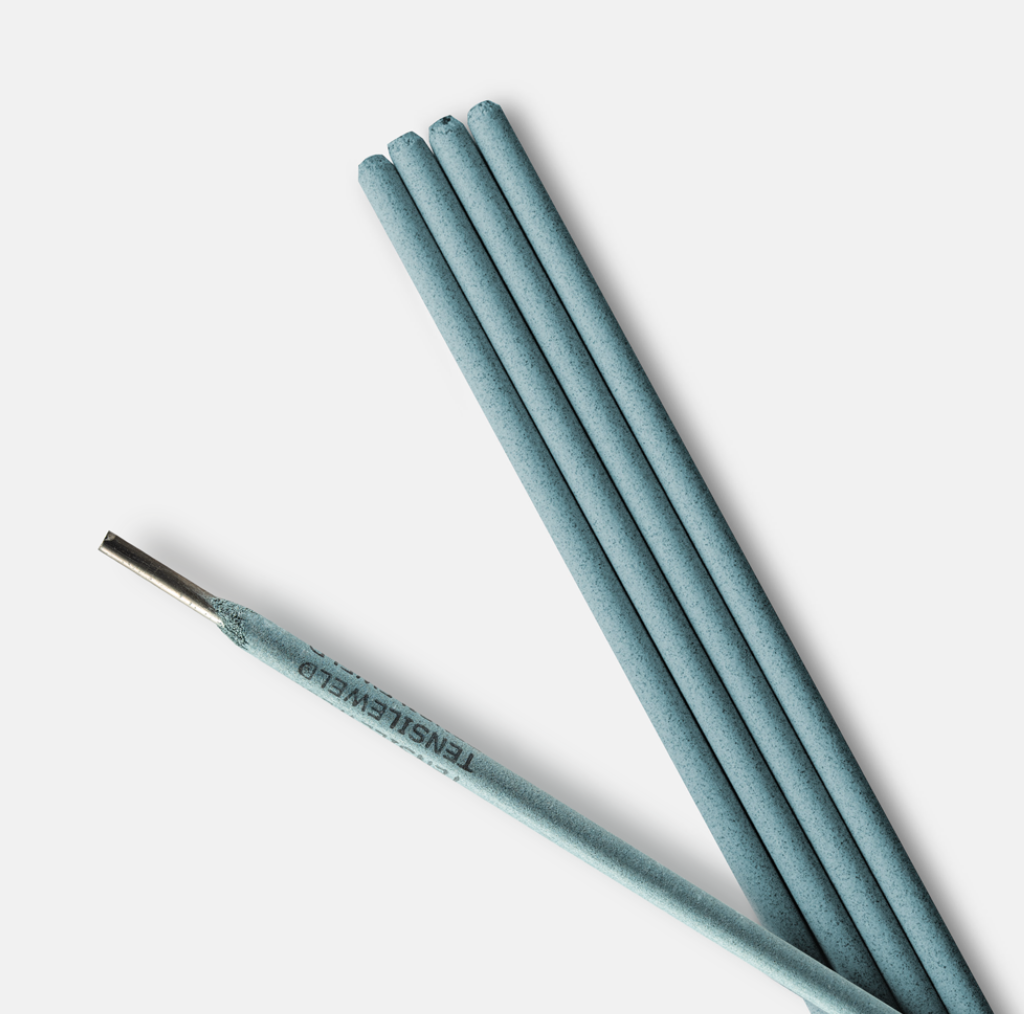
  • Tensileweld Stick Electrode

    Tensileweld Stick Electrode

    Introduction & Overview

    Tensileweld Electrodes are engineered for high-strength, porosity-free welds that can handle demanding environments. These electrodes are designed to work on both AC and DC current. They deliver weld deposits that are resistant to impact, abrasion, heat, and corrosion. They are particularly useful when welding dissimilar steels. They are also handy if the base metal’s alloy content is unknown. This makes them a versatile choice across a wide range of industries.

    Key Features

    The standout qualities of Tensileweld electrodes make them a go-to option for critical welding jobs:

    • High Strength & Durability: Tensile strength ranging from 95,000 to 122,000 psi and yield strength up to 95,000 psi.
    • Corrosion & Heat Resistance: Formulated to withstand harsh conditions.
    • Versatile Applications: Works effectively on dissimilar steels, carbon steels, stainless steels, tool steels, spring steels, and more.
    • Flexible Power Source: Suitable for both AC and DC reverse polarity.
    • User-Friendly Technique: Short arc welding with stringer beads and peening is recommended for best results.

    Pros & Cons

    Pros:

    • Produces strong, porosity-free welds
    • Resistant to impact, abrasion, heat, and corrosion
    • Compatible with a wide variety of steels and alloys
    • Useful when base metal composition is unknown

    Cons:

    • Requires preheating (400ºF) for carbon and cast steels
    • Recommended procedures may be less forgiving for beginners

    Who It’s For

    Tensileweld electrodes are designed for professionals and industries where weld integrity is non-negotiable:

    • Mining and Heavy Industry: Underlayment of hardfacing alloys, rebuilding shafts, agitator blades, and gears.
    • Aerospace & Pressure Vessels: Welding high-performance steels in critical applications.
    • Maintenance & Repair: Field welders tackling mixed or unknown alloys.

    What Makes It Unique

    What sets Tensileweld apart is its ability to handle unknown or dissimilar steels without sacrificing strength or reliability. Many electrodes are designed for specific alloys. However, Tensileweld’s chemistry, which is high in chromium, nickel, and molybdenum, makes it versatile across a wide spectrum. This adaptability reduces the guesswork when the base material isn’t clearly identified.

    Buying Tips

    When selecting Tensileweld electrodes:

    • Choose the correct diameter for the job (3/32”, 1/8”, 5/32”, or 3/16”).
    • Use flat position amperage ranges for best control (65–230 amps depending on size).
    • Preheat thicker or carbon steels to avoid cracking.
    • Keep the work area clean and beveled for maximum penetration and weld quality.

    Conclusion

    Tensileweld Electrodes provide welders with a high-performance, all-purpose solution for tackling tough jobs across diverse industries. They deliver strong, durable welds on dissimilar or unknown steels. This makes them an invaluable tool for anyone who prioritizes strength and reliability in welding.

    Note: We may earn a small commission from Amazon affiliate links at no additional cost to you.

    No products found.

    No products found.

    No products found.

  • Lincoln Auto-Darkening Welding Helmet for Beginners

    Lincoln Auto-Darkening Welding Helmet for Beginners

    **Lincoln Auto-Darkening Welding Helmet for Beginners: Product Review & Buying Guide**

    **Overview**

    The Lincoln Auto-Darkening Welding Helmet is a popular choice among beginner welders, offering a blend of safety, comfort, and advanced features at an accessible price point. Designed with user-friendly controls and reliable performance, this helmet helps new welders focus on their craft without worrying about eye protection or complicated settings.

    **Key Features**

    This helmet boasts an auto-darkening lens that quickly adjusts to varying light conditions, ensuring your eyes are protected from harmful UV and IR rays. The viewing area is generous, providing a clear and wide field of vision. With adjustable sensitivity and delay controls, users can fine-tune the helmet’s response to suit different welding tasks and environments.

    **Pros**

    – **User-Friendly:** Simple controls make it easy for beginners to set up and use right out of the box.
    – **Comfortable Fit:** Lightweight design and adjustable headgear reduce fatigue during long welding sessions.
    – **Reliable Protection:** Meets industry safety standards, offering peace of mind for new welders.
    – **Versatile:** Suitable for various welding processes, including MIG, TIG, and stick welding.

    **Cons**

    – **Battery Life:** Some users report that the battery may need replacement sooner than expected with heavy use.
    – **Basic Aesthetics:** The design is functional but lacks the flashy graphics found on some higher-end models.
    – **Limited Advanced Features:** While perfect for beginners, experienced welders may find the feature set somewhat basic.

    **Who Is It Best For?**

    This helmet is ideal for hobbyists, students, and anyone just starting out in welding. Its straightforward operation and dependable protection make it a smart investment for those learning the ropes. If you’re looking for a helmet that balances affordability with essential features, this Lincoln model is a solid choice.

    **What Makes It Unique?**

    Lincoln’s reputation for quality and safety sets this helmet apart from many entry-level competitors. The auto-darkening technology is responsive and consistent, reducing the risk of eye strain or accidental flashes. The combination of comfort, clarity, and ease of use makes it especially appealing for beginners who want to build confidence as they develop their skills.

    **Conclusion**

    The Lincoln Auto-Darkening Welding Helmet stands out as a reliable, beginner-friendly option that doesn’t compromise on safety or comfort. Its intuitive features and trusted brand name make it a worthwhile addition to any new welder’s toolkit.

    We may earn a small commission through Amazon affiliate links, at no extra cost to you.


    Lincoln Electric VIKING 1740 Auto-Darkening Welding Helmet, Matte Black – 4C Lens Tech, 1/1/1/1 Optics, 6.3 sq in View, Shade 9-13, Solar & Battery Powered, Model K3282-3
    • TRUE-COLOR VISIBILITY: Exclusive lens tech delivers vivid arc detail, reducing eye fatigue.
    • IDEAL FOR MULTI-PROCESS: Excellent clarity suited for MIG, TIG, Stick, and plasma cutting tasks.
    • BUILT-IN GRIND MODE: Quickly switch between welding and grinding with convenient LED indicator.
    • COMFORTABLE ALL-DAY WEAR: Adjustable, cushioned ratchet headgear evenly distributes helmet weight.
    • LONG-LASTING PERFORMANCE: Integrated solar panel plus AAA battery backup ensures consistent shading.

    Last update on 2026-07-14 / Affiliate links / Images from Amazon Product Advertising API

  • ESAB Savage A40 Helmet Buying Tips

    ESAB Savage A40 Helmet Buying Tips

    **ESAB Savage A40 Welding Helmet Review & Buying Guide**

    The ESAB Savage A40 is a popular auto-darkening welding helmet designed for both hobbyists and professionals. Known for its comfort, clarity, and value, the A40 stands out in a crowded market. Here’s what you need to know before making your purchase.

    **Key Features**

    The Savage A40 boasts a large viewing area (100 x 50 mm), providing excellent visibility and situational awareness. Its optical clarity rating of 1/1/1/2 ensures a crisp, distortion-free view. The helmet features four arc sensors for reliable auto-darkening response and offers shade adjustment from DIN 9 to 13, making it suitable for MIG, TIG, and stick welding. External controls allow for easy sensitivity and delay adjustments, even while wearing gloves.

    **Pros**

    – **Comfortable Fit:** The lightweight shell and ergonomic headgear reduce fatigue during long welding sessions.
    – **Clear Vision:** True Color lens technology enhances color recognition and detail, improving weld quality.
    – **Versatile Use:** Adjustable settings and a wide shade range accommodate various welding processes.
    – **Durable Construction:** The helmet is built to withstand tough workshop environments.

    **Cons**

    – **Battery Life:** While the helmet uses solar assist, the replaceable battery may need changing more frequently with heavy use.
    – **Limited Grinding Mode:** The grinding mode is functional but not as robust as some higher-end models.
    – **No Side Windows:** Unlike some premium helmets, the A40 lacks peripheral side windows for extra visibility.

    **Who Is It Best For?**

    The ESAB Savage A40 is ideal for intermediate welders, DIY enthusiasts, and professionals seeking a reliable helmet without a premium price tag. Its user-friendly controls and comfortable design make it suitable for extended use in workshops, garages, or job sites. Beginners will appreciate its straightforward operation, while experienced welders will value its clarity and adjustability.

    **What Makes It Unique?**

    The A40 stands out for its combination of affordability and high-end features. The True Color lens technology, large viewing area, and intuitive controls are typically found in more expensive helmets. ESAB’s reputation for quality and the helmet’s robust build further set it apart from competitors in its price range.

    **Buying Tips**

    – **Check for Fit:** Ensure the headgear is adjustable to your head size for maximum comfort.
    – **Consider Your Welding Type:** Make sure the shade range covers your primary welding processes.
    – **Look for Deals:** The A40 is often available in bundles with extra lenses or accessories.
    – **Read User Reviews:** Feedback from other welders can provide insights into long-term durability and performance.

    **Conclusion**

    The ESAB Savage A40 offers an impressive balance of comfort, clarity, and value, making it a top choice for many welders. If you’re looking for a reliable helmet that won’t break the bank, the A40 is well worth considering.

    We may earn a small commission through Amazon affiliate links, at no extra cost to you.


    ESAB 0700000490 SAVAGE A40 Black Auto-Darkening Welding Helmet, External Shade Adjustment, Four Arc Sensor Auto Darkening, 3.93″ x 1.96″ True Color Viewing Lens, Sensitivity/Delay Control
    • External shade adjustment between DIN 9 and DIN 13 and an optical class of 1/1/1/2
    • Delay and sensitivity can be adjusted from the inside;Four arc sensors for higher auto darkening response
    • True Color allowing for a brighter view and enhanced colour definition
    • Delay control enabling the welder to set how long the lens stays dark after the welding arc stops.
    • Shade 4 Grind Mode

    Last update on 2026-07-14 / Affiliate links / Images from Amazon Product Advertising API

  • Lincoln Viking 1740 Helmet: Safety Guide

    Lincoln Viking 1740 Helmet: Safety Guide

    **Lincoln Viking 1740 Helmet: Safety Guide & Product Review**

    The Lincoln Viking 1740 welding helmet is designed for both hobbyists and professionals seeking reliable eye and face protection. With its blend of comfort, advanced optics, and user-friendly features, it stands out as a solid choice in the mid-range welding helmet market.

    **Key Features**

    The Viking 1740 boasts a 4C lens technology, providing a true-color view and reducing eye strain during long welding sessions. Its auto-darkening filter (ADF) offers a variable shade range from 9 to 13, ensuring adaptability for various welding processes. The helmet is lightweight, weighing just over a pound, and features an adjustable headgear for a secure, comfortable fit.

    **Pros**

    – **Excellent Optical Clarity:** The 4C lens technology delivers a crisp, clear view, making it easier to see your workpiece and weld puddle.
    – **Lightweight & Comfortable:** The helmet’s low weight and ergonomic headgear reduce fatigue during extended use.
    – **Fast Reaction Time:** The ADF responds quickly to arc flashes, providing reliable protection for your eyes.
    – **Affordable Quality:** Compared to higher-end models, the Viking 1740 offers many premium features at a more accessible price point.

    **Cons**

    – **Limited Shade Range:** While suitable for most welding tasks, the shade range may not cover specialized applications requiring lighter or darker settings.
    – **Basic Controls:** The helmet’s controls are straightforward but lack some of the advanced customization found in pricier models.
    – **Battery Life:** Some users report the need to replace batteries more frequently with heavy use.

    **Who Is It Best For?**

    The Lincoln Viking 1740 is ideal for DIY enthusiasts, students, and entry-level professionals who need dependable protection without breaking the bank. It’s also a great backup helmet for seasoned welders. Its ease of use and comfort make it especially suitable for those new to welding or those who weld intermittently.

    **What Makes It Unique?**

    What sets the Viking 1740 apart is its balance of clarity, comfort, and affordability. The 4C lens technology, typically found in higher-end helmets, is a standout feature at this price point. Lincoln Electric’s reputation for durability and safety further enhances the helmet’s appeal, making it a trustworthy choice for a wide range of users.

    **Conclusion**

    The Lincoln Viking 1740 welding helmet offers impressive optical clarity, comfort, and essential safety features at a reasonable price. While it may lack some advanced options, its performance and reliability make it a top contender for anyone seeking quality eye protection in the workshop.

    We may earn a small commission through Amazon affiliate links, at no extra cost to you.


    Lincoln Electric VIKING 1740 Auto-Darkening Welding Helmet, Matte Black – 4C Lens Tech, 1/1/1/1 Optics, 6.3 sq in View, Shade 9-13, Solar & Battery Powered, Model K3282-3
    • TRUE-COLOR VISIBILITY: Exclusive lens tech delivers vivid arc detail, reducing eye fatigue.
    • IDEAL FOR MULTI-PROCESS: Excellent clarity suited for MIG, TIG, Stick, and plasma cutting tasks.
    • BUILT-IN GRIND MODE: Quickly switch between welding and grinding with convenient LED indicator.
    • COMFORTABLE ALL-DAY WEAR: Adjustable, cushioned ratchet headgear evenly distributes helmet weight.
    • LONG-LASTING PERFORMANCE: Integrated solar panel plus AAA battery backup ensures consistent shading.

    Last update on 2026-07-14 / Affiliate links / Images from Amazon Product Advertising API

  • ESAB Sentinel A50 Welding Helmet Review

    ESAB Sentinel A50 Welding Helmet Review

    **ESAB Sentinel A50 Welding Helmet Review & Buying Guide**

    The ESAB Sentinel A50 is a premium welding helmet designed for both professional welders and serious hobbyists. Known for its futuristic look and advanced features, the Sentinel A50 stands out in a crowded market. Here’s a closer look at what makes this helmet a top choice, along with its pros, cons, and who will benefit most from using it.

    **Key Features**

    The Sentinel A50 boasts a high-impact resistant nylon shell, giving it both durability and a lightweight feel. Its standout feature is the large, color touchscreen control panel, which allows for easy adjustment of shade, sensitivity, and delay settings. The helmet offers a wide viewing area (3.93” x 2.36”) with a true color lens, providing excellent visibility and clarity. With an auto-darkening filter that ranges from shade 5-13, it’s suitable for a variety of welding processes.

    **Pros**

    – **Exceptional Comfort:** The Halo™ headgear is highly adjustable, ensuring a snug and comfortable fit for long welding sessions.
    – **Crystal Clear Vision:** The true color lens technology reduces eye strain and makes it easier to see your workpiece.
    – **User-Friendly Controls:** The external grind button and touchscreen interface make switching modes and adjusting settings quick and intuitive.
    – **Durability:** The helmet’s shell is built to withstand tough job site conditions.

    **Cons**

    – **Price:** The Sentinel A50 is more expensive than many entry-level helmets, which may not suit occasional users.
    – **Battery Life:** Some users report that the auto-darkening lens drains batteries faster than expected.
    – **Weight:** While not the heaviest, it’s slightly bulkier than some minimalist helmets.

    **Who Is It Best For?**

    The ESAB Sentinel A50 is ideal for professional welders, fabricators, and advanced hobbyists who demand top-tier performance and comfort. Its advanced features and robust construction make it suitable for daily use in demanding environments. Beginners or occasional welders may find its price and features more than they need, but those who value quality and reliability will appreciate the investment.

    **What Makes It Unique?**

    The Sentinel A50’s combination of a sleek, ergonomic design and a full-color touchscreen sets it apart from competitors. The clarity of its true color lens and the ease of adjusting settings mid-job are features rarely found together in other helmets. The external grind mode button is a thoughtful addition, allowing users to switch tasks without removing the helmet.

    **Conclusion**

    The ESAB Sentinel A50 welding helmet is a standout choice for those seeking comfort, clarity, and advanced features in a durable package. While it comes at a premium price, its performance and user-friendly design justify the investment for serious welders. We may earn a small commission through Amazon affiliate links, at no extra cost to you.


    No products found.

  • Lincoln VIKING 3250D FGS Helmet Review

    Lincoln VIKING 3250D FGS Helmet Review

    **Lincoln VIKING 3250D FGS Helmet Review & Buying Guide**

    **Overview**
    The Lincoln VIKING 3250D FGS Welding Helmet is a premium choice for professional welders and serious hobbyists. Designed with advanced features and a focus on user comfort, this helmet stands out in a crowded market. Its combination of superior optics, innovative flip-up design, and robust construction make it a top contender for those seeking both safety and convenience.

    **Key Features**
    The 3250D FGS boasts a large 12.5 square inch auto-darkening lens with 4C Lens Technology, delivering exceptional clarity and true color visibility. The FGS (Flip-up Grind Shield) system allows users to quickly switch between welding and grinding tasks without removing the helmet. Additional features include an external grind button, adjustable headgear, and a lightweight yet durable shell.

    **Pros**
    – **Outstanding Optical Clarity:** The 4C Lens Technology provides a crystal-clear view, reducing eye strain and improving weld quality.
    – **Versatile Flip-up Design:** The integrated grind shield is a game-changer for multitasking, saving time and increasing productivity.
    – **Comfortable Fit:** The adjustable headgear ensures a secure and comfortable fit for extended use.
    – **Durability:** Built with high-quality materials, the helmet withstands tough job site conditions.

    **Cons**
    – **Premium Price:** The advanced features come at a higher cost compared to basic models.
    – **Slightly Heavier:** The flip-up mechanism adds some weight, which may be noticeable during long sessions.

    **Who Is It Best For?**
    The Lincoln VIKING 3250D FGS is ideal for professional welders, fabricators, and serious DIYers who demand top-tier performance and versatility. Its features cater to those who frequently switch between welding and grinding, making it especially useful in fabrication shops and industrial settings.

    **What Makes It Unique?**
    What sets the 3250D FGS apart is its innovative flip-up grind shield, which streamlines workflow and enhances safety. Combined with industry-leading lens clarity and a spacious viewing area, this helmet offers a blend of convenience and performance rarely found in other models.

    **Conclusion**
    The Lincoln VIKING 3250D FGS Welding Helmet is a standout choice for those seeking premium protection, comfort, and versatility. While it comes at a higher price point, its advanced features and robust design justify the investment for serious users.
    We may earn a small commission through Amazon affiliate links, at no extra cost to you.


    Lincoln Electric Viking™ 3250D FGS™ Welding Helmet, Black, Large
    • Premium Optics – The VIKING FGS Series welding helmets feature the exclusive 4C lens technology, which creates a crystal clear, true color view of the arc and puddle. This enhances your control and increases weld quality, while reducing eye strain. Additionally, the 2450 ADV Series lens has a 1/1/1/1 optical clarity rating, which showcases the absence of common lens imperfections, such as blurriness and distortion, while also providing consistent brightness and performance at an angle.
    • Maximizing Field of View – The integrated clear grind shield and shade 5 windows increase field of view in both the open and closed positions. The auto-darkening viewing area is the largest for its product type at 12.5 square inches to provide a widescreen view that increases versatility and operator control.
    • Improved Safety – The expanded field of vision in both the open and closed positions makes material inspection, grinding, and general movements less hazardous. Additionally, the ANSI Z87.1 compliant grind shield can protect operators from various impact hazards
    • Industrial Productivity – The integration of a clear grind shield shortens the amount of time needed to begin grinding operations and eliminates the need for a separate face shield, while the expanded field of view in both positions can reduce setup, inspection, and weld time. The digital user interface also makes controlling the helmet settings easy and clear
    • Industry Leading 5 year hassle free warranty

    Last update on 2026-07-14 / Affiliate links / Images from Amazon Product Advertising API

  • Miller Elite Series Helmet: Top Features Explained

    Miller Elite Series Helmet: Top Features Explained

    **Miller Elite Series Helmet: Product Review & Buying Guide**

    The Miller Elite Series Helmet is a top-tier choice for welders seeking advanced protection, comfort, and clarity. Renowned for its innovative features and robust build, this helmet is designed to meet the demands of both professionals and serious hobbyists. Here’s a closer look at what sets the Miller Elite apart.

    **Key Features**

    The Miller Elite Series Helmet boasts a large viewing area, providing excellent visibility and reducing the need to reposition your head while working. Its auto-darkening lens technology offers four arc sensors, ensuring quick and reliable shade adjustment even in low-amp TIG applications. The digital controls allow for easy switching between welding, cutting, and grinding modes, making it a versatile tool for various tasks.

    Comfort is another standout feature. The helmet’s lightweight shell and adjustable headgear minimize fatigue during long sessions. The built-in magnifying lens holder and replaceable sweatband add to the user-friendly design, while the helmet’s durable construction ensures longevity in tough environments.

    **Pros and Cons**

    **Pros:**
    – **Exceptional Clarity:** The ClearLight lens technology delivers true color and sharp detail, reducing eye strain.
    – **Versatility:** Multiple modes and sensitivity settings accommodate different welding processes.
    – **Comfortable Fit:** Adjustable headgear and lightweight design enhance comfort for extended use.
    – **Reliable Protection:** Fast auto-darkening response and full-coverage shell keep you safe from sparks and UV/IR radiation.

    **Cons:**
    – **Premium Price:** The advanced features come at a higher cost compared to entry-level helmets.
    – **Battery Dependency:** Requires regular battery changes, though solar assist helps extend battery life.

    **Who Is It Best For?**

    The Miller Elite Series Helmet is ideal for professional welders, fabricators, and serious DIY enthusiasts who demand top performance and reliability. Its advanced features cater to those working on complex projects or in environments where safety and precision are paramount. Beginners may find the investment steep, but the helmet’s ease of use and comfort make it accessible for anyone looking to upgrade their gear.

    **What Makes It Unique?**

    What truly sets the Miller Elite apart is its combination of clarity, comfort, and adaptability. The ClearLight lens technology provides a natural view of your work, while the digital controls and multiple modes ensure you’re always prepared for any task. The helmet’s reputation for durability and user-focused design makes it a standout in a crowded market.

    **Conclusion**

    The Miller Elite Series Helmet is a premium choice for those who value safety, comfort, and performance in their welding gear. Its advanced features and thoughtful design justify the investment for anyone serious about their craft.
    We may earn a small commission through Amazon affiliate links, at no extra cost to you.


    No products found.

  • Lincoln K3034-4 Viking Helmet: What to Expect

    Lincoln K3034-4 Viking Helmet: What to Expect

    **Lincoln K3034-4 Viking Helmet: What to Expect**

    The Lincoln K3034-4 Viking Welding Helmet is a top-tier choice for both professional welders and serious hobbyists. Known for its advanced features and robust build, this helmet is designed to provide maximum comfort, safety, and visibility during welding tasks. Here’s what you can expect from this popular model.

    **Key Features**

    The K3034-4 Viking Helmet stands out with its 4C Lens Technology, offering a crystal-clear, true-color view of the weld puddle and work area. The large 12.5 square inch viewing area is one of the biggest in its class, reducing the need to constantly adjust your head for a better view. With a variable shade range (5-13), grind mode, and fast switching speed (1/25,000 second), it adapts seamlessly to different welding processes.

    **Pros**

    – **Exceptional Clarity:** The 4C Lens Technology delivers a bright, accurate view, reducing eye strain and making it easier to produce high-quality welds.
    – **Comfortable Fit:** The helmet features an adjustable headgear system that distributes weight evenly, minimizing neck fatigue during long sessions.
    – **Versatile Use:** Suitable for MIG, TIG, Stick, and plasma cutting, making it a versatile addition to any workshop.
    – **Durable Construction:** Built to withstand tough environments, the helmet is both lightweight and sturdy.

    **Cons**

    – **Price Point:** The K3034-4 Viking is an investment, with a higher price tag than entry-level helmets.
    – **Battery Life:** While the helmet uses solar assist, some users report needing to replace batteries more frequently with heavy use.

    **Who Is It Best For?**

    This helmet is ideal for professional welders, fabricators, and advanced hobbyists who demand top performance and comfort. Its features may be more than what a casual or occasional welder needs, but for those who spend hours at the bench, the investment pays off in productivity and safety.

    **What Makes It Unique**

    The standout feature of the Lincoln K3034-4 Viking is its combination of a massive viewing area and 4C Lens Technology. This pairing provides unmatched visibility and color accuracy, setting it apart from many competitors. The helmet’s rugged build and user-friendly controls further enhance its appeal, making it a favorite among those who value both performance and reliability.

    **Conclusion**

    The Lincoln K3034-4 Viking Helmet is a premium choice for welders seeking clarity, comfort, and durability. While it comes at a higher price, its advanced features and robust design make it a worthwhile investment for serious users.

    We may earn a small commission through Amazon affiliate links, at no extra cost to you.


    Lincoln Electric K3034-4 VIKING 3350 Auto Darkening Welding Helmet with 4C Lens Technology, Matte Black, extra large
    • Industry Leading Optics – 4C Lens technology and perfect 1/1/1/1 optical clarity eliminate imperfections and color saturation to create the clearest view of the base material, arc, and puddle
    • Perfect 1/1/1/1 Optical Clarity – This rating is determined by measuring blurriness, distortion, shade consistency and angle uniformity of the auto-darkening welding lens
    • Extra Large Viewing Area – The 12.5 square inch auto darkening lens provides a large field of view to increase versatility and operator control
    • All Day Comfort – Innovative X6 Headgear distributes weight, reduces pressure and optimizes balance
    • Industry Leading 5 year hassle free warranty

    Last update on 2026-07-14 / Affiliate links / Images from Amazon Product Advertising API

Listen with Audible