Tag: auto-darkening filter

  • Powerweld Horizontal Single Auto-Darkening Filter for Welding, 2 x 4″, (Shade 11): Product Breakdown

    Powerweld Horizontal Single Auto-Darkening Filter for Welding, 2 x 4″, (Shade 11): Product Breakdown

    Product not found.
    “>Powerweld Horizontal Single Auto-Darkening Filter for Welding, 2 x 4", (Shade 11)

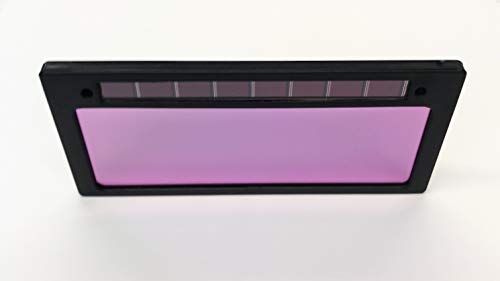
    The Powerweld Horizontal Single Auto-Darkening Filter for Welding, 2 x 4″, (Shade 11) is a helmet-support component for users who need a compact auto-darkening lens format and are already working within a 2 x 4 in. lens system. For buyers and maintenance teams, the main job is not just to read the advertised values. It is to verify fit, viewing area, cover plate requirements, and how the lens will be used in the helmet assembly.

    Key Takeaways

    • Format is 2 x 4 in. and the listed view size is 1.3 in. x 3.5 in. (34 mm x 88 mm).
    • Listed speed is 0.2 ms, light state shade is 3, and dark state shade is listed as Unknown (Verify) in the source data.
    • Thickness is listed as 1/5 in. (5.0 mm) and weight is 45 g.
    • It must be used with a protective cover plate.
    • Do not assume compatibility with any helmet shell, cartridge holder, or cover plate without measuring and checking the manufacturer’s requirements.

    What this lens is for

    This is an auto-darkening filter intended for welding helmet support use. In practical terms, that means it belongs in the front-window stack of a compatible helmet, where it can switch from a light state to a dark state during arc exposure. For the maintenance buyer, the critical issue is not only the shade number. It is whether the lens dimensions, thickness, and mounting style match the helmet and whether the front cover plate package is correct.

    Inspect before you install

    Use these checks before the lens goes into service:

    • Check the lens opening. Measure the helmet window and verify that a 2 x 4 in. filter is the correct format.
    • Inspect the cover plate requirement. The source states the filter must use a protective cover plate. Verify the cover plate size, thickness, and orientation before installation.
    • Verify the view area. The listed viewing area is 1.3 in. x 3.5 in. Confirm whether that matches the operator’s field-of-view needs and the helmet frame.
    • Check thickness. The source lists 5.0 mm thickness. Verify the cartridge pocket or front assembly has clearance.
    • Inspect the lens face and edges. Look for scratches, cracked housing, or warping before use.
    • Verify light state behavior. The source lists light state shade 3. Confirm the lens transitions correctly in a safe test setup before welding.

    Troubleshooting and support checks

    If the lens is not behaving as expected, work through the problem in order:

    • Check the helmet fit. If the lens shifts or gaps at the frame, verify the helmet opening and retaining hardware.
    • Inspect the cover plate. A missing or incorrect protective cover plate can expose the filter and reduce service life. Replace with the correct plate if required.
    • Verify orientation. Horizontal single filters are directional in practice. Confirm the lens is installed in the intended orientation and seated evenly.
    • Check the arc response in a controlled setting. If the lens is not darkening or appears inconsistent, verify that the problem is not from installation, damage, or contaminated front surfaces.
    • Inspect for contamination. Grinding dust, spatter, and smoke film on the cover plate can affect visibility and perceived response.

    For general auto-darkening helmet troubleshooting, see the support guide on welding helmet flickering and shade troubleshooting. For broader buying criteria on lens speed, shade range, and standards, see Auto-Darkening Welding Helmet Buying Guide 2025.

    Product and parts breakdown

    According to the source product data, the following details are available:

    • Product: Powerweld Horizontal Single Auto-Darkening Filter for Welding, 2 x 4″, (Shade 11)
    • Speed: 0.2 ms
    • Light state shade: 3
    • Dark state shade: Unknown (Verify)
    • View size: 1.3 in. x 3.5 in. (34 mm x 88 mm)
    • Thickness: 1/5 in. (5.0 mm)
    • Weight: 45 g
    • Installation note: Must use with a protective cover plate

    For the product page itself, use the ArcWeld source listing: Product not found.

    “>Powerweld Horizontal Single Auto-Darkening Filter for Welding, 2 x 4″, (Shade 11).

    Do not assume the dark state shade, mounting pattern, or sensor arrangement beyond what is listed. If your helmet model requires a specific cartridge profile, verify that against the actual shell and front frame measurements.

    Verify before production use

    Before putting the lens into regular service, confirm the following:

    1. Lens format matches the helmet opening.
    2. Cover plate is installed and fits without pinching the filter.
    3. Lens sits flat and does not rock in the frame.
    4. Operator can see the weld joint clearly in the light state.
    5. Auto-darkening transition is acceptable in a non-production test.
    6. Replacement schedule is defined for the cover plate and any damaged lens components.

    Safety notes

    • Use a protective cover plate as required by the product source.
    • Do not weld with a damaged filter, cracked housing, or missing front protection.
    • Verify that the lens is appropriate for the task and the helmet before arc exposure.
    • Do not rely on unverified shade assumptions when selecting a filter for a process or amperage range.
    • If the helmet setup is unclear, stop and verify the shell, lens, and cover plate stack before use.

    FAQ

    Is this lens ready to use in any 2 x 4 helmet?
    No. The format is 2 x 4 in., but fit still depends on the helmet frame, thickness clearance, retaining system, and cover plate requirements. Verify before installation.

    What is the dark shade on this filter?
    The source title references Shade 11, but the provided technical field for dark state shade is Unknown (Verify). Confirm the actual dark state shade from the product documentation or packaging before assigning it to a work cell.

    Why is the cover plate important?
    The source states the filter must use a protective cover plate. That means the cover plate is part of the working stack, not an optional accessory. It helps protect the filter surface and maintain service life.

    Can I use this as a procedure approval reference?
    No. A filler or lens page is a selection and fit starting point, not a guaranteed procedure approval. Verify against your own welding procedure, helmet requirements, and shop standards.

    Sources Checked

    • ArcWeld product page: Powerweld Horizontal Single Auto-Darkening Filter for Welding, 2 x 4″, (Shade 11)
    • Internal article: Auto-Darkening Welding Helmet Buying Guide 2025 | Lens Speed, Shade Range & Standards
    • Internal article: YESWELDER Large View Auto Darkening Welding Helmet (LYG‑M800H)
    • Internal article: ArcOne S240-10 Auto-Darkening Welding Filter: Shade 10 Lens Support Guide
    • Internal article: Welding Helmet Flickering Shade Troubleshooting: Auto-Darkening Lens, Sensors, Batteries, Sensitivity, and Delay

    Related Arc Weld Part

    Powerweld Horizontal Single Auto-Darkening Filter for Welding, 2 x 4", (Shade 11)

    Powerweld Horizontal Single Auto-Darkening Filter for Welding, 2 x 4", (Shade 11)

    '- Speed .2 ms – Light State Shade: 3 – Dark State Shade: – View Size 1.3" x 3.5" (34mm x 88mm) – Thickness: 1/5" (5.0 mm) – Weight: 45g – Must use with a protective cover plate

    View at Arc Weld Store

    Related Weld Support Guides

  • Do Welding Helmet Cover Lenses Block UV, or Is the ADF Doing That?

    A clear welding helmet cover lens is mainly a sacrificial protection plate. It protects the auto-darkening filter, fixed shade plate, and viewing area from spatter, grinding dust, scratches, smoke film, and impact wear. The welding filter or auto-darkening filter is the part that must provide the required welding shade and UV/IR protection for arc exposure.

    This matters because a clean cover lens can make the helmet look safer than it really is. A clear cover plate is not a welding shade. Do not weld with only a clear cover lens, and do not assume a scratched or missing cover lens is harmless. If the auto-darkening cartridge is damaged, missing, incorrectly installed, or not marked for welding protection, the helmet should be removed from service.

    For broader helmet selection and shade checks, see the auto-darkening welding helmet buying guide and the welding safety glasses shade and ANSI Z87.1 guide.

    Key Takeaways

    • The ADF or passive welding filter is the primary part responsible for welding shade and UV/IR protection.
    • The clear outside cover lens mainly protects the filter from spatter, dust, scratches, and impact wear.
    • Some clear cover lenses may meet ANSI Z87.1 impact requirements, but that does not make them welding shade filters.
    • Do not weld with a missing, cracked, heat-warped, or heavily scratched cover lens because it can expose the ADF to damage.
    • Do not weld with only a clear cover lens. Use the correct filter shade for the process and amperage.

    Problem / Context

    The common question is whether the clear lens on the outside of a welding helmet blocks UV, or whether the auto-darkening filter does that job. The practical answer is that the welding filter must be treated as the critical UV/IR and shade-control component. The clear cover lens is a replaceable barrier that helps preserve the filter, but it is not a substitute for the filter.

    Most helmet designs use several layers: the helmet shell, the outside clear cover lens, the ADF or fixed shade filter, and often an inside cover lens. Each part has a different job. Confusing these layers can lead to unsafe shortcuts, especially when a cover lens is cracked or the ADF looks expensive to replace.

    Root Causes of Confusion

    Clear lenses may still have safety markings: A clear replacement cover lens may be sold as ANSI Z87.1 compliant for impact protection. That does not mean it has the correct optical density for welding arc radiation.

    ADF lenses protect in light and dark states: Manufacturer manuals commonly state that the auto-darkening cartridge provides UV/IR protection in both light and dark states. The darkening function controls visible brightness and shade comfort, but the UV/IR filter function should not depend only on the lens switching dark.

    The cover lens sits closest to the arc: Because the clear plate faces sparks and spatter first, welders may assume it is the main safety lens. Its real job is to protect the more expensive filter behind it.

    Damaged cover lenses can hide filter problems: A cloudy, pitted, or heat-warped cover lens reduces visibility and can make welders raise their hood, lean into bad positions, or miss a damaged ADF. See the ArcOne S240-10 auto-darkening filter support guide for fit and visibility checks.

    Some helmets cannot be used without cover lenses: Several helmet manuals warn against using the helmet without the inside and outside cover lenses properly installed. Missing cover lenses can allow spatter, heat, and debris to damage the filter cartridge.

    Solution

    1. Confirm the helmet has a proper ADF or passive welding filter installed. A clear cover lens alone is not enough.
    2. Check the helmet and filter markings for ANSI Z87.1 and manufacturer identification.
    3. Confirm the shade range or fixed shade number matches the welding process and amperage.
    4. Inspect the outside cover lens for cracks, spatter pits, smoke film, deep scratches, or heat warping.
    5. Inspect the inside cover lens if the helmet uses one. Replace it if it is cracked, dirty, pitted, or loose.
    6. Use only replacement cover lenses specified by the helmet manufacturer when possible.
    7. Replace the cover lens before visibility drops enough to affect puddle control or sensor performance.
    8. Remove the helmet from service if the ADF cartridge is cracked, loose, delaminated, water-damaged, or not darkening correctly.
    9. Wear safety glasses or goggles under the helmet where grinding, chipping, or flying particle hazards exist.

    Specs / Verification Notes

    Helmet LayerMain JobCan It Replace the ADF?Verification Note
    Outside clear cover lensProtects the welding filter from spatter, dust, scratches, and impact wearNoSize, material, and helmet fit: Unknown (Verify)
    Auto-darkening filterProvides welding shade and UV/IR protection according to the helmet designRequired for ADF helmetsConfirm shade range and ANSI marking
    Passive filter plateProvides fixed welding shade and radiation filteringRequired for passive helmetsConfirm shade number for process and amperage
    Inside cover lensProtects the inside face of the filter from dust, handling damage, and debrisNoHelmet-specific fit: Unknown (Verify)
    Safety glasses under hoodProtects against flying particles when requiredNoConfirm ANSI Z87.1 marking

    Product Section

    Replacement cover lenses are maintenance parts, not shade filters. The example below is a 2 in x 4-1/4 in clear cover lens. Confirm helmet fit, lens size, manufacturer approval, and ANSI marking before use. Compatibility with any specific helmet is Unknown (Verify).

    No products found.

    Comparison Table

    QuestionCorrect AnswerShop Mistake to Avoid
    Does the clear cover lens provide welding shade?No. It is not the welding filter.Do not weld through only a clear cover lens.
    Does the ADF provide UV/IR protection?Manufacturer manuals commonly state UV/IR protection is present in light and dark states.Do not keep using a cracked or unverified ADF.
    Can a cracked cover lens be ignored?No. Replace it before welding.Do not let spatter or debris reach the filter cartridge.
    Can any clear lens fit any helmet?No. Size and helmet model matter.Do not force a loose, undersized, or warped cover plate into service.
    Are safety glasses still needed?They may be required for flying particle hazards.Do not rely on the helmet alone during grinding or chipping.

    Related Failure Paths

    ADF does not darken: If the lens stays light, flashes, or responds inconsistently, use the auto-darkening welding helmet not working checklist.

    ADF flickers on TIG: A dirty cover lens or blocked sensor can contribute to flicker on low-current TIG. See why auto-darkening helmets flicker on aluminum TIG.

    Passive versus auto-darkening confusion: Passive helmets and ADF helmets both require proper filter protection, but they work differently. Compare the practical differences in auto-darkening vs passive welding helmets.

    Shade number mismatch: A clear cover lens does not determine whether shade 9, 10, 11, 12, or 13 is correct. Use the process, amperage, and manufacturer chart to select shade. The helmet lens speed, shade range, and standards guide gives broader selection context.

    Safety Notes

    Arc welding emits visible light, ultraviolet radiation, and infrared radiation. Use a welding helmet with the correct filter lens shade for the process and current. OSHA guidance also notes that workers using welding helmets may need safety glasses with side shields or goggles where flying particle hazards exist.

    Do not treat a clear cover plate as UV/IR proof for welding exposure unless the complete helmet, filter, and replacement part are being used exactly as specified by the manufacturer. Even if a clear cover lens has some UV-blocking material property, it is not a substitute for a welding filter shade.

    Stop using the helmet if the filter cartridge is cracked, loose, heat damaged, water damaged, or visibly compromised. Manufacturer warnings commonly state that UV/IR protection may be compromised when the product is damaged.

    FAQ

    Does the clear outside cover lens block UV?

    Do not rely on it as the welding UV/IR protection layer. The cover lens is mainly a protective plate. The ADF or passive welding filter is the critical radiation-filtering component.

    Does an auto-darkening helmet protect from UV before it darkens?

    Manufacturer manuals for auto-darkening helmets commonly state that the ADF protects against UV/IR in both light and dark states. The darkening function controls visible light shade, but the helmet still must be undamaged, properly assembled, and correctly rated.

    Can welding flash happen if the ADF fails to darken?

    Yes. Even when UV/IR filtering is present, a lens that fails to darken can expose the user to excessive visible light and unsafe viewing conditions. Stop welding and troubleshoot the helmet.

    Can a clear cover lens be used for grinding?

    Only if the complete helmet setup is rated and configured for grinding or impact hazards. Grinding mode does not make the helmet a welding shade, and welding mode does not replace safety glasses where flying particles are present.

    How often should cover lenses be replaced?

    Replace them when cracked, soiled, pitted, deeply scratched, heat-warped, loose, or visibility is reduced. Replacement interval depends on welding process, spatter level, grinding exposure, and shop conditions.

    Can aftermarket cover lenses be used?

    Only after verifying size, fit, material, safety marking, and helmet manufacturer guidance. OEM lenses are preferred when the helmet manual specifies exact replacement parts.

    Next Step

    Inspect the helmet in layers: outside cover lens, ADF or passive filter, inside cover lens, shell, headgear, and safety glasses. Replace damaged cover lenses, verify the correct filter shade, and remove the hood from service if the ADF or passive filter is cracked, loose, unmarked, or not working correctly.

    Sources Checked

    • OSHA Eye Protection against Radiant Energy during Welding and Cutting fact sheet: filter lens shade guidance and safety glasses or goggles for flying particle hazards.
    • Lincoln Electric auto-darkening helmet manuals: UV/IR protection in dark and light states, warnings about damaged products, and use of specified cover lenses.
    • 3M Speedglas welding PPE product guide: permanent UV/IR protection references for Speedglas ADF products.
    • Forney 56800 cover lens manufacturer listing: 2 in x 4-1/4 in clear plastic cover lens, impact and spatter protection, ANSI Z87.1 reference, and fit notes.
    • Weld Support Parts: Auto-Darkening Welding Helmet Buying Guide 2025.
    • Weld Support Parts: Welding Safety Glasses Guide 2025.
    • Weld Support Parts: Auto-Darkening Welding Helmet Not Working: Causes and Fixes.
    • Weld Support Parts: ArcOne S240-10 Auto-Darkening Welding Filter Support Guide.
    • Weld Support Parts: Auto-Darkening vs Passive Welding Helmets.
  • ArcOne S240-10 Auto-Darkening Welding Filter: Shade 10 Lens Support Guide

    A 2 x 4-inch auto-darkening filter is often used when a welder wants an auto-darkening function in a compact helmet or fixed-front hood format. The ArcOne S240-10 is listed under ASIN B00206Y4B8 as a horizontal single auto-darkening filter for welding with a fixed shade 10 dark state.

    This guide covers practical selection points, common fit and visibility issues, safety checks, and when a fixed shade 10 auto-darkening filter may or may not be the right choice.

    Key Takeaways

    • Verified ASIN: B00206Y4B8.
    • Product type: auto-darkening welding helmet filter lens.
    • Category: Welding Helmet Support.
    • Known listing details include 2 x 4 inch size, shade 10, two independent sensors, 5.25 square inch active viewing area, and 0.5 millisecond switching speed.
    • Always confirm helmet fit, safety markings, and shade suitability before welding.

    Problem / Context

    Many compact welding hoods use a 2 x 4 inch filter opening. A passive lens can work well, but it requires the operator to flip the hood down before striking the arc. An auto-darkening filter can help reduce repeated hood flipping and can make arc starts easier to see.

    The main concern is not only whether the lens darkens. The filter also needs to fit the helmet correctly, provide the correct shade for the process, and remain protected from spatter, grinding dust, and handling damage.

    Root Causes

    • Wrong lens size: A 2 x 4 inch filter may not fit every helmet shell or retaining frame.
    • Shade mismatch: Shade 10 may be appropriate for many common arc welding ranges, but the required shade depends on process, amperage, electrode size, and viewing conditions.
    • Blocked sensors: Hood position, work angle, pipe joints, or tight spaces can block sensor exposure to the arc.
    • Dirty cover plates: Spatter and smoke film can reduce visibility and affect sensor response.
    • Assumed compatibility: A lens should never be assumed compatible with a helmet unless size, retaining system, and safety requirements are confirmed.

    Solution

    Use the ArcOne S240-10 only where a 2 x 4 inch horizontal auto-darkening filter is suitable for the helmet and the welding process. Before use, inspect the helmet shell, retaining clips, cover plates, gasket or lens frame, and filter condition. Replace cracked, loose, or contaminated components before welding.

    For welding procedures that require a shade lighter or darker than shade 10, select a different approved filter or an adjustable-shade helmet. Do not use a fixed shade lens as a substitute for a procedure-specific shade selection review.

    Specs / Notes

    ASINB00206Y4B8
    BrandArcOne
    Model / part referenceS240-10 / S240-10AON
    Product typeHorizontal single auto-darkening welding filter
    Lens size2 x 4 inch listing format; listed product dimensions also show 2″L x 4.25″W
    Dark shadeShade 10
    SensorsTwo independent sensors
    Active viewing area5.25 square inches
    Switching speed0.5 milliseconds
    Dark-to-light delay0.2 seconds
    Water / dust resistanceListed as water and dust resistant; verify current manufacturer documentation before industrial use
    Battery requirementListed as batteries not required
    Helmet compatibilityUnknown (Verify)
    ANSI marking on current unitUnknown (Verify)

    Product Section

    The ASIN below was verified as an Amazon product listing for the ArcOne S240-10 horizontal single auto-darkening welding filter.

    No products found.

    Selection Table

    Use CaseCheck Before UseSupport Note
    Replacing a passive 2 x 4 lensOSHA tables list the minimum shade by process and currentDo not force the filter into a tight or warped holder
    Stick weldingConfirm shade 10 is suitable for amperage and electrode sizeTest the response before welding in a tight joint
    MIG / flux-cored weldingConfirm shade and sensor exposureGun angle and joint position can shadow sensors
    TIG weldingConfirm low-amp sensitivity requirementsFixed shade 10 may be too dark for some low-amperage work
    Pipe or restricted-position weldingCheck for sensor blockageUse only with an approved helmet and eye protection program
    Training or shop useConfirm ANSI / employer safety requirementsUse only with approved helmet and eye protection program

    Safety: ANSI / AWS Notes

    Welding eye and face protection should comply with applicable ANSI Z87.1 and ANSI Z49.1 safety requirements. The correct filter shade depends on the welding or cutting process, amperage, and work conditions. OSHA filter shade tables provide minimum protective shade guidance for common welding and cutting operations.

    Wear approved safety glasses under the welding helmet where required. Inspect the auto-darkening filter before use. Do not weld with a cracked filter, a missing cover plate, a loose retaining frame, a damaged helmet shell, or a lens that does not darken correctly during a safe function check.

    FAQ

    Is B00206Y4B8 a verified Amazon ASIN?

    Yes. B00206Y4B8 was found as an Amazon ASIN for the ArcOne S240-10 horizontal single auto-darkening welding filter.

    Is shade 10 right for every welding process?

    No. Shade 10 is common for many arc welding applications, but shade selection must be matched to the process, amperage, electrode size, and applicable safety rules.

    Will this fit every 2 x 4 welding hood?

    No. The size format is 2 x 4 inch, but helmet compatibility is Unknown (Verify). Confirm the retaining system, cover plate size, and manufacturer requirements before use.

    Does an auto-darkening lens replace safety glasses?

    No. Safety glasses may still be required under the hood for impact protection and workplace compliance.

    What should be checked before striking an arc?

    Check lens condition, cover plates, helmet fit, shade suitability, sensor visibility, and whether the filter darkens correctly during a safe pre-use check.

    Next Step

    Before ordering or installing the ArcOne S240-10, confirm that the helmet accepts a 2 x 4 inch horizontal filter and that shade 10 matches the welding process and amperage range used in the shop.

    Sources

    • Amazon product listing for ASIN B00206Y4B8, ArcOne S240-10 Horizontal Single Auto-Darkening Filter for Welding.
    • Device.Report product data for ArcOne S240-10AON, including ASIN, model reference, size, and listing details.
    • OSHA 1910.133 Eye and Face Protection, filter lens shade guidance for radiant energy.
    • OSHA Eye Protection Against Radiant Energy During Welding and Cutting fact sheet.
    • AWS Eye and Face Protection for Welding and Cutting Operations, Fact Sheet No. 31.
  • Try Amazon Prime Free