Push-Pull Gun Motor Overheating Causes and Troubleshooting
A push-pull gun motor that overheats usually points to excessive wire-feed resistance, incorrect drive roll tension, liner drag, overloaded duty cycle, damaged armature components, or poor electrical connections. Most push-pull systems rely on synchronization between the feeder and gun motor. When resistance increases anywhere in the wire path, the gun motor compensates by drawing more current and generating excessive heat.
Common Symptoms
Handle becomes hot during welding.
Wire feed slows down after several minutes.
Motor cuts in and out intermittently.
Burnback increases during long welds.
Drive rolls slip even with increased tension.
Motor protection or thermal shutdown activates.
Likely Causes
Drive roll tension too tight: Excessive tension overloads the gun motor and flattens soft aluminum wire.
Contaminated or kinked liner: Aluminum debris, dirt, or crushed liners increase drag dramatically.
Worn contact tip: A partially fused or undersized tip increases feed resistance and current draw.
Oversized spool drag: Brake tension too high on spool systems forces the motor to work harder.
Poor cable routing: Tight bends in the gun cable increase wire friction and feeding resistance.
Inspection Steps
Remove the contact tip and verify free wire movement through the gun.
Inspect the liner for aluminum shavings or crushed sections.
Check spool brake tension. The spool should coast slightly without freewheeling.
Inspect drive rolls for wear, wrong groove type, or contamination.
Verify gun cable routing does not include tight loops or severe bends.
Check cooling airflow around the power source and feeder.
Common Wrong-Part Mistakes
Using steel drive rolls on soft aluminum wire.
Installing oversized contact tips that create unstable arc starts.
Running standard MIG liners instead of push-pull compatible liners.
Using incorrect U-groove or V-groove roll profiles.
Field Fix vs Proper Fix
Field fix: Reduce drive roll pressure, shorten cable bends, clean the liner, and lower spool drag. Proper fix: Replace worn liners, damaged tips, failing motors, or overloaded feeder components and verify the complete wire-feed setup matches the wire diameter and alloy being used.
Ignored Failure Consequences
Continuing to weld with an overheating push-pull motor can damage internal windings, weaken feeder synchronization, increase burnback frequency, and destroy expensive control boards or motor assemblies.
Safety Notes
Disconnect input power before servicing feeders, drive systems, or gun motors. Aluminum feeding systems contain rotating drive components that can pinch gloves or fingers during troubleshooting.
A spool gun trigger delay usually shows up as slow wire-feed startup, delayed arc initiation, intermittent trigger response, or a noticeable pause between pulling the trigger and wire movement. In most cases, the problem is caused by a failing trigger switch, damaged control wiring, dirty connections, relay problems, worn gun connections, or feeder communication issues between the spool gun and power source.
Common Symptoms
Trigger pulled but wire feed starts late.
Gas flows before wire movement begins.
Arc starts inconsistently or sputters on startup.
Trigger response changes when cable is bent.
Intermittent dead trigger with occasional normal operation.
Wire feed hesitates during tack welds.
Likely Causes
Worn trigger microswitch: Internal trigger contacts can become intermittent from repeated use.
Broken control wires: Repeated cable flexing near the handle or connector can fracture low-voltage control wiring.
Dirty gun connector pins: Oxidized or loose pins create inconsistent trigger signal transmission.
Failing feeder relay or contactor: Delayed relay engagement can cause noticeable startup lag.
Drive roll slippage: Worn rolls or incorrect tension delay wire movement during startup.
Inspection Steps
Disconnect power and inspect the trigger wiring at the handle and connector.
Check gun pins for looseness, corrosion, or overheating discoloration.
Verify spool brake tension is not excessive.
Inspect drive rolls for wear and confirm correct groove type for aluminum wire.
Test trigger continuity while flexing the gun cable gently.
Listen for delayed relay clicking inside the feeder or power source.
Common Wrong-Part Mistakes
Installing oversized contact tips that slow startup and increase burnback.
Using standard steel drive rolls on aluminum wire.
Replacing the gun before testing trigger circuits and relay functions.
Using incorrect spool gun adapters or incompatible control harnesses.
Field Fix vs Proper Fix
Field fix: Clean connector pins, reduce spool drag, tighten drive roll settings correctly, and reposition damaged cable sections temporarily. Proper fix: Replace damaged trigger switches, broken control wires, worn relays, or failing feeder boards and verify gun compatibility with the machine.
Related Failure Paths
Aluminum burnback
Erratic wire feed speed
Birdnesting near drive rolls
Contact tip overheating
Motor overload shutdown
Safety Notes
Disconnect input power before opening feeder cabinets or servicing trigger circuits. Spool guns contain moving feed components and electrically live trigger systems that can cause injury or accidental arc initiation during testing.
Aluminum spool gun burnback happens when the welding wire melts into the contact tip before feeding away from the arc. The most common causes are incorrect wire-feed speed, improper voltage settings, worn contact tips, feeding resistance, poor grounding, trigger timing problems, or excessive stickout. Because aluminum wire is soft and transfers heat quickly, spool gun systems are especially sensitive to feed interruptions and startup instability.
Common Symptoms
Wire fused inside the contact tip.
Arc stops suddenly during welding.
Erratic startup with popping or sputtering.
Wire feed motor continues but wire does not advance.
Birdnesting or wire deformation near the drive rolls.
Frequent tip replacement during aluminum welding.
Likely Causes
Wire-feed speed too low: The arc burns the wire back faster than it feeds.
Excessive voltage: High arc energy overheats the wire and contact tip rapidly.
Worn or undersized contact tip: Aluminum expands from heat and can seize inside tight or damaged tips.
Poor grounding: Weak work clamp contact destabilizes arc transfer.
Drive roll slippage: Incorrect tension or wrong roll type interrupts feeding.
Trigger delay or startup lag: Delayed wire-feed startup allows the arc to burn back into the tip immediately.
Inspect the contact tip for fused wire and overheating discoloration.
Verify correct tip size for the aluminum wire diameter.
Check drive roll type and tension settings.
Inspect spool brake adjustment for excessive drag.
Verify clean work clamp contact directly on bare metal.
Inspect cable routing for sharp bends or twists.
Test trigger response and startup timing.
Common Wrong-Part Mistakes
Using steel MIG contact tips for aluminum applications.
Installing incorrect drive roll groove styles.
Using standard MIG liners instead of spool-gun-compatible liners.
Running worn contact tips far beyond service life.
Field Fix vs Proper Fix
Field fix: Increase wire-feed speed slightly, reduce voltage if needed, replace the contact tip, and verify proper spool tension. Proper fix: Correct feeder setup, replace worn drive components, repair trigger or relay delays, and verify the spool gun matches the wire diameter and machine settings.
Related Failure Paths
Birdnesting
Contact tip overheating
Drive roll wear
Motor overload shutdown
Erratic aluminum arc starts
Safety Notes
Disconnect power before servicing spool guns, drive systems, or contact tips. Burnback conditions can leave electrically hot wire fused inside the gun assembly immediately after welding.
Sources Checked
Lincoln Electric MIG and spool gun equipment catalogs
TIG contamination shows up as a dull, dirty weld, unstable arc, or blackened tungsten. It’s usually caused by poor shielding, dirty material, or tungsten issues, and it will quickly ruin weld quality if not corrected.
Key Takeaways
Contamination is usually caused by air exposure or dirty surfaces
Tungsten condition directly affects arc stability
Shielding gas problems are a top cause
Cleanliness is critical for TIG welding success
What’s Causing the Problem
1) Poor Shielding Gas Coverage
Gas flow is too low or disrupted
Drafts pulling shielding gas away
Leaks in hoses or fittings
2) Dirty Base Material
Oil, grease, oxidation, or coatings
The aluminum oxide layer was not removed
Stainless contamination from improper tools
3) Contaminated Tungsten
Touching the puddle or filler rod
Improper grinding direction
Using the wrong tungsten type for the job
4) Incorrect Gas Flow Settings
Too low → inadequate shielding
Too high → turbulence pulling in air
5) Bad Technique
Long arc length exposing the weld to the atmosphere
Improper torch angle
Inconsistent filler rod feeding
How to Fix It
Step 1: Set Proper Gas Flow
Typical range: 15–25 CFH (7–12 L/min)
Use lower end indoors, higher if needed for coverage
Step 2: Clean the Material Thoroughly
Use a dedicated stainless steel brush for aluminum/stainless steel
Remove all oil and grease with acetone
Grind or wire brush to clean the metal surface
Step 3: Prepare Tungsten Correctly
Grind longitudinally (not around)
Keep a sharp, clean point for DC welding
Replace tungsten if contaminated
Step 4: Check Equipment
Inspect gas lines and connections for leaks
Clean the nozzle and check the gas lens if installed
Ensure proper cup size for coverage
Step 5: Improve Technique
Keep arc length short and consistent
Maintain proper torch angle (~10–15°)
Feed the filler rod smoothly without touching the tungsten
Common Mistakes to Avoid
Welding on dirty or oxidized metal
Letting tungsten touch the weld puddle
Running gas flow too high or too low
Using contaminated filler rods
Ignoring drafts in the work area
Best Settings / Guidelines
Parameter
Typical Range
Gas Flow
15–25 CFH (7–12 L/min)
Arc Length
Short and consistent
Torch Angle
10–15°
Tungsten Prep
Sharp point (DC), clean grind
Filler Rod
Clean, matched to material
Always verify with your machine settings and material requirements.
Safety Notes
Wear proper eye protection (ANSI Z87.1) and a welding helmet
Avoid breathing shielding gas in confined areas
Use proper ventilation when cleaning with solvents
Keep gloves clean to prevent contaminating filler rods
FAQ
Why does my tungsten turn black? This usually indicates poor shielding gas coverage or contamination.
Can I reuse contaminated tungsten? Yes, but it must be re-ground properly before reuse.
Does gas type matter for contamination? Yes—pure argon is standard for TIG and provides proper shielding.
Why is aluminum more prone to contamination? Aluminum forms an oxide layer that must be removed before welding.
Can drafts really affect TIG welding? Yes—even small air movement can disrupt shielding gas.
Sources Checked
American Welding Society
Lincoln Electric TIG welding resources
Miller Electric application and troubleshooting guides
Aluminum demands precision—wrong torch choice means poor penetration, porosity, and wasted material. We tested and verified four proven TIG torches that handle aluminum from hobby to production welding.
Where to Buy
All products below are available on Amazon with verified ASINs and ArcWeld.store. Links include affiliate commissions at no extra cost to you.
Key Takeaways
CK17 (150A air-cooled): Best for hobby and light aluminum work; lightweight, affordable, easy maintenance.
WP-26FV (200A air-cooled): Best budget upgrade; handles thicker aluminum and stainless; proven compatibility with Miller/Everlast.
WP-20 (250A water-cooled): Best for sustained aluminum production; larger cooling capacity, longer duty cycle.
CK18 (350A water-cooled): Best for heavy-duty aluminum fabrication; largest cooling jacket, premium build quality.
Comparison Table
Model
Type
Amperage
Cooling
Cable Length
Best For
CK17
Air
150A
Air
12.5 ft
Hobby, thin aluminum
WP-26FV
Air
200A
Air
12.5 ft
Budget upgrade, stainless
WP-20
Water
250A
Water
25 ft
Production aluminum
CK18
Water
350A
Water
12.5 ft
Heavy fabrication
Product Breakdowns
1. CK17 Air-Cooled TIG Torch (150A) – Best for Hobby & Light Aluminum
Verified Specs:
Amperage: 150A ACHF or DCSP @ 100%
Cooling: Air-cooled
Head Style: Flex head (super-flex cable option)
Cable Length: 12.5 ft (standard); 25 ft available
Torch Length: 8-1/8″ (20.6 cm)
Weight: 5 oz (141 g)
Tungsten Size: .020″–1/8″
Collet Body: 3 Series (standard accessories compatible)
Why It Works for Aluminum:The CK17 is the industry standard for entry-level and hobby aluminum TIG welding. Its lightweight design (5 oz) reduces fatigue on long jobs, and the air-cooled system keeps it simple—no water circulation to maintain. Perfect for aluminum sheet metal up to 1/8″ thickness.
Best For:
Hobby welders upgrading from stick
Aluminum repairs and fabrication shops
Educational settings
Portable/field welding
Safety Notes:Always use proper PPE: welding helmet (ANSI Z87.1, shade 10–14 for aluminum), heat-resistant gloves, and long sleeves. Ensure adequate ventilation; aluminum fumes require respiratory protection in confined spaces.
No products found.
2. WP-26FV Air-Cooled TIG Torch (200A) – Best Budget Upgrade
Verified Specs:
Amperage: 200A ACHF or DCSP @ 100%
Cooling: Air-cooled
Head Style: Flex head with gas valve
Cable Length: 12.5 ft (standard)
Torch Length: 6–8″ (varies by configuration)
Tungsten Size: .020″–3/32″
Collet Body: Standard (Miller/Everlast compatible)
Why It Works for Aluminum:The WP-26FV bridges the gap between hobby and professional. At 200A, it handles thicker aluminum (up to 3/16″) and stainless steel without overheating. Air-cooled design means lower cost and simpler maintenance than water-cooled torches.
Best For:
Upgrading from 110V hobby systems
Small fabrication shops
Aluminum and stainless work
Portable TIG setups
Safety Notes:Ensure your welder supports 200A output. Use shade 12–14 helmet for aluminum. Check collet compatibility with your machine before ordering.
No products found.
3. WP-20 Water-Cooled TIG Torch (250A) – Best for Production Aluminum
Verified Specs:
Amperage: 250A ACHF or DCSP @ 100%
Cooling: Water-cooled (requires chiller or cooler)
Head Style: Standard or flex (model-dependent)
Cable Length: 25 ft (standard)
Torch Length: 6–7″ (varies by configuration)
Tungsten Size: .020″–1/8″
Collet Body: Standard (Miller/Everlast compatible)
Why It Works for Aluminum:Water-cooled torches handle sustained high-amperage work without thermal fatigue. The WP-20 is rated for 250A, making it ideal for production aluminum welding (1/4″+ thickness) and long duty cycles. The 25 ft cable gives you more workspace flexibility.
Best For:
Production fabrication shops
Thick aluminum structures
Long welding sessions (high duty cycle)
Aerospace and automotive aluminum work
Safety Notes:Water-cooled torches require a dedicated cooler/chiller (not included). Monitor water flow and temperature; improper cooling can damage the torch. Use shade 12–14 helmet. Ensure your welder supports 250A output.
No products found.
4. CK18 Water-Cooled TIG Torch (350A) – Best for Heavy-Duty Aluminum Fabrication
Verified Specs:
Amperage: 350A ACHF or DCSP @ 100%
Cooling: Water-cooled (largest jacket available)
Head Style: Flex head (super-flex cable option)
Cable Length: 12.5 ft (standard); 25 ft available
Torch Length: 8–9″ (varies by configuration)
Tungsten Size: .020″–3/16″
Collet Body: 3 Series (premium build)
Water Jacket: 300% larger cooling capacity than standard torches
Why It Works for Aluminum:The CK18 is the premium choice for heavy aluminum fabrication. Its oversized water jacket provides superior cooling, allowing sustained operation at 350A without thermal stress. The flex head and super-flex cable offer unmatched maneuverability in tight spaces.
Best For:
Heavy-duty aluminum fabrication
Aerospace and marine welding
Multi-pass aluminum structures
Professional shops with high-volume work
Safety Notes:Requires a robust water cooler and 350A-capable welder. Use shade 12–14 helmet. Inspect water hoses regularly for leaks. Ensure proper grounding and cable management for high-amperage work.
No products found.
Top Pick: CK17 for Most Aluminum Welders
If you’re upgrading from stick or MIG to TIG aluminum, the CK17 is the proven choice. It’s lightweight, affordable, easy to maintain, and handles aluminum up to 1/8″ with precision. Thousands of welders trust it for hobby and professional work.
How to Choose the Right TIG Torch for Aluminum
1. Match Amperage to Material Thickness
Up to 1/8″ aluminum: 150A (CK17) is sufficient
1/8″–3/16″ aluminum: 200A (WP-26FV) recommended
3/16″–1/4″ aluminum: 250A (WP-20) ideal
1/4″+ aluminum: 350A (CK18) for sustained work
2. Air-Cooled vs. Water-Cooled
Air-Cooled (CK17, WP-26FV):
Lower cost
Simpler setup
Best for intermittent work
Limited duty cycle at high amperage
Water-Cooled (WP-20, CK18):
Higher upfront cost (requires cooler)
Better for sustained production
Handles high amperage longer
Requires maintenance (water flow, temperature)
3. Cable Length & Maneuverability
12.5 ft: Standard for shop work; good for fixed benches
25 ft: Better for field work and tight spaces; reduces cable drag
4. Compatibility Check
Verify your welder supports the torch amperage and connector type (Dinse 35, 50, or quick-connect). CK and Weldcraft torches are compatible with Miller, Lincoln, Everlast, and most TIG welders.
FAQ
Q: Can I use an air-cooled torch for thick aluminum?A: Yes, but with limits. Air-cooled torches are rated for 100% duty cycle at their amperage. For aluminum thicker than 3/16″, a water-cooled torch (WP-20 or CK18) is recommended to avoid thermal fatigue and maintain weld quality.
Q: Do I need a water cooler for water-cooled torches?A: Yes. Water-cooled torches require a dedicated cooler or chiller unit. Some welders have built-in coolers; check your manual. Standalone coolers cost $200–$400.
Q: What’s the difference between CK17 and WP-26FV?A: CK17 is 150A air-cooled; WP-26FV is 200A air-cooled. The WP-26FV handles thicker material and longer duty cycles. CK17 is lighter and more affordable for hobby work.
Q: Are these torches compatible with my welder?A: Most are. CK and Weldcraft torches work with Miller, Lincoln, Everlast, and other major brands. Verify your welder’s connector type (Dinse 35, 50, or quick-connect) before ordering.
Q: How often should I replace consumables (collets, cups, nozzles)?A: Tungsten: every 20–50 hours (depends on material). Collets and cups: every 100–200 hours. Nozzles: as needed if cracked or eroded. Keep spares on hand.
Safety Notes: Aluminum TIG Welding
Arc Flash & UV Protection:
Use ANSI Z87.1 certified helmet with shade 12–14 for aluminum
Wear heat-resistant gloves (leather or aluminized)
Cover exposed skin with long sleeves and apron
Fume & Respiratory Safety:
Aluminum fumes can cause metal fume fever; ensure ventilation
In confined spaces, use a respirator (P100 or equivalent)
Position fume extractor 6–12″ from work
Electrical Safety:
Ensure proper grounding (ground clamp to workpiece)
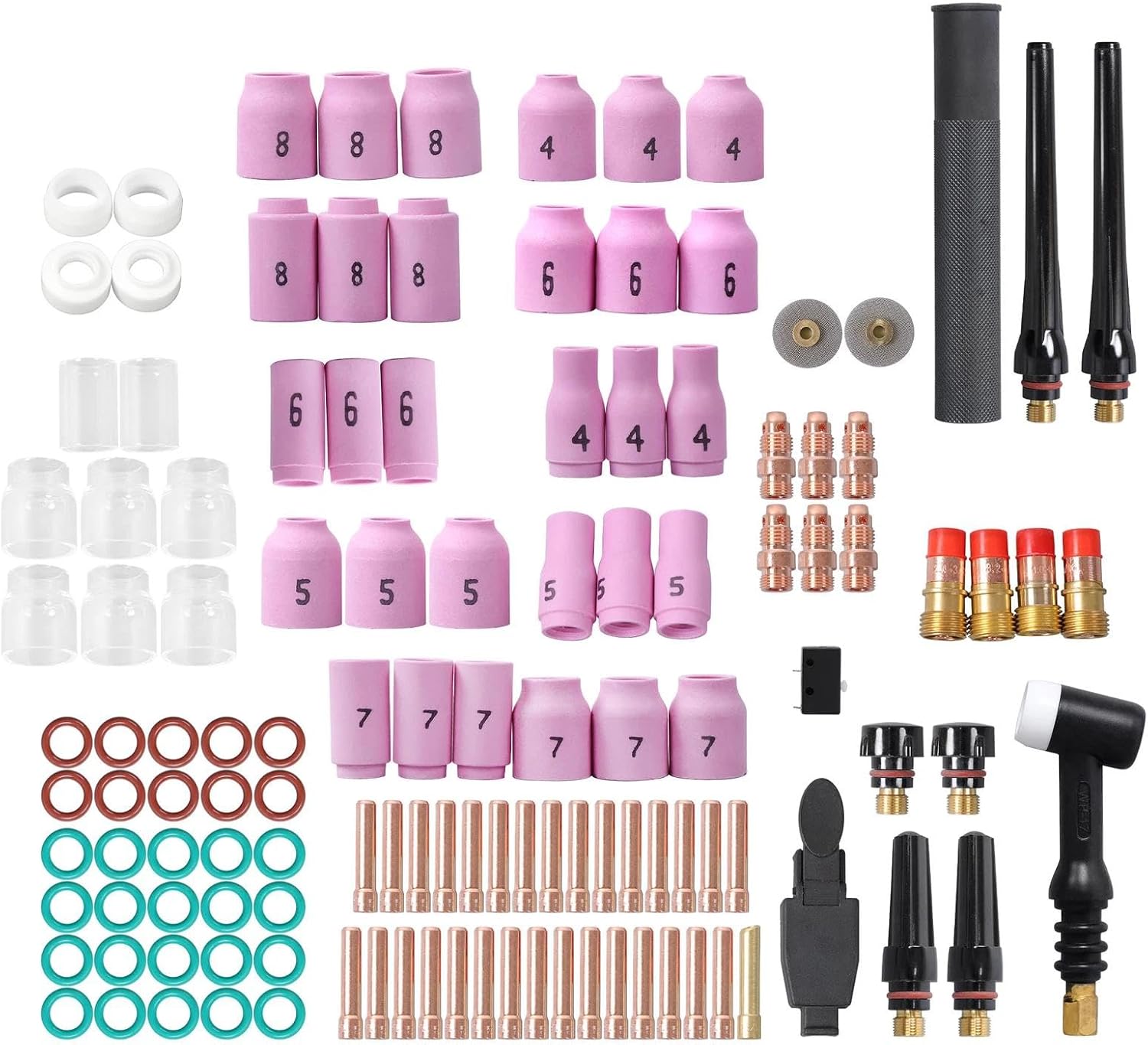
Intro: TIG torch consumables wear out fast—especially with aluminum or stainless jobs. This 123-piece kit gives WP-17/18/26 users a complete, ready-to-go stock of nozzles, collets, and gas lenses for pro-level results without the downtime of waiting for parts.
Key Takeaways
123 pieces: nozzles, collets, gas lenses, and ceramic cups for WP-17/18/26 torches
Precision-manufactured for reliable fit and consistent gas coverage
Heatproof glass cups and alumina nozzles resist cracking under high temps
Supports both AC and DC TIG work; ideal for aluminum, stainless, and mild steel
One-time stock eliminates repeated small orders and shop delays
No products found.
Performance & Use
All parts are precision-manufactured for reliable fit and gas coverage. Designed for both AC and DC TIG work (verify for your machine). Suits most US-shop WP-17/18/26 torches.
What to compare before you buy
Torch compatibility: Verify your torch model (WP-17, WP-18, or WP-26) before ordering
Collet sizes: Kit includes 0.040″, 1/16″, 3/32″, and 1/8″ collets—confirm your electrode diameter
Glass vs. ceramic: Kit includes both heatproof glass cups and alumina nozzles; choose based on your material and duty cycle
Gas lens setup: Verify whether you run stubby or regular gas lens configuration
Storage: Check if included storage case or organizer meets your shop layout needs
Heatproof glass cups and alumina nozzles resist cracking under high temps. All collets and lenses are built for repeated use—ideal for daily welding or instructional settings. Precision tolerances ensure tight, consistent seals that minimize gas leakage and porosity.
Who It’s For
TIG welders running WP-17/18/26 torches on aluminum, stainless, or mild steel
Fabrication shops that need backup consumables in stock to avoid downtime
Instructors teaching TIG welding who need a complete parts kit for multiple torch setups
Hobbyists and pros upgrading from single-part orders to bulk stock
Quick FAQ
Q: Will this fit my torch? A: Compatible with WP-17, WP-18, WP-26 (verify torch model before ordering).
Q: Are all parts included for aluminum and stainless? A: Yes, supports both (verify machine settings and gas type).
Q: Are the cups glass or ceramic? A: Both heatproof glass and alumina nozzles included.
Q: Can I use this for AC and DC TIG? A: Yes (verify for your machine).
Q: Does it include a storage case? A: Unknown (Verify on listing).
Safety Notes
Always allow torch to cool before handling consumables
Inspect collets and gas lenses for cracks or damage before use; replace if compromised
Verify gas flow and coverage before starting production welds
Follow ANSI Z49.1 safety standards for TIG welding
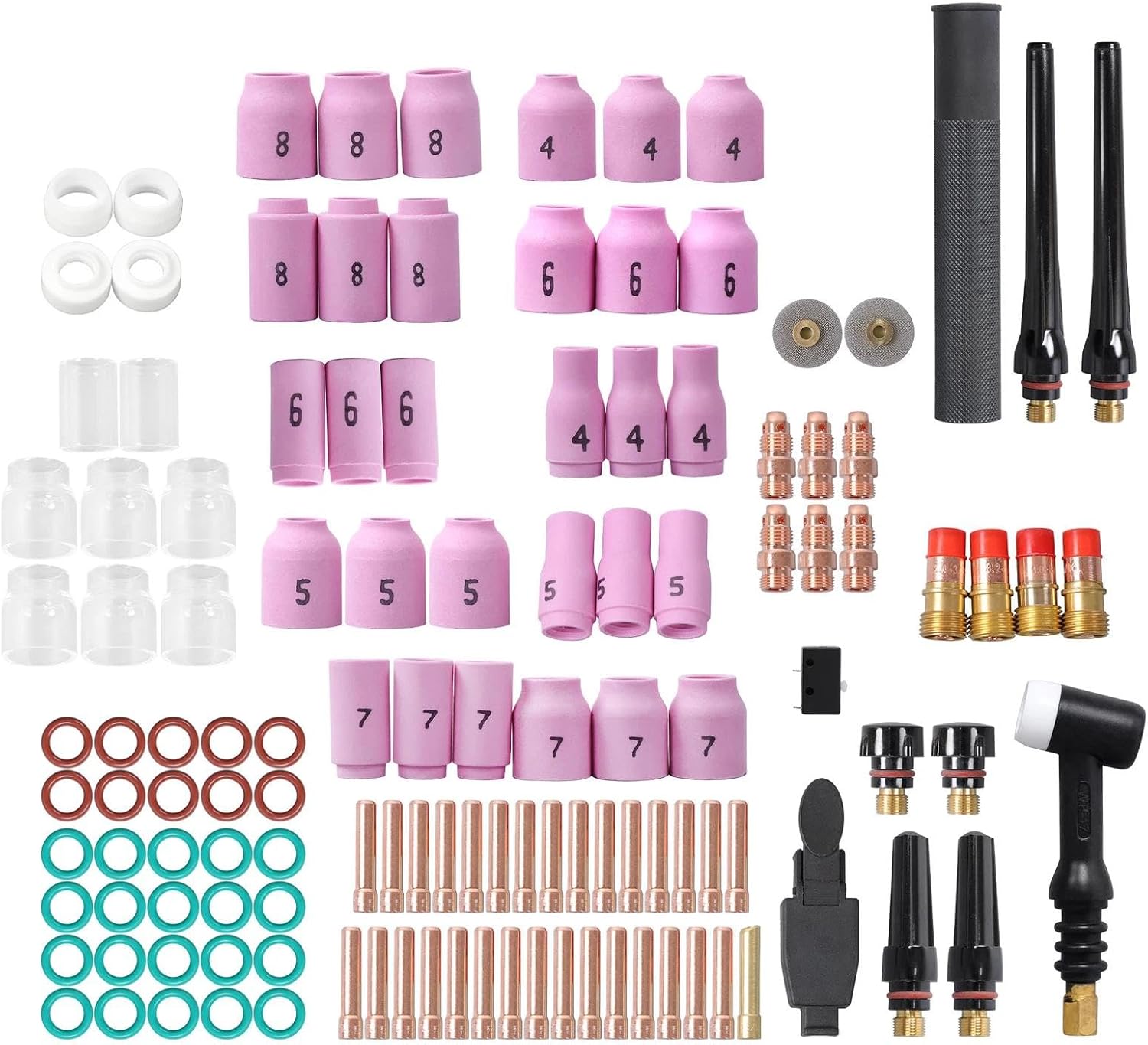
Intro: TIG torch consumables wear out fast—especially with aluminum or stainless jobs. This 123-piece kit gives WP-17/18/26 users a complete, ready-to-go stock of nozzles, collets, and gas lenses for pro-level results.
Key Takeaways
Full kit: 123 pieces for WP-17/18/26 torches.
Includes alumina nozzles, stubby gas lens, collets, glass cups.
Supports steel, stainless, and aluminum TIG jobs.
Compatible with most standard torch bodies (verify model).
Saves time and downtime—no emergency parts runs.
Performance & Use
All parts are precision-manufactured for reliable fit and gas coverage. Designed for both AC and DC TIG work (verify for your machine). Suits most US-shop WP-17/18/26 torches.
Heatproof glass cups and alumina nozzles resist cracking under high temps. All collets and lenses are built for repeated use—ideal for daily welding or instructional settings.
Power / Specs
Kit size: 123 pieces
Torch fit: WP-17, WP-18, WP-26
Materials: Alumina, glass, copper
Process: TIG (AC/DC), steel, stainless, aluminum
Standards: Unknown (Verify)
Included: Nozzles, collets, gas lenses, glass cups, accessories
Who It’s For
TIG welders (pro, hobby, instructional) using WP-17/18/26.
Shops needing full consumable stock.
Not for: Non-compatible torch models (verify fit).
Quick FAQ
Q: Will this fit my torch? A: Compatible with WP-17, WP-18, WP-26 (verify torch model).
Q: Are all parts included for aluminum and stainless? A: Yes, supports both (verify machine settings).
Q: Are the cups glass or ceramic? A: Both glass and alumina nozzles included.
Q: Can I use this for AC and DC TIG? A: Yes (verify for your machine).
Q: Does it include a storage case? A: Unknown (Verify on listing).
Safety Notes
Inspect all consumables before use.
Replace cracked or worn parts promptly.
Use proper PPE (gloves, eyewear) during installation.
Always follow the machine manual, SDS, and applicable code requirements. If unsure, verify with the manufacturer.
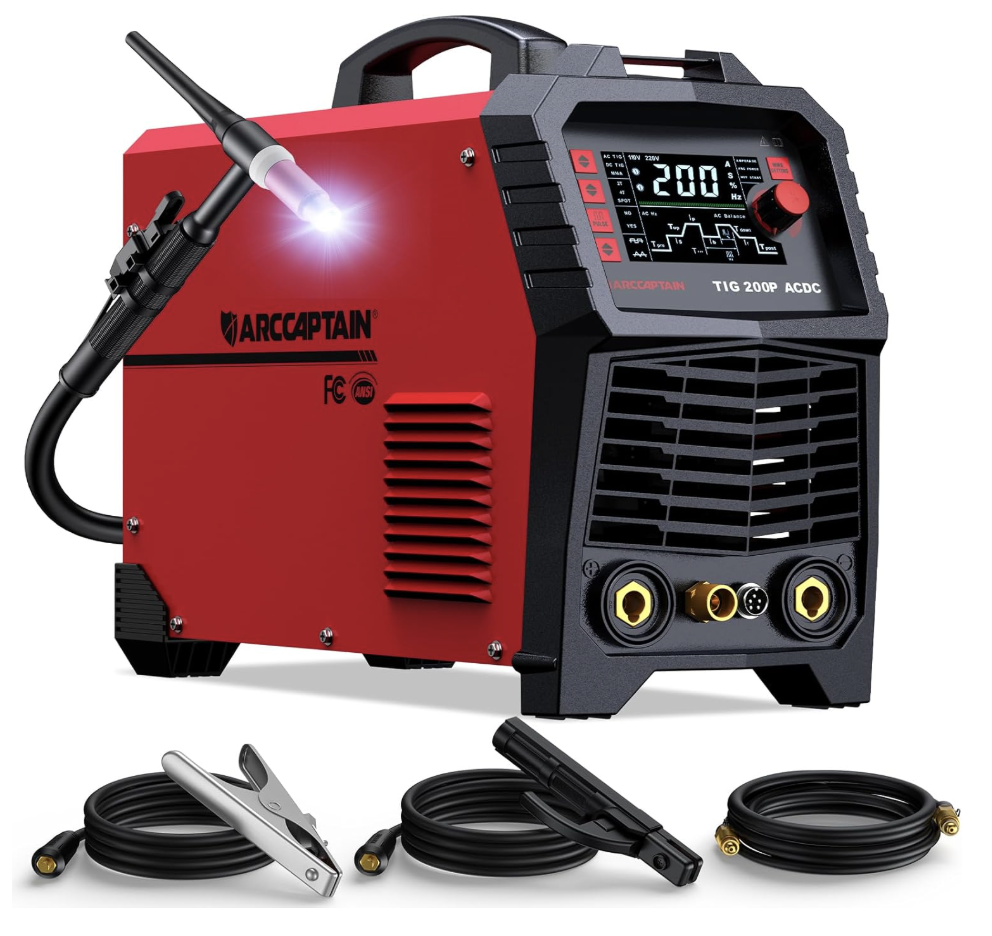
ARCCAPTAIN’s TIG200P AC/DC Pulse expands on their 205 Pro model by adding true AC TIG capability for aluminum. It’s a dual-voltage welder that handles TIG, Stick, and pulse modes with steady arc control, compact size, and enough power for both garage and light-shop use.
Key Takeaways
Dual-voltage: 120 / 240 V
AC/DC TIG and Stick processes
Output range: 10–200 A, pulse 0.2–200 Hz
AC balance adjustable 30–70%
Includes foot pedal, TIG kit, and regulator
60% duty cycle @ 200 A (240 V)
Performance and Features
The TIG200P’s pulse control and adjustable AC balance make it ideal for aluminum and stainless projects that need precision. The digital interface is clear and responsive, letting you tune slope, frequency, and cleaning action quickly. On 240 V it provides strong, stable arcs at full amperage. The included foot pedal gives proportional control for bench and fabrication work, while the compact inverter design keeps it portable for field jobs.
Wear PPE rated to ANSI Z87.1 and follow AWS Z49.1 for ventilation when TIG welding aluminum. Always ground to clean metal, maintain torch gas coverage, and avoid TIG welding near flammable materials or coatings.
FAQ
Q: Does it weld aluminum? A: Yes — it supports full AC TIG with balance and frequency control.
Q: Is a foot pedal included? A: Yes, included for amperage control.
Q: What torch connections does it use? A: Standard 17-series, compatible with CK and WP torch options.
We may earn a commission on purchases made through our links, at no extra cost to you.
Manage Consent
To provide the best experiences, we use technologies like cookies to store and/or access device information. Consenting to these technologies will allow us to process data such as browsing behavior or unique IDs on this site. Not consenting or withdrawing consent, may adversely affect certain features and functions.
Functional
Always active
The technical storage or access is strictly necessary for the legitimate purpose of enabling the use of a specific service explicitly requested by the subscriber or user, or for the sole purpose of carrying out the transmission of a communication over an electronic communications network.
Preferences
The technical storage or access is necessary for the legitimate purpose of storing preferences that are not requested by the subscriber or user.
Statistics
The technical storage or access that is used exclusively for statistical purposes.The technical storage or access that is used exclusively for anonymous statistical purposes. Without a subpoena, voluntary compliance on the part of your Internet Service Provider, or additional records from a third party, information stored or retrieved for this purpose alone cannot usually be used to identify you.
Marketing
The technical storage or access is required to create user profiles to send advertising, or to track the user on a website or across several websites for similar marketing purposes.