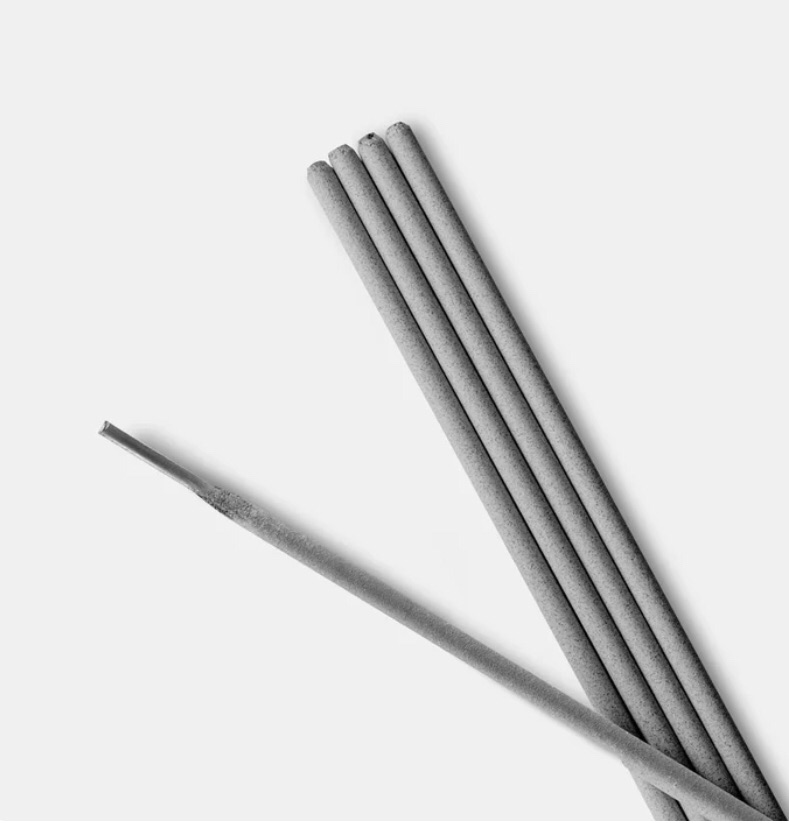
Tag: 7018 welding rod

  • 6010 vs 7018 Rod Selection Guide: When to Use Each Stick Electrode

    Use 6010 when the weld needs deep penetration, fast-freeze puddle control, open-root tie-in, or tolerance for less-than-perfect steel. Use 7018 when the weld needs low-hydrogen deposit control, higher tensile classification, smoother fill and cap passes, or structural weld quality on clean steel. The common field mistake is treating them as interchangeable. They are not. A 6010 root can solve lack-of-fusion problems that a soft 7018 arc may not reach. A 7018 fill or cap can reduce hydrogen-cracking risk where a cellulose rod is the wrong choice.

    For a quick comparison, the existing Weld Support Parts article 6010 Electrode vs 7018 Electrode: What Welders Need to Know covers the basic arc differences. This guide is focused on selection at the parts counter and in the field: base metal condition, machine output, polarity, joint type, code requirement, rod storage, and wrong-rod symptoms.

    Fast Selection Rule

    Job ConditionChoose 6010Choose 7018
    Open-root pipe or root passBest fitUsually not first choice
    Dirty, rusty, painted, or mill-scale steelBetter toleranceClean steel required
    Structural fill and cap weldsPossible only if procedure allowsPreferred
    Low-hydrogen requirementNoYes
    Machine is AC-onlyWrong choice in most casesUse 7018AC or AC-rated 7018
    Need smooth bead appearanceRougher, digging beadCleaner appearance
    Vertical or overhead controlStrong fast-freeze controlGood with correct amperage and dry rods

    What 6010 Does Better

    6010 is a high-cellulose sodium SMAW electrode. Its value is arc force. The arc digs, the puddle freezes fast, and slag coverage is light compared with low-hydrogen rods. That makes 6010 useful for open roots, pipe roots, maintenance welds, and joints where penetration is the main concern. Weld Support Parts lists the Washington Alloy 6010 electrode as a high-cellulose sodium rod for deep penetration, fast-freezing puddles, and arc force, conforming to AWS A5.1 E6010 and ASME SFA 5.1 E6010.

    Choose 6010 when the symptom is lack of root fusion, a cold root, poor tie-in at the land, or a root bead that will not keyhole. It is also the better rod when the base metal cannot be perfectly cleaned in field repair work. It does not replace cleaning, but it tolerates imperfect surfaces better than 7018.

    What 7018 Does Better

    7018 is an iron-powder, low-hydrogen SMAW electrode. It is selected for strength, crack resistance, smoother beads, and structural work where low hydrogen matters. The “70” indicates a 70 ksi tensile classification, the “1” indicates all-position capability, and the “8” indicates low-hydrogen iron-powder coating with AC or DC reverse polarity use depending on the specific product.

    Choose 7018 when the weldment is structural, restrained, thick, high-strength, or subject to cracking concerns. Use it for fill and cap passes after a 6010 root where the procedure allows that sequence. For current selection on machines that do not run standard 7018 correctly, use the verified guide Should You Use AC or DC Current? When to Use 7018AC.

    Common Symptoms When the Wrong Rod Is Used

    • 7018 used where 6010 is needed: root bead sits cold, sidewall fusion is poor, arc will not dig through the joint, or slag traps appear at the root.
    • 6010 used where 7018 is needed: bead profile is rough, hydrogen control is not acceptable, tensile classification may be below procedure, or cap appearance is poor.
    • Standard 6010 on the wrong machine: unstable arc, rod snuffing, arc outages, or inability to hold a keyhole.
    • Damp 7018: porosity, erratic starts, excess spatter, underbead cracking risk, and failed procedure control.

    Inspection Steps Before Selecting Rod

    1. Confirm the welding procedure or job requirement. Do not substitute 6010 for 7018 on code work unless the procedure permits it.
    2. Check base metal condition. Rust, paint, heavy mill scale, and field contamination favor 6010 for penetration, but cleaning is still required.
    3. Verify machine output. Standard 6010 normally needs DC electrode positive. 7018 may run DCEP or AC only if the rod is rated for it.
    4. Confirm joint type. Open root and pipe root conditions often favor 6010. Structural fill, cap, and restrained welds often favor 7018.
    5. Check rod storage. Opened 7018 must be handled as a low-hydrogen consumable. Do not treat it like 6010.

    Test Procedures

    Before committing to production welds, run a short test bead on matching scrap. With 6010, confirm arc force, keyhole control, root tie-in, and slag release. With 7018, confirm restart quality, slag peel, toe wet-out, and bead profile. If 7018 sticks immediately, review the troubleshooting path in 7018 Rod Sticking: Causes & Solutions before blaming the electrode.

    For 1/8 in rods, many field settings fall near 75-125 amps for 6010 and around 90-140 amps for 7018, but the product data sheet and welding procedure control the final setting. Arc length should stay tight with both rods. Long arc length increases spatter, porosity risk, undercut, and poor bead control.

    Visual Wear and Defect Indicators

    • 6010 too cold: sticking, ropey bead, poor root wash, inconsistent keyhole.
    • 6010 too hot: excessive burn-through, undercut, hard-to-control keyhole, thin root bead.
    • 7018 too cold: high bead crown, slag inclusions, rod sticking, poor restart.
    • 7018 too hot: undercut, excessive puddle fluidity, flat washed bead, poor vertical control.
    • Damp 7018: rough starts, porosity, arc instability, and higher cracking risk.

    Compatibility Notes

    Verify the rod against the base metal, welding procedure, machine output, polarity, position, and storage requirement. 6010 is not a low-hydrogen electrode. 7018 is not a deep-digging cellulose root rod. A machine that runs 7018 well may still run 6010 poorly if it does not support the required arc characteristics. A small AC transformer machine may require 7018AC instead of standard 7018.

    Also verify the electrode holder and lead set. Overheated holders, loose jaws, undersized cable, and poor work clamp contact can mimic rod problems. For holder sizing and lead compatibility, use Welding Electrode Holder: Choose the Best for Stick Welding.

    What To Verify Before Ordering

    • Electrode classification: E6010, E7018, E7018-1, E7018AC, or required low-alloy variant.
    • Rod diameter: match amperage range, joint size, position, and base metal thickness.
    • Polarity: DCEP, AC, or both depending on rod and machine.
    • Storage: low-hydrogen rods require dry storage control after opening.
    • Code requirement: AWS, ASME, customer WPS, or repair procedure.
    • Base metal: mild steel, low-alloy steel, pipe grade, weathering steel, or unknown steel.

    Common Wrong-Part Mistakes

    • Ordering 6011 when the procedure calls for 6010 because both are cellulose rods.
    • Ordering standard 7018 for an AC-only machine instead of 7018AC.
    • Using 6010 for a low-hydrogen requirement because it penetrates better.
    • Using old opened 7018 from a shelf for critical welds.
    • Choosing rod diameter by habit instead of joint size, position, and amperage range.

    Field Fix vs Proper Fix

    A temporary field fix is to switch from 7018 to 6010 only when penetration or root control is the actual issue and the procedure allows it. Another temporary fix is to increase amperage slightly if 7018 is sticking. The proper fix is to match the electrode classification to the WPS, clean the joint, verify polarity, use dry low-hydrogen rods, and correct the ground path.

    For 7018 storage, use a proper rod oven where required. The related Weld Support Parts rod oven guide YESWELDER BWX-01 Welding Rod Oven Review discusses portable electrode storage for E7018 and similar rods.

    Related Failure Paths

    • Lack of fusion from soft arc or low amperage.
    • Hydrogen-assisted cracking from damp low-hydrogen electrodes.
    • Slag inclusion from incorrect rod angle or cold 7018 puddle.
    • Burn-through from excessive 6010 heat on open-root joints.
    • Arc instability from wrong polarity, poor ground, or incompatible machine output.

    Safety Notes

    SMAW produces arc radiation, fumes, hot slag, electrical shock hazards, and fire hazards. Use correct PPE, ventilation, dry gloves, proper work clamp contact, and approved electrode storage. Do not weld unknown coated, galvanized, painted, or contaminated material without identifying the coating and controlling fumes. Never substitute electrode class on load-bearing or pressure work without the welding procedure or engineer approval.

    Bottom Line

    6010 is the penetration and root-control rod. 7018 is the low-hydrogen structural rod. For pipe and open-root work, 6010 often starts the weld. For strength, fill, cap, and crack resistance, 7018 often finishes it. Selection should be based on WPS, polarity, base metal condition, storage control, and the failure you are trying to prevent.

  • Washington Alloy 7018 Electrode Review & Buying Guide

    Washington Alloy 7018 Electrode Review & Buying Guide

    Washington Alloy 7018 Electrode Review & Buying Guide

    _Whether you’re fabricating heavy structural components or running critical repair welds in the field, the Washington Alloy 7018 welding electrode stands out as a dependable choice for Shielded Metal Arc Welding (SMAW). In this guide, we’ll take a hard look at what makes the 7018 from Washington Alloy—specifically ASIN=B071VYV1CC—a go-to for professionals and students alike._

    Introduction

    The Washington Alloy 7018 Electrode is a low-hydrogen, iron powder-coated arc welding rod designed for high-strength carbon and low-alloy steels. Offering superior crack resistance, excellent arc stability, and strong mechanical properties, it’s a staple for many structural welding applications.

    This product is especially popular among:
    Certified welders working on bridges, buildings, and pipelines
    Fabricators engaged in load-bearing assemblies
    Engineering professionals overseeing critical welding specs
    Students and apprentices preparing for AWS qualification tests

    Its role is clear: to provide solid, high-quality welds with excellent impact strength—especially in vertical or overhead positions where performance matters most.

    Types / Variants / Models

    The Washington Alloy 7018 comes in various sizes and packaging options, each suited for different project scales and welding machines.

    Common Rod Diameters:

    3/32” (2.4mm) – Ideal for sheet metal and light-gauge work.
    1/8” (3.2mm) – Most versatile; common in both shop and field use.
    5/32” (4.0mm) – Suitable for thicker plate welding and structural joints.

    Package Quantities:

    1-lb Sample Packs – Great for testing or small repair jobs.
    5-lb, 10-lb, and 60-lb Packs – Efficient for high-volume professional use.

    Depending on your amperage capacity and material thickness, you should choose the appropriate rod size. Larger electrodes require higher travel speeds and amperage settings but deliver deeper weld penetration.

    Key Features or Specifications

    Here are the core specs and what they mean for real-world users:

    Classification: AWS A5.1 E7018 — guarantees low-hydrogen properties for high-strength welds
    Diameter (ASIN=B071VYV1CC): 1/8″ – perfect balance of deposition rate and control
    Compatible Processes: SMAW (Shielded Metal Arc Welding)
    Current Type: AC or DCEP (Direct Current Electrode Positive)
    Tensile Strength: 70,000 psi — ensures high-load bearing capacity
    Impact Toughness: Charpy V-Notch >20 ft-lbs @ -20°F — maintains ductility in cold environments
    Coating Type: Low Hydrogen Iron Powder — reduces risk of hydrogen-induced cracking
    Certifications: Meets AWS, ASME, and often used in mil-spec and DOT environments

    Why It Matters:

    The low hydrogen content makes it perfect for welding high-strength steels, while its iron powder flux enhances deposit rates, making it a productivity booster in larger operations.

    Usage & Compatibility

    The 7018 series from Washington Alloy is used exclusively with SMAW, commonly called stick welding. Here’s what you need to know for proper usage:

    Compatible Welding Machines:

    – AC or DC stick welders with adjustable amperage control
    – Inverters and transformer-based SMAW machines
    – Machines with hot start or arc force features—for better arc initiation

    Tips for Optimal Use:

    – Maintain amperage between 90–150A depending on rod size and material thickness
    – Use DC+ (DCEP) for smoother arc and deeper penetration
    Preheat thicker base metals if welding cold or high-carbon steels

    Pros:

    – Easy arc starts
    – Clean, stable arc
    – Minimal spatter
    – Smooth bead appearance

    Cons:

    – Requires dry storage or rod ovens for maximum performance
    – Less effective on rusty or galvanized materials compared to 6010 rods

    Common Applications

    The Washington Alloy 7018 is frequently selected in environments demanding structural integrity and reliable mechanical performance.

    Typical Use Cases Include:

    Structural steel fabrication (bridges, buildings)
    Pipeline welding
    Shipbuilding and marine welding
    Heavy equipment repair
    Pressure vessel fabrication
    Steel stairs and platform installations

    Its strong mechanical bonding, especially in vertical and overhead positions, makes it ideal for multi-pass welds in critical joints that experience dynamic loading.

    Tips & Best Practices

    To get the most from your Washington Alloy 7018 rods, follow these practical tips:

    Storage & Handling:

    – Store in dry, airtight packaging or rod oven at 250°F
    – Avoid using rods exposed to humidity—this can introduce porosity and cracking

    Welding Best Practices:

    – Maintain steady arc length—too short causes sticking; too long reduces arc stability
    – Use stringer beads instead of weaving in vertical-up passes for stronger penetration
    – Clean the base metal well to ensure clean fusion

    Troubleshooting:

    Porosity or cracking? Rod may be moisture-contaminated
    Hard arc starts? Try switching polarity or slightly increasing amperage

    Conclusion

    The Washington Alloy 7018 electrode—especially the standard 1/8″ model (ASIN=B071VYV1CC)—delivers consistent, durable welds for demanding applications. Its combination of low-hydrogen flux, compatibility with both AC and DC machines, and structural-grade tensile strength makes it indispensable for modern welders.

    Whether you’re welding in the field, at a job site, or prepping for your AWS D1.1 test, this is a stick electrode you can trust.

    Affiliate Call to Action

    Check the latest price, ratings, and customer reviews on Amazon:

    Washington Alloy 7018 10lbs Welding Stick Electrode (5/32)
    • Yield Strength (PSI): 72,000
    • Tensile Strength (PSI): 86,000
    • Elongation in 2″ (%): 31
    • Charpy V-Notch at -20 degrees F (ft. lbs): 65

    Last update on 2026-06-03 / Affiliate links / Images from Amazon Product Advertising API

    Note for Readers:
    This post may contain affiliate links. If you purchase through them, we may earn a small commission at no cost to you. Thank you for supporting our site.

Read with Kindle Unlimited