Welding guides
Parts, troubleshooting, equipment, and life in the trade. Browse by topic or search below.
-
How to Stop MIG Nozzle Spatter from Blocking Gas Coverage
MIG weld porosity is often blamed on shielding gas settings, but a blocked nozzle can cause the same problem. When spatter builds up inside the MIG gun nozzle, shielding gas flow can…
-
How to Fix an Unstable TIG Arc from Poor Tungsten Prep
A wandering TIG arc is often blamed on gas flow, amperage, or the machine. Those issues can matter, but the tungsten electrode is one of the first places to check. A contaminated,…
-
Why MIG Wire Burns Back Into the Contact Tip
MIG burnback happens when the welding wire melts into the contact tip instead of feeding cleanly into the weld puddle. It is a common shop problem because the symptom looks simple, but…
-
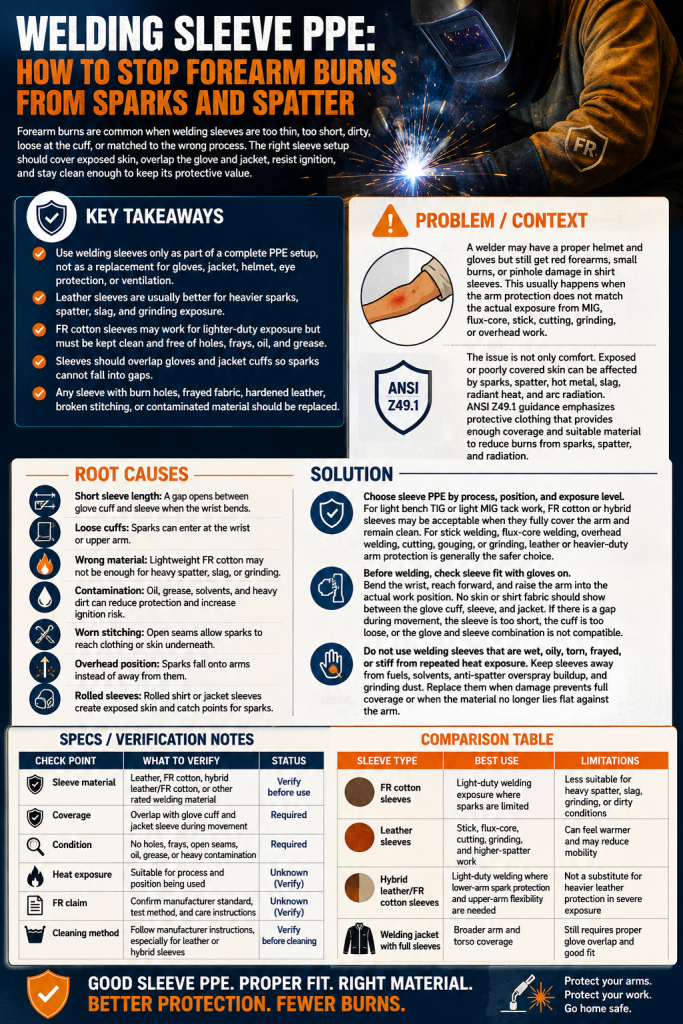
Welding Sleeve PPE: How to Stop Forearm Burns from Sparks and Spatter
Forearm burns are common when welding sleeves are too thin, too short, dirty, loose at the cuff, or matched to the wrong process. The right sleeve setup should cover exposed skin, overlap…
-
Why Carbon Arc Gouging Leaves Carbon Pockets in the Groove
Carbon Arc Gouging Carbon Pockets Troubleshooting Infographic Infographic showing root causes, fixes, verification notes, and safety reminders for carbon pockets left after air carbon arc gouging. Carbon Pockets After Gouging? Air Carbon…
-
Do I Need a Respirator If I Already Have a Fume Extractor?
A welding fume extractor reduces airborne fume at the source, but it does not automatically replace a respirator. The right answer depends on whether the extractor is capturing the plume before it…
-
Why TIG Tungsten Turns Black Even When the Weld Looks Clean
TIG tungsten turning black is usually a shielding problem, not a mystery tungsten problem. The weld may still look acceptable at first, but a darkened electrode, unstable arc, dull bead edge, or…
-
Best Low-Profile Welding Respirators That Fit Under a Hood
A welding respirator can have the right filter rating and still fail in the shop if it pushes the hood outward, breaks the face seal, fogs the lens, or blocks the view…
-
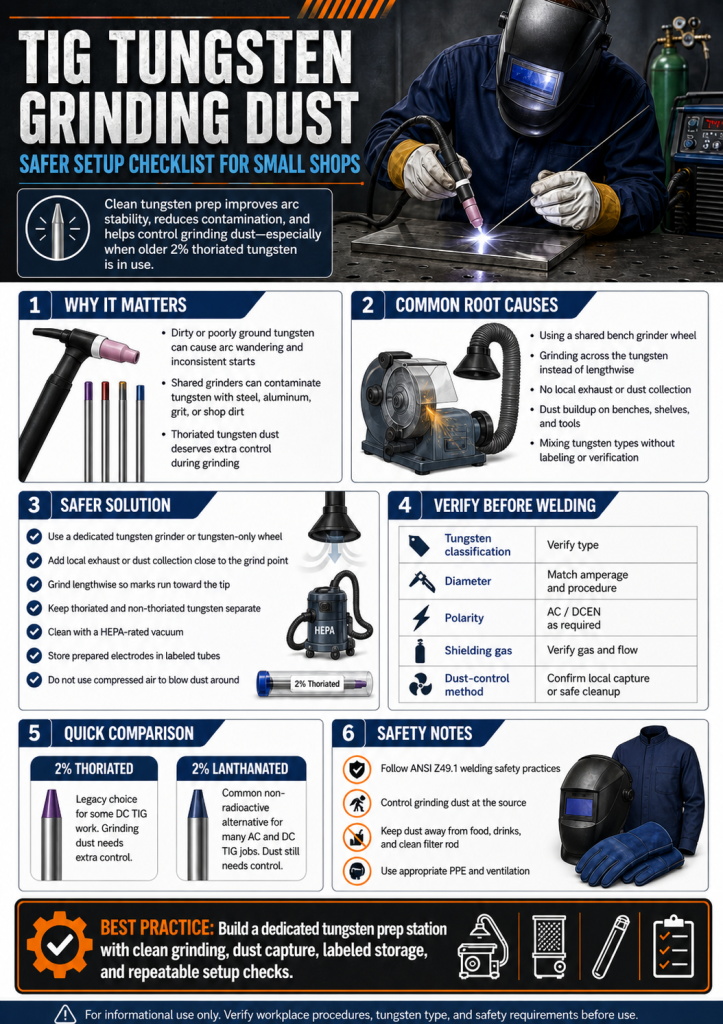
How to Reduce TIG Tungsten Grinding Dust in a Small Shop
TIG welding often depends on a clean, consistent tungsten point. The problem is that grinding tungsten electrodes can create fine dust, especially when older 2% thoriated tungsten is used. A simple shop…