Category: Welding Helmet Support

Weld Helmet, consumables, parts breakdowns, and accessories

  • Welding Safety Glasses Guide 2025 | Shade Numbers, ANSI Z87.1 & UV Protection

    Welding Safety Glasses Guide 2025 | Shade Numbers, ANSI Z87.1 & UV Protection

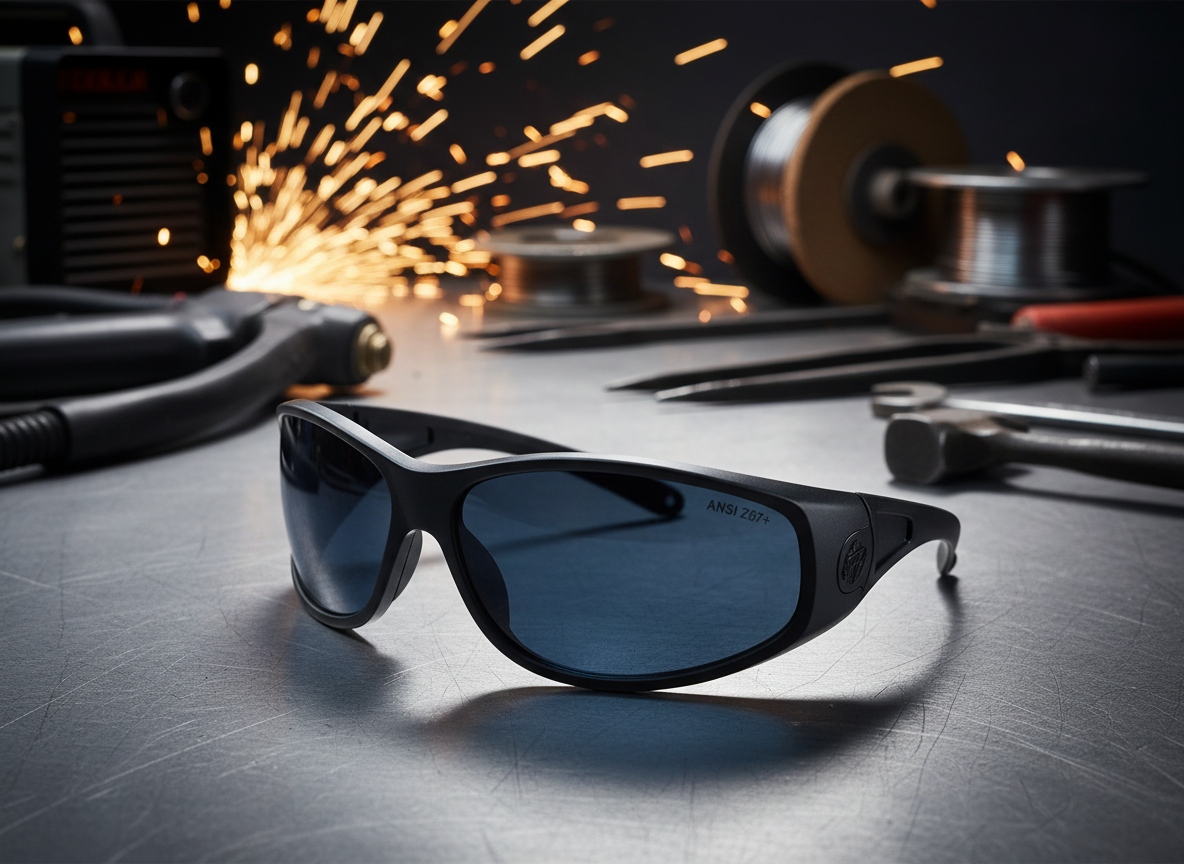
    Welding safety glasses protect against UV radiation, infrared light, and impact hazards during grinding and fabrication. Choosing the right glasses depends on process type, shade number, and ANSI Z87.1 certificationโ€”not just lens color.

    ANSI Z87.1 Certification Requirements

    Impact Protection Levels

    Basic Impact (Z87) – Protects against low-velocity impact (1โ€ steel ball at 150 ft/sec) – Suitable for: General shop work, light grinding, non-welding tasks

    High Impact (Z87+) – Protects against high-velocity impact (1/4โ€ steel ball at 150 ft/sec) – Required for: Welding, grinding, chipping, cutting – Marking: โ€œZ87+โ€ stamped on frame and lens

    Side Shield Requirement: – All welding safety glasses must have side shields or wraparound design – Prevents spatter and debris from entering around lens edges

    Shade Number Selection by Process

    ProcessAmperage RangeShade NumberLens Type
    Oxy-fuel cuttingN/A#3-#6Fixed shade
    TIG (GTAW)10-50A#8-#10Fixed or auto-darkening
    TIG (GTAW)50-150A#10-#12Fixed or auto-darkening
    MIG (GMAW)60-160A#10-#12Fixed or auto-darkening
    MIG (GMAW)160-250A#12-#14Fixed or auto-darkening
    Stick (SMAW)60-160A#10-#12Fixed shade
    Stick (SMAW)160-250A#12-#14Fixed shade
    Plasma cutting20-40A#4-#5Fixed shade
    Plasma cutting40-80A#5-#8Fixed shade

    Note: Safety glasses are supplemental protection worn under welding helmets or for indirect arc exposure (helper/observer).

    Lens Types & Technologies

    Fixed Shade Lenses

    • Pros: No batteries, consistent darkness, low cost
    • Cons: Single shade only, must swap lenses for different processes
    • Best for: Dedicated single-process work, backup glasses
    • Cost: $10-$30

    Auto-Darkening Lenses

    • Pros: Adjustable shade range, no lens swapping
    • Cons: Battery replacement, higher cost
    • Shade range: Typically #5-#13
    • Reaction time: 0.0001-0.00004 seconds
    • Best for: Multi-process shops, frequent shade changes
    • Cost: $50-$150

    Passive IR/UV Protection (Clear Lenses)

    • Function: Blocks UV and infrared without visible light darkening
    • Use case: Grinding, fabrication, indirect arc exposure (helper/observer)
    • Shade equivalent: #1.5-#2
    • Best for: Non-welding tasks requiring impact protection

    UV & IR Protection Standards

    UV Protection (200-400nm wavelength): – All welding lenses must block 99.9%+ UV radiation – Permanent damage occurs from unprotected UV exposure (arc eye/welderโ€™s flash)

    Infrared Protection (780nm-1mm wavelength): – Blocks heat radiation from welding arc – Prevents retinal damage and cataracts from prolonged exposure

    Visible Light Transmission: – Shade #3: 14.3% transmission (light tint) – Shade #8: 0.58% transmission (moderate darkness) – Shade #12: 0.0018% transmission (very dark)

    Lens Coatings & Features

    Anti-Fog Coating

    • Purpose: Prevents condensation in humid environments or when wearing respirator
    • Best for: Summer welding, enclosed spaces, respirator use
    • Limitation: Coating wears off after 6-12 months

    Anti-Scratch Coating

    • Purpose: Extends lens life in high-abrasion environments
    • Best for: Grinding, fabrication, production shops
    • Hardness rating: 4-6H pencil hardness (military spec MIL-PRF-32432)

    Polarized Lenses

    • Purpose: Reduces glare from reflective surfaces (polished stainless, aluminum)
    • Best for: TIG welding on reflective materials
    • Limitation: Not necessary for carbon steel or general fabrication

    Frame Styles & Fit

    Wraparound Design

    • Coverage: Maximum side and peripheral protection
    • Best for: Grinding, cutting, high-spatter welding
    • Fit: Snug to face, minimal gap around edges

    Over-the-Glass (OTG) Design

    • Purpose: Fits over prescription eyeglasses
    • Best for: Welders who wear corrective lenses
    • Limitation: Bulkier, may not fit all prescription frame sizes

    Prescription Welding Glasses

    • Purpose: Combines corrective lenses with welding shade
    • Best for: Full-time welders who need vision correction
    • Cost: $150-$400 (requires optometrist fitting)

    When to Wear Safety Glasses vs. Helmet

    Safety Glasses (Supplemental Protection)

    • Grinding, cutting, or fabrication (no arc)
    • Indirect arc exposure (helper/observer 10+ feet from arc)
    • Under welding helmet as secondary protection
    • Oxy-fuel cutting or brazing (low UV output)

    Welding Helmet (Primary Protection)

    • Direct arc exposure (TIG, MIG, stick, flux-core)
    • Primary welder performing arc welding
    • Required for all arc welding processes per OSHA 1910.252

    OSHA Requirement: Safety glasses must be worn under welding helmets in environments with grinding, chipping, or multiple welding stations.

    Common Mistakes

    Using non-certified safety glasses for welding
    Fashion sunglasses or non-Z87+ glasses donโ€™t block UV/IR radiation. Result: arc eye (photokeratitis) and permanent retinal damage. Always verify Z87+ marking.

    Wrong shade number for amperage
    Shade #3 glasses for 150A MIG = retinal burn risk. Shade #12 for oxy-fuel cutting = canโ€™t see work. Match shade to process and amperage.

    Skipping safety glasses under helmet
    Grinding debris or spatter can enter under helmet. OSHA requires safety glasses as secondary protection in multi-hazard environments.

    Buying Checklist

    • โœ“ ANSI Z87+ certification marked on frame and lens
    • โœ“ Shade number matches process and amperage range
    • โœ“ UV/IR protection rated for welding (99.9%+ UV block)
    • โœ“ Side shields or wraparound design for peripheral protection
    • โœ“ Anti-fog coating if working in humid environments
    • โœ“ Anti-scratch coating for grinding/fabrication work
    • โœ“ Comfortable fit (no pressure points, secure without slipping)
    • โœ“ OTG design if wearing prescription glasses

  • Auto-Darkening Welding Helmet Buying Guide 2025 | Lens Speed, Shade Range & Standards

    Auto-Darkening Welding Helmet Buying Guide 2025 | Lens Speed, Shade Range & Standards

    Auto-darkening helmets protect your eyes by switching from light to dark state when arc strikes. Choosing the right one depends on lens speed, shade range, viewing area, and certificationโ€”not brand hype.

    Key Specifications

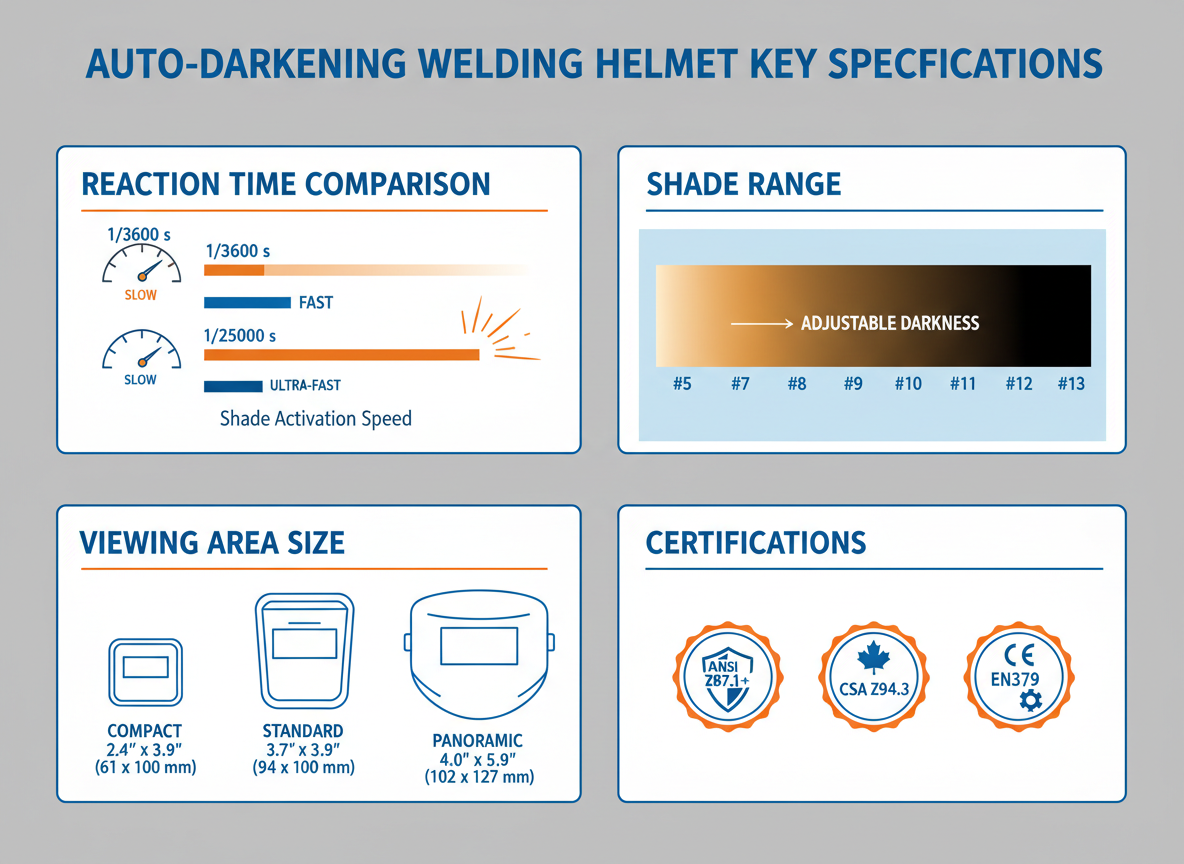
    Reaction Time (Switching Speed)

    LevelSpeedDecimal
    Entry-level1/3600 second0.00028s
    Mid-range1/10000 second0.0001s
    Professional1/25000 second0.00004s

    TIG welding requires faster response (1/20000s minimum) due to low-amperage arc initiation. MIG and stick work fine with 1/10000s.

    Shade Range

    • Standard range: #9โ€“#13
    • TIG-specific: #5โ€“#13 (low-amp visibility)
    • Grinding mode: #3โ€“#4 (light state)

    AWS D1.1 requires minimum shade #10 for 60โ€“160A stick welding, #11 for 160โ€“250A, #12 for 250โ€“550A.

    Viewing Area

    SizeDimensionsArea
    Compact3.5โ€ ร— 1.65โ€6 sq in
    Standard3.93โ€ ร— 2.36โ€9.3 sq in
    Wide-view3.93โ€ ร— 2.87โ€11.3 sq in
    Panoramic4.25โ€ ร— 3.25โ€13.8 sq in

    Larger viewing area improves peripheral awareness in tight spaces and multi-pass work.

    Optical Clarity Rating (1/1/1/1 to 1/1/1/3)

    Four numbers indicate: optical class / light diffusion / variations in luminous transmittance / angle dependence.

    • 1/1/1/1 = highest clarity (minimal distortion)
    • 1/1/1/2 = professional grade
    • 1/1/1/3 = acceptable for general fabrication

    Certification Requirements

    ANSI Z87.1+ (High-Impact Rated)
    Required for all industrial welding environments. Plus symbol (+) indicates high-velocity impact protection.

    CSA Z94.3
    Canadian standard equivalent to ANSI Z87.1+.

    EN379
    European standard covering optical class, switching time, and UV/IR protection.

    Process-Specific Requirements

    TIG (GTAW)

    • Reaction time: 1/20000s or faster
    • Shade range: #5โ€“#13 (low-amp start visibility)
    • Sensitivity adjustment: Essential for low-amperage starts

    MIG (GMAW)

    • Reaction time: 1/10000s acceptable
    • Shade range: #9โ€“#13
    • Spatter resistance: Check lens cover plate availability

    Stick (SMAW)

    • Reaction time: 1/10000s acceptable
    • Shade range: #10โ€“#13
    • Grinding mode: Useful for slag removal between passes

    Flux-Core (FCAW)

    • Same as MIG requirements
    • Higher spatter = more frequent cover plate replacement

    Power Source Options

    Solar-powered

    • Pros: No battery replacement, lighter weight
    • Cons: Requires adequate light exposure, slower recovery in dim environments

    Battery-powered

    • Pros: Consistent performance in all lighting
    • Cons: Battery replacement every 6โ€“12 months (CR2032 or AAA)

    Solar + Battery Hybrid

    • Best reliability for production environments
    • Battery backup prevents downtime

    True Color vs. Standard Lens Technology

    FeatureStandard Green LensTrue Color Lens
    Color perceptionGreen/blue tintNatural color
    Weld pool visibilityAdequateEnhanced
    Heat color distinctionStandardSuperior
    CostBase price2โ€“3ร— premium
    Best forStructural steelStainless/aluminum TIG

    True color improves precision on stainless and aluminum TIG work but isnโ€™t necessary for structural steel fabrication.

    Buying Checklist

    • โœ“ ANSI Z87.1+ certification marked on helmet
    • โœ“ Reaction time matches your primary process
    • โœ“ Shade range covers your amperage requirements
    • โœ“ Viewing area suits your work environment
    • โœ“ Optical clarity rating 1/1/1/2 or better
    • โœ“ Replacement lens covers readily available
    • โœ“ Adjustable sensitivity and delay controls
    • โœ“ Grinding mode if you do stick or flux-core

    Common Mistakes

    Buying based on viewing area alone
    Large viewing area with slow reaction time = retina damage risk. Verify switching speed first.

    Ignoring optical clarity rating
    1/1/1/3 lenses cause eye strain during 8+ hour shifts. Pay for 1/1/1/2 if you weld full-time.

    Skipping sensitivity adjustment testing
    Low-amperage TIG (10โ€“40A) wonโ€™t trigger poorly calibrated sensors. Test before buying.


  • Welding Fume Exposure in 2025: Whatโ€™s Changed and What PPE Actually Protects You

    Welding Fume Exposure in 2025: Whatโ€™s Changed and What PPE Actually Protects You

    Welding fumes have always carried health risks, but 2025 brings a major shift in how OSHA, AWS, and safety professionals are treating long-term exposure. Injury rates in welding have dropped 15% since 2020, but chronic inflammation, respiratory diseases, and cumulative metal-fume toxicity are getting significantly more attention.

    Whatโ€™s driving the change?
    Stricter exposure limits, new PPE technologies, and better data on how manganese, hexavalent chromium, nickel, and aluminum fumes impact long-term health.

    This guide explains whatโ€™s new, whatโ€™s trending, and which respirators provide real protectionโ€”not just marketing.


    Key Takeaways

    • Chronic inflammation from long-term fume exposure is a major 2025 focus
    • OSHA and ANSI Z49.1 have updated guidance for ventilation and fume extraction
    • PAPRs and tight-fitting respirators are becoming standard, not optional
    • Shops must document airflow, PPE compliance, and exposure reduction
    • Welders need gear that protects against manganese, aluminum oxides, and stainless fumes

    What Changed in 2025

    1. Chronic Inflammation Identified as a High-Priority Health Risk

    Research now links long-term fume exposure to:

    • Chronic lung inflammation
    • Reduced lung function
    • Cardiovascular stress
    • Increased sensitivity to airborne metals

    OSHA has signaled more aggressive enforcement on fume control, especially in enclosed fabrication environments.


    2. Stronger Requirements for Fume Extraction & Ventilation

    ANSI Z49.1 (Safety in Welding, Cutting, and Allied Processes) now emphasizes:

    • Mandatory local exhaust ventilation in most shop environments
    • Airflow documentation for enclosed welding stations
    • Regular fume monitoring for stainless, galvanized, and hardfacing work

    Shops that relied on โ€œgeneral ventilationโ€ are being pushed toward mechanical extraction.


    3. PPE Expectations Increased Across Industries

    Old disposable masks donโ€™t cut it anymore. For metal fume exposure, the standard is shifting toward:

    • Elastomeric half-mask respirators with P100 filters
    • PAPRs for long-duration welding or stainless applications
    • Integrated hood systems for high-particulate shops

    Shops are required to treat fume protection as โ€œessential PPE,โ€ not optional.


    Where Welders Are Most at Risk

    The highest fume loads appear in:

    โ€ข MIG welding in confined areas

    High particulate, high manganese content.

    โ€ข Stainless steel welding (GMAW, GTAW, FCAW)

    Hexavalent chromium risk.

    โ€ข Hardfacing and high-heat processes

    High metal concentration and oxide generation.

    โ€ข Multi-pass structural welding

    Sustained exposure on thick materials increases cumulative load.


    Recommended PPE for Real Protection (Not Marketing Claims)

    Below are two Miller respirators your audience already trusts and you want to sell. These are ideal for 2025โ€™s stricter fume-control expectations.


    Miller LPR-100 (295273 / 295274)

    A low-profile, P100-rated respirator designed specifically for welding hoods.

    Why it stands out:

      • Tight-seal fit designed for welding helmets
      • Filters block 99.97% of airborne particulates
      • Compact design prevents interference with PAPR hoses or helmets
      • Great for MIG, Stick, and TIG operations
      • Lower breathing resistance than many elastomeric masks

    Where to Buy

    ArcWeld Store:
    Miller 295273 LPR-100 Gen. II Half Mask Respirator with Nuisance OV Relief, S/M Size

    “>
    Miller 295273 LPR-100 Gen. II Half Mask Respirator with Nuisance OV Relief, S/M Size

    Miller 295273 LPR-100 Gen. II Half Mask Respirator with Nuisance OV Relief, S/M Size

    $59.72

    In Stock

    View Product

    Miller LPR-100 Gen. II Half Mask Respirator with P-100 Nuisance Organic Vapor Relief, M/L

    “>
    Miller LPR-100 Gen. II Half Mask Respirator with P-100 Nuisance Organic Vapor Relief, M/L

    Miller LPR-100 Gen. II Half Mask Respirator with P-100 Nuisance Organic Vapor Relief, M/L

    $59.72

    In Stock

    View Product

    Amazon:

    Miller LPR-100 Gen. II Half Mask Respirator, Nuisance OV Relief M/L – Welding Respirator Mask with Filters – P100 Respirator Mask for Filtrating Particulates & Aerosols – Respirator Under Helmet
    • Enhanced Protection with Nuisance OV Relief Filters: The Miller LPR-100 Gen. II Half Mask Respirator, Nuisance OV Relief M/L includes an added carbon layer feature to reduce nuisance-level organic vapor odors; Our respirator mask with filters helps ensure clean, breathable air for welders working in fume-intensive environments
    • Up to 99.97% Filtration: Upgrade your welding gear with our respirator mask; Strongly resistant to oil, the filters of our respirators help provide reliable filtration of airborne particles, including solid dust, metal fumes and mists
    • Compact Low-Profile Design for Welding Helmets: The slim design of our welding respirator under helmet offers a wide field of vision and fits easily under most welding helmets; Our respirator is designed to help provide full compatibility with your protective eyewear and headgear
    • Ergonomic Half-Mask Respirator for Extended Comfort: Crafted for long welding shifts, our half face respirator features minimal dead air space to reduce heat buildup; It also comes with a large non-return exhaust valve to help minimize user fatigue during high-demand tasks
    • Durable, Medical-Grade Materials: Made with latex- and silicone-free materials, this half mask face respirator is odor-free, hypoallergenic; It is also built to withstand demanding welding environments while providing user comfort and safety

    Last update on 2025-12-05 / Affiliate links / Images from Amazon Product Advertising API

    Miller LPR-100 Gen. II Half Mask Respirator, Nuisance OV Relief S/M – Welding Respirator Mask with Filters – P100 Respirator Mask for Filtrating Particulates & Aerosols – Respirator Under Helmet
    • Enhanced Protection with Nuisance OV Relief Filters: The Miller LPR-100 Gen. II Half Mask Respirator, Nuisance OV Relief S/M includes an added carbon layer feature to reduce nuisance-level organic vapor odors; Our respirator mask with filters helps ensure clean, breathable air for welders working in fume-intensive environments
    • Up to 99.97% Filtration: Upgrade your welding gear with our respirator mask; Strongly resistant to oil, the filters of our respirators help provide reliable filtration of airborne particles, including solid dust, metal fumes and mists
    • Compact Low-Profile Design for Welding Helmets: The slim design of our welding respirator under helmet offers a wide field of vision and fits easily under most welding helmets; Our respirator is designed to help provide full compatibility with your protective eyewear and headgear
    • Ergonomic Half-Mask Respirator for Extended Comfort: Crafted for long welding shifts, our half face respirator features minimal dead air space to reduce heat buildup; It also comes with a large non-return exhaust valve to help minimize user fatigue during high-demand tasks
    • Durable, Medical-Grade Materials: Made with latex- and silicone-free materials, this half mask face respirator is odor-free, hypoallergenic; It is also built to withstand demanding welding environments while providing user comfort and safety

    Last update on 2025-12-05 / Affiliate links / Images from Amazon Product Advertising API

    Disclosure: This article contains affiliate links. As an Amazon Associate, I earn from qualifying purchases.


    Ventilation: What Actually Works in 2025

    1. Local Exhaust Extraction (LEV)

    Most effective. Pulls fumes at the arc before they reach the welder.

    2. High-Volume Portable Fume Extractors

    Good for small fabrication shops; less ideal for high-production cells.

    3. PAPR Systems

    Best for stainless or long-duration welding. (Optrel Helix Pure Air, 3M Adflo, Miller PAPR)

    4. Clean-Air Booths

    High-end solution for training centers and production facilities.


    Why Shops Should Care

    1. Non-compliance = OSHA fines

    OSHAโ€™s 2025 inspection priority includes fume exposure logs and ventilation plans.

    2. Better PPE lowers long-term medical claims

    Reduced inflammation = fewer chronic issues = lower insurance cost.

    3. Certified welders are billing higher rates

    Because the PPE requirements are stricter and more expensive.


    Safety Notes (AWS/ANSI References)

    • Follow ANSI Z49.1 for ventilation and exposure limits
    • Use NIOSH-approved P100 filters
    • Respirator fit testing required under OSHA 1910.134
    • For stainless and galvanized steel, ensure proper local extraction
    • Replace filters per manufacturer schedule or earlier if breathing resistance increases

    FAQ

    Do welders need a respirator in 2025?
    For most shop workโ€”yes. Exposure standards are stricter, and many shops mandate P100 or PAPR.

    Is a disposable mask enough?
    Not for welding. Disposable masks do not meet P100 fume protection standards.

    Which is better, a PAPR or a tight-fitting respirator?
    PAPR = best for long-duration or stainless welding.
    P100 = excellent for general welding and a huge improvement over older PPE.

    Does fume extraction replace respirators?
    No. They work together. Extraction reduces airborne load; respirators protect your lungs directly.

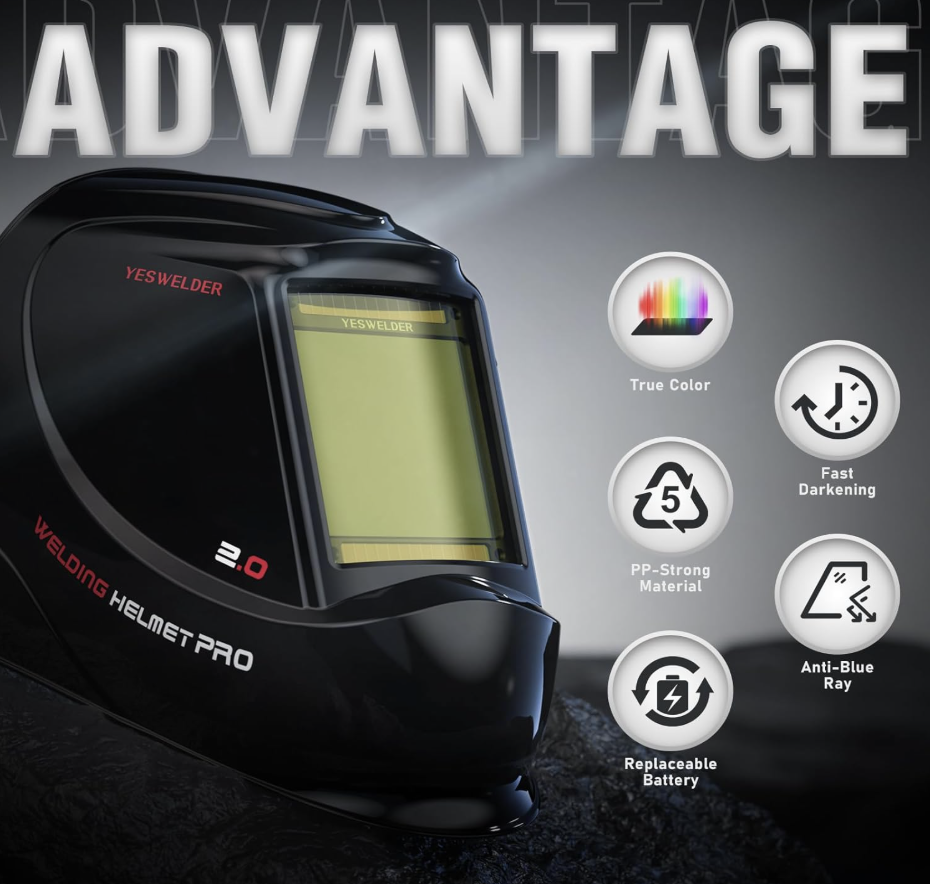
  • YESWELDER LYG-Q800D Auto-Darkening Welding Helmet Review (2025): 180ยฐ Side View, True-Color Clarity

    YESWELDER LYG-Q800D Auto-Darkening Welding Helmet Review (2025): 180ยฐ Side View, True-Color Clarity

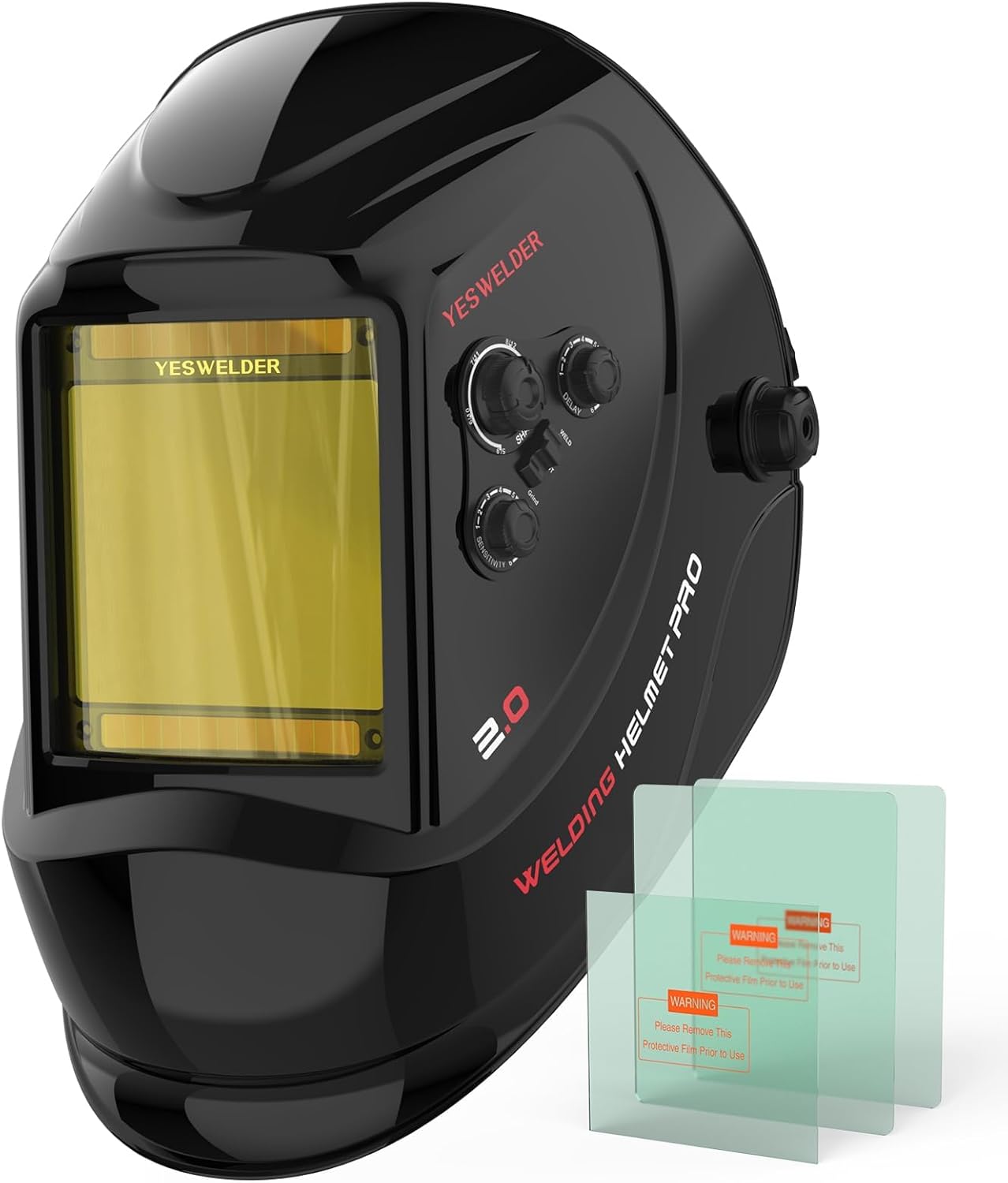
    YESWELDERโ€™s LYG-Q800D builds on their panoramic-view helmet line with a 180ยฐ viewing system, true-color optics, and a wide shade range for TIG, MIG, Stick, and grinding. Itโ€™s designed for welders who need broader situational awareness without giving up optical clarity.

    Key Takeaways

    • Optical rating: 1/1/1/1 true-color
    • View system: 180ยฐ panoramic with side windows
    • Shade range: 3/5โ€“9 / 9โ€“13
    • Applications: TIG, MIG, Stick, Cut, Grind
    • Solar-powered with battery backup
    • Panoramic visibility improves safety in busy shop environments

    Performance and Use

    The LYG-Q800Dโ€™s defining feature is the 180ยฐ panoramic design. The main lens pairs with two filtered side windows to give welders better spatial awarenessโ€”useful when working around other personnel, large fixtures, or moving equipment.

    YESWELDER uses a true-color lens stack that avoids the green tint found in older auto-darkening designs. The 1/1/1/1 rating keeps distortion minimal, which matters for TIG on stainless, thin aluminum, and precision joints.

    Sensors and Switching

    The helmet uses a typical four-sensor layout with adjustable sensitivity and delay. The switching speed is fast enough for TIG down to low amperage ranges (exact threshold not publishedโ€”Unknown, verify). Shade 3 grind mode allows uninterrupted prep and cleanup without swapping PPE.

    Fit and Comfort

    The headgear is YESWELDERโ€™s ratcheting suspension system. Itโ€™s serviceable and lightweight, but the panoramic shell is physically larger than a standard hood. Welders working in tight tanks or small enclosures may find clearance limited.


    Problems Solved

    Narrow Field of View

    Traditional 3.5 ร— 1.75 in windows limit visibility. The Q800Dโ€™s side windows reduce blind spots during fabrication, especially when repositioning parts or moving around jigs.

    Color Distortion

    True-color optics help identify bead profile, arc shape, and heat signature more accurately than older green-hue lensesโ€”useful when dialing in TIG without over-etching.

    Switching Between Weld and Grind

    Built-in grind mode avoids constantly lifting the hood, speeding up prep, tack-ups, and post-weld cleanup.


    Who Should Choose It

    • TIG welders working stainless or aluminum needing high optical clarity.
    • Fabricators who move frequently around workpieces and want added side visibility.
    • Small shops wanting a panoramic hood without premium-brand pricing.
    • Students/instructors who benefit from increased situational awareness.

    Comparison Table

    ModelKey SpecsBest For
    YESWELDER LYG-Q800D1/1/1/1 โ€ข Shade 3/5โ€“9/9โ€“13 โ€ข PanoramicTIG/MIG/Stick; shop visibility
    YESWELDER Q800D-A (if available)Similar features; alt shellStudents / budget TIG
    Lincoln Viking 33501/1/1/1 โ€ข 12.5 sq in โ€ข 4C lensProfessional TIG/MIG

    Where to Buy

    We may earn a commission from qualifying purchases at no extra cost to you.


    Safety Notes

    • Follow ANSI Z87.1 and ANSI Z49.1 practices for eye and arc protection.
    • Replace front cover lenses regularly; pitted lenses can degrade switching performance.
    • Verify clearance before working in tight areas; panoramic shells are larger than standard hoods.
    • Inspect sensors for slag/dust blockage to prevent delayed darkening.

    FAQ

    Q: Is the shade range suitable for TIG?
    Yesโ€”shade 5โ€“9 covers low-amp TIG, and 9โ€“13 covers higher-amp procedures. Minimum TIG amp rating is Unknown, verify, as YESWELDER does not publish it clearly.

    Q: Do the side windows stay dark?
    Yes. They use passive filtered side panelsโ€”not auto-darkeningโ€”providing constant protection.

    Q: Can you grind in this helmet?
    Yes. Shade-3 grind mode allows surface prep without removing the hood.

    Q: Is it battery or solar powered?
    Both. Solar-assisted with internal replaceable batteries.

    YESWELDER Auto Darkening Welding Helmet with SIDE VIEW, 180ยฐ Panoramic View, 1/1/1/1 True Color Solar Powered Welder Hood, Wide Shade 3/5-9/9-13 Welder Mask for TIG MIG ARC CUT and GRIND, LYG-Q800D
    • Advanced Eye Protection with Blue Light Blocking Technology: This welding helmet features cutting-edge Blue Light Blocking outer lens, shielding your eyes from harmful blue light during welding, protects your eyes by filtering out most of harmful high energy blue light rays while letting through the less harmful portion of the blue light spectrum. This ensures long-lasting eye comfort and safety, making it ideal for extended welding sessions
    • Panoramic LARGE VIEW: The welding hood is equipped with a 3.94″ x 3.23″ Large View with Side View (DIN5, non-auto-darkening) featuring 1/1/1/1 optical clarity lenses and True Color technology
    • MULTI-PROCESS: Features a versatile Shade Range (3/5-9/9-13), perfect for Professional Welding(TIG, MIG, MMA), CUT and GRIND. Covers most processes with precision protection. Easily accommodates Magnifying Lenses for close-up work
    • Fast Auto-darkening: This auto darkening welding helmet features 4 Arc Sensors for reliable arc detection, ultra-fast switching (1/30000 sec), and adjustable Sensitivity and Delay controls for perfect performance
    • Comfortability & Durability: Pivot style headgear ensures superior comfort, a secure fit, and balanced weight for all-day wear. Reinforced PP Materials with thicker design ensure exceptional durability and safety โ€“ built to withstand rigorous welding applications

    Last update on 2025-12-05 / Affiliate links / Images from Amazon Product Advertising API


    Sources Checked

    • YESWELDER LYG-Q800D product listing (Amazon)
    • Manufacturer specs (side windows, 1/1/1/1 rating, shade 3/5โ€“9/9โ€“13)
    • ANSI Z49.1 and Z87.1 guidelines
    • Comparable hood specs (Lincoln Viking 3350)
  • ArcOne Vision X81VX Welding Helmet Review (2025): Premium Clarity for Pros

    ArcOne Vision X81VX Welding Helmet Review (2025): Premium Clarity for Pros

    Intro
    The ArcOne Vision X81VX is a professional-grade auto-darkening welding helmet designed for fabricators who spend long hours under the hood. It delivers wide viewing, fast switching, and rugged comfort that meets ANSI Z87.1 and CSA Z94.3 safety standards. Hereโ€™s how it stacks up for industrial and pipe work.


    Key Takeaways

    • Large View: 3.85 ร— 2.44 in (98 ร— 62 mm) viewing area for precise weld puddle control.
    • 4 Arc Sensors: Reliable switching < 1/25,000 s for SMAW, GTAW, GMAW, and Plasma.
    • Variable Shade: DIN 9 โ€“ 13 with grind mode and sensitivity/delay adjustments.
    • Comfort Fit: Balanced shell design and adjustable headgear reduce neck fatigue.
    • Durability: Meets ANSI Z87.1 + CSA Z94.3; ideal for shop and field environments.

    Performance and Build

    ArcOne engineered the X81VX for welders who need both optical clarity and long-term comfort. The XTREME series uses a lightweight polycarbonate shell that resists spatter and impact while keeping total weight manageable for multi-hour jobs. With true color filters and a fast reaction speed, arc starts and transitions are crisp, reducing eye strain throughout a shift.


    Applications

    • Structural steel and pipe fabrication
    • TIG and MIG precision work
    • Industrial maintenance and repair
    • Long-duration shop projects requiring wide view and comfort

    Comparison Table

    ModelKey SpecsBest ForArcWeld StoreAmazon
    ArcOne Vision X81VX (Black XTREME)3.85 ร— 2.44 in view โ€ข Shade 9โ€“13 โ€ข 4 Sensors โ€ข ANSI Z87.1 โ€ข True ColorPro-level MIG/TIG and pipe welding where clarity and comfort matter ArcOne Vision X81VX Black XTREME Auto Darkening Welding Helmet X81VX-1500 “>View at Arc Weld StoreAmazon Listing (disclosure) if out of stock

    Safety Notes

    Always verify that auto-darkening helmets meet ANSI Z87.1 and CSA Z94.3 for eye and face protection. Inspect lenses and batteries regularly, and store the helmet in a cool, dry place to protect sensors and optics. Replace lens covers as needed to maintain clarity.


    FAQ

    Q: Can the X81VX be used for low-amp TIG work?
    A: Yes. Its sensitivity control detects arcs as low as 5 amps, suitable for GTAW applications.

    Q: Does it support grind mode?
    A: Yes. Switch to grind mode for surface prep without filter darkening.

    Q: What is the power source?
    A: Solar assisted with replaceable lithium batteries.

    Q: Is the helmet compatible with cheater lenses?
    A: Yes โ€“ standard clip-in magnifiers fit inside the frame.


    Where to Buy

    ArcOne Vision X81VX Black XTREME Auto Darkening Welding Helmet X81VX-1500

    “>
    ArcOne Vision X81VX Black XTREME Auto Darkening Welding Helmet X81VX-1500

    ArcOne Vision X81VX Black XTREME Auto Darkening Welding Helmet X81VX-1500

    $327.82

    Sold Out

    View Product

    (If out of stock, available:

    Last update on 2025-12-05 / Affiliate links / Images from Amazon Product Advertising API

    Disclosure: We may earn a small commission at no extra cost to you.)

  • Fibre-Metal Pipeliner 110PWE Review (2025): Why Pipe Welders Still Swear by It

    Introduction

    Some tools outlast every trend. The Fibre-Metal Pipeliner 110PWE is one of themโ€”unchanged in all the right ways since long before โ€œauto-darkeningโ€ was even a buzzword. It still shows up on job sites where heat, grit, and tight quarters ruin fancy tech helmets. Pipe welders keep reaching for it because it just works.

    Buy it here


    Tech Specs

    FeatureDetails
    Shell MaterialSuperGlas Plus fiberglass
    Viewing Area2 ร— 4.25 in. passive lens
    Default Shade#10
    WeightApprox. 1.3 lbs
    HeadgearAdjustable ratchet suspension
    CertificationsANSI Z87.1 / CSA Z94.3
    ColorWhite reflective finish

    Build & Durability โ€” SuperGlas Plus Shell

    The Pipelinerโ€™s SuperGlas Plus shell takes abuse few helmets survive. It shrugs off sparks, radiant heat, and drops without cracking. Fiberglass construction gives it rigidity while staying lighter than most composite models. The matte white surface also reflects radiant heatโ€”a small thing that matters when youโ€™re kneeling beside 600 ยฐF pipe.


    Fit and Balance for Long Days

    Fibre-Metal designed the Pipeliner to hang low and center, keeping the lens close to your face and the weight off your neck. The headgear ratchet system is simple but steady once dialed in. Many welders upgrade it with a 3M or Huntsman headgear for extra padding or better micro-adjustment. A bit of ingenuityโ€”adding a sweatband or swapping to elastic webbingโ€”turns it from โ€œbarely tolerableโ€ to โ€œall-day wearable.โ€


    Lens and Filter Options

    It ships with a fixed shade 10 passive lens, using the classic 2 ร— 4.25 in. window. Replacements are cheap and everywhere. For brighter arcs or TIG work, welders often switch to shade 9; for heavy stick or flux-core, shade 11 or 12 keeps the eyes calmer. Gold-coated lenses improve clarity and color tone. Cheater lenses slip right behind the filter plate without modification.


    Popular Mods and Accessories

    This helmet practically invites customization:

    Because every part is simple, nothing costs much or takes long to replace.


    Performance vs. Auto-Darkening Helmets

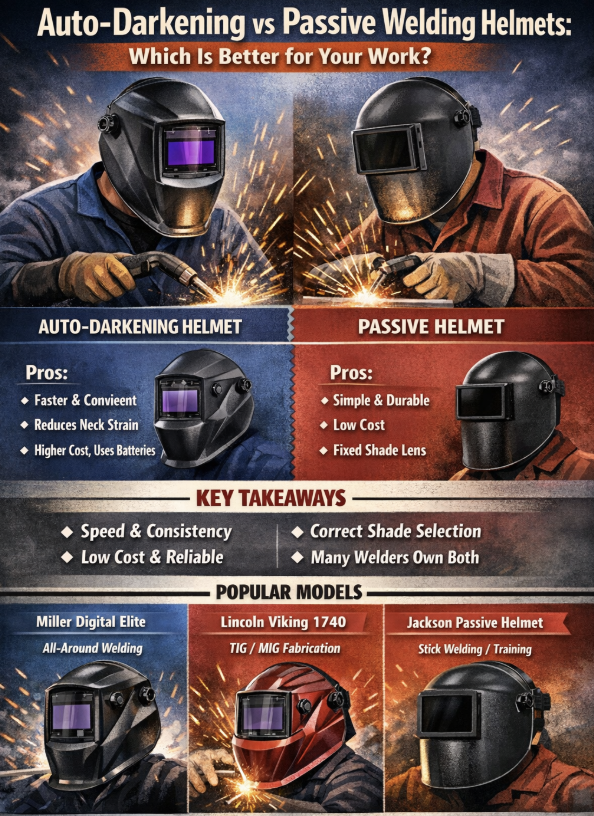
    Auto-darkening wins for convenience, but the Pipeliner still dominates in reliability. No batteries, sensors, or lag timeโ€”just instant shade when the arc strikes. Visibility under low-light conditions is naturally wider than most think once the lens is tuned right. Field welders favor it because it canโ€™t โ€œflashโ€ them when sunlight or reflections confuse sensors. If you do mostly fabrication indoors, pairing this with an auto-dark helmet for setup and tack work covers both worlds.


    Pros and Cons

    ProsCons
    Virtually indestructible SuperGlas Plus shellFixed-shade lens
    Light, well-balanced feelNarrow viewing area
    Low cost for parts and lensesNo grind mode or electronics
    Trusted by pipe welders worldwideLimited headgear adjustability

    Alternative: Jackson Safety PL280 Pipeliner Welding Hood (Model 14301)

    For welders who love the Pipeliner form factor but want a different finish, the Jackson Safety 14301 PL280 Pipeliner Welding Hood โ€“ Arc Weld Store offers a sleek black design with comparable fit and lens size. Itโ€™s slightly heavier but comes with a comfortable headgear out of the box. Both helmets share that same old-school fiberglass durability and tight seal, but Jacksonโ€™s darker finish hides grime better and gives a more modern look.

    You can find both versions side by side at Arc Weld Store โ€” ideal if youโ€™re comparing fit, weight, and lens options before buying.


    Verdict

    If your work is dirty, cramped, or outdoors, this helmet still outperforms plenty of pricier choices. Itโ€™s a pure tool: durable, minimal, and easy to maintain. For many welders, the Pipeliner 110PWE isnโ€™t nostalgiaโ€”itโ€™s insurance against downtime.

    Order direct from Arc Weld Store for genuine Fibre-Metal gear and fast shipping.

  • Miller 295274 LPR-100 Gen II Respirator Review & Guide

    Miller 295274 LPR-100 Gen II Respirator Review & Guide

    Miller 295274 LPR-100 Gen II Respirator Review & Guide

    Note for Readers: This post may contain affiliate links. If you purchase through them, we may earn a small commission at no cost to you. Thank you for supporting our site.

    Introduction

    The Miller 295274 LPR-100 Gen II Respirator is a next-generation low-profile respirator designed specifically for welding and metal fabrication environments. Built for professionals who need superior respiratory protection without sacrificing comfort, visibility, or mobility, this advanced PPE (personal protective equipment) is ideal for high-particulate operations such as grinding, cutting, plasma arc cutting (PAC), GMAW (MIG), GTAW (TIG), FCAW (flux-cored), and SMAW (stick welding).

    This respirator is commonly used by:
    Professional welders
    Fabrication technicians
    Welding instructors and students
    Industrial maintenance crews
    Engineers and inspectors working on active job sites

    Whether you’re welding galvanized steel or cutting aluminum, the LPR-100 Gen II offers a critical level of respiratory protection against harmful metal fumes and airborne particulates.

    Types / Variants / Models

    While the Miller LPR-100 series has multiple models, the 295274 Gen II version is an upgraded design that builds upon the success of the original LPR-100 respirator. Here’s how the Gen II compares to earlier versions:

    LPR-100 Gen I: Original model with basic comfort and protection features; widely used for general welding applications.
    LPR-100 Gen II (295274):
    – Redesigned headgear and improved face seal for better comfort and fit
    Adjustable straps with quick-release buckles
    – Integrated adjustable exhaust valves for better breathability
    Optional HEPA filter compatibility

    The 295274 Gen II version delivers improved ergonomics and safety specs that make it more suitable for long-term wear in high-use industrial environments.

    Key Features or Specifications

    The Miller 295274 LPR-100 Gen II Respirator is built to meet rigorous workplace demands. Below are key features and what they mean for welders:

    Low-Profile Design:
    – Fits under most welding helmets, including Miller Digital Infinity and Digital Elite series.
    – Great for tight workspaces and precise fabrication jobs.

    Two-Stage Filtration System:
    – P100/HEPA filters capture โ‰ฅ99.97% of airborne particulates.
    – Protects against metal fumes from mild steel, stainless, aluminum, and galvanized metals.

    Replaceable Filters:
    – Easy twist-on design promotes hygienic filter changes.
    – Compatible with P100 filters specific to Miller (sold separately).

    Superior Seal Design:
    – Medical-grade silicone face seal minimizes leakage, remains soft and conformable during extended wear.

    Durable Construction:
    – Built from impact- and heat-resistant materials for rugged environments.

    Certifications:
    NIOSH Certified P100 โ€“ verified filtration and safety system compliant with U.S. occupational safety standards.

    Specs Overview:
    – Weight: ~7.5 oz
    – Compatibility: Most major welding helmet brands (especially Miller)
    – Size Options: One size fits most (adjustable strap system)
    – ASIN: B0DKLYQRL4

    Usage & Compatibility

    The LPR-100 Gen II is exceptionally versatile across welding processes. Here’s how and where it fits in:

    SMAW (Stick Welding): Great for outdoor or shielded applications where heavy particle exposure is likely.
    GMAW (MIG) and FCAW (Flux-Cored): Ideal when welding galvanized or painted steel where zinc oxide fumes are a hazard.
    GTAW (TIG): Low-profile allows unimpeded head movement and close-up focus, making it suitable for precision TIG work.
    Plasma Cutting & Grinding: Combines with face shields or auto-darkening helmets to maintain respiratory protection without bulk.

    Compatibility Notes:
    – Fits under most Miller helmets, including the Digital Infinity, T94i, and Titanium 9400i.
    – Compatible with grinding shields and face protection systems.
    – Not designed for use with supplied air or powered air-purifying respirator (PAPR) systems.

    Pros:
    – Excellent fit and comfort for long shifts.
    – Easy filter replacement and maintenance.
    – Superior low-profile ergonomics.

    Cons:
    – Filters must be purchased separately.
    – Not for use in oxygen-deficient or IDLH environments.

    Common Applications

    The Miller 295274 LPR-100 Gen II shines in metalworking sectors where clean breathing air is critical:

    Heavy Fabrication & Structural Welding:
    – Protects against thick fume concentrations in shipbuilding, steel bridges, and structural metalwork.

    Vehicle & Equipment Repair:
    – Ideal for tasks involving rusted or painted metal surfaces that emit chemical fumes or particulates.

    Industrial Maintenance:
    – Great for routine welding or grinding during plant turnarounds or refinery shutdowns.

    Welding Schools and Training Shops:
    – Lightweight and student-friendly, the Gen II is popular in welding education for extended learning environments.

    Tips & Best Practices

    To get the most from your Miller LPR-100 Gen II:

    Fit Check Before Each Use:
    – Ensure a snug seal around the nose and cheeks; perform a positive/negative pressure test.

    Change Filters Regularly:
    – Replace filters after 40 hours of use or sooner if breathing becomes difficult. Donโ€™t wait for visible signs of clogging.

    Clean After Each Day:
    – Wipe the inner seal and shell with a damp cloth.
    – Avoid harsh chemicals that can degrade the silicone.

    Helmet Compatibility:
    – Test fit with your welding helmet before field use. Make sure the face seal doesnโ€™t interfere with the helmet’s down position.

    Storage:
    – Keep in a sealed plastic bag or respirator case between uses to prevent dirt and dust accumulation.

    Avoid These Common Mistakes:
    – Using damaged or expired filters.
    – Wearing over facial hair, which can break the seal.
    – Failing to flush exhaust valves if breath condensation builds up.

    Conclusion

    The Miller 295274 LPR-100 Gen II Respirator is a top-tier choice for welders, metalworkers, and fabrication professionals who need compact, comfortable, and effective respiratory protection. Its improved Gen II fit, certified filtration, and low-profile design make it ideal for daily use in high-fume applicationsโ€”without compromising helmet compatibility or range of motion.

    Whether you’re laying down MIG welds on mild steel or TIG-ing stainless pipe in a tight corner, this respirator helps you breathe easier and stay compliant with workplace safety guidelines.

    If you’re serious about protecting your lungs on the job, the LPR-100 Gen II is an investment in both safety and comfort.

    Miller LPR-100 Gen. II Half Mask Respirator, Nuisance OV Relief M/L – Welding Respirator Mask with Filters – P100 Respirator Mask for Filtrating Particulates & Aerosols – Respirator Under Helmet
    • Enhanced Protection with Nuisance OV Relief Filters: The Miller LPR-100 Gen. II Half Mask Respirator, Nuisance OV Relief M/L includes an added carbon layer feature to reduce nuisance-level organic vapor odors; Our respirator mask with filters helps ensure clean, breathable air for welders working in fume-intensive environments
    • Up to 99.97% Filtration: Upgrade your welding gear with our respirator mask; Strongly resistant to oil, the filters of our respirators help provide reliable filtration of airborne particles, including solid dust, metal fumes and mists
    • Compact Low-Profile Design for Welding Helmets: The slim design of our welding respirator under helmet offers a wide field of vision and fits easily under most welding helmets; Our respirator is designed to help provide full compatibility with your protective eyewear and headgear
    • Ergonomic Half-Mask Respirator for Extended Comfort: Crafted for long welding shifts, our half face respirator features minimal dead air space to reduce heat buildup; It also comes with a large non-return exhaust valve to help minimize user fatigue during high-demand tasks
    • Durable, Medical-Grade Materials: Made with latex- and silicone-free materials, this half mask face respirator is odor-free, hypoallergenic; It is also built to withstand demanding welding environments while providing user comfort and safety

    Last update on 2025-12-05 / Affiliate links / Images from Amazon Product Advertising API

    **Check the latest price and read (Incomplete: max_output_tokens)

  • Weldcote Helmet: Supreme View Review & Comfort Guide

    Weldcote Helmet: Supreme View Review & Comfort Guide

    The Weldcote Supreme View Welding Helmet combines visibility, comfort, and adaptability, making it a dependable choice for welders at all skill level. With its wide viewing area, responsive auto-darkening lens, and adjustable settings, this helmet is designed to reduce eye strain and boost precision on every weld. Whether youโ€™re on the job site, in a fabrication shop, or tackling DIY projects at home, the Supreme View delivers both protection and ease of use.

    Key Features

    The Supreme View offers more than just a large lensโ€”itโ€™s packed with practical safety and comfort features that welders actually need:

    • Large Viewing Area: Expansive lens allows for better visibility of the weld pool and surrounding workpiece.

    • Manual Shade Setting: Dial in your preferred shade when consistency is needed.

    • Auto-Darkening Mode: Adjusts automatically based on the brightness of the arc.

    • +/- 2 Shade Adjustment: Fine-tune the auto-darkening feature for specific tasks or personal comfort.

    • Lightweight & Durable Design: Keeps fatigue low while holding up to tough shop environments.

    • Adjustable Headgear: Ensures a secure, comfortable fit for extended welding sessions.

    Together, these features make the helmet versatile enough to handle a variety of welding processes and working conditions.

    Pros & Cons

    Pros:

    • Wide viewing area for improved clarity

    • Flexible shade control (manual + automatic)

    • Auto-darkening adjusts to arc brightness

    • +/- 2 shade fine-tuning for comfort and precision

    • Lightweight design with adjustable headgear

    Cons:

    • The helmet can be a bit heavy for some users

    • Three year warranty, lower than some of the higher end helmets

    Who Itโ€™s For

    The Weldcote Supreme View is ideal for:

    • Professionals who need reliable shade options for varied projects

    • Students and apprentices who benefit from simple yet adaptable controls

    • Fabricators switching between processes like MIG, TIG, and Stick

    • DIY welders who want professional-grade safety without overspending

    What Makes It Unique

    Unlike many entry-to-mid-level helmets, the Supreme View gives welders full control over visibility. The combination of manual shade selection and smart auto-darkening with brightness sensitivity provides flexibility across different welding environments. The +/- 2 shade adjustment further customizes the auto feature, ensuring youโ€™re not locked into one setting but can fine-tune for comfort and accuracy.

    Buying Tips

    Before purchasing the Weldcote Supreme View, consider:

    “>supremeinner
  • Outside Cover Lens: Weldcote Metals KLEARVIEWLO Outside Cover Lens For Klear-View and Ultraview Helmet, 5 pack

    Weldcote Metals KLEARVIEWLO Outside Cover Lens For Klear-View and Ultraview Helmet, 5 pack

    $14.19

    In Stock

    View Product
    “>klearouter
  • Pair it with quality PPE for full protection.

  • Comparing its clarity rating (optical class 1/1/1/2 or similar) with competitors for accuracy and comfort.

  • Conclusion

    The Weldcote Supreme View Welding Helmet offers welders a balance of safety, comfort, and adaptability. With its manual shade settings, responsive auto-darkening, and +/- 2 shade fine-tuning, it stands out as a versatile option for both professionals and hobbyists. Clear visibility, reliable protection, and customizable controls make this helmet a smart investment for anyone serious about welding.

    Note: We may earn a small commission from Amazon affiliate links at no additional cost to you.


    ย 

  • Welding Galvanized: Safe Fume Control Tactics

    Welding Galvanized: Safe Fume Control Tactics

    Introduction

    Welding galvanized steel presents a unique challenge: toxic fumes. The galvanizing process coats steel with a layer of zinc, which vaporizes when exposed to welding temperatures, releasing hazardous zinc oxide gas. Left uncontrolled, these fumes can lead to serious short- and long-term health effects, including metal fume fever and chronic respiratory issues.

    Understanding safe fume control tactics isnโ€™t just about complianceโ€”itโ€™s about protecting your lungs, your team, and the quality of your welds. Whether you’re a structural welder, pipefitter, fabrication shop operator, or welding student, mastering this topic is crucial when working with zinc-coated metals.


    Galvanized Steel and Fume Hazards: What Are You Dealing With?

    Galvanized steel is carbon steel thatโ€™s been hot-dip coated in zinc to resist corrosion. While excellent for long-term durability in outdoor and moist environments, that zinc layer becomes dangerous when melted.

    Zinc fume hazards include:

    • Zinc Oxide (ZnO): Formed when zinc vapor cools in air.
    • Metal Fume Fever: Flu-like symptoms that appear within hours of exposure.
    • Chronic Exposure Risks: Repeated inhalation can cause long-term lung damage and weaken immune function.

    Additional risk factors:

    • Galvanized coatings can include lead, cadmium, or hexavalent chromium, especially in older infrastructure or imported steel.

    Fume Control Tactics: Types & Classifications

    Controlling zinc oxide fumes isnโ€™t a one-size-fits-all fix. Multiple strategies should be combined for safe welding on galvanized materials. Here are the primary categories:

    1. Ventilation Systems

    • Local Exhaust Ventilation (LEV):
      • Fume hoods, extractor arms, or downdraft tables.
      • Ideal for shop environments.
      • Captures fumes at the source before they spread.
    • General Shop Ventilation:
      • Large-scale air movement and filtration.
      • Supports LEV but isnโ€™t effective on its own.

    2. Personal Protective Equipment (PPE)

    • Powered Air-Purifying Respirators (PAPRs):
      • Offer higher protection than disposable masks.
      • Positive airflow prevents fume ingress.
      • Find PAPR Helmets Here
    • Half/Full-Face Respirators:
      • Use P100 or equivalent filters.
      • Must be properly fitted and regularly maintained.
    Miller LPR-100 Gen. II Half Mask Respirator, Nuisance OV Relief M/L – Welding Respirator Mask with Filters – P100 Respirator Mask for Filtrating Particulates & Aerosols – Respirator Under Helmet
    • Enhanced Protection with Nuisance OV Relief Filters: The Miller LPR-100 Gen. II Half Mask Respirator, Nuisance OV Relief M/L includes an added carbon layer feature to reduce nuisance-level organic vapor odors; Our respirator mask with filters helps ensure clean, breathable air for welders working in fume-intensive environments
    • Up to 99.97% Filtration: Upgrade your welding gear with our respirator mask; Strongly resistant to oil, the filters of our respirators help provide reliable filtration of airborne particles, including solid dust, metal fumes and mists
    • Compact Low-Profile Design for Welding Helmets: The slim design of our welding respirator under helmet offers a wide field of vision and fits easily under most welding helmets; Our respirator is designed to help provide full compatibility with your protective eyewear and headgear
    • Ergonomic Half-Mask Respirator for Extended Comfort: Crafted for long welding shifts, our half face respirator features minimal dead air space to reduce heat buildup; It also comes with a large non-return exhaust valve to help minimize user fatigue during high-demand tasks
    • Durable, Medical-Grade Materials: Made with latex- and silicone-free materials, this half mask face respirator is odor-free, hypoallergenic; It is also built to withstand demanding welding environments while providing user comfort and safety

    Last update on 2025-12-05 / Affiliate links / Images from Amazon Product Advertising API

    Miller LPR-100 Gen. II Half Mask Respirator, Nuisance OV Relief S/M – Welding Respirator Mask with Filters – P100 Respirator Mask for Filtrating Particulates & Aerosols – Respirator Under Helmet
    • Enhanced Protection with Nuisance OV Relief Filters: The Miller LPR-100 Gen. II Half Mask Respirator, Nuisance OV Relief S/M includes an added carbon layer feature to reduce nuisance-level organic vapor odors; Our respirator mask with filters helps ensure clean, breathable air for welders working in fume-intensive environments
    • Up to 99.97% Filtration: Upgrade your welding gear with our respirator mask; Strongly resistant to oil, the filters of our respirators help provide reliable filtration of airborne particles, including solid dust, metal fumes and mists
    • Compact Low-Profile Design for Welding Helmets: The slim design of our welding respirator under helmet offers a wide field of vision and fits easily under most welding helmets; Our respirator is designed to help provide full compatibility with your protective eyewear and headgear
    • Ergonomic Half-Mask Respirator for Extended Comfort: Crafted for long welding shifts, our half face respirator features minimal dead air space to reduce heat buildup; It also comes with a large non-return exhaust valve to help minimize user fatigue during high-demand tasks
    • Durable, Medical-Grade Materials: Made with latex- and silicone-free materials, this half mask face respirator is odor-free, hypoallergenic; It is also built to withstand demanding welding environments while providing user comfort and safety

    Last update on 2025-12-05 / Affiliate links / Images from Amazon Product Advertising API

    3. Coating Removal Techniques

    • Mechanical Removal (grinding or sanding):
      • Eliminates zinc coating at the joint area.
      • Reduces fume production but adds prep time.
    • Chemical Stripping:
      • Effective, but may introduce other hazards.
      • Requires strict disposal and PPE practices.

    4. Welding Process Modifications

    • Low-heat welding processes
      • Reduce the vaporization of zinc.
      • Can include pulsed GMAW or GTAW with tight control.

    Key Characteristics and Safety Specs

    Letโ€™s break down why fume control is a non-negotiable when working with galvanized:

    FactorDetails
    Zinc Vaporization Point~ 1650ยฐF (899ยฐC) โ€” much lower than steelโ€™s melting point
    Toxicity Threshold (ZnO)5 mg/mยณ TWA (OSHA limit) โ€” easily exceeded without ventilation
    Fume Production RateIncreases with amperage, travel speed, and preheat
    Affected ProcessesAll fusion welding processes can produce zinc fumes

    Example Scenario:
    A welder using FCAW at 250 amps on a 3/8″ galvanized plate without ventilation can easily exceed safe fume thresholds within minutes. That same weld with LEV and a PAPR drastically reduces the inhaled fume load.


    Process Considerations for Welding Galvanized

    SMAW (Stick Welding):

    • Pros: Portable, doesnโ€™t require shielding gas.
    • Cons: Produces heavy fumes; not ideal without strong ventilation.
    • Tips: Use low-hydrogen electrodes (E7018), clean the joint first, and use a fan or LEV.

    GMAW (MIG):

    • Pros: Cleaner arc, better control with spray or pulsed transfer.
    • Cons: Higher heat input can vaporize more zinc.
    • Tips: Use short-circuit mode or pulsed spray with adequate fume extraction.

    GTAW (TIG):

    • Pros: Precise, low-fume process.
    • Cons: Slower, more prep needed; zinc still poses risks near the arc.
    • Tips: Remove coating at the weld zone, ensure good airflow.

    FCAW:

    • Pros: Great for thick steel and structural work.
    • Cons: Very smokyโ€”generates significant fumes.
    • Tips: Use self-shielded wire with LEV and respirator.

    Common Applications for Galvanized Welding

    Welding galvanized materials is common in industries where corrosion resistance is critical:

    • Construction: Fencing, walkways, structural beams, brackets.
    • Agriculture: Livestock enclosures, irrigation systems.
    • HVAC and Plumbing: Ducting, pipe systems.
    • Automotive and Trailers: Frames, chassis, suspension components.

    Why use it? Zinc prevents rust, extending metal lifespan in outdoor or moist environments, making galvanized a smart choice for long-term infrastructure. But only when fumes are properly managed.


    Best Practices & Pro Tips from the Field

    1. Remove Zinc from Weld Zone Whenever Possible
      • Grind or sand at least 1-2 inches beyond joint lines.
      • Use flap discs for controlled removal without deep gouging.
    2. Always Ventilate at the Arc
      • Keep extractor hoods within 6โ€“10 inches of the arc.
      • Donโ€™t rely solely on room fansโ€”they just push fumes around.
    3. Use Respirators Every Time
      • Even outdoors, a breeze canโ€™t compete with zinc vapor.
      • P100 filters or PAPRs should be standard when welding galvanized.
    4. Mind Your Heat Input
      • Lower amps reduce zinc vaporization.
      • Stitch weld instead of full beads to reduce fume output.
    5. Watch for Metal Fume Fever Symptoms
      • Fatigue, chills, cough, or nausea after welding could indicate overexposure.
      • Rest, hydrate, and seek medical attention if symptoms persist.
    6. Post-Weld Cleaning Helps Too
      • Remove burned zinc residues to prevent toxic smoke during rework or painting.

    Conclusion

    Welding galvanized steel demands more than skillโ€”it requires awareness, preparation, and the right gear. Fume control isnโ€™t optional. Itโ€™s a safety-critical component of every galvanized job. Whether you’re laying beads on a ranch gate or structural bracing in a warehouse, make sure youโ€™re not trading your health for corrosion resistance.

    Key takeaway: If you smell it, you’re breathing it. Use ventilation, PPE, and coating removal techniques in conjunction to stay safe while welding galvanized materials.

  • 3M Speedglas G5-02 08-0100-50IC: Ultimate Welding Helmet Review

    3M Speedglas G5-02 08-0100-50IC: Ultimate Welding Helmet Review

    Introduction & Overview

    The 3M Speedglas G5-02 Helmet Review โ€“ Top Pick for Serious Welders? is a formidable contender in the world of welding safety gear. Known for its durability and cutting-edge technology, this helmet is designed to meet the demanding needs of professional welders. Offering both protection and comfort, it helps reduce fatigue during prolonged welding sessions. This review examines its features and evaluates whether it deserves the title of top pick for serious welders.

    Key Features

    The 3M Speedglas G5-02 Helmet is packed with features that enhance its functionality and user experience. It boasts an auto-darkening filter that adjusts seamlessly to changes in light intensity, ensuring consistent visibility and safety. The helmetโ€™s lightweight design reduces strain on the neck, allowing for extended use without discomfort. Moreover, its ergonomic construction includes a fully adjustable headband, providing a secure and customized fit for any user. The advanced lens technology delivers superior optical clarity, essential for precision work.

    Pros & Cons

    • Pros:

      • Auto-darkening filter adjusts quickly and smoothly
      • Lightweight and comfortable for prolonged use
      • Superior optical clarity for precise welding
      • Fully adjustable headband for a custom fit
    • Cons:

      • Premium pricing may be a barrier for hobbyists
      • Requires careful maintenance to preserve lens quality

    Who Itโ€™s For

    The 3M Speedglas G5-02 Helmet is ideal for professional welders who require reliable protection and visibility in their line of work. It is particularly suited for those who engage in tasks that demand precision, such as fine detailed welding and intricate repairs. Its advanced features cater to individuals who work in environments where safety and efficiency are paramount.

    5. What Makes It Unique

    What sets the 3M Speedglas 08-0100-50IC Helmet apart from other options on the market is its combination of advanced safety features and user-centric design. The auto-darkening filter is remarkably responsive, ensuring users are consistently protected. Additionally, the helmetโ€™s lightweight construction and ergonomic features make it a standout choice for those prioritizing both safety and comfort.

    Buying Tips

    When purchasing the 3M Speedglas G5-02 Helmet, consider whether the auto-darkening feature is necessary for your specific welding tasks. Pairing this helmet with accessories such as lens covers can extend the lifespan of its optical components. If multiple users will share the helmet, ensure all can achieve a comfortable fit with the adjustable headband.

    Conclusion

    In conclusion, the 3M Speedglas G5-02 Helmet Review โ€“ Top Pick for Serious Welders? It lives up to its reputation by offering a well-balanced mix of safety, clarity, and comfort. Designed for professionals, it stands out with its advanced features and thoughtful design. While it comes at a premium price, the investment is justified for those seeking a reliable, high-quality welding helmet.

    ย 

    We may earn a small commission through Amazon affiliate links, at no extra cost to you.

    3M Speedglas Welding Helmet G5-02, Auto Darkening Welding Helmet Meets ISO 16321 TIG+ Standards, Light State 2.5, Curved Wide View ADF, Bluetooth Enabled, 4 Arc Sensors, Includes Welding Helmet Bag
    • 3M SPEEDGLAS CURVED GLASS TECHNOLOGY: Follows your head’s curvature and the range of your peripheral vision to provide a 100% wider ADF field of view
    • 3M SPEEDGLAS NATURAL COLOR TECHNOLOGY: Colors appear brighter and more realistic in both the light and dark states
    • LIGHT WEIGHT WITH BETTER WEIGHT DISTRIBUTION: Light-weight as possible with the center of gravity closer to the center of your head, giving you better weight distribution
    • ANSI Z87.1-2015: ADF is certified using the same impact resistance tests used for traditional flat ADFs. Welding filter and protection plate meet ANSI Z87.1-2015
    • BLUETOOTH ENABLED: Program up to 10 memory modes with your phone with the 3M Connected Equipment app with easy access to maintenance logs, usage statistics, and User Manuals

    Last update on 2025-12-05 / Affiliate links / Images from Amazon Product Advertising API

  • Watch with Prime Video