Category: Plasma Cutting Support
-
Thermal Dynamics 7-3447 Torch Adapter Kit: Product Breakdown
“>
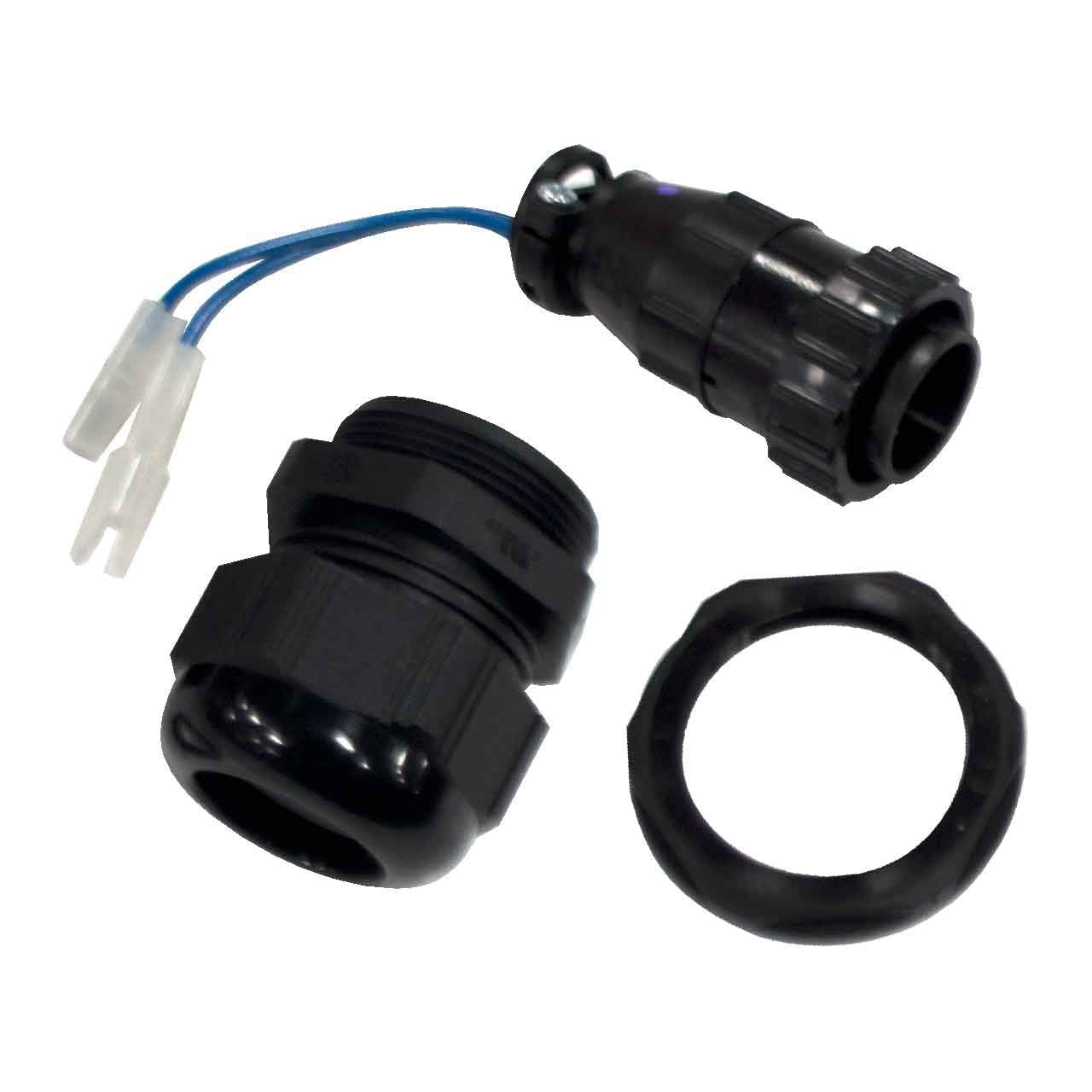
The Thermal Dynamics 7-3447 Torch Adapter Kit is a plasma torch parts item listed by ArcWeld. For buyers, maintenance teams, and welding support staff, the main question is not just what the part is called, but where it fits in the torch assembly, what to verify before install, and how to avoid mismatched parts in the field. The listing data provided identifies it as a Thermal Dynamics adapter kit with UNSPC code 23271707. Beyond that, technical details are Unknown (Verify) and should be confirmed against the torch model, parts diagram, or OEM documentation before use.
Key Takeaways
- The product is listed as the Thermal Dynamics 7-3447 Torch Adapter Kit.
- It is a plasma torch parts item for support and replacement use.
- UNSPC code provided in the listing: 23271707.
- Exact torch compatibility is Unknown (Verify) from the provided data.
- Before installation, confirm the torch model, mating interfaces, and the current wear condition of adjacent parts.
What this product is used for
An adapter kit in plasma torch service usually helps connect or align torch components, consumables, or accessory interfaces. The provided listing does not specify the exact function of the 7-3447 kit, so the safe assumption is limited to its role as a torch parts adapter component. Do not assume it fits a specific torch body, machine, or consumable family unless the parts breakdown confirms it.
For maintenance buyers, this means the kit should be treated as a controlled replacement part, not a universal accessory. If the torch is already in service, record the current part number, compare the old component to the replacement, and verify all interfaces before shutdown ends.
Product and parts check
The source listing provides only a basic identification set. Use the following check list before release to production:
- Check the part number: Confirm the package and invoice match Thermal Dynamics 7-3447.
- Inspect the torch model: Verify the torch and machine model against OEM documentation. Compatibility is Unknown (Verify).
- Inspect mating surfaces: Look for burn marks, galling, thread damage, or carbonized residue on adjoining parts.
- Verify seals and retention points: If the kit includes sealing or locking features, confirm they are clean and undamaged. Exact contents are Unknown (Verify).
- Compare to the removed part: Match length, profile, and connection style against the existing assembly before install.
If the kit is being stocked for multiple machines, label it by torch family, repair cell, or equipment ID. Do not place it in general consumables inventory without a verified application note.
Troubleshooting support: when the adapter kit may be involved
Adapter-related issues often show up as fit-up problems, poor electrical transfer, gas leakage, or inconsistent cut quality. The exact failure mode depends on the torch design, so inspect the full assembly rather than the adapter alone.
1) Torch will not assemble cleanly
- Check: Confirm the part number on the kit and the torch body.
- Inspect: Look for cross-threading, bent surfaces, or debris in the connection path.
- Verify: The replacement is intended for the torch model in service. If not confirmed, stop and check OEM documentation.
2) Air or gas leak appears after repair
- Check: Leak points at all adjacent fittings, O-rings, and connection faces.
- Inspect: Sealing surfaces for cuts, flattening, or contamination.
- Verify: All related consumables and seals are the correct service parts. Exact seal content is Unknown (Verify).
3) Cut performance changes after replacement
- Check: Consumable condition, torch alignment, and adapter seating.
- Inspect: Heat damage, loose assembly, or visible arcing at unintended points.
- Verify: Current operating parameters are still within the machine and torch specification. Those specs are not provided here.
Install and inspection steps
Use a controlled maintenance process when changing plasma torch parts.
- Lock out the system according to site procedure.
- Depressurize and isolate the plasma gas supply.
- Remove the worn component and keep it for direct comparison.
- Clean the torch interface and inspect for damage.
- Install the adapter kit only after part-number verification.
- Hand-check fit and alignment before restoring service.
- Perform a leak check and a short operational test under supervised conditions.
If resistance is felt during assembly, stop. Do not force the fit. Forcing mismatched parts is a common cause of damaged threads, poor sealing, and shortened torch life.
Safety notes
- De-energize and isolate the equipment before service.
- Allow hot parts to cool before handling.
- Wear eye protection and gloves when removing plasma torch components.
- Keep the work area free of metal dust, oil, and conductive debris.
- Do not rely on visual similarity alone to confirm compatibility.
- If the torch is part of a critical production line, use a documented spare-parts verification step before release.
Buyer guidance
For purchasing, the main value of this listing is part identification. Use it when you need a replacement adapter kit tied to the Thermal Dynamics naming convention. Because the source data does not include a full model list, dimensions, or an exploded-view reference, the buyer should verify the exact application with the torch serial number, machine documentation, or the removed part.
If you are building a support bin, store the package with a note for the verified torch system. If the application is not confirmed, mark it Unknown (Verify) instead of assigning it to a specific machine.
FAQ
What is the Thermal Dynamics 7-3447 Torch Adapter Kit?
It is a Thermal Dynamics plasma torch parts adapter kit listed by ArcWeld. The source data confirms the part name and UNSPC code, but not the full application details.
Which torch models does it fit?
Fitment is Unknown (Verify) from the provided data. Confirm the exact torch model and parts diagram before installation.
Does the kit include seals, retainers, or other sub-parts?
Unknown (Verify). The listing does not provide a detailed kit breakdown, so check the package contents or OEM documentation before use.
How should this part be checked before service?
Check the part number, inspect the torch interface, compare it with the removed component, and verify the application against the machine documentation.
Sources Checked
- ArcWeld product listing: Thermal Dynamics 7-3447 Torch Adapter Kit
- Provided source description and product metadata
- UNSPC code reference provided in the listing: 23271707
ArcWeld product reference:
Thermal Dynamics 7-3447 Torch Adapter Kit
TDC7-3447 Features: -Thermal Dynamics 7-3447 Adapter Kit. -THERMAL DYNAMICS. -UNSPC CODE: 23271707. -Plasma Torch Parts Plasma Torch Parts welders accessories accessory torches part.
View at Arc Weld Store
Thermal Dynamics 8-4025, Plasma Lubricant, Pack of (1): Replacement Part Breakdown
Thermal Dynamics 8-4025, Plasma Lubricant, Pack of (1) is a support item used in plasma cutting maintenance workflows. For buyers and maintenance teams, the main question is not just what the item is, but where it fits in the service routine, what it can and cannot solve, and what should be checked before it is put into service. For this product, the verified Amazon identifier is B0044FK0XY. Any deeper technical detail beyond the product listing should be treated as Unknown (Verify) unless confirmed by the equipment manual or supplier documentation.
Key Takeaways
- This is a plasma cutting support item, not a cutting torch, consumable kit, or machine assembly.
- Use it as part of a maintenance plan, not as a fix for worn internal parts, damaged leads, or airflow faults.
- Compatibility with any specific plasma system is Unknown (Verify) unless confirmed by the manufacturer or the machine manual.
- Before use, check the equipment manual, service procedure, and worksite handling requirements.
- For sourcing, the verified product reference is Thermal Dynamics 8-4025, Plasma Lubricant, Pack of (1) B0044FK0XY.
What This Part Is Used For
Lubricants in plasma support applications are generally used to reduce friction, support maintenance activities, or assist with service-related handling. The exact application for this item is Unknown (Verify) from the product reference alone. Do not assume it is intended for torch internals, O-rings, seals, cutting tips, or automated system components unless the equipment documentation says so.
If you support production equipment, treat this as a controlled maintenance item. Verify where it belongs in the process, how it is applied, and whether any residue is acceptable on the specific machine or work area.
Replacement Part Breakdown
This listing is for a pack of one. Beyond that, the product page identifier does not confirm formulation, container size, application method, or temperature rating. Those details are Unknown (Verify).
- Product name: Thermal Dynamics 8-4025, Plasma Lubricant, Pack of (1)
- Amazon ASIN: B0044FK0XY
- Package count: 1
- Exact chemistry: Unknown (Verify)
- Exact equipment compatibility: Unknown (Verify)
- Certifications: Unknown (Verify)
For maintenance buyers, that means the purchase decision should be driven by confirmed machine need, not assumption. Cross-check the part number against the service manual, service bulletin, or approved supplier list.
Check, Inspect, Verify Before Ordering
- Check: The machine model, torch family, and service procedure that calls for this lubricant.
- Inspect: The current maintenance issue. If the problem is arc instability, torch damage, or airflow restriction, a lubricant alone will not correct it.
- Verify: The exact part number 8-4025 in the manual or parts list.
- Verify: Whether the application point is external service hardware, torch-related service points, or another assembly.
- Check: Whether the work area requires any contamination control before applying a lubricant.
- Inspect: Any warning notes about seals, plastics, elastomers, or post-application cleanup.
Troubleshooting and Support
If you are using a lubricant in a plasma cutting support role, start with the failure mode. Do not default to part replacement before the underlying issue is checked.
- If motion feels stiff: Check for dirt, heat damage, worn bearings, or misalignment before applying lubricant.
- If torch performance is poor: Inspect consumables, gas flow, power settings, and ground path. Do not assume lubricant is relevant.
- If residue is present where it should not be: Verify whether the lubricant is approved for that location. Remove contamination per the machine procedure.
- If the part number does not match: Stop and verify the revision or alternate part number in the equipment documentation.
- If the application instruction is unclear: Use the manufacturer manual or support channel. Unknown (Verify) is the correct status until you confirm it.
For recurring support issues, create a simple job record: machine ID, torch type, date of service, part number used, and the observed result after application. This helps distinguish a true maintenance improvement from a temporary symptom change.
Product and Parts Notes
This product should be treated as a maintenance consumable or support item, not a high-value replacement assembly. Because the public listing does not confirm material data or compatibility scope, buyers should not rely on general assumptions from other lubricants in the plasma category. Use the exact part number only where the equipment documentation supports it.
If you are building a spare-parts shelf, label it clearly: manufacturer name, part number, intended equipment family, and storage controls if any are required. If those controls are not stated in the documentation, they remain Unknown (Verify).
Safety Notes
- Follow the equipment manual before applying any lubricant to plasma cutting equipment.
- Keep lubricant away from cutting paths, electrical contact points, and surfaces where contamination could affect performance.
- Use normal shop controls for chemical handling, including gloves, ventilation, and cleanup procedures where required by the product label.
- Do not assume the product is suitable for every seal, hose, plastic, or coated surface.
- If the labeling or SDS is unavailable, stop and verify before use.
Buyer Guidance
For maintenance buyers, the key question is whether this exact part number is listed in your approved spares plan. If it is, buy to the documented need. If it is not, verify the substitution path before ordering. A plasma support lubricant can be useful, but only when it matches the service requirement. Do not purchase based on brand recognition alone.
If you need to compare the exact listing, the verified Amazon product reference is available through the product shortcode:
No products found.
.FAQ
Is Thermal Dynamics 8-4025 a consumable for cutting performance?
Not directly. It is a plasma support lubricant listing. Any performance benefit depends on the intended maintenance application, which is Unknown (Verify) without the manual.
Can I use this on any plasma cutter?
No assumption should be made. Compatibility is Unknown (Verify) unless the manufacturer documentation lists the exact part number for your machine or torch family.
What should I check before installing or using it?
Check the equipment model, inspect the service point, and verify the part number against the official parts list. Also confirm any contamination or cleanup requirements.
Does the product listing confirm specifications or certifications?
No. Specifications, certification status, and detailed formulation are Unknown (Verify) from the provided product reference alone.
Sources Checked
- Provided Amazon ASIN registry entry: B0044FK0XY
- Provided product name: Thermal Dynamics 8-4025, Plasma Lubricant, Pack of (1)
- Provided task metadata and buyer-guide instructions
Where technical details were not confirmed by the provided sources, they are marked Unknown (Verify).
Disclosure: As an Amazon Associate, Weld Support Parts may earn from qualifying purchases.
Plasma Cut Has Beveled Edge
Hypertherm 220674 Plasma Cutting Shield – T45v Hand Cutting Shield, 1 Pack
$26.34
In Stock
View Product
A beveled edge on a plasma cut usually means the arc is not centered through the kerf. The most common causes are torch angle, travel speed, worn consumables, incorrect standoff, and poor air quality. Start with the cut setup, then inspect parts, then check the air system.
Key Takeaways
- A plasma cut beveled edge is often caused by torch tilt or uneven travel speed.
- Worn nozzle, electrode, or shield parts can push the arc off-center.
- Too fast or too slow travel speed changes edge angle and dross.
- Dirty, wet, or low-pressure air can distort the plasma stream.
- Check the shield and consumables before changing settings.
Diagnose the Cut
1) Check torch angle
Hold the torch square to the plate. Even a small tilt can create a bevel on one side of the cut. If the torch is hand-held, watch for side lean during the full cut path, especially on long cuts and corners.
2) Check travel speed
Travel speed affects kerf shape. If you move too fast, the arc trails and the cut leans. If you move too slow, the arc can wash out the lower edge and increase dross. Make one change at a time and test on scrap.
3) Inspect consumables
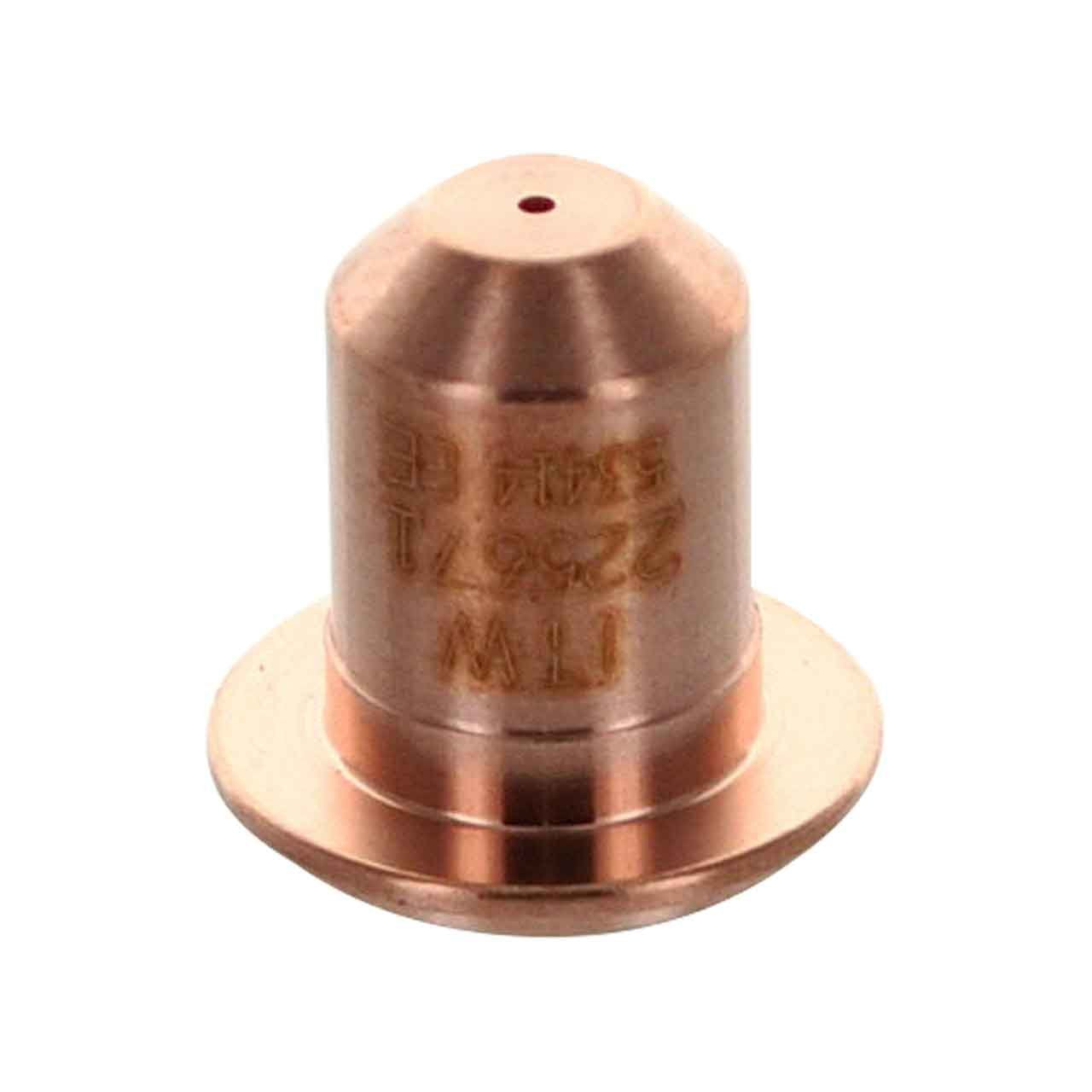
Worn or damaged consumables can make the arc unstable. Check the electrode, nozzle, and shield for erosion, pitting, heat damage, or clogging. If the shield is damaged or worn, replace it before continuing. The Hypertherm 220674 Plasma Cutting Shield is one available part for compatible T45v hand cutting setups; exact compatibility beyond the listed product title is Unknown (Verify).
4) Verify standoff and contact
If standoff is too high, the arc can spread and lose cut squareness. If the torch is dragging when it should not, the shield or tip condition may be affecting arc control. Follow the machine or torch manual for the correct stand-off method.
5) Check air quality
Moisture, oil, and debris in the air line can cause rough cuts and edge angle changes. Drain the compressor tank, inspect filters, and confirm the air supply is clean and dry. Air pressure and flow requirements are torch-specific and Unknown (Verify) without the machine manual.
Troubleshooting Support Sections
If the bevel is consistent on one side
- Recheck torch angle and hand path.
- Inspect for worn shield or nozzle.
- Check for a damaged torch head or loose retaining parts.
If the bevel changes during the cut
- Look for inconsistent hand speed.
- Check for air pressure drop while cutting.
- Inspect the work lead, power cable, and air hose for restriction.
If edge quality is poor with fresh consumables
- Verify the air source is clean and dry.
- Confirm the machine settings match the material being cut.
- Check for incorrect torch height or dragging on the plate.
Product / Parts
Hypertherm 220674 Plasma Cutting Shield – T45v Hand Cutting Shield, 1 Pack
This shield may be used when the existing shield is worn or damaged. Use only if it matches the torch setup and manual requirements. Compatibility details beyond the product title are Unknown (Verify).
Hypertherm 220674 Plasma Cutting Shield – T45v Hand Cutting Shield, 1 Pack
Introducing the Hypertherm 220674 Hand Cutting Shield, your essential companion for plasma cutting tasks. This high-quality plasma cutting shield is designed to protect both your workspace and yourself. Made by Hypertherm, a trusted name in plasma cutting technology, this product ensures superior performance and durability. The Hypertherm Hand Cutting Shield is perfect for both professionals and DIY enthusiasts. I…
View at Arc Weld StoreSafety Notes
- Wear proper eye, face, hand, and body protection for plasma cutting.
- Keep hands clear of the arc and hot cut edges.
- Do not service consumables until the unit is powered down and safe to handle.
- Use adequate ventilation and follow hot-work controls.
- Do not assume compatibility; verify the torch model and parts list before installation.
FAQ
Why does plasma cut beveled edge happen?
It usually happens when the arc is not centered through the cut path. Torch angle, travel speed, consumable wear, and air quality are the main checks.
Can bad air cause a bevel?
Yes. Wet or contaminated air can make the arc unstable and change edge angle.
Should I replace the shield first?
If the shield is worn, damaged, or heat-affected, replace it. If the shield looks normal, check nozzle, electrode, torch angle, and air supply before replacing more parts.
What setting should I change first?
Start with torch angle and travel speed, then inspect consumables. Exact cut settings are torch and material dependent and Unknown (Verify) without the manual.
Sources Checked
- Provided product title and description for Hypertherm 220674 Plasma Cutting Shield
- Topic brief: diagnose torch angle, consumables, speed, and air quality
- Internal link inventory: none provided