• Millermatic 252 MIG Welder – Top Features & Reviews

    A Deep Dive into the Millermatic 252 MIG Welder

    Millermatic 252 is a robust, high-performance MIG welding machine from Miller Electric Mfg. LLC, engineered for advanced metal fabrication, industrial applications, and production welding environments. Designed with both power and precision in mind, it’s a go-to solution for professional welders, fabricators, engineers, and technical schools.

    Whether on a shop floor or in a teaching lab, the Millermatic 252 MIG Welder stands out for its excellent arc performance, dependable output, and intelligent usability features that support high-quality welds across diverse metals and applications.


     Models and Variants of the Millermatic 252

    The Millermatic 252 is a specific model within the MIG (GMAW) category of Miller welders. Unlike some series with multiple sub-models, the 252 doesn’t come in dramatically different variants but is available with customizable options and accessories. Here’s what’s important to know:

    • Standard Package
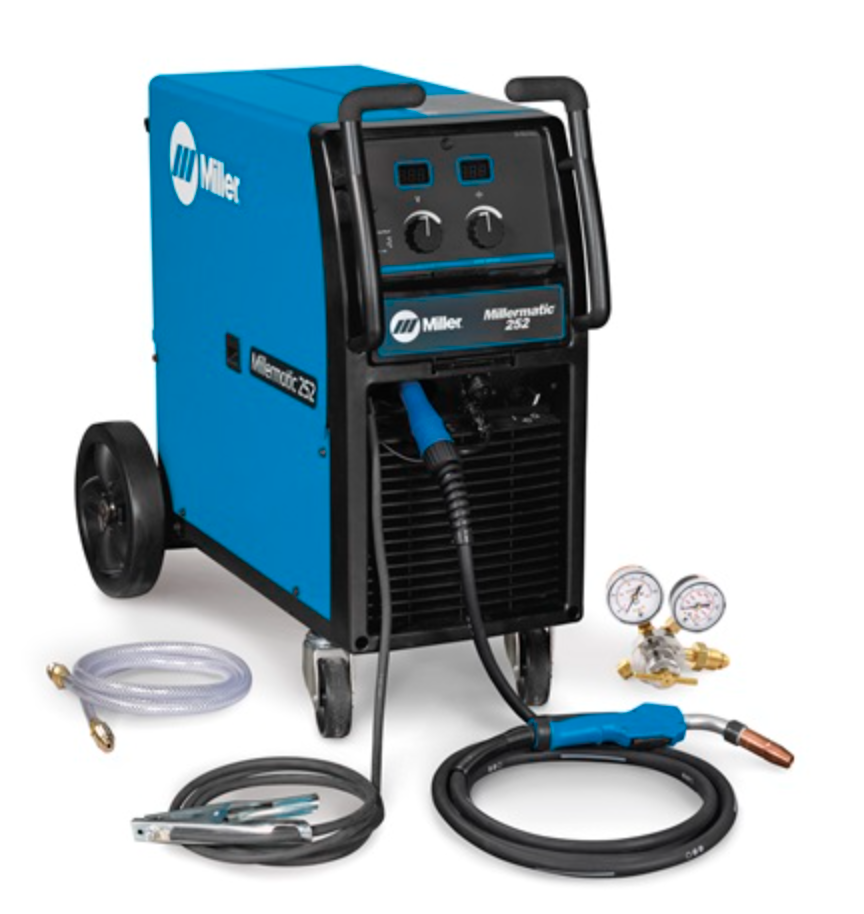
      Includes the Millermatic 252 power source, MDX-250 MIG gun (15 ft.), work cable with clamp, Argon mix regulator and hose, and .030/.035 reversible drive rolls.

    • Optional Accessories
      While the core unit remains unchanged, users can customize functionality with:

      • Spoolmatic® 30A Spool Gun Compatibility for aluminum
      • Dual Cylinder Rack & Gun Cable Holder for better mobility

    These added accessories help tailor the Millermatic 252 setup to suit specific materials (like aluminum) or shop configurations.


    Key Features and Specifications

    Specifications Overview:

    Specification Detail
    Input Voltage 208/230 V, 60 Hz, 1-Phase
    Amperage Range 30–300 Amps
    Rated Output 200 A @ 28 VDC, 60% Duty Cycle
    Wire Speed 50–700 IPM
    Weldable Material Thickness 22 ga. to 1/2 in. Mild Steel
    Dimensions (HxWxD) 30 in. x 19 in. x 40-1/2 in.
    Weight 207 lbs. (without cylinder or accessories)
    Compatible Wire Diameter .023–.045 in. (Solid Wire)
    Spool Gun Ready Yes (with optional kit)
    Drive Roll System Industrial 4-Roll Drive System
    Certifications CSA certified for United States and Canada

    Key Features and Their Benefits:

    • Auto-Set™ Feature
      Automatically adjusts wire feed speed and voltage for accurate, clean welds. Minimizes setup time and reduces the risk of operator error—ideal for students or beginners in fabrication environments.

    • 4-Roll Wire Drive System
      Ensures smooth, consistent wire feeding, reducing the chances of bird-nesting, especially on long welding runs.

    • Spool Gun Compatibility
      The Millermatic 252 is compatible with a Spoolmatic 30A Spool Gun, making it highly versatile for both aluminum and steel welding.

    • Large Digital Display
      Clear, precise voltage and wire-feed settings enhance visibility and repeatability.

    • Industrial Build Quality
      At over 200 pounds and equipped with a durable steel cabinet, the unit is optimized for heavy-duty, long-duration use—not weekend hobby welding.


    Usage & Compatibility

    The MillerMatic 252 is a Gas Metal Arc Welding (GMAW/MIG) machine that also supports Flux-Cored Arc Welding (FCAW) processes.

    Compatible Welding Processes:

    • GMAW (MIG) – Best for welding carbon steel, stainless steel, and aluminum using inert shielding gases.
    • FCAW – Uses semi- or fully self-shielded wire, suitable for outdoor and heavy-material applications.

    Note: It does not support SMAW (Stick) or GTAW (TIG) directly—this is a dedicated MIG/FCAW machine.

    Pros:

    • Reliable and controlled arc for heavy-gauge material.
    • High-duty cycle suitable for production environments.
    • Easy to learn and operate—great for vocational training centers.

    Cons:

    • Heavy and less portable without a cart.
    • Single-phase use only—no three-phase option.
    • Not ideal for ultra-thin gauge or cosmetic TIG-like welds.

    Common Applications

    The versatility and power of the Millermatic 252 make it ideal across a range of professional welding use cases:

    • Heavy Fabrication & Structural Work
      Welds 1/2-inch steel in a single pass—perfect for trailers, structural beams, metal staircases, and infrastructure projects.

    • Automotive & Farm Equipment Repair
      With a wire speed control up to 700 IPM, users can dial in precise settings for welding frames, axle housings, mower decks, and more.

    • Manufacturing & Production Lines
      High duty cycle (200A @ 60%) keeps workflow continuous in high-volume environments.

    • Aluminum Fabrication
      With a compatible spool gun, shops can efficiently handle aluminum toolboxes, marine parts, and custom metal work.

    • Educational Institutions
      Auto-Set and teaching-friendly controls make it an excellent tool for instructors guiding students through hands-on training.


    Tips & Best Practices

    Setup Tips:

    • Use correct drive rolls for your wire type (.023 to .045).
    • Ensure the shielding gas nozzle is clean and not obstructed.
    • Use CO₂ or a 75/25 argon mix for mild steel; 100% argon for aluminum.

    Maintenance Notes:

    • Clean the wire drive system regularly to prevent build-up.
    • Check the liner and replace if feeding is irregular.
    • Secure all ground connections to avoid arc inconsistency.

    Common Issues & Fixes:

    • Wire burnback at tip? Check for improper voltage/wire speed ratio.
    • Uneven arc or splatter? May result from a dirty contact tip or an incorrect gas mix.
    • Inconsistent feeding? Adjust the tension on the drive rolls one increment at a time.

    🧠 Conclusion

    The Millermatic 252 MIG Welder is a high-performance, industry-proven machine designed for serious welders who need reliability, adaptability

    Miller Millermatic 252 Electric MIG Welder, Wheeled, 208/230VAC (907321)
    • Occupational Health & Safety
    • Country of Manifacturer: United States
    • Manufacturer: Miller Electric
    • Wheeled mounted portability

    Last update on 2026-03-19 / Affiliate links / Images from Amazon Product Advertising API
  • Millermatic 211 Pro MIG Welder | Powerful & Portable


    Model: Millermatic® 211 Pro

    ⚠️ Note for Readers: This post may contain affiliate links. If you purchase through them, we may earn a small commission at no cost to you. Thank you for supporting our site.


    Introduction

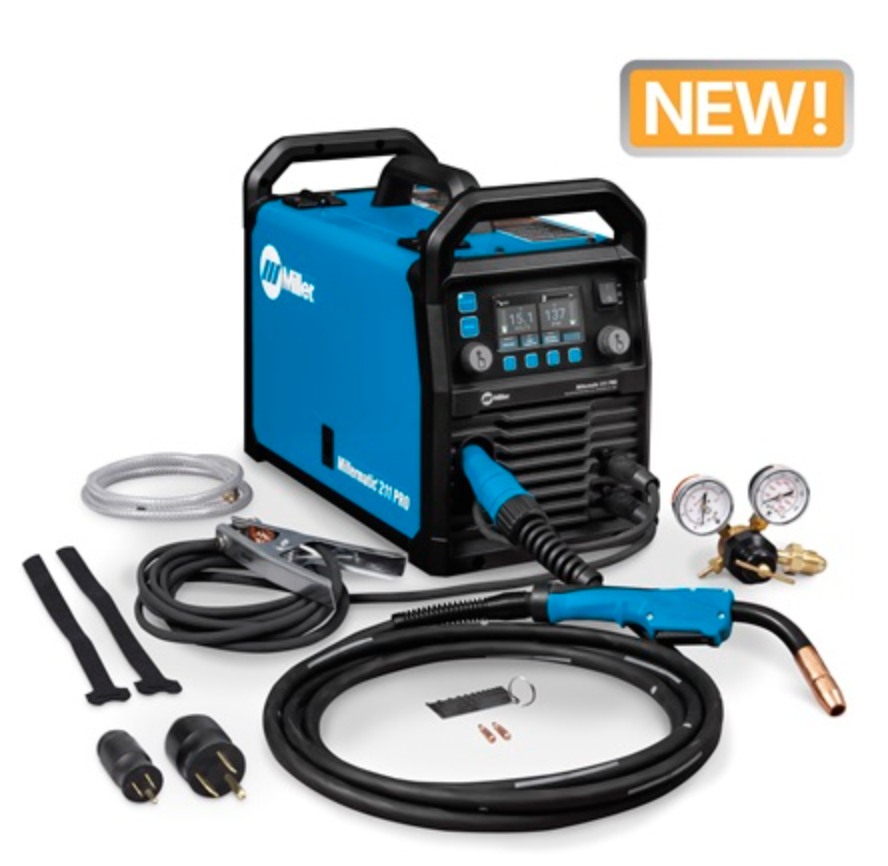
    The Miller Electric Millermatic 211 Pro is a compact, professional-grade MIG (GMAW) welder designed for use across a wide spectrum of metal fabrication tasks. Built with both portability and welding performance in mind, it’s an evolution of one of Miller’s most popular mid-range welders, optimized for ease-of-use, multi-voltage operation, and superior arc quality.

    This machine occupies a sweet spot for professional fabricators, maintenance personnel, students, field technicians, and DIY welders demanding industrial performance in a lightweight package. With its ability to run on both 120V and 240V input power, the Millermatic 211 Pro is suited for everything from shop settings to on-site jobs.


    Types / Variants / Models

    At the time of writing, Miller Electric lists only the Millermatic 211 Pro as a standalone model—this is a streamlined iteration of the previous Millermatic 211 (non-“Pro”) model.

    While there’s no fleet of variants under the “211 Pro” name, it’s useful to differentiate:

    • Millermatic® 211 Pro (Current Model)

      • Updated UI and design
      • Simplified interface with precision adjustment
      • New industrial-grade drive system
    • Millermatic® 211 (Legacy Models)

      • Auto-Set™ technology (not present in the “Pro”)
      • Slightly different interface and control system

    The “Pro” version is aimed more at professionals who prefer manual voltage and wire feed control over automated settings like Auto-Set™ found in consumer models.


    Key Features or Specifications

    Here’s a breakdown of the critical specs and design features that define the Millermatic 211 Pro:

    Power Source

    • Multi-voltage input: 120V or 240V
    • MVP™ (Multi-Voltage Plug): Adapts to varying job site power supplies
      Benefit: Maximum portability without sacrificing performance

    Output Amperage Range

    • 120V Input: 30–150 A
    • 240V Input: 30–230 A
      Benefit: Wide amperage range accommodates thin-gauge to thick materials (24 ga to 3/8″ in a single pass)

    Duty Cycle

    • 240V: 40% @ 150A
    • 120V: 20% @ 115A
      Benefit: Practical for extended use at medium output; improves productivity with adequate cooling time

    Machine Dimensions & Weight

    • Height: 12.5 in
    • Width: 11.25 in
    • Depth: 20.5 in
    • Net Weight: 38 lbs
      Benefit: Extremely portable for a welder with this power class

    Wire Compatibility

    • Wire sizes supported:
      • Solid wire: 0.023–0.035 in
      • Flux-cored wire: 0.030–0.045 in
        Benefit: Flexible enough for both MIG and FCAW applications

    Build & Durability

    • Industrial-grade cast aluminum drive system
    • Integrated spool gun control for aluminum welding
      Benefit: Long operational life and compatibility with spool guns like the Spoolmate™ 100

    Certifications

    • CSA-certified
    • IP23S-rated for rugged environments
      Benefit: Meets key safety and durability standards expected in professional use environments

    Usage & Compatibility

    Supported Welding Processes

    • GMAW (MIG)
    • FCAW (Flux-Cored Arc Welding)
      (Not compatible with SMAW or GTAW)

    Welder Compatibility

    • Ready out of the box for MIG and flux-cored processes
    • Compatible with accessories such as the Spoolmate™ 100 spool gun for aluminum
    • Works with standard MIG consumables and drive rolls

    User Experience Highlights

    • Manual controls: No Auto-Set™, requires knowledge of voltage/wire speed chart
    • Digital voltage and wire feed readouts: Ensures consistency and ease of setup
    • Smooth arc starts with minimal spatter: Reduces need for post-weld cleanup

    Pros

    • Lightweight and portable
    • Excellent arc characteristics
    • Dual-voltage capability
    • Ideal for aluminum with a compatible spool gun

    Cons

    • No Auto-Set™ feature may require a learning curve for beginners
    • Slightly more expensive than entry-level models

    Common Applications

    The Millermatic 211 Pro has been widely adopted across various use cases due to its ability to weld a broad range of materials and manage differing material thicknesses effectively.

    Industries and Job Types

    • Automotive repair & fabrication
    • Farm and ranch maintenance
    • General metal fabrication
    • Field/portable welding
    • Light industrial manufacturing
    • Technical education programs

    Material Compatibility

    • Mild steel, stainless steel, aluminum (with spool gun)
    • Welds steel thicknesses from 24-gauge to 3/8 in in a single pass

    Why It’s Ideal

    • Its power-to-weight ratio makes it perfect for mobile fabricators
    • Dual-voltage input means it works equally well in workshops and field settings
    • Designed for performance in demanding environments with consistent weld quality

    Tips & Best Practices

    To get the most from your Millermatic 211 Pro, consider these tips:

    Setup Tips

    • Use the included setup chart for voltage/wire feed references based on material type and thickness
    • Ensure correct polarity depending on weld wire type (e.g., reverse polarity for solid wire with shielding gas, straight polarity for flux-core)

    Welding Practices

    • Use clean, properly prepared material for stronger welds
    • Maintain a steady travel speed to avoid undercut or poor penetration

    Maintenance Recommendations

    • Clean drive rolls and liner regularly to avoid feed issues
    • Store indoors if possible—while IP23S rated, prolonged moisture exposure affects electronics
    • Blow out dust and debris periodically with dry compressed air

    Troubleshooting

    • Welds sputter? Check wire speed and contact tip size
    • No arc? Confirm ground clamp connection, spool gun toggle, and trigger circuit
    • Wire feeding erratically? Check for liner wear or incorrect tension on feed rolls

    Conclusion

    The Miller Electric Millermatic 211 Pro delivers professional-grade performance in a compact and portable MIG welder. Designed with structural repair

    Check out the Miller store!

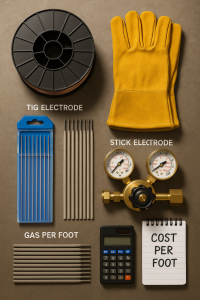
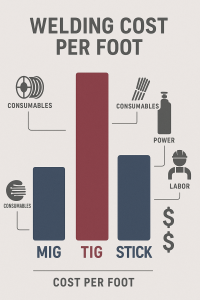
  • Welding Science: MIG vs TIG vs Stick Cost per Foot

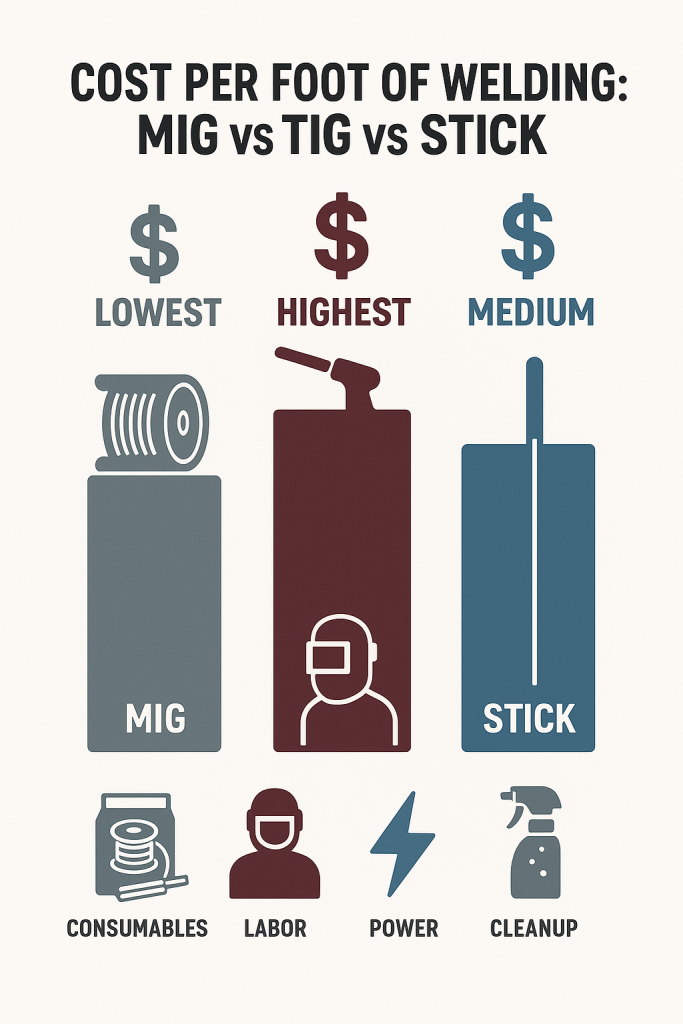
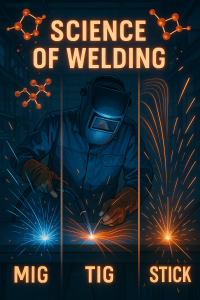
    The Science of Welding: MIG, TIG, and Stick Compared – Plus the Real Cost Per Foot of Weld


    Introduction

    In the world of metal fabrication, welding is both art and a science. Understanding not just how to weld but why certain processes work better—and cost less—in specific scenarios is essential for:

    • Welders are optimizing efficiency in the booth.
    • Engineers and designers make process-specific decisions during material selection.
    • Fabrication buyers and project managers estimate costs accurately and competitively.

    From the molecular thermodynamics of arc formation to the economic reality of consumables, each welding process—MIG (GMAW), TIG (GTAW), and Stick (SMAW)—brings trade-offs that can dramatically affect weld quality and cost per foot.

    In this guide, we’ll break down:

    • The science behind MIG, TIG, and Stick welding.
    • How variables like speed, consumable use, and labor affect cost per linear foot.
    • Real-world cost breakdowns and comparisons—to help you make informed decisions and reduce waste.

    The Science of Welding Processes


    🔌 MIG Welding (GMAW) – High Speed, Low Cost

    Science Behind the Process:

    • Arc Formation: A continuous solid wire is fed through a MIG gun, producing an electric arc between the wire and base metal.
    • Shielding Gas: Typically a mix of argon and CO₂ to protect the weld zone from atmospheric contamination.
    • Filler Metal Transfer: Spray or short-circuit transfer, depending on settings and thickness.

    Molecular Level Insight:

    • The arc melts both the electrode and base metal, fusing them at a localized point as electrons bombard the joint.
    • Shielding gas prevents oxygen and nitrogen from contaminating the weld pool, which is crucial for metallurgy.

    Strengths:

    • High deposition rate and travel speed.
    • Easy to learn and automate.
    • Ideal for production shops and thin to mid-thickness steel.

    Weaknesses:

    • Requires shielding gas, limiting portability.
    • Less suitable for windy outdoor environments or dirty/oxidized metal.

    TIG Welding (GTAW) – Precision and Cleanliness

    Science Behind the Process:

    • Non-Consumable Tungsten Electrode creates the arc without melting itself.
    • Filler rod is added manually (or autogenously).
    • Shielded with pure argon (and sometimes helium blends).

    Precision Metallurgy:

    • Arc is extremely focused—ideal for very thin materials and dissimilar metals.
    • Allows precise control of heat input, reducing heat-affected zones (HAZ) and distortion.

    Strengths:

    • Produces the highest quality and cleanest welds.
    • Ideal for aluminum, stainless steel, nickel alloys, and precision aerospace components.

    Weaknesses:

    • Slowest process—low deposition rate.
    • Skill-intensive; long arc-on time per weld.
    • Highest cost per foot.

    Stick Welding (SMAW) – Versatility and Ruggedness

    Science Behind the Process:

    • Uses a flux-coated consumable electrode.
    • An arc is created between the electrode tip and the base metal.
    • Flux burns off to create shielding gas and leaves a protective slag layer.

    Molecular Dynamics:

    • Flux deoxidizes and scavenges impurities in the weld pool.
    • Slag forms a protective crust, improves cooling rates, and must be chipped away after the weld.

    Strengths:

    • Works in windy/outdoor settings without shielding gas.
    • Lower upfront equipment costs.
    • Suitable for structural steel, piping, and field repairs.

    Weaknesses:

    • Slower than MIG, more cleanup.
    • Stub loss and slag introduce waste.
    • Arc-on time is lower than GMAW.

    Welding Variables That Impact Cost

    To get to the real cost per foot, consider these key variables:

    Variable MIG (GMAW) TIG (GTAW) Stick (SMAW)
    Travel Speed Fast Slow Medium
    Deposition Rate High Low Medium
    Consumable Efficiency High (~90–95%) Moderate (~75%) Lower (~60% with stub loss)
    Power Usage Moderate High Moderate
    Labor Skill Level Moderate High Moderate
    Cleanup/Rework Minimal Minimal Significant (slag chipping)

    Cost Breakdown Per Foot of Weld

    Let’s compute the average cost per linear foot using common practices, consumables, and hourly wage estimates.

    📌 Assumptions:

    • Labor rate: $40/hour
    • Electricity: $0.12/kWh
    • Mild steel or stainless steel applications
    • Weld size: 1/4” fillet weld, 12” long

    🧮 MIG Welding Cost Example

    Consumable & Indirect Costs:

    Item Cost Estimate
    Wire (ER70S-6) $2.50/lb; ~0.035 lb/ft = $0.09
    Shielding gas $1.00/CFH; ~35 CFH ≈ $0.12/ft
    Power 4 kW/hr @ 12 in/min = ~0.067 kWh = $0.01
    Labor 12 in/min = 1 ft/min = $0.67/ft
    Total per Foot ⚙ $0.89/ft

    🧮 TIG Welding Cost Example

    Consumable & Indirect Costs:

    Item Cost Estimate
    Filler (ER308L rod) $12/lb; ~0.045 lb/ft = $0.54/ft
    Argon (pure) $1.10/CFH @ 20 CFH = $0.18/ft
    Power 5 kW/hr @ 6 in/min = ~0.167 kWh = $0.02
    Labor 6 in/min = 2 min/ft = **$1.34/
  • Tillman 48 MIG Gloves Review: Goatskin Fleece Comfort


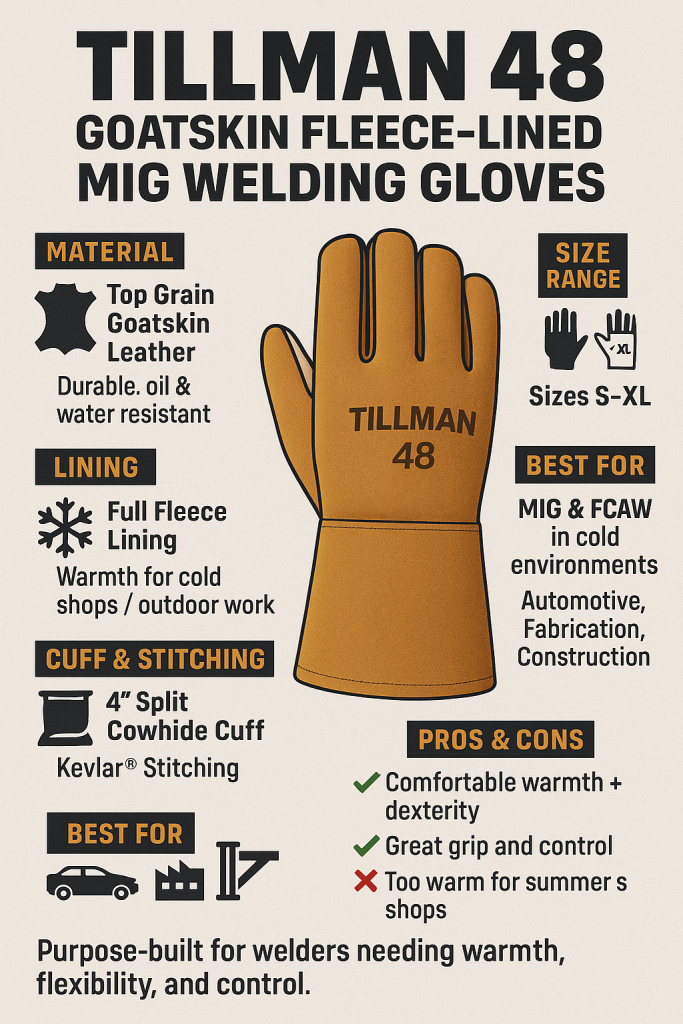
    Product Review: Tillman 48, Goatskin Fleece-Lined Standard Grade MIG Gloves

    Tillman 48, Goatskin Fleece Lined Standard Grade MIG Gloves are a specialized type of protective apparel engineered for MIG (Metal Inert Gas) welding applications. Constructed with premium goatskin leather and enhanced with fleece insulation, these gloves are tailored for welders who need a combination of mobility, dexterity, and thermal protection.

    Designed for the professional welder, fabrication student, or anyone working in moderate to heavy-duty welding environments, these gloves are a go-to solution for consistent, comfortable hand protection during extended welding sessions.


    Types / Variants / Models

    The Tillman 48 is a model within Tillman’s line of MIG gloves specifically built for winter or cold shop environments. While the model itself doesn’t come with multiple variants, it can be contrasted with other Tillman MIG glove lines to show its distinct place in the market:

    • Tillman 42 (Unlined MIG Glove)

      • Made from top-grain goatskin but unlined, offering better heat dissipation but less warmth.
      • Best for moderate climates or short arc runs.

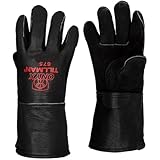
    Welding Gloves, MIG, L, Reinforced, PR
    • Price For: Each Stitching Material: Kevlar(R) Grade of Leather: A Design: (2) Piece Back Item: Welding Gloves Size: L Color: Tan Cuff Material: Split Cowhide Leather Lining Material: Cotton/Foam Length: 12″ Cuff: 4″ Gauntlet Cut: Gunn Thumb Style: Reinforced Application: MIG Back Material: Grain Pigskin Palm Material: Pigskin
    • Leather Palm Type: Top Grain Country of Origin (subject to change): Unknown

    Last update on 2026-03-19 / Affiliate links / Images from Amazon Product Advertising API

    • Tillman 875 (Top Grain Pigskin)

      • Features fleece lining, but made of pigskin for higher oil resistance.
      • Ideal for oily environments or when working with oily metals.

    Tillman Large Black Elkskin CottonFoam Lined Welders Gloves with Top Grain Elkskin Cuff and Kevlar Thread Locking Stitch (Carded)
    • Package Dimension : 7.7 centimeters L x 18.2 centimeters W x 29.1 centimeters H
    • Item Package weight : 0.276 kilograms
    • Made in: United States
    • Straight thumb with added reinforcement

    Last update on 2026-03-19 / Affiliate links / Images from Amazon Product Advertising API

    • Tillman 1350 (Top Grain Cowhide)

      • Includes Kevlar lining for added cut resistance.
      • Suitable for jobs with high abrasion risk.

    Last update on 2026-03-19 / Affiliate links / Images from Amazon Product Advertising API

    Tillman 48 stands out due to its fleece lining and goatskin composition, making it ideal for cold-weather shops and increased dexterity needs.


    Key Features & Specifications

    Here’s a breakdown of the Tillman 48 MIG gloves’ key physical and technical specifications and their benefits:

    • Material: Top grain goatskin leather (palm and back)

      • Delivers exceptional dexterity and tactile control.
      • Naturally oil- and water-resistant.
    • Lining: Fleece lining throughout

      • Provides insulation against cold environments, ideal for outdoor or unheated shop work.
      • Adds comfort over extended wear.
    • Cuff style: 4” split cowhide cuff

      • Ensures added wrist and forearm protection against sparks and slag.
      • Stiffness in cuff makes it easier to slide gloves on/off.
    • Stitching: Kevlar® thread

      • Offers high heat and abrasion resistance, minimizing seam failure under welding conditions.
    • Size Range: Available in sizes S – XL

      • Accommodates a broad range of hand sizes for optimal fit and performance.
    • Certifications:

      • While the Tillman 48 does not carry an ANSI or CE cut rating, it complies with general industrial PPE guidelines for welding heat protection.

    These specs make it especially suitable for welders seeking mobility without sacrificing crucial thermal and mechanical protection.


    Usage & Compatibility

    The Tillman 48 is designed primarily for MIG (GMAW) welding but can also be used selectively in other processes with similar handling requirements:

    • GMAW (MIG): Ideal for moderate heat levels over long periods—offers the dexterity required to guide the gun with precision.
    • FCAW (Flux-Cored Arc Welding): Suitable, especially in colder environments, for additional hand warmth.
    • SMAW (Stick Welding): Usable for lower-amperage stick work, but lacks the padding needed for high-amperage stick or gouging.
    • GTAW (TIG): Not recommended due to reduced fingertip feel; TIG work typically requires thinner, unlined gloves.

    Pros:

    • Excellent grip and tactile control.
    • Comfortable during prolonged use.
    • Thermal insulation without excessive bulk.

    Cons:

    • Not flameproof or cut-rated to ANSI A-levels.
    • Fleece lining may be too warm for summer or high-temperature indoor shops.
    • Not suitable for high-heat stick or overhead MIG applications.

    Common Applications

    The Tillman 48 Goatskin Fleece-Lined MIG Gloves are suitable for:

    • Outdoor fabrication yards: Welders working in sub-freezing temperatures benefit from the warmth and dexterity combo.
    • Automotive repair/production: Where sustained hand protection and feel for fine MIG passes are vital.
    • Metal art and sculpture fabrication: Delicate but repetitive welds where hand fatigue is a risk.
    • Steel building construction and repair: Offers protection and comfort for field welders wearing gloves all day.

    The glove’s design makes it ideal for moderate-duty welders who frequently need to handle sheet metal, round tubing, or small-fillet MIG joints without overheating or over-bulking.


    Tips & Best Practices

    To maximize glove performance and life:

    • Break-in Tip: Like most goatskin gloves, the fit improves slightly after break-in. Wear them around the shop before performing precision work.
    • Storage: Keep gloves dry and clean; fleece lining may retain sweat or moisture if stored improperly.
    • Cleaning: Spot-clean leather with a damp cloth. Do not machine wash—this can shrink leather and warp fleece.
    • Don’t Overuse in High Heat: While durable, the fleece liner can melt under extreme flame or slag exposure. If welding over 250A GMAW or full-penetration stick, use gloves rated for high heat.

    Common Mistakes to Avoid:

    • They are used in high-heat gouging or carbon arc operations where heavy-duty cowhide is preferable.
    • Wearing them for TIG without switching to thinner gloves results in poor arc control.

    Conclusion

    The Tillman 48 Goatskin Fleece-Lined Standard Grade MIG Gloves are a high-value option for welders working in colder or unheated environments who require a balance between warmth, flexibility, and fine control. They excel in MIG and light flux-core work—particularly when dexterity and thermal comfort are crucial—and are well-suited for welders, students, and professionals across fabrication, auto repair, and construction industries.

    Key takeaway: If you’re welding in cold climates or need sensory control without sacrificing finger flexibility, the Tillman 48 is a smart, purpose-built solution.


    📌 Note for Readers:
    This post may contain affiliate links. If you purchase through them, we may earn a small commission at no cost to you. Thank you for supporting our site.
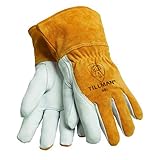
    John Tillman and Co Medium Brown Top Grain Goatskin Fleece Lined Standard Grade MIG Welders Gloves with Straight Thumb, 3 12″ Cuff, Kevlar Stitching and Elastic Back
    • Welders Gloves
    • Manufacturer: John Tillman & Co
    • Made in: United States
    • Thumb Elastic Back Glove Mig/Tig Medium Goatskin Palm Cowhide Split Back With Straight

    Last update on 2026-03-19 / Affiliate links / Images from Amazon Product Advertising API

    Last update on 2026-03-19 / Affiliate links / Images from Amazon Product Advertising API

    Tillman 48XL Welding Gloves, MIG/TIG, XL, 13 in. L, PR, Pearl
    • Price For: Each Stitching Material: Kevlar(R) Grade of Leather: A Item: Welding Gloves Size: XL Color: Pearl Cuff Material: Split Cowhide Leather Lining Material: Fleece Length: 13″ Cuff: 3-1/2″ Gauntlet Cut: Gunn Thumb Style: Straight Application: MIG/TIG Back Material: Split Cowhide Palm Material: Goatskin Leather Palm Type: Grain
    • Country of Origin (subject to change): China

    Last update on 2026-03-19 / Affiliate links / Images from Amazon Product Advertising API

  • Tensileweld Stick Electrode

    Introduction & Overview

    Tensileweld Electrodes are engineered for high-strength, porosity-free welds that can handle demanding environments. These electrodes are designed to work on both AC and DC current. They deliver weld deposits that are resistant to impact, abrasion, heat, and corrosion. They are particularly useful when welding dissimilar steels. They are also handy if the base metal’s alloy content is unknown. This makes them a versatile choice across a wide range of industries.

    Key Features

    The standout qualities of Tensileweld electrodes make them a go-to option for critical welding jobs:

    • High Strength & Durability: Tensile strength ranging from 95,000 to 122,000 psi and yield strength up to 95,000 psi.
    • Corrosion & Heat Resistance: Formulated to withstand harsh conditions.
    • Versatile Applications: Works effectively on dissimilar steels, carbon steels, stainless steels, tool steels, spring steels, and more.
    • Flexible Power Source: Suitable for both AC and DC reverse polarity.
    • User-Friendly Technique: Short arc welding with stringer beads and peening is recommended for best results.

    Pros & Cons

    Pros:

    • Produces strong, porosity-free welds
    • Resistant to impact, abrasion, heat, and corrosion
    • Compatible with a wide variety of steels and alloys
    • Useful when base metal composition is unknown

    Cons:

    • Requires preheating (400ºF) for carbon and cast steels
    • Recommended procedures may be less forgiving for beginners

    Who It’s For

    Tensileweld electrodes are designed for professionals and industries where weld integrity is non-negotiable:

    • Mining and Heavy Industry: Underlayment of hardfacing alloys, rebuilding shafts, agitator blades, and gears.
    • Aerospace & Pressure Vessels: Welding high-performance steels in critical applications.
    • Maintenance & Repair: Field welders tackling mixed or unknown alloys.

    What Makes It Unique

    What sets Tensileweld apart is its ability to handle unknown or dissimilar steels without sacrificing strength or reliability. Many electrodes are designed for specific alloys. However, Tensileweld’s chemistry, which is high in chromium, nickel, and molybdenum, makes it versatile across a wide spectrum. This adaptability reduces the guesswork when the base material isn’t clearly identified.

    Buying Tips

    When selecting Tensileweld electrodes:

    • Choose the correct diameter for the job (3/32”, 1/8”, 5/32”, or 3/16”).
    • Use flat position amperage ranges for best control (65–230 amps depending on size).
    • Preheat thicker or carbon steels to avoid cracking.
    • Keep the work area clean and beveled for maximum penetration and weld quality.

    Conclusion

    Tensileweld Electrodes provide welders with a high-performance, all-purpose solution for tackling tough jobs across diverse industries. They deliver strong, durable welds on dissimilar or unknown steels. This makes them an invaluable tool for anyone who prioritizes strength and reliability in welding.

    Note: We may earn a small commission from Amazon affiliate links at no additional cost to you.

    Washington Alloy Tensileweld, 10lbs Welding Stick Electrode (3/32″)
    • 10 LB Package – Tensile Weld 3/32″
    • 3/32″ Stick Electrode
    • Tensile Strength (psi) 95-122,000
    • Yield Strength (psi) 87-95,000
    • AWS A 5.4 / ASME SFA 5.4

    Last update on 2026-03-19 / Affiliate links / Images from Amazon Product Advertising API

    Washington Alloy Tensileweld, 10lbs Welding Stick Electrode (1/8″)
    • 10 LB Package – Tensile Weld 1/8″
    • 1/8″ Stick Electrode
    • Tensile Strength (psi) 95-122,000
    • Yield Strength (psi) 87-95,000

    Last update on 2026-03-19 / Affiliate links / Images from Amazon Product Advertising API

    Washington Alloy Tensileweld, 10lbs Welding Stick Electrode (5/32″)
    • 10 LB Package – Tensile Weld 5/32″
    • 5/32″ Stick Electrode
    • Tensile Strength (psi) 95-122,000
    • Yield Strength (psi) 87-95,000

    Last update on 2026-03-19 / Affiliate links / Images from Amazon Product Advertising API

  • 6011 Rod: Best Practices for AC vs. DC Welding

    Introduction

    In the world of welding, choosing the right electrode and current type is pivotal for achieving optimal results. One common question among welders is whether to run the 6011 electrode on AC or DC current. This decision significantly impacts the welding process and the final outcome. The 6011 electrode is crucial in welding for its versatility and effectiveness in penetrating rusted or dirty metals. Both experienced welders and newcomers, including fabricators, students, and engineers, often examine this electrode for its unique benefits.

    Types / Variants

    While 6011 itself is a designated type of electrode, it comes in various sizes:

    • 1/8 inch: Typically used for medium-thickness metals.
    • 3/32 inch: Better suited for thinner materials.
    • 5/32 inch: Ideal for thicker metals requiring deeper penetration.

    Each size is chosen based on the metal thickness and desired penetration.

    Key Features or Specifications

    • Material: Cellulose-based coating
    • Deposition Rate: Moderate, providing a good balance between speed and control.
    • Compatibility: Usable with both AC and DC power sources, making it versatile for different settings.
    • Certifications: Often compliant with AWS (American Welding Society) standards.

    The main advantage of the 6011 electrode is its deep penetration capability, which is crucial for welding dirty or rusty materials.

    Usage & Compatibility

    AC Current Advantages:

    • Arc Stability: While more challenging, AC offers flexibility in stabilizing the arc.
    • Cost Effectiveness: Often more affordable than DC welding machines.
    • Versatility: Suitable for basic repairs and fabrication.

    DC Current Advantages:

    • Smoother Operation: Provides more stable arcs and smoother welds.
    • Easier for Beginners: Often easier to manage and control.
    • Directional Stability: Consistent electrode behavior.

    Disadvantages:

    • AC: Can be more difficult to control and produce less stable arcs.
    • DC: Equipment is usually more expensive.

    Best Use Case:

    6011 is predominantly used in the Shielded Metal Arc Welding (SMAW) process. Welders dealing with rusted or painted surfaces often lean towards using 6011 for its penetrating power, especially when cleaning the metal isn’t entirely feasible.

    Common Applications

    • Field Repairs: Known for effectiveness in less-than-ideal conditions.
    • Pipeline Construction: Excels in tasks demanding deep penetration.
    • Automotive Work: Handles rusted or imperfect surfaces effectively.

    The electrode’s adaptability makes it a staple in industries requiring durability and reliability.

    Tips & Best Practices

    • Setup: Ensure proper machine settings based on the electrode size and type of current.
    • Technique: Maintain a slight dragging angle for deeper penetration.
    • Maintenance: Regularly clean and inspect electrode holders for starch buildup.

    Troubleshooting:

    • Starting issues on AC: Adjust arc length and ensure connections are reliable.
    • Uneven weld bead: Review travel speed and heat settings.

    Conclusion

    Whether running 6011 on AC or DC depends on several factors, like equipment availability and specific project needs. AC is cost-effective and versatile for general repairs, whereas DC offers smoother operation suitable for detailed work. The 6011 electrode’s deep penetration and versatility make it indispensable for welding professionals and students. Understanding its advantages and applications allows for informed decisions tailored to individual project goals.


    Note for Readers: This post may contain affiliate links. If you purchase through them, we may earn a small commission at no cost to you. Thank you for supporting our site.


    Washington Alloy 6011 Stick Electrode 5LB Package (6011 3/32″)
    • Washington Alloy’s 6011 3/32″ Electrode
    • 60,000lbs Tensile strength
    • 5 Lb Package
    • All-position, Flux coated

    Last update on 2026-03-19 / Affiliate links / Images from Amazon Product Advertising API

    Washington Alloy 6011 Stick Electrode 5LB Package (6011 1/8″)
    • Washington Alloy’s 6011 1/8″ Electrode
    • 60,000lbs Tensile strength
    • 5 Lb Package
    • All-position, Flux coated

    Last update on 2026-03-19 / Affiliate links / Images from Amazon Product Advertising API

    Washington Alloy 6011 Stick Electrode 5LB Package (6011 5/32″)
    • Washington Alloy’s 6011 5/32″ Electrode
    • 60,000lbs Tensile strength
    • 5 Lb Package
    • All-position, Flux coated

    Last update on 2026-03-19 / Affiliate links / Images from Amazon Product Advertising API

    Washington Alloy 6011 10lbs Welding Stick Electrode (6011 1/8″ – 10 LBS.)
    • AWS A5.1 CLASS E6011
    • 10 LB Package – 6011
    • Tensile Strength (psi) 60,000

    Last update on 2026-03-19 / Affiliate links / Images from Amazon Product Advertising API

    Washington Alloy 6011 10lbs Welding Stick Electrode (6011 5/32″ – 10 LBS.)
    • AWS A5.1 CLASS E6011
    • 10 LB Package – 6011
    • Tensile Strength (psi) 60,000

    Last update on 2026-03-19 / Affiliate links / Images from Amazon Product Advertising API

  • Weldcote Helmet: Supreme View Review & Comfort Guide

    The Weldcote Supreme View Welding Helmet combines visibility, comfort, and adaptability, making it a dependable choice for welders at all skill level. With its wide viewing area, responsive auto-darkening lens, and adjustable settings, this helmet is designed to reduce eye strain and boost precision on every weld. Whether you’re on the job site, in a fabrication shop, or tackling DIY projects at home, the Supreme View delivers both protection and ease of use.

    Key Features

    The Supreme View offers more than just a large lens—it’s packed with practical safety and comfort features that welders actually need:

    • Large Viewing Area: Expansive lens allows for better visibility of the weld pool and surrounding workpiece.

    • Manual Shade Setting: Dial in your preferred shade when consistency is needed.

    • Auto-Darkening Mode: Adjusts automatically based on the brightness of the arc.

    • +/- 2 Shade Adjustment: Fine-tune the auto-darkening feature for specific tasks or personal comfort.

    • Lightweight & Durable Design: Keeps fatigue low while holding up to tough shop environments.

    • Adjustable Headgear: Ensures a secure, comfortable fit for extended welding sessions.

    Together, these features make the helmet versatile enough to handle a variety of welding processes and working conditions.

    Pros & Cons

    Pros:

    • Wide viewing area for improved clarity

    • Flexible shade control (manual + automatic)

    • Auto-darkening adjusts to arc brightness

    • +/- 2 shade fine-tuning for comfort and precision

    • Lightweight design with adjustable headgear

    Cons:

    • The helmet can be a bit heavy for some users

    • Three year warranty, lower than some of the higher end helmets

    Who It’s For

    The Weldcote Supreme View is ideal for:

    • Professionals who need reliable shade options for varied projects

    • Students and apprentices who benefit from simple yet adaptable controls

    • Fabricators switching between processes like MIG, TIG, and Stick

    • DIY welders who want professional-grade safety without overspending

    What Makes It Unique

    Unlike many entry-to-mid-level helmets, the Supreme View gives welders full control over visibility. The combination of manual shade selection and smart auto-darkening with brightness sensitivity provides flexibility across different welding environments. The +/- 2 shade adjustment further customizes the auto feature, ensuring you’re not locked into one setting but can fine-tune for comfort and accuracy.

    Buying Tips

    Before purchasing the Weldcote Supreme View, consider:

    “>supremeinner
  • Outside Cover Lens: Weldcote Metals KLEARVIEWLO Outside Cover Lens For Klear-View and Ultraview Helmet, 5 pack
“>klearouter
  • Pair it with quality PPE for full protection.

  • Comparing its clarity rating (optical class 1/1/1/2 or similar) with competitors for accuracy and comfort.

  • Conclusion

    The Weldcote Supreme View Welding Helmet offers welders a balance of safety, comfort, and adaptability. With its manual shade settings, responsive auto-darkening, and +/- 2 shade fine-tuning, it stands out as a versatile option for both professionals and hobbyists. Clear visibility, reliable protection, and customizable controls make this helmet a smart investment for anyone serious about welding.

    Note: We may earn a small commission from Amazon affiliate links at no additional cost to you.


  • Welding with 7018: Should You Use AC or DC Current? When to Use 7018AC

    Introduction

    Welding with 7018 electrodes is a staple in shielded metal arc welding (SMAW), also known as stick welding. Known for creating strong, smooth welds, the 7018 is frequently used in critical applications such as structural steel work. A common question among welders is whether to use AC or DC current with this electrode, and when to opt for the 7018AC variant. Understanding these choices is crucial for welders, fabricators, and students striving for optimal performance.

    Types / Variants / Models

    The primary variants include:

    • 7018 Electrode: Typically used with direct current electrode positive (DCEP).
    • 7018AC Electrode: Specifically designed for alternating current (AC) applications.

    Each variant excels under different conditions, making the choice between them vital depending on the available equipment and project requirements.

    Key Features or Specifications

    • Coating Composition: Low hydrogen, iron powder which minimizes the risk of cracking.
    • Current Type:
      • 7018: Best with DCEP for stability and penetration.
      • 7018AC: Optimized for AC, offering good arc stability even with lower voltage machines.
    • Sizes: Available from 3/32″ to 1/4″, depending on thickness needs.
    • Certifications: Meets AWS A5.1 standards ensuring quality and reliability across structural applications.

    The differences in current compatibility directly affect arc stability and penetration, essential for achieving robust, high-quality welds.

    Usage & Compatibility

    Welding Processes:

    • SMAW (Stick Welding): The preferred method for 7018, ensuring strength in welds.

    Machine Compatibility:

    • DC Machines: Offer stable arcs with deeper penetration for the standard 7018.
    • AC Machines: Enable the use of 7018AC, overcoming limitations of older or less robust machines prone to arc interruptions.

    Pros and Cons:

    • 7018 with DC:
      • Pros: Deeper penetration, better arc stability.
      • Cons: Requires DC-compatible equipment.
    • 7018AC:
      • Pros: Usable with AC machines, improved arc stability on fluctuating AC power.
      • Cons: Slightly different handling required due to AC characteristics.

    Common Applications

    Welding with 7018 electrodes is prevalent in:

    • Structural Steelwork: Essential for beams and columns due to its strength.
    • Pipeline Welding: Ensures solid joints crucial for durability.
    • Shipbuilding: Vital in combating metal fatigue and environmental pressures.

    The 7018AC variant is particularly useful in field repairs and projects where only AC power sources are available, providing necessary flexibility and reliability.

    Tips & Best Practices

    • Setup: For AC use, ensure a stable power supply to reduce fluctuations.
    • Handling: Maintain dry storage for electrodes to prevent moisture absorption, particularly for low-hydrogen types.
    • Troubleshooting: If experiencing arc blow on DC, try adjusting the grounding position or switch to 7018AC for better control.

    Avoid common mistakes such as incorrect polarity settings and improper storage, which can compromise weld quality.

     Conclusion

    Choosing between AC and DC currents for 7018 electrodes hinges on equipment availability and project needs. The 7018AC variant provides a viable option for those restricted to AC machines without sacrificing weld quality. Welders and students should assess their equipment and project requirements to make informed decisions, ensuring efficiency and optimal results in their welding tasks.

    In summary, understanding when and why to use the 7018 or 7018AC can significantly impact the success of your welding projects, guiding you toward making the best choices for each unique scenario.

  • ESAB Rogue ES 201IP: Compact Dual-Voltage Welder

    Introduction

    The ESAB 0705002022, Rogue ES 201IP PRO Stick Welder

    “>ESAB 0705002022 Rogue ES 201IP PRO is a professional-grade inverter stick welder renowned for its dual-voltage (120/230V) input, rugged case design, and lift-arc TIG capabilities. This welder stands as a beacon of innovation in the world of welding, offering portability and reliability in a compact unit. Ideal for jobsite use, field repairs, and serious DIYers, it caters to welders, fabricators, students, and engineers who demand high performance without compromising on convenience.

    Types / Variants / Models

    While the Rogue ESAB 0705002022, Rogue ES 201IP PRO Stick Welder

    “>ES 201IP PRO is a standout model itself, ESAB offers a range of welding machines catering to different needs. Here’s how the Rogue ES 201IP PRO compares:

    The ESAB 0705002022, Rogue ES 201IP PRO Stick Welder

    ESAB 0705002022, Rogue ES 201IP PRO Stick Welder

    $934.99

    In Stock

    View Product

    “>ES 201IP PRO, however, is distinguished by its dual-voltage input and lift-arc capabilities, making it more versatile and ideal for varied environments.

    Key Features or Specifications

    Usage & Compatibility

    The ESAB Rogue ESAB 0705002022, Rogue ES 201IP PRO Stick Welder

    ESAB 0705002022, Rogue ES 201IP PRO Stick Welder

    $934.99

    In Stock

    View Product

    “>ES 201IP PRO excels in multiple welding processes:

    Compatible with a variety of electrodes and materials, this welder is prized for its adaptability and precision, especially in tight or demanding environments.

    Common Applications

    Widely used in:

    Its rugged build ensures durability in outdoor and rough conditions, essential for professionals needing dependable equipment.

    Tips & Best Practices

    Common mistakes include neglecting ventilation and overloading the welder. Stay within the duty cycle limits to ensure longevity.

    Conclusion

    The ESAB 0705002022, Rogue ES 201IP PRO Stick Welder

    ESAB 0705002022, Rogue ES 201IP PRO Stick Welder

    $934.99

    In Stock

    View Product

    “>ESAB 0705002022 Rogue ES 201IP PRO is a pivotal tool in the welding industry, blending portability with versatility. Its features cater to a wide array of welding needs, making it ideal for professionals seeking efficient and reliable performance in a compact design. Whether for jobsite use or DIY projects, this welder empowers users with the confidence to tackle diverse challenges.

    Note for Readers

    This post may contain affiliate links. If you purchase through them, we may earn a small commission at no cost to you. Thank you for supporting our site.

  • Powermax 45 SYNC: Ultimate Plasma Cutter for Metal Workers

    A Comprehensive Guide to the Hypertherm 088560 Powermax 45 SYNC Plasma Cutter

     Introduction

    The Hypertherm 088560 Powermax 45 SYNC Plasma Cutter with a 20 ft. 75-degree handheld torch stands out as a pinnacle in the world of metal fabrication. Designed for metal workers who require versatility in gouging, cutting, and marking, the Powermax45 SYNC is distinguished by its patented single-piece cartridge. This innovation delivers a consumable life up to five times longer, offering a greater cutting power than many higher-amperage competitors. This plasma cutter is essential not just for professional welders but also for fabricators, students, and engineers who seek a high return on investment in their metalworking tools.

    Types / Variants / Models

    While the Powermax 45 SYNC itself is a specific model, its versatility stems from several notable aspects:

    • Single-Piece Cartridge System: Simplifies consumable management and significantly extends operational life.
    • Various Torch Angles Available: While the standard is 75 degrees, other options can accommodate different cutting needs.

    Each configuration is suited for specific tasks, allowing flexibility in handling complex projects across varying environments.

    Key Features or Specifications

    Specifications:

    • Output Current: Up to 45 Amps
    • Cut Capacity: Up to 16 mm (5/8 inch) on mild steel
    • Input Voltage: Auto-voltage technology from 200 to 240 V
    • Weight: Approximately 15 kg (33 lbs)
    • Certifications: CE, CSA, and NRTL-approved

    Key Benefits:

    • Patented Single-Piece Cartridge: Reduces downtime and maintenance, streamlining consumable replacement.
    • Advanced Cutting Technology: Offers superior precision and smooth cuts, reducing the need for secondary finishing.
    • Ergonomic Design: The handheld torch is designed for comfort, reducing operator fatigue during prolonged use.

    Usage & Compatibility

    The Powermax 45 SYNC is highly versatile, making it suitable for various cutting processes, including:

    • Plasma Cutting (Hand and Mechanized)
    • Plasma Gouging
    • Plasma Etching

    Compatibility:

    • Functions with CNC machines for automated cutting tasks.
    • Compatible with multiple compressor systems, ensuring seamless integration into existing setups.

    Pros:

    • User-friendly setup
    • Durable and reliable under intensive conditions

    Cons:

    • The initial investment cost may be higher compared to basic plasma cutters

    Common Applications

    The Powermax 45 SYNC excels in projects such as:

    • Heavy-Duty Industrial Fabrication: Ideal for cutting thick metals with precision.
    • Construction: Offers portability and efficiency on construction sites.
    • Automotive Repair: Perfect for precise cutting in vehicle restoration or customization.

    Its durability and precision make it a favorite in these demanding environments.

    Tips & Best Practices

    • Setup: Ensure a stable power supply and proper grounding for optimal performance.
    • Maintenance: Regularly inspect and clean the torch and consumables to extend their lifespan.
    • Troubleshooting: Keep an eye on air pressure settings to avoid irregular cuts. Refer to the user manual for error codes and solutions.

    Common Mistakes to Avoid:

    • Running the unit without appropriate cooling can lead to overheating.
    • Using incompatible consumables can severely affect performance.

    Conclusion

    In summary, the Hypertherm 088560 Powermax 45 SYNC Plasma Cutter is a formidable tool in metalworking due to its innovative design and superior cutting capabilities. It is a valuable investment for welders who prioritize efficiency and long-term savings. Whether you’re an industry professional or an aspiring student, this plasma cutter’s advanced features offer unmatched performance for all your cutting and gouging needs.

    For those considering expanding their toolkit, the Powermax 45 SYNC’s exceptional performance and extended consumable life provide a compelling case for inclusion, ensuring you stay at the forefront of welding technology.

    Hypertherm Powermax 45 SYNC Plasma Cutter w/ 20 ft. 75 Degree Handheld Torch 088560
    • Recommended Cut Capacity Slow 22 mm (7/8″) @ 250 mm/min (10 ipm)
    • Recommended Cut Capacity Fast 16 mm (5/8″) @ 500 mm/min (20 ipm)
    • Severance Capacities 29 mm (1-1/8″) @ 125 mm/min (5 ipm)
    • Pierce Capacities 12 mm (1/2″) *Pierce rating for handheld use or with automatic torch height control

    Last update on 2026-03-19 / Affiliate links / Images from Amazon Product Advertising API


    ⚠️ Note for Readers:

    This post may contain affiliate links. If you purchase through them, we may earn a small commission at no cost to you. Thank you for supporting our site.

  • Try Amazon Prime Free