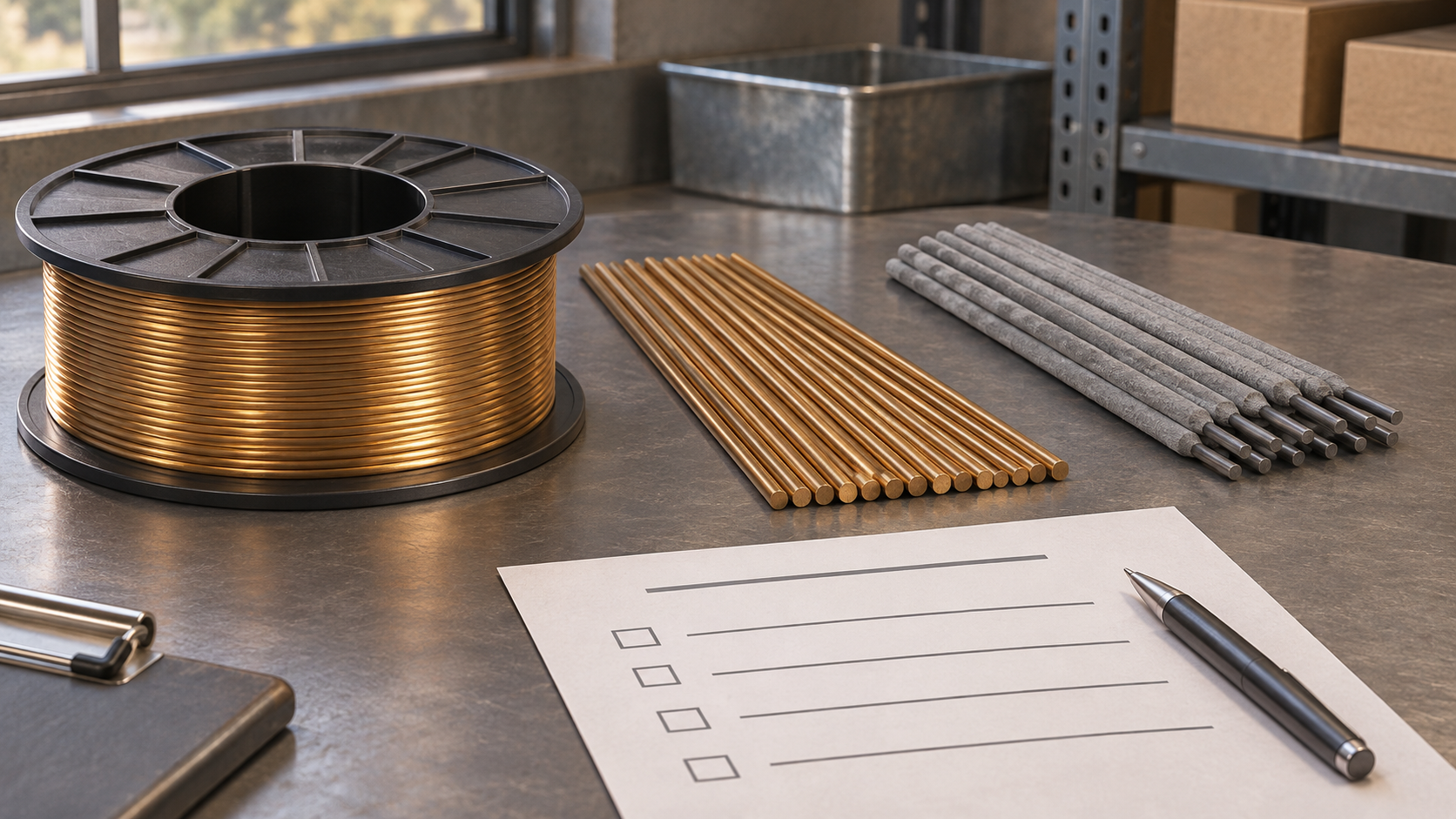
ERCuSn-C identifies a filler-metal classification, but it is not a complete spool order. Before buying MIG wire, match the specified classification to the manufacturer’s exact product, then confirm wire diameter, spool format, package weight and the documents required for the job. A listing that says only “phosphor bronze” leaves important questions unanswered.
This is a purchasing and receiving checklist, not a repair approval, welding procedure or recommendation for machine settings. The governing job requirements and equipment instructions still decide what can be used.
Keep the C suffix in the specification
Washington Alloy identifies its Phos-Bronze C bare filler as ERCuSn-C under AWS A5.7 and ASME SFA5.7. Its manufacturer certificate of compliance gives a tin range of 7.00–9.00 percent. The manufacturer’s product page distinguishes C from Phos-Bronze A by its higher tin content.
That distinction matters when a purchase request names a classification. Do not shorten ERCuSn-C to “bronze wire” and assume the supplier will choose the intended material. Do not treat ERCuSn-A as an automatic substitute because both descriptions mention phosphor bronze. A substitution needs the applicable technical decision, not just a similar product name.
The manufacturer document supports the classification statement above. It does not establish that a particular online offer is the same material, that a spool is currently in stock, or that it is approved for your component. Those are separate checks.
Turn a classification search into an exact order
The WSP ERCuSn-C MIG wire reference page provides a useful starting point for locating the classification. Its search links are not verified exact-SKU matches. Search results, diameter words in a query and a familiar supplier name cannot replace checking the actual item being offered.
Before requesting a quote or placing an order, write down the manufacturer, trade name and exact part number. Then record the classification exactly as shown on the current product documentation. Confirm that the offered form is the required wire product rather than a different filler form carrying a related description.
Ask the supplier to identify the wire diameter, spool format, package weight and number of packages included in the selling unit. Keep these as separate entries. A weight is not a spool dimension, and an image of a spool does not establish the quantity shipped. Where an offer leaves one of these details unclear, resolve it before treating the quotation as complete.
Check the spool against the equipment documentation
A correct filler classification does not tell you whether the package fits your equipment. Compare the supplier’s documented spool dimensions and mounting format with the applicable machine or feeder manual. Verify the required wire diameter against the approved job requirements and equipment documentation rather than assuming that a familiar spool size settles both questions.
If the offer supplies only a net weight, ask for the missing package information. If the equipment documentation is unavailable, retain that as an unresolved check. Do not infer suitability from a photograph, a seller’s broad compatibility phrase or the fact that another wire previously worked in the feeder.
This purchasing check does not prescribe drive components, shielding gas, electrical parameters or a welding sequence. Those decisions belong to the applicable procedure and equipment guidance.
Separate a general certificate from lot documentation
The linked Washington Alloy certificate identifies the trade name and classification, but the copy reviewed for this article does not identify a heat or lot. It should not be presented as the actual certificate for an unidentified spool. Its current revision date was not established during this review.
Washington Alloy’s downloads page offers an actual-certificate lookup using a heat number and diameter. The existence of that lookup is useful, but it does not prove that the certificate for your delivery has been retrieved or checked.
Where the job requires traceable documentation, specify that requirement when requesting the material. On receipt, compare the package identifiers with the supplied document. If a number is missing, illegible or inconsistent, keep the discrepancy open rather than filling it in from a generic product sheet. Preserve the manufacturer’s identifiers in your receiving record.
Use a short receiving check
Compare the delivered label with the purchase order: manufacturer and product identity, ERCuSn-C classification, diameter, package format, net quantity and required heat or lot reference. Check that the received count agrees with the selling unit you ordered. Retain the supplier’s exact item description and the documents that accompanied it.
If the label conflicts with the order or supporting documents, do not resolve the mismatch by choosing whichever description looks most familiar. Ask the supplier for a documented explanation and obtain the appropriate technical review before treating the material as an acceptable replacement.
For related classification research, use the WSP alloy reference library and filler-metal finder. These are lookup resources, not substitutes for a governing procedure or engineering approval. For the culture and craft surrounding the work, explore Arc Life.
Source review: November 11, 2026. This article does not establish current stock, price, an exact available seller SKU or approval for a particular repair. The illustration is conceptual and cannot identify a filler metal.
Leave a Reply