Tag: welding training

  • 2025 Welder Certification Changes: What You Need to Know

    2025 Welder Certification Changes: What You Need to Know

    Welding certifications are tightening in 2025. AWS, ANSI, and industry regulators have rolled out updated requirements focused on fatigue prevention, longer-term inflammation risks, exposure limits, and more robust process testing. If you were certified under pre-2025 rules, you may not meet current standards.

    Hereโ€™s what changedโ€”and what welders, shops, and buyers need to understand right now.


    Key Takeaways

    • New AWS/ANSI updates increase documentation, safety, and exposure-control requirements
    • Older certs may require renewal or supplemental testing
    • Emphasis on fatigue prevention, inflammation risk, and fume-exposure management
    • Structural, pipe, and automotive codes now reference expanded testing
    • Shops should plan for retraining and potential downtime

    What Changed for 2025

    AWS and ANSI updates donโ€™t overhaul the entire systemโ€”but several areas now demand more scrutiny.

    1. Fatigue Prevention & Ergonomics (New Focus Area)

    For the first time, AWS guidance ties welder conditioning, repetitive-strain exposure, and fatigue management to certification validity within certain shops.

    Whatโ€™s being emphasized:

    • Maximum allowable repetition cycles
    • Mandatory rest intervals for heavy-position welds
    • PPE requirements for vibration and joint stress
    • Documentation of overexertion incidents

    These arenโ€™t โ€œfitness tests,โ€ but they do affect shop compliance and jobsite audits.


    2. Chronic Inflammation & Long-Term Exposure

    ANSI Z49.1 references now highlight chronic inflammation risks from:

    • Metal fume inhalation
    • Heavy particulate exposure
    • Long-duration heat/UV exposure

    Shops are expected to update:

    • Fume extraction plans
    • Airflow documentation
    • Respiratory PPE fit-testing logs
    • Heat-stress protocols

    This ties directly into certification renewals for certain industries.


    3. Tighter Process Testing for Certification

    Across AWS D1.1 (structural), D1.3 (sheet steel), D17.1 (aerospace), and B31 pipe codes, many certs now require:

    • More detailed weld-procedure records
    • Updated documentation of parameters
    • Expanded visual exam criteria
    • New acceptance limits for cumulative defects

    Pre-2025 certifications may require requalification or supplemental weld tests.


    Old vs. New (Quick Breakdown)

    AreaPre-2025 Standard2025 Standard
    Fatigue PreventionMinimal mentionMandatory documentation + rest cycle guidelines
    Chronic Inflammation RiskGeneral fume guidanceExpanded exposure limits + detailed PPE compliance
    Fume ExtractionRecommendedRequired in most shop audits
    Cert Validity WindowsStandard intervalsSome industries shortened validity periods
    Process TestingVisual + bend testsTighter acceptance criteria and expanded documentation
    Medical Risk NotesRarely includedNow referenced in several AWS/ANSI publications

    Which Certifications Matter Most in 2025

    Different industries now lean heavily on updated standards. Hereโ€™s what welders and shops need to prioritize.

    Structural (AWS D1.1)

    Expect:

    • Stricter visual standards
    • Additional position testing for some shops
    • More documentation on parameters and heat input

    Pipe Welding (ASME / B31 Series)

    Tighter tolerance for:

    • Root reinforcement
    • Internal misalignment
    • Heat-affected zone integrity

    Automotive / Manufacturing (AWS D8/D9)

    New focus on:

    • Repetitive-strain prevention
    • Heat-stress logs
    • Exposure management for high-volume weld cells

    Aerospace (AWS D17.1)

    More stringent:

    • Visual inspection criteria
    • Traceability requirements
    • Operator-specific parameter logs

    Why It Matters for Welders

    1. Certifications from 2024 may not satisfy 2025 audit requirements

    Many shops will require updated test plates or documentation.

    2. Retraining budgets matter now

    Expect more formal training, especially around exposure prevention.

    3. Higher certification standards = higher labor rates

    Buyers should expect increased cost per hour for certified welders, especially in pipe, structural, and aerospace.


    Where to Buy Safety Upgrades

    With stricter exposure-control and fatigue-management rules, PPE and ventilation gear matter more than ever.

    ArcWeld Store PPE Essentials:
    www.arcweld.store


    Safety Notes (AWS/ANSI References)

    • Follow ANSI Z49.1 for exposure and fume-control guidelines
    • Ensure fit testing for respirators per OSHA 1910.134
    • Use NIOSH-approved PPE for metals containing Cr, Ni, Mn, or aluminum
    • Maintain proper airflow and extraction in accordance with AWS safety recommendations

    FAQ

    Do I need to retake my welding test in 2025?
    Possiblyโ€”especially for structural, pipe, and aerospace work. Many shops require updated certs.

    What if my employer still uses old standards?
    They may fail audits or be unable to bid certain jobs.

    Do these rules affect hobby welders?
    No, these updates primarily affect commercial shops and certified welders.

    How often should I renew my certification now?
    Depends on code. Some industries shortened validity windows under 2025 guidance.
  • Why Welders Are in Demand in 2025 (And What It Means for Your Shop)

    Why Welders Are in Demand in 2025 (And What It Means for Your Shop)

    The U.S. welding industry is entering a pressure zone: a massive labor shortage, an aging skilled workforce, and demand that keeps climbing. AWS projects a 400,000-welder shortage in 2025, and the average welder is now 55 years oldโ€”far older than the general workforce. Retirements are hitting faster than replacements can be trained, and shops are already feeling the squeeze.

    This post breaks down the shortage, what it means for wages and job security, and how shops are adapting.


    Key Takeaways

    • The U.S. welding trade faces a 400K worker shortage in 2025 (AWS).
    • Average welder age: ~55, vs. 42 for the general workforce.
    • Skilled welders are commanding premium rates, OT, and retention bonuses.
    • Shops are increasing training, embracing automation, and shifting workflows.
    • Buyers should expect labor-driven pricing pressure on fabricated products.

    The Numbers: A Shortage Years in the Making

    The American Welding Society has been warning about this for a decade, but the timeline is now real:

    • 400,000+ welders needed by 2025 to meet U.S. demand (AWS).
    • 61% of welding professionals are now over age 45.
    • Trade schools report enrollment backlogs for welding programs.
    • Large segments of the pipeline (especially structural and pipe welders) are aging out simultaneously.

    Why it matters:
    Shops are running leaner crews, projects are delayed, and labor costs are rising across the board.


    What This Means for Welders (Spoiler: Job Security)

    If youโ€™re a welderโ€”or training to become oneโ€”this is one of the strongest job markets in the tradeโ€™s history.

    Expect:

    • Higher hourly wages
    • More job options
    • More overtime
    • Better benefits and sign-on bonuses
    • Employers willing to invest in upskilling & certifications

    A young welder entering the industry in 2025 has a near-guaranteed job path for the next decade.


    What This Means for Shops & Buyers

    Shops are already adjusting operations:

    1. Automation Where It Makes Sense

    Not full replacementโ€”augmentation.
    Robotic cells, positioners, and fixturing tables are helping smaller crews produce more.

    Internal resource: Check out our guide to fixture tables and clamps for improving throughput.

    2. In-House Training Pipelines

    Shops are partnering with schools, offering apprenticeships, or training helpers into full welders.

    3. Higher Labor Costs

    Credentials (AWS D1.1, pipe certs, aluminum, stainless TIG) now carry premium value.
    Buyers should expect tighter project timelines and pricing pressure driven by labor scarcity.

    4. Retention Strategies

    • Tool stipends
    • Boot allowances
    • Consistent scheduling
    • Safer environments and updated PPE

    How Shops Can Stay Competitive in 2025

    Invest in Skill

    Retaining one high-skill welder is cheaper than retraining three inexperienced hires.

    Leverage Positioning & Fixturing

    Strong Handโ€“style modular tooling can cut setup time dramatically, making fewer hands more productive.

    Upgrade PPE and Comfort Gear

    A safer, more comfortable welder is a more consistent welder.
    (Internal link: MIG gloves, TIG gloves, helmet guides.)

    Cross-Train Where Practical

    Training helpers to tack, grind, and prep work reduces the load on certified welders.


    Safety Notes

    • Follow ANSI Z87.1 for all welding helmets/eye protection.
    • Use proper ventilation when welding stainless, galvanized, or aluminum.
    • For automation or mechanized welding, review the manufacturerโ€™s electrical grounding and guarding requirements.
    • Always cross-check equipment specs with OEM manuals.

    FAQ

    Is the welder shortage really 400,000 in 2025?

    Yesโ€”AWS projections place the gap at 360โ€“400K workers due to retirements, expanding infrastructure projects, and low trade school enrollment.

    Will robots replace welders?

    No. Automation supplements welding, but human welders remain vital for complex, variable, and out-of-position work.

    Are wages going up?

    In most regions, yesโ€”especially for pipe, structural, and TIG welders with current certs.

    What can shops do to attract welders?

    Better tools, consistent hours, PPE allowances, clean shops, and clear advancement paths.


    Sources Checked

    • American Welding Society (AWS) labor reports
    • Bureau of Labor Statistics (BLS) welder demographics
    • Manufacturer data sheets (Strong Hand Tools)
    • Industry training program enrollment reports (2023โ€“2025)
  • Arc Control: Why Arc Length Matters in Stick Welding โ€” Overview & Review

    Arc Control: Why Arc Length Matters in Stick Welding โ€” Overview & Review

    Introduction

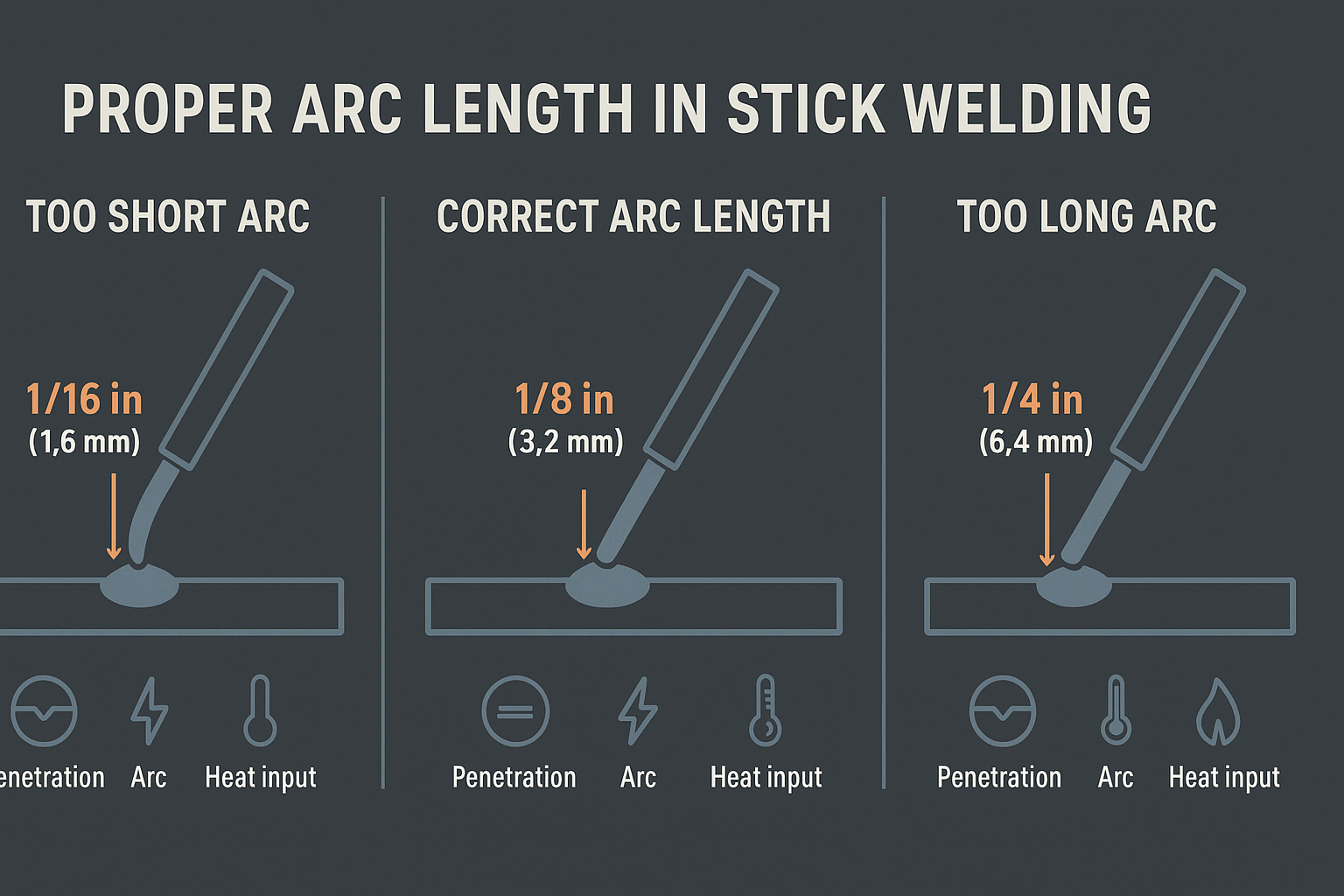
    Arc length is one of the most important variables in stick welding, and this guideโ€”Arc Control: Why Arc Length Matters in Stick Weldingโ€”breaks down exactly why. The book explains how arc length influences penetration, bead shape, stability, and overall weld quality. For new welders trying to stop sticking and wandering arcs, and for experienced welders chasing cleaner, more consistent beads, this resource provides straightforward direction.

    Key Features

    This guide focuses entirely on understanding and maintaining proper arc length. Core topics include:

    • How arc length affects heat input and penetration
    • How arc stability changes with electrode angle and travel speed
    • The relationship between arc length, puddle control, and weld bead behavior
    • Visual diagrams that show what โ€œtoo longโ€ and โ€œtoo shortโ€ arcs look like
    • Simple, actionable tips welders can use immediately

    Itโ€™s written in plain language with enough detail to be useful without overwhelming beginners.

    Pros & Cons

    Pros

    • Clear explanations of how arc length affects weld quality
    • Applicable to all experience levels
    • Helpful illustrations and diagrams
    • Strong focus on practical, real-world improvement

    Cons

    • Doesnโ€™t include advanced technical data
    • Could go deeper for welders who already have strong arc control

    Who Itโ€™s For

    This guide fits welders who want more consistency and better quality out of their SMAW work. Ideal groups include:

    • Welding students learning fundamentals
    • DIY welders trying to reduce sticking and uneven beads
    • Working welders who want tighter control and repeatable results
    • Anyone who struggles with keeping a steady arc length

    What Makes It Unique

    Most welding books touch on arc length but donโ€™t spend much time on it. This guide focuses specifically on that variable and explains it step-by-step. The visuals help welders understand what they should see, and the practical advice makes it easy to apply on the next weld.

    Buying Tips

    For the best learning experience:

    • Look for editions that include diagrams, photos, or companion videos
    • Choose the latest version if updates are available
    • Make sure you have basic PPE and electrodes on hand so you can practice
    • Pair the guide with a machine that has stable outputโ€”helpful when learning arc control

    Conclusion

    Arc Control: Why Arc Length Matters in Stick Welding is a solid resource for anyone wanting stronger, cleaner, and more consistent stick welds. It breaks down arc length in a way that welders can understand and apply immediately. Beginners and seasoned welders alike will find something useful here.

    This article may contain Amazon affiliate links. We may earn a small commission at no extra cost to you.

  • Arc Control Secrets: Stick Welding Tips That Matter

    Arc Control Secrets: Stick Welding Tips That Matter

    Introduction

    Arc Control Secrets: Stick Welding Tips That Matter is a focused guide for welders who want to improve control, stability, and consistency in SMAW (Stick) welding. Arc control directly affects bead shape, penetration, and weld soundnessโ€”this book breaks those concepts down and explains how to apply them in real work, not just theory.

    Key Features

    The guide covers the fundamentals of arc stability and then moves into more advanced control techniques. Topics include:

    • Managing arc length for different electrodes
    • Electrode angle and travel speed adjustments
    • How arc force, heat input, and polarity affect bead shape
    • Troubleshooting common issues like sticking, porosity, and wandering arcs
    • Real-world examples that connect each technique to practical shop scenarios

    The layout is straightforward and designed for welders who want actionable steps rather than long explanations.

    Pros & Cons

    Pros

    • Strong focus on arc controlโ€”one of the hardest SMAW skills to master
    • Real examples welders will recognize from shop and field work
    • Works for any skill level
    • Clear illustrations and explanations
    • Helps improve consistency, bead appearance, and quality

    Cons

    • Only covers stick welding (SMAW), not MIG/TIG
    • Some techniques may require tools a beginner may not have
    • New welders might feel overwhelmed by the depth in later chapters

    Who Itโ€™s For

    This guide fits:

    • Beginners who need to understand how arc length, angle, and motion affect results
    • Intermediate welders trying to tighten up consistency
    • Experienced welders who want to refine technique and improve control in tricky positions
    • Anyone welding structural steel, pipe, fabrication, or artistic work where bead control matters

    What Makes It Different

    Most welding books mention โ€œarc control,โ€ but few explain how to actually master it. This guide centers entirely on that skill. The illustrations and examples make complex ideas usable, and the focus on real welding conditionsโ€”heat buildup, position changes, joint accessโ€”makes it more practical than typical classroom-style manuals.

    Buying Tips

    Before picking up the guide, consider:

    • Your current SMAW skill level
    • Whether you already have a range of electrodes and amps to practice the techniques
    • If your machine lets you adjust arc force/amps precisely (helpful but not required)
    • Whether youโ€™re focused on structural, repair, or hobby welding

    If improving bead quality, consistency, and control is your goal, this book is a solid addition to your toolbox.

    Conclusion

    Arc Control Secrets: Stick Welding Tips That Matter is a detailed, practical resource for welders who want to improve one of the most difficult parts of SMAW: controlling the arc. The techniques help produce cleaner, stronger, and more repeatable welds. Itโ€™s a worthwhile guide for both new welders and experienced pros looking to refine their craft.

    This article may contain Amazon affiliate links. We may earn a small commission at no extra cost to you.

Stream with Amazon Music