Tag: welding-tips

  • Why Your MIG Welder Sputters and Pops: Diagnosis and Fix

    Your MIG welder sputters, pops, or cuts out mid-weld. The arc is unstable, the weld looks rough, and you’re losing time troubleshooting. This guide walks you through the most common causes—and how to fix each one in under 30 minutes.

    Key Takeaways

    • Sputtering is usually caused by worn contact tips, dirty nozzles, or poor ground connections (not the machine itself)
    • Most fixes are free or cost under $20
    • Replace contact tips every 50–100 hours of welding for consistent performance
    • Clean your nozzle and check your ground clamp before buying new parts
    • A worn contact tip can cause arc instability even on a quality machine

    Quick Diagnosis

    What you’ll see:

    • Arc pops or crackles during welding
    • Wire feed seems inconsistent
    • Spatter builds up on the nozzle and tip
    • Weld bead looks rough or has gaps
    • Machine may cut out briefly, then restart

    Most likely causes (ranked by frequency):

    1. Worn or damaged contact tip (most common)
    2. Spatter buildup on nozzle or tip
    3. Poor ground connection or dirty work clamp
    4. Wire speed set too high or too low
    5. Gas flow rate too low or regulator issue
    6. Kinked or damaged gun liner

    Safety Notes

    • PPE: Wear ANSI Z87.1-rated helmet with appropriate shade (typically #10–#12 for MIG), leather gloves, and flame-resistant clothing. Keep helmet DOWN during all welding.
    • Ventilation: Ensure adequate fume extraction. MIG welding produces CO₂ and metal fumes—use a fume hood or work in well-ventilated space.
    • Electrical: Disconnect the welder from power before inspecting the gun, liner, or contact tip.
    • Gas: Check regulator for leaks before starting. Do not exceed manufacturer’s recommended gas flow rate.

    Step-by-Step Troubleshooting

    Step 1: Inspect the Contact Tip (Free)

    • Remove the nozzle from your MIG gun.
    • Look at the contact tip (the small copper piece at the end of the gun).
    • If it’s worn, pitted, or has a flat spot instead of a tapered point, replace it.
    • Why: A worn tip creates poor electrical contact, causing arc instability and sputtering.

    Step 2: Clean the Nozzle (Free)

    • Remove the nozzle (usually a threaded brass or ceramic piece).
    • Use a wire brush or old contact tip to scrub away spatter buildup inside and outside.
    • Reinstall and test.
    • Why: Spatter on the nozzle blocks gas flow and creates electrical resistance, destabilizing the arc.

    Step 3: Check Your Ground Clamp (Free)

    • Inspect the ground clamp on your work piece. Look for rust, paint, or corrosion.
    • Clean the contact surface with a wire brush or file.
    • Ensure the clamp is tight and making solid metal-to-metal contact.
    • Why: A poor ground path increases electrical resistance, causing the arc to be unstable.

    Step 4: Verify Wire Speed and Voltage (Free)

    • Check your machine’s wire speed and voltage settings against the manufacturer’s chart for your wire type and thickness.
    • If wire speed is too high, the tip can overheat and wear faster. If too low, the arc may be weak.
    • Adjust to the middle of the recommended range and test.
    • Why: Incorrect settings stress the contact tip and create inconsistent arc conditions.

    Step 5: Check Gas Flow Rate (Free)

    • Locate your regulator and check the flow rate (usually 15–25 CFH for MIG).
    • If the gauge reads below 15 CFH, increase the flow slightly.
    • If you suspect a leak, apply soapy water to all connections—bubbles indicate a leak.
    • Why: Low gas flow allows air into the weld, causing porosity and arc instability. Leaks reduce shielding.

    Step 6: Inspect the Gun Liner (Free)

    • Remove the wire spool and pull the wire out of the gun.
    • Look through the gun liner (the tube inside the gun that guides the wire).
    • If you see kinks, cracks, or heavy wear, the liner may be restricting wire feed.
    • Why: A damaged liner causes friction, which can jam the wire and destabilize the arc.

    Fix Options (Ranked)

    Option 1: Adjustment (Free)

    • Clean nozzle and ground clamp.
    • Verify wire speed and gas flow settings.
    • Test weld.
    • When to use: If sputtering started recently and your machine is less than 5 years old.

    Option 2: Replace Contact Tip (~$5–$15)

    • Order a replacement contact tip that matches your gun type and wire size (e.g., 0.035″ for standard MIG).
    • Remove the old tip, install the new one, and test.
    • When to use: If the tip is visibly worn, pitted, or you’ve been welding for 50+ hours since the last replacement.

    Option 3: Replace Gun Liner (~$15–$40)

    • If the liner is kinked or damaged, order a replacement liner kit for your gun model.
    • Follow the manufacturer’s installation instructions.
    • When to use: If you’ve ruled out the tip and nozzle, and the wire feed feels sluggish.

    Option 4: Equipment Upgrade (if applicable)

    • If your machine is 10+ years old and you’ve replaced the tip and liner, consider upgrading to a newer machine with better arc stability.
    • When to use: Only after all consumables and settings have been checked.

    Recommended Fix: Replace Your Contact Tips

    A worn contact tip is the #1 cause of sputtering. Copper tips wear down with every weld—the arc erodes the tapered point, creating a flat or pitted surface. Once worn, the tip can’t deliver consistent electrical contact to the wire, and your arc becomes unstable.

    Why this works:

    • A fresh contact tip restores the precise tapered geometry needed for stable arc initiation.
    • Copper’s high conductivity ensures reliable electrical transfer.
    • New tips prevent spatter buildup and reduce nozzle fouling.

    When to use it:

    • Your contact tip is visibly worn or pitted.
    • You’ve been welding for 50–100 hours since the last replacement.
    • You’ve cleaned the nozzle and ground clamp, but sputtering persists.

    When NOT to use it:

    • If your nozzle is heavily fouled with spatter—clean that first (it’s free).
    • If your ground clamp is loose or corroded—fix that before replacing the tip.
    • If your wire speed or voltage is way off—adjust settings first.

    What to check before buying:

    • Confirm your gun type (e.g., Lincoln Magnum 100L, Miller M25, Tweco Mini).
    • Match the wire size (0.030″, 0.035″, or 0.045″).
    • Buy a multi-pack (20–30 tips) so you always have spares on hand.
    • Look for tips with at least 4+ stars and 100+ reviews.
    • Verify the tip is copper (not steel) for best conductivity.
    TimelyDu Mig Welder Tips 30-Pack .035” 0.9mm Welding Tips Contact Tip for Mig Welding Gun Welding Torch MIG Gun Replacement,Welding Accessories, Copper (.035” tips)
    • 1. Package Includes 30 Premium Quality .035” (Ø0.9mm)welding Tips.
    • 2.Premium Contact Tips – Compatible with Lincoln, Tweco, Binzel, and Similar Mini MIG Gun Styles.
    • 3. Made of high-quality copper, this welding contact tip offers excellent conductivity, high temperature resistance, and wear resistance, ensuring long-lasting performance.
    • 4.Thread:M6×1.0thd.
    • 5.If you have any questions, feel free to get in touch. We’re here to offer service and help you out in any way we can!

    Last update on 2026-05-11 / Affiliate links / Images from Amazon Product Advertising API

    Comparable Options

    If you need tips for a different gun type, check these:

    Common Mistakes

    • Using the wrong wire size tip. A 0.030″ tip won’t work with 0.035″ wire. Check your machine manual or gun label.
    • Not replacing tips regularly. Tips wear out—don’t wait until sputtering is severe. Replace every 50–100 hours.
    • Ignoring the nozzle. Spatter buildup on the nozzle blocks gas and causes arc instability. Clean it every few welding sessions.
    • Assuming the machine is broken. 90% of sputtering issues are consumables or settings, not the welder itself.
    • Over-tightening the contact tip. Hand-tight is enough. Over-tightening can crack the tip or damage the gun threads.

    FAQ

    Q: How often should I replace my contact tip? A: Every 50–100 hours of welding, or sooner if you notice visible wear. A worn tip costs you time and material in bad welds.

    Q: Can I clean and reuse a contact tip? A: No. Once a tip is pitted or flattened, cleaning won’t restore its geometry. Replace it.

    Q: Why does my tip wear out so fast? A: High wire speed, incorrect voltage, or poor shielding gas flow accelerates wear. Check your settings and gas flow rate.

    Q: What’s the difference between copper and steel contact tips? A: Copper conducts electricity better and lasts longer. Steel tips are cheaper but wear faster and create more spatter. Use copper.

    Q: Can a bad ground clamp cause sputtering? A: Yes. A loose or corroded ground clamp increases electrical resistance, destabilizing the arc. Always ensure solid metal-to-metal contact.

    Next Steps

    1. Clean your nozzle and ground clamp now — this is free and fixes 30% of sputtering issues.
    2. Check your wire speed and gas flow — verify they match your machine’s recommended settings for your wire type.
    3. Order replacement contact tips — keep a multi-pack on hand so you’re never without spares.
    4. Read our related troubleshooting guides:

    For more welding fixes and gear options, see our full resource page: https://blog.weldsupportparts.com/links/

  • Why Does My Stick Welding Electrode Keep Sticking? (Fix in 15 Minutes)

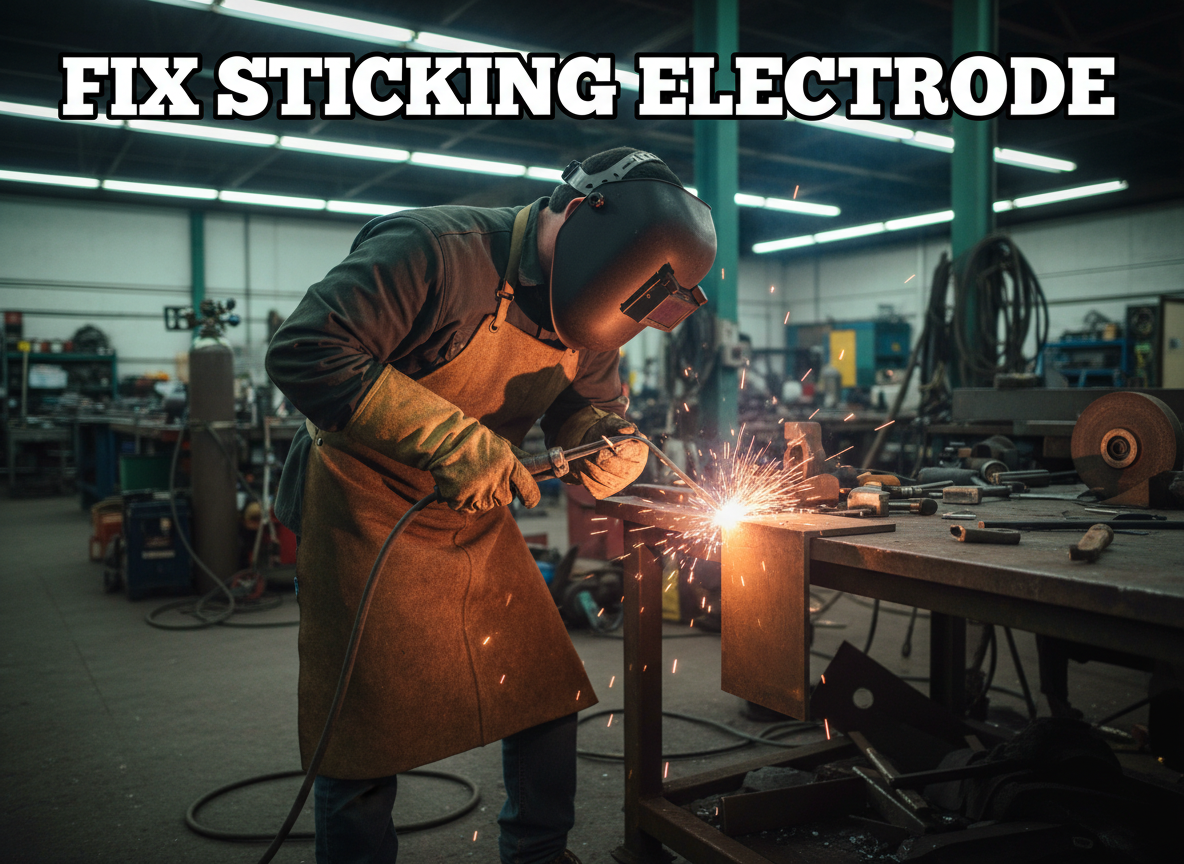
    Why Does My Stick Welding Electrode Keep Sticking? (Fix in 15 Minutes)

    Your electrode sticks to the workpiece, the arc dies, and you’re left wrestling with the rod. This is one of the most common stick welding problems—and it’s fixable. Low amperage, poor ground connection, and contaminated metal are the usual culprits. Here’s how to diagnose and fix it fast.

    Key Takeaways

    • Low amperage is the #1 cause of electrode sticking ($0 fix—just adjust the dial)
    • Poor ground clamp connection prevents proper current flow ($15–$40 for a new clamp)
    • Dirty or wet electrodes create weak arc initiation ($5–$15 for fresh rods)
    • Bad workpiece prep (rust, mill scale) makes arc unstable ($0–$20 for cleaning tools)
    • Fix time: 5–15 minutes for most issues

    Quick Diagnosis

    What you’re seeing:

    • Rod sticks immediately after striking
    • Arc dies or becomes very weak
    • Difficulty pulling the rod away from the workpiece
    • Electrode melts back into the holder

    Likely causes (ranked by frequency):

    1. Amperage set too low
    2. Ground clamp loose or corroded
    3. Electrode damp or old
    4. Workpiece dirty (rust, paint, mill scale)
    5. Worn electrode holder (weak jaw grip)

    Safety Notes

    • Arc flash hazard: Always wear a helmet with proper shade (ANSI Z87.1 compliant). Sticking electrodes often cause sudden arc flare-ups.
    • Fume exposure: Stick welding produces heavy fumes. Ensure adequate ventilation or use a respirator (ANSI Z136.1 rated for welding fumes).
    • Electrical shock: Disconnect power before inspecting the electrode holder or ground clamp.
    • Hot metal: Electrodes and workpiece are extremely hot. Use insulated gloves and let parts cool before handling.

    Step-by-Step Troubleshooting

    Step 1: Check Your Amperage (FREE)

    • Sticking almost always means you’re running too cold.
    • Increase amperage by 10–15 amps and try again.
    • Why: Low current can’t sustain a stable arc. The electrode cools too quickly and bonds to the workpiece.
    • Rule of thumb: For 1/8″ (3.2mm) 7018 rod, use 90–110A. For 5/32″ (4mm), use 120–150A.

    Step 2: Inspect Your Ground Clamp ($0–$40)

    • Check that the ground clamp is tight on clean, bare metal.
    • If the clamp is loose, tighten it. If it’s corroded, clean it with a wire brush or replace it.
    • Why: A loose or corroded ground connection increases resistance, reducing current flow to the workpiece.
    • What to check:
      • Is the clamp jaw making full contact?
      • Is the cable connection tight at the clamp?
      • Is the workpiece surface clean where the clamp sits?

    Step 3: Dry Your Electrodes ($5–$15)

    • If your rods have been exposed to humidity, they may be damp.
    • Store them in a dry rod oven or sealed container.
    • If you don’t have an oven, use fresh rods from a sealed package.
    • Why: Moisture in the flux coating weakens the arc and makes initiation difficult.

    Step 4: Clean Your Workpiece ($0–$20)

    • Remove rust, mill scale, paint, or dirt with a wire brush, wire wheel, or grinding stone.
    • Clean a 2–3 inch area around your intended weld.
    • Why: Contamination blocks current flow and creates a weak, unstable arc.

    Step 5: Check Your Electrode Holder ($15–$50)

    • Inspect the jaw for wear, corrosion, or damage.
    • If the jaw is worn, the clamp won’t grip the electrode firmly, causing poor contact.
    • Replace if necessary.

    Fix Options (Ranked)

    1. Adjustment (FREE)

    • Increase amperage by 10–15 amps.
    • Tighten ground clamp.
    • Clean workpiece.
    • When to use: First troubleshooting step. Works 70% of the time.

    2. Consumable Change (~$10–$50)

    • Replace old or damp electrodes with fresh rods.
    • Replace corroded ground clamp.
    • When to use: If rods are old or ground clamp is visibly corroded.

    3. Part Replacement (~$15–$50)

    • Replace worn electrode holder.
    • Replace damaged ground clamp.
    • When to use: If jaw is cracked, worn, or clamp is beyond cleaning.

    Recommended Fix: Upgrade Your Electrode Holder

    A quality electrode holder ensures consistent jaw grip and reliable current flow. The YESWELDER Welding Electrode Holder is a solid upgrade that prevents many sticking issues caused by poor contact.

    Why it works:

    • Pure copper construction for superior conductivity.
    • Heavy-duty jaw with strong bite force (300A rated).
    • Insulated handle stays cool during extended use.
    • Durable design resists wear and corrosion.

    When to use it:

    • Your current holder is worn or corroded.
    • You’re upgrading from a cheap or damaged stinger.
    • You want consistent, reliable arc initiation.

    When NOT to use it:

    • Your current holder is brand new and working fine.
    • The problem is low amperage or dirty workpiece (fix those first).
    YESWELDER Welding Electrode Holder pure copper Brass Materials 300AMP, for SMAW (MMA) Stick Electrode Welding
    • PURE COPPER: Our clamp has a higher copper content than others. Therefore, better conductivity, safer and more improved cable connection.
    • MAXIMUM AMPERAGE:Up to 300A.
    • COMFORTABLE OPERATION: Great for most ARC, Stick welding jobs. Easy to operate at a newly designed level for good hand clearance and better hold.
    • SAFETY DESIGN: Heat resistant handle, made of arc-resistant insulation and impact resistant material.
    • METHOD: This 300A welding electrode holder connects to the welding cable and conducts the welding current to the electrode. The insulated handle is used to guide the electrode over the weld joint and feed the electrode over the weld joint and feed the electrode into the weld puddle as it is consumed.

    Last update on 2026-05-11 / Affiliate links / Images from Amazon Product Advertising API

    Comparable Options

    Lincoln Electric Industrial 200 Amp Electrode Holder – Premium option with copper alloy jaw and ergonomic handle. Best for professional/production work. ~$27.

    Reboot 300AMP Electrode Holder – Budget-friendly, heavy-duty. Good for occasional use. ~$15–$18.

    Common Mistakes

    • Running too cold: Beginners often fear high amperage. Low current is the #1 cause of sticking. Increase heat.
    • Ignoring ground clamp corrosion: A corroded clamp looks fine but kills conductivity. Clean or replace it.
    • Using old, damp rods: Moisture in the flux weakens the arc. Store rods in a dry oven or sealed container.
    • Not cleaning the workpiece: Rust and mill scale block current. Always brush the area before welding.
    • Striking too slowly: Strike the rod quickly and confidently. A hesitant strike can cause sticking. Move the rod away immediately after arc initiation.

    FAQ (Snippet-Optimized)

    Q: Why does my electrode stick even at high amperage? A: Check your ground clamp. A loose or corroded clamp prevents current flow, regardless of amperage. Clean and tighten it.

    Q: Can damp electrodes cause sticking? A: Yes. Moisture in the flux coating weakens arc initiation. Store rods in a dry oven or sealed container.

    Q: How do I know if my ground clamp is bad? A: Look for corrosion, loose connections, or a worn jaw. If the clamp won’t tighten or the jaw is cracked, replace it.

    Q: Is sticking dangerous? A: Yes. A stuck electrode can cause sudden arc flare-ups and spatter. Always wear proper PPE and disconnect power if you need to free a stuck rod.

    Q: What’s the best amperage for 1/8″ 7018 rod? A: 90–110A. Check your rod box for the manufacturer’s recommendation—it varies by brand and coating.

    Next Steps

    Related troubleshooting guides:

    Upgrade your setup:

    For more welding fixes and gear options, see our full resource page: https://blog.weldsupportparts.com/links/

Watch with Prime Video