Tag: welding safety

  • Auto-Darkening Welding Helmet (True Color, Large View) โ€“ Specs & Safety Guide

    Auto-Darkening Welding Helmet (True Color, Large View) โ€“ Specs & Safety Guide

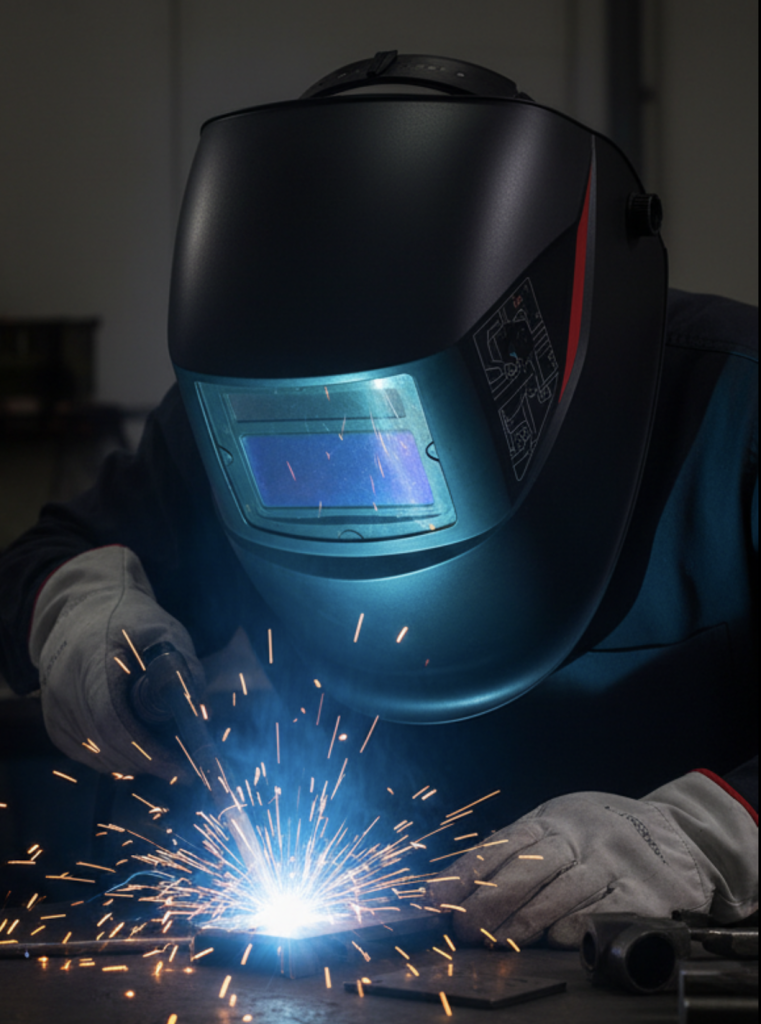
    A true color auto-darkening helmet improves puddle visibility, reduces eye strain, and protects against arc flash. Not all budget helmets react quickly or provide clear opticsโ€”hereโ€™s what to check.


    Key Takeaways

    • True color lens improves puddle visibility
    • Large viewing area (~3.94″ x 3.66″)
    • 4 arc sensors for reliable switching
    • Variable shade 4/5-9/9-13
    • Solar powered with battery backup

    Where to Buy

    YESWELDER Large View Auto Darkening Welding Helmet, Blue Light Blocking, 1/1/1/1 True Color Solar Powered Welder Hood Mask with 4 Arc Sensors, Wide Shade 3/5-9/9-13 for TIG MIG ARC CUT and GRIND
    • Advanced Eye Protection with Blue Light Blocking Technology: This welding helmet features cutting-edge Blue Light Blocking outer lens, shielding your eyes from harmful blue light during welding, protects your eyes by filtering out most of harmful high energy blue light rays while letting through the less harmful portion of the blue light spectrum. This ensures long-lasting eye comfort and safety, making it ideal for extended welding sessions
    • Multi-Application: Wide shade range 3/5-9/9-13, covering most common welding processes, ideal for TIG, MIG, MMA (STICK), CUT & GRIND. Easily accommodates Magnifying Lenses for close-up work
    • True Color & Clear View: This auto darkening welding helmet is equipped with a 3.93″X3.66″ Large View, enjoys a True Color view with upgraded 1/1/1/1 optical clarity, improves visibility and reduced eye strain
    • Fast Auto-darkening: Features 4 Arc Sensors for reliable arc detection, ultra-fast switching (1/30000 sec), and adjustable Sensitivity and Delay Controls for perfect performance
    • Long Service Life: Powered by solar panel technology and replaceable CR2450 lithium battery. Solar panel can transform harmful arcs into electrical energy not only for longer life, but also provides support for energy conservation and environmental protection

    Last update on 2026-02-21 / Affiliate links / Images from Amazon Product Advertising API

    Disclosure: As an Amazon Associate, Weld Support Parts earns from qualifying purchases.


    Why True Color Matters

    Traditional lenses tint green, masking puddle detail.
    True color improves contrast and clarity, helping you:

    • Track the weld pool
    • Identify defects
    • Reduce fatigue during long sessions

    Performance & Compatibility

    Suitable for:

    • MIG
    • TIG (increase sensitivity for low-amp TIG)
    • Stick
    • Plasma cutting

    Always test before striking an arc.


    Specs

    SpecValue
    Viewing Area~3.94″ x 3.66″
    Shade Range4 / 5-9 / 9-13
    Sensors4 arc
    PowerSolar + battery
    Weight~1โ€“2 lbs (Verify)
    StandardANSI Z87.1 (Verify)

    Who Should Buy

    Best for:

    • Multi-process welders
    • Hobbyists upgrading from fixed shade
    • Shop environments with varied amperage

    Skip if:

    • You require fixed shade only
    • You weld exclusively outdoors in bright sunlight

    Safety Notes

    • Confirm ANSI Z87.1 compliance
    • Inspect shell and headgear regularly
    • Replace outer lenses when scratched
    • Always wear flame-resistant PPE

    FAQ

    Is it good for TIG?
    Yesโ€”ensure proper sensitivity adjustment.

    Does it run only on solar?
    No, typically solar with battery backup.

    Can lenses be replaced?
    Most models allow easy lens swaps.

    Is it rated for overhead welding?
    Verify impact rating with manufacturer.


  • TIG Welding Tungsten Electrodes 3/32″ (WT20 Red Tip) โ€“ Specs, Safety & Buying Guide

    TIG Welding Tungsten Electrodes 3/32″ (WT20 Red Tip) โ€“ Specs, Safety & Buying Guide

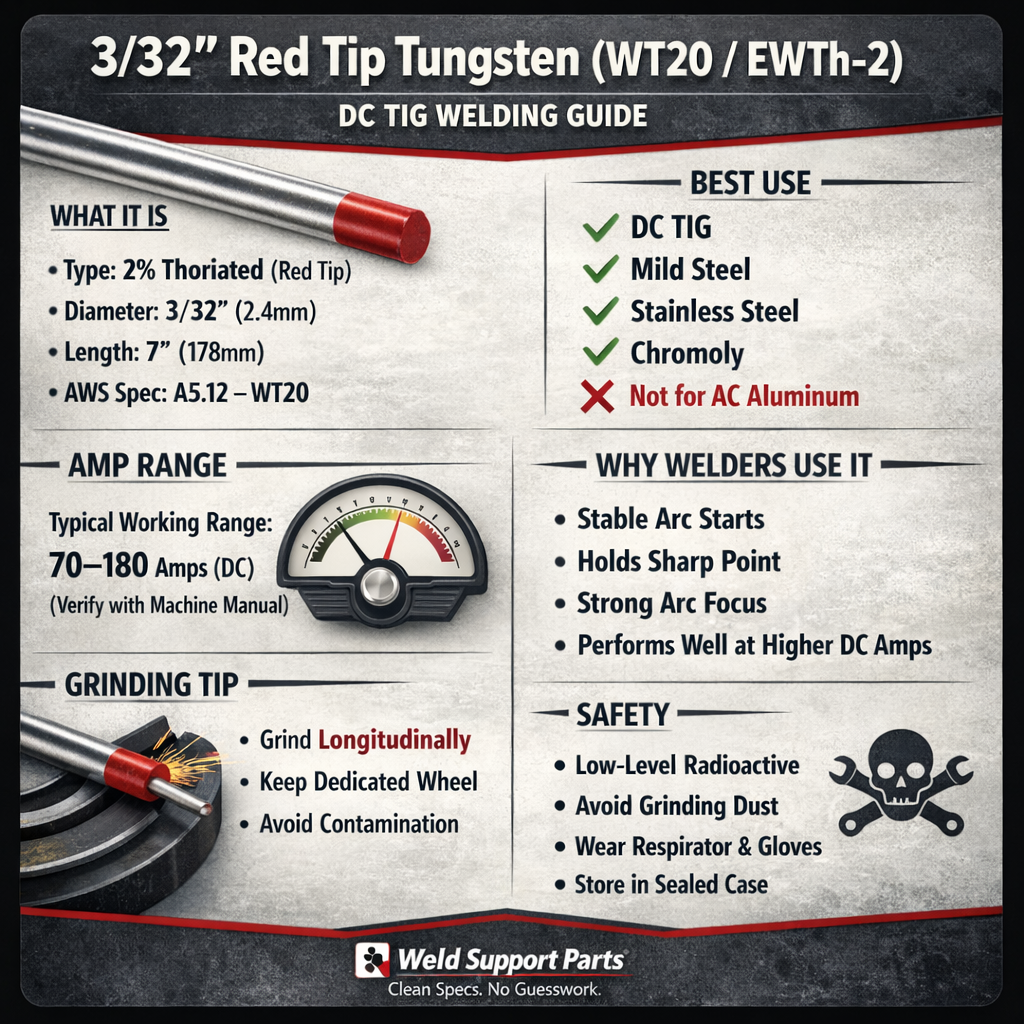
    Selecting the correct tungsten electrode directly affects arc stability, weld appearance, and electrode life. 3/32″ 2% thoriated (WT20/EWTh-2) is a long-time standard for DC TIG welding on steel and stainless. Hereโ€™s what matters before you buy.


    Key Takeaways

    • 3/32″ (2.4mm) fits most 70โ€“180A DC TIG applications
    • Red tip (2% thoriated) offers stable arc starts and strong arc focus
    • Best for DC welding on steel and stainless
    • Not recommended for AC aluminum
    • Grind longitudinally to maintain arc control

    Where to Buy

    YESWELDER TIG Welding Tungsten Electrode Red Tip 3/32″ x 7″ (Red, WT20/EWTh-2) 10-pk
    • RED TIP: The red band tungsten electrode is a traditional outstanding welding electrode, whose arc is continuous, stable, without spreading and dispersing. As it is not easy to get a round top with thermostability, it performs well in a lifetime.
    • AWS CERTIFIED: AMERICAN Welding Society standard AWS A5.12M/A5.12:2009 conformance
    • UPGRADED PACKAGING: We’ve upgraded from a plastic case to a high-strength, sealed aluminum tube. This airtight design prevents electrode oxidation, ensuring stable arc performance and perfect welds. The innovative dual-open design offers easy access to all electrode lengths, while the rugged, compact build is drop-resistant and portableโ€”ready for your pocket, toolbox, or belt loop
    • PERFECT DESIGN: By checking the color of the outer packaging, you can quickly and easily distinguish the color and model of tungsten electrodes, saving your time and reducing the possibility of errors
    • SPECIFICATION: Diameter: 3/32″; Length: 7″; Quantity: 10pk

    Last update on 2026-02-22 / Affiliate links / Images from Amazon Product Advertising API

    Disclosure: As an Amazon Associate, Weld Support Parts earns from qualifying purchases.


    Why 3/32″ WT20 Is Popular

    Arc Stability

    Thoriated tungsten maintains a sharp point under DC current, producing a focused arc and clean starts.

    Amp Range

    Typical usable range: 70โ€“180A DC (verify with machine manual).
    Works well for:

    • Mild steel
    • Stainless steel
    • Chromoly
    • Field repair work

    Grind Matters

    Always grind lengthwise (not around the circumference).
    Use a dedicated tungsten grinder or clean wheel to prevent contamination.


    Specs

    SpecValue
    Diameter3/32″ (2.4mm)
    Length7″ (178mm)
    ClassificationWT20 / EWTh-2
    Composition2% Thoriated
    ProcessDC TIG
    AC AluminumNot recommended

    Who Should Use This

    Best for:

    • DC TIG welders running steel or stainless
    • Shop and field repair
    • Welding instructors

    Skip if:

    • You weld mostly aluminum (use lanthanated or pure)
    • You prefer non-radioactive options (choose ceriated or lanthanated)

    Safety

    • Thoriated tungsten contains low-level radioactive material
    • Avoid inhaling grinding dust
    • Wear respirator and gloves when sharpening
    • Follow AWS A5.12 classification guidance

    FAQ

    Can I use red tip tungsten on aluminum?
    No. Itโ€™s designed for DC welding.

    Is thoriated tungsten radioactive?
    Yes, at low levels. Safe in use but avoid dust inhalation.

    Whatโ€™s the advantage over ceriated?
    Better performance at higher DC amperage.

    How often should I regrind?
    When arc stability decreases or contamination occurs.


  • Welding Fume Extractors: Essential Safety for Modern Shops

    Welding Fume Extractors: Essential Safety for Modern Shops

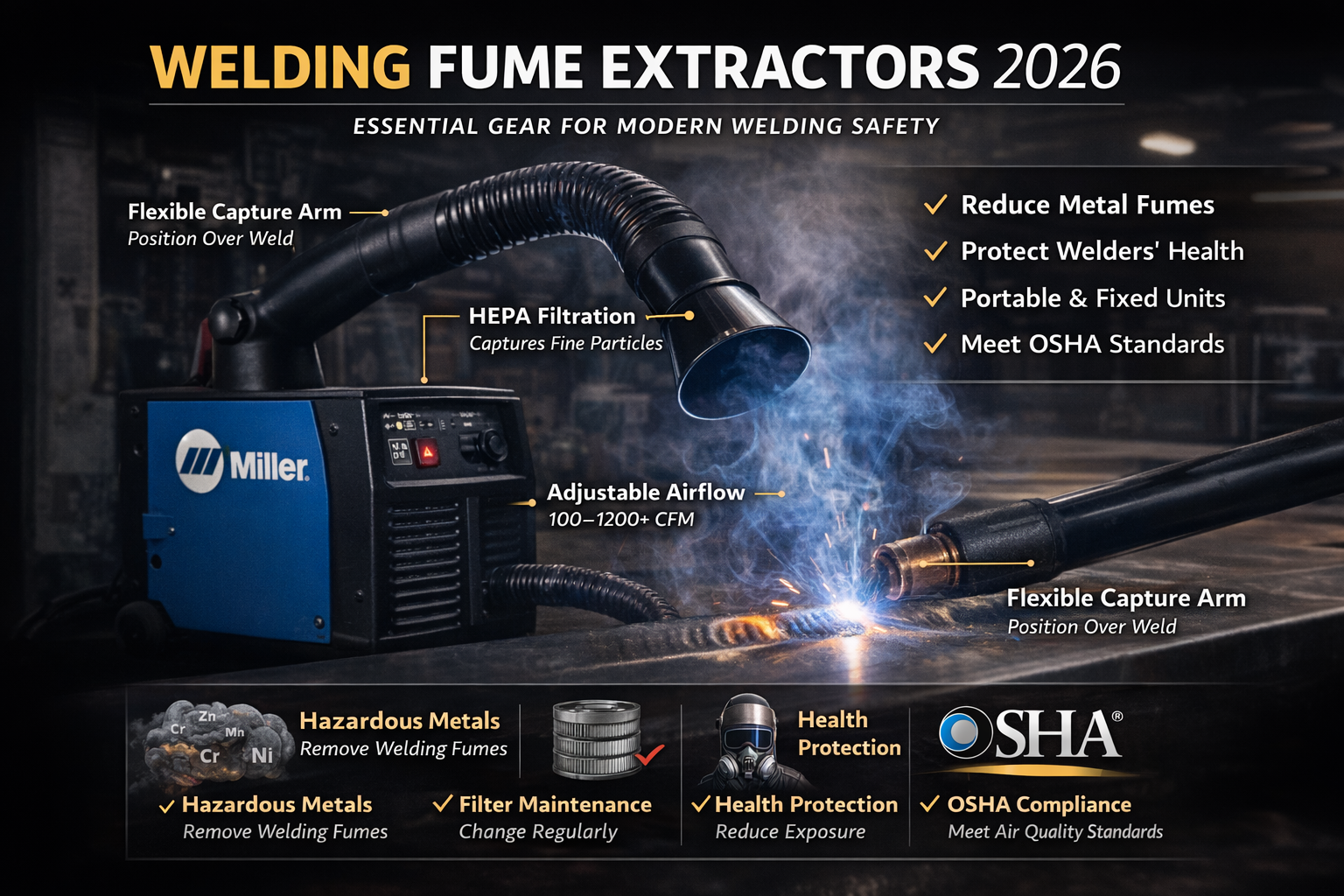
    Welding fumes contain hazardous metal particulates that can accumulate quickly in enclosed spaces. A properly sized fume extractor protects welders, improves air quality, and supports OSHA compliance.


    Key Takeaways

    • Fume extractors reduce airborne exposure to hazardous metals
    • Portable and fixed systems serve different shop sizes
    • Airflow (CFM) and filter type determine effectiveness
    • HEPA or specialty filters are required for fine particle capture
    • OSHA standards require indoor fume control

    Performance & Use

    Welding fume extractors use powered airflow and filtration systems to capture smoke at the source. Capture arms should be positioned near the arc without disrupting shielding gas.

    Portable units work well for single stations or field fabrication. Fixed systems integrate into production environments with multiple welders.

    Effectiveness depends on:

    • Correct airflow rating (CFM)
    • Proper hood placement
    • Regular filter maintenance

    Without maintenance, extraction systems lose efficiency rapidly.


    Durability & Build

    Industrial units from manufacturers such as Miller Electric, Lincoln Electric, and FumeVac are designed for daily shop use.

    Look for:

    • Metal housings
    • Accessible filter compartments
    • Clearly rated airflow
    • Documented filter efficiency

    Lower-cost units may lack sufficient static pressure or true HEPA filtration. Verify technical specifications before purchase.


    Power / Specs

    FeatureTypical RangeNotes
    Airflow (CFM)100โ€“1200+Must match shop size
    Filter TypeHEPA or specialtyRequired for fine particles
    PortabilityPortable or fixedApplication dependent
    Power Source120V / 240VVerify plug compatibility
    Noise Level60โ€“80 dBShop environment consideration

    Unknown (Verify):

    • Filter efficiency rating
    • Replacement filter cost
    • Warranty coverage
    • Fire protection features

    Who Itโ€™s For

    Essential for shops welding stainless steel, galvanized material, aluminum, or running high production indoors.

    Less critical for outdoor-only operations with natural ventilation.


    Quick FAQ

    Q: Are fume extractors required?
    OSHA requires employers to control welding fume exposure indoors. Local codes may vary.

    Q: Can one portable unit cover an entire shop?
    No. Portable units are designed for single workstations.

    Q: How often should filters be changed?
    Depends on usage. Follow manufacturer guidelines and inspect regularly.

    Q: Can I use a shop vacuum instead?
    No. Standard shop vacs are not designed for welding fumes or fine metal particulates.

    Q: Which metals produce the most hazardous fumes?
    Stainless steel (chromium, nickel) and galvanized steel (zinc) present higher risks.

    Q: Where do I verify filter specs?
    Consult manufacturer datasheets and compliance documentation.


    Safety Notes

    • Always use fume extraction when welding indoors
    • Wear a properly fitted P100 respirator when welding stainless or galvanized
    • Do not bypass safety interlocks
    • Maintain fire watch procedures; overloaded filters can ignite
  • Auto-Darkening Welding Helmet Buying Guide 2025 | Lens Speed, Shade Range & Standards

    Auto-Darkening Welding Helmet Buying Guide 2025 | Lens Speed, Shade Range & Standards

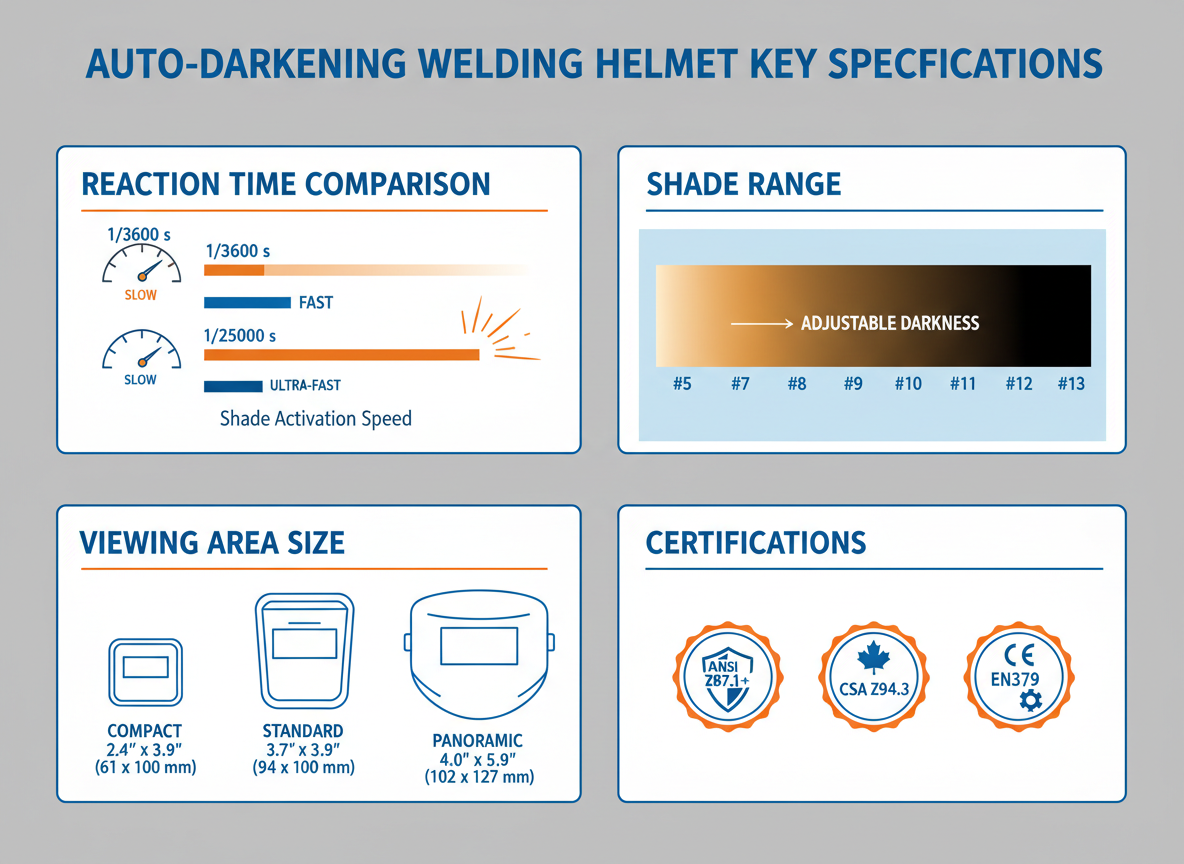
    Auto-darkening helmets protect your eyes by switching from light to dark state when arc strikes. Choosing the right one depends on lens speed, shade range, viewing area, and certificationโ€”not brand hype.

    Key Specifications

    Reaction Time (Switching Speed)

    LevelSpeedDecimal
    Entry-level1/3600 second0.00028s
    Mid-range1/10000 second0.0001s
    Professional1/25000 second0.00004s

    TIG welding requires faster response (1/20000s minimum) due to low-amperage arc initiation. MIG and stick work fine with 1/10000s.

    Shade Range

    • Standard range: #9โ€“#13
    • TIG-specific: #5โ€“#13 (low-amp visibility)
    • Grinding mode: #3โ€“#4 (light state)

    AWS D1.1 requires minimum shade #10 for 60โ€“160A stick welding, #11 for 160โ€“250A, #12 for 250โ€“550A.

    Viewing Area

    SizeDimensionsArea
    Compact3.5โ€ ร— 1.65โ€6 sq in
    Standard3.93โ€ ร— 2.36โ€9.3 sq in
    Wide-view3.93โ€ ร— 2.87โ€11.3 sq in
    Panoramic4.25โ€ ร— 3.25โ€13.8 sq in

    Larger viewing area improves peripheral awareness in tight spaces and multi-pass work.

    Optical Clarity Rating (1/1/1/1 to 1/1/1/3)

    Four numbers indicate: optical class / light diffusion / variations in luminous transmittance / angle dependence.

    • 1/1/1/1 = highest clarity (minimal distortion)
    • 1/1/1/2 = professional grade
    • 1/1/1/3 = acceptable for general fabrication

    Certification Requirements

    ANSI Z87.1+ (High-Impact Rated)
    Required for all industrial welding environments. Plus symbol (+) indicates high-velocity impact protection.

    CSA Z94.3
    Canadian standard equivalent to ANSI Z87.1+.

    EN379
    European standard covering optical class, switching time, and UV/IR protection.

    Process-Specific Requirements

    TIG (GTAW)

    • Reaction time: 1/20000s or faster
    • Shade range: #5โ€“#13 (low-amp start visibility)
    • Sensitivity adjustment: Essential for low-amperage starts

    MIG (GMAW)

    • Reaction time: 1/10000s acceptable
    • Shade range: #9โ€“#13
    • Spatter resistance: Check lens cover plate availability

    Stick (SMAW)

    • Reaction time: 1/10000s acceptable
    • Shade range: #10โ€“#13
    • Grinding mode: Useful for slag removal between passes

    Flux-Core (FCAW)

    • Same as MIG requirements
    • Higher spatter = more frequent cover plate replacement

    Power Source Options

    Solar-powered

    • Pros: No battery replacement, lighter weight
    • Cons: Requires adequate light exposure, slower recovery in dim environments

    Battery-powered

    • Pros: Consistent performance in all lighting
    • Cons: Battery replacement every 6โ€“12 months (CR2032 or AAA)

    Solar + Battery Hybrid

    • Best reliability for production environments
    • Battery backup prevents downtime

    True Color vs. Standard Lens Technology

    FeatureStandard Green LensTrue Color Lens
    Color perceptionGreen/blue tintNatural color
    Weld pool visibilityAdequateEnhanced
    Heat color distinctionStandardSuperior
    CostBase price2โ€“3ร— premium
    Best forStructural steelStainless/aluminum TIG

    True color improves precision on stainless and aluminum TIG work but isnโ€™t necessary for structural steel fabrication.

    Buying Checklist

    • โœ“ ANSI Z87.1+ certification marked on helmet
    • โœ“ Reaction time matches your primary process
    • โœ“ Shade range covers your amperage requirements
    • โœ“ Viewing area suits your work environment
    • โœ“ Optical clarity rating 1/1/1/2 or better
    • โœ“ Replacement lens covers readily available
    • โœ“ Adjustable sensitivity and delay controls
    • โœ“ Grinding mode if you do stick or flux-core

    Common Mistakes

    Buying based on viewing area alone
    Large viewing area with slow reaction time = retina damage risk. Verify switching speed first.

    Ignoring optical clarity rating
    1/1/1/3 lenses cause eye strain during 8+ hour shifts. Pay for 1/1/1/2 if you weld full-time.

    Skipping sensitivity adjustment testing
    Low-amperage TIG (10โ€“40A) wonโ€™t trigger poorly calibrated sensors. Test before buying.


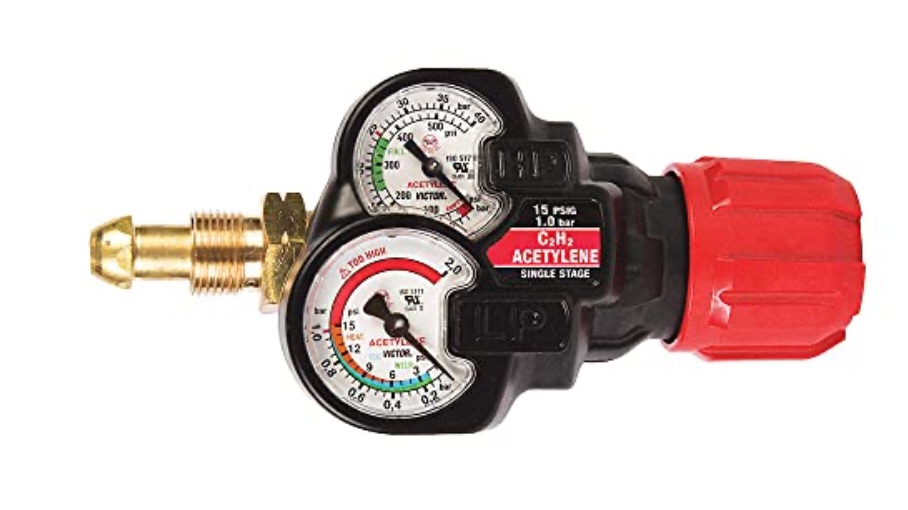
  • Victor 0781-3628 EDGE 2.0 Regulator Review & Guide’

    Victor 0781-3628 EDGE 2.0 Regulator Review & Guide’

    Victor 0781-3628 EDGE 2.0 Regulator Review & Guide

    Note for Readers: This post may contain affiliate links. If you purchase through them, we may earn a small commission at no cost to you. Thank you for supporting our site.

    Introduction

    The Victor 0781-3628 ESS32-15-510 EDGE 2.0 Regulator is a high-performance single-stage Acetylene regulator engineered for reliability, precision, and safety in welding and cutting operations. Designed as part of the EDGE 2.0 series, this regulator is trusted by professional welders, metal fabricators, technicians, and industrial maintenance crews for its excellent pressure control and rugged build.

    Welding gases, especially Acetylene, must be regulated precisely for safety and performance. The Victor EDGE 2.0 regulator ensures accurate gas delivery, making it essential for processes like oxy-fuel cutting and gas welding, where stable flow rates are critical for flame control and consistent results.

    Whether you’re a student learning oxy-fuel welding techniques, a fabrication shop owner, or a pipefitter on-site, the Victor 0781-3628 delivers dependable regulation and advanced safety features in high-demand conditions.

    Types / Variants / Models

    The Victor EDGE 2.0 line includes several regulators designed for different gases and connection types. The 0781-3628 (ESS32-15-510) model focuses specifically on acetylene use and features a CGA-510 inlet connection.

    Here are common variants in the EDGE 2.0 ESS32 series:

    Victor 0781-3628 ESS32-15-510
    Gas: Acetylene
    Inlet Connection: CGA-510
    Max Delivery Pressure: 15 PSI
    Best for: General-purpose welding, cutting, heating in fabrication environments.

    Victor 0781-3627 ESS32-510
    Gas: Acetylene
    Inlet Connection: CGA-510
    Used alongside the 0781-3626 for oxy-acetylene setups.

    Victor EDGE 2.0 Argon/CO2 Regulators
    – Tailored for shielding gases in GMAW (MIG) and GTAW (TIG) welding applications.

    The 0781-3628 is optimized for use with Acetylene cylinders and pairs with oxygen regulators for balanced and safe operation in oxy-fuel torches.

    Key Features or Specifications

    The Victor 0781-3628 EDGE 2.0 regulator is engineered for performance, precision, and durability. Hereโ€™s what sets it apart:

    Gas Type: Acetylene
    – Designed for high-flow acetylene applications in cutting and welding.

    Inlet Connection: CGA-510
    – Commonly found on standard industrial acetylene cylinders in the U.S.

    Delivery Pressure Range: 1-15 PSI
    – Ideal for acetylene fuel cutting, light to heavy-duty brazing, and machine torch setups.

    Gauge Type: Dual 2-inch gauges with high-contrast color-coded dials
    – Provides clear visibility of cylinder pressure and delivery pressure, even in low-light environments.

    Housing: Forged brass body with zinc-aluminum cap
    – Delivers strength and corrosion resistance suitable for heavy industrial use.

    Diaphragm: Fabric-reinforced neoprene
    – Offers stable pressure control and responsiveness, especially in variable temperature conditions.

    Safety: Built-in SLAMโ„ข (Shock Limitation and Minimization) technology
    – Protects gauges and regulator internals from impact for extended longevity and reliability.

    Weight: Approx. 3 lbs
    – Heavy-duty yet portable, suitable for mobile welding units and shop setups.

    Certifications: Meets industry standards like ANSI Z49.1, with stringent manufacturing quality controls. Victor products are also known to be CE compliant and AWS (American Welding Society) recommended.

    Usage & Compatibility

    The Victor EDGE 2.0 0781-3628 is primarily used in oxy-fuel cutting, welding, and brazing processes. It is compatible with:

    Processes:
    SMAW (Shielded Metal Arc Welding): For preheating or post-weld heat treating using torch heating.
    GMAW / FCAW: When combined with fuel gases for flame-cutting prep.
    GTAW (TIG): Occasionally used for heating applications alongside TIG for thick metal prep.
    Oxy-Acetylene Welding and Cutting: The most common use-case scenario, pairing the 0781-3628 with an oxygen regulator.

    Torch Compatibility:
    – Compatible with Victor journeyman torch sets, Harris-type tips, and general oxy-fuel torch outfits.

    Cylinders:
    – Works with standard industrial-sized acetylene tanks with a CGA-510 fitting.

    Pros:
    – Excellent gauge readability and safety design.
    – Stable, accurate delivery pressure control.
    – Extremely durable for harsh job site conditions.

    Cons:
    – Heavier than some budget regulators (due to durable casing).
    – Slightly more expensive, but justifiable by performance and lifespan.

    Common Applications

    The Victor 0781-3628 is relied upon in a variety of professional and industrial settings, particularly where precision and safety are paramount:

    Metal Fabrication Shops
    – Acetylene delivery for cutting thick plate steel, structural beams, and prepping weld joints.

    Field Welding & Pipelines
    – Durable enough for on-site welding and cutting in demanding environments.

    Trade Schools & Welding Education
    – Provides students with tools that mirror professional-grade standards, preparing them for industry work.

    Industrial Maintenance & Repair
    – Used for steel structure repairs, flange bolt removal via acetylene heating, and dismantling operations.

    Its robust design, precision control, and wide delivery pressure range make it ideal for both stationary setups and mobile welding units.

    Tips & Best Practices

    To get the most out of your Victor 0781-3628 EDGE 2.0 regulator, follow these tips:

    Setup:

    – Always attach to an upright cylinder and use a wrench appropriate for CGA-510 fittings.
    – Crack the cylinder valve briefly before connecting to blow out debris.
    – Gradually open the acetylene valve; do not force open fully in one turn.

    Usage:

    – Use in well-ventilated areas and ensure hoses and flashback arrestors are in good condition.
    – Monitor gauge readings frequently, especially in high-heat environments.
    – Use a compatible acetylene regulator and appropriate torch tip for balanced flame characteristics.

    Maintenance:

    – Store regulators in protective cases or upright when not in use.
    – Periodically inspect for gas leaks using soapy water (never a flame).
    – Avoid dropping or hitting the regulator to protect internal calibration and integrity.

    Troubleshooting:

    Erratic Pressure: May indicate diaphragm wearโ€”time for service or replacement.
    Leak at CGA-510 Inlet: Check for damaged threads or missing sealing washer.
    – (Incomplete: max_output_tokens)
Listen with Audible