Black soot and dirty tungsten usually point back to shielding gas coverage—either turbulence, leaks, or a setup that can’t maintain a stable argon envelope. A gas lens kit is one of the simplest upgrades to stabilize coverage, especially with longer stickout or tight joints.
Not sure if this is your issue? See the full troubleshooting guide → TIG Welds Turning Black and Sooty? Fix Gas Coverage Fast
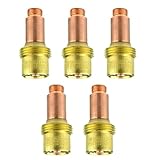
- TIG Gas Lens 45V26 Tig Torch Gas Lens 3/32”
- Work With: TIG 17, 18, 26 Series Torches
- 3/32″ Tungsten Electrodes Standard 10N Series Collet
- 54N Series Gas Lens Ceramic Cups Setup
- Pack of 5
Last update on 2026-03-31 / Affiliate links / Images from Amazon Product Advertising API
Key Takeaways
- A gas lens helps create more stable, laminar shielding gas flow
- Better coverage can reduce soot, oxidation, and tungsten contamination
- Match the kit to your torch family (commonly 17/18/26 style)
- Replace damaged screens/cups—dirty hardware can cause “mystery” contamination
- If specs aren’t clearly listed, treat it as Unknown (Verify) before buying
Product Picks (verify fitment before ordering)
1) 45V26 TIG Gas Lens (3/32 in) — TOP PICK (Most common fix)
Short description: A standard 45V26-reference gas lens collet body for common 17/18/26-style TIG torches.
Key specs (manufacturer verified): Ref number 45V26; intended for 3/32 in (2.4 mm) tungsten; torch family 17/18/26 (Verify exact torch compatibility).
Best for: Most welders seeing soot/dirty tungsten after switching cups, changing stickout, or fighting inconsistent coverage.
ArcWeld link: N/A
Amazon:
- TIG Gas Lens 45V26 Tig Torch Gas Lens 3/32”
- Work With: TIG 17, 18, 26 Series Torches
- 3/32″ Tungsten Electrodes Standard 10N Series Collet
- 54N Series Gas Lens Ceramic Cups Setup
- Pack of 5
Last update on 2026-03-31 / Affiliate links / Images from Amazon Product Advertising API
2) 17/18/26 Gas Lens Kit (cups + lens + collets)
Short description: A bundled kit can be the fastest way to replace multiple wear items at once (cups, collets, lens).
Key specs: Unknown (Verify)
Best for: If your cup is chipped, your lens screen is dirty, and you want a clean reset.
ArcWeld link: N/A
Amazon:
Unknown (Verify)
Still deciding? Compare these options below.
- TIG Gas Lens 45V26 Tig Torch Gas Lens 3/32”
- Work With: TIG 17, 18, 26 Series Torches
- 3/32″ Tungsten Electrodes Standard 10N Series Collet
- 54N Series Gas Lens Ceramic Cups Setup
- Pack of 5
Last update on 2026-03-31 / Affiliate links / Images from Amazon Product Advertising API
3) Jumbo Cup Gas Lens Kit (for longer stickout)
Short description: Larger cups can improve coverage in joints where you need extra tungsten stickout.
Key specs: Unknown (Verify)
Best for: Corners, fillets, and tight access where coverage breaks down.
ArcWeld link: N/A
Amazon:
Unknown (Verify)
Buying Guide: How to Choose
- Torch family fit (17/18/26 vs other): Don’t assume—verify your torch style before ordering.
- Tungsten diameter: Match the lens/collet body to your tungsten size (common: 1/16 in, 3/32 in, 1/8 in).
- Cup size and access: Bigger cups can help coverage but may not fit tight joints.
- Quality and consistency: If listings don’t clearly state reference numbers (like 45V26) and fitment, treat as Unknown (Verify).
FAQ
What does a gas lens actually change?
It helps straighten and stabilize gas flow, so coverage is less turbulent and more consistent.
Can too much gas cause soot?
Yes. Excess flow can create turbulence that pulls air into the shield.
Do I still need to regrind tungsten after soot shows up?
Yes. Once contaminated, it’s faster and more reliable to regrind than to “burn it clean.”
Will a gas lens fix leaks or bad gas?
No. Fix leaks, confirm 100% argon, and check connections first.
Safety Notes
Use appropriate PPE and ensure eye protection meets ANSI Z87.1. Maintain ventilation—shielding issues can tempt people to hover and “test” the arc repeatedly, increasing UV exposure.